Over 30 wind farm projects in the U.S. are delayed because of slow military reviews, affecting electricity generation for data centers important for artificial intelligence. These reviews check if wind turbines might interfere with military operations. There are arguments that the delays relate to national security concerns and reflect President Trump's past critical stance on wind energy.
Key Facts
More than 30 wind farms in the U.S. are delayed due to pending military reviews.
The reviews ensure wind turbines do not interfere with military radar or aviation systems.
Each of these wind farms could provide significant electricity, enough for cities or large data centers.
The American Clean Power Association seeks clarity on what is causing these delays.
President Trump has been vocal against wind energy, describing it critically in the past.
National security concerns are cited as reasons for the delays, although some dispute these claims.
An unusual agreement was reached to repurpose offshore wind project funds for oil and gas.
Read the Original
Want the full story? Tap a source to open the original
article.
A video of a cat named Lily went viral when it looked like she tried to disable a home security camera. The footage, shared on Threads, amused many viewers who joked about the cat's actions resembling a heist movie plot. The video highlights how pet cameras can give insights into pet behavior, although they should not replace proper interaction.
Key Facts
A video shows a cat named Lily approaching a Wyze security camera, making it seem like she disabled it.
The video was shared online by a user named @slop.guru and quickly got popular.
People joked that the cat was trying to be like characters in a heist movie.
Some comments suggested the cat acted intentionally to avoid surveillance.
Home security cameras are commonly used by pet owners to watch their pets when they're not home.
Experts say cameras can help owners spot problems with their pets early, but they shouldn't replace spending time with the pets.
The owner of Lily, the cat, found the video's popularity delightful.
This isn't the first time videos of cat behavior on cameras have become popular online.
Read the Original
Want the full story? Tap a source to open the original
article.
NASA's Artemis II mission will send four astronauts to fly around the Moon, marking the first time humans have returned to the Moon in over 50 years. A podcast titled "13 Minutes Presents: Artemis II" will cover this mission daily with input from experts like space scientist Maggie Aderin and astronaut Tim Peake.
Key Facts
NASA plans to return humans to the Moon with the Artemis II mission.
The mission will involve four astronauts looping around the Moon.
This marks the first human trip beyond the Moon in more than 50 years.
The Artemis II mission will travel further from Earth than any previous human mission.
A podcast produced by the BBC, 13 Minutes Presents: Artemis II, will cover the mission.
The podcast will feature space experts and will have theme music by Hans Zimmer and Christian Lundberg.
Read the Original
Want the full story? Tap a source to open the original
article.
Chinese tech companies are increasingly setting up in Hong Kong to access international markets. They use Hong Kong as a base to promote their products, raise funds, and build trust with global clients, particularly as they face challenges in the US and Europe.
Key Facts
Chinese tech companies are choosing Hong Kong to expand their presence internationally.
Hong Kong serves as a strategic location for testing products and raising capital.
The number of mainland Chinese companies listing on the Hong Kong Stock Exchange rose to 76 in the past year.
Increased geopolitical tensions make it harder for these companies to operate in US and European markets.
Hong Kong is seen as a bridge for Chinese companies to connect with global investors.
The Chinese government is focusing on technology self-reliance, emphasizing local development in AI and semiconductors.
Hong Kong's policies support faster share flotations and help companies set up operations smoothly.
Read the Original
Want the full story? Tap a source to open the original
article.
Big Tech companies, including Google, Amazon, Meta, and others, are using the rise of artificial intelligence (AI) as a reason for cutting jobs. Executives claim AI allows them to operate efficiently with fewer workers, leading to job reductions even as they plan significant investments in AI technology.
Key Facts
Tech companies like Google, Amazon, Meta, and smaller firms are reducing their workforce due to AI advancements.
Meta, which owns Facebook, Instagram, and WhatsApp, recently cut hundreds of jobs, including 700 positions last week.
Meta plans to nearly double its spending on AI this year while maintaining a hiring freeze in certain areas.
Jack Dorsey’s company, Block, will cut nearly half its workforce, citing AI tools as a reason.
Tech investor Terrence Rohan noted that companies are using AI as a more favorable explanation for job cuts compared to cost-cutting motives.
Companies, including Amazon and Google, plan to invest approximately $650 billion into AI this year, impacting their workforce decisions.
Amazon alone plans to invest $200 billion into AI in the next year.
Read the Original
Want the full story? Tap a source to open the original
article.
The movie "Project Hail Mary," starring Ryan Gosling, is a film adaptation of Andy Weir's science fiction novel. It has performed well at the box office, becoming the top-grossing film in 2026. The movie is expected to be available for streaming on Amazon Prime Video and possibly Apple TV later in the year.
Key Facts
"Project Hail Mary" is based on a novel by Andy Weir.
Ryland Grace, played by Ryan Gosling, is the main character in the movie.
The film saw a strong box office opening with $80.6 million in domestic earnings.
It is one of only two non-sequel, non-franchise films in a decade to open with $80 million or more.
The film is produced by Amazon MGM Studios and may eventually be streamed on Amazon Prime Video.
Apple TV also has a page for the movie with a "Coming Soon" tag.
Ryan Gosling's biggest domestic opening with a leading role is "Project Hail Mary."
Read the Original
Want the full story? Tap a source to open the original
article.
The UK government is encouraging councils in England to adopt a universal parking payment app called the National Parking Platform (NPP). This app allows drivers to use any major parking app to pay, reducing the need to download new apps for different car parks. The aim is to cut down on parking fines and simplify the payment process.
Key Facts
The National Parking Platform (NPP) allows drivers to pay for parking using any major app.
The UK government has issued statutory guidance to encourage councils to adopt the NPP.
Fifteen local authorities have joined the platform so far.
The initiative aims to double the number of participating councils.
Since launching nationwide, the NPP has processed over 10 million payments.
A survey found that 13% of people struggled to use parking apps, with 26% of those over 75 finding them difficult.
The platform is run by the British Parking Association and is not-for-profit.
The government plans to expand the use of NPP to cover road tolls and electric vehicle charging.
Read the Original
Want the full story? Tap a source to open the original
article.
The game "Super Animal Royale" offers a different approach to the popular battle royale genre by focusing on simplicity and accessibility while still providing engaging gameplay. Created by Pixile Studios, this top-down game allows for fast matches and includes both real players and bots to reduce wait times. The game emphasizes social interaction in a designated social space called Super Animal World.
Key Facts
"Super Animal Royale" is a top-down multiplayer video game.
The game was developed by Pixile Studios.
It focuses on being accessible and easy to understand while keeping the excitement of battle royale games.
The game includes both real players and bots to shorten waiting times for matches.
Matches in "Super Animal Royale" are designed to be short, lasting around seven minutes.
The game includes a social feature called Super Animal World for interaction between players.
Game developers adjusted designs based on player behavior, such as creating social spaces for interaction.
Read the Original
Want the full story? Tap a source to open the original
article.
AI models that technology companies are developing could soon be very good at hacking systems, making cyberattacks easier and more dangerous. Anthropic, a tech company, is warning that its upcoming AI model, called "Mythos," may be particularly skillful in this area by 2026. This development raises concerns about the threat these AI systems pose to cybersecurity.
Key Facts
Anthropic and other tech companies plan to release advanced AI models capable of hacking.
Anthropic's new model, "Mythos," could make large-scale cyberattacks more likely by 2026.
These AI models can work independently and with precision to access various systems.
A previous cyberattack by AI involved a Chinese group that hacked 30 global targets.
Sophisticated AI models can think and act independently, similar to tireless hackers.
"Shadow AI" refers to AI use by employees that increases system vulnerability.
48% of cybersecurity experts rank agentic AI as the top attack concern for 2026.
Companies need secure environments for AI testing to protect sensitive information.
Read the Original
Want the full story? Tap a source to open the original
article.
Meta, the company that owns Facebook and Instagram, lost a key court case accusing it of creating addictive social media products that harmed a young user’s mental health. The jury decided that Meta knowingly designed Instagram to be addictive and awarded the user damages totaling $4.2 million from Meta and $1.8 million from YouTube.
Key Facts
The lawsuit claimed Instagram caused mental health problems, including body dysmorphia and self-harm, to a 20-year-old user named KGM.
Meta argued the young user’s mental health issues were due to family problems and offline bullying, not Instagram.
Meta’s lawyers used KGM’s texts, therapy notes, and personal writings to support their defense.
The jury voted 10-2 in favor of the plaintiff, finding Meta intentionally designed an addictive product.
The court awarded $4.2 million in damages from Meta and $1.8 million from YouTube.
Meta’s defense strategy focused on blaming the user’s family but did not convince the jury.
Meta said it plans to appeal the verdict and stated teen mental health is complex and not caused by one app.
The ruling may influence thousands of similar ongoing lawsuits against social media companies.
Read the Original
Want the full story? Tap a source to open the original
article.
A TikTok series called "Fruit Love Island," created using generative AI, has become very popular. It mimics the reality TV show "Love Island" but replaces human contestants with talking fruits. The series has quickly gained millions of fans and followers despite mixed reactions.
Key Facts
"Fruit Love Island" is an AI-generated series on TikTok with fruit characters similar to "Love Island."
Characters include Plumero the plum, Watermelina the watermelon, Bananito the banana, and Cherrita the cherry.
The series has reached hundreds of millions of views in just a few weeks.
The TikTok account ai.cinema021, which posts the series, has 3.3 million followers.
Some celebrities like Joe Jonas and Zara Larson have shown interest in the series.
TikTok removed several episodes, but they are also available on YouTube.
Some former Love Island USA cast members have commented on the series with mixed opinions.
The series reflects a trend of using AI for creating viral content on social media platforms.
Read the Original
Want the full story? Tap a source to open the original
article.
The TV show "Rooster," starring Steve Carell, premiered on HBO and HBO Max on March 8, attracting a strong audience. The first season is currently airing weekly, and discussions about a second season are ongoing, although no official decision has been made yet. The show received a boost from California tax credits, which may help its renewal chances.
Key Facts
"Rooster" premiered on HBO and HBO Max on March 8.
Steve Carell is the lead actor in the series.
The show had 2.4 million viewers in its first three days, making it HBO's most-watched comedy debut since 2015.
Its first season will air until May 10.
Co-created by Bill Lawrence and Matt Tarses, the series has notable actors like Charly Clive, Connie Britton, and Alan Ruck.
Talks for a second season are underway, with no official decision yet.
The series received California tax credits, improving its chances of renewal.
Read the Original
Want the full story? Tap a source to open the original
article.
NASA's latest moon mission, Artemis, is making history with a diverse crew that includes a woman, a person of color, and a Canadian astronaut. This mission won't land on the moon but aims to explore farther into space than previous missions, paving the way for future moon landings.
Key Facts
The mission is called Artemis, and it's NASA's first moon mission in over 50 years.
The Artemis crew includes four astronauts: a woman, a person of color, and a Canadian.
Reid Wiseman, the mission commander, is a retired Navy captain and former NASA chief astronaut.
Victor Glover is one of the few Black astronauts at NASA and will pilot the mission.
Christina Koch holds the record for the longest single spaceflight by a woman.
The mission will not land on or orbit the moon but will travel farther into space than past missions.
The Artemis program aims to prepare for future moon landings, with further missions planned for 2027 and 2028.
Read the Original
Want the full story? Tap a source to open the original
article.
OpenAI has decided to focus more on business tools and revenue growth rather than risky consumer features, such as AI-generated adult content. The company is also ending some consumer services to make way for business opportunities in response to growing competition and preparing for potential financial moves like an initial public offering (IPO).
Key Facts
OpenAI is prioritizing making money by focusing on business tools.
The company is moving away from consumer features like AI-generated adult content.
OpenAI's CEO initially proposed an erotica feature, but faced technical issues.
OpenAI has ended its AI video app Sora and scaled back its in-chat shopping feature.
Apple is allowing rival chatbots to work with Siri on iPhones, which affects OpenAI.
OpenAI wants to turn active users of ChatGPT into paying customers.
ChatGPT has 900 million weekly active users and 50 million consumer subscribers.
OpenAI is focusing on business applications of AI and is preparing for an IPO.
Read the Original
Want the full story? Tap a source to open the original
article.
Substack is a growing social media platform where writers can publish content without editorial restrictions. By 2026, it had over 35 million active users, and it’s gaining popularity due to its appeal to intellectual influencers and content creators who value freedom and substance over trends.
Key Facts
Substack was founded in 2017 and is growing rapidly.
By 2026, Substack had more than 35 million monthly active subscribers.
The platform allows writers to publish without editors, giving them freedom.
Substack is popular among those who want to share thoughtful and intentional content.
Celebrities like Charli XCX and Rosalía use Substack to influence culture.
Substack appeals to those seeking a career in independent media.
It combines free content posting with paid subscriptions to attract creators.
Substack is seen as an alternative to more trend-focused platforms like TikTok.
Read the Original
Want the full story? Tap a source to open the original
article.
Apple has discontinued the Mac Pro, a desktop computer first introduced in 2006. This decision is part of Apple's strategy to focus on devices with its in-house silicon chips, like the Mac Studio.
Key Facts
Apple has stopped making the Mac Pro after nearly 20 years.
The Mac Pro had been a powerful desktop used by professionals in film, music, and design.
The latest Mac Pro model, before its discontinuation, started at $6,999.
The Mac Pro had not received major updates recently and was last refreshed with Apple's M2 Ultra chip.
Apple now focuses on newer products like the Mac Studio, iMac, and Mac mini for desktop users.
The Mac Studio is positioned as the high-end option for professionals, replacing the Mac Pro's role.
Apple confirmed that the Mac Pro will not get future updates.
Read the Original
Want the full story? Tap a source to open the original
article.
The article "Tech Now" covers various technological advancements and their applications in fields such as agriculture, space exploration, fashion, and energy. It highlights innovative uses of tech at global events and explores futuristic ideas like AI, biocomputing, and electric transportation.
Key Facts
Research connects climate change to extreme weather and is used in lawsuits against polluters.
A high-tech insect farm transforms food waste into animal feed.
New phone gadgets and trends are showcased at MWC Barcelona.
An electric boat is tested for green tourism in Norway's fjords.
The Esrange Spaceport in Sweden is part of Europe's space exploration efforts.
Innovators in Australia use tech to advance agriculture.
CES 2026 in Las Vegas highlights the latest tech trends.
AI is being used to address clothing size issues in the fashion industry.
Read the Original
Want the full story? Tap a source to open the original
article.
A jury found Meta and YouTube liable for making their platforms addictive, harming a young woman's mental health. Meta and Google plan to appeal the decision, which included financial penalties. The outcome raises concerns about future lawsuits against tech firms over similar issues.
Key Facts
A jury ruled that Meta and YouTube's designs led to social media addiction, harming a woman's mental health.
The woman, named Kaley, argued the platforms worsened her mental health issues.
Meta and Google face financial penalties of $6 million from the verdict.
The companies plan to appeal, disagreeing with the jury's decision.
There are fears of more lawsuits against tech companies for similar reasons.
TikTok and Snap Inc settled before the trial but still face other legal challenges.
Meta and Google claim they protect teen users and argue their platforms are misunderstood.
Read the Original
Want the full story? Tap a source to open the original
article.
Wikipedia has banned content created by large-language models (LLMs) from its site, except for two specific uses: copyediting and translation. The decision came after discussions about how AI-generated content often breaks Wikipedia's main rules. Wikipedia plans to keep relying on volunteers to maintain its articles.
Key Facts
Wikipedia has stopped allowing AI-generated content from models like ChatGPT, Claude, DeepSeek, and Google Gemini, except in two cases.
Editors can use AI for copyediting, ensuring the AI does not change the content's original meaning or create text on its own.
AI can also be used to translate articles from other languages into English, following specific guidelines.
The decision followed several months of debate within the Wikipedia community.
The policy was developed with input from Wikiproject AI Cleanup.
Wikipedia remains committed to its volunteer-driven model for content creation and editing.
Concerns were raised about AI's ability to meet Wikipedia's research and editorial standards.
There are challenges in determining if text was created by LLMs.
Read the Original
Want the full story? Tap a source to open the original
article.
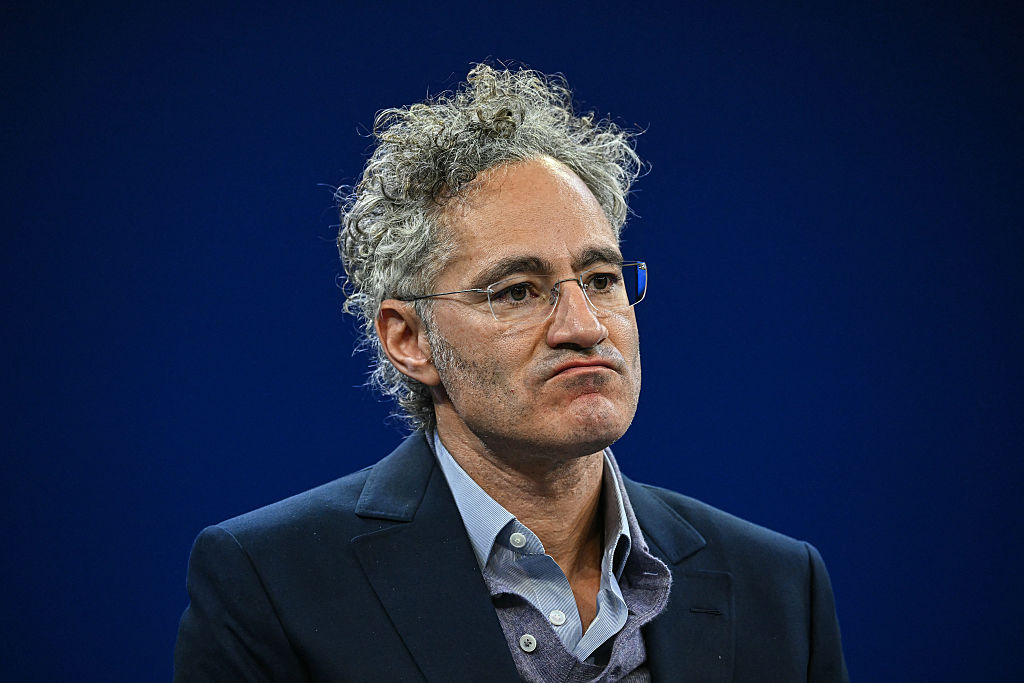
The CEO of Palantir, Alex Karp, stated that in an economy driven by artificial intelligence (AI), only two types of workers—those with hands-on skills and individuals who think differently—will find success. His comments came amid concerns about job losses due to AI and automation, with reports suggesting significant potential impacts on the job market in the next decade. The discussion sparked debate about the future of work as technology rapidly evolves.
Key Facts
Alex Karp is the CEO of Palantir, a company involved in data analytics and software development.
Karp said that people with vocational skills and neurodivergent individuals might fare better in a future dominated by AI.
An October 2025 Senate report estimated that new technologies could eliminate nearly 100 million U.S. jobs within a decade.
AI integration into industries varies, with some sectors more affected than others.
The report highlighted the uncertainty about how many new jobs AI could create to replace those lost.
Online discussions about Karp's comments showed mixed reactions, with some people skeptical of the economic impact.
Political and business leaders are debating the potential benefits and risks of AI technology.
Experts suggest that while AI could change jobs significantly, its full impact on the labor market is not yet clear.
Read the Original
Want the full story? Tap a source to open the original
article.