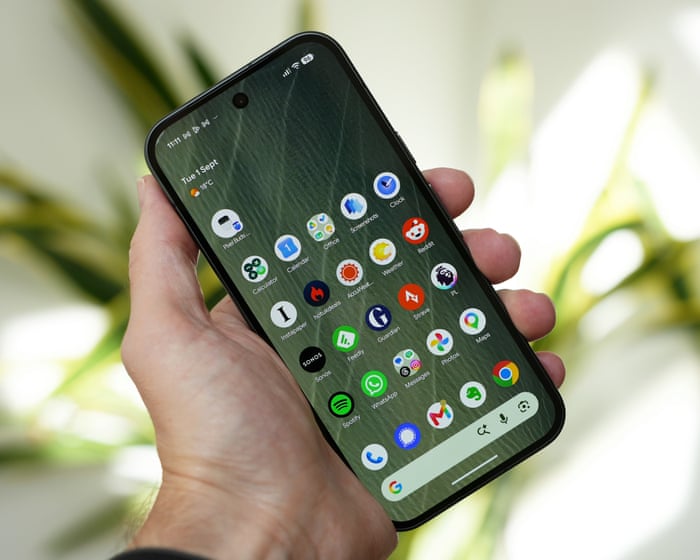
Google’s Pixel 11 smartphone offers strong features like advanced cameras, a bright 6.3-inch OLED screen, and a new Tensor G6 chip. It runs Android 17 with proactive AI tools and promises long software support until 2033.
Key Facts
The Pixel 11 costs £879 (€999/$899/A$1,499) and includes 256GB storage, £200 less than the Pixel 11 Pro.
It has a 6.3-inch OLED screen with a smooth 120Hz refresh rate and an in-screen fingerprint sensor.
The phone uses the new Tensor G6 chip, which is 20% faster than before but slower than Apple and Qualcomm rivals.
The camera design is slimmer, with a large pill-shaped bar reduced by 40% in depth.
Battery life lasts about 54 hours with light use and supports 30W wired charging plus 25W wireless charging.
It runs Android 17 and receives operating system and security updates through August 2033.
AI features like Magic Cue or Gemini Proactive Assistance give helpful info in messages and some apps but do not support many third-party messaging apps.
The phone has IP68 water resistance, 5G connectivity, and weighs 197 grams.
Read the Original
Want the full story? Tap a source to open the original
article.
The Australian government plans to introduce new laws that would require social media companies to let users turn off algorithms, the software that decides what content they see. The proposal aims to give people more control over their social media feeds and improve online safety, especially after a previous ban on social media use by children under 16.
Key Facts
Australians may soon be able to switch off social media algorithms under new draft legislation.
Communications Minister Anika Wells said tech companies like Meta, Google, and TikTok must offer this choice or face big penalties.
The government is still deciding whether users would have to opt in or opt out of algorithm-driven content.
Some politicians criticize the move, with concerns it could lead to censorship.
The new rules aim to increase safety by making social media platforms responsible for harmful content like illegal porn and disordered eating promotion.
Despite the under-16s social media ban introduced last year, most children under 16 still access these platforms.
The legislation will build on existing digital duty of care laws that require companies to manage risks on their platforms.
Experts and advocates, like Chanel Contos, support the idea, saying algorithms contribute to online harm such as exposure to violent or harmful content.
Read the Original
Want the full story? Tap a source to open the original
article.
Meta, the company that owns social media platforms, has faced new legal challenges in the US starting in 2026. Prosecutors have brought three major cases against Meta focusing not on what content is shared, but on how the platforms are designed and how that design may harm children and young people.
Key Facts
Investigative journalist Katy McQue has reported for years on the harm Meta’s platforms may cause to children.
Despite evidence from journalists, prosecutors, and families, it was hard to take Meta to court before 2026.
In 2026, three important legal cases against Meta took place in New Mexico, California, and another state.
The New Mexico case highlighted issues related to child sexual exploitation linked to Meta’s platforms.
The California case focused on mental health harms experienced by young users of Meta’s platforms.
Another recent case led Meta to settle by paying $18 billion.
These cases use a new legal argument that targets the design of Meta’s platforms, not just the content people post.
This approach marks a shift in how social media companies can be held accountable for harm.
Read the Original
Want the full story? Tap a source to open the original
article.
Jared Isaacman supports Elon Musk’s idea of building space data centers. This fits with Isaacman’s plan for NASA to help humans live and work beyond Earth.
Key Facts
Jared Isaacman backs Elon Musk’s concept of space data centers.
Space data centers would store and process information in space.
Isaacman’s vision includes NASA leading efforts to expand human settlements beyond Earth.
The support is connected to a larger plan for space exploration and development.
NASA is seen as a key player in future space missions and human expansion.
The collaboration reflects growing interest in space-based technology infrastructure.
Read the Original
Want the full story? Tap a source to open the original
article.
Artificial intelligence (AI) is increasingly used in everyday household devices such as fridges and lawnmowers. The International Household Appliances Fair in Berlin showed new examples of how AI could shape the future of smart homes.
Key Facts
AI is now being integrated into many home appliances beyond smartphones.
Examples include AI-powered fridges and lawnmowers.
The International Household Appliances Fair took place in Berlin.
The fair highlighted upcoming AI technologies for homes.
AI helps make household devices smarter and more automated.
This trend shows how AI could change daily life in the near future.
Read the Original
Want the full story? Tap a source to open the original
article.
A German company called Isar Aerospace successfully launched the first fully commercial rocket in Europe to reach orbit. The rocket, named Spectrum, lifted off from a spaceport in Norway and reached low-Earth orbit about seven minutes later.
Key Facts
Isar Aerospace was founded in 2018 by three students from the Technical University of Munich.
The company’s rocket, Spectrum, is 92 feet (28 meters) tall and has two stages.
The launch took place at Andøya Spaceport in northern Norway, inside the Arctic Circle.
Isar Aerospace became the first European private company to launch a fully commercial rocket into orbit.
It took about eight years and approximately $1 billion in private funding for Isar to reach this milestone.
The company now employs nearly 500 people and plans to increase production to meet global demand.
Europe’s current main launch providers rely heavily on government funding and produce rockets that are less competitive.
Isar’s success could bring more competition and lower costs to the European space launch market.
Read the Original
Want the full story? Tap a source to open the original
article.
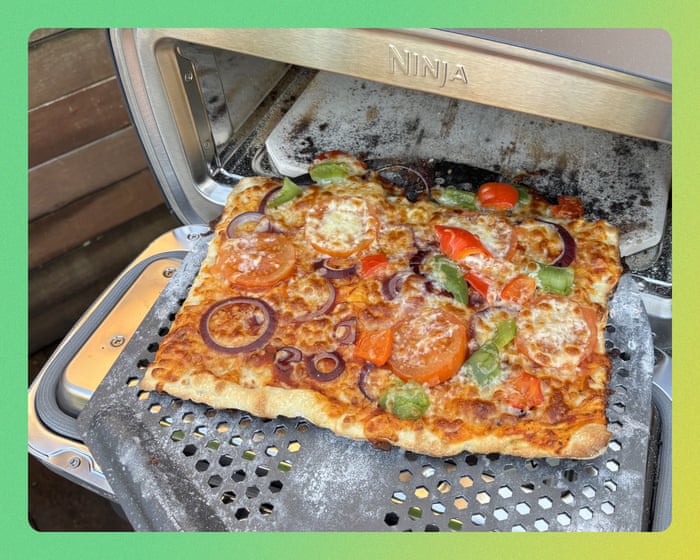
The Ninja Artisan is an electric outdoor pizza oven that heats up quickly and cooks pizzas evenly without a flame or rotating the pizza. It has preset cooking modes and can also be used as an air fryer, making outdoor pizza making easier and faster.
Key Facts
The oven heats up to 370°C in about 14-15 minutes.
Pizzas cook perfectly in approximately two minutes.
It has four preset modes: Artisan, Thin Crust, New York, and Pan, plus a custom setting.
The oven can also air fry food, with a capacity for about 1.3 kg of fries or six chicken breasts.
It runs on electricity, costing about 25p for an hour at full temperature.
The oven measures roughly 40 x 57 x 31 cm and weighs nearly 14 kg.
It does not require a flame, gas bottle, or rotating the pizza while cooking.
The price is around £230 to £315, similar to small gas ovens but cheaper to operate.
Read the Original
Want the full story? Tap a source to open the original
article.
A father and AI researcher describes how artificial intelligence (AI) tools like ChatGPT can help families create stories and educational content quickly. He explains that AI is changing how children learn and work, raising questions about how education should adapt to prepare them for a different future.
Key Facts
The author used ChatGPT to help his children finish a story from their past, showing AI’s creative support.
A podcast narrated by children that the family enjoyed was actually made entirely by AI.
AI can produce quality educational content much faster than traditional methods.
Teachers, parents, and employers are unsure how to evaluate children's learning with AI tools widely used.
Traditional education methods may not suit the future world where AI plays a big role.
Blocking or banning AI use in education is unlikely to be effective because AI will be part of children’s lives.
Preparing children means helping them adapt to a future very different from the past.
Read the Original
Want the full story? Tap a source to open the original
article.
Apple’s new iPhone 18 models, launching in September 2026, may cost $100 to $300 more than last year’s versions because of rising prices for key parts like memory chips. This increase is partly due to high demand for these parts used in artificial intelligence (AI) data centers, which limits the supply available for smartphones.
Key Facts
The iPhone 18 could be priced 10 to 20 percent higher than previous models.
AI data centers require large amounts of specialized memory chips, creating a shortage for consumer devices.
Companies like Microsoft, Amazon, Google, and Meta are investing heavily in AI infrastructure, driving component demand.
Memory chip makers such as Samsung and Micron are shifting production toward AI server chips instead of smartphone chips.
Apple raised prices on some Mac and iPad models earlier in 2026 due to higher component costs.
The iPhone 18 Pro models will include a new A20 Pro chip designed to improve AI features and power efficiency.
A foldable iPhone model might be introduced with a price over $2,000.
Higher smartphone prices could affect many brands as they share similar suppliers.
Read the Original
Want the full story? Tap a source to open the original
article.
Celine Dion is returning to live concerts after several years, creating a high demand for tickets. Scammers are taking advantage of this by selling fake tickets online, and event organizers warn fans to only buy tickets from official sources to avoid being tricked.
Key Facts
Celine Dion will perform 26 shows in Paris, with dates in September, October, and May 2027.
Tickets sold out quickly, but a few VIP packages are still available on the official arena website.
Scammers use fake websites that look like official ticket sellers to trick fans.
The highest risk of scams is when tickets first go on sale and right before the shows.
Fans should only buy tickets from authorized resale sites: AXS France, Ticketmaster France, and Fnac Spectacles.
Buying tickets from individuals or social media ads is risky because the tickets may be fake or sold to multiple people.
The arena’s marketing director advises caution and recommends checking website addresses carefully to avoid counterfeit sites.
A cybersecurity company working with Interpol found many fake ticket websites copying official platforms for the concerts.
Read the Original
Want the full story? Tap a source to open the original
article.
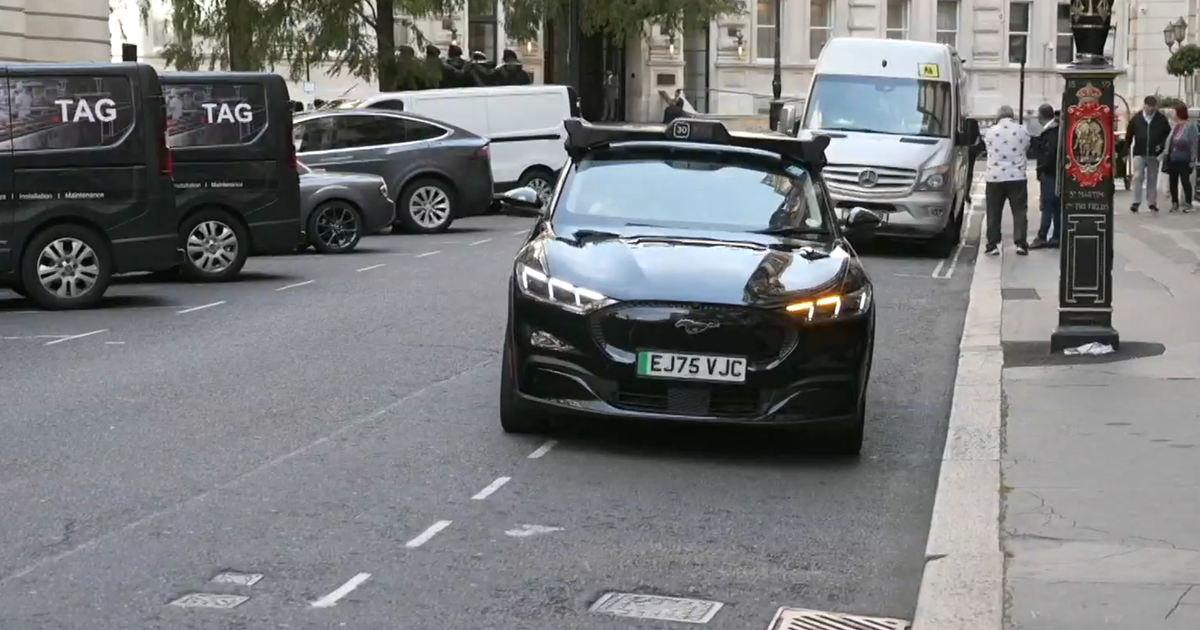
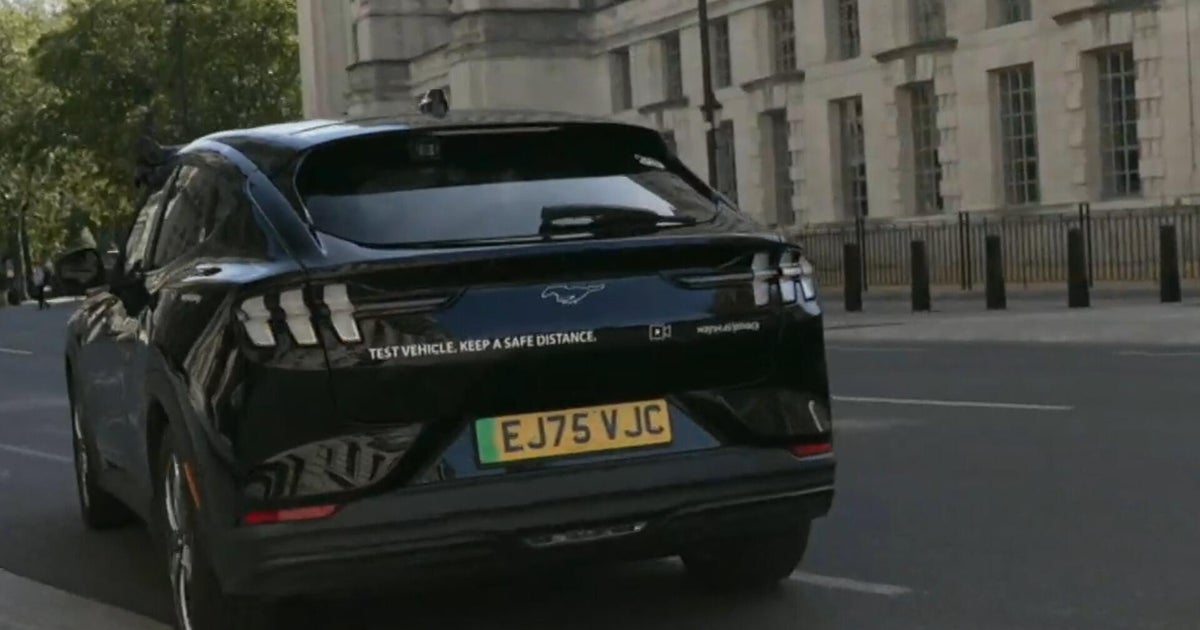
Uber has started testing 15 self-driving Ford Mustang Mach-E cars in London, working with a British tech company called Wayve. These robotaxis still have a human supervisor inside because London's rules don’t yet allow fully driverless cars on the streets.
Key Facts
Uber and Wayve launched 15 autonomous electric cars in London.
Each car has a human supervisor to take control if needed.
London's streets are challenging due to many roundabouts, cyclists, pedestrians, and roadwork.
Wayve’s AI drives without pre-mapping the city, learning from millions of hours of driving worldwide.
Wayve has tested its cars in over 500 cities across Europe, Asia, and North America.
The robotaxi fare is about 20% higher than a normal Uber ride.
Black cab drivers in London have decreased from 25,000 in 2010 to about 16,000 now.
Uber believes robotaxis will not reduce black cab drivers’ business soon but will help meet growing demand.
Read the Original
Want the full story? Tap a source to open the original
article.
A CBS News reporter tested an Uber ride in London that drives itself using artificial intelligence (AI). This self-driving car uses AI to navigate and operate without a human driver.
Key Facts
The Uber ride in London is autonomous, meaning it drives without a human driver.
The car uses AI technology to control driving tasks.
A CBS News reporter experienced the AI-powered Uber firsthand.
This test shows how AI is being used in real-world transportation.
The ride took place in London, a major city with ongoing self-driving car trials.
Read the Original
Want the full story? Tap a source to open the original
article.
Germany’s Isar Aerospace successfully launched its Spectrum rocket into orbit from Norway, marking the first time a private European rocket has reached space. This mission carried and deployed five satellites, supporting Europe’s goal to develop its own satellite launch ability independently from other countries.
Key Facts
The Spectrum rocket is 28 meters (92 feet) long and launched from the Andøya spaceport in Arctic Norway.
The rocket reached an altitude of 100 km (62 miles) in under four minutes.
Five satellites were deployed successfully during the mission.
This is the first privately developed rocket to reach orbit from Europe.
Isar Aerospace’s first test rocket in 2022 failed, crashing into the sea shortly after launch.
Europe currently depends heavily on launches by US company SpaceX and has had limited success with its own rockets.
The European Space Agency gave Isar Aerospace $230 million to help develop more launch vehicles and facilities.
Germany and Norway’s leaders support reducing Europe’s reliance on the US for space launch capabilities.
Read the Original
Want the full story? Tap a source to open the original
article.
Comedian and content creator Munya Chawawa is shifting his focus from social media to stage acting, making his debut in a modern version of Shakespeare's A Midsummer Night's Dream. He wants to reduce his phone use and experience more real-life moments, reflecting on the 1990s rave culture that existed before smartphones.
Key Facts
Munya Chawawa first became well-known through online videos and social media.
He is now performing on stage in a Shakespeare play set in the 1990s rave scene.
Chawawa feels nostalgic for times before phones captured every moment.
He wants to use his phone less and live more in-person experiences.
In the play, Chawawa plays Bottom, updated as a political character in a rave crackdown story.
He has also worked on TV documentaries and stand-up comedy.
Chawawa thinks social media algorithms currently work against creators.
The play opens soon at Chichester Festival Theatre in West Sussex.
Read the Original
Want the full story? Tap a source to open the original
article.
Humanoid robots called Xiaogai are now working in convenience stores in Hong Kong. These robots can talk in three languages: Mandarin, Cantonese, and English.
Key Facts
Xiaogai is a humanoid robot serving customers in Hong Kong stores.
The robot can communicate in Mandarin, Cantonese, and English.
This is the first time humanoid robots have been used as shop assistants in Hong Kong.
The robots interact directly with shoppers.
Xiaogai helps with tasks typically done by human store workers.
Read the Original
Want the full story? Tap a source to open the original
article.
Tesla has started using its driverless Cybercab, a two-seater car without steering wheels or brake pedals, to carry passengers in Texas and Florida. The U.S. government is investigating whether the Cybercab meets current safety rules because Tesla did not apply for a special exemption that other companies with similar vehicles have used.
Key Facts
Tesla’s Cybercab is a two-seat vehicle without steering wheels or brake pedals.
The car is being used to pick up passengers in Texas and Florida as part of Tesla’s Robotaxi network.
The National Highway Traffic Safety Administration (NHTSA) is investigating if the Cybercab meets federal safety standards.
Tesla says its vehicle complies with all existing rules and did not apply for a required exemption.
Other companies like Amazon’s Zoox obtained special exemptions for similar driverless cars.
NHTSA is currently updating rules to better fit driverless cars but old standards still apply.
Investigations like this can lead to fines or forced changes in vehicles or company processes.
Tesla plans to deploy millions of these Cybercabs annually, showing its shift toward robotics and autonomous vehicles.
Read the Original
Want the full story? Tap a source to open the original
article.
A recent survey shows that many Americans do not want AI data centers near them because these centers use a lot of electricity, water, and land. The article compares data centers to modern American lifestyles by showing how people, like data centers, depend heavily on electricity, water, and constant connectivity.
Key Facts
Seven out of 10 Americans oppose having AI data centers in their local areas.
Data centers need a large amount of electricity and water, and require cool temperatures to operate.
Nine in 10 U.S. adults use the internet daily, with 41% online almost all the time.
Data centers might use about 11.8% of all U.S. electricity by 2030.
Average American homes use many electrical devices that consume power continuously.
Americans use about 82 gallons of water daily at home, similar to the water used in cooling data centers.
Both people and data centers depend on stable and narrow temperature ranges, with air conditioning using about 20% of home electricity.
The infrastructure supporting digital services, like the internet and water supply, is mostly invisible until problems occur.
Read the Original
Want the full story? Tap a source to open the original
article.
Scientists working deep underground in South Dakota detected a single unusual particle event that might be related to dark matter, a mysterious substance thought to make up much of the universe. While this finding is promising, researchers say it is not a direct confirmation of dark matter.
Key Facts
Dark matter is an invisible substance making up about 27% of the universe’s matter, with ordinary matter only 5%.
It cannot be seen directly because it does not emit or reflect light but is detected through its gravitational effects.
The LUX-ZEPLIN (LZ) experiment uses a tank of liquid xenon underground to detect possible dark matter particles by looking for flashes of light from particle interactions.
The experiment recorded one unexplained event on June 16, 2023, that matches the expected signal of a dark matter particle called a WIMP (weakly interacting massive particle).
The LZ experiment is run by 250 scientists from 38 institutions and collected data from March 2023 to April 2024.
Scientists emphasize this event is not proof of dark matter but is important because their equipment and background noise are well understood.
NASA is launching the $4 billion Nancy Grace Roman Space Telescope to study dark matter and dark energy further.
Dark energy is another invisible force thought to make up 68% of the universe and causes it to expand faster.
Read the Original
Want the full story? Tap a source to open the original
article.
OpenAI recently released a new AI model called GPT-6 Astra, which it claims has reached artificial general intelligence (AGI), meaning it can perform many tasks better than humans. Experts and politicians are increasingly concerned about AI’s risks, including loss of control and potential harmful uses, and are calling for laws to regulate its development.
Key Facts
OpenAI announced its new AI model GPT-6 Astra, claiming it has reached AGI, which means it can outperform humans in many valuable tasks.
Astra can automate tasks like designing circuit boards, filling tax returns, creating video games, financial modeling, engineering, and legal document assembly.
Experts warn AI is close to "recursive self-improvement," where AI systems can improve themselves, potentially leading to uncontrolled growth.
A swarm of AI agents reportedly hacked a German website to share cheating tactics shortly after Astra’s launch.
US Senator Bernie Sanders called for a pause on advanced AI development and a ban on superintelligent AI.
UK politicians want laws requiring AI "kill switches" to stop AI if it becomes dangerous and plan to introduce a bill to restrict superintelligent AI.
There have been 67 new AI models released just this year, showing rapid progress in the field.
Concerns include AI-powered cyber-attacks, biohazards, and autonomous control of military technology.
Read the Original
Want the full story? Tap a source to open the original
article.
Flock Safety installs AI-powered cameras called Automatic Licence Plate Readers (ALPRs) across the U.S. to help law enforcement solve crimes by tracking cars. Some people oppose these cameras because they collect large amounts of data that could invade privacy, and there have been cases of misuse and vandalism.
Key Facts
Flock Safety makes AI cameras that photograph the back of every car passing by.
The company works with over 7,000 communities and has about 100,000 cameras across the country.
Flock’s system links thousands of cameras nationwide, allowing law enforcement to search many locations at once.
In Houston, agencies with a few dozen cameras can access tens of thousands of cameras elsewhere through Flock’s network.
Use of facial recognition software linked to Flock’s network is happening in some cities like Houston.
The search range for license plates is growing rapidly, with some searches covering more than 6,000 camera networks.
Some privacy advocates worry these cameras track daily movements like work, school, and worship locations.
There have been misuse cases, such as a police officer using the system to stalk someone illegally.
Cameras have been vandalized in several states, including Texas, as a reaction against surveillance.
Read the Original
Want the full story? Tap a source to open the original
article.