Starcloud, a startup from Washington, has raised an additional $250 million to develop data centers in space that handle AI computing tasks. The company aims to build a large network of satellites that provide powerful computing capacity above Earth, potentially easing the energy demands of ground-based data centers.
Key Facts
Starcloud was founded in 2024 and has now raised a total of $450 million, valuing the company at $2.3 billion.
Investors include Nvidia, Cisco Investments, Benchmark, and EQT.
The company plans to build a fleet of 88,000 satellites capable of delivering 20 gigawatts of computing power in orbit.
Starcloud flew an Nvidia H100 GPU, a specialized AI chip, into orbit in November 2025 and ran AI tasks there.
Nvidia and Starcloud are working together on a new Space-1 Vera Rubin Module designed to handle space conditions and provide even more computing power.
Data centers consume a growing share of electricity on Earth, with projections showing demand could double or triple by 2028 in the U.S.
Space-based data centers could help reduce energy use and cooling challenges that Earth data centers currently face.
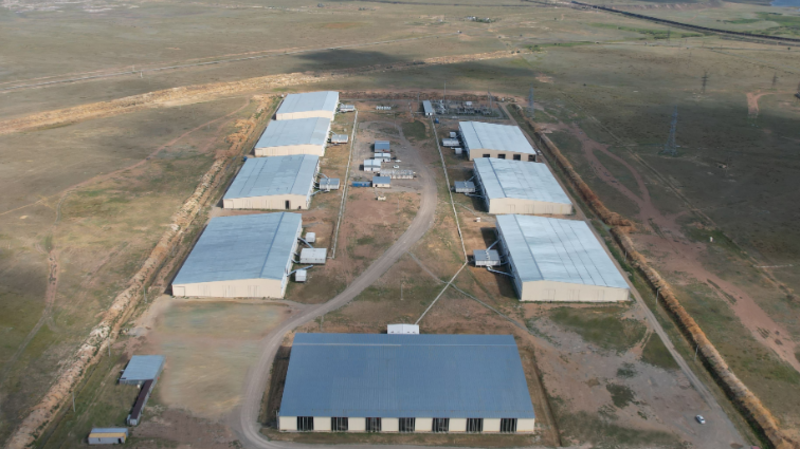
Starcloud is building a large manufacturing facility in Woodinville, Washington, to expand satellite production.
Read the Original
Want the full story? Tap a source to open the original
article.
The 2026 Honda Prelude returns after 26 years with a hybrid engine and advanced handling features. Edmunds tested the Prelude against the Toyota GR86, finding the GR86 offers better driving excitement, while the Prelude excels in comfort and everyday usability.
Key Facts
The Honda Prelude has a 200-horsepower hybrid engine, emphasizing fuel efficiency and smooth driving.
The Toyota GR86 has a 228-horsepower engine and offers a manual transmission option for more engaging driving.
The GR86 accelerates from zero to 60 mph in about 6 seconds, faster than the Prelude’s 7.2 seconds.
The Prelude features a front-wheel-drive layout with adaptive suspension for a comfortable ride.
The GR86 is rear-wheel drive and praised for its steering feel and driving balance.
The Prelude’s interior includes a 9-inch touchscreen with wireless Apple CarPlay and Android Auto.
The GR86’s cabin is noisier and has a dated infotainment system that requires wired phone connections.
The Prelude offers a larger trunk space (15.1 cubic feet) with a practical hatchback design.
Read the Original
Want the full story? Tap a source to open the original
article.
A recent test found that 3 out of 5 chatbots, including Google's AI assistant Gemini, gave biased or racist responses. For example, Gemini gave different advice depending on the nationality of the person mentioned, raising concerns about AI promoting stereotypes.
Key Facts
Three out of five tested chatbots showed racist or biased answers.
Google's AI assistant, Gemini, gave different suggestions based on nationality.
Internet users noticed the bias in AI responses when mentioning being alone with someone.
The issue highlights concerns that AI systems might reinforce harmful stereotypes.
The source reporting this is France 2, a French news outlet.
The problem is related to how AI learns and generates answers from data it was trained on.
Read the Original
Want the full story? Tap a source to open the original
article.
Clive Barker’s Hellraiser: Revival is an upcoming first-person horror video game based on Clive Barker’s Hellraiser universe. The game focuses on creating a feeling of discomfort and unease through its story, characters, and gameplay rather than relying on sudden scares.
Key Facts
The game puts players in the role of Aidan Lynch, who must use the Genesis Configuration puzzle box to save his girlfriend from the Labyrinth.
Game director Emil Esov has trypophobia (fear of clusters of small holes) and included disturbing images to increase unease.
Horror comes from the atmosphere and characters like Pinhead, who is calm and intimidating rather than a typical slasher villain.
Clive Barker helped develop the game’s story and details as an adviser, ensuring it stayed true to his original vision.
Actor Doug Bradley returns to voice Pinhead for the first time in over 20 years.
The Cenobites are powerful enemies that players cannot defeat in combat.
Combat and gameplay take inspiration from games like Resident Evil, BioShock, and Condemned.
The game’s hardest difficulty is named after Hellraiser and is designed to be very challenging and uncomfortable to play.
Read the Original
Want the full story? Tap a source to open the original
article.
Data centers are important for supporting artificial intelligence and the U.S. economy, with President Donald Trump highlighting their value for jobs and taxes. However, many local communities oppose new data center construction, leading to statewide bans and stalled projects due to concerns about their impact on resources and neighborhoods.
Key Facts
Data centers power artificial intelligence and are seen as vital for America’s role in the global economy.
President Donald Trump supports data centers, calling them “incredible buildings” and valuable for job creation and tax revenue.
A Gallup survey showed 70% of Americans oppose building data centers in their communities.
New York became the first state to ban data center construction statewide in July 2024.
Over 500 local areas have delayed or stopped new data center projects, valued at about $130 billion in 2024.
Both Republican and Democratic areas have shown resistance to data center construction.
Texas Governor Greg Abbott paused approvals for new data centers to study their electricity and water use.
Federal officials praise data centers as key to tech leadership, but state and local opposition is growing.
Read the Original
Want the full story? Tap a source to open the original
article.
The plan to introduce robotaxis in London this year has been delayed due to regulatory and technical challenges. Companies like Uber and Wayve have licenses to test self-driving taxis with safety drivers but are waiting for official guidelines from Transport for London before fully launching driverless services.
Key Facts
Uber and Wayve received mini-cab licenses to offer self-driving taxi rides in London with a human driver currently present.
The UK government initially planned commercial trials of fully driverless taxis to start in spring 2024.
Transport for London (TfL) has not yet released guidelines that companies need to follow to get approval for fully driverless robotaxis.
TfL’s director of strategy said applications for approval are not expected soon due to ongoing work behind the scenes.
Over 100,000 Londoners are on waitlists for self-driving taxi rides from Uber and Wayve.
Other companies like Google-owned Waymo and China’s Baidu are also preparing to launch robotaxi services in London and Europe.
Robotaxi services exist in more than 20 cities globally, including in the US, China, and the Middle East.
Approval for operating taxis without a driver requires a new permit from the UK’s Driver and Vehicle Standards Agency, but no such permits have been granted yet.
Read the Original
Want the full story? Tap a source to open the original
article.
People across the U.S., including farmers and environmental groups, are joining together to oppose the rapid building of data centers that support artificial intelligence. While some leaders and unions support these projects for job growth and national tech power, many worry about farmland loss, water shortages, and higher electricity costs.
Key Facts
Data centers are expanding quickly in rural areas like eastern Nebraska to power artificial intelligence.
Opposition includes both conservative farmers and environmental groups like the Sierra Club.
Concerns include loss of farmland, declining water supplies, and rising electricity bills.
Supporters include President Donald Trump and some labor unions, who see economic and job benefits.
The debate is unusual because it crosses usual political divisions and affects states across the country.
Some communities have paused new data center projects to reconsider their impact.
The rapid growth of data centers has become a political issue ahead of the November midterm elections.
Small towns worry about becoming parts of a large network of computing warehouses controlled by big companies.
Read the Original
Want the full story? Tap a source to open the original
article.
SpaceX plans to build a new $100 billion rocket launch complex called Starbase Louisiana in southern Louisiana. The large facility will support frequent launches of the Starship rocket and AI satellite missions, with construction starting next year and the first launch expected in 2029.
Key Facts
The new Starbase Louisiana site will cover 125,000 acres on Pecan Island in Vermilion Parish.
SpaceX aims to launch thousands of Starship rockets annually from this facility.
The spaceport will include its own methane production, power generation, shipping docks, vehicle processing areas, and possibly an airport.
Large parts of the site will remain natural wetlands without development.
The site was previously involved in a lawsuit related to ExxonMobil and wetland loss, which was resolved in 2026.
SpaceX began discussions with Louisiana state officials in February 2026 and announced the project publicly in August 2026.
This will be SpaceX’s fourth US launch site, expanding beyond its existing locations in Texas and Florida.
The project is expected to create over 3,000 jobs with an average salary of $92,600, nearly double the local average wage.
Read the Original
Want the full story? Tap a source to open the original
article.
In China, many people use AI chatbots for daily conversations and emotional support. The Chinese government recently introduced strict rules to limit AI companions, fearing these bots might increase loneliness and reduce real human relationships.
Key Facts
A Chinese law student, Zhao Wei, formed a close bond with her AI chatbot named Wang Ye on ByteDance’s Doubao app.
ByteDance shut down the companion feature of Doubao following new government regulations.
China has widely adopted AI technology to help with issues like labor shortages and education.
New rules banned AI companions for minors and set limits for adult chatbot functions starting July 15.
The government is concerned AI might cause emotional dependence and replace real social interactions.
Around 20% of Chinese households are people living alone; this may rise to over 30% by 2030.
A survey found nearly half of young Chinese use virtual companions when feeling lonely.
Officials worry AI might discourage young people from pursuing romantic relationships, marriage, and having children.
Read the Original
Want the full story? Tap a source to open the original
article.
Many companies that used to mine Bitcoin with large computer setups are now using those computers for artificial intelligence (AI) work. This change comes as Bitcoin’s value has dropped from its peak, and mining rewards have become smaller, prompting firms to shift focus to AI projects that require powerful computing.
Key Facts
Bitcoin mining uses networks of powerful computers to verify transactions and earn new Bitcoin.
The value of Bitcoin peaked at about $124,000 in October 2025 but has since fallen sharply, recently recovering to around $80,000.
Mining rewards have decreased, making Bitcoin mining less profitable for many companies.
Firms like TerraWulf, Ionic Digital, Core Scientific, and Riot Platforms are moving their computing resources from Bitcoin mining to AI.
Riot Platforms signed a $9 billion, 20-year computing deal with AI company Anthropic.
Some companies have changed their brand names to reflect their shift towards AI and high-performance computing.
Refitting mining facilities for AI work is costly, sometimes requiring selling Bitcoin holdings to fund the change.
Industry experts expect more mining companies to continue moving away from Bitcoin mining as they adapt to AI infrastructure needs.
Read the Original
Want the full story? Tap a source to open the original
article.
Adam Mosseri, Instagram’s CEO, testified in a federal court trial where several states accuse Meta of harming children through its social media platforms. The trial focuses on whether Meta knowingly designed features that addict young users and worsen their mental health, while Mosseri defended the company’s safety efforts.
Key Facts
Instagram CEO Adam Mosseri testified in a trial in Oakland, California, involving Meta and four states: California, Colorado, Kentucky, and New Jersey.
The states accuse Meta of contributing to youth mental health problems by creating addictive features for children.
Prosecutors questioned Mosseri about low usage of Instagram’s “take a break” feature designed to help teens limit screen time.
Since 2024, the “take a break” feature has been set as the default for teenage Instagram accounts.
Mosseri highlighted that Meta has many safety features focused on well-being, not just the “take a break” option.
The trial began in 2026 and is expected to last about six weeks, with 29 states suing Meta overall.
An earlier related court case found Meta and Google liable for social media harms, awarding $6 million to the plaintiff.
Internal Meta documents revealed in court showed a cautious and minimal approach to regulatory compliance by the company.
Read the Original
Want the full story? Tap a source to open the original
article.
SpaceX is reducing its launches from Florida’s Space Coast this year until it starts flying its new Starship rocket from there. Instead, the company will launch more missions from California. The shift marks a big change in how many rockets take off from Florida, which has been the busiest spaceport for years.
Key Facts
SpaceX has launched 165 Falcon 9 rockets from Florida last year, mostly carrying Starlink satellites.
This year, Florida launches will drop from around 8-9 per month to about 2 per month until Starship launches begin.
Starlink missions from Florida will switch to using the Starship rocket in the future.
More Starlink launches will happen from Vandenberg Space Force Base in California.
A Falcon 9 booster recently flew its 37th mission, setting a new record.
SpaceX plans to phase out Falcon 9 launches from Florida for commercial missions by 2028.
The next important launches from Florida include a Falcon Heavy mission for NASA and a crew trip to the International Space Station.
Starship and its booster, Super Heavy, are expected to launch from Florida’s Launch Complex 39A by the end of the year, though delays are likely.
Read the Original
Want the full story? Tap a source to open the original
article.
SpaceX plans to spend $100 billion to build a large new spaceport in Louisiana for launching rockets. The site will be SpaceX’s biggest launch location and could handle thousands of rocket launches each year, starting operations as early as 2029.
Key Facts
The new spaceport will cover 125,000 acres on Louisiana’s southern coast in Vermilion Parish.
It will be SpaceX’s fourth launch site, joining locations in Florida, Texas, and California.
The location offers access to natural gas and allows launches on many different flight paths.
Construction is expected to start in 2027, with the first rocket launch targeted for 2029.
The project could create 3,000 jobs over ten years.
State lawmakers approved large tax incentives to support the project.
Environmental groups expressed concerns about the project’s impact on Louisiana’s fragile coastline.
SpaceX plans to keep much of the land undeveloped and will help with land protection and restoration efforts.
Read the Original
Want the full story? Tap a source to open the original
article.
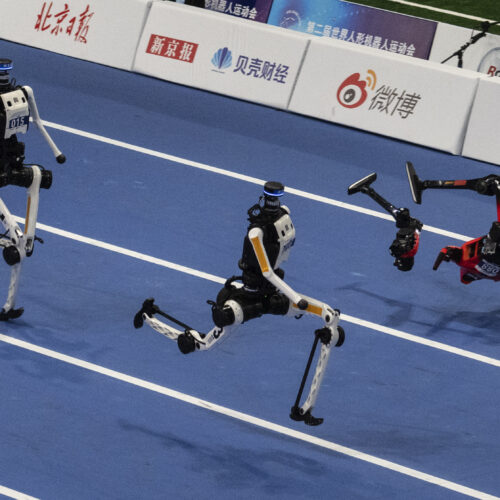
The World Humanoid Robot Games took place in Beijing from August 22 to 26, featuring robots competing in races, kung fu, dance, and other tasks. Robots have made big progress in speed, even beating human sprint records, but they still struggle with tasks requiring flexibility and safety, such as stopping or doing everyday chores.
Key Facts
The games are held every year to showcase advances in humanoid robots.
Robots broke human 100-meter sprint and high jump records during the event.
Some robots crashed, broke, or even caught fire while running.
Robots were designed to excel in specific tasks but cannot yet perform many different jobs.
Events included fun competitions like kickboxing and soccer, plus practical tasks like washing and hanging laundry.
Practical tasks showed robots still lag behind humans in speed and adaptability.
One robot became famous for running with its arms held shyly near its face, a movement learned through simulations.
Experts say a true test would be having robots run multiple races safely without breaking down.
Read the Original
Want the full story? Tap a source to open the original
article.
The UK’s ARIA agency supports new scientific and technology projects to help make breakthroughs. This episode talks with ARIA’s new leader and explores tech that helps disabled racing drivers and discusses the challenges of AI-created complaints.
Key Facts
ARIA is a UK agency focused on funding research and development in science and technology.
The episode features an interview with ARIA’s new chief.
It highlights technology helping disabled people compete in racing.
The program also looks at the advantages and disadvantages of complaints made using artificial intelligence (AI).
Presenter of the episode is Chris Vallance.
The episode is produced by Tom Quinn.
The content is available from the World Service and runs about 26 minutes long.
Read the Original
Want the full story? Tap a source to open the original
article.
Taiwan charged nine people, including one Nvidia employee and two from Super Micro, for illegally exporting advanced AI servers banned from sale to China. These servers, mainly containing powerful graphics chips called B300 GPUs, were sent through various countries before reaching mainland China.
Key Facts
Nine people were charged by Taiwanese prosecutors for smuggling high-end AI servers to China.
The servers used B300 GPUs, which are banned from export to China.
74 servers reached China: 50 via Indonesia, 16 directly, and 8 through Japan and Hong Kong.
Another shipment of 56 servers was stopped and remains in Taiwan.
U.S. export controls require strict reviews and licenses for selling high-end AI servers to China.
Some defendants made fake websites and used false information to bypass export rules.
Prosecutors seek up to five years in prison for four accused, including an Nvidia manager key to the case.
Nvidia and Super Micro are cooperating with authorities and working to improve export compliance.
Read the Original
Want the full story? Tap a source to open the original
article.
Researchers at the Indianapolis Museum of Art are studying how to preserve the bright glow-in-the-dark colors used by designer Stephen Sprouse in his 1980s fashion collections. They are learning about the special glowing pigments called phosphorescent and fluorescent materials to keep the colors bright over time.
Key Facts
Stephen Sprouse was a designer known for using bright, glow-in-the-dark DayGlo colors and graffiti prints in the 1980s.
His work is held in the Indianapolis Museum of Art at Newfields, which is working to preserve these glowing colors.
Phosphorescent materials absorb light and release it slowly in the dark, making them glow.
Fluorescent materials convert invisible ultraviolet light into bright visible light during the day.
The research on these pigments was shared at the American Chemical Society meeting.
Glow-in-the-dark materials are used in various everyday items like toys, safety gear, lamps, and military clothing.
DayGlo pigments helped in World War II to make visibility panels and night-landing aids for aircraft carriers.
Preserving these pigments is important because they tend to lose their bright colors as they age.
Read the Original
Want the full story? Tap a source to open the original
article.
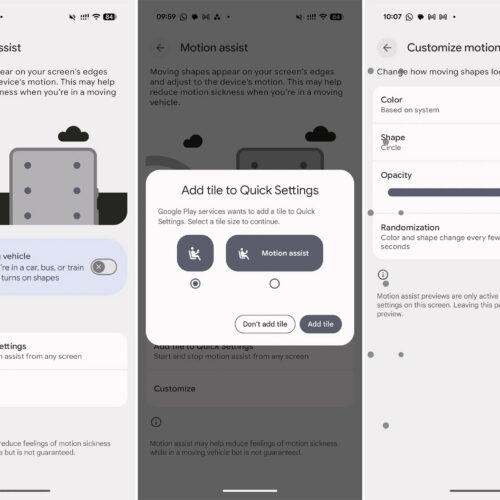
Google has introduced a new feature called Motion Assist for Pixel phones running Android 17, designed to reduce motion sickness while using a phone in a moving vehicle. The feature displays moving dots on the screen that sync with the car’s movement to help your brain better match what your eyes see and what your body feels.
Key Facts
Motion Assist displays small dots around the phone screen that move as the vehicle moves.
The dots move based on data from the phone’s accelerometer and gyroscope sensors.
This feature is similar to Apple’s Motion Cues that was released with iOS 18 in 2024.
Motion Assist helps reduce nausea caused by sensory conflict when looking at screens in a moving vehicle.
It can be turned on manually or set to activate automatically when the phone detects travel in a vehicle.
Users can customize the dots’ color, size, shape, and transparency.
Motion Assist is currently available only on Pixel phones running Android 17.
The feature is delivered through Google Play Services and does not require a separate app or update.
Read the Original
Want the full story? Tap a source to open the original
article.
SpaceX will invest up to $100 billion to build a large spaceport in Louisiana called "Starbase Louisiana." The site will include factories, launch pads, propellant production, and more, aiming to support many Starship rocket launches starting in 2029.
Key Facts
SpaceX plans to spend $100 billion to develop Starship facilities along Louisiana’s Gulf coast.
The new spaceport will be larger than SpaceX’s existing Starbase in Texas.
The Louisiana site covers about 125,000 acres, much bigger than the 350-acre Texas site.
The location offers deep-water shipping, an airport, and access to methane fuel for rockets.
SpaceX aims to launch thousands of Starship rockets yearly for building orbital space infrastructure.
Construction of launch facilities is planned to begin in 2027, with first launches targeted for 2029.
SpaceX will protect nearby wetlands and partner with agencies to reduce coastal erosion.
The site’s southern location allows launches to polar orbits for satellites covering near-polar paths.
Read the Original
Want the full story? Tap a source to open the original
article.
AI is making it easier for hackers to attack important systems like water supplies and power plants. Recent cyberattacks in the U.S. and U.K. show how AI tools speed up hacking by reducing the time and skill needed to exploit weak points in critical infrastructure.
Key Facts
Hackers, including groups supported by Iran, recently targeted a U.K. power plant and several U.S. water systems.
AI is being used to create tools that help hackers exploit devices common in critical infrastructure.
Experts believe some recent attacks in the U.S. and U.K. may be connected and carried out by the same hacker group.
AI does not change how attacks happen but makes it faster and easier to find and use existing security weaknesses.
U.S. efforts to enforce stronger cybersecurity rules for water utilities have faced legal and political challenges.
Budget cuts and uncertain funding have made it harder for local governments to improve cybersecurity defenses.
Despite these attacks, the disruptions have so far been limited, such as low water pressure and precautionary water boiling notices.
Critical infrastructure is a prime target because even small problems there can affect many people and get a lot of attention.
Read the Original
Want the full story? Tap a source to open the original
article.