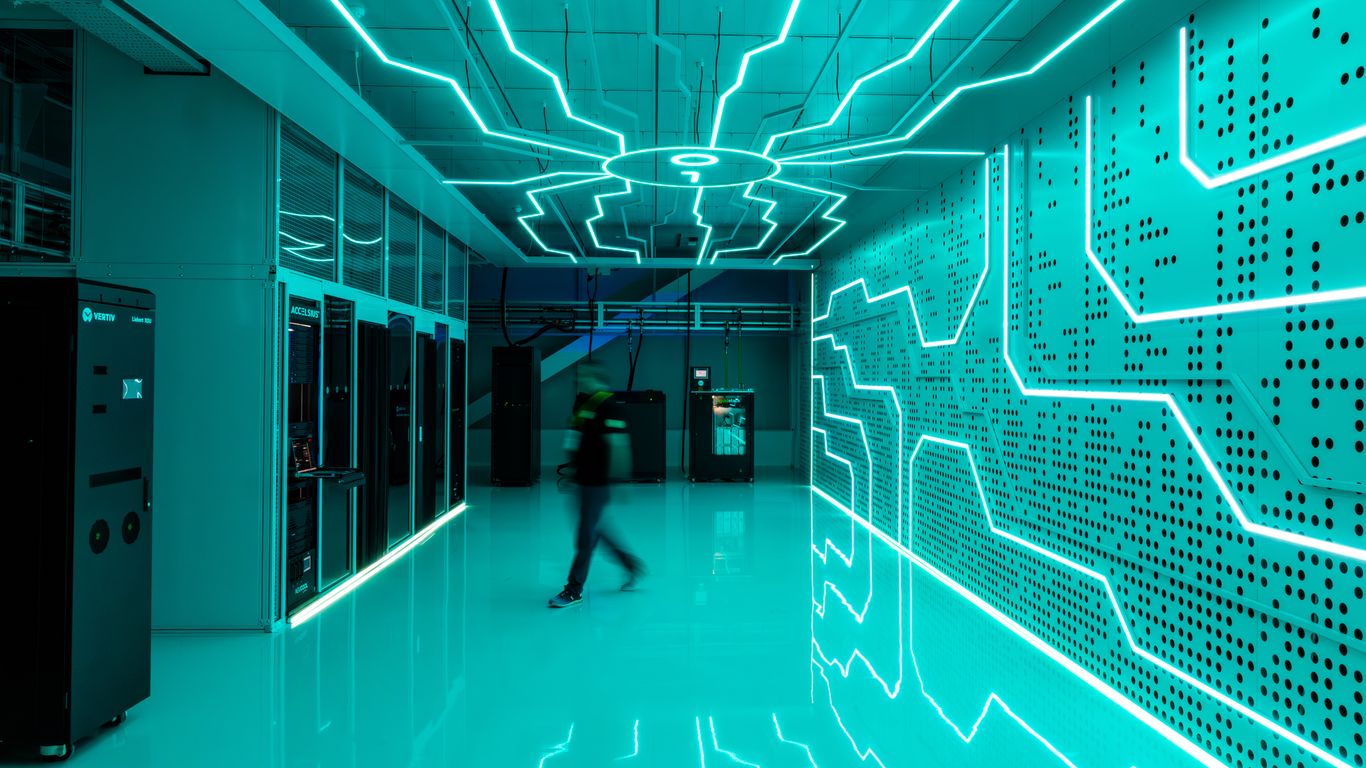
Data centers are large buildings filled with powerful computers that support internet use and AI development. They use a lot of electricity and water for cooling, which has caused public concern and protests in the U.S.
Key Facts
There are about 4,000 data centers in the U.S., with 3,000 more being built or planned.
Data centers are essential for streaming videos, emails, online games, and AI functions.
They consume a significant amount of electricity—globally about 1.5% in 2024, expected to rise to 3% by 2030.
U.S. data centers could use up to 15.3% of the country’s electricity by 2030.
They use about 17 billion gallons of water annually, mainly for cooling the servers.
Some newer data centers reuse water with closed-loop systems to reduce water use.
Public opposition to data centers is strong, with 70% of Americans opposing new ones.
The debate includes concerns about environmental impacts like fossil fuel use and air pollution.
Read the Original
Want the full story? Tap a source to open the original
article.
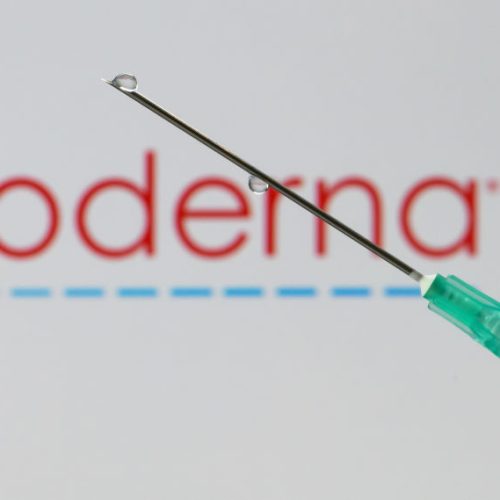
Moderna and Merck announced that their personalized mRNA cancer vaccine, Intismeran, lowered the chance of melanoma returning and spreading in a late-stage trial. The vaccine trains the immune system to fight cancer by targeting mutations in tumor cells.
Key Facts
Intismeran is a personalized mRNA vaccine developed to treat melanoma.
The vaccine showed success in reducing cancer recurrence and spread in a late-stage clinical trial.
Results released are interim; detailed data will be shared at a future medical meeting.
The vaccine was tested alongside Merck’s immunotherapy drug, Keytruda.
If approved, it could help thousands of melanoma patients who had tumors removed by surgery.
Melanoma affected over 1.5 million people in the US in 2023.
The vaccine works by training the patient’s immune system to recognize and attack cancer cells.
This is the first positive late-stage trial result for an mRNA vaccine against cancer.
Read the Original
Want the full story? Tap a source to open the original
article.
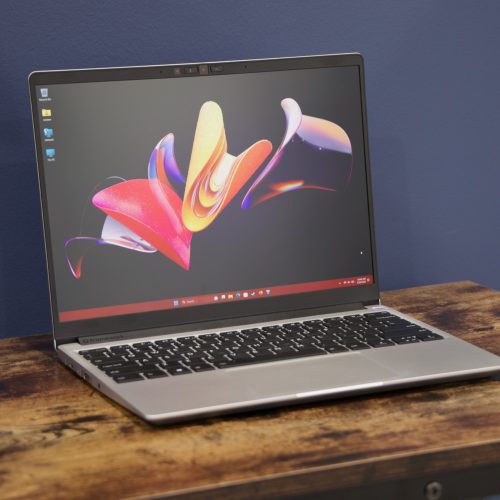
A BIOS update for Framework Laptop 13 models with AMD Ryzen 7040 processors is causing some laptops to stop working. Framework is investigating the problem and has started adding a new recovery feature to prevent future failures. They are also offering motherboard replacements in certain cases where the update caused damage.
Key Facts
Framework shipped Ryzen 7040-based Laptop 13 models and motherboards starting in 2023.
BIOS version 3.20 was released in June 2026 to support new hardware features and fix some battery-related issues.
Many users experienced the update stalling and their laptops becoming unbootable, also called “bricked.”
Framework admits a small number of BIOS updates caused non-bootable laptops and is investigating the cause.
Some users reported that Framework support initially refused free motherboard replacements if the device was out of warranty.
Framework now offers exceptions for replacements if the update caused the problem, even after warranty expiration.
The company is developing a “Crisis Recovery Mode” to help recover from failed BIOS updates in future releases.
Blogger Guanzhong Chen suggested the issue is a software bug related to how the BIOS flashes memory during updates.
Read the Original
Want the full story? Tap a source to open the original
article.
Google won an auction to buy a large set of Spirit Airlines employee data, including emails and workplace records. The data will be anonymized to hide personal details, but former Spirit flight attendants are concerned that their private information might still be revealed or misused.
Key Facts
Google purchased a large amount of Spirit Airlines employee data, but no customer personal information.
The data includes about 100 million employee emails, HR details, payroll, and work behavior data.
A court-appointed overseer will ensure any personal information is removed before Google receives the data.
Google promised not to try to re-identify the data or let third parties do so.
The data sale came after Spirit Airlines went bankrupt and auctioned off company data.
Former Spirit flight attendants and their union objected, fearing that the privacy protections focus only on customers, not workers.
Privacy groups worry that using this data for new purposes, like training AI, happens without worker consent.
Google won the auction with a $10 million bid and agreed to have a third party handle data scrubbing, beating rival bidders.
Read the Original
Want the full story? Tap a source to open the original
article.
The Federal Communications Commission (FCC) has removed the goal of providing gigabit-speed internet across the U.S., saying the target is unfair to slower internet technologies. Instead, the FCC now considers current internet speeds of 100 Mbps download and 20 Mbps upload as acceptable for judging broadband availability.
Key Facts
The FCC ended the previous goal of 1,000 Mbps (1 gigabit) download and 500 Mbps upload speeds for broadband.
This change was finalized on August 14 in the FCC’s broadband deployment report.
The FCC stated the gigabit goal was not "technologically neutral" because it favored fiber internet over slower services like satellite and wireless.
The updated benchmark for broadband speed is now 100 Mbps download and 20 Mbps upload.
The FCC’s decision was supported by industry groups representing cable and wireless providers.
Democratic Commissioner Anna Gomez disagreed, saying standards should remain high and consistent for all technologies.
The change does not affect government grant programs that require gigabit speeds for funded internet projects.
The FCC must report on whether internet is being deployed quickly enough nationwide and take action if it isn’t.
Read the Original
Want the full story? Tap a source to open the original
article.
A LinkedIn study found that women make up a small share of new hires for AI jobs in the U.S., even though these jobs pay much more than other technology roles. Women hold fewer leadership positions in AI globally and are more likely to work in jobs that AI may replace, highlighting a growing gender gap in the AI field.
Key Facts
Women made up just 26% of new hires for AI jobs in the U.S., compared to 50% in non-AI tech roles.
AI jobs typically offer salaries around $177,000, more than double the $80,000 average for non-AI tech roles.
Since 2023, the number of AI job postings on LinkedIn has doubled.
Globally, women hold only 13% of leadership roles in AI firms, lower than the 20% in broader tech leadership.
Women are more likely to have jobs at risk of being changed or replaced by AI, such as clerical and administrative work.
Most workers in AI-vulnerable roles (86%) are women, according to The Brookings Institution.
LinkedIn suggests that hiring based on skills instead of formal degrees could increase women's participation in AI jobs.
Online courses and public AI tools make it easier to gain AI skills without traditional education or job experience.
Read the Original
Want the full story? Tap a source to open the original
article.
NASA stopped trying to save the Neil Gehrels Swift Observatory, a space telescope losing its orbit. The mission to move the satellite to a safer orbit failed, but NASA will still gather information to improve future satellite rescue missions.
Key Facts
The Neil Gehrels Swift Observatory is a space telescope falling into an unstable orbit around Earth.
NASA tried to save it using a privately built spacecraft called LINK to grab and move it to a higher orbit.
LINK experienced control problems, leading NASA to cancel the rescue attempt.
Swift cannot raise its orbit by itself because it has no propulsion system.
Despite the failure, LINK will still approach Swift to learn about satellite relocation.
NASA sees value in the mission for future satellite servicing efforts.
Swift is expected to burn up in Earth's atmosphere later this year.
NASA will keep using other missions to monitor cosmic events while Swift is lost.
Read the Original
Want the full story? Tap a source to open the original
article.
NASA ended its effort to save the Swift space telescope after the rescue spacecraft, Link, had control problems. The telescope, which has studied cosmic explosions for over 20 years, will reenter Earth’s atmosphere and be destroyed later this year.
Key Facts
NASA hired Katalyst Space Technologies to send a rescue spacecraft called Link to boost the Swift telescope to a safer orbit.
The Link spacecraft launched in early July but began spinning uncontrollably soon after.
Despite efforts to control Link, it continued having problems with aiming and positioning in space.
NASA stopped the rescue attempt and said Swift will fall back to Earth and burn up.
Swift launched in 2004 and tracked phenomena like gamma ray bursts and exploding stars.
NASA paid $30 million for the rescue mission to extend Swift’s orbital life.
The mission was risky and done quickly, taking less than a year to prepare.
The Link spacecraft will still fly near Swift to test future space rescue techniques.
NASA’s Hubble Space Telescope, also losing altitude, might be the next candidate for an orbital boost rescue.
Read the Original
Want the full story? Tap a source to open the original
article.
China has made progress in reusable rocket technology with a company called LandSpace successfully landing the first stage of its Zhuque-3 rocket on land, 40 days after another Chinese rocket booster was recovered at sea. This marks China's first successful on-land recovery of an orbital-class rocket stage and shows growing activity in reusable rockets within China.
Key Facts
LandSpace successfully launched and landed the first stage of its Zhuque-3 rocket on August 19, 2026.
This was China’s first successful booster recovery on land using landing legs.
Another Chinese rocket, Long March 10B, had earlier achieved a successful booster recovery by catching it in a net on an offshore platform.
The Zhuque-3 rocket launched from Jiuquan Satellite Launch Center in the Gobi Desert.
The rocket is powered by nine methane-fueled engines and is made of stainless steel.
LandSpace made design changes after a previous crash landing to improve the landing phase and heat shield protection.
China has several companies, both state-owned and private, developing reusable rockets.
The success follows similar efforts by US companies like SpaceX and Blue Origin in reusable rocket technology.
Read the Original
Want the full story? Tap a source to open the original
article.
Hackers attacked French government computers in June and July, stealing data from tax and land registry systems. The stolen information includes financial and property details from hundreds of thousands of individuals and businesses. The French government is responding by improving cybersecurity and using artificial intelligence tools to protect against future attacks.
Key Facts
Two cyberattacks targeted the French tax authority’s systems in June and July 2026.
Over 678,000 tax accounts and 200,000 land registry accounts were compromised.
The stolen data includes names, income data, tax rates, and property ownership details.
A hacking group called ZeroBytes claimed responsibility and said they sold some stolen data for thousands of euros.
The hackers also claimed they obtained information on millions of students and tens of thousands of teachers.
France’s Prime Minister asked the National Cybersecurity Agency to create a new unit to fight cyberattacks.
The French government plans to use AI tools to test cybersecurity but will only work with domestic AI providers, excluding US companies like OpenAI.
Earlier in April, another large cyberattack affected the French identity document agency, impacting nearly 12 million people’s data.
Read the Original
Want the full story? Tap a source to open the original
article.
NASA says that experts and space enthusiasts have found the place where a rocket hit the Moon. They used images and data to pinpoint the exact crash site.
Key Facts
NASA is the U.S. space agency responsible for space exploration.
A rocket impacted the Moon, but its exact location was unknown at first.
Both professional scientists and amateur space fans helped find the impact spot.
They used photographs and other information to identify the site.
This discovery helps NASA learn more about the Moon and space missions.
Read the Original
Want the full story? Tap a source to open the original
article.
NASA astronauts Jessica Meir and Jack Hathaway, living on the International Space Station (ISS), shared their experiences of seeing space events like eclipses and auroras. They missed the full solar eclipse but enjoyed watching the northern and southern lights, which appeared very bright due to recent solar activity.
Key Facts
Jessica Meir and Jack Hathaway have been aboard the ISS for six months.
They saw a partial solar eclipse from space but could not see the full eclipse because of the station’s position.
They hope to observe the upcoming lunar eclipse while in orbit.
The northern and southern lights (auroras) were especially bright due to a strong solar plasma blast.
Meir described seeing a bright green aurora close beneath the ISS, lighting up the station’s exterior.
Astronauts also enjoy activities like cooking on the station, with a special cooking series called “Chez ISS.”
Meir performed music prerecorded in space for a July 4 celebration.
The crew includes Americans, Russians, and a French astronaut, and they will return to Earth via SpaceX soon.
Read the Original
Want the full story? Tap a source to open the original
article.
U.S. security agencies have warned about active cyberattacks using artificial intelligence (AI) to target important systems that control water and other utilities. The warning says hackers focus on Siemens programmable logic controllers (PLCs), which manage industrial processes, and that weak security on these devices could cause serious problems.
Key Facts
Multiple U.S. security agencies issued a warning about ongoing cyber threats using AI tools.
The attacks target Siemens S7 Series programmable logic controllers (PLCs) used in infrastructure.
PLCs are devices that control industrial systems like water treatment, energy, and chemicals.
Hackers use AI-generated scripts disguised as normal monitoring tools to find vulnerable PLCs exposed online.
Outdated or poorly protected PLCs are the main targets for these cyberattacks.
Exploiting these systems could disrupt critical processes, cause safety issues, damage equipment, or lead to data breaches.
The Cybersecurity and Infrastructure Security Agency (CISA) published an advisory urging PLC owners to apply security fixes.
This threat affects multiple sectors including energy, water, wastewater, chemical, and commercial facilities.
Read the Original
Want the full story? Tap a source to open the original
article.
President Donald Trump will speak at the White House about improving U.S. innovation and leadership in technology. Leaders from crypto companies like Ripple and Coinbase will attend the event, which marks the start of the Commodity Futures Trading Commission (CFTC) Innovation Advisory Committee.
Key Facts
President Trump will deliver remarks on U.S. technology innovation.
The event is held at the White House on a Wednesday afternoon.
CEOs from crypto companies Ripple and Coinbase will be present.
The event signals the launch of the CFTC Innovation Advisory Committee.
The committee advises on new technology and market developments related to commodities and financial products.
The focus is on strengthening American technology leadership and innovation.
Read the Original
Want the full story? Tap a source to open the original
article.
Wildwood is a new stop-motion animated fantasy film directed by Travis Knight and produced by Laika Studios. The movie, based on a 2011 novel by Colin Meloy and Carson Ellis, tells the story of a girl named Prue who enters a magical forest to rescue her kidnapped baby brother. The film features advanced animation techniques with hundreds of sets and puppets and will be released in theaters on October 23, 2026.
Key Facts
Wildwood is a stop-motion animated fantasy movie directed by Travis Knight.
The story is adapted from a 2011 novel by Colin Meloy and Carson Ellis.
The film follows 12-year-old Prue McKee who enters a magical forest to find her baby brother.
Laika Studios created the film, using 136 sets and 231 practical puppets.
The animation includes some visual effects (VFX) to enhance scenes.
The main voice actors include Peyton Elizabeth Lee, Jacob Tremblay, and Carey Mulligan.
The movie will premiere in theaters on October 23, 2026.
The film features a musical cover of Avicii’s song “Wake Me Up.”
Read the Original
Want the full story? Tap a source to open the original
article.
Moderna and Merck announced that their personalized mRNA-based vaccine, combined with Merck’s cancer drug Keytruda, helped patients with melanoma, a serious skin cancer, live longer without the cancer coming back. This was shown in a large Phase 3 clinical trial involving over 1,100 patients, and the treatment led to significant improvements in cancer-free survival time.
Key Facts
The vaccine is tailored to each patient’s own cancer mutations using synthetic mRNA.
The trial included 1,137 patients with stage IIB to IV melanoma who had surgery before treatment.
Patients were randomly assigned to get either the vaccine plus Keytruda or Keytruda alone.
The study was double-blind; neither patients nor doctors knew who got which treatment.
Results showed the combination extended time without cancer returning (recurrence-free survival) and without spread to other body parts (distant metastasis-free survival).
A previous Phase 2 trial showed nearly half reduction in risk of cancer returning or death.
The vaccine works by training the immune system to recognize and attack cancer-specific proteins.
Moderna’s CEO called this a key step forward for personalized cancer treatment using mRNA technology.
Read the Original
Want the full story? Tap a source to open the original
article.
Google has released the Pixel 11 series, their latest smartphones featuring small design changes and improved software. The series includes three flat phones and a foldable model, using the new Google Tensor G6 chip and Android 17 software.
Key Facts
The Pixel 11 series includes four models: Pixel 11, Pixel 11 Pro, Pixel 11 Pro XL, and Pixel 11 Pro Fold.
All models use the Google Tensor G6 processor and run Android 17.
Screen sizes range from 6.3 inches to 8 inches (foldable model unfolded), with OLED displays and refresh rates from 60Hz up to 120Hz.
Camera setups vary, with the Pro models having higher resolution sensors and multiple lenses including ultra-wide and telephoto.
Battery capacities range from about 4,800 mAh to 5,115 mAh with wired charging speeds up to 45W depending on the model.
Connectivity features include Wi-Fi 6E or Wi-Fi 7, Bluetooth 6, NFC for contactless payments, and 5G support.
The design has changed very little from last year, with slightly slimmer dimensions and minor weight adjustments.
Prices start at $899 and go up to $1,899 for the foldable Pro model.
Read the Original
Want the full story? Tap a source to open the original
article.
Meta ran ads for an app called Kromix, which promised to create AI-generated pornographic videos of female U.S. politicians without restrictions. The app allowed users to upload photos to make deepfake adult content, violating Meta's rules against sexual and nonconsensual imagery. Meta removed the ads after they were reported.
Key Facts
The app Kromix advertised itself as an "AI image styler" with "no restrictions" on use.
Ads showed videos of women resembling female U.S. politicians in adult content scenarios.
Kromix invited users to upload photos for creating explicit AI-generated videos, including violent and sexual themes.
The app was available on Apple’s App Store before media inquiries, despite Apple’s rules against such content.
San Francisco’s city attorney demanded removal of similar apps aiding nonconsensual explicit images.
Meta’s ad system uses automated tools to review ads before they run on Facebook and Instagram.
The Kromix ads targeted male users and ran for a short time with minimal views before removal.
Female politicians have been frequent targets of deepfake and nonconsensual AI-generated sexual images.
Read the Original
Want the full story? Tap a source to open the original
article.
OpenAI is releasing a new version of its ChatGPT designed specifically for teenagers. This version includes features to help respond to situations involving self-harm and suicide when users mention these topics.
Key Facts
OpenAI is updating ChatGPT to create a version suited for teens.
The new version can recognize when a user talks about self-harm or suicide.
It provides appropriate responses to support users in these situations.
The goal is to make the chatbot safer and more helpful for younger people.
Rebecca Bellan, a reporter from TechCrunch, shared details about these new tools.
This update is part of OpenAI’s effort to improve chatbot safety and mental health support.
Read the Original
Want the full story? Tap a source to open the original
article.
President Trump will hold a meeting with leaders from the cryptocurrency and technology sectors to discuss America’s innovation and technological leadership. Officials from prediction market companies were not invited to this event.
Key Facts
President Trump is hosting a White House event focused on technology and innovation.
Cryptocurrency and other tech leaders will attend the meeting.
Prediction market companies will not participate in the event.
The purpose of the event is to strengthen America’s position in technology.
The White House confirmed these details to Politico.
The meeting is scheduled for Wednesday.
Prediction markets are platforms where people bet on the outcome of future events.
Read the Original
Want the full story? Tap a source to open the original
article.