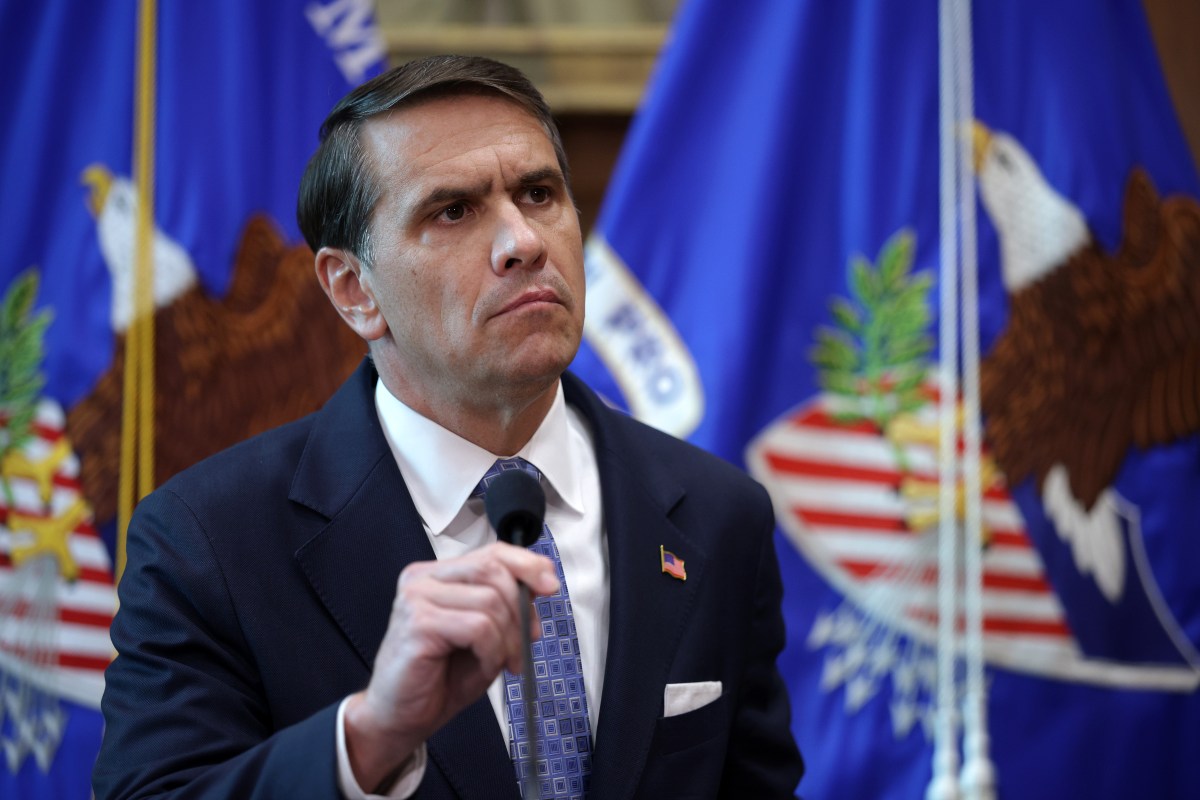
Marco Rubio, who holds several official jobs in President Trump’s administration, became popular online through “Rubio Realizing” memes showing his serious reactions to taking on more roles. For his 55th birthday, the White House gave him a framed collage of these memes, which have helped boost his image with voters.
Key Facts
Marco Rubio holds three official jobs and unofficially is known for being a viral meme star.
The “Rubio Realizing” memes show his serious expression when assigned new tasks in the Trump administration.
For Rubio’s 55th birthday on May 28, President Trump and White House staff gave him a gold-framed collage of 68 favorite memes.
The memes started from a photo taken during a tense Oval Office meeting with Ukrainian President Zelensky on February 28, 2025.
The memes have made Rubio appear more popular and serious to voters, according to political observers.
Rubio has said he does not plan to run for president in 2028 and will endorse Vice President Vance if he runs.
President Trump wants Vance to choose Rubio as his running mate, but no deep discussions about the race have happened yet.
Rubio has joked about wanting more government jobs and has said he initially disliked the meme photo but now finds the meme funny.
Read the Original
Want the full story? Tap a source to open the original
article.
President Donald Trump is moving forward with large construction and renovation projects in Washington, D.C. The cost for the White House-related projects is now estimated at $900 million, with taxpayers paying a large part, even though Trump earlier said private donors would pay most of the expenses.
Key Facts
President Trump is leading major building and renovation work in Washington.
The cost for these White House projects is about $900 million.
Taxpayers are funding a large portion of this money.
Trump previously promised that private donors would pay most costs.
The projects aim to reshape parts of Washington, D.C.
The report comes from White House correspondent Liz Landers.
Read the Original
Want the full story? Tap a source to open the original
article.
A U.S. appeals court dismissed a case that challenged President Trump’s use of the Alien Enemies Act to deport alleged Venezuelan gang members. The court did not decide if the law was used correctly because the plaintiffs were already deported.
Key Facts
The case involved alleged members of Venezuela’s Tren de Aragua gang and the MS-13 gang.
These individuals were deported to El Salvador by the U.S. government.
The legal challenge questioned the use of the Alien Enemies Act, a wartime law.
The U.S. Court of Appeals for the 5th Circuit dismissed the case on August 13, 2026.
The dismissal happened because the plaintiffs had already been deported, so the court did not rule on the law’s application.
The Alien Enemies Act is an old law that allows the U.S. to remove foreign nationals considered a threat during wartime.
The case related to actions taken during President Trump’s administration.
The story is still developing with further updates expected.
Read the Original
Want the full story? Tap a source to open the original
article.
A journalist sued the Justice Department, saying it broke a transparency law about records on Jeffrey Epstein and related investigations. A judge heard the case, and the Justice Department has not yet met several legal requirements, including sharing a detailed list of document redactions and releasing all relevant materials linked to President Donald Trump.
Key Facts
Journalist Katie Phang sued the Justice Department for not following the Epstein Files Transparency Act.
The law was signed by President Donald Trump in 2025 to make Epstein-related records public.
The Justice Department has not published a required redaction log explaining why parts of documents were hidden.
The department has not released some foreign-language documents or all records related to Trump.
Some FBI interview notes about Trump, which were given to attorneys in another case, were not publicly released.
The lawsuit describes the Justice Department’s response as delays and failure to comply with the law.
The U.S. District Judge Emmet Sullivan held a hearing on the case and appears aware of the department’s delays.
The case continues as Phang’s legal team plans to request court actions to enforce the law.
Read the Original
Want the full story? Tap a source to open the original
article.
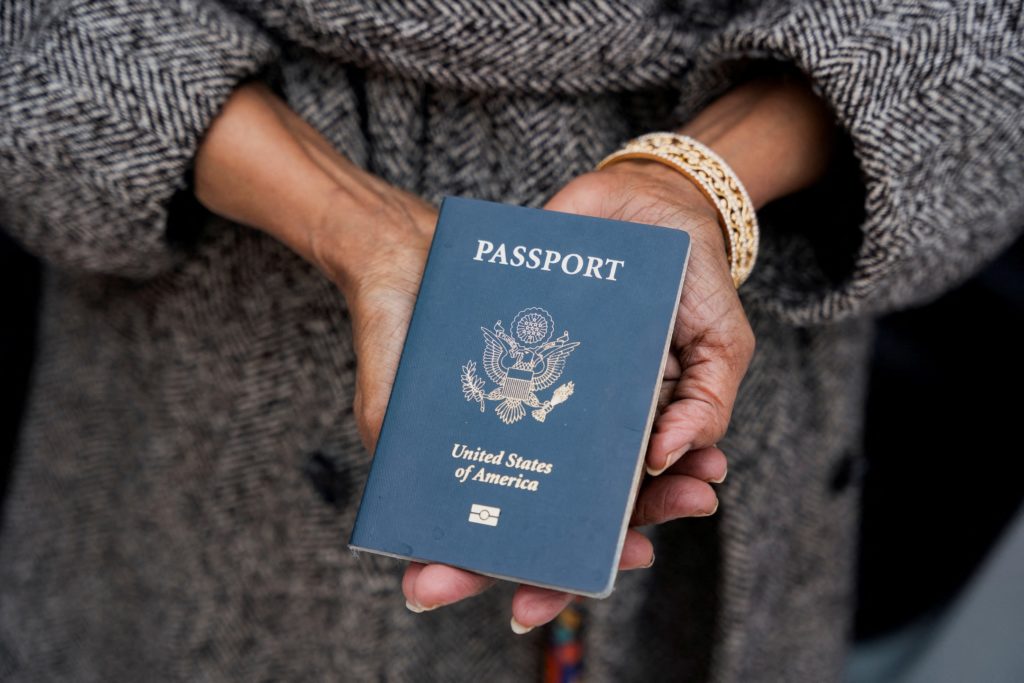
The U.S. Justice Department has recently started efforts to take away the citizenship of 25 naturalized Americans. These people are accused of lying about their backgrounds and hiding serious crimes when they became citizens. This process is called denaturalization and has become a high priority for the Justice Department.
Key Facts
The Justice Department is targeting naturalized citizens who allegedly lied during their citizenship process.
25 individuals are currently facing denaturalization actions.
Denaturalization means removing a person’s citizenship.
The government accuses them of hiding serious crimes or past actions.
This approach is a recent and important focus for federal prosecutors.
The Justice Department sees denaturalization as a key law enforcement tool.
The effort aims to ensure that citizenship was obtained honestly and lawfully.
The cases reflect a shift in how immigration and citizenship issues are handled by the government.
Read the Original
Want the full story? Tap a source to open the original
article.
The Trump administration has ended a program started during President Biden’s time that aimed to speed up building power lines in several states. This program targeted areas like Pennsylvania, Colorado, New Mexico, Oklahoma, Nebraska, and the Dakotas.
Key Facts
The program was designed to make power line construction faster.
It covered parts of six states: Pennsylvania, Colorado, New Mexico, Oklahoma, Nebraska, and the Dakotas.
The Biden administration started this effort to improve energy infrastructure.
The Trump administration decided to cancel this program.
The goal was to support better and quicker electricity delivery.
The cancellation could affect future power line projects in these areas.
Read the Original
Want the full story? Tap a source to open the original
article.
The Trump administration decided to stop funding the Arctic Report Card, a research project that tracks changes in the rapidly warming Arctic region. This move is part of broader actions by the administration to reduce support for climate change science.
Key Facts
The Arctic Report Card gathers important scientific data on changes in the Arctic.
The Arctic is the fastest-warming area on Earth.
The Trump administration announced it will end funding for this report.
Ending funding will affect the ongoing collection of research on climate change impacts in the Arctic.
This action is part of a pattern of reducing support for climate science under President Trump's administration.
Twila Moon, a glaciologist, is the editor of the Arctic Report Card.
William Brangham discussed the issue with Twila Moon in a news segment.
Read the Original
Want the full story? Tap a source to open the original
article.
A leading Democrat in the House Energy and Commerce Committee is questioning major U.S. airlines about their use of artificial intelligence (AI) to set ticket prices. The concern is whether airlines use travelers’ personal data to decide which prices are shown to different customers.
Key Facts
Rep. Frank Pallone Jr. (D-N.J.) is the top Democrat on the House Energy and Commerce Committee.
He asked major U.S. airlines if they use AI to set ticket prices based on personal information from travelers.
The inquiry focuses on whether AI influences which fares are shown to different customers.
The goal is to understand if personal data affects the pricing people see when buying airline tickets.
The questions reflect concerns about fairness and transparency in how airlines use technology.
Airlines have not yet publicly detailed how they use AI in pricing decisions.
The committee is monitoring the potential for "surveillance pricing," where personal data could impact costs.
Read the Original
Want the full story? Tap a source to open the original
article.
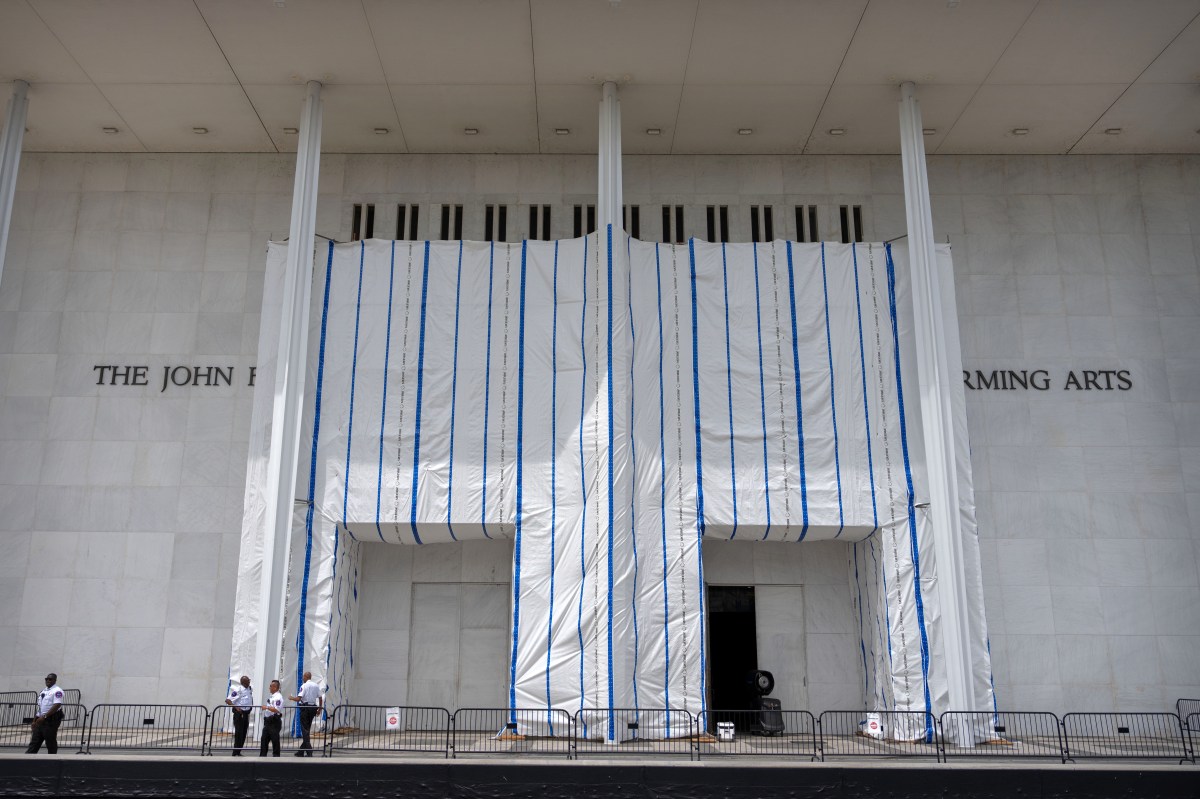
The Kennedy Center board voted to put President Donald Trump's name back on the building after a judge had ordered its removal. The board also approved a two-year closure for renovations, despite legal challenges regarding the renaming of the cultural institution.
Key Facts
The Kennedy Center board decided to add "Restored and Renovated By President Donald J. Trump" to the building's name.
This decision came two months after a judge ruled the name had been added without proper congressional approval.
The judge had ordered the removal of President Trump's name, which was taken down last month.
The board is mostly made up of allies of President Trump.
A federal judge had blocked a planned two-year closure for renovations, but the board voted to proceed with it.
President Trump appointed himself as a trustee and chairman of the Kennedy Center board in February 2025.
Congress has designated the Kennedy Center as a memorial to President John F. Kennedy, which restricts renaming efforts.
The White House said the Kennedy Center is improving under President Trump's leadership.
Read the Original
Want the full story? Tap a source to open the original
article.
Senate Democrats are asking for information about the living and working conditions on the USS Abraham Lincoln. The Navy ship has been on an extended deployment since November 21, 2025, leading to concerns about how long the crew members have to stay at sea and what conditions they face on board.
Key Facts
The USS Abraham Lincoln is a Navy ship deployed since November 21, 2025.
Its deployment period has been extended multiple times, now lasting about 9 months.
Senate Democrats are seeking answers about the conditions for crew members on the ship.
Concerns focus on how the long deployment affects the crew’s wellbeing.
The information was reported by CBS News correspondents Major Garrett and Charlie D’Agata.
The situation has gained attention due to the unusually long time the crew remains away from home.
Read the Original
Want the full story? Tap a source to open the original
article.
In the U.S., wait times for surgery in six common types of cancer have grown longer over the past decade. A study found delays increased steadily from 2012 to 2023, which can lead to worse health results and more stress for patients.
Key Facts
The study looked at over 2.7 million cancer patients diagnosed between 2012 and 2023.
Cancer types studied included breast, colon, lung, pancreatic, gastric, and esophageal cancers.
Wait times for surgery increased for all six cancers; for example, breast cancer waits rose from 34 to 45 days.
More patients experienced long waits of over 30 and even 60 days.
Increased wait times happened as healthcare systems centralized cancer care into large, specialized centers.
Patients who were uninsured, on Medicaid, Black, lower-income, or lived far from treatment centers faced longer waits more often.
Researchers suggest expanding patient capacity and improving scheduling at big centers to reduce delays.
They recommend only referring complex cases to high-volume centers to avoid unnecessary delays for simpler surgeries.
Read the Original
Want the full story? Tap a source to open the original
article.
An artist and teacher in Washington, D.C., named Blu Murphy is using her art to help her students appreciate themselves and their neighborhoods. Her work also addresses the ongoing impact of redlining, a historical practice that caused unfair treatment of certain communities.
Key Facts
Blu Murphy is both an artist and a teacher in Washington, D.C.
She focuses on encouraging students to view themselves and their communities as valuable art.
Her work highlights the lasting effects of redlining, a process that historically segregated neighborhoods.
Redlining has caused long-term disadvantages for many communities.
The story was covered by Shane Mukasa from PBS News Student Reporting Labs.
Read the Original
Want the full story? Tap a source to open the original
article.
White House press secretary Karoline Leavitt is stepping down from her position. Political analysts are already considering several possible candidates to replace her as the main spokesperson for President Trump’s administration.
Key Facts
Karoline Leavitt, the current White House press secretary, is leaving her role.
The press secretary acts as the main spokesperson for the President and the White House.
President Trump had four different press secretaries during his first term.
The position is highly visible and important in communicating with the media and public.
Speculation is ongoing about who will be chosen as the next press secretary.
No official announcement has been made yet about Leavitt’s successor.
The transition is happening during President Trump’s current term, after his 2024 election victory.
Read the Original
Want the full story? Tap a source to open the original
article.
The University of Michigan will not give letter grades to some first-semester freshmen starting next year. This decision has led to discussions about how useful and important grades are for students.
Key Facts
The University of Michigan is changing its grading policy for some new students.
First-semester freshmen will be affected by this change.
Instead of letter grades (like A, B, C), other ways of showing progress may be used.
The change starts next year.
People are debating whether grades help or hurt students’ learning.
Abbie Everett from KnowledgeWorks talked about this topic on CBS News.
The goal is to support students as they adjust to college.
Read the Original
Want the full story? Tap a source to open the original
article.
Senator Elizabeth Warren asked HHS Secretary Robert F. Kennedy Jr. if the government’s handling of a food poisoning outbreak was affected by donations from a lettuce supplier connected to groups supporting President Trump. Warren raised concerns about whether these ties influenced the response to the illness caused by cyclosporiasis, a parasite-linked infection.
Key Facts
Senator Elizabeth Warren represents Massachusetts and is in the U.S. Senate.
Robert F. Kennedy Jr. is the Secretary of Health and Human Services under President Trump’s administration.
There was an outbreak of cyclosporiasis, a disease caused by a tiny parasite found in contaminated food.
Warren sent a letter to Kennedy questioning if the government’s response to the outbreak was handled properly.
She asked if donations from a major lettuce supplier to groups connected to President Trump influenced the response.
Warren described the government’s handling of the outbreak as “botched,” meaning poorly managed.
The investigation focuses on possible political or financial influence affecting public health decisions.
Read the Original
Want the full story? Tap a source to open the original
article.
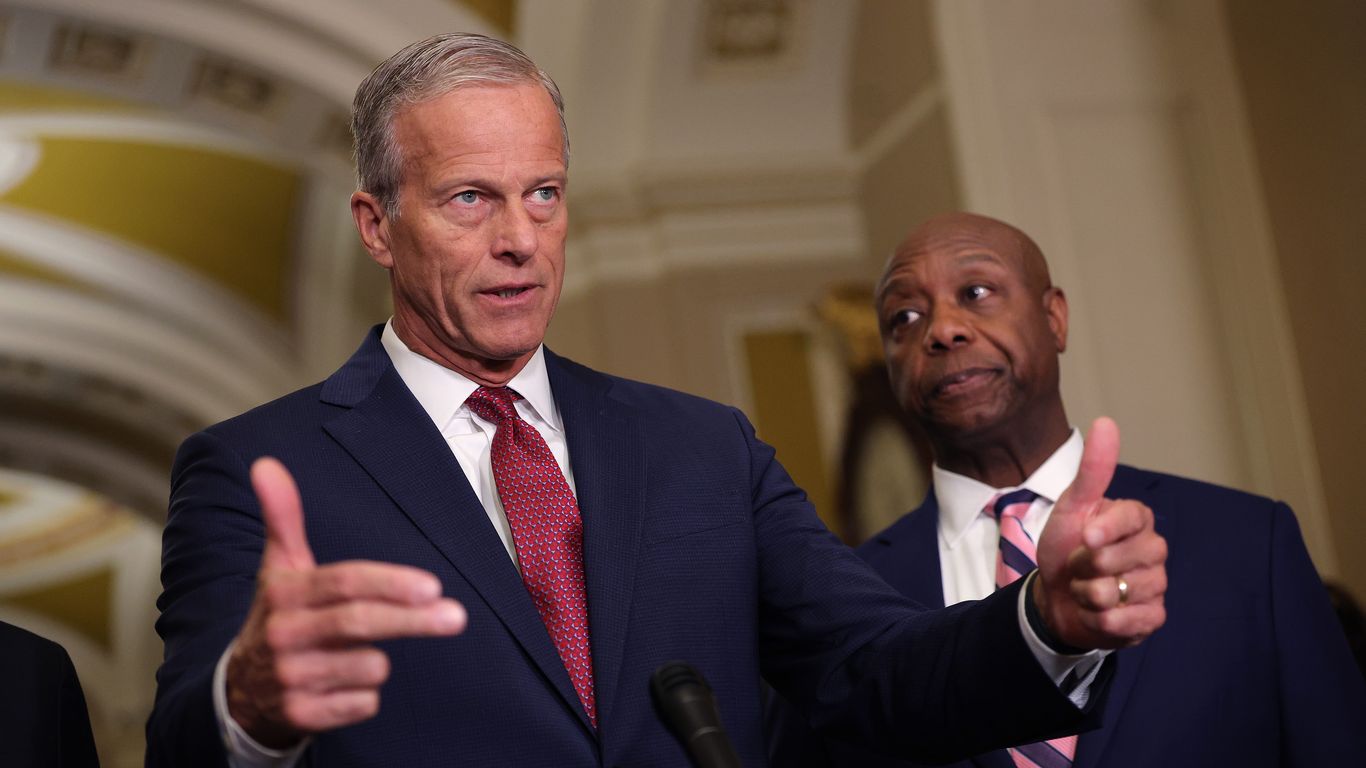
President Trump’s top advisors told Senate Republicans to focus more on health care in their campaigns instead of the SAVE Act, which centers on voter-ID and citizenship proof. Polls showed that discussing insurance companies and health care issues gives Republicans a bigger advantage with voters than focusing on the SAVE Act.
Key Facts
Trump’s political team advised Senate Republicans to emphasize health care in their midterm campaigns.
Polling showed Republicans have a strong advantage by criticizing health insurance companies for profits, claim denials, and wait times.
Messaging on the SAVE Act gave Republicans only a small lead compared to health care topics.
Banning congressional stock trading and fighting fraud also scored well with voters.
MAGA Inc. and the Republican National Committee plan to invest money into midterm races soon.
The Republican National Committee currently has $128 million in cash, much more than the Democrats’ $16 million.
A recent Supreme Court ruling allows the RNC to spend unlimited money directly with candidates, making their funds more effective.
President Trump controls more than $400 million in MAGA Inc. funds and said he will support Republicans.
Read the Original
Want the full story? Tap a source to open the original
article.
An ice cream man in Tonyrefail, Wales, received a noise complaint for playing loud music after 8 p.m. The local council confirmed the complaint was valid and reminded him of a 7 p.m. cutoff rule for ice cream van chimes, but he has changed his approach to honking the horn instead to keep serving customers.
Key Facts
Mark Edwards has operated his ice cream van for over 20 years without prior complaints.
A resident complained about the loud music being played after 8 p.m. in June.
Rhondda Cynon Taf council investigated and confirmed the noise complaint was valid.
The law requires ice cream van music to stop by 7 p.m., but vans can still sell ice cream later.
Edwards now beeps his horn in each street to alert customers instead of playing music.
Some locals expressed support, saying the music was a positive part of their community.
Edwards believes the 7 p.m. rule is outdated and worries about the future of ice cream vans.
The council said it must enforce noise laws when complaints are made and considers the case closed.
Read the Original
Want the full story? Tap a source to open the original
article.
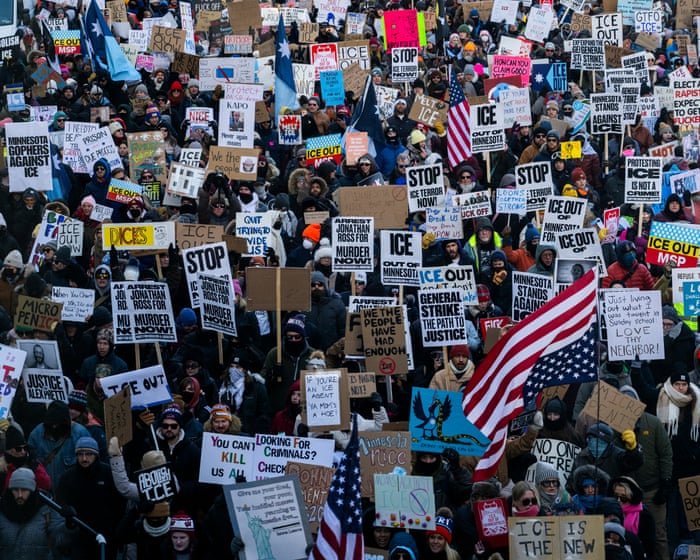
New government records reveal that the US Department of Homeland Security (DHS) spied on leftwing groups and protesters who opposed immigration enforcement in Minnesota. The spying included undercover agents attending meetings, monitoring online chats, and gathering financial information about unions and nonprofit organizations. This operation was part of a government investigation linked to protests during President Trump's immigration enforcement efforts.
Key Facts
DHS conducted an operation called “Operation Puppet Master” to identify organizers opposing US Immigration and Customs Enforcement (ICE).
The spying targeted activists, protesters, and mainstream progressive groups in Minnesota and New York.
Internal reports show undercover agents attended meetings and infiltrated private online group chats on Signal.
DHS obtained financial records of major unions and left-leaning nonprofits to investigate “domestic terrorist financing.”
The Department of Justice charged 15 Minneapolis protesters with conspiracy to obstruct immigration officers.
Several major organizations, including AFL-CIO, SEIU, Democratic Socialists of America, and Showing Up for Racial Justice, were linked to the investigation but have not been charged.
The operation followed President Trump's executive order declaring “antifa” a domestic terrorist group connected to protests against ICE.
Civil rights groups are concerned the government is criminalizing legal protest activities under the label of terrorism.
Read the Original
Want the full story? Tap a source to open the original
article.
The Kennedy Center board voted to put President Donald Trump’s name back on the building by adding an inscription calling him the restorer and renovator. This move follows a court order that removed Trump’s name because the board lacks permission from Congress to rename the Kennedy Center. The decision is expected to face new legal challenges.
Key Facts
The Kennedy Center board approved adding “Restored and Renovated by President Donald J. Trump” under the main sign.
They also plan to name the grounds “President Donald J. Trump Plaza.”
This comes after a judge ordered Trump’s name removed from the building’s facade, ruling the board cannot rename it.
The board wants to close the main building for two years for a $250 million renovation.
Opponents argue that adding Trump’s name in any way still violates federal law and the court ruling.
Representative Joyce Beatty, who sued to remove Trump’s name, criticized the board’s actions as trying to avoid the court’s decision.
A federal judge ruled the Center must keep President Kennedy’s name since Congress created it as a memorial to him.
The board’s plan may lead to more court fights over the naming and the building’s closure.
Read the Original
Want the full story? Tap a source to open the original
article.