Director of National Intelligence Tulsi Gabbard has increased efforts to question the investigation that concluded Russia meddled in the 2016 U.S. election. Gabbard made unfounded claims involving former President Obama and described the investigation in critical terms.
Key Facts
Tulsi Gabbard is the Director of National Intelligence.
She questioned the findings of the Russia investigation related to the 2016 election.
The investigation found that Russia interfered with the 2016 U.S. election.
Gabbard made claims about former President Obama's role, which lack evidence.
She described the investigation as a misuse of intelligence power.
Nick Schifrin reported on this story.
Read the Original
Want the full story? Tap a source to open the original
article.
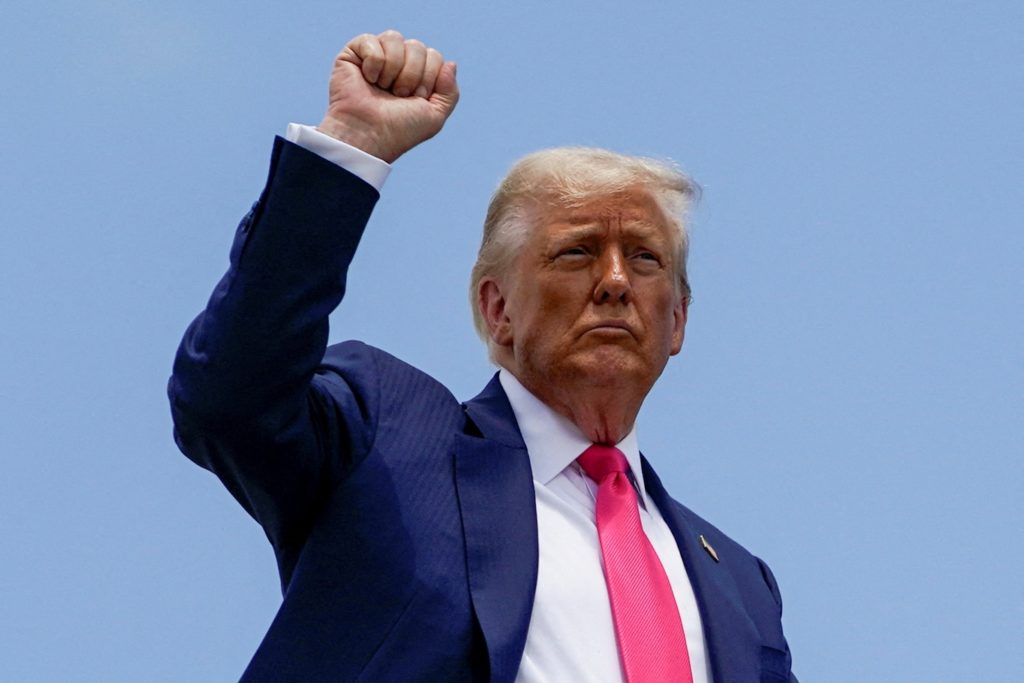
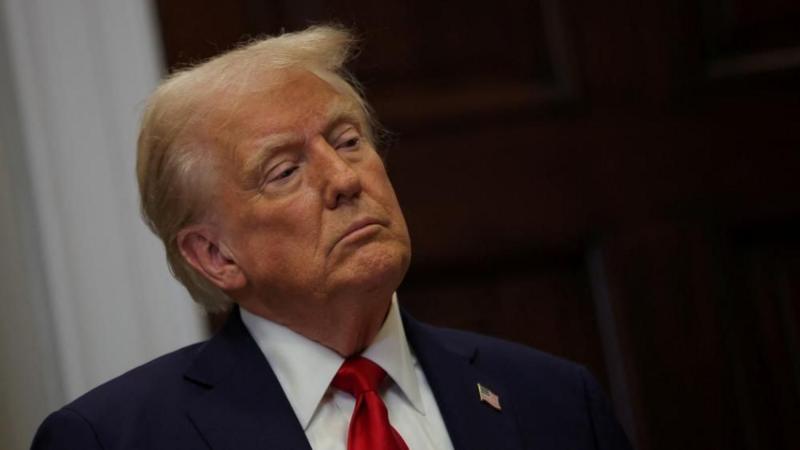
President Trump has been in office for six months. He discussed his achievements and changes in the federal government, though many people remain unsure about his biggest successes. There is also increased attention on his connection to Jeffrey Epstein.
Key Facts
President Trump completed six months in office.
He highlighted his policy achievements and changes he made in the federal government.
There is public uncertainty about the significance of his achievements.
Attention on Trump’s relationship with Jeffrey Epstein is increasing.
Amna Nawaz talked about these issues with Democratic strategist Faiz Shakir and Republican strategist Kevin Madden.
Read the Original
Want the full story? Tap a source to open the original
article.
Last year, almost 332 million people visited national parks in the United States, and that number might be even higher this year. This increase in visitors is happening even though there have been staff and budget cuts.
Key Facts
Last year, national parks saw nearly 332 million visitors.
This visitor number was a record high.
The number of visitors is expected to be higher this year.
Visitor numbers are increasing despite reductions in staff and budget.
These cuts were made during the Trump administration.
Theresa Pierno from the National Parks Conservation Association discussed these issues.
Read the Original
Want the full story? Tap a source to open the original
article.
The U.S. government, under President Trump, has increased its efforts on immigration enforcement significantly in the past six months. This includes the passage of large funding for these activities, which is part of the largest domestic enforcement budget in U.S. history.
Key Facts
President Trump returned to office and quickly changed many federal policies.
His administration has focused strongly on immigration changes.
Congress approved a large amount of money to fund immigration enforcement.
This funding is the largest ever for domestic enforcement in the U.S.
The focus includes a mass deportation campaign for people living in the U.S. without legal permission.
President Trump has made promises about conducting the largest deportation in history.
Read the Original
Want the full story? Tap a source to open the original
article.
Loretta Ross, a long-time activist, has changed her approach to handling disagreements. At 71, she focuses on making difficult conversations more productive.
Key Facts
Loretta Ross is a well-known activist who has spent over 50 years fighting against racism, sexism, and sexual violence.
She is 71 years old.
Ross was previously known for having a fiery temper.
She now believes there is a better way to deal with disagreements.
Judy Woodruff interviewed Ross as part of a series called America at a Crossroads.
The series looks at how to turn challenging conversations into productive discussions.
Read the Original
Want the full story? Tap a source to open the original
article.
Washington, D.C. now has the worst traffic in the U.S., surpassing Los Angeles, according to a report by Consumer Affairs. Drivers in Washington spend the most time in traffic, averaging 33.4 minutes per commute, while Los Angeles still experiences the most daily congestion time.
Key Facts
Washington, D.C. now has the longest traffic commutes in the U.S. at 33.4 minutes on average.
Los Angeles has the longest daily congestion time, with nearly eight hours of traffic every day.
The ranking was reported by Consumer Affairs, a private company that reviews American products and services.
The top five cities for worst traffic are Washington, D.C., Los Angeles, Miami, San Francisco, and Atlanta.
Cities with high traffic often have strong economies, attracting more residents who drive to work.
President Trump's orders for federal workers to return to offices increased Washington's traffic.
Cities with the least traffic are Rochester, Salt Lake City, and Cleveland, which have more road space.
Read the Original
Want the full story? Tap a source to open the original
article.
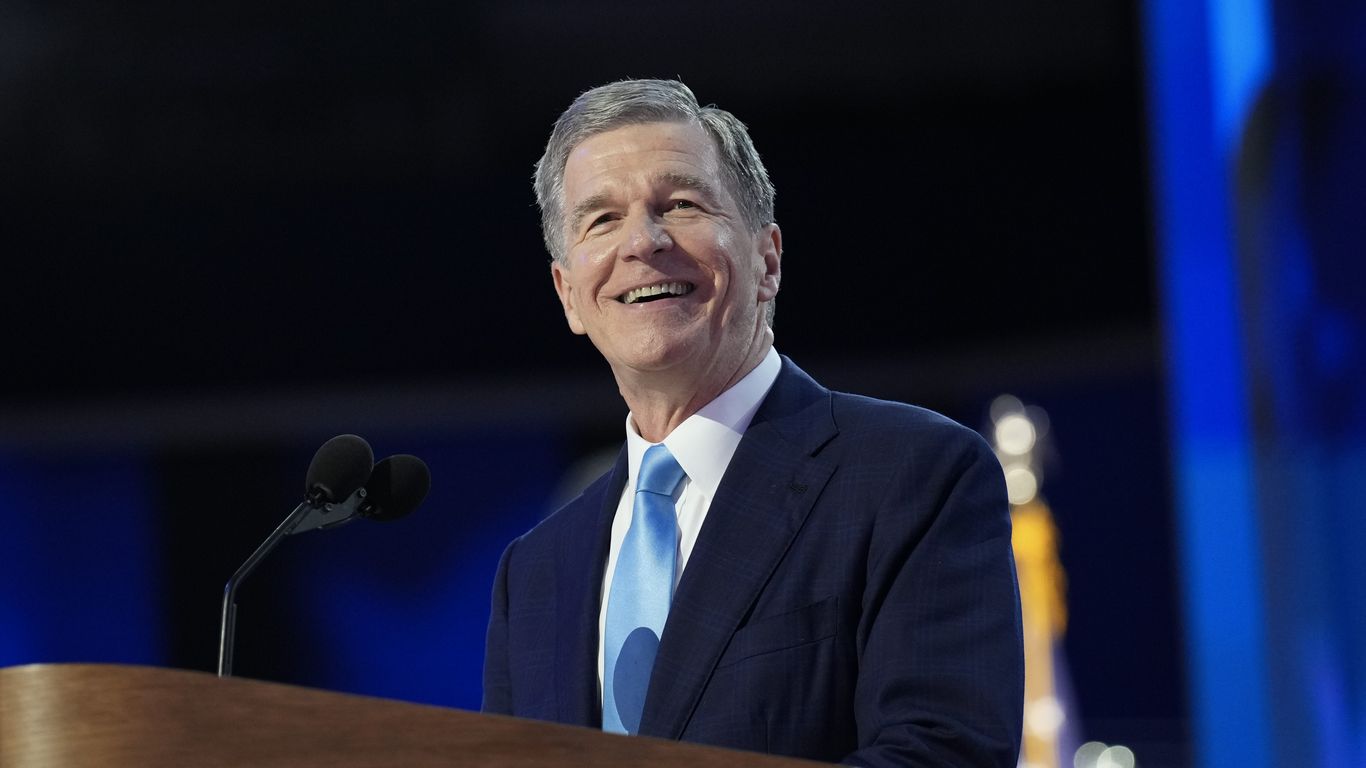
Former North Carolina Governor Roy Cooper plans to announce his campaign for the U.S. Senate next week. Cooper is seen as a strong candidate for the Democrats in the 2026 race to gain a Senate seat currently held by Republicans.
Key Facts
Roy Cooper is a former governor of North Carolina and a Democrat.
He plans to run for a U.S. Senate seat in the 2026 election.
The Democratic Party views him as their top candidate to win this seat.
Democratic leaders, including Kirsten Gillibrand, have encouraged him to run.
The current Republican Senator Thom Tillis has announced his retirement.
Democrats are waiting to see if Lara Trump will run for the Republican side.
Cooper was considered for a vice presidential role but chose to study at Harvard instead.
Former Congressman Wiley Nickel, also a Democrat, has already announced his Senate campaign.
Read the Original
Want the full story? Tap a source to open the original
article.
The U.S. Supreme Court has allowed the Trump administration to remove three Democratic members from the Consumer Product Safety Commission, reversing their reinstatement by a lower court. The court's decision was based on the argument that the President has the authority to remove commissioners without cause, aligning with past rulings.
Key Facts
The Supreme Court approved the removal of three Democratic members of the Consumer Product Safety Commission.
President Trump had previously fired these members without providing a reason.
A federal judge had initially reinstated them, ruling their dismissals unlawful.
The Supreme Court decision aligns with earlier cases allowing firings of independent board members.
A 1935 decision, Humphrey’s Executor, originally restricted the firing of independent agency members without cause.
The recent decision may lead to the reconsideration of this 90-year-old ruling.
The Consumer Product Safety Commission was established in 1972 to protect consumers from unsafe products.
Commission members serve staggered seven-year terms, ensuring a mix of political party representation.
Read the Original
Want the full story? Tap a source to open the original
article.
The Trump administration released a plan to boost artificial intelligence (AI) development while reducing regulations that it views as obstacles. The plan includes steps to develop AI infrastructure, encourage AI use in government and private sectors, and prevent misuse of the technology. President Trump plans to sign executive orders to support these goals.
Key Facts
The AI Action Plan proposes over 90 policy actions to advance AI technology in the U.S.
The plan aims to reduce regulations and address what the administration calls "ideological bias" in AI systems.
President Trump plans to sign executive orders to promote AI exports and review existing policies affecting AI.
The plan focuses on preventing AI technology from being misused or stolen.
Critics argue the plan favors large technology companies over public interest.
The Trump administration's plan follows a previous executive order by Joe Biden focused on AI safety, which was rescinded by Trump.
Over 10,000 public comments helped shape the AI plan.
The plan emerged from discussions related to a major budget bill, which initially sought to prevent state regulation of AI but ultimately did not include this provision.
Read the Original
Want the full story? Tap a source to open the original
article.
The Trump administration announced new plans to address perceived biases in artificial intelligence (AI) systems. This includes revising guidelines to remove diversity and inclusion references and requiring tech companies to ensure their AI supports free speech.
Key Facts
The Trump administration is addressing what it calls "woke" AI systems, believing they have liberal biases.
Michael Kratsios from the administration emphasized the need for AI to reflect truth and objectivity.
An executive order and other actions related to AI bias are expected from the administration.
New guidelines will remove references to diversity, equity, inclusion, climate change, and misinformation.
The government will work only with tech companies that promote free speech.
Some critics, including Neil Sahota, say this creates challenges for tech companies already competing globally.
AI experts argue there is no intentional design in chatbots to produce liberal responses.
The debate over "woke AI" is similar to past claims of social media bias against conservative views.
Read the Original
Want the full story? Tap a source to open the original
article.
The Trump administration is investigating Harvard University's eligibility to sponsor visas, related to the Exchange Visitor Programme. This follows previous conflicts with the university over funding and visa restrictions, and Harvard has responded by suing the government, claiming violations of free speech rights.
Key Facts
The Trump administration is reviewing Harvard's right to sponsor certain visas.
The Exchange Visitor Programme allows foreign visitors to the US for cultural and educational exchanges.
Harvard has sued the government, claiming it violated their First Amendment rights.
Previously, the administration attempted to revoke Harvard's ability to host foreign academics temporarily.
A federal judge has blocked the administration's order while legal proceedings continue.
Harvard's attorney argues the government is trying to influence the university by cutting funding.
The administration accuses Harvard of not addressing antisemitism on campus.
The legal dispute is part of broader tensions between Harvard and the Trump administration over funding and control.
Read the Original
Want the full story? Tap a source to open the original
article.
The Supreme Court decided that President Trump could remove three Democrats appointed by President Biden to the Consumer Product Safety Commission. This action challenges a long-standing rule from 1935 that restricted the president's ability to fire members of independent regulatory agencies without a valid reason.
Key Facts
The Supreme Court's ruling allows President Trump to fire three Biden appointees from the Consumer Product Safety Commission (CPSC).
The CPSC is an agency that sets safety standards for consumer products and recalls dangerous items.
The decision challenges a 1935 Supreme Court precedent that limited the president's power to remove agency officials without cause.
The 1935 precedent came from a case where the court ruled President Roosevelt could not fire a Federal Trade Commission member for policy disagreements.
The Biden-appointed commissioners argued they could only be removed for neglect of duty or wrongdoing, not at the president's will.
A Maryland federal judge had temporarily blocked Trump's action, but the Supreme Court sided with the administration.
The court's decision follows a pattern of rulings that have expanded the president's power over certain federal agency officials.
Read the Original
Want the full story? Tap a source to open the original
article.
The disappearance of 6-year-old Etan Patz in 1979 led to significant changes in how the United States deals with missing children cases. An appeals court recently ordered a retrial of Pedro Hernandez, who was previously convicted of kidnapping and murdering Patz because of jury instruction errors.
Key Facts
Etan Patz disappeared on May 25, 1979, while walking to his school bus stop in Manhattan.
His case raised awareness nationwide and changed how police handle missing children cases.
Pedro Hernandez was convicted in 2017 for kidnapping and murdering Patz but will face a retrial due to overturned conviction.
In 1979, police often waited 24 to 72 hours before acting on missing child reports, which has since changed to a more urgent response.
Etan's case led to the creation of systems like national registries and emergency alerts for missing children.
Etan's father used his photography skills to distribute high-quality images, keeping the case in public attention.
Kevin Branzetti, from the National Child Protection Task Force, highlighted the importance of immediate action in missing child cases, inspired by Patz's story.
The case encouraged better communication among police agencies and initiated the well-known practice of showing missing kids on milk cartons.
Read the Original
Want the full story? Tap a source to open the original
article.
A Palestinian American named Sayfollah Musallet was killed by Israeli settlers in the West Bank on July 11, shortly before his 21st birthday. His case has led to calls for the United States to investigate due to his American citizenship.
Key Facts
Sayfollah Musallet was a Palestinian American.
He was killed on July 11 in the West Bank, which is an area under Israeli control.
Musallet's death happened just before his 21st birthday.
His killing is one of nearly 1,000 incidents involving settlers this year.
Musallet's US citizenship has led to calls for an investigation by the United States.
There is interest in whether this incident might change how the US deals with violence by settlers in the West Bank.
Read the Original
Want the full story? Tap a source to open the original
article.
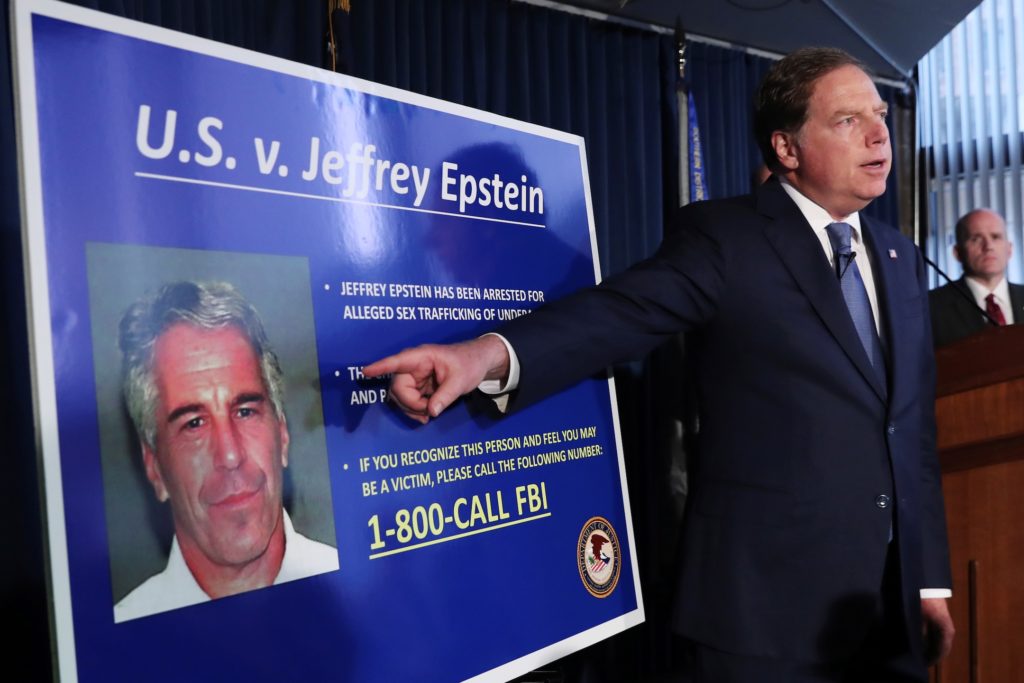
Congress is in recess, but a debate continues about a resolution to release records connected to Jeffrey Epstein. Some members of Congress want these records made public to reveal who was involved in Epstein's activities, but House Speaker Mike Johnson stopped a vote on the issue due to privacy concerns.
Key Facts
Congress is currently in a recess that lasts for a month.
Democratic Rep. Ro Khanna is critical of the decision to stop a vote on releasing Epstein's related records.
The resolution aims to make public federal interview memos and evidence tied to Epstein's activities, with protections for victims' identities.
Both Democratic and some Republican lawmakers support this resolution, despite opposition from some GOP leaders.
House Speaker Mike Johnson cited concerns about protecting the privacy of witnesses.
A discharge petition is being considered to force a vote; it needs support from additional Republicans.
Some well-known Republicans aligned with Trump have also supported the call to release the records.
Khanna argues that releasing the records would help restore public trust, even if they don't contain new information.
Read the Original
Want the full story? Tap a source to open the original
article.
The U.S. government, under President Donald Trump, has started an investigation into Harvard University's exchange program for foreign scholars. This program, which issues J-1 visas for cultural and academic exchanges, must comply with U.S. national security and foreign policy laws.
Key Facts
The investigation targets Harvard’s exchange program, which lets foreign scholars visit the U.S.
Secretary of State Marco Rubio announced this probe, citing U.S. security concerns.
The program offers J-1 visas, meant for temporary cultural and academic exchanges.
Rubio mentioned Harvard’s ability to continue hosting this program depends on the investigation’s findings.
The Immigration and Nationality Act of 1952 could influence decisions on expelling foreign nationals.
Critics argue that expelling students may violate free speech rights and protest freedoms.
President Trump previously opposed pro-Palestinian protests at universities like Harvard and Columbia.
There have been many campus arrests related to similar protests across the U.S.
Read the Original
Want the full story? Tap a source to open the original
article.
Bryan Kohberger was sentenced to life in prison without parole for the murder of four University of Idaho students. He pleaded guilty to avoid the death penalty, and the court heard emotional statements from the victims' families and friends.
Key Facts
Bryan Kohberger killed four University of Idaho students in November 2022.
He broke into their home through a sliding door and attacked them with a knife.
Kohberger admitted to the murders and accepted a life sentence to avoid the death penalty.
The judge sentenced him to four life terms with no chance of parole and an additional 10 years for burglary.
Kohberger cannot appeal the sentence because he waived that right.
Families and friends of the victims shared their pain and sadness in court.
Investigators could not find the murder weapon or any link between Kohberger and the victims.
The motive behind the murders remains unknown.
Read the Original
Want the full story? Tap a source to open the original
article.
A judge in Florida decided not to release records from grand jury investigations related to Jeffrey Epstein. This decision came after a request from the Trump administration, which aimed to address concerns among Trump supporters about a possible conspiracy to protect Epstein's clients.
Key Facts
A U.S. judge declined a request to unseal grand jury transcripts involving Jeffrey Epstein in Florida.
The request was made by the Trump administration but did not meet legal exceptions to make the documents public.
The Justice Department wanted the records released to address concerns of a conspiracy to protect Epstein’s clients.
In 2008, Epstein made a plea deal in Florida to lesser charges, avoiding more severe federal charges.
Epstein was later arrested in 2019 for federal sex trafficking charges but died in jail, and officials concluded it was a suicide.
Ghislaine Maxwell, Epstein's former girlfriend, was convicted for her role in abusing girls and was sentenced to 20 years in prison.
The case drew attention due to Epstein and Maxwell’s connections with well-known individuals.
There was a pending similar records request in New York at the time.
Read the Original
Want the full story? Tap a source to open the original
article.
A federal judge in Florida denied a request to release grand jury transcripts from an investigation into Jeffrey Epstein. The judge stated that the law does not allow the release under the circumstances presented.
Key Facts
A Florida judge rejected the request to make public the grand jury transcripts related to Jeffrey Epstein.
The decision was based on the law in the Eleventh Circuit, which prevents the judge from releasing the documents.
President Trump had supported the release for transparency reasons.
The Department of Justice (DOJ) had asked for these transcripts to be unsealed in several states, including Florida and New York.
Other judges in New York are still considering similar requests from the DOJ.
Epstein was charged with child sex trafficking and died in jail in 2019 while waiting for trial.
Ghislaine Maxwell, an associate of Epstein, is serving a 20-year prison sentence for helping with his criminal acts.
Read the Original
Want the full story? Tap a source to open the original
article.
Ozzy Osbourne, the lead singer of the heavy metal band Black Sabbath, died at the age of 76. In the United States, fans are honoring him by leaving flowers on the Hollywood Walk of Fame and sharing stories about how he influenced their lives.
Key Facts
Ozzy Osbourne was a well-known figure in the heavy metal music genre.
He was the frontman for Black Sabbath, a pioneering band in heavy metal.
Osbourne passed away at the age of 76.
Fans in the US are leaving flowers on the Hollywood Walk of Fame to honor him.
Many fans are discussing how Osbourne's music and persona impacted their lives.
Read the Original
Want the full story? Tap a source to open the original
article.