The U.S. House of Representatives passed three bills to regulate the cryptocurrency industry. One bill, which focuses on stablecoins, has already been approved by the Senate and will go to the President for signing. The other two bills, concerning the overall market structure for cryptocurrencies and preventing a government-issued digital currency, will now be considered by the Senate.
Key Facts
The House passed three bills aimed at regulating cryptocurrency.
The stablecoin bill had bipartisan support and passed the Senate; it is now awaiting the President’s approval.
Stablecoins are digital currencies tied to stable assets like the U.S. dollar to reduce price changes.
Two other bills are moving to the Senate: one sets a new market structure for cryptocurrencies, and the other stops the Federal Reserve from issuing a digital currency.
The stablecoin bill requires issuers to comply with anti-money laundering laws and have reserves.
The legislation seeks to clarify which cryptocurrencies fall under specific regulatory bodies.
The broader legislative effort was paused due to disagreements among House Republicans before being voted on separately.
The bills aim to improve consumer trust and make the U.S. a leader in cryptocurrency regulation.
Read the Original
Want the full story? Tap a source to open the original
article.
A new federal report examines how Amtrak is working to improve its services for passengers with disabilities. This comes after many complaints from disabled passengers about the difficulties they face when traveling by train.
Key Facts
Amtrak has received numerous complaints from passengers with disabilities about poor service.
A federal report has been released to assess Amtrak's efforts to improve.
The focus of the report is on making train travel easier for disabled passengers.
The report aims to identify areas where Amtrak can enhance its services.
Passengers with disabilities have faced challenges, making it hard for them to use the train.
Read the Original
Want the full story? Tap a source to open the original
article.
Zohran Mamdani, a Democratic Socialist in the New York State Assembly, used videos and social media to connect with multicultural communities, helping him to win the New York City mayoral Democratic primary with 56% of the votes on July 1. Mamdani's campaign focused on reaching non-English-speaking voters, using languages like Hindi, Urdu, and Spanish to address their concerns and encourage voter turnout.
Key Facts
Zohran Mamdani is a 33-year-old Democratic Socialist member of the New York State Assembly.
Mamdani used social media videos with cultural references to engage voters.
He explained ranked choice voting with relatable examples, like using mango lassi.
Mamdani's campaign reached voters in multiple languages, including Hindi, Urdu, and Spanish.
The campaign focused on issues important to voters, such as affordability.
Mamdani won the Democratic primary for New York City mayor with 56% of the vote.
Key areas of his support included South Asian, Latino, and Chinese neighborhoods.
Mamdani's method aimed to encourage participation from voters not typically targeted in mainstream campaigns.
Read the Original
Want the full story? Tap a source to open the original
article.
Emil Bove, who once defended former President Trump, has been approved by a Senate committee for a federal judge position. The full Senate will now vote on his nomination, but some people oppose it due to his past work and actions.
Key Facts
Emil Bove is nominated for a judge position on the U.S. Court of Appeals for the Third Circuit.
A Senate Judiciary Committee voted to advance his nomination, but Democrats did not participate in the vote.
Bove formerly served as a federal prosecutor in Manhattan.
He defended Donald Trump in criminal cases brought by the Justice Department.
Over 900 former DOJ lawyers and more than 75 retired judges oppose his nomination due to concerns about his loyalty to Trump.
Allegations were made that Bove instructed DOJ lawyers to potentially disobey court orders.
Bove denied these allegations at his confirmation hearing, stating he was not Trump's "henchman."
Read the Original
Want the full story? Tap a source to open the original
article.
FEMA is helping in the flood-affected areas of Hunt, Texas, especially after the July 4 flash flood. However, religious charities are receiving more praise from local people for their assistance.
Key Facts
Hunt, Texas was badly affected by a flash flood on July 4.
FEMA, a federal agency that helps during disasters, is now actively helping in Hunt.
Initially, people criticized FEMA for being slow to respond.
Local people are pleased with FEMA's current efforts.
Religious charities are also helping in the area.
More local praise is directed toward these religious groups for their support.
Read the Original
Want the full story? Tap a source to open the original
article.
Public media networks like NPR and PBS might soon lose funding from the federal government. Congress is considering stopping all financial support for these public media services.
Key Facts
Public media includes networks like NPR and PBS.
Congress is thinking about cutting off all federal funds for these media outlets.
Federal funding is money the government gives to support these services.
Losing this support could change how public media operates.
The potential funding cut is reported to be a major shift for public media.
Read the Original
Want the full story? Tap a source to open the original
article.
On July 17, 2025, the U.S. Congress passed its first major cryptocurrency legislation called the GENIUS Bill, which focuses on regulating stablecoins. The bill aims to provide clear rules for stablecoins and has received support from both political parties and the President, who has personal financial interests in the crypto industry.
Key Facts
The U.S. Congress passed the first standalone cryptocurrency bill, known as the GENIUS Bill, which focuses on stablecoins.
The House approved the bill with a 308-122 vote.
Stablecoins are a type of cryptocurrency that must be backed by an equivalent amount of dollars.
President Trump supported the bill, helping it pass, and he has financial interests in stablecoins.
The legislation indicates a shift in U.S. policy towards digital currencies, with more regulations expected to follow.
The bill now awaits the President's signature since the Senate has already passed it.
Stablecoins allow for quick international money transfers without bank fees.
Retailers and banks are exploring stablecoins to reduce transaction costs.
Read the Original
Want the full story? Tap a source to open the original
article.
Wildfires are spreading across North America. In Canada, fires have led to evacuations and destruction of cabins. In Colorado, a large wildfire has grown to 4,160 acres, and in California, lightning started a fire near Shasta Lake.
Key Facts
Wildfires are currently burning in different parts of North America.
In Canada, fires have caused evacuations and destroyed cabins.
A wildfire in Colorado has expanded to cover 4,160 acres.
Lightning caused a new fire near Shasta Lake in northern California.
Special planes called "Super Scoopers" are being used to fight the fire near Shasta Lake.
Fire crews are actively trying to control these wildfires.
Read the Original
Want the full story? Tap a source to open the original
article.
The United Kingdom plans to lower the voting age from 18 to 16 for all elections. This change, along with other electoral reforms, aims to modernize democracy in the UK and involves around 1.6 million new young voters. The proposed reforms must be approved by Parliament.
Key Facts
The UK government announced plans to lower the voting age to 16 for all elections.
These changes are part of broader efforts to update democracy in the UK.
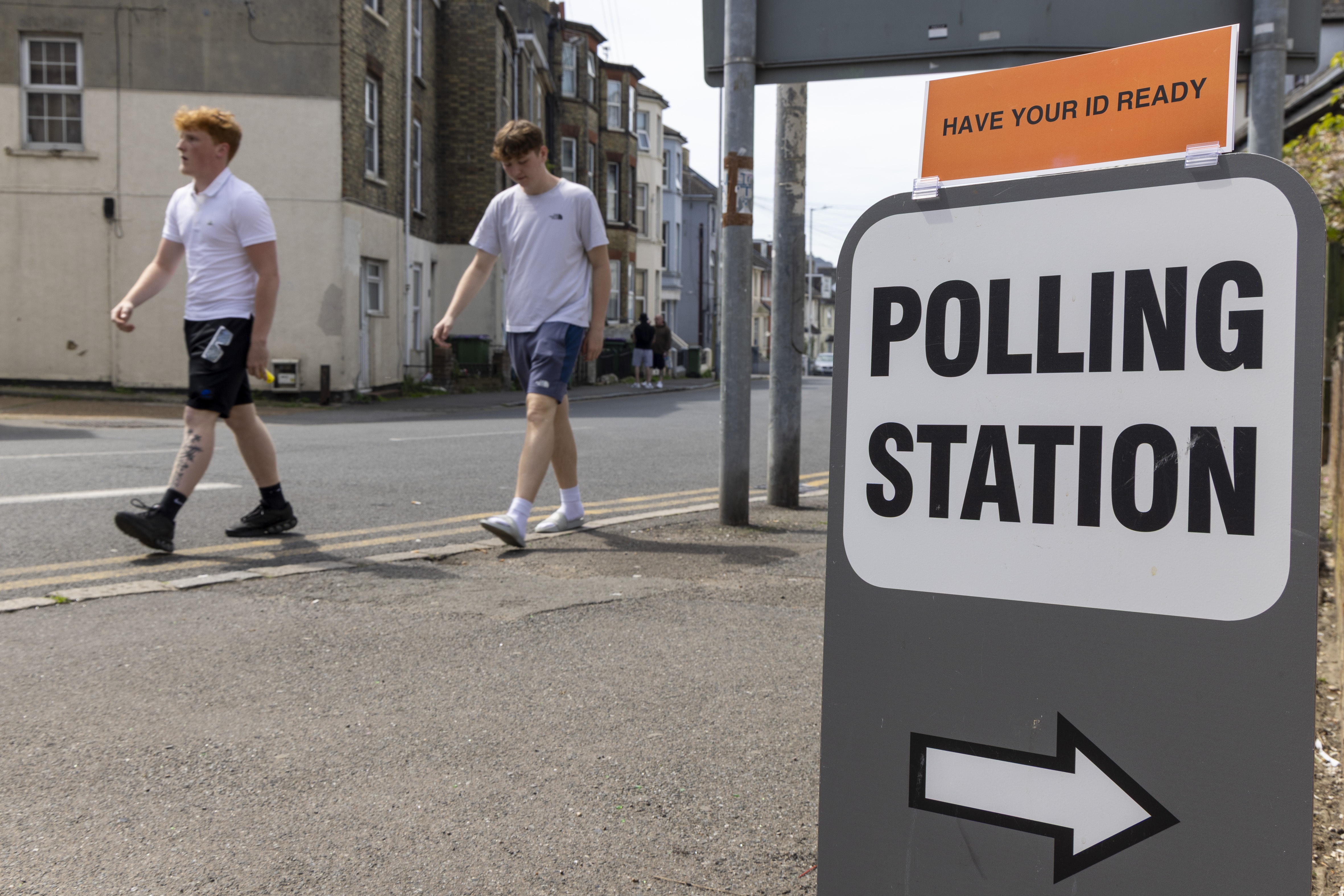
The reforms include the use of bank cards as voter ID and changes to political donation rules.
The new voting age could be in effect by the next general election, which must occur by August 2029.
The Labour Party, which has a majority in Parliament, supports the change, making its approval likely.
Scotland and Wales already allow 16- and 17-year-olds to vote in certain local elections.
Around 1.6 million teenagers would gain the right to vote under the new proposal.
Globally, most countries and regions have a voting age of 18 or higher, but some allow voting at 16 or 17.
Read the Original
Want the full story? Tap a source to open the original
article.
The White House confirmed that President Donald Trump has a condition called chronic venous insufficiency, which is common in older adults. After a check-up due to slight swelling in his legs, doctors found no serious problems, and the President is said to be in good health.
Key Facts
President Trump has a condition called chronic venous insufficiency.
This condition is common, especially in people over 70 years old; Trump is 79.
He had a full medical check-up after noticing mild swelling in his lower legs.
Doctors found no signs of more serious issues like deep vein thrombosis or arterial disease.
Bruising on Trump's hands is due to frequent handshaking and aspirin use.
The White House described Trump as being in excellent health.
Read the Original
Want the full story? Tap a source to open the original
article.
The UK plans to allow 16- and 17-year-olds to vote in general elections, lowering the voting age from 18. The government aims to increase voter participation and remove voting barriers, intending to align voting rules across the UK. They also plan to introduce automated voter registration and accept bank cards as ID in elections.
Key Facts
The UK will lower its voting age from 18 to 16 in general elections.
The Labour government announced this plan to modernize democracy.
Approximately 1.6 million 16- and 17-year-olds live in the UK.
The change brings the UK in line with countries like Austria and Brazil, where 16-year-olds can vote.
The government plans to introduce automated voter registration.
UK-issued bank cards will be accepted as ID at polling stations.
The change aims to enhance democratic participation and public trust.
The opposition Conservative Party criticized the voting age change.
Read the Original
Want the full story? Tap a source to open the original
article.
A mother and her nine-year-old son were rescued in the Sierra Nevada forest in California after they left handwritten notes to signal for help. They were found by a volunteer search team over 24 hours after they got stranded due to a faulty GPS signal.
Key Facts
A mother and her son got lost in the Sierra Nevada forest in California.
They left handwritten notes under rocks to signal for help.
A volunteer search team found the notes and rescued them.
The mother and son had been stranded for over 24 hours.
They got lost after their GPS stopped working in an area with no phone service.
The search team used off-road vehicles and air support to find them.
The pair spent the night in their car to stay safe from wild animals.
They were returned safely to their family using vehicle recovery equipment.
Read the Original
Want the full story? Tap a source to open the original
article.
Florida's Supreme Court has decided to keep the current congressional district map in place. This decision comes after a challenge against the removal of a district that formerly had a majority of Black voters in north Florida.
Key Facts
Florida's Supreme Court upheld the current congressional map, rejecting a challenge about a majority-Black district.
The removed district previously linked Black communities from Jacksonville to near Tallahassee.
The court said changing the map would be impermissible racial gerrymandering, which is against equal protection rights.
Florida's current district map gives Republicans a 20-8 advantage over Democrats.
Formerly, the removed district was represented by a Black Democrat, Al Lawson.
A federal panel of judges had earlier upheld the current districts.
The National Redistricting Foundation expressed concern that the decision reduces Black voting power in Florida.
Justice Jorge Labarga disagreed, saying the lawsuit should have been allowed further exploration in a lower court.
Read the Original
Want the full story? Tap a source to open the original
article.
Over 1 million low-income families might lose their subsidized housing if a proposed two-year limit on rental assistance becomes law. A study from New York University suggests this change could affect up to 1.4 million households, with concerns that it could lead to high costs and widespread disruption.
Key Facts
The proposal involves a two-year time limit on rental assistance for low-income families.
New York University researchers have studied and reported the potential impact.
About 1.4 million households could be affected, focusing on those who have been using subsidies for over two years.
Households with elderly or disabled members would not be affected by the time limit.
HUD Secretary suggested the changes aim to reduce waste and encourage self-sufficiency.
The proposal might displace over a million children and primarily affects working families earning below median income.
There is no clear guidance yet on how the time limit policy would be implemented.
The issue adds to current challenges like the affordable housing and homelessness crisis in the U.S.
Read the Original
Want the full story? Tap a source to open the original
article.
A new poll shows that only about a quarter of U.S. adults feel that President Donald Trump’s policies have helped them. Most Americans give him low marks on key issues like the economy, immigration, and health care, and around 40% approve of his overall job performance.
Key Facts
Only about 25% of U.S. adults say Trump’s policies helped them.
Trump does not have majority approval on any major issues in the poll.
About half of U.S. adults feel Trump's policies have hurt them.
Inflation has risen due to tariffs, increasing costs for goods.
Trump's budget cuts could leave 11.8 million more Americans uninsured.
40% of U.S. adults approve Trump's overall job performance.
Historical comparison shows Trump's approval is lower than recent presidents at similar points in office.
Read the Original
Want the full story? Tap a source to open the original
article.
The US Senate voted to cut $9 billion from approved funding, targeting foreign aid and public broadcasting. The bill passed with a 51-48 vote and now returns to the House of Representatives for further approval. The decision is part of a broader plan to reduce federal spending.
Key Facts
The US Senate passed a bill to cut $9 billion from previous funding.
Cuts affect public broadcasting and foreign aid.
The vote was 51 in favor and 48 against.
The bill aims to save costs under a plan by President Donald Trump.
The House of Representatives had earlier passed a similar version with $9.4 billion in cuts.
An amendment kept $400 million for the Pepfar HIV/Aids program.
The bill removes $8 billion from global aid programs and over $1 billion from public broadcasting.
The bill now returns to the House for further voting.
Read the Original
Want the full story? Tap a source to open the original
article.
Former President Donald Trump criticized some of his supporters, accusing them of being deceived by Democrats regarding records related to Jeffrey Epstein's investigation. The Justice Department recently stated that Epstein did not have a client list, a move that angered many of Trump's loyal followers. Trump referred to the situation as a "hoax" and expressed frustration over the focus on Epstein, considering it a distraction from his achievements.
Key Facts
Trump accused some of his supporters of being misled by Democrats about Epstein-related records.
Trump called the situation a "hoax" and has criticized the focus on it.
The Justice Department said Epstein did not maintain a client list.
Jeffrey Epstein was found dead in jail in August 2019 after being charged with sex trafficking.
Past promises were made to release more files, but no further documents will be made public.
Some of Trump's supporters are upset with Attorney General Pam Bondi for her role in handling the case.
Trump expressed disappointment with some people while remaining confident in Bondi.
Read the Original
Want the full story? Tap a source to open the original
article.
Senate Democrats left a committee meeting after Republicans moved forward with the nomination of Emil Bove for a judicial position. This action came despite Democratic concerns that their opinions were not fully considered before the vote.
Key Facts
Senate Democrats left a vote in the committee to show disagreement.
Republicans advanced Emil Bove’s nomination to the 3rd U.S. Circuit Court of Appeals.
Democratic Senator Cory Booker said not all voices had been heard before the vote.
Emil Bove has had a significant role in the Justice Department and has defended actions taken during Trump’s time in office.
Bove was a criminal defense lawyer for Trump and worked on well-known Justice Department cases.
A former Justice Department lawyer accused Bove of suggesting the department could defy court orders, which Bove denied.
Deputy Attorney General Todd Blanche praised Bove’s legal abilities and moral integrity.
Read the Original
Want the full story? Tap a source to open the original
article.
Senators in the United States approved a plan to reduce foreign aid spending by about $8 billion, which includes cutting funds for emergency aid and public broadcasting. The proposal passed with a close vote and will now go back to the House of Representatives for final approval.
Key Facts
The U.S. Senate voted 51-48 to cut about $8 billion in foreign aid spending.
The proposal includes canceling $9 billion in previously approved expenses.
Over $1 billion will be cut from funding for the Corporation for Public Broadcasting.
The plan targets funds from the now-closed US Agency for International Development (USAID).
The proposal affects programs like emergency shelter and food in areas hit by disasters or conflicts.
Nearly 500 tonnes of food meant for children in Afghanistan and Pakistan will be destroyed.
The plan will return to the House of Representatives after the Senate vote.
Read the Original
Want the full story? Tap a source to open the original
article.
The U.S. Justice Department has fired Maurene Comey, a federal prosecutor and daughter of former FBI director James Comey. No specific reason was given for her termination, but it occurred amid other firings of prosecutors who have been involved in politically sensitive cases.
Key Facts
Maurene Comey was a federal prosecutor in Manhattan.
She worked on high-profile cases including those against Jeffrey Epstein and Sean “Diddy” Combs.
Her firing is part of a series of dismissals by the Justice Department without stated reasons.
Some firings involved prosecutors linked to cases that angered former President Donald Trump.
Maurene Comey is the daughter of James Comey, former FBI director, who had a strained relationship with Trump.
The Justice Department recently acknowledged an investigation involving James Comey, but details are unclear.
Maurene Comey was involved in the successful conviction of Ghislaine Maxwell for sex trafficking.
The termination coincided with criticism of Attorney General Pam Bondi over the handling of Epstein-related evidence.
Read the Original
Want the full story? Tap a source to open the original
article.