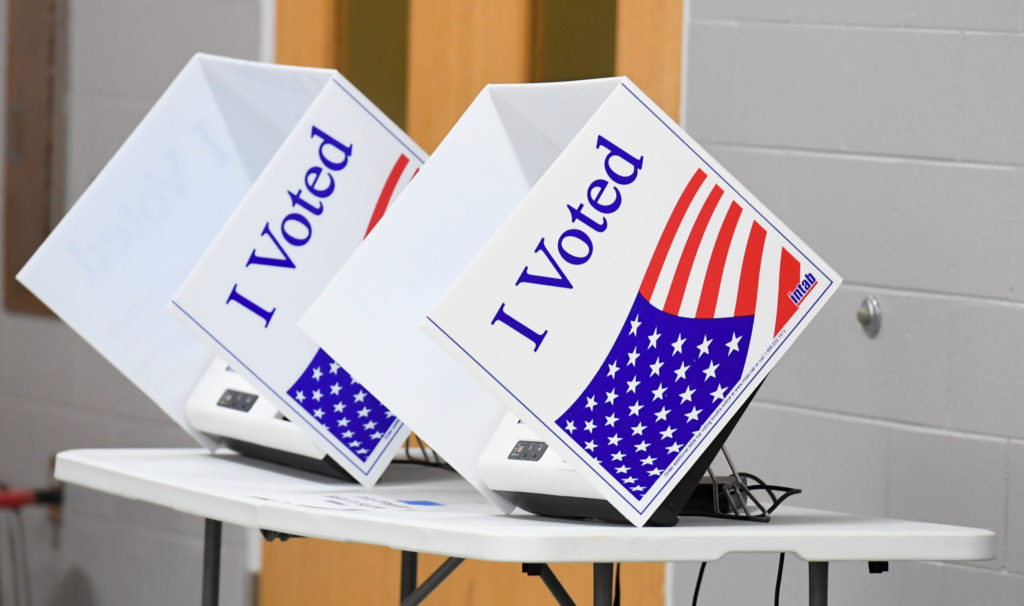
Voters in five states—Connecticut, Vermont, Minnesota, Wisconsin, and South Carolina—are preparing to vote in primary elections on Tuesday. These elections will choose candidates for state and federal offices, including a special primary in South Carolina for the Senate seat left open by late Senator Lindsey Graham.
Key Facts
Five states are holding primary elections on Tuesday.
The states are Connecticut, Vermont, Minnesota, Wisconsin, and South Carolina.
The elections will select candidates for different state and federal government positions.
South Carolina is holding a special primary for the Senate seat after Senator Lindsey Graham passed away.
These primaries help decide who will run in the general elections later this year.
Primaries allow political parties to pick their official candidates.
Voter turnout in primaries can influence the political choices on the November ballot.
Read the Original
Want the full story? Tap a source to open the original
article.
A large truck hit an overpass in Rockland County, New York, causing serious damage to the vehicle. The tractor trailer nearly had its top torn off, then it flipped onto its side.
Key Facts
The accident occurred in Rockland County, New York.
The vehicle involved was an 18-wheeler tractor trailer (semi truck).
The truck hit the overpass, causing the top to be almost sheared off.
After the collision, the truck overturned and landed on its side.
The event was captured on video.
The incident happened on August 10, 2026.
Read the Original
Want the full story? Tap a source to open the original
article.
Republican Representative Max Miller will remain on the ballot for Ohio’s 7th Congressional District despite domestic abuse allegations from his ex-wife and calls within his party to step down. The deadline has passed for the Republican Party to replace him, making the race more competitive against Democrat Brian Poindexter.
Key Facts
Max Miller, a Republican congressman from Ohio, faces domestic abuse claims from his ex-wife.
The last day to replace Miller on the general election ballot passed, so he remains the candidate.
Some Republicans, including Ohio senators, asked Miller to drop out, but President Donald Trump supported him.
Miller won his seat with 51% of the vote two years ago in a three-way race.
The district usually leans Republican, about 55%-44%, according to recent maps.
Democrat Brian Poindexter is challenging Miller and is gaining attention from Democratic groups.
Republican leaders have not clearly committed money to support Miller’s campaign.
Miller worked as a senior aide to President Trump during Trump’s first term.
Read the Original
Want the full story? Tap a source to open the original
article.
President Donald Trump said he has not discussed prosecuting Dr. Anthony Fauci with Attorney General Todd Blanche or U.S. Attorney Jeanine Pirro. He made these remarks during an interview in the Oval Office.
Key Facts
President Trump spoke to Semafor’s Shelby Talcott on Monday.
He denied talking to Attorney General Todd Blanche about prosecuting Dr. Fauci.
He also said he has not spoken to Jeanine Pirro, the U.S. Attorney for Washington, D.C., on this matter.
The topic of prosecuting Dr. Fauci was brought up in connection with recent Republican Senate discussions.
The interview took place in the Oval Office.
The information relates to ongoing political debates about Dr. Fauci’s role during the COVID-19 pandemic.
No new legal actions against Dr. Fauci were reported at the time of this statement.
Read the Original
Want the full story? Tap a source to open the original
article.
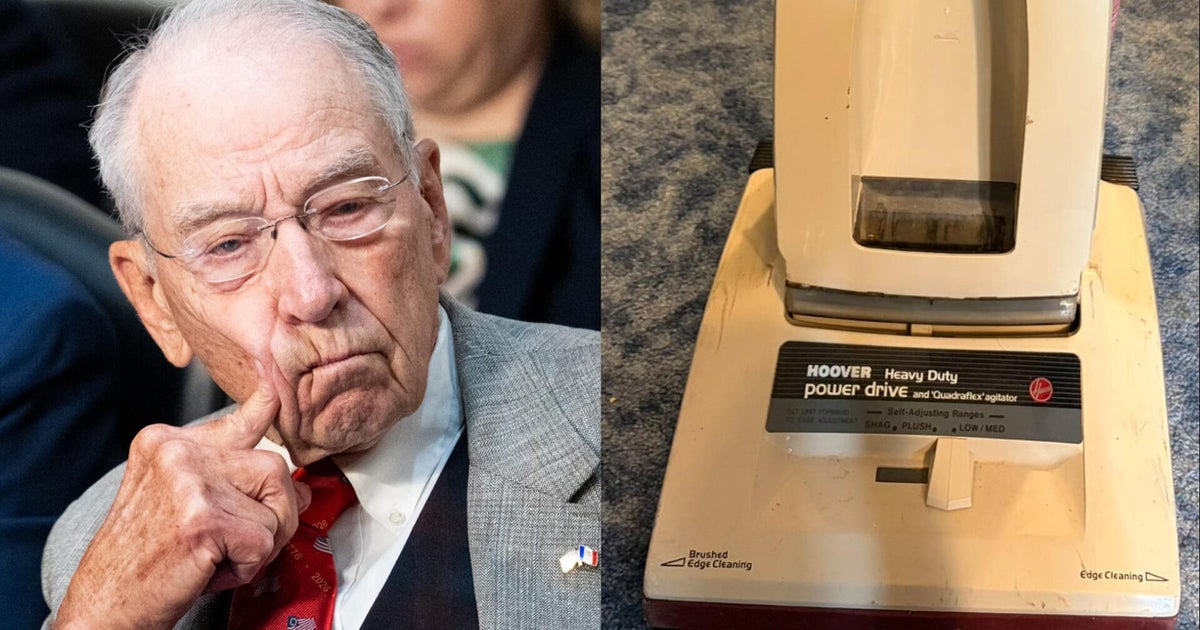
Senator Chuck Grassley shared that his vacuum cleaner, named Beth, has retired after nearly 50 years of use in his family. He posted pictures of the vacuum, calling it "old reliable."
Key Facts
The vacuum cleaner is named Beth.
Beth has been used by Senator Chuck Grassley's family for almost 50 years.
Senator Grassley referred to Beth as "old reliable."
The news report about Beth's retirement was shared by CBS News.
Tony Dokoupil reported the story.
Read the Original
Want the full story? Tap a source to open the original
article.
A former Northern Arizona University fraternity leader pleaded guilty to causing the death of a pledge by forcing him to drink too much alcohol during a rush event. The pledge, Colin Daniel Martinez, died from alcohol poisoning, and the fraternity chapter was shut down after the incident.
Key Facts
Carter Eslick, 20, pleaded guilty to felony hazing linked to Colin Martinez’s death.
Martinez, 18, was pledging to the Delta Tau Delta fraternity chapter at NAU.
Martinez’s blood alcohol level was 0.425%, which is extremely dangerous.
Eslick was the pledge master, the member in charge of new pledges, at the time.
Martinez and three others drank from two bottles of vodka until they vomited.
The fraternity was suspended by the university, and the national group closed the NAU chapter.
Eslick faces up to four years probation and possibly up to one year in jail at sentencing.
Witnesses tried to monitor Martinez’s condition after he became unresponsive but were unable to save him.
Read the Original
Want the full story? Tap a source to open the original
article.
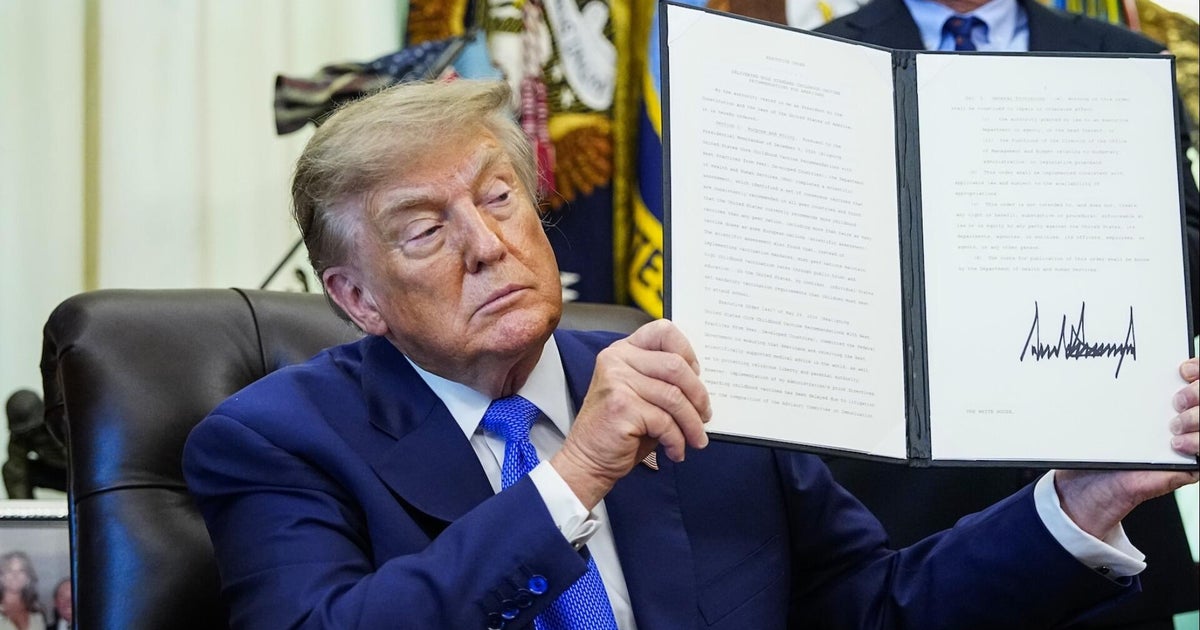
President Donald Trump signed an executive order to reduce the number of vaccines recommended for children as they return to school during a large measles outbreak. Health experts advise parents to follow their children’s doctors’ vaccine advice despite the order.
Key Facts
President Trump issued an executive order that cuts down the number of vaccines suggested for kids.
This change comes during the worst measles outbreak in many years.
The executive order affects vaccinations that children receive before and during the school year.
Medical experts recommend parents continue to trust and follow their pediatricians’ guidance on vaccines.
The measles outbreak has raised concerns about public health and children's safety in schools.
Vaccine recommendations are usually made to protect children from preventable diseases like measles.
Read the Original
Want the full story? Tap a source to open the original
article.
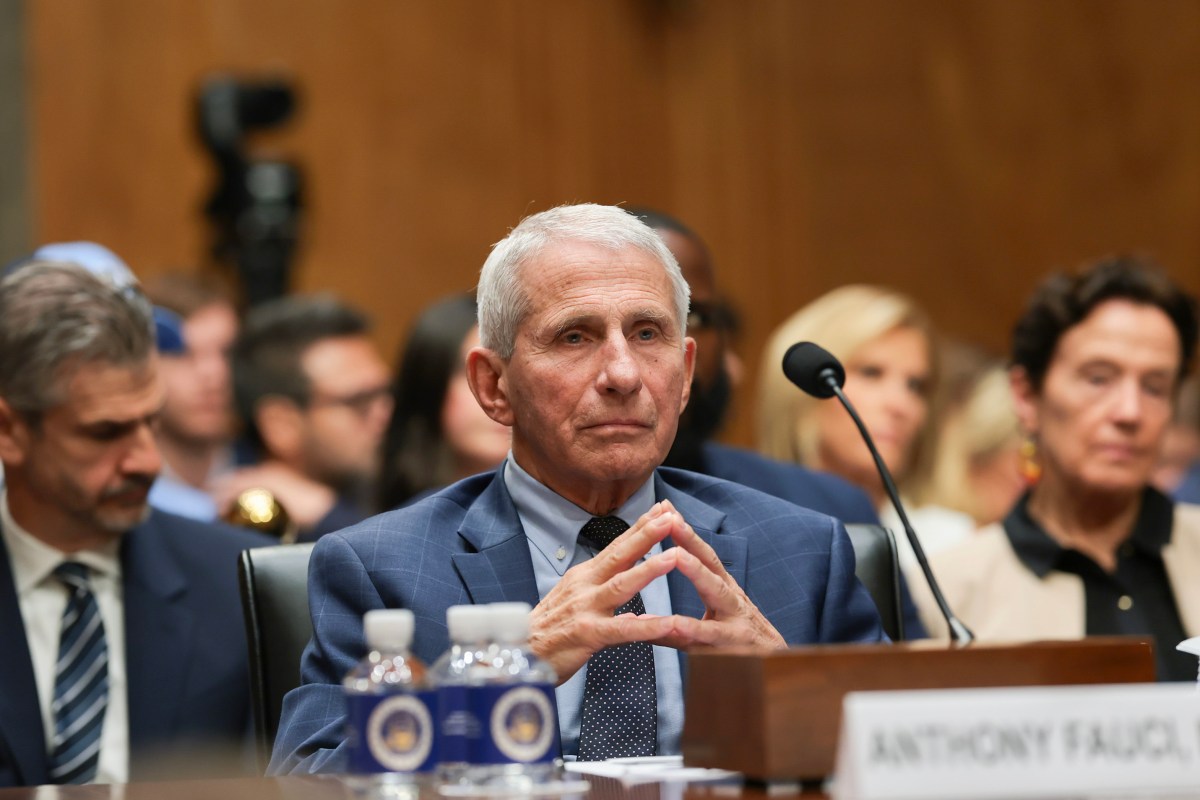
Newly released text messages from Dr. Anthony Fauci and other top health officials show their early 2021 discussions about COVID-19 vaccines for pregnant women. They talked about limited data at the time, possible risks like fever-related miscarriage, and the ongoing efforts to collect safety information.
Key Facts
The texts were released by Republican Senators Ron Johnson and Rand Paul.
Messages date from January 2021, shortly after COVID-19 vaccines became available.
Officials, including Fauci, then-Surgeon General Murthy, and CDC Director Walensky, discussed vaccine timing during pregnancy with little data.
Fauci noted a theoretical risk of miscarriage linked to fever and immune response after vaccination in the first trimester.
They emphasized no current evidence showed vaccines caused harm to pregnant women.
COVID-19 itself was stated as a serious risk for pregnant women.
A WHO advisory against Moderna vaccine in pregnancy due to limited data was mentioned.
U.S. health authorities and major obstetric groups supported allowing pregnant women to choose vaccination with doctor advice.
The phone used contained over 34,000 text messages and 522 voicemails related to the COVID-19 pandemic response.
Read the Original
Want the full story? Tap a source to open the original
article.
The American Academy of Pediatrics strongly criticized President Donald Trump’s executive order that aims to reduce childhood vaccinations. They warned this order could increase the risk of diseases like measles, which is already at a high level in the U.S.
Key Facts
President Donald Trump signed an executive order seeking fewer childhood vaccines.
The American Academy of Pediatrics opposes the order and calls it dangerous.
Measles cases in the U.S. are at the highest level in 35 years.
The executive order comes as cold and flu season approaches.
Dr. Andrew Racine, president of the Academy, publicly spoke against the order.
The Academy worries that reducing vaccines could lead to more outbreaks of preventable diseases.
Childhood vaccines protect children from serious illnesses like measles.
The criticism shows a significant disagreement between health experts and the president on vaccination.
Read the Original
Want the full story? Tap a source to open the original
article.
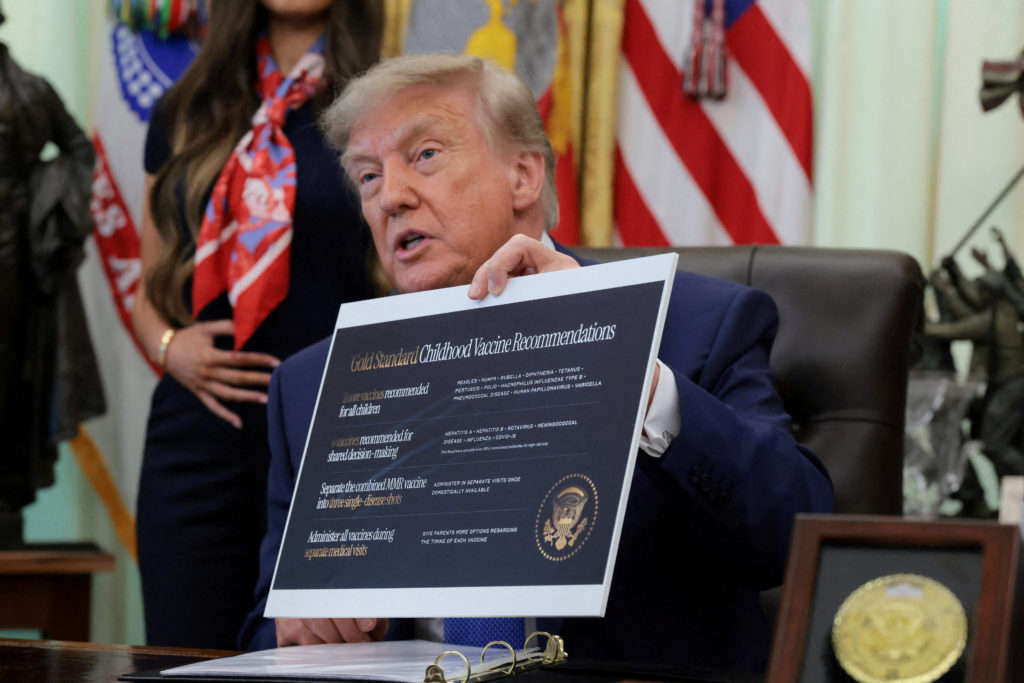
President Donald Trump signed an executive order to reduce the number of childhood vaccines given at one time by spreading the shots over multiple doctor visits. Meanwhile, Tropical Storm Dolphin hit eastern China, and the President’s Board of Peace is talking with Israel after Prime Minister Netanyahu rejected Trump’s Gaza peace plan.
Key Facts
President Trump signed an order to give childhood vaccines in smaller, separate doses instead of all at once.
The order aims to space out vaccines over multiple doctor appointments.
Tropical Storm Dolphin made landfall in eastern China recently.
President Trump’s Board of Peace is engaged in discussions with Israel.
Israeli Prime Minister Benjamin Netanyahu rejected President Trump’s Gaza peace plan.
This rejection marks a visible disagreement between Netanyahu and the White House.
Read the Original
Want the full story? Tap a source to open the original
article.
CISA, a federal agency that protects important computer systems, held a phone meeting with state officials in charge of elections. This meeting focused on securing voting systems before the upcoming midterm elections, which are 85 days away.
Key Facts
CISA stands for the Cybersecurity and Infrastructure Security Agency.
CISA works to protect the country’s critical infrastructure from cyberattacks.
State election officials joined a conference call organized by CISA.
The call discussed security measures for the upcoming midterm elections.
The midterm elections are scheduled to happen in 85 days.
President Donald Trump has said hackers might target voting systems.
This was one of CISA’s first large outreach efforts before Election Day.
Liz Landers reported on this event.
Read the Original
Want the full story? Tap a source to open the original
article.
NPR’s Tamara Keith and Amy Walter talk about current political news, including how Democratic voters feel in this election year. They also discuss outsider candidates, the influence of President Trump’s endorsement in South Carolina, and GOP Representative Max Miller continuing his campaign despite abuse accusations.
Key Facts
Tamara Keith and Amy Walter are political analysts discussing election topics.
They focus on Democratic primary voters' current preferences.
The discussion includes the energy behind outsider candidates running for office.
President Trump’s endorsement is seen as strong in South Carolina.
GOP Representative Max Miller remains in his race despite facing abuse allegations.
The conversation covers multiple key political developments for 2024.
The focus is on U.S. domestic politics during the election cycle.
Read the Original
Want the full story? Tap a source to open the original
article.
President Donald Trump signed a new executive order asking for fewer vaccines to be given. Separately, a powerful earthquake caused severe damage in Colombia.
Key Facts
President Donald Trump issued an executive order related to vaccines.
The order calls for fewer vaccines to be used.
A major earthquake struck Colombia.
The earthquake caused significant destruction.
The news was covered by CBS Evening News on August 10.
The report is available on the CBS News app and website.
Read the Original
Want the full story? Tap a source to open the original
article.
Congresswoman Ilhan Omar says an Immigration and Customs Enforcement (ICE) agent was parked outside her town hall meeting in Minnesota, claiming to be undercover but without notifying local police. Omar is asking the Department of Homeland Security for answers about the agent’s presence and whether ICE is monitoring political opponents.
Key Facts
An ICE agent was seen parked outside Ilhan Omar’s town hall event in Richfield, Minnesota.
The agent claimed to be conducting an undercover drug operation but did not notify local police.
A Richfield police officer noticed the agent’s vehicle had mismatched license plates and questioned her.
Omar wrote to Homeland Security Investigations (HSI), the investigative branch of ICE, asking why the agent was there.
Omar is concerned ICE might be using its agents to watch political opponents during the Trump administration.
The incident raised safety concerns because the local police had to investigate the agent instead of providing security.
ICE actions in Minnesota have caused protests and tensions this year.
Omar has been a vocal critic of ICE and has faced attacks at public events, including an incident where she was sprayed with a substance from a syringe.
Read the Original
Want the full story? Tap a source to open the original
article.
A new book explains how President Donald Trump won the 2024 Republican nomination even after losing the 2020 election and facing multiple criminal charges. The author, Seth Masket, discussed these factors in a CBS News interview.
Key Facts
President Trump lost the 2020 U.S. presidential election.
He faced several criminal indictments before the 2024 campaign.
Despite challenges, he secured the Republican nomination for the 2024 election.
Seth Masket wrote the book "The Elephants in the Room" about this political comeback.
The discussion was featured on CBS News in a segment called "The Takeout."
The book analyzes political and social reasons behind Trump's sustained support.
Read the Original
Want the full story? Tap a source to open the original
article.
Senator Chuck Grassley of Iowa said goodbye to his vacuum cleaner named Beth, which he had used for nearly 50 years. The story was discussed by political strategists on CBS News.
Key Facts
Senator Chuck Grassley is from Iowa.
He has owned a vacuum cleaner named Beth for almost 50 years.
He recently said farewell to this vacuum cleaner.
The story was featured on CBS News.
Political strategists Marc Short and Carolyn Bourdeaux talked about the story on CBS.
Read the Original
Want the full story? Tap a source to open the original
article.
President Donald Trump signed an executive order asking states to reconsider vaccine rules for schoolchildren and to separate the combined measles, mumps, and rubella (MMR) vaccine into three individual shots. This comes amid the country’s worst measles outbreak in decades, even though scientific experts say the combined MMR vaccine is safe and effective.
Key Facts
President Trump signed an order promoting a review of school vaccine mandates and MMR vaccination policies.
The order suggests, but does not require, states to rethink vaccine rules for school enrollment.
The MMR vaccine currently combines protection against measles, mumps, and rubella into one shot, supported by decades of safety data.
The order calls for creating a task force to work toward offering the MMR vaccine as three separate shots, alongside the combined vaccine.
Health Secretary Robert F. Kennedy Jr., known for anti-vaccine views, supports separating the MMR vaccine despite scientific consensus on its safety.
The American Academy of Pediatrics warns that separated vaccines would take over a decade to develop and urges continuing current vaccinations.
Senator Bill Cassidy criticized the executive order, stating it would raise vaccine hesitancy and make children less safe.
A federal court blocked previous Trump administration vaccine changes, siding with medical groups opposing these policy shifts.
Read the Original
Want the full story? Tap a source to open the original
article.
The U.S. government is ending a subsidy that helped lower costs for Medicare Part D prescription drug plans earlier than planned, which may cause higher monthly payments for many people starting in 2027. Medicare Part D will continue, but beneficiaries should watch for changes to their drug plans and costs during the open enrollment period this fall.
Key Facts
The Medicare Part D Premium Stabilization subsidy, worth about $9.8 billion, will end on January 1, 2027.
This subsidy was created to keep monthly premiums from rising too much after new rules capped deductibles starting in 2025.
The subsidy helped insurance companies keep costs lower for Medicare drug plan enrollees between 2024 and 2026.
After the subsidy ends, premiums may increase, but CMS says most people will see less than a $10 rise in monthly costs.
Medicare Part D itself is not ending, and coverage will continue as usual.
Open enrollment for Medicare drug plans runs from October 15 to December 7 each year, when beneficiaries can switch plans or adjust coverage.
People should carefully review plan information mailed to them this fall to understand cost and coverage changes.
Some beneficiaries, especially those with serious health conditions requiring expensive medications, are concerned about paying more.
Read the Original
Want the full story? Tap a source to open the original
article.
Fewer members of Congress are holding in-person town hall meetings with their constituents. Some lawmakers, like Rep. Mike Flood, continue these meetings despite past confrontations, believing they help voters hear directly from their representatives.
Key Facts
Congressional town hall meetings during August recess used to be common but are now rare.
Only 11 lawmakers have town halls scheduled for the rest of August 2026.
Rep. Mike Flood (R-Neb.) holds three in-person town halls a year and draws hundreds of attendees.
Last year, some Republicans faced angry crowds protesting government policies and cuts during town halls.
The National Republican Congressional Committee advised Republicans to stop holding in-person town halls after confrontations.
Rep. Flood says town halls often show respectful conversations not seen in news coverage.
Flood believes town halls help independent voters learn directly from lawmakers in a neutral setting.
Some members stopped town halls due to fears of hostile encounters, but Flood feels communication is important for improvement.
Read the Original
Want the full story? Tap a source to open the original
article.
Democratic candidate Roy Cooper leads Republican Michael Whatley by seven points in the North Carolina Senate race, based on a recent poll. The poll surveyed 915 people less than three months before the general election.
Key Facts
Roy Cooper is the Democratic candidate for the North Carolina Senate race.
Michael Whatley is the Republican candidate in the same race.
A poll by Carolina Forward and Change Research surveyed 915 people.
The poll shows Cooper leading by seven points.
The survey was conducted less than three months before the general election.
Change Research is considered a left-leaning polling group.
Cooper is a former two-term governor of North Carolina.
Read the Original
Want the full story? Tap a source to open the original
article.