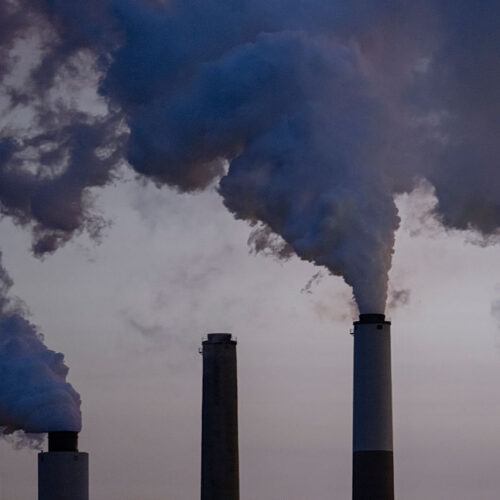
The Environmental Protection Agency (EPA) has removed climate rules for power plants, leading several health and environmental groups to sue the agency. The groups argue this change will increase pollution and harm public health, and they have asked a court to review the EPA’s decision.
Key Facts
The EPA finalized a rule that removes climate pollution limits for power plants.
Several groups, including the American Lung Association and the Natural Resources Defense Council, filed a lawsuit against the EPA.
The lawsuit claims the EPA’s decision goes against the Clean Air Act, a key U.S. law to protect air quality.
The EPA says the rule change will save billions of dollars on energy costs for Americans.
Critics say the change could cause thousands of premature deaths due to increased pollution.
The EPA argues the health harms from power plant pollution are hard to directly connect to climate change.
Advocacy groups warn the rollback will worsen climate change, heat, and poor air quality.
The lawsuit asks the US Court of Appeals to review and possibly block the EPA’s new rule.
Read the Original
Want the full story? Tap a source to open the original
article.
A federal judge gave Attorney General Todd Blanche a deadline to release parts of the Epstein case files as ordered by the court. The judge warned that if Blanche does not comply, he could face contempt charges for ignoring the court’s orders.
Key Facts
A federal judge named Emmet Sullivan is overseeing the case.
The judge ordered Attorney General Todd Blanche to release specific information from the Epstein files.
Blanche and his office have not yet followed the court’s order fully.
The judge set a clear deadline for compliance.
If Blanche misses the deadline, he may face contempt of court charges.
The issue involves how much information about Epstein’s case should be made public.
The court’s concern centers on redactions, which are parts of documents being blocked or hidden.
Read the Original
Want the full story? Tap a source to open the original
article.
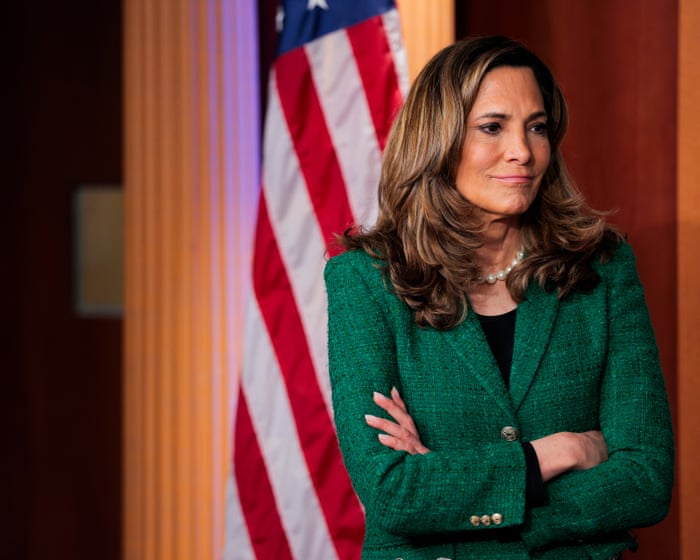
A Republican congresswoman, María Elvira Salazar from Florida, released a campaign ad criticizing President Donald Trump’s immigration enforcement policies. She highlights that many people detained under these policies have no criminal records, and she supports immigration reform to provide a better life for some undocumented immigrants.
Key Facts
María Elvira Salazar is a Republican congresswoman representing a Miami-area district with a large Hispanic population.
She released a campaign ad saying Trump’s immigration enforcement has gone too far.
In July, half of the 50,000 people detained had no criminal record.
Trump won this district by 15 percentage points in 2022 but immigration policies are now a challenge.
Salazar supports the Dignity Act, which would allow some undocumented immigrants to get legal status.
She is facing a strong challenge from Democrat Eliott Rodriguez, who is tied with her in recent polls.
Other Republicans are also distancing themselves from Trump ahead of the November midterm elections.
Democrats hope to win back control of the House and Senate, partly due to low approval of Trump’s policies.
Read the Original
Want the full story? Tap a source to open the original
article.
President Donald Trump has urged the Federal Reserve to lower interest rates to 1 percent or less, saying high rates are hurting the U.S. economy. However, the Federal Reserve recently raised rates to 3.75-4.00 percent to control inflation, and many experts warn that cutting rates sharply could cause more inflation and economic problems.
Key Facts
The Federal Open Market Committee (FOMC) raised interest rates by 0.25 percentage points to 3.75-4.00 percent.
President Trump believes the current rates are too high and wants them at 1 percent or lower.
Experts say that while some sectors might temporarily benefit from lower rates, dramatic cuts could lead to serious inflation.
Inflation in the U.S. is currently above 3 percent, and unemployment is relatively low.
Lower interest rates make borrowing cheaper, which can increase spending and demand, potentially raising inflation.
Past experience shows that very low rates during times of inflation can harm the economy.
Some economists called Trump’s suggestion to cut rates to 1 percent “economically insane” and said it could cause problems in government bond markets.
The Federal Reserve’s recent rate hike was the first since 2023 and aimed to reduce inflation pressures.
Read the Original
Want the full story? Tap a source to open the original
article.
President Trump was observed on Air Force One looking at a poster that shows the possible demolition of the Kennedy Center. This happens during a legal fight about adding his name to the building and beginning renovation work.
Key Facts
President Trump was on Air Force One.
He was examining a placard with images related to the Kennedy Center.
The poster showed a potential demolition plan for the Kennedy Center.
There is a legal dispute about putting President Trump’s name on the Kennedy Center.
The controversy also involves starting renovations at the Kennedy Center.
The photos were taken by a photojournalist from Agence France-Presse.
The event took place on Wednesday night.
Read the Original
Want the full story? Tap a source to open the original
article.
There are many cameras used by law enforcement, but no national laws control how these cameras are used. This means there are no clear rules or limits on how the police use surveillance technology.
Key Facts
Many cameras are already used by police and law enforcement agencies.
There is currently no federal law that sets rules on how these cameras are used.
Lawmakers have not created a legal framework for policing technology.
Without clear laws, police use of cameras can vary widely.
The lack of regulation raises concerns about privacy and oversight.
Some local governments may have their own rules, but there is no consistent, country-wide standard.
Surveillance technology is growing, but legal guidelines have not kept pace.
Read the Original
Want the full story? Tap a source to open the original
article.
Nora LeTorre, CEO of Eat Real, shared tips on CBS Mornings to help parents make healthier school lunches that their children will enjoy eating. The advice focuses on improving nutrition while keeping meals appealing for kids.
Key Facts
Nora LeTorre is the CEO of a company called Eat Real.
She appeared on CBS Mornings to discuss school lunch ideas.
The goal is to make lunches healthier for children.
Tips aim to encourage kids to actually eat the healthier meals.
The segment was shown on CBS News and is available on the CBS News app.
Read the Original
Want the full story? Tap a source to open the original
article.
A new report shows that one in three Americans with health insurance have medical debt they are paying off. Many people owe money from hospital visits and routine medical care, and some struggle to pay these debts without cutting back on basic needs.
Key Facts
About 33% of insured Americans have medical debt.
Hospital visits cause most of the medical debt.
Nearly half of those with medical debt owe $2,000 or more.
To pay medical bills, 37% used their savings.
30% cut back on essentials like food, heat, or rent to pay medical debt.
30% delayed or skipped medical care because of cost.
Medical debt can be hard to pay, especially for low-income families with tight budgets.
People with medical debt are advised to check their bills for errors and negotiate payment plans when possible.
Read the Original
Want the full story? Tap a source to open the original
article.
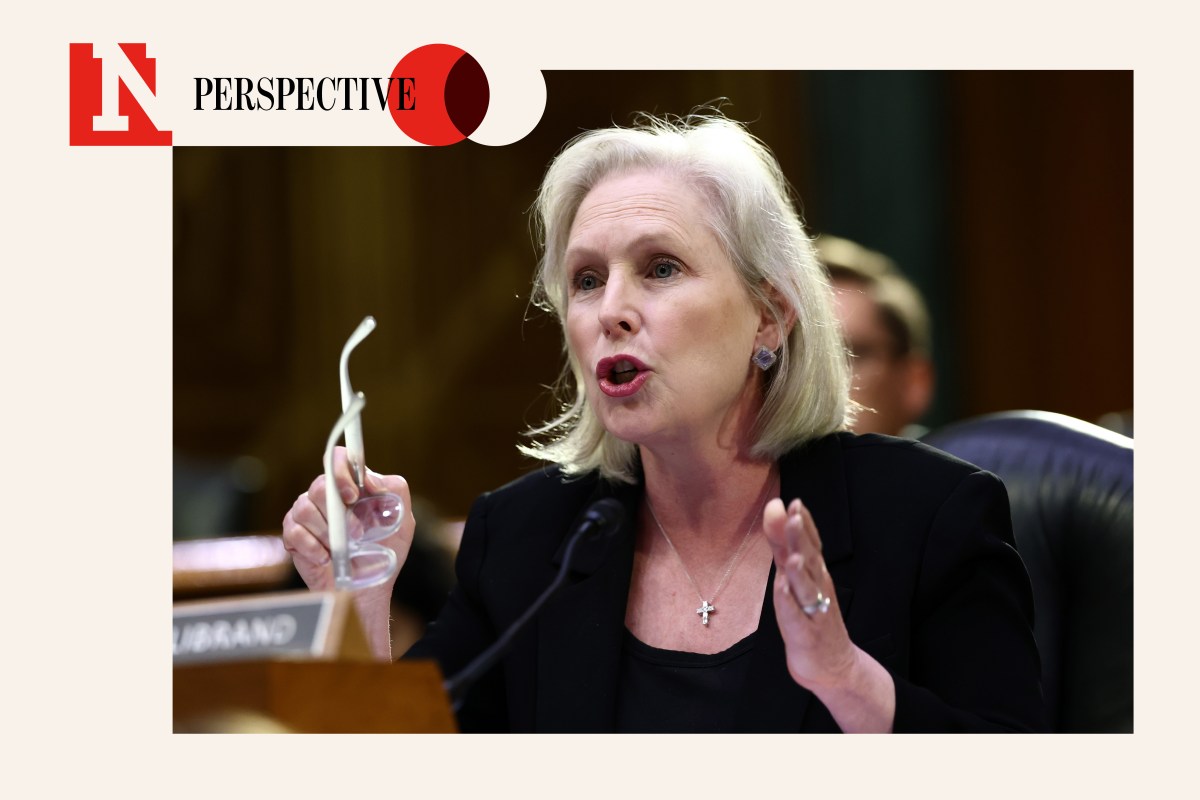
The U.S. Senate held its first hearing on menopause to discuss research gaps and how doctors are trained to treat it. Senators from both parties proposed a bill to increase federal funding and improve care and education on menopause.
Key Facts
The Senate Special Committee on Aging held the first-ever congressional hearing on menopause on September 16.
The hearing was called "Half the Country, Zero Hearings" to highlight a lack of government focus on menopause.
Senators Kirsten Gillibrand (Democrat) and Rick Scott (Republican) asked the Government Accountability Office to review menopause research funding.
Sens. Patty Murray (Democrat) and Lisa Murkowski (Republican) reintroduced a bill to provide $275 million over five years for menopause and midlife women's health.
The bill would give $25 million annually for menopause research at the National Institutes of Health (NIH), plus funds for doctor training and public education.
NIH spent $78 million on menopause research in 2025, much less than for prostate cancer research ($314 million) or broader men’s health research ($768 million).
Experts say menopause education for doctors is still insufficient, affecting patient care.
The federal government is starting to address medical and research gaps that women have experienced around menopause for generations.
Read the Original
Want the full story? Tap a source to open the original
article.
Eight groups focused on history, architecture, and preservation are involved in a legal case against the Kennedy Center. They want the center’s leaders to either step down or have someone else take control to better protect the building.
Key Facts
Eight organizations are plaintiffs in a lawsuit against the Kennedy Center.
These groups specialize in history, architecture, and preservation.
They believe the current Kennedy Center leadership is not properly protecting the building.
The plaintiffs are demanding that the current leaders resign.
Alternatively, they want a receiver appointed to manage the center.
A receiver is a person or group assigned to take control of an organization when current management is unable to manage properly.
The concern focuses on safeguarding the historical and architectural value of the building.
Read the Original
Want the full story? Tap a source to open the original
article.
Members of the U.S. House of Representatives will receive about $91,051 each in salary for nearly seven weeks when they are not meeting in session before the November 2026 midterm elections. The House Republican leaders canceled the last voting days before the election, allowing members to focus on campaigning, which drew criticism from some lawmakers who believe important work is being neglected.
Key Facts
House members will be paid roughly $91,051 each for 191 days when the House is not in session from January to November 8, 2026.
The House was scheduled to meet about 121 days, or 39% of the 312 calendar days in that period.
Republican leaders canceled the final voting days before the November midterm elections, leading to a nearly seven-week recess.
Lawmakers are still paid their salaries during these recess periods, even when no votes occur.
Some members, like Representative Ralph Norman, criticized lawmakers for campaigning instead of working and said taxpayer money should not pay for that.
Representative Thomas Massie argued the early recess was to avoid voting on impeachment and other key legislation.
Representative Jim McGovern called this Congress the "laziest and least effective" due to the low number of days in session.
There are 535 voting members in Congress, including 435 Representatives and 100 Senators.
Read the Original
Want the full story? Tap a source to open the original
article.
The Kennedy Center will close its main building for at least one week to carry out emergency repairs. The center’s director said this closure is not connected to the board, which supports President Donald Trump, deciding on longer renovation plans.
Key Facts
The Kennedy Center’s main building will close for at least one week.
The closure is for emergency repairs that need immediate attention.
The executive director of the Kennedy Center is Matt Floca.
Matt Floca explained the closure in a court filing on Thursday.
The U.S. Department of Justice said the emergency closure is not related to the Kennedy Center board’s renovation plans.
The Kennedy Center board is described as aligned with President Donald Trump.
There is a plan for long-term renovations that the board is considering.
The emergency closure could be extended if necessary.
Read the Original
Want the full story? Tap a source to open the original
article.
A spokesperson for the Kennedy Center said the building is not being demolished, despite President Donald Trump saying it might be "ripped down." The center has closed temporarily due to safety risks, and a court is reviewing decisions related to the center’s renovation and naming rights linked to President Trump.
Key Facts
The Kennedy Center spokesperson confirmed no demolition is happening at the arts center.
President Trump said the center might be "ripped down" if his administration is not recognized for restoration efforts.
A witness declared that a forklift hit pillars at the building.
The Kennedy Center was temporarily closed due to public safety risks from structural problems.
The closure could last a week or longer, depending on safety reviews.
A judge ruled that President Trump's name cannot be added to the center.
The Kennedy Center board, with supporters of President Trump, voted to close the center for renovations.
Congress allocated over $250 million for the center’s restoration.
President Trump was photographed reviewing a document titled "Kennedy Center Demolished" on Air Force One.
Read the Original
Want the full story? Tap a source to open the original
article.
President Donald Trump said that higher gas prices are a small cost compared to the benefits of the U.S. war in Iran. He made these comments during a speech to supporters in North Carolina.
Key Facts
President Trump spoke about gas price increases during a rally in North Carolina.
He called the rising gas costs a "very inexpensive price to pay."
Trump linked these gas price increases to the U.S. military action in Iran.
He suggested that even if gas prices were higher, the cost would still be worth it.
The comments focused on balancing economic pain with foreign policy goals.
Read the Original
Want the full story? Tap a source to open the original
article.
Predictions show Democrats have a 58% chance of winning both the House and Senate in the upcoming midterm elections, the highest level recorded so far. If they win, Democrats would control Congress for the last two years of President Donald Trump's second term.
Key Facts
The prediction market Kalshi shows Democrats at a 58% probability of winning both chambers of Congress.
This level is higher than the previous high of 52% in April.
Democrats need to gain 5 seats to win the House and 4 seats to win the Senate.
Poll averages show Democrats leading Republicans 49.3% to 41.9% in the national generic congressional ballot.
President Trump's approval rating is around 38%.
The Senate currently has a 53-47 Republican advantage, including independents who side with Democrats.
Some Republican seats in states like Alaska, Texas, and New Hampshire have become competitive.
Recent polls in Iowa and Texas show close races between Democratic and Republican candidates.
Read the Original
Want the full story? Tap a source to open the original
article.
Tony Burke, an Australian Labor Party politician, said that changes to immigration rules will not raise food prices and will help farming by speeding up visa processing for backpackers. The National Farmers Federation warned that limiting temporary workers could hurt harvests and raise food costs. The plan balances worker availability with keeping immigration under control and avoiding harm to other sectors like healthcare and aged care.
Key Facts
Tony Burke unveiled new visa reforms to speed up processing for backpackers who work in agriculture.
The National Farmers Federation said limits on temporary migrant workers could cause food prices to rise and harvests to be incomplete.
Backpackers wanting to stay longer in Australia will face a lottery due to restricted places for years two and three on their visas.
Burke said the plan supports multiple industries relying on overseas workers, such as healthcare and construction.
About 100 new compliance officers and 250 extra immigration detention beds will be added to enforce visa rules.
Burke stated that Australia’s immigration enforcement is less harsh than policies under the Trump administration in the U.S.
Some refugee groups and the Greens criticized the increased immigration detention and restrictions on family members of foreign students.
Major employers, including the Minerals Council, welcomed the reforms for their potential economic benefits.
Read the Original
Want the full story? Tap a source to open the original
article.
Fifteen years after the Occupy Wall Street protests, economic inequality in the U.S. remains, but the poorest half of Americans have increased their share of wealth and income has reached a record high. The protest slogan "We are the 99 percent" still influences politics, including support from both progressive and populist leaders like President Donald Trump.
Key Facts
Occupy Wall Street protests began in 2011 in Lower Manhattan to protest economic inequality and corporate power.
The richest 1 percent of American households owned about 29 percent of wealth in 2011, rising to 31.6 percent by recent Federal Reserve estimates.
The bottom 50 percent increased their share of wealth from 0.4 percent in 2011 to 2.5 percent today.
Real median household income reached $87,460 in 2025, the highest since records began in 1967.
The official poverty rate dropped to 10.2 percent recently.
Occupy's ideas about wealth inequality have shaped political discussions and gained support from diverse political groups.
President Donald Trump used similar populist language, focusing on transferring power from elites to ordinary Americans.
Some political figures across different parties now share concerns about corporate power and economic fairness.
Read the Original
Want the full story? Tap a source to open the original
article.
Senator Dan Sullivan, a Republican from Alaska, is behind former Representative Mary Peltola, a Democrat, in a recent poll for the Alaska Senate race. The poll shows Peltola leading by 5 percentage points.
Key Facts
The poll was conducted by AARP, a group focused on people aged 50 and older.
Pollsters Fabrizio Ward and Impact Research carried out the survey.
Mary Peltola has 46% support in the poll.
Senator Dan Sullivan has 41% support in the poll.
7% of people polled were undecided or supported other candidates.
The poll was released on Thursday.
Read the Original
Want the full story? Tap a source to open the original
article.
The article discusses how the rising cost of living in the United States has made people question why wealthy individuals are treated differently under the rules. It suggests that taxing very rich people could help restore faith in democracy.
Key Facts
The U.S. is facing an affordability crisis, meaning many people struggle to pay for basic needs.
This crisis has reduced optimism among Americans about the future.
People are starting to ask why rich individuals seem to have special rules or advantages.
The idea is that taxing billionaires could help address fairness in society.
Increasing taxes on the very wealthy might improve trust in the democratic system.
Read the Original
Want the full story? Tap a source to open the original
article.
Senator Andy Kim from New Jersey introduced a new bill called the Stop the Wait Act. This bill aims to gradually remove the waiting periods for Social Security Disability Insurance (SSDI) and Medicare for people with disabilities.
Key Facts
The bill is named the Stop the Wait Act.
It would end the current five-month waiting period before people can get SSDI benefits.
This change would happen gradually over five years.
It would also remove the 24-month waiting period before disabled people can get Medicare benefits.
The bill is focused on helping people with disabilities receive benefits faster.
Senator Andy Kim is a Democrat representing New Jersey.
The changes apply to Social Security Disability Insurance and Medicare programs.
Read the Original
Want the full story? Tap a source to open the original
article.