The Republican Party plans to hold its first midterm convention in Dallas to highlight what it calls the growing influence of the left wing in the Democratic Party. They aim to present themselves as focused on practical issues like taxes, drug costs, and border security, while criticizing Democratic candidates and policies as too extreme.
Key Facts
The GOP midterm convention will take place September 9-10 at the American Airlines Center in Dallas.
Republicans will show videos and messages targeting progressive Democrats, including figures like Hasan Piker and James Talarico.
Michigan Senate candidate Abdul El-Sayed, who supports Medicare for All and criticizes Israel’s policies, is a key focus for the GOP’s criticism.
President Donald Trump and other officials like Vice President J.D. Vance will speak at the convention.
The GOP plans to emphasize Republicans’ record on cutting taxes and lowering prescription drug prices.
The convention will mostly feature MAGA activists rather than donors and delegates.
Democrats chose not to hold a midterm convention, criticizing the GOP event as a celebration of Trump’s agenda.
Polling shows many voters think President Trump is not paying enough attention to economic and domestic issues.
Read the Original
Want the full story? Tap a source to open the original
article.
U.S. Immigration and Customs Enforcement (ICE) will equip its officers with body cameras by the end of September 2026. However, ICE's policy lets the agency decide if and when to share videos with the public, based on what it thinks is best for itself.
Key Facts
ICE plans to give all field officers body-worn cameras within the next two months.
The agency’s policy says footage will only be released if it serves ICE’s “best interests.”
Videos of shootings or serious injuries caused by ICE agents may not be shared right away.
A committee made up of ICE leaders and lawyers will review footage before recommending if it should be released.
The ICE director can delay or block video release if there are “specific and compelling circumstances,” though these are not clearly defined.
Officers must turn on cameras during arrests, search warrants, and emergency responses.
The policy has drawn attention because it allows ICE to control public access to important footage.
This move follows recent fatal shootings by ICE officers and growing calls for more transparency and accountability.
Read the Original
Want the full story? Tap a source to open the original
article.
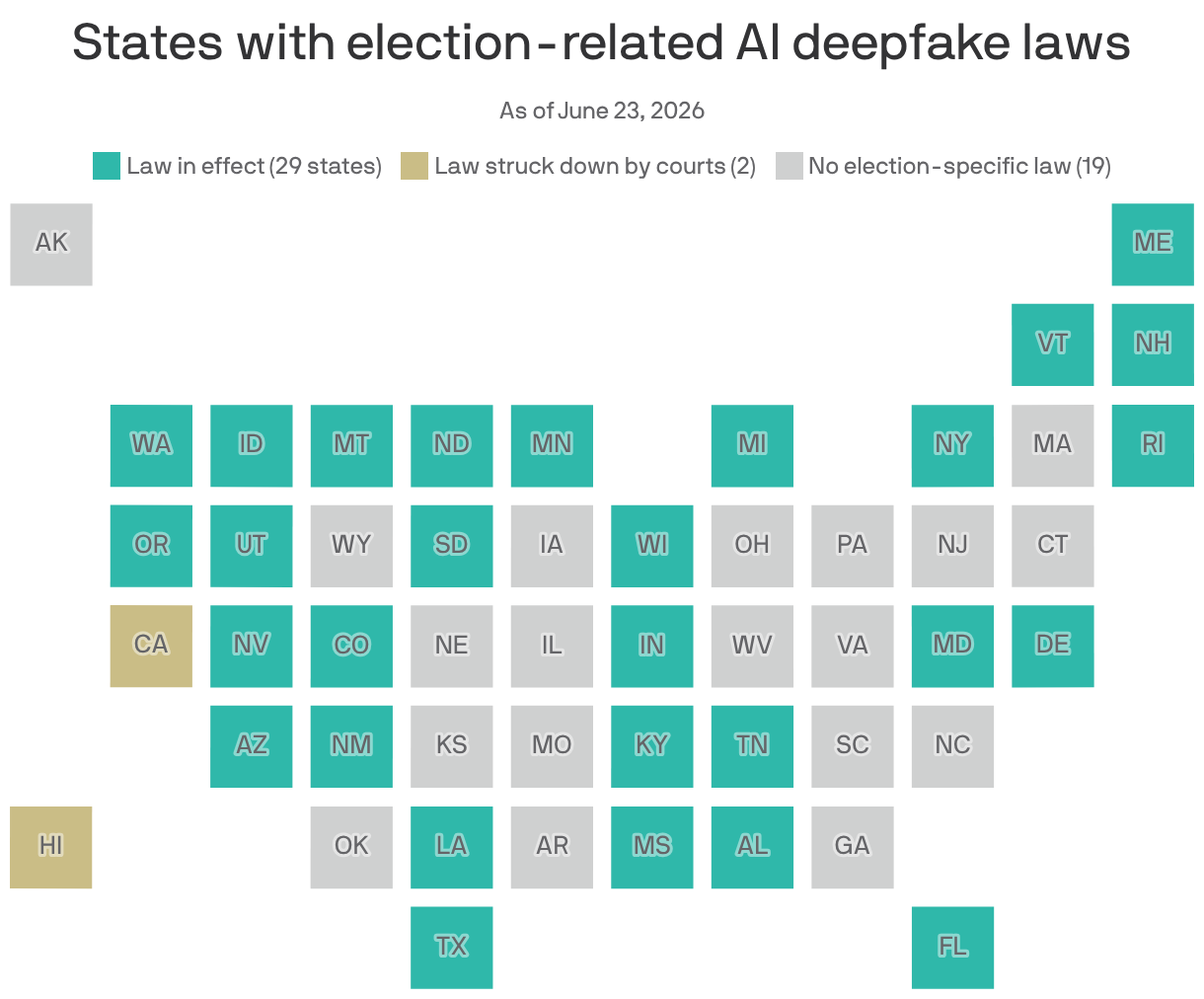
Many U.S. states have different rules about AI deepfakes in political campaigns, causing voters to have uneven protections. Some states ban or require disclosures about AI-created political content, while others have no specific laws or had their laws blocked by courts.
Key Facts
29 states have laws about AI deepfakes in elections; California and Hawaii had their laws blocked by courts.
Minnesota and Texas ban political deepfakes for a limited time before elections; Maryland bans them year-round.
Some states, like Colorado and Utah, require detailed disclosures about AI deepfakes, including creator and editing information.
California’s AI Transparency Act requires disclosures about AI-generated images starting August 3.
Hawaii passed a law banning deepfakes in ads without the person’s consent.
The federal government has no specific law yet for election AI deepfakes, but Congress passed the Take it Down Act for intimate images.
Enforcement of the Take it Down Act varies, and advocates expect legal cases to help improve enforcement.
House Democrats plan to propose federal laws on election deepfakes next year if they regain control.
Read the Original
Want the full story? Tap a source to open the original
article.
Key U.S. missile stockpiles, including Patriot and THAAD air defense missiles, have been significantly reduced during the ongoing conflict in Iran. President Donald Trump and military officials say supplies are limited but the U.S. can still escalate military action if needed, though low missile inventories influence planning for future conflicts.
Key Facts
Patriot missile stockpiles have decreased by about two-thirds since the war with Iran began.
THAAD missile stocks have been cut in half from an estimated 452 units before the conflict.
Long-range offensive missiles like the ATACM and PRSM are also running low.
Each missile costs around $4 million and can take up to two years to produce.
President Trump acknowledged some munitions are in short supply, but others have nearly unlimited availability.
Retired military leaders say missile shortages affect U.S. military planning and decision-making.
Despite these shortages, the U.S. can escalate to full-scale war if the president decides to do so.
Experts warn that missile shortages could complicate potential conflicts with other countries like China in the future.
Read the Original
Want the full story? Tap a source to open the original
article.
Secretary of State Marco Rubio is leading a strong U.S. campaign to pressure Cuba’s communist government through many new economic sanctions. These actions aim to worsen Cuba’s economy and reduce its support from other countries, as the Trump administration keeps open the possibility of military action.
Key Facts
The Trump administration has imposed about two dozen new sanctions on Cuba since last year.
These sanctions target 40 organizations, including Cuba’s state-run fuel, banking, and mining companies.
At least 38 individuals face U.S. sanctions, visa limits, and residency bans.
The U.S. is pressuring other countries to stop Cuba’s doctor-export program, calling it "human trafficking."
Cuba’s economy is collapsing due to sanctions and internal mismanagement, causing shortages of food, fuel, medicine, and money.
Cuba’s prime minister announced more private business activity allowed, the most since 1959.
U.S. fuel exports to Cuba increased to $96 million in the first half of this year, showing some business shifts amid sanctions.
New lawsuits use a law allowing Americans to sue companies profiting from properties taken during the Cuban Revolution.
Read the Original
Want the full story? Tap a source to open the original
article.
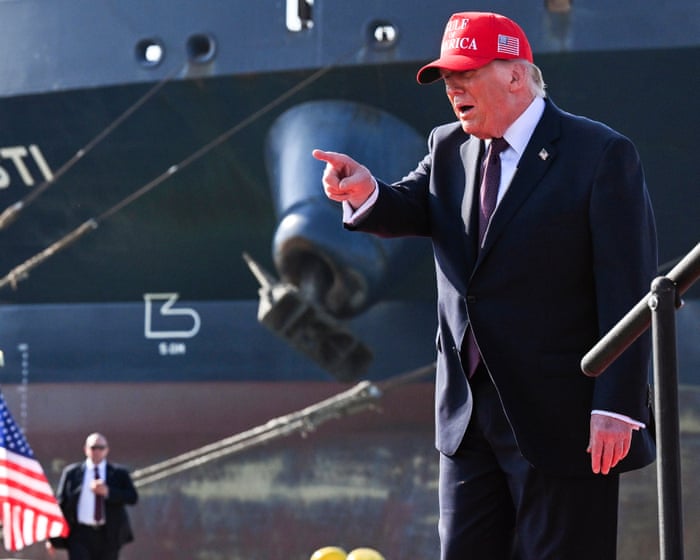
President Donald Trump said oil companies are making too much money because of the Iran war and suggested they should give some money back to the public. However, critics point out that Trump’s past policies helped oil companies make more profit, and some lawmakers want to tax these extra profits to help American families.
Key Facts
ExxonMobil and Chevron reported huge profits in the second quarter of the year, with Chevron’s earnings up nearly 400% to $12 billion and Exxon’s profits more than doubling to $14.5 billion.
President Trump said oil companies "ought to give some of that back to the public" because they are making too much money due to a shortage caused by the Iran war.
Trump launched a war on Iran in February, which contributed to higher gas prices.
Despite his recent comments, Trump has a history of supporting oil companies by easing environmental rules and meeting with oil industry leaders for campaign donations.
Trump personally owns millions of dollars in ExxonMobil and Chevron stock, potentially benefiting from their profits.
Some members of Congress have proposed a tax on oil companies’ extra profits from the Iran war, with money going to American families affected by higher fuel costs.
The White House defends Trump’s energy policies as helping to provide affordable and reliable energy while lowering gas prices.
American families have paid over $78 billion more at the gas pump since the Iran war began, according to a Brown University study.
Read the Original
Want the full story? Tap a source to open the original
article.
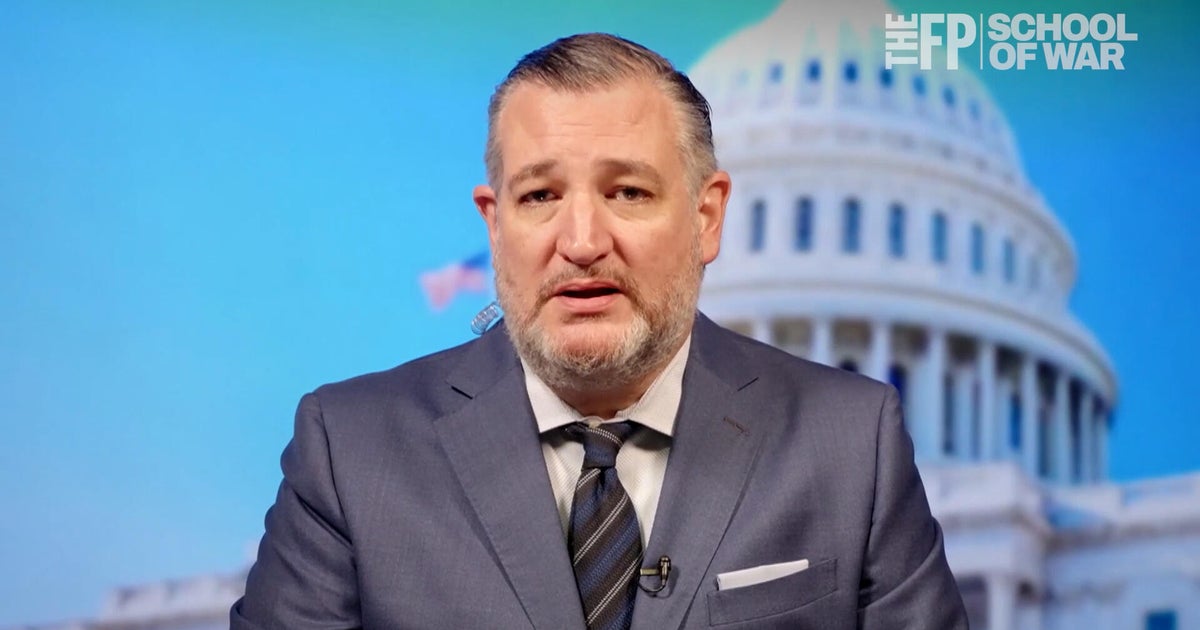
Senator Ted Cruz said President Donald Trump should provide weapons to Iranian protesters. Cruz believes this will help the protesters overthrow Iran’s government. This statement came as the U.S. works toward a deal with Iran.
Key Facts
Senator Ted Cruz spoke on the "School of War" podcast.
Cruz suggested arming Iranian protesters against their government.
He said the goal should be to make Iran’s current government fall.
President Trump is currently working on a deal with Iran.
The call to arm protesters shows a plan to increase pressure on Iran.
This position reflects ongoing tensions between the U.S. and Iran.
The White House has not announced any new moves on arming protesters.
Implied support for regime change in Iran is part of some U.S. political debates.
Read the Original
Want the full story? Tap a source to open the original
article.
Senator Ted Cruz wants the U.S. to increase pressure on Iran by arming protesters who oppose the Iranian government to help cause its collapse. He criticized recent U.S. diplomatic efforts with Iran and supports continuing military strikes and economic sanctions.
Key Facts
Ted Cruz suggests arming Iranians who protest against their government to overthrow the regime.
Cruz believes the U.S. should work toward the collapse of Iran’s ruling clerical regime.
The Trump administration seeks a deal with Iran amid ongoing conflict lasting six months.
A June memorandum aiming to ease tensions and restore negotiations between the U.S. and Iran failed last month.
Cruz calls the memorandum a bad deal that could give Iran billions of dollars and economic power.
Cruz supports ongoing U.S. strikes on Iranian military targets and keeping sanctions and blockades.
President Trump has reduced public calls for regime change but previously expressed interest in influencing Iran’s next leader.
Cruz is open to any new Iranian leader as long as they do not hate America or try to harm Americans.
Read the Original
Want the full story? Tap a source to open the original
article.
President Donald Trump is set to announce over $180 million in grants to improve education and training programs for the mining industry. These funds aim to grow the workforce skilled in mining and critical minerals, which are important for high-tech products and less reliant on foreign sources.
Key Facts
President Trump will reveal more than $180 million in grants to support mining education and training.
The announcement will happen at a meeting at the State Department with university and government leaders.
The Department of Energy will start a $100 million grant program to increase the number of graduates in mining and critical minerals within two years.
Scholarships and other education programs will be funded, open to colleges, trade schools, industry groups, and partners.
The military is contributing over $80 million to three universities: Colorado School of Mines ($32.7 million), South Dakota School of Mines ($25 million), and Johns Hopkins University ($23.6 million).
These funds will support programs such as a tech hub, workforce development, and mineral recycling.
The goal is to boost U.S. production of minerals like lithium, graphite, and rare-earth elements, which are key for electronics and aerospace.
The Trump administration has also supported the coal mining industry with $700 million in grants and relaxed environmental rules.
Read the Original
Want the full story? Tap a source to open the original
article.
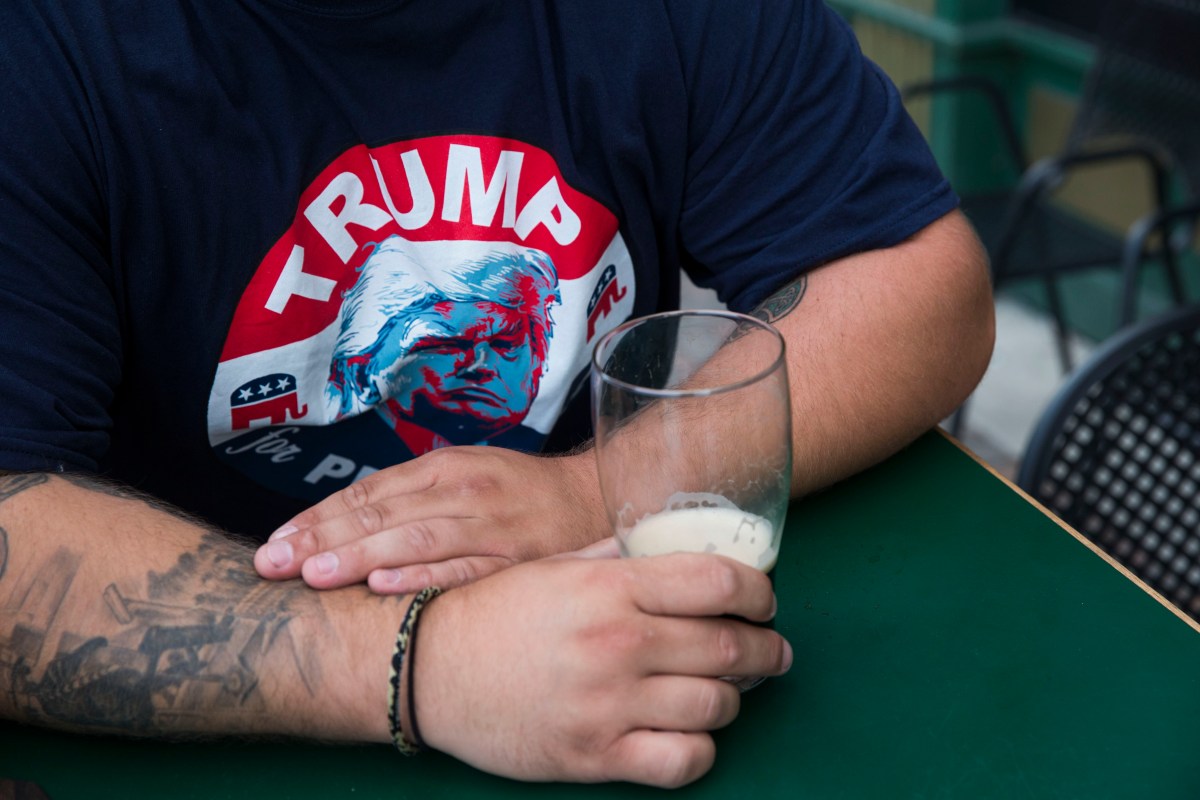
Young Republicans are drinking less alcohol than before, a change influenced by President Donald Trump’s example of avoiding drinking and a new focus on health and fitness. While drinking rates have dropped sharply among Republicans, this decline is not fully explained by health concerns, but also reflects a cultural shift toward sobriety within the party’s younger members.
Key Facts
The Young Republican National Federation held a summer conference starting August 7, with events like a “cigar caucus” and a “gym caucus.”
President Donald Trump does not drink alcohol and this has helped make sobriety more normal among younger Republicans.
The Make America Healthy Again (MAHA) movement promotes fitness, health, and looks, influencing the younger GOP members.
Republican drinking rates dropped from 65% in 2023 to 46% in 2025, a much bigger drop than the national average.
Among adults aged 18 to 34, drinking declined but at a slower rate, from 59% to 50%.
Democrats’ drinking rates stayed steady at about 61%.
Despite drinking less, Republicans are less likely than Democrats or independents to view moderate drinking as unhealthy.
Party gatherings used to involve drinking and partying; now younger conservatives largely avoid alcohol and focus on discipline and sobriety.
Read the Original
Want the full story? Tap a source to open the original
article.
Dr. Tariq Lateef is a hospice and palliative care doctor in Chicago who has struggled with the limits of modern medicine when it comes to death and dying. To better understand these challenges, he has combined his medical training with Islamic bioethics and religious studies, finding a more complete approach to care that respects both science and faith.
Key Facts
Tariq Lateef is a hospice and palliative care physician in Chicago.
He has cared for patients at the end of life and found modern medical ethics sometimes inadequate.
Lateef questioned what medicine’s purpose is when death cannot be delayed.
He attended a lecture on Islamic bioethics that influenced his thinking deeply.
Lateef has pursued religious studies at Darul Qasim college alongside bioethics at Northwestern University.
He balances his medical work with a growing knowledge of Islamic teachings.
Lateef’s goal is to create a medical approach that includes both scientific and Islamic perspectives.
He believes knowing both medicine and faith helps improve care for patients facing death.
Read the Original
Want the full story? Tap a source to open the original
article.
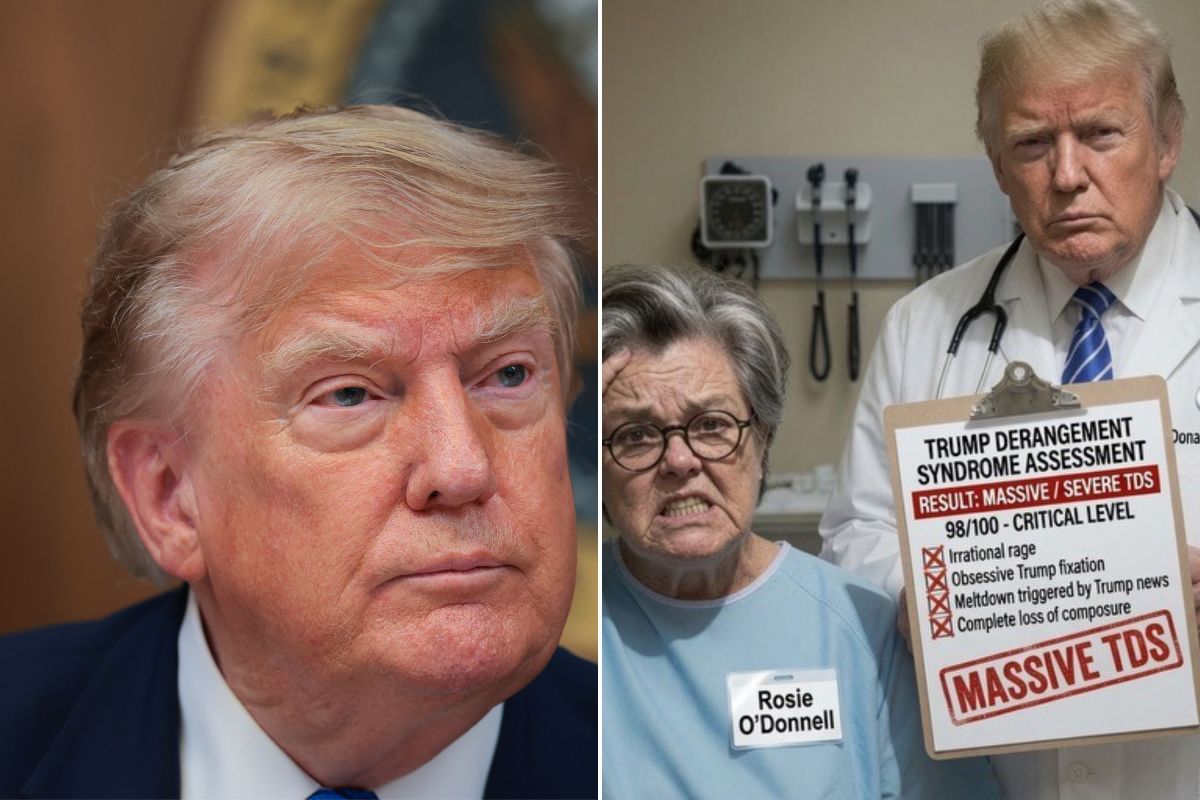
President Donald Trump shared an AI-generated image mocking comedian Rosie O'Donnell after she suggested on a podcast that he was in poor health. The image, posted on his social media platform Truth Social, portrayed O'Donnell as suffering from "Trump Derangement Syndrome," a term used by Trump and his supporters to describe intense opposition to him. This exchange revives a long-standing public feud between Trump and O'Donnell.
Key Facts
President Trump posted an AI-generated image mocking Rosie O'Donnell on Truth Social.
The image shows O'Donnell in a medical setting with a fake diagnosis of “Trump Derangement Syndrome.”
O'Donnell recently said on a podcast that Trump appeared physically ill and unfit to lead.
Trump supporters often use the phrase “Trump Derangement Syndrome” to describe extreme criticism of him.
The White House reported in May that President Trump is in “excellent health” after a medical exam.
Earlier, the White House disclosed Trump has a vein condition causing leg swelling but no serious illnesses.
Trump and O'Donnell have had a public feud since 2006, starting with O'Donnell's criticism of Trump on TV.
Trump has often used memes and AI-generated images on social media to mock critics and opponents.
Read the Original
Want the full story? Tap a source to open the original
article.
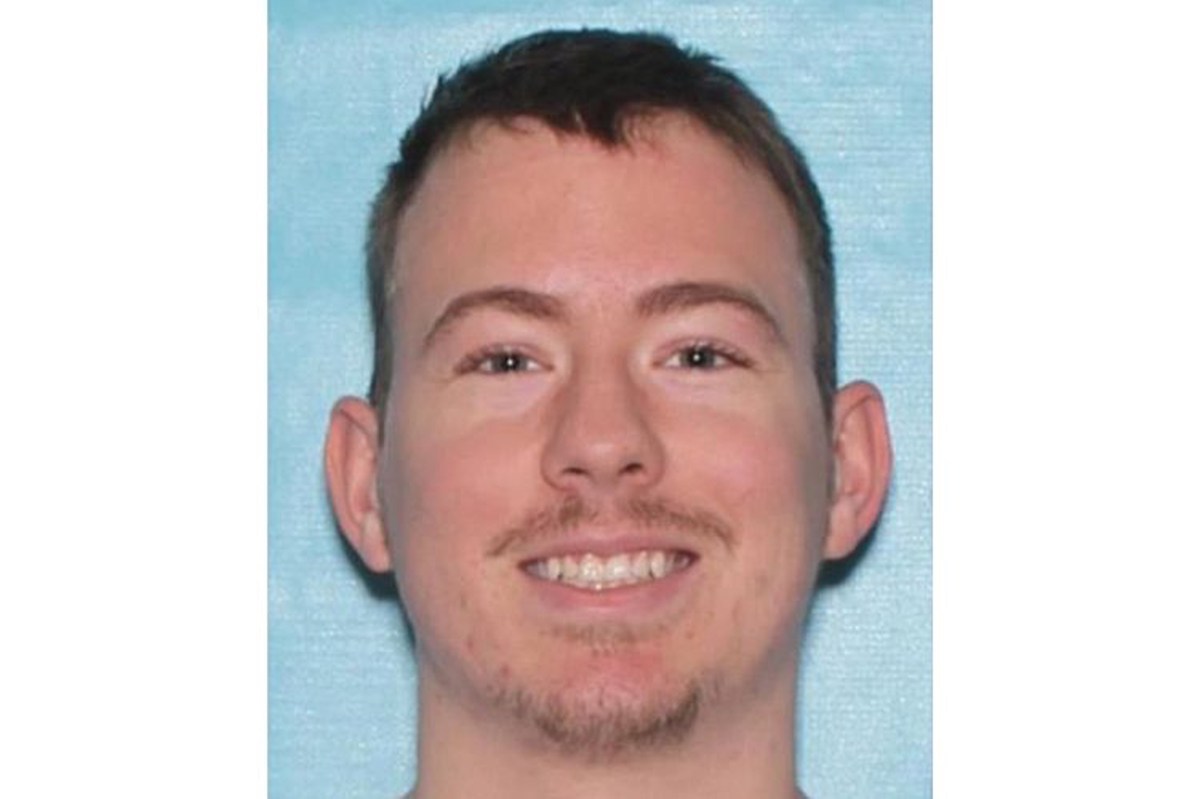
Police in Arizona found the bodies of two people in the backyard of a home where a husband, wife, and their son lived. The son, Matthew Flores, is missing and has left the country; he is now a suspect in the case.
Key Facts
Police were called to a home in Litchfield Park, Arizona, to check on the welfare of a family.
The family includes a husband, a wife, and their 27-year-old son, Matthew Flores.
Officers found the house empty but saw signs of possible foul play.
Two bodies were found in the backyard; their identity is not confirmed.
Matthew Flores fled the country and is considered a suspect.
Police found a large amount of blood and evidence that someone tried to hide it.
Authorities are still investigating and have not given more details about Flores’s location.
The case remains open and active.
Read the Original
Want the full story? Tap a source to open the original
article.
A government review in England will recommend that primary schools identify children at risk of leaving education at 16 without a job. The review also suggests wider changes in education and welfare systems to better support young people and reduce youth unemployment.
Key Facts
Primary schools in England should spot children likely to become NEET (not in employment, education, or training) by the time they finish secondary school.
The review is led by Alan Milburn and will include recommendations on education policy and the benefits system.
Over 1 million young people aged 16 to 24 are NEET in Britain, the highest number in over ten years.
Factors like poverty, mental health, and children being in care often increase the risk of becoming NEET.
Identifying and supporting at-risk children early, even from preschool, is suggested to prevent youth worklessness.
The report is expected to urge schools and services to intervene and help get young people back on track.
Welfare reforms to balance support with obligations for young people are part of the plan.
The review draws lessons from Ireland, where youth unemployment rates have fallen significantly in recent years.
Read the Original
Want the full story? Tap a source to open the original
article.
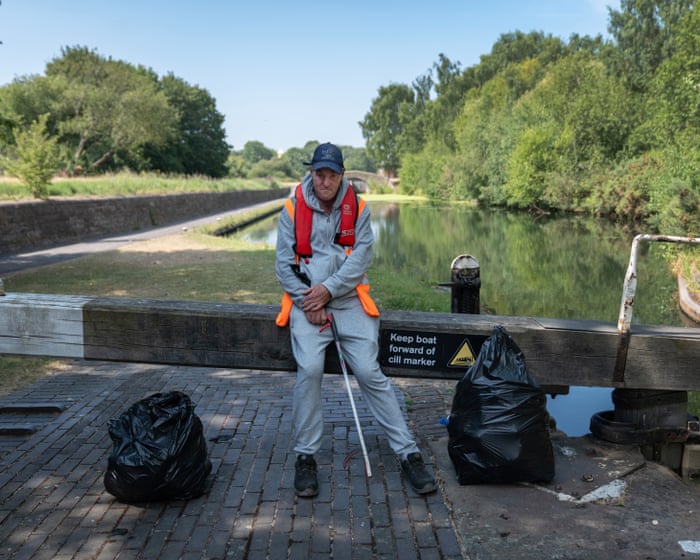
In the West Midlands, some convicted offenders are working to clean canals and improve green spaces instead of going to prison. This is part of a community payback program that helps reduce prison overcrowding by allowing courts to suspend short prison sentences and assign community work instead.
Key Facts
The community payback scheme involves offenders doing unpaid work to improve local areas.
It includes cleaning canals, removing litter, cutting vegetation, and other public service tasks.
Courts can order offenders to complete between 40 and 300 hours of community work.
Offenders work up to 28 hours a week if they are unemployed, with schedules adapted if they have jobs.
The Sentencing Act of 2024 encourages courts to suspend short prison sentences of 12 months or less.
Community payback helps with rehabilitation by combining punishment with positive community impact.
Projects can include graffiti removal, decorating public places, or planting trees if they help the community.
Supervisors overseeing offenders may come from different backgrounds and find the work rewarding.
Read the Original
Want the full story? Tap a source to open the original
article.
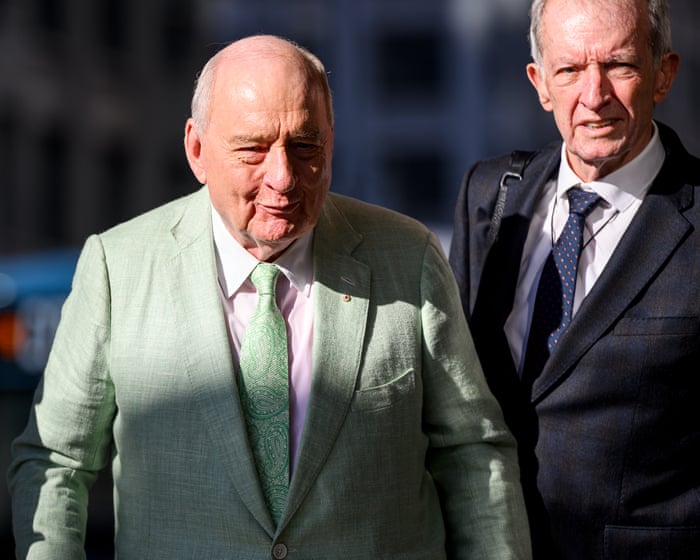
Alan Jones is on trial in Sydney, accused of 22 charges related to indecent assault and sexual touching involving six men. One complainant, identified as J, has testified and denied making up details about the alleged assaults or intending to humiliate Jones.
Key Facts
Alan Jones faces 22 charges of indecent assault and sexual touching from incidents over 20 years ago.
Complainant J is the first witness to give evidence in court.
J described incidents including unwanted kissing, sexual touching in various locations on a farm property.
During questioning, the defence suggested J fabricated parts of his story, but J denied these claims.
J provided details about Jones’s physical characteristics and events, rejecting suggestions he guessed or invented them.
The defence pointed out inconsistencies in J’s statements and questioned his memory of dates and events.
J maintained that he did not consent to the alleged actions and repeated that he did not fabricate his testimony.
The case is being heard at the Downing Centre local court in Sydney.
Read the Original
Want the full story? Tap a source to open the original
article.
Two men convicted of manslaughter in the death of police officer Andrew Harper are set to be eligible for early release next year under new government plans. The senior investigator and PC Harper’s widow have expressed strong concerns, saying the killers should not be freed early due to the seriousness of the crime.
Key Facts
PC Andrew Harper died in 2019 after being dragged behind a car during a crime scene escape.
Jessie Cole and Albert Bowers were convicted of manslaughter and sentenced to 13 years in prison.
Under revised rules, they can be released after serving half their sentence instead of two-thirds.
The government changed early release rules to reduce prison overcrowding but excluded some serious offenders like rapists and child sex offenders.
The senior officer who led the investigation said he was “appalled” by the possibility of their early release.
PC Harper’s widow is campaigning against their early release and has started a petition.
The justice secretary said about 1,000 prisoners will no longer be released early due to the new rules.
Prisoners released early will face strict controls and victims will be consulted before release.
Read the Original
Want the full story? Tap a source to open the original
article.
The U.S. job market added nearly 100,000 jobs in July 2026, showing some improvement after weak hiring in 2025. Despite stable hiring and low layoffs, young people and those without jobs still find it hard to get work, as many unemployed have been out of work for a long time.
Key Facts
In July 2026, the U.S. likely added about 98,000 jobs, an increase from 57,000 in June.
The unemployment rate dropped to 4.2% in June and stayed around that level in July.
Layoffs are low, giving people who have jobs strong job security.
About 27.5% of unemployed people in May had been without a job for six months or more.
Hiring varies by industry: some companies struggle to find workers and pay higher wages, while others use technology to reduce hiring needs.
Job growth in 2025 was very low, averaging fewer than 10,000 new jobs per month.
Factors like President Donald Trump’s immigration policies and baby boomers retiring reduced the number of people looking for work.
The number of new jobs needed each month to keep unemployment stable has fallen from about 155,000 to near zero.
Read the Original
Want the full story? Tap a source to open the original
article.
President Donald Trump has frequently talked about grass, especially at the White House, since his second term began. He often links his knowledge about grass to his experience owning golf courses and his work on renovating the White House grounds.
Key Facts
President Trump has mentioned grass at least 45 times in public events or interviews over the past 18 months.
He discussed plans to pave over some grass visible from the Oval Office window shortly after his second inauguration.
Trump compares grass to humans, saying it has life and needs care.
He believes good grass is important for business, based on his golf course ownership experience.
Trump’s interest in grass reflects his background in real estate and construction projects.
A lawn expert from Scotts Miracle-Gro recently met with Trump about planting new grass on the White House South Lawn.
Trump talks about grass more often now than during his first four-year term, when he mentioned it 26 times.
The White House has not provided official comments on Trump’s frequent remarks about grass.
Read the Original
Want the full story? Tap a source to open the original
article.
Republican Congressman Andy Ogles lost his primary in Tennessee despite receiving President Donald Trump’s endorsement. Ogles, known for controversial anti-Muslim statements, was defeated by Charlie Hatcher, who will run against a Democrat in the November general election.
Key Facts
Andy Ogles is a Republican Congressman from Tennessee with a record of anti-Muslim remarks.
President Trump gave Ogles a "complete and total endorsement" before the primary.
Ogles lost the primary to Charlie Hatcher, the state’s former agriculture commissioner.
Hatcher also describes himself as pro-Trump but criticized Ogles’s anti-Muslim comments.
The Tennessee district was redrawn to favor Republicans in the upcoming November election.
Hatcher will face Democrat Chaz Molder, mayor of Columbia, Tennessee, in November.
Tennessee Governor Bill Lee endorsed Hatcher late in the race.
Ogles made statements that were widely condemned for targeting the Muslim community.
Another Trump-endorsed candidate, Amir Hassan in Michigan, also lost a primary this week.
Midterm primary elections are ongoing across the US, with all House and some Senate seats up for election.
Read the Original
Want the full story? Tap a source to open the original
article.