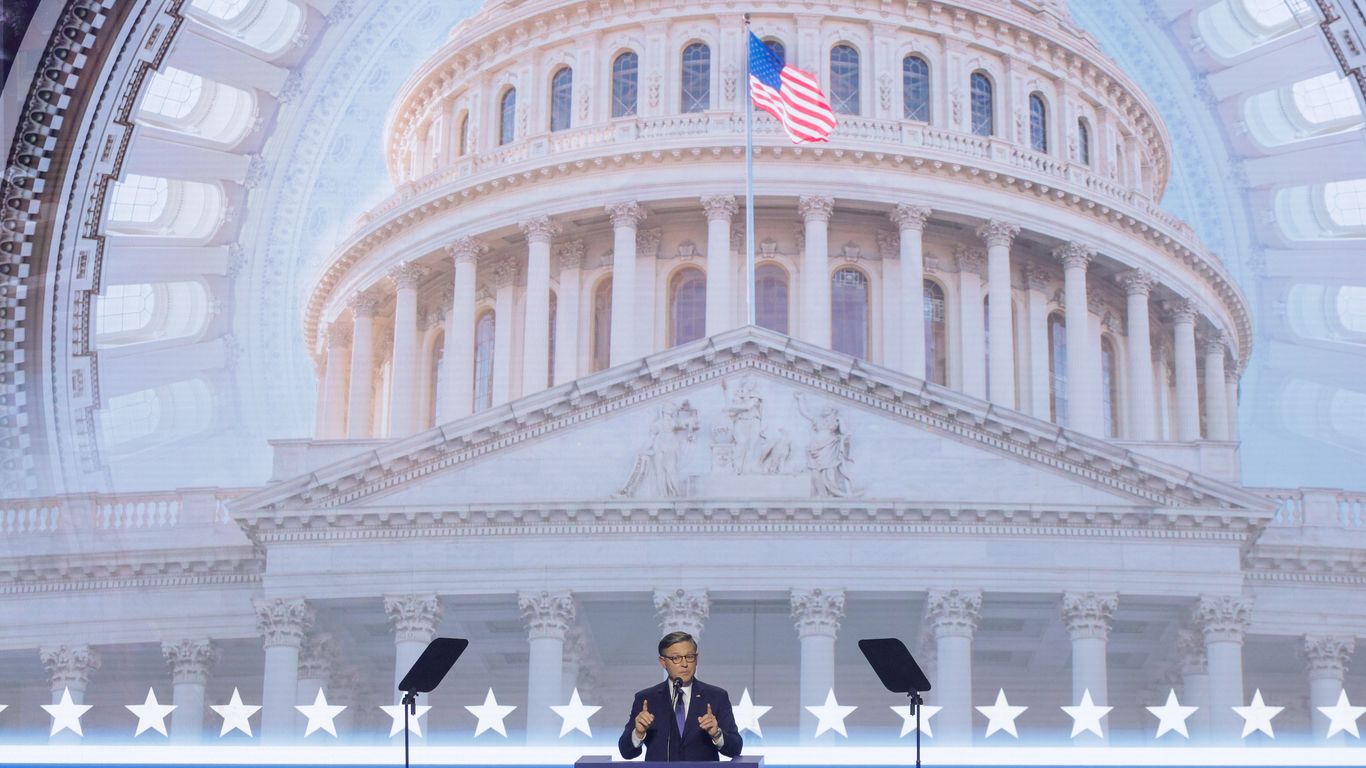
House Speaker Mike Johnson’s decision to end the current congressional session early has caused a conflict with Representative Thomas Massie, who wants more days in session to push votes on important issues. Massie claims Johnson is cutting days to avoid tough votes, including an impeachment effort against Defense Secretary Pete Hegseth, while Johnson calls this a publicity stunt.
Key Facts
Speaker Johnson sent the House home for over six weeks before the midterm elections.
Rep. Thomas Massie is upset because this recess delays a vote on impeaching Defense Secretary Pete Hegseth.
Massie introduced eight articles of impeachment against Hegseth as a "privileged resolution" that requires quick House action.
Johnson canceled Thursday’s session, pushing the vote until after the elections.
Massie accused Johnson of avoiding votes by shortening the House calendar, a claim Johnson denies.
This is not the first time Massie has accused Johnson of using recesses to avoid votes, including on files related to Jeffrey Epstein.
Some other Republicans also criticize Johnson for canceling voting days during the election year.
Massie does not currently plan to try to remove Johnson as speaker but says others may take action in the future.
Read the Original
Want the full story? Tap a source to open the original
article.
President Donald Trump praised Federal Reserve Chair Kevin Warsh but blamed the entire Federal Reserve board for raising interest rates. Trump said the board members were appointed by other people and implied they were responsible for the decision, not Warsh alone.
Key Facts
President Trump spoke to reporters in North Carolina.
He expressed support for Federal Reserve Chair Kevin Warsh.
Trump said the board of the Federal Reserve made the decision to raise interest rates.
The board members were appointed by others, not just Warsh.
Trump suggested Warsh faces challenges because of the board’s decisions.
Read the Original
Want the full story? Tap a source to open the original
article.
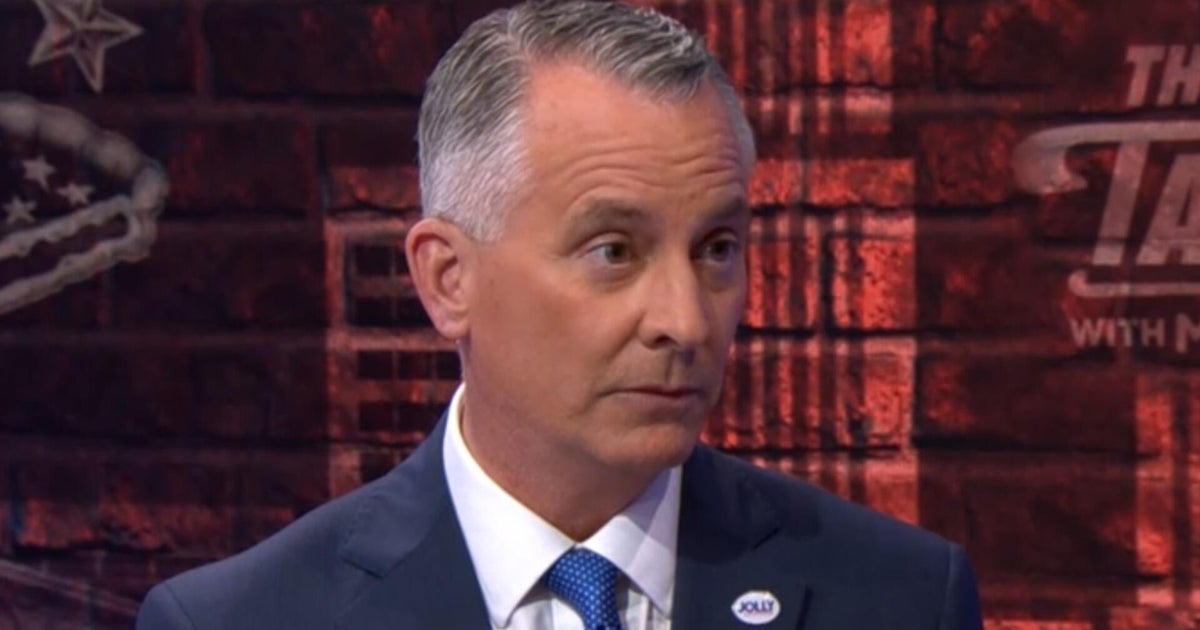
David Jolly, a Democrat running for governor in Florida, says the current political situation is similar to the time after the Watergate scandal in 1974. Democrats are hopeful about winning, even though they have not won a statewide election in Florida since 2018.
Key Facts
David Jolly is the Democratic candidate for Florida governor.
He compares today’s politics to the period after the Watergate scandal in 1974.
Democrats are optimistic about this election cycle in Florida.
Florida has not elected a Democrat to a statewide office since 2018.
President Donald Trump adopted Florida as his home state.
Jolly discussed his campaign on CBS News program "The Takeout."
The governor’s race in Florida is seen as challenging for Democrats.
Read the Original
Want the full story? Tap a source to open the original
article.
Sabato’s Crystal Ball, a political forecast, moved eight U.S. House of Representatives races to favor the Democratic Party. Two of these races changed from slightly favoring Republicans to being uncertain, showing more districts are now competitive before the November midterm elections.
Key Facts
Sabato’s Crystal Ball updated its ratings for House races on a Wednesday.
Eight races were shifted to favor the Democratic Party.
Two races moved from “leans Republican” to “toss-up,” meaning no clear favorite.
One notable race is an open seat in Iowa’s 2nd Congressional District.
These changes indicate more closely contested House districts this year.
The updates come seven weeks before the midterm elections in November.
Sabato’s Crystal Ball is a well-known election forecast tool.
Read the Original
Want the full story? Tap a source to open the original
article.
The United States Federal Reserve has raised interest rates for the first time in over three years to help lower rising inflation. The Fed increased the benchmark rate by 0.25%, now set between 3.75% and 4%, aiming to bring inflation back to 2%.
Key Facts
The Federal Reserve’s 12-member committee voted unanimously to raise interest rates by a quarter of a percentage point.
Inflation in the US reached 3.4% last month, above the Fed’s 2% target.
The Fed’s goal is to slow inflation by making borrowing more expensive, which may reduce spending.
Higher interest rates will increase costs for people with credit card debt and variable-rate loans like some home mortgages.
The rate increase comes less than 50 days before US midterm elections, potentially impacting voter sentiment.
Inflation has partly risen due to tariffs, the US conflict with Iran, and increased spending on artificial intelligence.
President Donald Trump has opposed higher rates and pressured the Fed for lower borrowing costs.
Kevin Warsh, the Fed Chair appointed by Trump, led the decision to raise rates despite Trump’s preference for lower rates.
Read the Original
Want the full story? Tap a source to open the original
article.
The U.S. House passed a bill to prevent Americans from paying higher electricity bills caused by growing data centers. The bill requires tech companies to cover the costs of new power infrastructure needed for these data centers instead of passing them to consumers. The bill now goes to the Senate.
Key Facts
The bill is called the Ratepayer Protection Act and passed 417 to 3 in the House.
It aims to stop the increased electricity costs caused by new data centers from being paid by regular consumers.
Tech companies that operate large data centers would have to pay for new power plants and infrastructure they need.
Data center electricity use could double by 2030 and may account for over 10% of U.S. power demand.
The bill was sponsored by GOP Rep. Gabe Evans of Colorado and supported by members from both parties.
President Donald Trump supports the AI industry and encourages companies to secure their own power supply.
Some Democrats and Republicans say the bill helps but does not solve all issues related to AI and data centers.
The bill responds to rising energy costs linked to the growth in AI-related data centers.
Read the Original
Want the full story? Tap a source to open the original
article.
The House of Representatives passed the bipartisan Ratepayer Protection Act to address rising costs related to building data centers that support AI technology. The bill asks state utility regulators to require data centers to pay some of the costs for new power generation, aiming to protect consumers from higher electricity bills.
Key Facts
The Ratepayer Protection Act passed the House with a vote of 417-3.
The bill requires state utility regulators to consider rules that make data centers share costs for new power plants.
Data centers use a lot of electricity, causing higher utility costs and concerns about the power grid and water use.
About 70% of Americans oppose building new data centers near their communities.
Lawmakers from both parties support slowing or restricting data center growth to address these concerns.
President Donald Trump opposes slowing AI or data center development, arguing it is important for U.S. technology leadership against China.
Trump has said communities that block data centers will be left behind economically.
The bill passed amid growing debate over AI’s rapid growth and its impact on infrastructure and consumers.
Read the Original
Want the full story? Tap a source to open the original
article.
A federal judge ruled that the Department of Homeland Security (DHS) likely violated the First Amendment by sending warning notices to a New York man after he sent a critical email to Immigration and Customs Enforcement (ICE). The judge ordered DHS to stop sending such notices to the man.
Key Facts
The ruling was made by U.S. District Judge Rudolph Contreras.
Judge Contreras was appointed by President Obama.
The man is from New York and sent an email criticizing ICE.
DHS sent the man "warning notices" after his email.
The judge said the warnings probably violated the First Amendment, which protects free speech.
The judge ordered DHS not to send any more warning notices to the man.
The case involves government limits on citizens’ rights to express criticism.
Read the Original
Want the full story? Tap a source to open the original
article.
The U.S. House of Representatives approved a bill imposing sanctions on Russia and Iran with a vote of 262 to 159. The bill was promoted by the late Senator Lindsey Graham and now goes to President Donald Trump for his signature.
Key Facts
The House passed a sanctions bill targeting Russia and Iran.
The vote was 262 in favor and 159 against.
The bill was supported by Senator Lindsey Graham before his passing.
The measure will next be considered by President Donald Trump for approval.
The sanctions aim to increase pressure on Russia and Iran for their actions.
The vote took place on September 16, 2026.
The bill includes measures related to U.S. foreign policy and national security.
This action reflects ongoing tensions between the U.S. and both countries.
Read the Original
Want the full story? Tap a source to open the original
article.
The U.S. House of Representatives voted for the third time to end the war with Iran by limiting President Donald Trump’s ability to carry out military actions without Congress’s approval. The measure still needs to be approved by the Senate, and it comes after the conflict has lasted more than six months, although President Trump initially said it would last only weeks.
Key Facts
The House of Representatives voted to stop President Trump from continuing military action against Iran without Congress agreeing.
This is the third time the House has voted on this war powers resolution.
The resolution needs to be passed by the Senate before it becomes law.
The war with Iran has lasted nearly seven months.
President Trump had originally said the conflict would last only weeks.
The issue was discussed by Amna Nawaz with correspondent Reza Sayah.
The vote reflects ongoing debate about the president’s power to conduct war without full congressional approval.
Read the Original
Want the full story? Tap a source to open the original
article.
Speaker Mike Johnson announced that the U.S. House of Representatives will take a break one day earlier than planned while there is a move to impeach Defense Secretary Pete Hegseth. Also, fencing was put up around the Kennedy Center after President Donald Trump’s chosen board decided to close it for repairs, and a news helicopter crashed in Los Angeles, killing three people.
Key Facts
The U.S. House will recess one day earlier than originally scheduled.
This change comes as there is a plan to impeach Defense Secretary Pete Hegseth.
Fences were installed around the Kennedy Center.
The Kennedy Center was closed for repairs following a vote by the board appointed by President Donald Trump.
A news helicopter crashed in Los Angeles.
Three people died in the helicopter crash.
Read the Original
Want the full story? Tap a source to open the original
article.
The US Congress passed a bill that gives President Donald Trump more power to increase tariffs on countries buying Russian energy and to impose new sanctions on Russia and those helping it. The bill aims to punish Russia for its war against Ukraine by cutting off money that supports its military actions.
Key Facts
The bill is called the Lindsey O Graham Sanctioning Russia and Iran Act of 2026 and passed with a 262-159 vote.
It allows President Trump to raise tariffs up to 100% on top buyers of Russian energy, including China.
The bill targets Russian officials, military helpers, and foreign groups that help Russia avoid previous sanctions.
It also focuses on stopping Russia’s “shadow tankers,” ships that secretly move Russian oil despite sanctions.
Some Democrats worried the bill gives too much power to President Trump to impose tariffs even on US allies.
The Senate passed the bill earlier with an 86-11 vote, but the House had more debate and closer votes.
Supporters say the bill is needed to cut off funds for Russia’s war and to help Ukraine during a difficult winter.
The Ukrainian government and many US Ukrainians support the bill as an important step against Russia’s aggression.
Read the Original
Want the full story? Tap a source to open the original
article.
The family of Tierra Walker, a Texas woman who died of preeclampsia while pregnant, filed a lawsuit against Texas Attorney General Ken Paxton and doctors. They say she was denied an abortion despite serious health problems during her pregnancy in 2024.
Key Facts
Tierra Walker, 37, was four months pregnant when she developed preeclampsia.
Preeclampsia is a dangerous pregnancy condition that can cause seizures, blood clots, and high blood pressure crises.
Walker suffered seizures, blood clots, and a hypertensive crisis before her death.
Doctors refused to perform an abortion after she asked multiple times.
Walker died as a result of these health complications.
Her family is suing Texas Attorney General Ken Paxton and the doctors involved.
The lawsuit claims that denying the abortion led to Walker’s death.
The case highlights tensions around abortion laws in Texas in 2024.
Read the Original
Want the full story? Tap a source to open the original
article.
The US House of Representatives voted to hold billionaire investor Leon Black in contempt of Congress because he did not comply with subpoenas in the investigation of Jeffrey Epstein. The case is now with the Justice Department, which will decide if criminal charges should be filed.
Key Facts
Leon Black is a billionaire investor linked to Jeffrey Epstein.
The House voted unanimously to hold Black in contempt of Congress for ignoring two subpoenas.
This decision follows a House Oversight Committee recommendation.
Black did not attend a scheduled deposition on September 3 and did not fully respond to another subpoena.
Black had earlier testified voluntarily but refused to answer some questions about nondisclosure agreements.
Black has said he did not know about Epstein’s criminal activity and denied any wrongdoing.
The Justice Department will decide whether to press criminal charges after the House referral.
Jeffrey Epstein died in 2019 while waiting for trial on charges related to sex trafficking minors.
Read the Original
Want the full story? Tap a source to open the original
article.
The primary elections for the 2026 Senate race have ended with the recent vote in Delaware. With about seven weeks left before Election Day, Democrats see the North Carolina Senate race as their best chance to win a seat currently held by Republicans.
Key Facts
The 2026 primary season ended after Delaware held its primary election.
Election Day is about seven weeks away.
The Democratic Party aims to gain control of the U.S. Senate.
North Carolina’s Senate race is viewed as a key opportunity for Democrats.
The seat in North Carolina is currently held by a Republican.
Public media journalist Colin Campbell discussed the race with Lisa Desjardins.
The focus is on how Democrats can flip this GOP-held seat.
Read the Original
Want the full story? Tap a source to open the original
article.
The House of Representatives passed a bill imposing new sanctions on Russia despite opposition from many Democrats. The bill lets President Trump place high tariffs on top buyers of Russian oil and extends sanctions on Iran’s energy and weapons sectors.
Key Facts
The House passed the Russia sanctions bill by a vote of 262 to 159.
58 Democrats supported the bill, while 7 Republicans opposed it.
The Senate approved the bill with strong bipartisan support in August.
The bill is named after the late Senator Lindsey Graham, who helped negotiate it.
It allows the president to impose tariffs up to 100% on the top five buyers of Russian oil or gas, with some exceptions.
Sanctions target Russian President Putin, government officials, oligarchs, banks, and buyers of Russian energy.
The bill extends sanctions on Iran’s energy and weapons sectors and lets the president waive them if in U.S. national interest.
Some Democrats oppose the bill because they believe it expands presidential tariff powers too much and may raise U.S. prices.
Read the Original
Want the full story? Tap a source to open the original
article.
There are over a dozen closely contested Senate races this year that will decide which party controls the Senate. Most of these key seats are currently held by Republicans, who are working hard to keep them.
Key Facts
More than 12 Senate seats are highly competitive this election cycle.
These races will largely determine the Senate's future balance of power.
Republicans currently hold most of the vulnerable seats.
Both parties are campaigning strongly in these key states.
The Cook Political Report tracks and analyzes these races.
Lisa Desjardins and Jessica Taylor discuss the political map and these Senate contests.
Read the Original
Want the full story? Tap a source to open the original
article.
Vice President JD Vance asked voters to give the current Republican leadership another chance in the upcoming midterm elections. Polls and prediction markets show Democrats gaining momentum and possibly winning both the House and Senate, while Republicans try to keep control.
Key Facts
JD Vance spoke on the All-In Podcast, urging Americans to support Republicans in the midterms.
Many polls show Democrats leading in generic congressional ballots and key battleground states.
Prediction markets indicate increasing chances for Democrats to win both the House and Senate in 2026.
Republicans currently hold narrow majorities in both the House and Senate.
Midterm elections often result in losses for the party holding the presidency.
Polls from YouGov/Economist show mixed results, with Democrats leading for the House but Republicans slightly ahead in Senate races, though within the margin of error.
Vance criticized Democrats for being influenced by radical groups and opposed illegal immigration.
Both parties see the midterms as crucial for controlling Congress and advancing their agendas.
Read the Original
Want the full story? Tap a source to open the original
article.
The U.S. House of Representatives approved a bill that lets President Trump impose tariffs and stronger sanctions on countries that buy energy from Russia. The bill now goes to President Trump to sign into law.
Key Facts
The bill gives President Trump the power to apply tariffs on countries buying Russian energy.
It allows for tougher penalties against the Russian government due to the war in Ukraine.
The legislation passed in the House on a Wednesday vote.
The bill took over a year and a half to reach this stage.
After passing the House, the bill is sent to President Trump for approval.
The goal is to limit support for Russia by targeting its energy buyers.
This action is part of U.S. efforts to respond to the conflict in Ukraine.
Read the Original
Want the full story? Tap a source to open the original
article.
The House of Representatives passed a new bill to increase sanctions on Russia and give President Trump more power to tax buyers of Russian oil and gas. The bill targets a network of old Russian tankers used to avoid sanctions and was sent to President Trump to sign.
Key Facts
The House passed the Russia sanctions bill with a vote of 262 to 159.
The bill allows President Trump to impose extra tariffs of up to 100% on countries buying Russian oil and gas.
It targets Russia’s "shadow fleet," which is a group of old tankers used to evade sanctions.
The bill is named after Senator Lindsey Graham, who led the effort and died in July.
Some Democrats supported the bill, but Democratic leaders opposed giving Trump more tariff powers.
Republicans blocked efforts to limit the tariff powers in the bill.
Some Republicans opposed the bill due to concerns over U.S. involvement in the Russia-Ukraine conflict.
The Senate passed the bill last month with strong bipartisan support, and President Trump endorsed it before the House vote.
Read the Original
Want the full story? Tap a source to open the original
article.