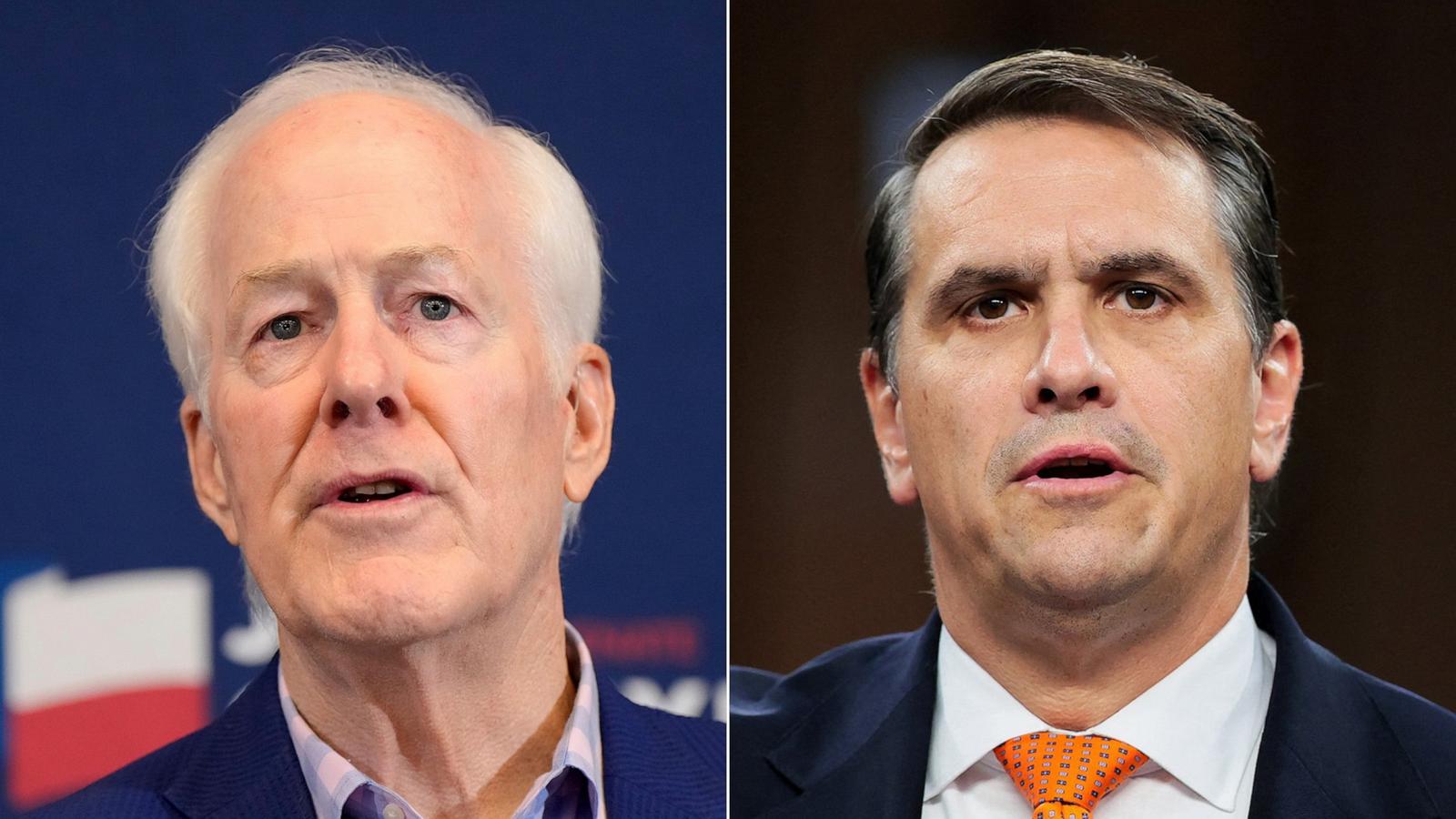
Todd Blanche, the interim U.S. Attorney General, is facing doubts from Republican Senator John Cornyn about his confirmation to lead the Department of Justice. Concerns focus on Blanche’s handling of a controversial IRS settlement and the creation of a fund seen as favoring President Trump’s allies.
Key Facts
Todd Blanche has been acting Attorney General since April and was previously deputy attorney general.
Senator John Cornyn expressed he is not ready to support Blanche’s confirmation.
Blanche brokered a May settlement protecting President Trump and his family from future IRS audits.
The settlement also included an “anti-weaponisation fund” for individuals claiming political persecution, which faced bipartisan criticism.
Blanche has since backed away from the fund after a federal judge ruled the settlement illegal.
The Senate Judiciary Committee plans a vote on Blanche’s nomination, needing Republican support to advance.
Cornyn, a critic of Trump recently, will leave the Senate in January and lost Trump’s endorsement in a primary last May.
President Trump defended Blanche and questioned Cornyn’s motives in opposing the nomination.
Read the Original
Want the full story? Tap a source to open the original
article.
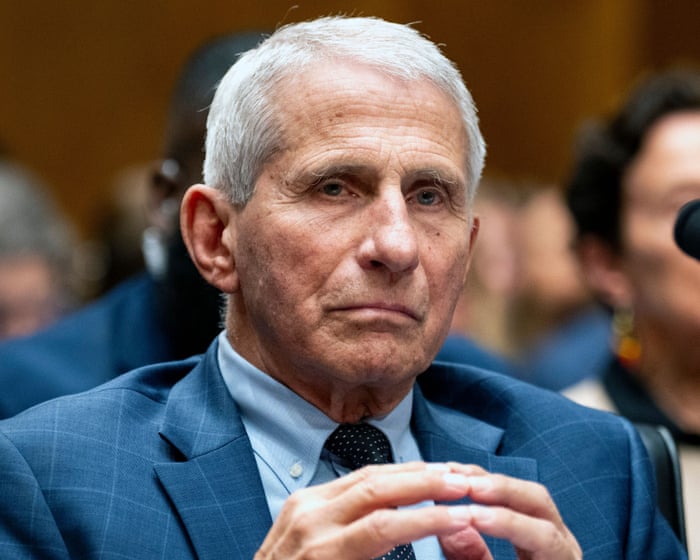
Dr. Anthony Fauci, the former chief medical adviser to the White House, attended a Senate hearing where Republican members criticized his handling of the COVID-19 pandemic. Fauci declined to answer some questions during the several-hour-long session, which included discussions about possible contempt charges against him.
Key Facts
Dr. Anthony Fauci served as chief medical adviser to the White House and led the National Institute of Allergy and Infectious Diseases for nearly 40 years.
A Senate hearing focused on Fauci’s role in the government’s COVID-19 response.
Republican senators used the hearing to express strong criticism and question Fauci’s actions during the pandemic.
Fauci refused to answer some questions during the hearing.
Some senators threatened to hold Fauci in contempt of Congress.
The hearing lasted for several hours with intense discussions.
The event reflects ongoing political debates about how the government managed the COVID-19 crisis.
Read the Original
Want the full story? Tap a source to open the original
article.
The U.S. Federal Communications Commission (FCC) has banned the import of many foreign-made mobile robots, including humanoid and four-legged robots, due to national security risks. The ban mainly targets new models of robots that have advanced sensors, network connectivity, and AI, especially those made in China, but also applies to some robots from allied countries.
Key Facts
The FCC added "foreign-produced advanced robotic devices" to the list of technologies banned for import.
The ban targets mobile robots that can move on the ground autonomously or via remote control.
Robots must have sensors, network connections, and AI software to be included in the ban.
The ban covers robots mainly produced by Chinese companies but also affects some robots from Japan, South Korea, and Germany.
Robots weighing less than 4.4 pounds, like robotic toys, are exempt.
Existing robots already approved or owned in the U.S. can still be used, but new models after the ban are blocked.
Medical robots, drones, trains, and fixed industrial robots are not included in the ban.
The U.S. Department of Defense can exempt certain foreign robots if deemed safe for national security.
Read the Original
Want the full story? Tap a source to open the original
article.
Dr. Anthony Fauci appeared at a US Senate hearing led by Republican Senator Rand Paul to discuss the origins of the Covid-19 pandemic. Fauci declined to answer questions by invoking his Fifth Amendment rights, which protect against self-incrimination, leading to strong disagreements and threats of legal action from the senators.
Key Facts
The hearing focused on whether Covid-19 began as a “lab leak” from the Wuhan Institute of Virology.
Senator Rand Paul accused Fauci of being possibly responsible for the pandemic due to NIH funding linked to the institute.
Fauci, who advised both President Trump and President Biden during the pandemic, refused to answer questions citing his Fifth Amendment rights.
Fauci has testified at Senate hearings many times before but chose not to answer this time on his lawyers’ advice.
A group of 155 scientists defended Fauci, calling the accusations against him baseless and unsupported by evidence.
The hearing included debate over whether Fauci can use the Fifth Amendment after receiving a presidential pardon.
Senator Paul said he plans to push for a vote to hold Fauci in contempt of Congress for refusing to testify.
Another senator, Josh Hawley, said Fauci has no Fifth Amendment rights in this context because it is a congressional investigation.
Read the Original
Want the full story? Tap a source to open the original
article.
Lawyers for James Comey, former FBI director, say U.S. prosecutors left out important information and included false details in a case against him. The case involves an Instagram post Comey made showing seashells arranged as “86 47,” which prosecutors say is a coded threat against President Donald Trump; Comey denies this.
Key Facts
James Comey was charged in April for sharing a seashell photo on Instagram that showed “86 47.”
Prosecutors claim “86 47” is a coded message suggesting harm to President Trump, the 47th president.
“86” is slang meaning “get rid of” or “throw out.”
Comey’s lawyers say the government ignored key evidence that did not support their case.
The defense argues the case is politically motivated retaliation by the Trump administration.
Comey faces charges of threatening the president and sending a threat across state lines.
If convicted, Comey could face up to 10 years in prison.
There have been other legal cases targeting Trump critics, such as New York Attorney General Letitia James and former National Security Advisor John Bolton.
Read the Original
Want the full story? Tap a source to open the original
article.
Polls from July 2026 show that most Americans think the U.S. economy is doing badly and are worried about rising prices. Many expect the economy to get worse over the next year, especially with higher costs for things like gas, food, and housing.
Key Facts
Only 23% of Americans said the economy is good, while 77% said it is poor or bad.
Inflation grew by 3.5% in June compared to last year, slightly lower than 4.2% the month before.
Majorities are very concerned about costs for healthcare (69%), food and goods (66%), housing (64%), gasoline (56%), and electricity (54%).
Concern about gasoline prices rose from 34% in January to 56% in July.
Democrats show more worry about costs than Republicans, especially about healthcare and housing.
Two-thirds of Americans say groceries are unaffordable, up from 45% before the conflict in Iran started.
Most Americans expect the economy to get worse: 48% said it will decline, while only 20% think it will improve.
Many voters say inflation causes financial hardship, with about one-third calling it severe.
Read the Original
Want the full story? Tap a source to open the original
article.
A recent Quinnipiac University poll shows that President Trump’s approval rating has fallen to 32 percent among all registered voters. The poll also indicates that President Trump is losing support from some Republican voters amid ongoing concerns about the Iran war and challenges to the U.S. economy.
Key Facts
President Trump’s overall approval rating is now 32 percent.
The poll was conducted by Quinnipiac University.
Support for President Trump is dropping among Republican voters.
The decline in approval is linked to the months-long conflict with Iran.
Economic difficulties in the U.S. may be affecting voter opinions.
The poll reflects the views of registered voters nationwide.
Read the Original
Want the full story? Tap a source to open the original
article.
The Pentagon created a new way to count U.S. military deaths and injuries related to recent fighting with Iran. This change is connected to the conclusion of Operation Epic Fury, and it involves removing some service members who died or were hurt from previous official counts.
Key Facts
The Pentagon announced a new category for tallying U.S. military casualties in conflicts involving Iran.
This change is linked to the end of a military effort called Operation Epic Fury.
Four U.S. service members died in recent fighting against Iran.
Dozens of service members were injured in the same conflict.
These deaths and injuries were removed from the Pentagon's previous casualty counts.
The new system clarifies how the Department of Defense reports casualties from renewed fighting.
The Pentagon aims for clearer tracking of military harms in conflicts with Iran.
Read the Original
Want the full story? Tap a source to open the original
article.
Wyoming is facing a shortage of obstetricians and gynecologists (OB-GYNs), particularly in Casper, the state’s second-largest city. The number of OB-GYNs there has dropped from six to two, making work schedules very demanding and causing delays in non-urgent care like annual exams. This shortage reflects wider problems in Wyoming’s maternity care system, worsened by hospital closures and workforce challenges.
Key Facts
Casper, Wyoming, had six OB-GYNs but now only has two serving around 80,000 people.
The two remaining OB-GYNs cover emergency room calls nearly every other day.
Non-urgent services such as annual exams are often delayed due to emergency care demands.
Four Wyoming hospitals have closed labor and delivery units since 2022, leaving 16 birthing hospitals statewide.
Wyoming’s rural setting makes it harder to recruit OB-GYNs and maintain delivery services.
Nearly 150 rural U.S. labor and delivery units have closed or plan to close since 2020.
More than 35% of U.S. counties are considered “maternity care deserts,” areas with little or no access to maternity care.
Despite legislative attention, Wyoming’s maternity care shortages remain a serious concern.
Read the Original
Want the full story? Tap a source to open the original
article.
A Wisconsin judge ruled that voters who have already sent in their absentee ballots for the state primary cannot cancel those ballots and ask for a new one. This decision affects the ongoing governor’s primary and was made after Democrats asked for voters to have the chance to change their ballots due to changes in the race.
Key Facts
The judge ruled that Wisconsin law does not allow voters to “spoil” (cancel) an absentee ballot once it has been returned.
Democrats had filed a lawsuit seeking to let voters change their ballots because some candidates had dropped out after ballots were sent.
Over 117,000 absentee ballots had already been returned by the time of the ruling.
The ruling is expected to be appealed as voting continues in the state’s governor primary.
The Wisconsin Elections Commission had told local clerks that absentee ballots cannot be changed once returned.
The ruling follows past legal battles over ballot spoiling in Wisconsin, including a 2022 lawsuit from a Republican group.
The winner of the Democratic primary will likely face Republican U.S. Rep. Tom Tiffany in the November general election.
Incumbent Democratic Governor Tony Evers is not running for a third term.
Read the Original
Want the full story? Tap a source to open the original
article.
Senate Democratic Leader Chuck Schumer asked Senator John Fetterman of Pennsylvania to stay in the Senate Democratic caucus. Schumer praised Fetterman as a good congress member, despite some disagreements between Fetterman and progressive Democrats.
Key Facts
Chuck Schumer is the Senate Democratic Leader from New York.
Senator John Fetterman represents Pennsylvania.
Schumer wants Fetterman to remain part of the Senate Democratic caucus.
There are tensions between Fetterman and progressive members of the Democratic Party.
Schumer described Fetterman as a “very good” member of Congress.
The request to stay came during a public statement on Wednesday.
Read the Original
Want the full story? Tap a source to open the original
article.
Harvey Levin, founder of TMZ, defended Dr. Anthony Fauci after Republicans criticized him during a Senate hearing. Levin expressed his support for Fauci publicly, highlighting Fauci’s service in public health.
Key Facts
Dr. Anthony Fauci is a top infectious disease expert in the U.S.
Fauci faced attacks from Republican senators during a Senate hearing.
Harvey Levin, who started TMZ, spoke out in favor of Fauci.
Levin shared his support on TMZ’s YouTube channel.
This defense was notable because Levin rarely shares personal opinions on that platform.
The hearing was described as tense and contentious.
Fauci has been a prominent figure during health crises like the COVID-19 pandemic.
Read the Original
Want the full story? Tap a source to open the original
article.
The U.S. Senate unanimously voted to oppose any pardon or clemency for Ghislaine Maxwell, who was convicted of sex crimes. The resolution was introduced by Senator Jacky Rosen to block a potential pardon by President Donald Trump.
Key Facts
The Senate voted unanimously against pardoning Ghislaine Maxwell.
Maxwell was convicted of sex offenses related to her association with Jeffrey Epstein.
Senator Jacky Rosen sponsored the resolution.
The resolution aims to prevent Acting Attorney General Todd Blanche from supporting a pardon.
President Donald Trump nominated Todd Blanche to remain in his role.
The move shows strong Senate opposition to pardons for individuals convicted of serious crimes.
Ghislaine Maxwell’s crimes have received wide public and political attention.
The Senate’s decision is a clear statement about pardons related to this case.
Read the Original
Want the full story? Tap a source to open the original
article.
Sheriff Chris Nanos said that FBI Director Kash Patel was wrong about details in the Nancy Guthrie case. Sheriff Nanos also said he and Patel have never talked to each other.
Key Facts
Sheriff Chris Nanos criticized FBI Director Kash Patel’s statements.
Nanos said Patel’s claims about the Nancy Guthrie case were inaccurate.
The sheriff said he and Patel have never had a conversation.
The disagreement concerns details of a specific case involving Nancy Guthrie.
The article focuses on communication and accuracy between local and federal officials.
Read the Original
Want the full story? Tap a source to open the original
article.
A recent poll shows Americans are divided in how well they understand democratic socialism. While some see value in the ideas, others are unsure or do not understand the term, even as candidates linked to democratic socialism win key Democratic primary races.
Key Facts
The poll was conducted by Reuters/Ipsos.
27% of Americans said democratic socialists hold several valid beliefs.
23% of respondents were unsure about or did not understand democratic socialism.
Candidates associated with democratic socialism have won elections in Democratic Party primaries.
The poll reflects differing views on democratic socialism across the United States.
Read the Original
Want the full story? Tap a source to open the original
article.
New York Times reporter Maggie Haberman described President Donald Trump’s $15 billion lawsuit against her newspaper as an attempt to intimidate them. In a TV interview, she spoke about the challenges she and her colleagues face from the Trump administration’s actions.
Key Facts
President Donald Trump filed a $15 billion lawsuit against The New York Times.
Maggie Haberman is a White House reporter for The New York Times.
Haberman called the lawsuit a “bullying campaign.”
She spoke about the pressure faced by journalists from the Trump administration.
The interview took place on MS NOW’s show called “The Weeknight.”
Host Michael Steele asked Haberman how she and her team handle the administration’s tactics.
President Trump reportedly tries to get the reporters’ attention by calling them directly.
The situation highlights ongoing tensions between the Trump administration and some media outlets.
Read the Original
Want the full story? Tap a source to open the original
article.
Senator John Cornyn canceled a meeting with acting Attorney General Todd Blanche before a Senate Judiciary Committee vote on Blanche’s nomination. Cornyn wants clearer, written proof that a fund linked to President Donald Trump’s IRS settlement will be ended and that IRS audits on Trump and his associates will be limited.
Key Facts
Senator John Cornyn canceled a meeting with Todd Blanche one day before a committee vote on Blanche’s AG nomination.
Cornyn’s main concerns involve President Donald Trump’s settlement with the IRS.
The Department of Justice created a $1.8 billion “Anti-Weaponization Fund” connected to the settlement, which Blanche called “dead” during his hearing.
Cornyn wants proof in writing that the fund will be formally rescinded.
The DOJ provided drafts rescinding the fund but did not offer changes related to limiting IRS audits on Trump and his associates.
Cornyn says the DOJ has not provided satisfactory documents that meet his requests.
Blanche’s confirmation as Attorney General depends on support from senators like Cornyn.
The dispute involves issues of government oversight and trust regarding enforcement actions connected to President Trump.
Read the Original
Want the full story? Tap a source to open the original
article.
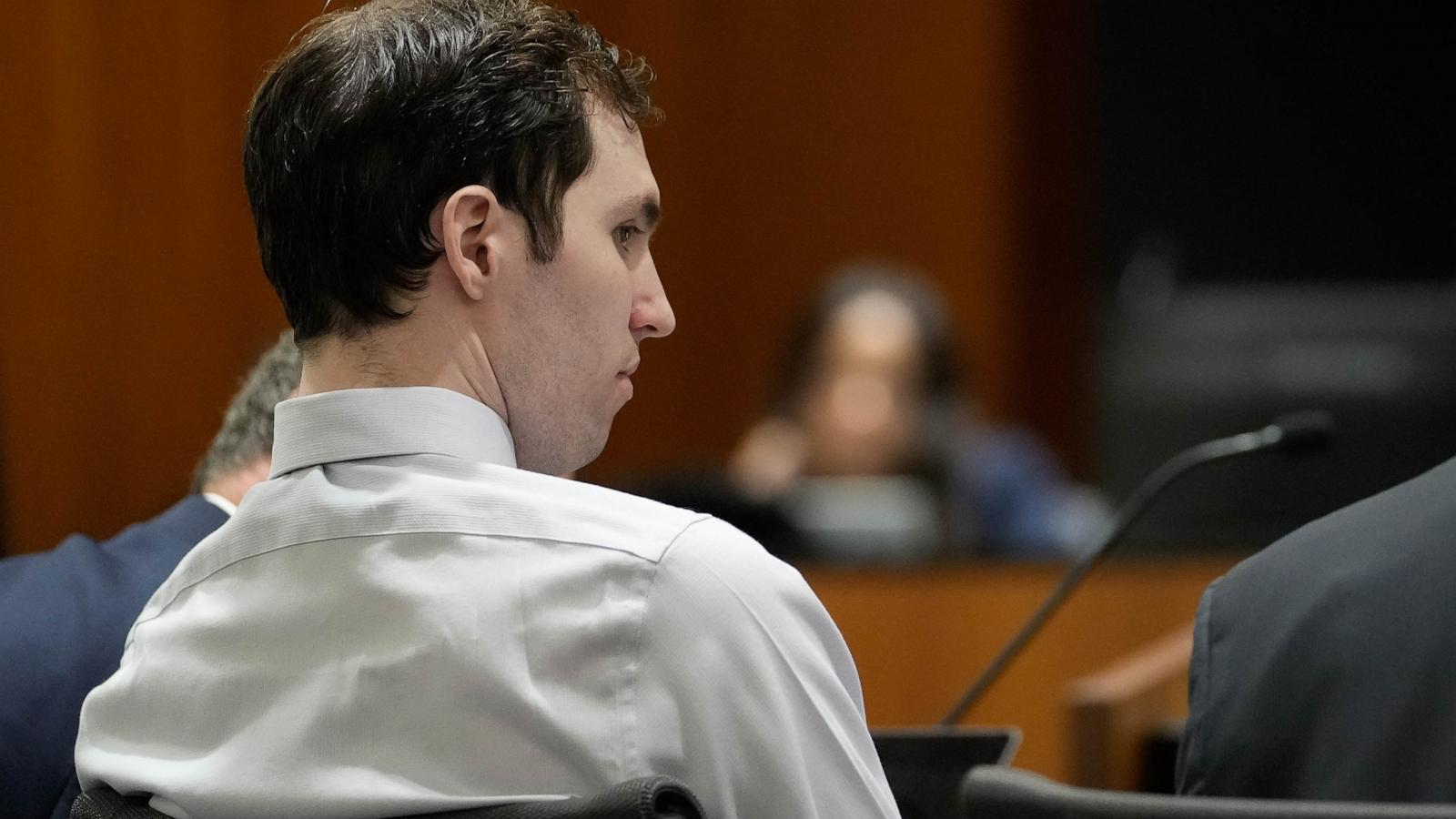
Tyler Robinson is waiting for a judge’s decision on whether he will stand trial for the killing of conservative activist Charlie Kirk. Prosecutors say there is enough evidence for a trial and plan to seek the death penalty. The case involves video evidence and witness statements.
Key Facts
Tyler Robinson is accused of killing Charlie Kirk with a rifle shot at a rally in Utah on September 10, 2025.
Prosecutors say the evidence clearly supports moving forward to a trial.
The judge’s decision is expected after a hearing scheduled for September 1, 2026.
Robinson faces charges including aggravated murder and firearm offenses.
Videos allegedly show Robinson on the roof where the shot was fired.
Robinson's roommate said Robinson confessed to the killing in messages and in person.
Defense attorneys have until August 11, 2026, to submit arguments.
Prosecutors plan to seek the death penalty in this case.
Read the Original
Want the full story? Tap a source to open the original
article.
Marjorie Taylor Greene, a former U.S. Representative from Georgia, married conservative commentator Brian Glenn in Las Vegas. The wedding took place at the Bellagio Hotel and was shared by Greene on social media.
Key Facts
Marjorie Taylor Greene was formerly a U.S. Representative from Georgia.
Brian Glenn is a conservative commentator.
The couple married on Tuesday in Las Vegas.
Their wedding was held at the Bellagio Hotel.
Greene posted about the wedding on the social media platform X.
The post included photos from the wedding.
Family members were present for the ceremony.
Read the Original
Want the full story? Tap a source to open the original
article.
Senator Lindsey Graham was honored with funeral ceremonies in South Carolina, where he was remembered as a hardworking public servant dedicated to his state. Earlier, leaders including President Donald Trump spoke of him as a persistent dealmaker.
Key Facts
Senator Lindsey Graham returned to South Carolina for his funeral.
The ceremonies were streamed by South Carolina ETV.
President Donald Trump and Vice President others praised Graham in a funeral service in Washington, D.C.
Graham was remembered as a hardworking and tireless politician.
Friends and colleagues recalled his deep connections throughout South Carolina.
He supported Republican candidates with funding in state and local elections.
Former Representative Trey Gowdy described Graham’s humble beginnings as the son of pool hall owners.
Graham knew many local officials and community locations in South Carolina.
Read the Original
Want the full story? Tap a source to open the original
article.