President Donald Trump announced new import tariffs of 10 to 12.5 percent on goods from 60 countries to target products made with forced labor. These tariffs will start immediately after previous temporary global tariffs expire and aim to protect U.S. workers by discouraging forced labor in international trade.
Key Facts
New tariffs range from 10% to 12.5% on imports from 60 trading partners.
Tariffs target goods linked to forced labor that enter U.S. markets.
The tariffs start at 12:01 a.m. Friday after previous temporary tariffs expire.
The U.S. Trade Representative says these tariffs cover about 99% of U.S. imports.
Countries with some forced-labor restrictions face a 10% tariff; others face 12.5%.
Some products like oil, gas, fertilizer, and goods under the U.S.-Mexico-Canada trade agreement are exempt.
This action follows a Supreme Court ruling that rejected previous broad global tariffs under a different law.
The tariffs rely on a law that allows the president to respond to unfair foreign trade practices.
Read the Original
Want the full story? Tap a source to open the original
article.
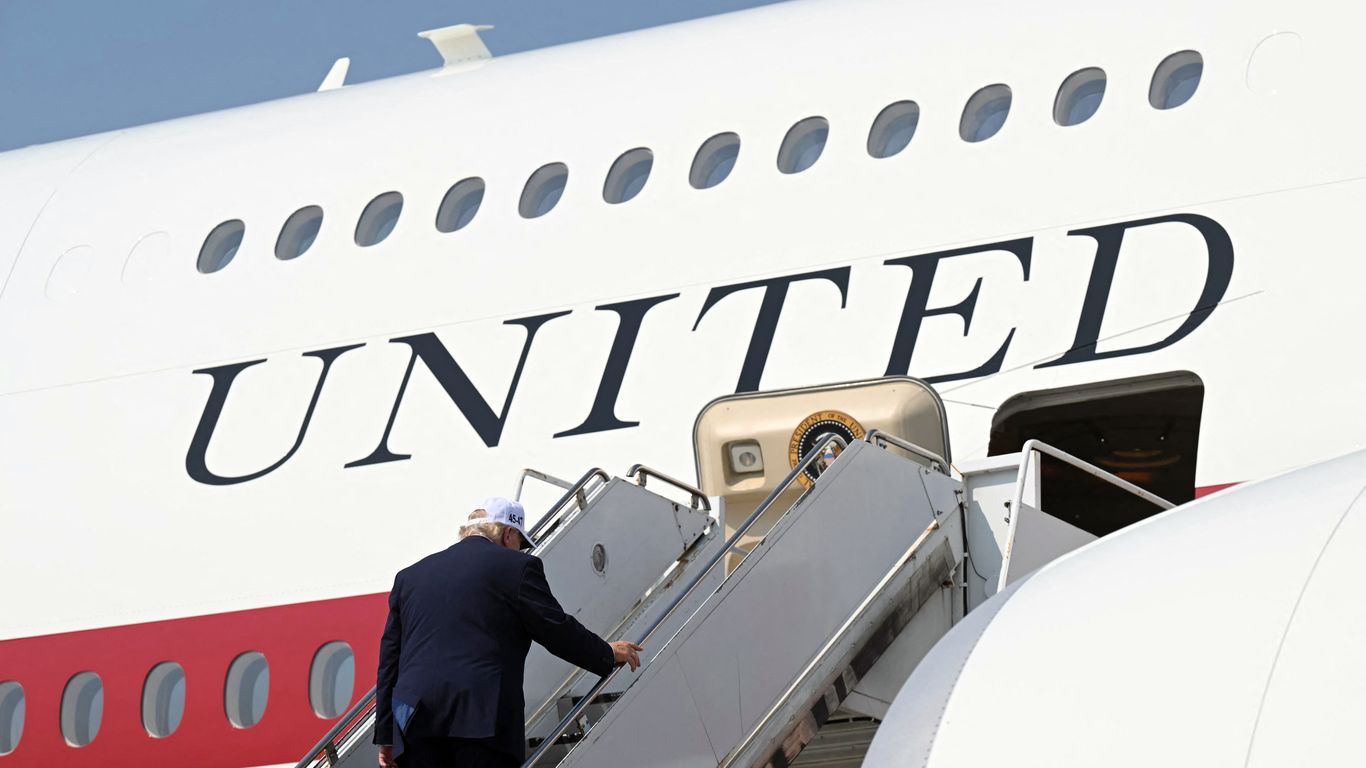
Lawyers representing President Donald Trump's administration withdrew subpoenas that aimed to force New York Times reporters to testify about stories on security issues with the new Air Force One plane. A federal judge questioned the subpoenas, and the Justice Department admitted some mistakes in how they were issued but said the investigation into leaks would continue.
Key Facts
President Trump's lawyers issued subpoenas to New York Times journalists over reports about Air Force One security.
The reports said the new plane, a gift from Qatar, lacked advanced security features.
The Secret Service advised President Trump to use a different plane after a NATO summit.
A federal judge questioned why subpoena requests included journalists' families.
The Department of Justice acknowledged errors in how the subpoenas were served.
The subpoenas would have required journalists to appear before a grand jury.
The Justice Department said the leak investigation is still ongoing.
The new Air Force One jet, a $400 million Boeing 747-8, was donated by Qatar and unveiled by President Trump.
Read the Original
Want the full story? Tap a source to open the original
article.
President Donald Trump said a possible US-Saudi civilian nuclear deal depends on Saudi Arabia normalizing relations with Israel through the Abraham Accords. The White House confirmed that talks between the US and Saudi Arabia are still ongoing.
Key Facts
President Trump stated the US-Saudi nuclear deal is "totally subject" to Saudi Arabia joining the Abraham Accords.
The Abraham Accords create diplomatic ties between Israel and Arab countries like Saudi Arabia.
Saudi Arabia has not yet normalized relations with Israel.
White House Press Secretary Karoline Leavitt confirmed that negotiations on the nuclear deal are still happening.
The proposed deal involves civilian nuclear cooperation, meaning peaceful uses like energy.
The deal is linked to broader diplomatic efforts in the Middle East.
The agreement would be between the US and Saudi Arabia.
The conditions emphasize political and diplomatic steps before finalizing the nuclear deal.
Read the Original
Want the full story? Tap a source to open the original
article.
President Donald Trump announced a policy called the Ratepayer Protection Pledge, which asks big technology companies with AI data centers to pay for the electricity generation and infrastructure they need. The plan aims to protect regular electricity users from higher costs caused by the growing demand for power from AI facilities.
Key Facts
The Ratepayer Protection Pledge is a voluntary agreement involving major tech companies like Amazon, Google, Meta, Microsoft, OpenAI, Oracle, and xAI.
Companies agree to build or buy new power sources and pay for grid upgrades to support their AI data centers.
The goal is to stop these costs from being passed to regular electricity customers, like households and small businesses.
President Trump said expanding AI technology needs much more electricity—more than double the current production.
Energy Secretary Chris Wright said the policy helps the U.S. lead in AI while protecting consumers from higher electricity bills.
Environmental groups worry that even if companies pay for some costs, the growth of AI data centers could strain energy systems and increase pollution.
The pledge also encourages companies to hire and train local workers and provide backup power in emergencies.
Trump highlighted the importance of winning the global AI race, especially against China, by rapidly increasing energy production.
Read the Original
Want the full story? Tap a source to open the original
article.
A new bill in the U.S. Congress aims to lower monthly payments for millions of Americans by eliminating interest on federal student loans. The Student Loan Interest Elimination Act would refinance current federal loans to a 0% interest rate and change how future loans are handled, helping borrowers save money over time.
Key Facts
The bill is sponsored by Senator Peter Welch and Representative Joe Courtney, both Democrats.
It would refinance existing federal student loans to zero percent interest immediately.
Future federal student loans would also follow new financing rules with no interest.
About 43 million Americans with federal student loans would benefit from this change.
Borrowers would still repay the original loan amount, but no longer pay interest, which usually increases total debt.
The bill proposes creating a Department of Education trust fund to invest borrower payments and support the loan program’s costs.
On average, borrowers currently pay over $14,000 in interest on a $39,547 loan over 10 years. Eliminating interest would remove this cost.
The bill only applies to federal student loans, not private loans.
Read the Original
Want the full story? Tap a source to open the original
article.
President Donald Trump announced new tariffs of 10% to 12.5% on imports from 60 countries starting Friday, aiming to address forced labor concerns. These tariffs replace temporary levies that expired after the Supreme Court ruled against his previous trade measures.
Key Facts
The new tariffs apply to imports from 60 countries that make up 99% of US imports.
These tariffs target countries accused of not stopping goods made with forced labor.
The tariffs range from 10% to 12.5% on affected imports.
They replace temporary 10% worldwide tariffs that expired at midnight Friday.
Trump is using Section 301 of the Trade Act of 1974 to impose these tariffs.
Section 301 allows the president to tax imports from countries engaged in unfair trade practices.
Some products like oil, gas, and fertilizer are exempt from the new tariffs.
Products under the US-Mexico-Canada trade agreement are also exempt.
Read the Original
Want the full story? Tap a source to open the original
article.
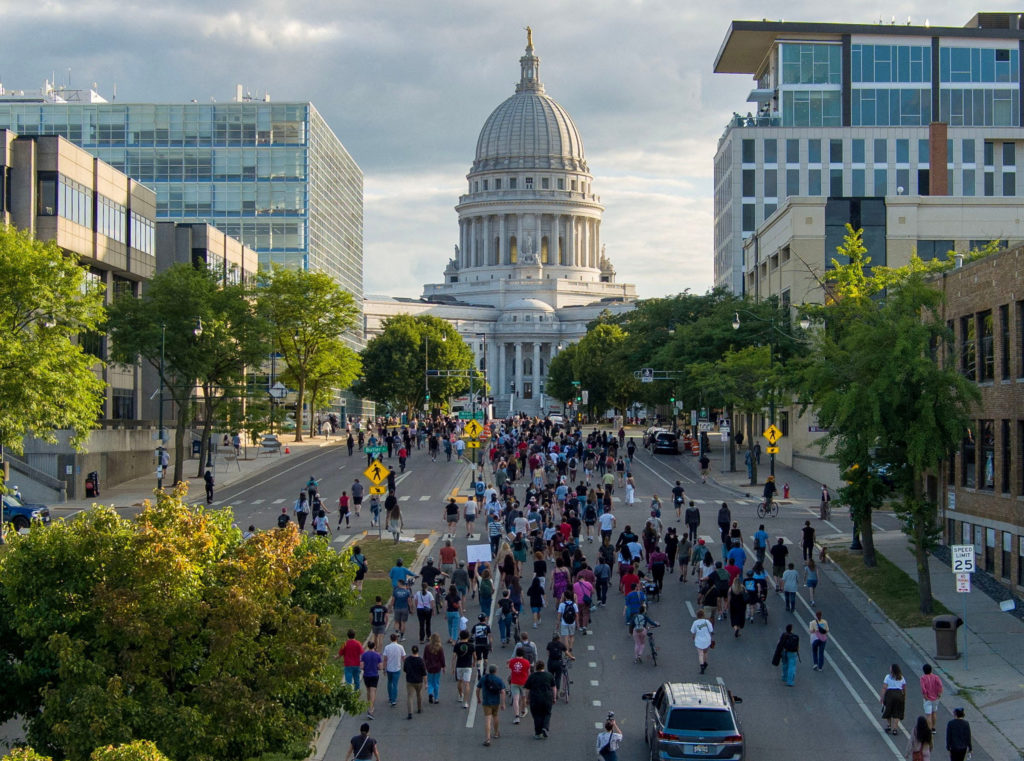
A homeless man named Corey Ruiz was shot and killed by police in Madison, Wisconsin, after officers said he resisted arrest and injured one of them with a knife. The shooting has caused protests, raised questions about police use of force, and is under investigation by state authorities.
Key Facts
Corey Ruiz, a homeless man, was shot by police after officers said he resisted arrest and stabbed one officer with a knife.
The shooting happened after police tried to stop Ruiz, who was reported to be trying to get into parked cars.
None of the four officers involved wore body cameras during the incident.
Passersby recorded video of the shooting, which led to public debate about whether the police overreacted.
Protesters interrupted a police news conference, demanding transparency and expressing anger.
Madison Mayor Satya Rhodes-Conway called for a thorough investigation and said no one should lose their life in a law enforcement encounter.
The Wisconsin Department of Criminal Investigation is leading an independent probe, and the officers involved are on administrative leave.
The city’s independent police monitor has not yet received evidence or officer identities from the police department.
Read the Original
Want the full story? Tap a source to open the original
article.
Social media posts wrongly claim that President Barack Obama encouraged noncitizens to vote in the 2016 election. The video clip shared online is edited and misrepresents Obama’s actual message, which focused on encouraging eligible citizens, including Latino voters, to participate in voting.
Key Facts
A short clip from a 2016 interview with President Obama has been falsely used to claim he told noncitizens to vote.
The full video shows Obama urging only legal voters to cast ballots and denying any encouragement for illegal voting.
The misrepresented clip suggests that Obama said people "can’t be stopped" from voting if they show up at a polling place.
Obama explained that voting is for citizens, and immigration authorities do not track voters to deport their families.
Noncitizens voting in federal elections is very rare and illegal under U.S. law since 1996.
The clip was originally from an interview by Latina actress Gina Rodriguez about voting myths and election fairness.
President Donald Trump advocates stricter proof of citizenship laws ahead of upcoming elections.
Obama’s spokesperson did not provide additional comments on the false claims.
Read the Original
Want the full story? Tap a source to open the original
article.
President Donald Trump is imposing new tariffs of 10% to 12.5% on imports from 60 countries. This move replaces temporary tariffs that expire and targets goods linked to forced labor and unfair trade practices.
Key Facts
The tariffs will affect imports from 60 countries, covering 99% of U.S. imports.
The U.S. accuses these countries of not enforcing bans on products made with forced labor.
These new tariffs use Section 301 of the Trade Act of 1974, which allows the president to tax imports from countries with unfair trade actions.
Temporary 10% tariffs imposed under Section 122 are expiring after 150 days.
The Supreme Court struck down previous tariffs imposed under the International Emergency Economic Powers Act (IEEPA).
The U.S. Trade Representative is investigating if 16 countries are producing excess goods to lower prices and hurt U.S. companies.
Trump argues that higher tariffs will bring back American manufacturing and protect U.S. jobs.
Large tariffs on China were also imposed using Section 301 during Trump’s first term and survived legal challenges.
Read the Original
Want the full story? Tap a source to open the original
article.
Giant metal rooster statues appeared on lawns in a Maine coastal town in support of a 6-year-old autistic girl named Pyper. The town ordered the removal of most roosters, saying they were advertising signs for a restaurant, leading to community support and compromises.
Key Facts
David and Sara LeBlanc have giant metal rooster statues on their lawn in Ogunquit, Maine.
The roosters are meant to comfort their autistic daughter, Pyper, who loves roosters.
The town said the roosters were unpermitted advertising for their restaurant, The Omelette Factory.
The couple was fined $450 and ordered to remove the roosters in April 2026.
The town later allowed two roosters to remain after an agreement.
The LeBlancs adopted Pyper, who came to them with a stuffed rooster toy.
Community members helped place some roosters in other locations in support of Pyper.
The town’s enforcement officer did not know about the autism connection until the fines were appealed.
Read the Original
Want the full story? Tap a source to open the original
article.
Blake Miguez, a Louisiana candidate for the U.S. House of Representatives who denies a 2007 rape accusation against him, is seeking to regain President Trump’s endorsement as he decides which newly redrawn district to run in. The presidential endorsement remains formally valid, but the White House said it will reconsider if new information arises after candidate qualifying.
Key Facts
Blake Miguez faces a 2007 police report accusing him of rape; no charges were filed, and he denies the claim.
The accusation became public amid Louisiana’s redistricting following a Supreme Court decision.
Miguez has the current endorsement of President Trump from the previous congressional district, which no longer exists.
Miguez is deciding between running in one of two new districts where he does not live but is legally allowed to run.
The primary election was postponed from May to November due to the redistricting.
The White House said Trump has not withdrawn the endorsement but may review candidates after qualifying.
Miguez’s campaign circulated statements discrediting the accuser, including comments about her mental health and substance issues.
A rival candidate’s spokesperson criticized the idea that redistricting is the main reason for uncertainty around Trump’s endorsement.
Read the Original
Want the full story? Tap a source to open the original
article.
The Department of Justice has dropped subpoenas that sought testimony from New York Times journalists about their reporting on President Donald Trump's gifted jet from Qatar. This decision came after a judge challenged the government’s actions during a court hearing.
Key Facts
The subpoenas targeted New York Times reporters who wrote about security measures on President Trump's Qatar-gifted Boeing 747-8 jet.
The court hearing was presided over by U.S. District Judge Arun Subramanian, who questioned the government’s subpoenas.
The DOJ said the judge threatened sanctions if the subpoenas were not withdrawn and blocked the government from fully explaining the investigation.
The government said the investigation is still ongoing and related to leaks of classified information, a federal crime.
The Times called the subpoenas an intimidation tactic and said the government failed to meet the legal standards to force reporters to reveal confidential sources.
The subpoenas were originally delivered to reporters’ homes and sought grand jury testimony.
The government argued the reporting posed a national security risk due to possible leaks of classified information.
The Times criticized the government’s approach, saying investigations should have happened before sending armed agents to reporters’ homes.
Read the Original
Want the full story? Tap a source to open the original
article.
At a campaign rally in Marietta, Georgia, a person sitting behind President Donald Trump copied the president’s hand movements and facial expressions during his speech. This caught the attention of people watching the event.
Key Facts
The event took place in Marietta, Georgia.
President Donald Trump was giving a campaign speech.
A person sitting just behind the president mimicked his gestures and facial expressions.
The mimicking was noticeable throughout the speech.
The behavior attracted attention from the crowd and viewers.
The person’s actions were focused on copying President Trump’s signature moves.
Read the Original
Want the full story? Tap a source to open the original
article.
A police officer in Wisconsin shot and killed a man, and videos of the shooting have been shared publicly. People protested at the location, asking the police for explanations.
Key Facts
The incident happened in Wisconsin, a state in the United States.
A man was fatally shot by a police officer on a street.
Videos of the shooting were released and widely viewed.
The videos sparked public outrage in the local community.
Protesters gathered at the site of the shooting.
The protesters demanded answers and accountability from the police department.
Officials have not yet provided detailed information about the shooting.
Read the Original
Want the full story? Tap a source to open the original
article.
The Trump administration stopped its demand for the University of Pennsylvania to provide a list of Jewish employees. This request was part of a larger claim that the university and other schools were not doing enough to prevent antisemitism.
Key Facts
The administration asked for a list of Jewish employees from the University of Pennsylvania.
This request was linked to accusations that the school did not properly address antisemitism.
The administration withdrew this demand, as shown in court papers.
The documents were filed with the U.S. Court of Appeals for the Third Circuit.
The Equal Employment Opportunity Commission is involved in the case.
Similar demands have been made at other universities.
The case is part of broader concerns about how antisemitism is handled on college campuses.
Read the Original
Want the full story? Tap a source to open the original
article.
President Donald Trump told Axios that he is thinking about a large military action against Iran. Meanwhile, the top Republican on the House Judiciary Committee has filed a criminal complaint against Jack Smith, a special counsel.
Key Facts
President Trump said he is considering a "massive attack" on Iran.
The comment was made during an interview with Axios.
The GOP (Republican) chair of the House Judiciary Committee is involved.
This chairperson has submitted a criminal referral against Jack Smith.
Jack Smith is a special counsel, a type of independent prosecutor.
The news comes from a CBS News report titled "The Takeout with Major Garrett."
The developments relate to U.S. political and legal affairs involving President Trump and congressional leaders.
Read the Original
Want the full story? Tap a source to open the original
article.
A new study shows nearly half of Americans who have not retired doubt they will ever fully stop working. Many are worried about money, rising living costs, and how new technologies like artificial intelligence (AI) might affect their jobs and plans for retirement.
Key Facts
47% of Americans who have not retired believe they will never fully retire.
58% of non-retirees feel confident they will have enough money to retire on time.
64% are more focused on current financial problems than saving for retirement.
Many have stopped or reduced retirement savings recently, and some have taken money out early to cover expenses.
Higher living costs and economic uncertainty are major worries for retirement plans.
AI is causing job concerns, especially among younger workers—63% of Gen Z and 59% of millennials worry about AI hurting their retirement options.
Americans are adjusting their retirement ideas, planning part-time work or delayed retirement instead of fully stopping work.
Experts say the idea of retirement is changing, with people expecting to work longer or in different ways.
Read the Original
Want the full story? Tap a source to open the original
article.
Fort Hood, one of the Army’s largest bases, has closed a dining facility after a video showed roaches inside the kitchen. The facility will stay closed until the infestation is fixed, highlighting ongoing challenges with food quality and safety at military dining halls.
Key Facts
A video showed dozens of roaches crawling on kitchen walls in a Fort Hood dining facility.
The Operation Iraqi Freedom dining facility at Fort Hood was closed immediately to address the problem.
Fort Hood is home to about 34,000 soldiers who rely on on-base dining facilities for meals.
Traveling across the large base and limited dining hall schedules make closures disruptive for soldiers.
The Army faces problems with staffing, meal quality, and operating hours in its food services.
Similar food and safety issues have been reported at other military bases across different service branches.
A lawmaker proposed an amendment requiring public disclosure of military dining facility inspections.
Army Secretary Dan Driscoll has called the military dining system “broken” and pledged to improve basic services like food and housing.
Read the Original
Want the full story? Tap a source to open the original
article.
Senate Majority Leader John Thune said lawmakers plan to add penalties on Iran to a bill already targeting Russia. President Donald Trump recently requested that sanctions on Iran be included in this bipartisan legislation.
Key Facts
Senator John Thune leads the Senate Majority.
Thune expects to include sanctions against Iran in a Russia sanctions bill.
The bill is currently being discussed in the Senate.
President Donald Trump publicly asked for Iran sanctions to be added to the Russia bill.
The legislation has support from both political parties.
The sanctions aim to penalize Iran and Russia for certain actions.
The announcement came during a press briefing on Thursday.
Read the Original
Want the full story? Tap a source to open the original
article.
Two Black descendants of people once enslaved by the Muscogee Nation tribe have sued the tribe's leaders in federal court to force them to give the descendants citizenship cards. The tribe’s Supreme Court ruled last year that the descendants have the right to citizenship under an 1866 treaty, but the tribe’s leaders have not yet issued the cards.
Key Facts
Rhonda Grayson and Jeffrey Kennedy filed a lawsuit in U.S. District Court in Oklahoma City to get citizenship cards from the Muscogee Nation.
The tribe's Principal Chief David Hill and Citizenship Board are named as defendants for not issuing the cards.
An 1866 treaty between the U.S. and the tribe abolished slavery and granted citizenship to formerly enslaved people.
The Muscogee Nation Supreme Court ruled in July 2025 that Black Creek Freedmen descendants are entitled to tribal citizenship.
The Citizenship Board had denied applications because applicants could not prove descent from Muscogee by blood on the Dawes Rolls, an old tribal census.
In August 2025, the principal chief blocked the Citizenship Board from issuing cards while the tribal constitution is reconsidered.
Other Oklahoma tribes like the Seminole and Cherokee have granted citizenship to Freedmen descendants after similar legal rulings.
There are about 100,000 Black Creek Freedmen descendants across the U.S. who could gain citizenship rights from this ruling.
Read the Original
Want the full story? Tap a source to open the original
article.