More than 40 U.S. states have high error rates in their SNAP food assistance payments, which could soon make them pay part of the program’s costs. The Trump administration’s new rules say states with error rates above 6% must share funding responsibilities starting next year, aiming to reduce mistakes and improper payments.
Key Facts
SNAP stands for Supplemental Nutrition Assistance Program and helps low-income people buy groceries.
SNAP benefits are funded by the federal government, but states share administrative costs equally with the federal government.
The Trump administration introduced rules requiring states with over 6% payment errors to pay part of SNAP benefit costs.
In Fiscal Year 2025, the national SNAP payment error rate was 10.62%, with errors meaning benefits paid too much or too little.
41 states and Washington DC have SNAP error rates above 6% and may face financial penalties unless they improve.
Alaska has the highest error rate at 23.15%, much higher than the 6% limit.
States with the lowest error rates include South Dakota (2.47%), Idaho (3.85%), and Wyoming (3.96%).
Improper SNAP payments totaled over $10 billion last year, highlighting the scale of the issue.
Read the Original
Want the full story? Tap a source to open the original
article.
The U.S. House of Representatives voted 214 to 208 to pass a resolution directing President Donald Trump to end military actions against Iran without Congress's approval. Some Republicans joined Democrats in opposing the president's handling of the conflict, especially after several U.S. service members died and fighting increased.
Key Facts
The House passed a war powers resolution introduced by Democrat Pramila Jayapal to limit military action against Iran.
The resolution directs President Trump to stop U.S. forces from fighting Iran unless Congress approves it.
Four Republicans sided with Democrats in voting for the resolution.
The vote follows the deaths of U.S. service members caused by Iranian attacks.
President Trump ended a monthlong ceasefire with Iran on July 10 and notified Congress that military actions resumed.
The War Powers Resolution of 1973 requires the president to notify Congress within 48 hours of starting hostilities and limits military action to 60 days without congressional approval.
The Trump administration argues that renewed hostilities reset the 60-day limit and also contests the constitutionality of the War Powers Resolution.
The administration requested $67 billion to fund the conflict and replenish military supplies, as well as $1.5 trillion funding for the Pentagon next year.
Read the Original
Want the full story? Tap a source to open the original
article.
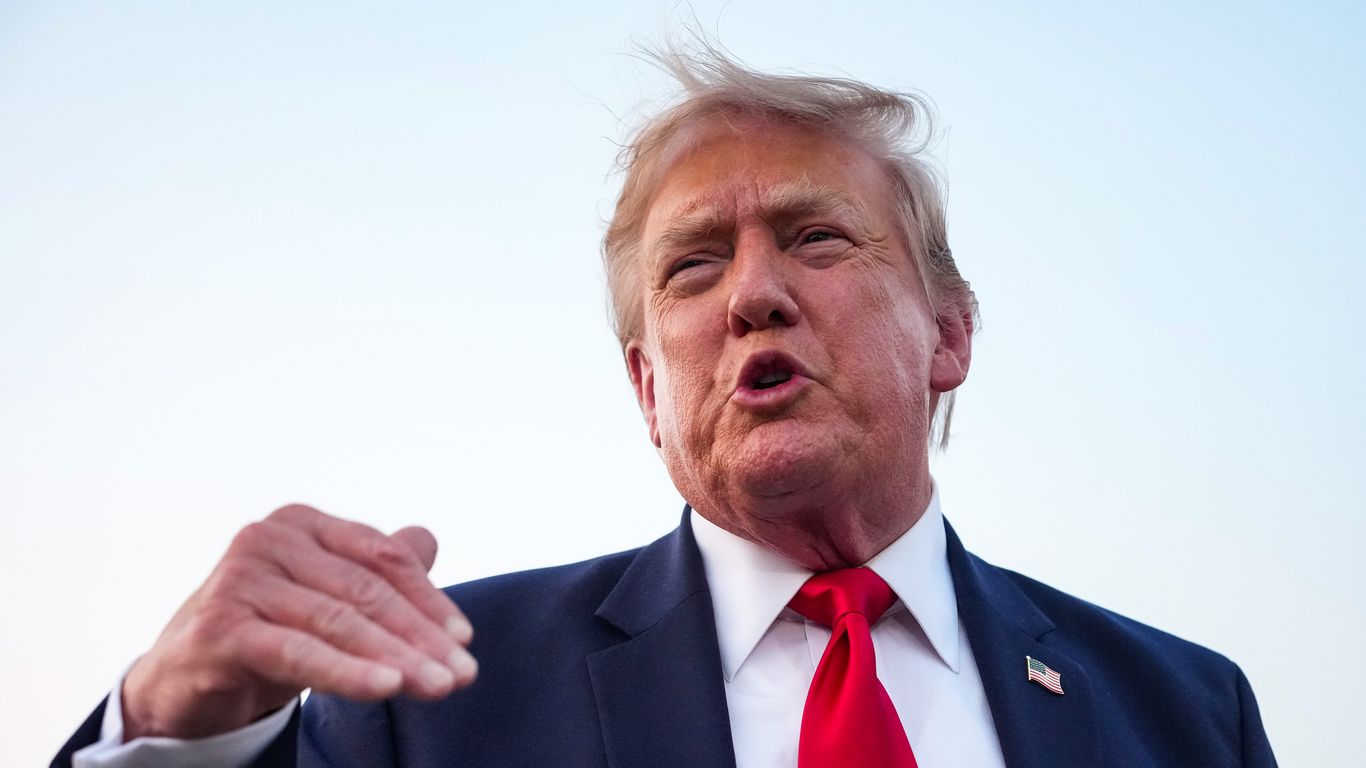
President Donald Trump announced that the U.S. reached an agreement with Saudi Arabia on a civilian nuclear program. The deal requires Saudi Arabia to normalize relations with Israel and does not allow uranium enrichment.
Key Facts
President Trump said Saudi Arabia must normalize relations with Israel under the Abraham Accords as part of the deal.
The nuclear program is civilian, meaning it is meant for peaceful purposes.
The agreement forbids Saudi Arabia from enriching uranium, a process that can be used to make nuclear weapons.
Some experts worry the deal lacks strong measures to prevent Saudi Arabia from enriching uranium to weapons-grade levels.
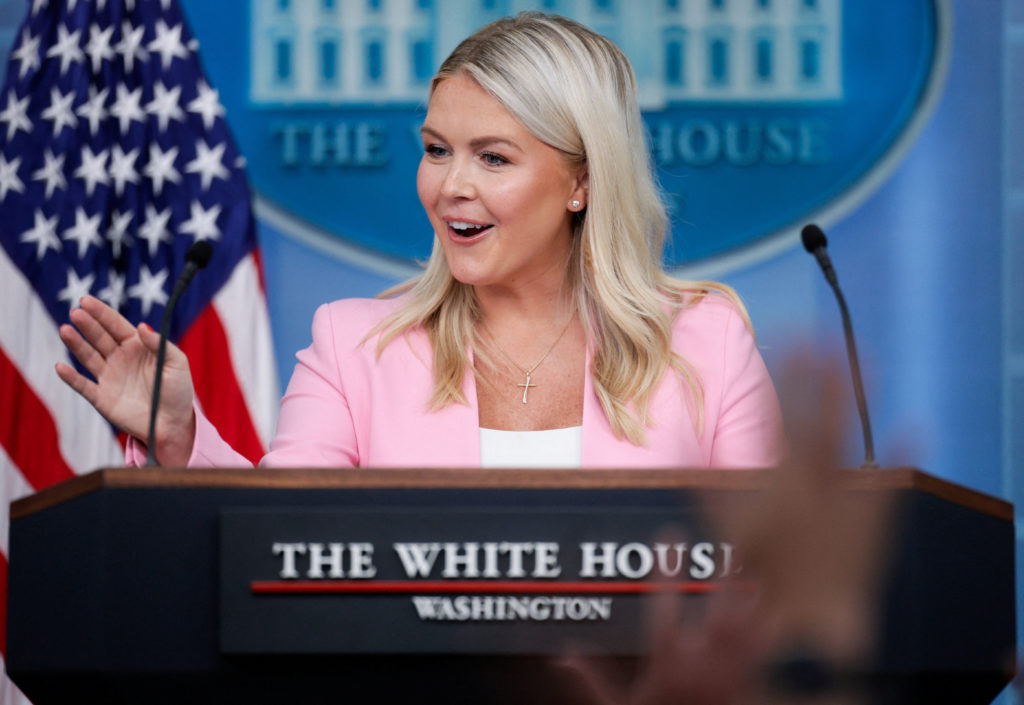
White House press secretary Karoline Leavitt held a news briefing about the agreement.
The deal is seen as significant for U.S.-Saudi relations and regional security in the Middle East.
The news conference was scheduled for 11 a.m. Eastern Daylight Time.
Read the Original
Want the full story? Tap a source to open the original
article.
The House of Representatives voted 214-208 to pass a resolution asking President Donald Trump to stop military actions in Iran. The vote included support from some Republicans and all Democrats, but the resolution is symbolic and does not change the law.
Key Facts
The House passed the resolution to limit President Trump's military campaign in Iran.
Four Republicans joined all Democrats in supporting the measure.
The vote was 214 in favor and 208 against.
The resolution tells President Trump to end hostilities but has no legal power.
This is the second time the House has passed a similar resolution against the Iran war effort.
The resolution gained momentum after three U.S. troops died recently in the region.
Many Republicans support the military campaign, but some want more debate and oversight.
The Senate is preparing to vote on a similar resolution, but it faces challenges there.
Read the Original
Want the full story? Tap a source to open the original
article.
The Senate Judiciary Committee held two days of hearings about Todd Blanche's nomination for U.S. attorney general. Some senators expressed concerns about whether Blanche would remain loyal to President Donald Trump.
Key Facts
Todd Blanche was nominated for the position of U.S. attorney general.
The Senate Judiciary Committee conducted hearings over two days to review his nomination.
Senators questioned Blanche about his potential loyalty to President Donald Trump.
The hearings aimed to evaluate Blanche's qualifications and views on the role.
Loyalty to the sitting president is a common concern during such nominations.
The committee’s review will influence whether Blanche is confirmed for the job.
Read the Original
Want the full story? Tap a source to open the original
article.
The House of Representatives passed a resolution to limit President Trump’s ability to engage in military action against Iran. The vote was 214 to 208, with all Democrats and four Republicans supporting the measure.
Key Facts
The House passed a war powers resolution focused on Iran.
The resolution aims to restrict President Trump’s military actions without congressional approval.
The vote count was 214 in favor and 208 against.
All Democrats supported the resolution.
Four Republicans joined the Democrats: Reps. Tom Barrett, Warren Davidson, Thomas Massie, and Brian Fitzpatrick.
The resolution was sponsored by Rep. Pramila Jayapal from Washington.
The resolution reflects ongoing concern about the President’s military decisions involving Iran.
Read the Original
Want the full story? Tap a source to open the original
article.
A federal appeals court has paused the Trump administration’s plan to end deportation protection for over 300,000 Haitian migrants living in the U.S. This protection, called Temporary Protected Status (TPS), was scheduled to end on Friday, but the court’s action delays it for a few more days.
Key Facts
The Trump administration planned to end TPS for hundreds of thousands of Haitians.
TPS gives Haitians protection from deportation and allows them to work legally in the U.S.
More than 300,000 Haitian migrants were affected by this plan.
A Supreme Court ruling influenced the timing of the TPS ending.
A federal appeals court has temporarily blocked the administration from ending TPS immediately.
This block will last at least until Monday, giving more time before any changes occur.
Read the Original
Want the full story? Tap a source to open the original
article.
The Food and Drug Administration (FDA) is holding a two-day meeting to review several peptides, which are substances promoted for health benefits but lack strong proof of safety or effectiveness. Health Secretary Robert F. Kennedy Jr. supports these peptides and wants to remove regulations currently in place.
Key Facts
The FDA advisory panel is reviewing more than six different peptides.
Peptides are popular in wellness trends but have little scientific proof they work or are safe.
The meeting lasts two days and started on a Thursday.
Health Secretary Robert F. Kennedy Jr. supports peptides and calls himself a "big fan."
Kennedy wants to reverse restrictions on peptides that were put in place under President Joe Biden.
Some influencers, like Joe Rogan and Gary Brecka, promote peptides and sell them online.
Many people share positive experiences with peptides on social media, claiming health and fitness benefits.
Read the Original
Want the full story? Tap a source to open the original
article.
About 500 National Guard members have been sent to West Virginia to help after heavy rain caused sudden floods. The governor said rescue teams are still searching for people and working to fix damages from the floods.
Key Facts
Torrential rain caused flash floods in parts of West Virginia this week.
West Virginia Governor Patrick Morrisey declared a state of emergency for all 55 counties.
About 500 National Guard members were deployed to assist with flood response and rescue.
Severe storms brought heavy rain, strong winds, mudslides, and rapidly rising water.
Some counties, especially Lewis, Pleasants, and Upshur, were hit hardest by flooding.
In one area, 4.5 inches of rain fell in just 37 minutes, causing severe water buildup.
More than 6,000 residents were without power as crews worked to restore electricity.
The National Weather Service says weather will be calm for the rest of the week, with some rain expected again over the weekend.
Read the Original
Want the full story? Tap a source to open the original
article.
The U.S. House of Representatives passed a bill to rename the Defense Department as the “Department of War.” The bill, called the National Defense Authorization Act for fiscal year 2027, also includes a $1.15 trillion budget for national security and raises for military personnel.
Key Facts
The House approved changing the name of the Defense Department to the Department of War.
The change was part of the annual defense policy bill.
The bill is called the National Defense Authorization Act (NDAA) for fiscal year 2027.
It includes a $1.15 trillion budget for national security programs.
The bill also provides pay raises for members of the military.
The NDAA is a yearly law that sets defense spending and policies.
The vote reflected majority support in the House of Representatives.
The legislation typically covers a range of defense and security issues.
Read the Original
Want the full story? Tap a source to open the original
article.
The White House held a news briefing to discuss the U.S. approach to rising tensions with Iran and conflicts in the Middle East. President Donald Trump issued several warnings to Iran and its allies as the number of American soldier deaths increases.
Key Facts
White House press secretary Karoline Leavitt briefed reporters on Thursday morning.
The briefing focused on U.S. strategy regarding Iran and the Middle East conflict.
The death toll for American troops in the region is rising.
President Donald Trump has warned the Iranian government and its allies.
The situation has increased fears of a wider conflict in the Middle East.
The briefing aimed to address public questions and government plans.
The broader Middle East conflict involves various groups, including the Iranian-backed Houthi movement.
Read the Original
Want the full story? Tap a source to open the original
article.
Brian Johnson, chosen by President Trump to lead the Consumer Financial Protection Bureau (CFPB), is currently testifying before the Senate Banking Committee. The CFPB helps protect consumers from unfair financial practices. Russell Vought has been the acting head of the CFPB before this hearing.
Key Facts
Brian Johnson is President Trump’s nominee for director of the CFPB.
Johnson worked in several roles at the CFPB during President Trump’s first term.
The Senate Banking Committee is holding a confirmation hearing for Johnson.
Russell Vought, the Director of the Office of Management and Budget, has been the temporary head of the CFPB.
The CFPB focuses on protecting consumers in financial matters.
This hearing is part of the Senate’s process to approve Johnson’s appointment.
The CFPB leadership was vacant until Johnson’s nomination.
The confirmation hearing is taking place on a Thursday morning.
Read the Original
Want the full story? Tap a source to open the original
article.
Thirteen House Democrats joined Republicans to pass a law that adds voter identification rules for federal elections. The new law was combined with a bill aimed at stopping insider trading, creating a mix of election rules and ethics reforms.
Key Facts
The House vote on July 22 was 232 in favor and 198 against the combined bill.
The bill paired voter ID requirements with a ban on insider trading by members of Congress.
Thirteen Democrats voted yes on the bill, joining the Republican majority.
The SAVE America Act, supported by President Trump, aims to change election laws, including requiring proof of citizenship for voter registration.
Some Democrats who voted yes represent districts where elections are closely contested.
Critics say attaching election rules to stock-trading reform is a political tactic.
Previous versions of the SAVE Act had less Democratic support.
The new law requires voters to show certain documents like passports or birth certificates to prove they are U.S. citizens.
Read the Original
Want the full story? Tap a source to open the original
article.
President Donald Trump has focused much attention on redecorating the White House, including major remodeling projects costing an estimated $1.2 billion. This behavior reflects a broader cultural interest in home renovations, which can cause stress but remains very popular across the U.S.
Key Facts
President Trump spends a significant amount of time and energy on interior decorating.
He is involved in decorating disagreements with First Lady Melania Trump and has personally worked on some White House renovations.
The White House has undergone about 18 major remodeling projects during Trump’s second term, potentially costing $1.2 billion.
Trump replaced the Oval Office carpet in 2017 and later made more extensive redesign changes, such as tearing down the East Wing.
Home renovation is a common and stressful activity for many Americans, with high levels of relationship strain reported during remodeling projects.
The U.S. interior design market is very large, with revenue projected to grow from $185 billion in 2025 to $298 billion by 2033.
Popular culture and media, such as HGTV and the Property Brothers, have contributed to the rise of renovation interest.
Some experts note that widespread renovation trends can lead to similar-looking homes and spaces across the country.
Read the Original
Want the full story? Tap a source to open the original
article.
As the United States updates its electric power grid, experts say attention should be given to the computer software and control systems used. These parts of the grid have the highest risks for security problems.
Key Facts
The U.S. is working to modernize its electric power grid.
The power grid includes software and control systems that help manage electricity flow.
These software and control systems are vulnerable to security threats.
Policymakers are advised to focus on protecting these high-risk areas.
Ensuring the security of the grid is important for reliable electricity supply.
Foreign enemies could potentially target these weaknesses.
Upgrading hardware alone is not enough to improve grid security.
Cybersecurity measures are crucial for the modern electric grid.
Read the Original
Want the full story? Tap a source to open the original
article.
A Republican-led House committee has referred Jack Smith, the special prosecutor who investigated President Trump, for criminal investigation, accusing him of lying to Congress. Democrats and Smith’s lawyers say these accusations are unfounded and politically motivated.
Key Facts
The House Judiciary Committee, led by Republican Jim Jordan, accused Jack Smith of making false statements during testimony about access to phone records.
Jordan claims Smith lied about only having "toll records" without message contents, while documents showed access to text messages of 44 lawmakers.
Smith’s lawyers said he answered questions truthfully in both closed and open hearings.
Democrats call the referral baseless and a political attack supporting President Trump’s wishes to punish Smith.
Maryland Democrat Jamie Raskin said Smith’s testimony was clear, consistent, and truthful.
The referral letter was seen as a distraction to help confirm Todd Blanche as U.S. Attorney General.
Todd Blanche, the acting Attorney General, must decide whether to pursue charges against Jack Smith.
Smith led investigations into President Trump regarding the 2020 election and handling of classified documents.
Read the Original
Want the full story? Tap a source to open the original
article.
Angela Rayner, a Labour MP, has said she will not repay a £16,876 severance payment she received after resigning as deputy prime minister and housing secretary in 2025. She has returned to the cabinet as housing secretary under Prime Minister Andy Burnham, despite criticism from the Conservative Party.
Key Facts
Angela Rayner resigned in September 2025 after a tax issue related to her £800,000 flat.
She received a severance payment of £16,876 when she left her ministerial position.
Rayner returned to the cabinet as housing secretary under Prime Minister Andy Burnham in 2026.
The Conservative Party criticized her for keeping the payout after rejoining the government.
Rayner has said she will not return the severance money because she was out of government for almost a year.
Rayner had a tax investigation and paid £40,000 in unpaid stamp duty, but was cleared of deliberately avoiding tax.
She plans to focus on building council houses and supporting local government.
The government aims to fund £39 billion for social and affordable housing.
Read the Original
Want the full story? Tap a source to open the original
article.
NewsNation’s Chris Stirewalt said both political parties in the U.S. should be ashamed of the country's immigration system. He called the system confusing and broken, regardless of whether people want it to be more or less open.
Key Facts
Chris Stirewalt made the statement on NewsNation.
He criticized both parties for the immigration system.
He described the current immigration system as incoherent and ridiculous.
The criticism applies no matter if someone wants stricter or more lenient immigration rules.
The focus is on the state of U.S. immigration policy and management.
The system is seen as broken by the commentator.
Read the Original
Want the full story? Tap a source to open the original
article.
Police in Madison, Wisconsin, fatally shot a man during an attempt to arrest him. The man was armed with a knife and had injured an officer before being shot. Protests broke out following the incident.
Key Facts
The shooting happened in Madison, Wisconsin.
Police were trying to arrest a man who was armed with a knife.
The man injured a police officer during the event.
Police shot and killed the man.
Protests took place after the shooting.
CBS News reporter Mark Strassmann covered the story.
The incident was reported by CBS News online and in their app.
Read the Original
Want the full story? Tap a source to open the original
article.
Tom Homan, a White House border official, spoke about changes in Immigration and Customs Enforcement (ICE) since January. He noted that ICE has made improvements and that the number of ICE arrests has decreased recently.
Key Facts
Tom Homan is a White House official focused on border issues.
He discussed how ICE has changed since January.
Two U.S. citizens were killed in Minneapolis by federal immigration authorities in January.
ICE arrest numbers have gone down in recent months.
Homan spoke honestly about the drop in arrests.
Read the Original
Want the full story? Tap a source to open the original
article.