A news helicopter crashed in the San Fernando Valley area of Los Angeles, killing at least one person. The helicopter landed on shipping containers and vehicles, causing a large fire. Firefighters and police are investigating the crash.
Key Facts
The crash happened near the 9100 block of N. Mason Avenue in San Fernando Valley.
At least one person died in the crash.
The helicopter landed on two shipping containers and several vehicles.
A large fire broke out after the crash, which firefighters worked to control.
Officials have not yet confirmed how many people were on the helicopter.
The helicopter is badly damaged, and rescue crews are examining the wreckage.
The Federal Aviation Administration and National Transportation Safety Board are involved in the investigation.
Los Angeles police are also investigating the incident.
Read the Original
Want the full story? Tap a source to open the original
article.
The House of Representatives voted 220 to 204 to restrict President Donald Trump’s ability to take military action against Iran without congressional approval. This marks the third time the House acted to limit Trump’s war powers amid ongoing conflict and high war costs.
Key Facts
The vote was 220 in favor and 204 against limiting President Trump’s military actions against Iran.
Seven Republicans joined Democrats in supporting the measure, more than in previous votes.
The resolution calls for removing U.S. armed forces from hostilities with Iran.
The Senate has not yet acted on the resolution and has only two weeks left before elections.
The conflict started about six months ago, and the U.S. has no clear plan to end it.
The Pentagon says the initial strikes (Operation Epic Fury) ended in May, but fighting continues.
The war has cost the U.S. about $38 billion since February 28, averaging $2 to $3 billion per month.
Republicans are seeking up to $73 billion in new war funding, but the Senate stalled the budget process over unrelated political issues.
Read the Original
Want the full story? Tap a source to open the original
article.
The House of Representatives passed a resolution to limit President Donald Trump’s ability to carry out military actions in Iran without congressional approval. The vote was 220 to 204, with most Democrats and a few Republicans supporting the measure.
Key Facts
The House voted 220-204 to pass the war powers resolution on Tuesday.
The resolution was sponsored by Representative Seth Moulton from Massachusetts.
The resolution aims to restrict President Trump from taking military action against Iran without Congress’s consent.
Seven Republicans joined Democrats in supporting the resolution.
The resolution reflects concerns over the president’s authority to use military force.
The House is the lower chamber of the U.S. Congress that makes laws and oversees government actions.
The resolution is part of broader debate over checks and balances in U.S. military decisions.
Read the Original
Want the full story? Tap a source to open the original
article.
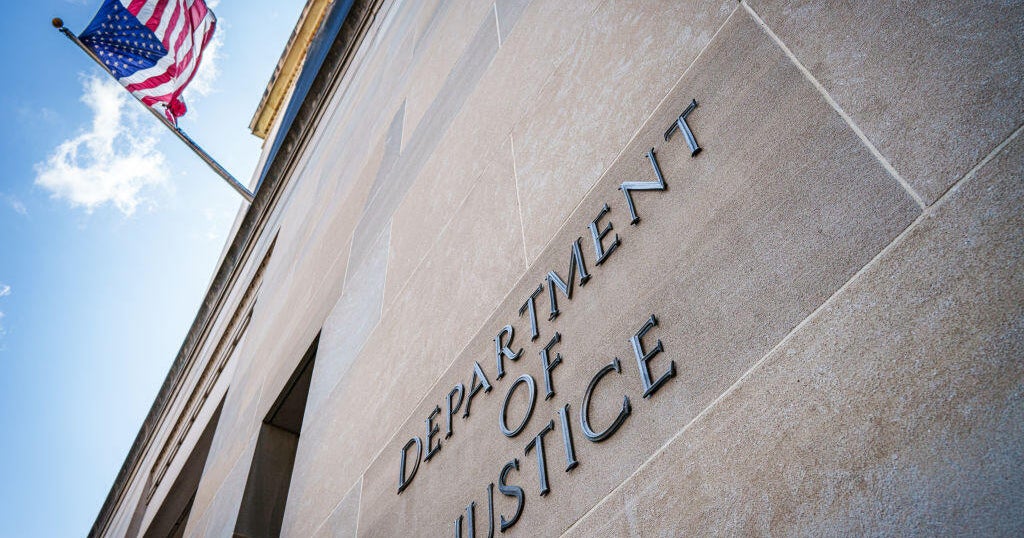
Attorney General Todd Blanche confirmed that the White House will follow a Supreme Court decision related to mail voting. The decision upheld a lower court ruling that stops the U.S. Postal Service from enforcing new rules about mail ballots.
Key Facts
Attorney General Todd Blanche spoke to CBS News about the issue.
The Supreme Court kept a lower court's ruling in place.
The ruling prevents the U.S. Postal Service from applying new regulations on mail voting.
The White House said it will comply with the Supreme Court’s decision.
The discussion focused on rules about voting by mail ballots.
Read the Original
Want the full story? Tap a source to open the original
article.
Prime Minister Andy Burnham is considering plans to give mayors and local leaders powers to oversee water companies in England. The plan includes creating regional bodies to set goals, check spending, and hold these companies accountable, aiming to improve water services and control rising costs.
Key Facts
Andy Burnham wants to create nine regional bodies to supervise water companies.
These bodies would include mayors, experts, and representatives from sectors like transport and farming.
The plan follows recommendations from Sir John Cunliffe’s Independent Water Commission.
Officials in the Department for Environment, Food and Rural Affairs support the idea.
Water customers in England and Wales have faced large bill increases and rising complaints.
Complaints to the water industry watchdog rose by 84% in one year, the highest in 20 years.
Burnham aims to give mayors more power over public services and budgets in a 10-year plan.
More than 200,000 people signed a petition calling for a public vote on returning water companies to public ownership.
Read the Original
Want the full story? Tap a source to open the original
article.
The U.S. Justice Department charged five people connected to Russian intelligence with running a global plan to kill critics of Russia, including one plot aimed at a dissident living in the United States. The suspects, who remain in Russia, allegedly tried to hire people to spy on and kill these dissidents and were also involved in attacks in Europe.
Key Facts
Five people linked to Russia's intelligence services were indicted for plotting assassinations and attacks.
The group is called the "RIS Network" and includes a former Russian intelligence colonel, his son, two Cubans, and one Venezuelan.
One plot involved recruiting a Brooklyn man to take photos of a Russian dissident in the U.S. and offered large sums to kill him.
The suspected dissident was believed to live near Washington, D.C.
The Brooklyn resident agreed to spy but refused to carry out the killing.
Another attempt involved recruiting a U.S. citizen in Lithuania to kill someone speaking against Russia.
The group also allegedly planned arson attacks in the Czech Republic and Lithuania targeting pro-Ukraine facilities.
The suspects were charged with terrorism financing and murder-for-hire conspiracies.
Read the Original
Want the full story? Tap a source to open the original
article.
Senator Chris Coons, a Democrat from Delaware, won his primary election and is expected to win the Senate seat again in the November general election. He will compete against Michael Katz, a former state senator who won the Republican primary.
Key Facts
Chris Coons is the Democratic Senator from Delaware.
Coons won his primary election on Tuesday.
Delaware is considered a strong Democratic (blue) state.
Michael Katz, a former Delaware state senator, won the Republican primary.
Katz competed against U.S. Army Reserves Colonel John Shulli for the Republican spot.
Coons is likely to win another term in the U.S. Senate.
The general election will take place in the fall.
Read the Original
Want the full story? Tap a source to open the original
article.
The race to replace Democratic Senator Jeanne Shaheen in New Hampshire has become more competitive, with polls showing Republicans and Democrats close in support. Former Senator John Sununu (Republican) and Representative Chris Pappas (Democrat) are the main candidates, and national Republicans have spent more money in the race. The contest is now seen as a toss-up ahead of the November election.
Key Facts
Senator Jeanne Shaheen, a Democrat, is retiring, opening the Senate seat in New Hampshire.
John Sununu, who was a Republican senator before, won the GOP nomination.
Chris Pappas, a Democratic representative, is the Democratic nominee.
Recent polls show a close race, with some polls tying the candidates or showing a small lead for either.
Republicans have spent almost twice as much as Democrats on the race so far.
New Hampshire has not elected a Republican senator since 2010.
The state is known for having many independent voters, making predictions difficult.
The result could affect control of the U.S. Senate, with Republicans currently holding a narrow majority.
Read the Original
Want the full story? Tap a source to open the original
article.
A 21-year-old man from Pennsylvania was arrested by federal officials for planning a mass attack inspired by ISIS. Authorities said the man intended to cause many casualties.
Key Facts
The suspect is 21 years old and lives in Pennsylvania.
He was arrested for plotting a mass casualty attack.
The plot was inspired by ISIS, a known terrorist group.
Federal officials made the arrest.
The plan could have led to many injuries or deaths.
The investigation involved CBS News reporting by Anna Schecter.
The arrest aims to prevent a violent attack.
Read the Original
Want the full story? Tap a source to open the original
article.
Rep. Thomas Massie introduced a resolution to impeach Defense Secretary Pete Hegseth, citing wrongdoing in his leadership of the Pentagon and military actions. The House of Representatives must vote on the resolution soon, but it is uncertain if it will pass given the narrow Republican majority.
Key Facts
Rep. Thomas Massie gave a 67-minute speech reading a 34-page impeachment resolution against Defense Secretary Pete Hegseth.
The resolution accuses Hegseth of breaking laws to minimize civilian harm, conducting an unlawful war in Yemen, ordering extrajudicial killings, suppressing free speech, and kidnapping a foreign leader.
The Pentagon defended Hegseth, calling him a transformative leader with full departmental support.
Massie is an outgoing Republican representative who lost a primary after President Trump endorsed his opponent.
The House GOP has a slim majority, meaning only a few Republican defections could block the impeachment vote.
Speaker Mike Johnson and GOP leaders may try to delay or cancel the vote to avoid politically risky decisions before midterm elections.
The impeachment vote must happen within two legislative days, likely by Thursday.
This impeachment effort relates to concerns over Hegseth’s handling of military and diplomatic matters under President Donald Trump’s administration.
Read the Original
Want the full story? Tap a source to open the original
article.
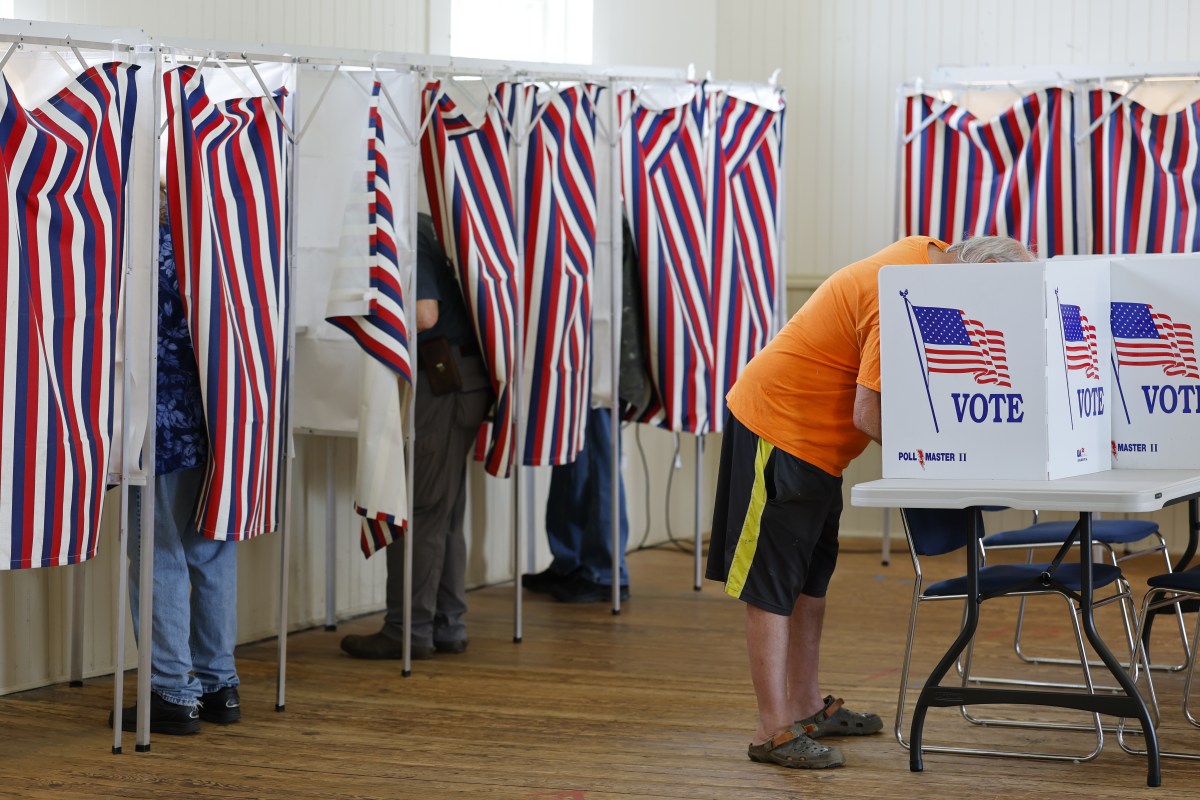
The Supreme Court blocked stricter mail-in voting rules supported by President Donald Trump before the 2026 midterm elections. A legal expert explained the Court’s decision and its impact on voting procedures.
Key Facts
The Supreme Court stopped new, tighter rules for mail-in voting.
These rules were supported by President Donald Trump.
The decision came before the 2026 midterm elections.
The ruling affects how mail-in votes can be cast and counted.
A legal expert from CBS News explained what the decision means.
The decision maintains existing mail-in voting regulations.
Read the Original
Want the full story? Tap a source to open the original
article.
The Environmental Protection Agency (EPA) is removing rules that limited climate pollution from power plants using coal and natural gas. These power plants will now have fewer restrictions on the amount of pollution they produce.
Key Facts
The EPA is changing rules that control pollution from coal and natural gas power plants.
The removed rules previously set limits on climate pollution from these plants.
The decision will allow power plants to emit more greenhouse gases.
Coal and natural gas power plants are major sources of pollution causing climate change.
Dr. Nat Keohane, president of the Center for Climate and Energy Solutions, has spoken publicly about this topic.
The change is expected to impact efforts to reduce climate pollution in the United States.
This is a significant shift in environmental regulations by the EPA.
Read the Original
Want the full story? Tap a source to open the original
article.
Delaware voters are voting in the final national primary election before the midterm elections. This primary is important because it helps decide which candidates will run in the midterms.
Key Facts
Delaware held the last national primary election before the midterms on Tuesday.
Voters in Delaware chose candidates for various political offices.
The midterm elections are scheduled for later this year.
Primaries decide who will represent each political party in the midterms.
CBS News provided coverage of the election process and results.
Read the Original
Want the full story? Tap a source to open the original
article.
Rep. Joyce Beatty, a member of the Kennedy Center board, said she had a heated argument with President Donald Trump about the Kennedy Center. The disagreement happened because she opposed closing the center during a board meeting.
Key Facts
Joyce Beatty is a Democratic representative from Ohio.
She serves on the Kennedy Center board as an ex-officio member.
Beatty spoke about a heated discussion with President Donald Trump.
The argument was about closing the Kennedy Center during a board meeting.
Beatty opposed closing the Kennedy Center while Trump supported it.
The interview was given to NewsNation’s Joe Khalil.
The Kennedy Center is a major cultural venue in the United States.
The disagreement highlights differing views on the center’s operation.
Read the Original
Want the full story? Tap a source to open the original
article.
A magazine borrowed from a library in New Hampshire in 1894 was returned 132 years late. The library had stopped charging overdue fines, so the person who returned it did not have to pay the large fine.
Key Facts
The magazine is the September 1894 issue of The Century Illustrated Monthly Magazine.
It was borrowed from Concord Public Library in New Hampshire.
The return happened after the library announced it would stop charging fines on overdue items.
The magazine was 48,220 days overdue, which could have led to a $12,055 fine.
The man who returned it said it had been in his house for many years without him knowing how it got there.
The library announced a one-year pause on overdue fines starting September 2026 to see how a fine-free system works.
The magazine will not be put back on loan, but may be kept in a special local history section of the library.
The library shared the news with happy responses on social media.
Read the Original
Want the full story? Tap a source to open the original
article.
The United States has spent $38 billion so far on the war involving Iran. The Congressional Budget Office says the U.S. will keep spending about $2 billion to $3 billion every month on this conflict.
Key Facts
The U.S. has already spent $38 billion on the Iran war.
Monthly spending is expected to be between $2 billion and $3 billion.
The information comes from the Congressional Budget Office, which advises the U.S. Congress on budget matters.
The report shows ongoing high costs for the U.S. government related to the conflict.
This spending reflects the government’s continued involvement in the Iran war.
Read the Original
Want the full story? Tap a source to open the original
article.
President Donald Trump criticized the Supreme Court after it refused to enforce stricter mail-in voting rules, calling it a loss for Republicans and saying it could lead to cheating. However, a study from the Brookings Institution found only four cases of mail-in voter fraud for every 10 million ballots cast between 2016 and 2022.
Key Facts
President Trump called the Supreme Court’s decision a "big loss" for Republicans and Americans.
The court refused to approve stricter rules for mail-in voting.
President Trump said this refusal might cause voting fraud.
The Brookings Institution analyzed mail-in voting fraud cases.
They found only four fraud cases per 10 million mail ballots from 2016 to 2022.
The data covers the elections of 2016, 2018, 2020, and 2022.
CBS News reported on the issue and the related comments from President Trump.
Read the Original
Want the full story? Tap a source to open the original
article.
Police released new video showing an 18-year-old man launching fireworks from a moving truck. Authorities say this action caused a deadly wildfire, and the suspect now faces several charges, including first-degree manslaughter.
Key Facts
New video shows a suspect lighting fireworks while driving a moving truck.
The fireworks are linked to starting a wildfire that caused deaths.
The suspect is 18 years old.
He faces charges including first-degree manslaughter, which means causing death without planning it.
The incident is under police investigation.
Wildfires can be caused by careless use of fireworks.
The case draws attention to fire safety and legal responsibility.
Read the Original
Want the full story? Tap a source to open the original
article.
A federal judge ruled that the Kennedy Center cannot be named after President Trump unless Congress approves it. In response, the board selected by President Trump voted to close the Kennedy Center.
Key Facts
A judge decided the Kennedy Center cannot carry President Trump’s name without Congress’s approval.
The board managing the Kennedy Center is chosen by President Trump.
This board voted to close the Kennedy Center after the judge’s ruling.
The decision to close the center came soon after the legal ruling.
The controversy revolves around naming rights connected to President Trump’s priorities.
This situation involves a federal court decision and actions by a presidential appointee board.
The Kennedy Center is a famous cultural venue in the United States.
The news was reported by Ed O’Keefe from the White House.
Read the Original
Want the full story? Tap a source to open the original
article.
A bipartisan bill to impose sanctions on Russia has moved forward in the U.S. House of Representatives. The bill was co-written by the late Senator Lindsey Graham and aims to pressure Russia to stop its war in Ukraine.
Key Facts
The bill is supported by both political parties (bipartisan).
It focuses on imposing sanctions on Russia.
The goal is to make Russia end its war with Ukraine.
The bill was co-authored by the late Senator Lindsey Graham.
The House Rules Committee approved the bill.
CBS News contributor Masih Alinejad expressed her support for the bill.
Read the Original
Want the full story? Tap a source to open the original
article.