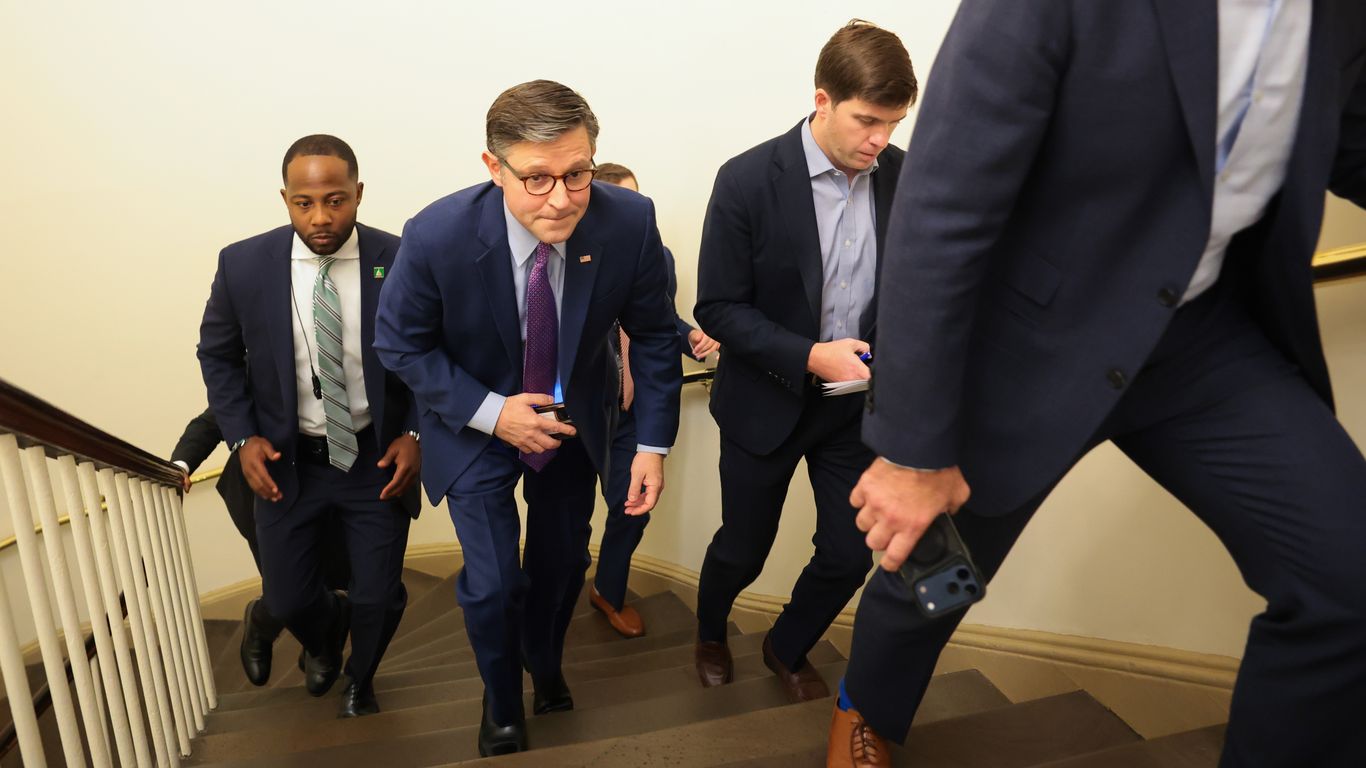
House Republicans passed a budget resolution to start writing a $95 billion bill. The bill plans to fund U.S. military operations related to the war with Iran, provide aid to farmers, and attempt to impose new voting restrictions. The resolution passed narrowly along party lines and is designed to move through the Senate with special rules.
Key Facts
The House passed the budget resolution by a vote of 216-214, mostly along party lines.
The bill aims to provide about $73 billion for military spending on the Iran conflict.
An additional $12 billion is planned to support farmers affected by global impacts and tariffs.
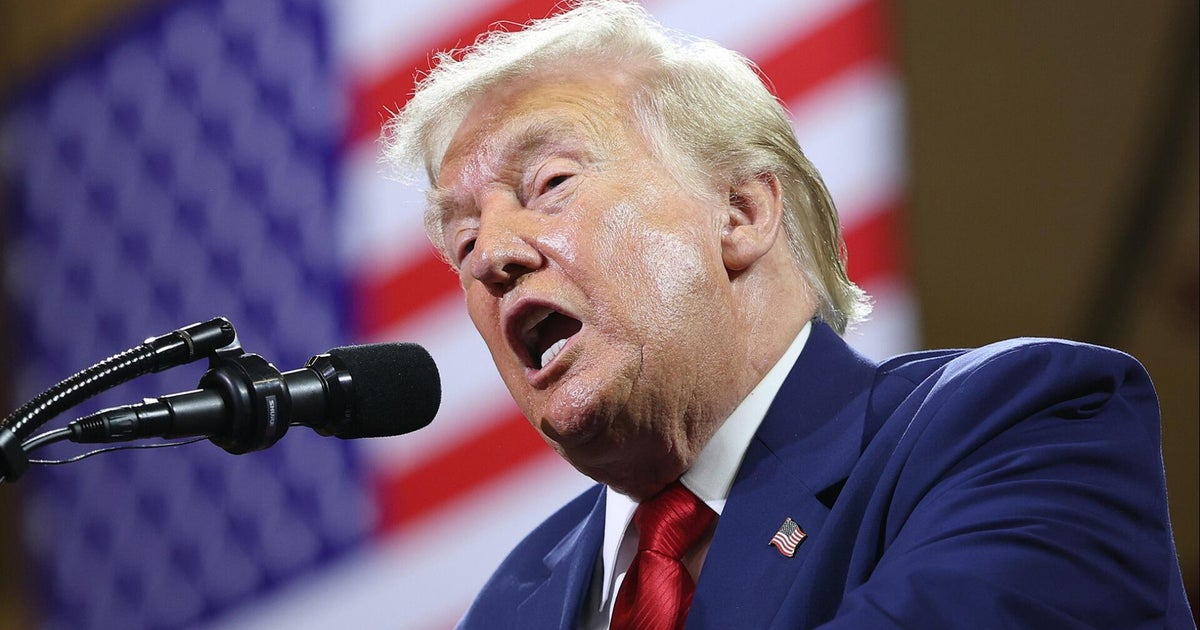
$10 billion is set aside for voting-related measures, including a bill supported by President Trump that would ban mail-in ballots and require stricter voter ID.
The Senate may remove voting-related changes because budget reconciliation rules limit what can be included.
Two Republicans and one independent joined all Democrats in opposing the resolution.
The House speaker said the bill supports troops, farmers, and election integrity.
Senate Republican leader John Thune indicated the Senate might delay action on the bill until a government funding deadline approaches.
Read the Original
Want the full story? Tap a source to open the original
article.
Support for the war in Iran has dropped among President Donald Trump’s most loyal voters, known as MAGA Trump voters. A recent Politico poll shows 37% now support continuing the war, down from 50% in May.
Key Facts
The poll focuses on supporters of President Donald Trump who identify with the MAGA movement.
Support for a war in Iran decreased from 50% in May to 37% recently.
The war would involve increased costs that could affect people in the United States.
The poll was conducted by Politico, a news organization.
The change shows a significant drop in approval for military action among this group.
Read the Original
Want the full story? Tap a source to open the original
article.
A three-year-old girl in Santa Clarita, California, was bitten by a rattlesnake that was hiding under an Amazon package left at her home. She was treated with anti-venom in the hospital and is now recovering.
Key Facts
The snake was a southern pacific rattlesnake hiding beneath a brown padded envelope.
The girl, named Addy, was bitten on her left hand while trying to get the package.
Addy's mother took her to first responders who gave her anti-venom and she was then moved to a pediatric intensive care unit.
Addy received three doses of anti-venom total during her treatment.
She is currently in good spirits but has bruising where she was bitten.
Rattlesnake bites have increased in California this year due to heatwaves since March.
So far, there have been 277 reported rattlesnake bites in California this year.
Three people have died from snake bites in California this year, which is higher than usual.
Read the Original
Want the full story? Tap a source to open the original
article.
House Republicans narrowly passed a budget plan to begin work on a $95 billion package called reconciliation 3.0. The package includes funding for the Iran war, farm aid, and incentives for states to adopt parts of the SAVE America Act but faces challenges in both the House and Senate.
Key Facts
The House passed the budget framework by a close vote of 216-214.
Two House Republicans and one Independent voted against the measure, along with all Democrats.
The $95 billion package includes $73 billion for the Iran war, $12 billion for farm aid, and $10 billion to encourage states to adopt parts of the SAVE America Act.
President Donald Trump urged House Republicans to support the budget resolution.
Some conservatives oppose the package’s grant program to states for voter ID laws, calling for stronger enforcement instead.
Senate Republicans warn that including the full SAVE Act would likely fail Senate rules for reconciliation bills.
Senate Majority Leader John Thune said the reconciliation plan faces difficult approval and may be a backup option to prevent a government shutdown.
Read the Original
Want the full story? Tap a source to open the original
article.
The House of Representatives, led by Speaker Mike Johnson, approved a budget plan worth $95 billion. This plan increases money for the Pentagon, helps farmers, and supports states in adding voting rules.
Key Facts
The House passed a $95 billion budget reconciliation framework.
The plan includes more funding for the Pentagon (U.S. Department of Defense).
It provides financial aid for agriculture and farming.
The budget also encourages states to adopt new voting restrictions.
Speaker Mike Johnson led efforts to get enough support for the vote.
The vote was close due to a narrowly divided House.
Read the Original
Want the full story? Tap a source to open the original
article.
The House of Representatives passed a bill that limits stock trading by members of Congress. The bill bans buying stocks by Congress members, their spouses, and children, and requires advance public disclosure of stock sales, but some Democrats criticized it for not being strict enough and for including a voter ID rule.
Key Facts
The bill is called the Stop Insider Trading Act, introduced by Rep. Bryan Steil of Wisconsin.
It bans members of Congress, their spouses, and dependent children from buying publicly traded stocks.
Lawmakers must disclose planned stock sales at least seven days before selling.
Violators face fines of $2,000 or 10% of the transaction, plus loss of any profits made.
The bill passed 232 to 198, with some Democrats joining all Republicans in support.
Republicans added a photo voter ID requirement to the bill, which some Democrats oppose.
Democrats want a stronger ban, including on stock ownership and trading by the president and administration officials.
Current law (STOCK Act) bans insider trading by officials but has not led to any prosecutions over 13 years.
Read the Original
Want the full story? Tap a source to open the original
article.
The U.S. House of Representatives passed a new law that bans members of Congress from trading stocks. The bill was supported by Republicans and some Democrats and aims to prevent conflicts of interest by lawmakers.
Key Facts
The House voted 232 to 198 in favor of the stock trading ban.
The bill was introduced by Representative Bryan Steil, a Republican from Wisconsin.
Thirteen Democrats joined all Republicans to pass the legislation.
The bill addresses concerns about lawmakers potentially benefiting financially from inside information.
Conservative Republicans pushed for this vote after months of delay.
The new law is designed to increase transparency and public trust in Congress.
The legislation affects members of the House of Representatives.
Read the Original
Want the full story? Tap a source to open the original
article.
A recent fatal shooting by an Immigration and Customs Enforcement (ICE) agent in Maine has become a major topic in the state's Senate race. Democratic candidate Troy Jackson supports ending ICE, while Republican Senator Susan Collins, who backed ICE funding, faces criticism and defends her efforts to influence federal immigration actions.
Key Facts
Johan Sebastián Guerrero, a 25-year-old Colombian man, was fatally shot by an ICE agent in Biddeford, Maine, on July 13, 2026.
Guerrero was not the target of the ICE operation; he had entered the U.S. illegally in 2023 but received a work permit in 2025.
Hundreds protested in Biddeford after the shooting, criticizing ICE and supporting Guerrero’s family.
Troy Jackson, poised to be the Democratic nominee, called ICE "a rogue agency" and said it should be dismantled.
Senator Susan Collins, a Republican, chairs the Senate Appropriations Committee and supports a close working relationship with the federal government.
After the shooting, Collins urged a halt to non-urgent vehicle stops by ICE, but President Trump reversed that pause.
Democrats criticize Collins for supporting federal immigration enforcement, while some Republicans defend her approach as beneficial to Maine.
Jackson has strong support from labor unions, which may boost his message on immigration issues.
Read the Original
Want the full story? Tap a source to open the original
article.
The US House of Representatives passed a $1.15 trillion defense policy bill called the National Defense Authorization Act (NDAA) in a close vote mostly along party lines. The bill now moves to the Senate. Democrats mostly opposed it because of the war with Iran, new voting restrictions supported by President Trump included in the bill, and concerns about its high cost.
Key Facts
The NDAA authorizes $1.15 trillion for military spending in fiscal year 2027.
The House vote was 216 in favor and 212 against, with most Democrats opposing.
Democrats opposed the bill partly due to the ongoing war with Iran and lack of Congress approval for attacks.
The bill includes the Save America Act, a Trump-backed law proposal to ban mail-in ballots and add voter ID rules.
Some Democrats criticized the bill’s high cost and cuts to other government programs.
The bill also includes provisions to increase US-Israel defense cooperation.
Several amendments were debated; two notable votes included rejecting a halt to aid for Ukraine and rejecting a ban on transgender military service.
The House Republicans plan to approve an additional $60 billion in military spending related to the Iran conflict.
Read the Original
Want the full story? Tap a source to open the original
article.
The House of Representatives passed a large defense policy bill worth about $1.15 trillion. The vote was close, with some members crossing party lines, as the bill aims to increase U.S. military production and address concerns about conflicts like the war in Iran.
Key Facts
The House passed the National Defense Authorization Act (NDAA) with a 216-212 vote.
Six Democrats voted in favor, while seven Republicans voted against the bill.
The bill authorizes nearly $1.15 trillion in defense spending for the year.
It includes measures to expand U.S. defense production capacity.
The legislation comes amid rising concerns about military spending and the war in Iran.
The NDAA is an annual bill that sets policy and budget priorities for the U.S. military.
Read the Original
Want the full story? Tap a source to open the original
article.
U.S. health regulators will review seven peptides to decide if they should be allowed to be made by licensed pharmacies with prescriptions. These peptides are marketed for various health issues, but the FDA says there is little evidence they are safe or effective. The decision comes amid growing public interest and some controversy about the ties of advisory committee members to the peptide industry.
Key Facts
Peptides are short chains of amino acids naturally found in the body and help control many biological functions.
The FDA’s Pharmacy Compounding Advisory Committee will meet to discuss whether seven specific peptides can be legally compounded by pharmacies for patients.
The seven peptides reviewed include BPC-157, TB-500, and KPV, promoted for conditions like ulcers, wound healing, obesity, migraines, pain, insomnia, and opioid withdrawal.
Peptides have grown popular due to social media, beauty trends called “looksmaxxing,” and endorsements from Health Secretary Robert F. Kennedy Jr.
The FDA expresses concern over lack of strong scientific evidence, poor quality controls, and limited human testing on these peptides.
Some advisory committee members have connections to businesses that sell or promote peptide therapies, raising questions about conflicts of interest.
Industry groups argue legal approval would improve safety through regulation and better quality standards.
The panel’s recommendations will guide the FDA’s final decision but are not legally binding.
Read the Original
Want the full story? Tap a source to open the original
article.
The White House is expanding a voluntary agreement to reduce the impact of data centers on electricity costs. President Donald Trump will announce that big utility companies like Nextera and Duke Energy are joining this pledge.
Key Facts
The White House created a voluntary pledge to help manage electricity costs caused by data centers.
The goal is to reduce financial impacts on utilities and states.
President Donald Trump will make the announcement about expanding the pledge on Thursday.
Major utility companies Nextera and Duke Energy are joining the pledge.
The initiative involves cooperation between the federal government, utilities, and state leaders.
Data centers are large facilities that use a lot of electricity to store and process data.
Read the Original
Want the full story? Tap a source to open the original
article.
A recent poll shows that fewer voters who supported President Trump now back the U.S. and Israel's conflict involving Iran. Support among these voters dropped by 13 percentage points as concerns about the war's costs grew.
Key Facts
The poll focused on voters who supported President Trump in the last election.
These voters showed less support for the U.S.-Israeli conflict related to Iran.
Support among Trump voters declined by 13 points.
The poll was released by Politico on a Wednesday.
The poll asked if the war should continue even if it leads to higher costs.
Concerns about the financial and other costs of the conflict influenced opinions.
Read the Original
Want the full story? Tap a source to open the original
article.
President Donald Trump spoke at a high school in Marietta, Georgia, on Wednesday. His visit followed his attendance at a dignified transfer ceremony for four U.S. troops who were killed in the Middle East.
Key Facts
President Trump visited a high school in Marietta, Georgia, on Wednesday.
He spoke to people there after attending a dignified transfer ceremony.
The dignified transfer honored four U.S. troops who died in the Middle East.
A dignified transfer is a respectful handover of fallen soldiers’ remains to their country.
The event was covered by CBS News and reported by congressional reporter Taurean Small.
Read the Original
Want the full story? Tap a source to open the original
article.
A Senate committee approved a bill to limit the cost of insulin to $35 for people with private health insurance. The vote was bipartisan, with support from both Democrats and some Republicans, but it is not yet clear if the full Senate will pass the measure.
Key Facts
The bill sets a maximum price of $35 for insulin for privately insured patients.
The Senate Health, Education, Labor and Pensions Committee voted 17-5 in favor.
Six Republicans supported the bill alongside all Democrats on the committee.
The goal is to make insulin more affordable for people who rely on it to manage diabetes.
The bill still needs approval from the full Senate before it can become law.
Insulin costs have been a concern due to their high prices for many Americans.
The legislation represents a bipartisan effort to address healthcare costs.
Read the Original
Want the full story? Tap a source to open the original
article.
A research team has found and taken the first images of a Pan American Airways plane wreckage that sank 74 years ago off the coast of Puerto Rico. The plane, called the Clipper Endeavor, crashed in 1952 due to engine failure, killing most of the 69 people onboard.
Key Facts
The Pan Am plane went down on April 11, 1952, shortly after takeoff because of engine problems.
The crash happened 2,000 feet (610 meters) under the Atlantic Ocean near Puerto Rico.
Of 69 passengers and crew, only 17 survived the crash.
Survivors had trouble finding life vests and rafts as the plane sank fast.
The disaster led to important changes in airline safety, like requiring safety briefings before all flights.
A sonar-equipped underwater drone helped find the wreckage.
The discovery was a team effort by Air/Sea Heritage, Deep Sea Vision, and Discovery's Expedition Unknown.
Read the Original
Want the full story? Tap a source to open the original
article.
A recent poll shows Francesca Hong, a Democratic socialist and state assembly member, leading the Democratic race for governor in Wisconsin. However, many voters in the poll have not yet decided whom they will support.
Key Facts
The poll was done by Marquette Law School between July 8 and 16.
430 registered Democrats in Wisconsin participated in the poll.
Francesca Hong received 26% support among those polled.
Hong is a member of the Wisconsin State Assembly since 2021.
Other candidates, including a former lieutenant governor, are also in the race.
A large portion of respondents remain undecided about their choice.
The poll measures preferences for the Democratic gubernatorial primary.
Read the Original
Want the full story? Tap a source to open the original
article.
The Trump administration announced a plan to change how it gives money for research and development. Instead of mostly funding universities and colleges, it will now focus more on supporting individual scientists.
Key Facts
The U.S. spends about $200 billion each year on research and development.
The Trump administration wants to reduce funding directed at academic institutions.
More money will be given directly to individual scientists.
Michael Kratisos, director of the White House Office of Science and Technology Policy, released a memo about this change.
The current system was created after World War II.
The shift aims to improve how research funding is distributed in the U.S.
The policy change is part of the administration’s efforts to update research funding strategies.
Read the Original
Want the full story? Tap a source to open the original
article.
The Trump administration is trying to take over more than 14 acres of land owned by the Catholic Diocese of Las Cruces near the U.S.-Mexico border to build and expand border security. The church argues this would hurt religious activities at a pilgrimage site on Mount Cristo Rey, while the government says the land is needed for border safety.
Key Facts
The land in question is around 14.26 acres near Mount Cristo Rey in Sunland Park, New Mexico.
Mount Cristo Rey is a Catholic pilgrimage site with a large statue of Jesus visited by thousands each year.
The federal government filed a lawsuit to take this land using eminent domain, a legal power to seize private property for public use.
The government wants to build border wall infrastructure including roads, fencing, cameras, and sensors on the land.
The Diocese of Las Cruces argues that building on this land would interfere with religious freedom and activities at the sacred site.
The court has allowed the government to take ownership of the land for now but has not allowed construction to start.
Defense attorneys say the government’s claim ignores protections for religious freedom under the First Amendment and a law called the Religious Freedom Restoration Act.
A U.S. Representative has introduced a bill to stop federal funds from being used to seize church land in this case.
Read the Original
Want the full story? Tap a source to open the original
article.
President Donald Trump said Iran will face serious consequences after the deaths of four US troops. He made this statement just before attending a ceremony honoring the fallen soldiers.
Key Facts
Four US troops were recently killed in action.
President Trump attended a ceremony called a dignified transfer to honor these troops.
Before the ceremony, President Trump warned that Iran will pay a big price for the deaths.
The statement connects Iran to the deaths of the US soldiers.
The dignified transfer ceremony is a formal event where fallen soldiers are respectfully returned home.
President Trump’s warning suggests possible US action in response.
Read the Original
Want the full story? Tap a source to open the original
article.