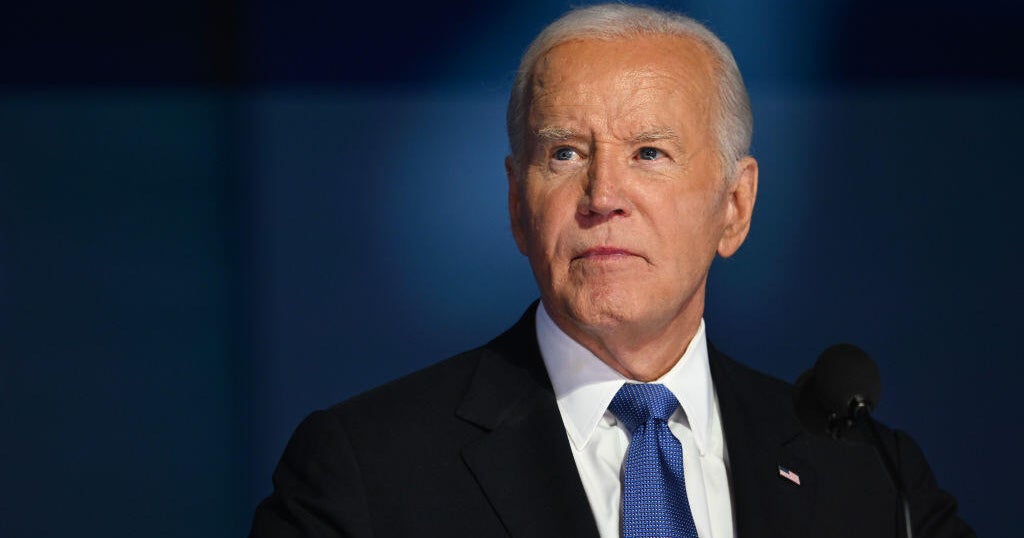
A federal appeals court denied President Biden’s request to block the release of transcripts and audio recordings of his conversations with his biographer from about ten years ago. The recordings will be given to the Heritage Foundation, a conservative group, but the court allowed more time until August 3 for further appeals.
Key Facts
The court’s decision was a 2-1 ruling by three judges on the U.S. Court of Appeals for the D.C. Circuit.
The Heritage Foundation requested the tapes after a special counsel report mentioned them in connection with Biden’s memory and behavior.
The recordings are from 2016 and 2017 when Biden spoke with his biographer, Mark Zwonitzer.
The Justice Department withheld the tapes at first but planned to release them after President Trump returned to office.
A lower court initially blocked and then delayed the tapes’ release to allow for further review.
Biden’s legal team argued that the recordings were private and should not be public because they were collected during a criminal investigation that led to no charges.
The case involves a Freedom of Information Act (FOIA) request filed by the Heritage Foundation.
The court delayed the ruling until August 3 to give time for possible appeals.
Read the Original
Want the full story? Tap a source to open the original
article.
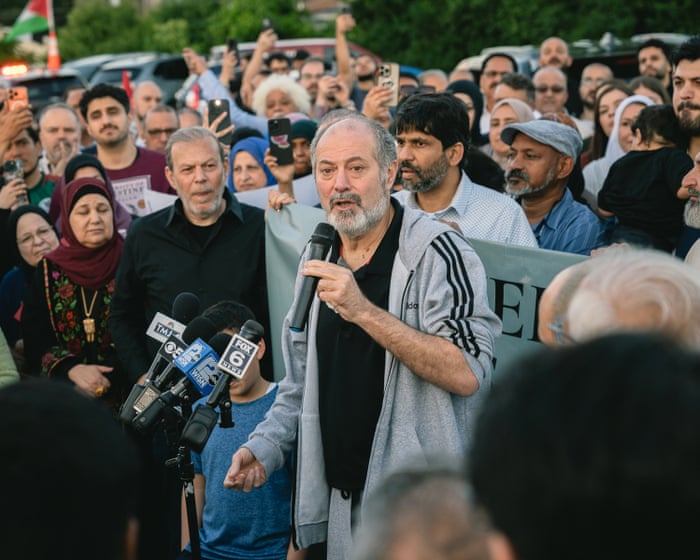
Salah Sarsour, a Muslim community leader in Wisconsin, spent over 80 days in federal immigration detention, which he says reminded him of his past time in Israeli prisons. He was released after a judge found his detention was likely in retaliation for his advocacy on Palestinian rights, but the government is still working to deport him.
Key Facts
Salah Sarsour is the president of Wisconsin’s largest mosque and a U.S. permanent resident for almost 30 years.
He was detained by U.S. Immigration and Customs Enforcement (ICE) in March and released last month after a judge challenged the legality of his detention.
Sarsour claims his treatment in detention was "dehumanizing," causing him to lose over 30 pounds.
The Trump administration continues to seek his deportation, citing accusations related to past activities in Israel and claims he harms U.S. foreign policy.
Sarsour denies accusations made by the Department of Homeland Security (DHS), including alleged funding of terror groups and lying on immigration forms.
He was arrested as a teenager in Israel during the first intifada and spent two years in prison, claiming he was tortured and forced to sign documents he did not understand.
Civil rights groups, legislators, and community members protested his detention, seeing it as politically motivated.
Sarsour is also a board member of American Muslims for Palestine, an advocacy group criticized by the Trump administration.
His immigration case is ongoing with upcoming court hearings in Chicago, with his lawyers arguing the case is being fast-tracked for political reasons.
Read the Original
Want the full story? Tap a source to open the original
article.
The Occupy Wall Street movement started around 15 years ago and brought many people together to protest economic inequality. Although it ended quickly, it helped train many activists and influenced new leftwing political leaders, shifting public views about class and power. Organizers now say movements need to build strong strategies and focus on real power to create lasting change.
Key Facts
Occupy Wall Street began about 15 years ago with widespread protests against economic inequality.
The movement ended quickly due to police actions, harsh weather, and internal challenges.
Organizer Yotam Marom believes Occupy failed partly because it lacked a clear plan for political change.
Occupy introduced the idea of the "99%" fighting against the wealthiest "1%."
The movement helped train many activists and led to the creation of new advocacy groups.
Leftwing politicians like Bernie Sanders and members of "The Squad" have roots linked to the movement’s impact.
Current social movements are learning that focusing solely on distrust of institutions can weaken efforts.
Building a diverse working-class movement with clear goals is seen as essential for future progress.
Read the Original
Want the full story? Tap a source to open the original
article.
Representative Anna Paulina Luna asked the Trump administration to cancel over 265,000 student visas held by Chinese nationals studying in the United States. She based her request on claims of Chinese interference in U.S. elections and wants the State Department to stop issuing new Chinese student visas until a review is done.
Key Facts
Luna sent a letter on July 20 to Secretary of State Marco Rubio asking to revoke F-1 and J-1 visas for Chinese students.
There are about 265,919 Chinese students in the U.S., the second-largest group after Indian students.
Luna cited President Trump’s mention of newly declassified documents alleging Chinese cyber spying in U.S. elections since 2020.
She views Chinese student visas as possible tools for Chinese Communist Party influence in U.S. institutions.
Chinese students contribute around $14.6 billion yearly to the U.S. economy through tuition and spending.
The proposal to cancel all Chinese student visas could face pushback from universities, businesses, and diplomats.
Other Republicans, like Representative Riley Moore, support strict limits or bans on Chinese student visas citing national security concerns.
The administration’s response to Luna’s letter or any new visa policy has not been announced.
Read the Original
Want the full story? Tap a source to open the original
article.
Arizona Republicans will hold a primary election to choose a candidate to run against Democratic Governor Katie Hobbs in November. Voters will also decide candidates for U.S. House seats and various state and local offices.
Key Facts
Arizona’s Republican primary will pick a nominee to challenge Governor Katie Hobbs in the general election.
Katie Hobbs is one of few Democratic governors in states won by President Trump in 2024 facing a competitive race in 2026.
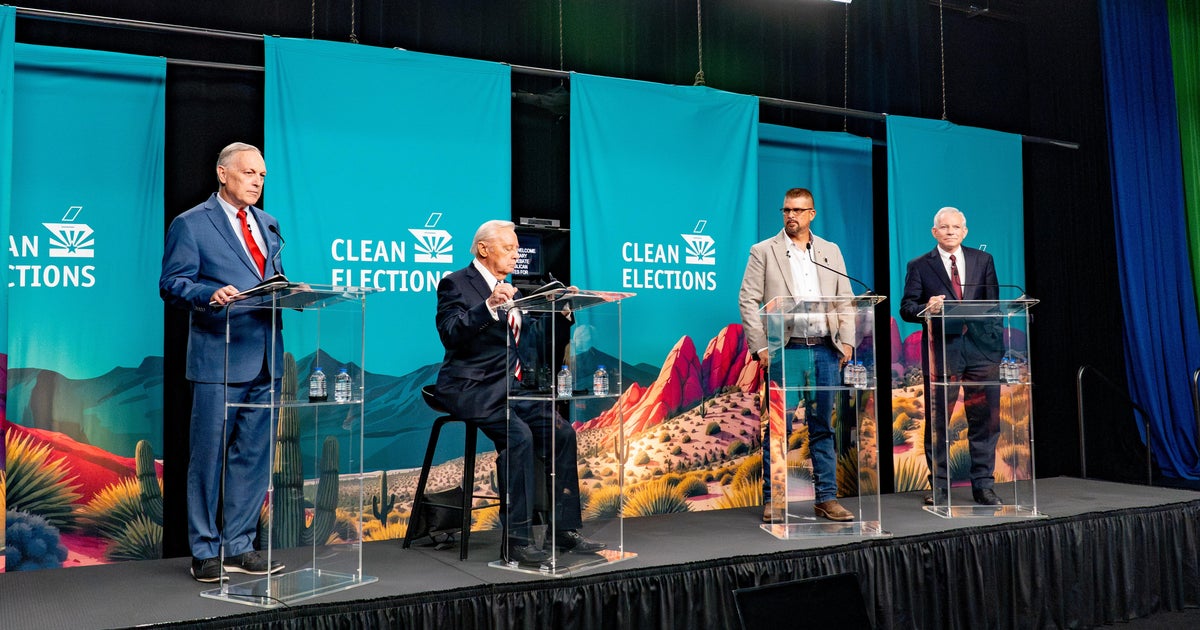
Four candidates are running for the Republican governor nomination: two congressmen, Andy Biggs and David Schweikert, and two businessmen, Ken Miceli and Scott Neely.
Andy Biggs has the endorsement of President Trump.
Former Trump-endorsed candidate Karrin Taylor Robson dropped out in February.
David Schweikert is not seeking reelection to Congress to run for governor.
In the race to replace Schweikert’s congressional seat, candidates include Joseph Chaplik, Jay Feely, and John Trobough.
President Trump endorsed Feely after encouraging him to run in a different district when Feely switched from the 5th to the 1st Congressional District race.
Read the Original
Want the full story? Tap a source to open the original
article.
Dozens of U.S. senators, led by Senator Angus King, have asked Immigration and Customs Enforcement (ICE) and the Department of Homeland Security for more information about ICE agent hiring and pursuit policies. They also want ICE officers to start using body cameras after two fatal shootings involving immigrants in Maine and Houston.
Key Facts
39 senators signed a letter requesting details on how ICE vets new agents and handles vehicle chases.
The letter was led by Senator Angus King from Maine and sent to DHS, which oversees ICE.
Two ICE officers shot and killed immigrants recently, one in Maine and one in Houston.
The Maine ICE officer who fired had a history of family violence, reported in court documents.
Family members believe ICE should not have given this officer a gun and authority to patrol.
Senators want ICE to consider domestic violence records when hiring agents.
They call for body cameras to be quickly issued to all ICE officers.
The senators emphasize the need for clarity and accountability after these shootings.
Read the Original
Want the full story? Tap a source to open the original
article.
The U.S. Bureau of Land Management is planning to lease 2,840 acres of Ohio’s Wayne National Forest for oil and gas drilling using fracking. This move is part of a broader effort by President Donald Trump’s administration to expand energy development on public lands, although environmental groups are concerned about its effects on wildlife and recreation.
Key Facts
The lease sale will cover 41 parcels totaling 2,840 acres in Ohio’s Wayne National Forest.
The forest is divided into three separate areas located around southeast Ohio near Marietta and Parkersburg, West Virginia.
This would be the first time fracking, a method that uses high-pressure water to extract natural gas, is allowed in this national forest.
The lease sale is scheduled for September 15, 2026, but the winning bidders will still need federal permits to start drilling.
Environmental groups warn that fracking threatens endangered species like the Indiana bat and could increase noise, light, and traffic.
The Wayne National Forest already has conventional oil wells from before fracking technology was used.
Ohio state parks and wildlife areas have also opened about 22,000 acres to oil and gas development since 2024 through GOP-supported laws.
The Ohio Oil and Gas Association says the leasing process includes environmental reviews and public input and argues responsible energy development is possible with care for the environment.
Read the Original
Want the full story? Tap a source to open the original
article.
David Hearn, a former Olympic canoeist, is set for a trial on September 28 in Washington, D.C., after being charged with damaging the Lincoln Memorial Reflecting Pool. The pool has undergone a costly and problematic renovation project supported by President Donald Trump.
Key Facts
David Hearn has been indicted on a felony charge for allegedly damaging the Lincoln Memorial Reflecting Pool.
The trial date is set for September 28, 2026, by Judge Todd Edelman.
Hearn pleaded not guilty and his lawyers want the case dismissed, citing poor preservation of evidence.
Three others face misdemeanor charges related to the Reflecting Pool for removing paint.
The damage charge involves at least $1,000 worth of harm, with up to 10 years in prison possible if convicted.
The Reflecting Pool renovation, led by President Trump for the country's 250th independence anniversary, has cost over $16 million, much higher than the initial $1.5 million estimate.
Critics say the renovation problems result from bad repair work, while Trump says vandals are responsible.
Supporters of Hearn argue this prosecution is politically motivated to shift blame from the administration.
Read the Original
Want the full story? Tap a source to open the original
article.
A former U.S. Army soldier named Andrew Arrabaca set off fireworks, started a fire, and fired a pellet gun outside a federal building in Manhattan, injuring three people. Authorities arrested him, and the FBI is investigating the incident, though it has not been labeled terrorism.
Key Facts
Andrew Arrabaca is 43 years old and a former U.S. Army mechanic who worked on Patriot missile systems.
The incident happened on the morning of July 20, 2026, outside 26 Federal Plaza in New York City.
Arrabaca carried a sign with the message "ICE Off Our Streets," showing opposition to U.S. Immigration and Customs Enforcement.
He poured gasoline and set a fire near an employee entrance of the federal building.
Arrabaca fired five to seven pellets from an airsoft rifle at the building.
Three people were injured during the incident, including someone attending an immigration court hearing.
FBI's Joint Terrorism Task Force is investigating, but the attack is not currently classified as terrorism.
Arrabaca was arrested by federal security officers and a security contractor shortly after the attack.
Read the Original
Want the full story? Tap a source to open the original
article.
A study from Boston University found that Republican lawmakers introduced 86% of anti-vaccine bills in U.S. state legislatures between 2019 and 2023. The number of vaccine-related bills increased sharply after the COVID-19 pandemic began, reflecting growing political divisions over vaccines.
Key Facts
Between 2019 and 2023, state legislatures introduced 1,513 vaccine-related bills.
After 2020, vaccine-related bills increased from 386 in 2019 to 1,154 in 2021.
Republicans sponsored over 65% of anti-vaccine bills during this period.
Democrats sponsored 54% of pro-vaccine bills and mostly supported increasing vaccine access or funding.
Roughly 40% of all bills each legislative cycle after 2020 dealt with vaccines.
Anti-vaccine attitudes shifted from personal views to political issues influencing laws.
Vaccine hesitancy has become more linked to political identity than to medical discussion.
Researchers highlight that vaccine hesitancy is now an institutional challenge, not just a communication problem.
Read the Original
Want the full story? Tap a source to open the original
article.
President Trump resumed military actions against Iran after ending a June agreement, leading to increased US and Iranian casualties. Democrats are urging the president to stop escalating the conflict, while Iran has responded with attacks on US sites and military targets in the Middle East.
Key Facts
President Trump ended a memorandum of understanding with Iran in June and restarted military attacks.
US forces have carried out at least ten waves of attacks on Iranian targets.
Three US troops were killed in Iranian strikes, with at least 17 US service members killed since the war began on February 28.
Nearly 100 US service members have been injured in the recent two weeks of fighting.
Iran’s Revolutionary Guards targeted US military sites in Bahrain and Kuwait.
Bahrain, Kuwait, and Jordan activated defenses to repel Iranian attacks.
More than 1,700 Iranian civilians have died in the conflict so far.
Democratic Senator Chris Murphy criticized President Trump for losing control of the war.
Read the Original
Want the full story? Tap a source to open the original
article.
The U.S. Supreme Court will review a case involving Alaska bush pilot Kenneth Jouppi, whose $95,000 plane was seized after a passenger brought beer on a flight to a dry village. Jouppi argues that taking his plane as punishment is an excessive fine and violates the Eighth Amendment, while Alaska says the seizure is legal due to laws against bringing alcohol into certain communities.
Key Facts
Kenneth Jouppi is an Alaska bush pilot whose 1969 Cessna plane was seized after a passenger brought a six-pack of beer to a dry village.
Jouppi and his company were convicted of a misdemeanor for knowingly transporting alcohol into a village where it is banned.
A judge sentenced Jouppi to three days in jail and decided to seize his plane to deter others from similar actions.
The Alaska Supreme Court ruled that seizing Jouppi’s plane was legal and not an excessive fine.
Jouppi argues the seizure violates the Eighth Amendment’s Excessive Fines Clause, which protects against unreasonable punishments.
The U.S. Supreme Court agreed to hear the case, with arguments expected in the fall.
Alaska officials say airplane seizures help fight alcohol abuse in rural areas where planes are often used to bring alcohol illegally.
Jouppi’s lawyers say the punishment is too harsh for a minor crime involving only one six-pack of beer.
Read the Original
Want the full story? Tap a source to open the original
article.
Arizona voters are holding primary elections to pick party candidates for governor, congressional seats, and other state offices. The results are important because they could affect who controls the U.S. House of Representatives and whether Republicans can win the governor’s office in a key battleground state.
Key Facts
Arizona’s primary elections take place on Tuesday, with polls open from 6 a.m. to 7 p.m. local time.
Registered Democrats and Republicans can only vote in their party’s primary; independents can choose either party’s primary to vote in.
About 4.3 million people are registered to vote in Arizona, including around 1.5 million Republicans, 1.2 million Democrats, and 1.5 million independents or unaffiliated voters.
Voters are selecting nominees for governor, U.S. Congress, state secretary, attorney general, treasurer, superintendent of public instruction, and all seats in the state legislature.
The key race is the Republican primary for governor, where Andy Biggs and David Schweikert are the main contenders to challenge Democratic Governor Katie Hobbs in November.
Andy Biggs is closely aligned with President Trump and supports his agenda, while Schweikert presents himself as a more moderate conservative.
The 1st Congressional District seat is open because Schweikert is running for governor; Republicans and Democrats are competing to win this important and competitive district.
President Trump has endorsed Andy Biggs in the governor’s race and Jay Feely, a former NFL kicker, in the congressional race.
Read the Original
Want the full story? Tap a source to open the original
article.
Arizona voters are holding key primaries to decide who will run for governor against Democrat Katie Hobbs and who will represent important congressional districts. The state has mixed political control, with a Democratic governor and U.S. senators, but a Republican majority in the House delegation, and many races involve candidates linked to claims about the 2020 election.
Key Facts
Arizona voters are choosing candidates for governor and U.S. House seats in primaries.
Democrat Katie Hobbs is running unopposed in her party for governor.
Four Republicans compete to run against Hobbs; leading candidates include Reps. Andy Biggs and David Schweikert.
President Donald Trump has endorsed Andy Biggs and Jay Feely (for Congress).
Arizona voted for Biden in 2020 but switched back to President Trump in 2024.
Andy Biggs supports claims that the 2020 election was stolen, claims that lack evidence.
Trust in Arizona election systems remains low among voters, with one in three doubting fair ballot counting.
The political battles in Arizona often revolve around election integrity and confidence in voting processes.
Read the Original
Want the full story? Tap a source to open the original
article.
As the midterm elections approach, Republicans seem to be doing better than many expected. Polls show that the general voter preference is almost equal between the two main U.S. parties, even though President Donald Trump has low approval ratings.
Key Facts
Midterm elections historically challenge the party that holds the presidency.
Since the Civil War, only three midterms have favored the president’s party.
Current polls show a nearly even split in voter preference between Republicans and Democrats.
Despite this, President Donald Trump’s approval ratings are low among voters.
This situation suggests that Republican voter enthusiasm is stronger than expected.
Read the Original
Want the full story? Tap a source to open the original
article.
New York City Mayor Zohran Mamdani said he is considering seeking an arrest warrant for Israeli Prime Minister Benjamin Netanyahu. His statement highlights growing disagreements within the Democratic Party about how to handle the U.S. relationship with Israel.
Key Facts
Zohran Mamdani is the Mayor of New York City.
Mamdani threatened to arrest Israeli Prime Minister Benjamin Netanyahu.
He mentioned he is discussing whether an arrest warrant for Netanyahu is possible.
This situation reveals increasing divisions within the Democratic Party.
The disagreement centers on the party’s approach to Israel.
Netanyahu is the current Israeli Prime Minister.
The news was reported by the New York Times.
Read the Original
Want the full story? Tap a source to open the original
article.
Republican lawmakers are concerned about the growing conflict with Iran and how it is causing gas prices to rise. They are asking President Donald Trump to work on reopening the Strait of Hormuz quickly to prevent voter dissatisfaction.
Key Facts
The military conflict with Iran is getting worse.
Gas prices have increased because of this conflict.
A ceasefire with Iran has recently ended or failed.
GOP lawmakers want the Strait of Hormuz to be reopened soon.
The Strait of Hormuz is a key waterway for oil shipments.
Lawmakers worry that high gas prices could upset voters.
President Trump is being urged to take action to help resolve the situation.
Read the Original
Want the full story? Tap a source to open the original
article.
Arizona is holding its primary elections in July, earlier than usual, to prepare better for the November general election. Important races for governor, key state offices, and Congress will take place, with Republicans hoping to win some seats.
Key Facts
Arizona’s primary election is scheduled for July instead of the usual August.
The state changed the primary date through a law passed in February.
The earlier primary gives more time to prepare for the November general election.
The election includes races for governor, important statewide offices, and congressional seats.
Republicans see this primary as a chance to defeat some first-term officeholders.
The event is called the Grand Canyon State’s primary.
The election results will shape the state’s political landscape for the rest of the year.
Read the Original
Want the full story? Tap a source to open the original
article.
House Republican leaders are working quickly to pass a temporary funding bill to keep the U.S. government operating from October 1 through December 4. This effort aims to prevent a government shutdown while lawmakers finish their regular budget work.
Key Facts
House GOP leaders want to avoid a government shutdown that has caused problems before.
They are proposing a stopgap funding bill, also called a continuing resolution.
The bill would fund the government for about two months, from October 1 to December 4.
The stopgap funding gives lawmakers more time to finish the regular budget decisions.
The current plan differs from past situations when shutdowns happened because of budget disputes.
The U.S. government must pass funding measures to keep running without interruption.
A government shutdown means many federal services stop or slow down until funding is approved.
Read the Original
Want the full story? Tap a source to open the original
article.
Five adults died after trying to help a struggling swimmer in the Scioto River in Ohio. The victims included two women and three men, and two children from the group are now in family care.
Key Facts
The incident happened on Sunday evening near the Scioto River in Powell, Ohio.
A child running along a nearby highway alerted a motorist, who called 911.
First responders pulled two women from the river; both later died at hospitals.
Three men’s bodies were found the next day in the river.
The group was believed to be fishing when one person began struggling while swimming.
Several others went into the river to help, but they also got into trouble and drowned.
Two children under 10 who were with the group are now under the care of family services.
The victims’ names have not been released pending family notification.
Read the Original
Want the full story? Tap a source to open the original
article.