ICE is rolling out body cameras for its agents to record arrests and vehicle stops, aiming for greater transparency. However, research shows that body cameras do not consistently change the behavior of officers or people involved in confrontations.
Key Facts
ICE is increasing the use of body cameras among its agents, with more than half of field offices equipped and plans to complete deployment soon.
The rollout was delayed partly due to a government shutdown caused by Democrats, according to the White House press secretary.
Body cameras are intended to show what officers see during incidents, which can help prove if officers acted properly.
Studies show body cameras do not clearly reduce the use of force or arrests by police.
Research is mixed on whether body cameras improve police accountability or community relations.
A RAND study of ICE’s pilot use of body cameras found no significant drop in force or complaints.
Body camera footage can provide valuable evidence to support or refute claims against officers.
Cameras record what happens but do not prevent violent actions or decide if the use of force is justified.
Read the Original
Want the full story? Tap a source to open the original
article.
A recent bill passed by the U.S. House of Representatives aims to simplify cash transactions by addressing how change is given when pennies are not used. Currently, businesses have different ways of handling change without pennies, which can be confusing for customers.
Key Facts
Many businesses do not use pennies when giving change in cash transactions.
Because of this, some stores round change up or down, leading to different rules.
A bill passed by the U.S. House seeks to standardize how change is returned without pennies.
The goal is to make cash transactions clearer and less confusing for shoppers.
No pennies would be needed for everyday cash sales if the bill becomes law.
This change affects only cash payments, not cards or other electronic methods.
The bill is part of ongoing efforts to modernize handling of small coins in the U.S. economy.
Read the Original
Want the full story? Tap a source to open the original
article.
The Hill Country area in Texas prepared for heavy flooding on Wednesday and Thursday. Summer camps in the region stayed alert to keep people safe during the wet weather.
Key Facts
The Hill Country is a region in Texas.
Summer camp operators were closely watching for floods.
Severe flooding was expected on two days: Wednesday and Thursday.
The camps took precautions to protect campers and staff.
Local authorities and organizations likely coordinated flood responses.
The flooding risk comes from heavy rains.
Flooding can cause dangerous water levels in rivers and low areas.
Read the Original
Want the full story? Tap a source to open the original
article.
The Trump administration is considering a proposal that would require some immigrants applying for green cards at U.S. consulates abroad to pay a bond of up to $100,000. This plan aims to ensure applicants can support themselves financially but may face legal challenges over whether the government has the authority to impose such a broad bond requirement.
Key Facts
The proposal would require certain immigrant visa applicants to post a bond as high as $100,000.
The bond is intended to show applicants can support themselves and not rely on public assistance.
The State Department and Department of Homeland Security are exploring using existing laws to enforce the bond.
Critics say broad bond requirements might not be allowed under federal immigration law and could lead to lawsuits.
Some immigration lawyers say bonds should only be based on individual financial assessments, not applied broadly by nationality or visa type.
The bond amount might change and could start with applicants from a few countries in a pilot program.
Current immigration rules already include checks to make sure new immigrants can financially support themselves.
The plan has not been finalized and could change before any implementation.
Read the Original
Want the full story? Tap a source to open the original
article.
A woman in Houston experienced a sexual assault at a Dollar Tree store where a man inappropriately exposed himself and ejaculated on her. Similar attacks, known online as "tagging" or "sharking," have been reported at various Dollar Tree locations across the U.S., linked to issues like poor store security and understaffing.
Key Facts
A woman in Houston was sexually assaulted at a Dollar Tree when a man exposed himself and ejaculated on her.
The assault happened after she confronted the man inside the store and he followed her outside.
The woman reported the incident to store staff but did not receive immediate serious attention.
Online communities have used terms like "tagging" and "sharking" for this behavior of public masturbation and assault.
Dollar Tree stores are often chosen for these assaults due to poor lighting, cluttered aisles, lack of security, and few employees working.
Multiple women have reported similar incidents at Dollar Tree stores nationally.
Law enforcement and media have confirmed a rising pattern of these offenses in several locations.
Dollar Tree stated they are committed to safety but did not comment in detail on specific assaults.
Read the Original
Want the full story? Tap a source to open the original
article.
New York City’s council is considering a bill to stop horse-drawn carriages in Central Park by June 2028. This comes after a recent accident where a tourist died, sparking debates between carriage industry workers and animal rights activists.
Key Facts
Central Park has had horse-drawn carriages since 1858, with about 160 horses pulling 68 carriages.
An 18-year-old tourist from India, Romanch Mahajan, died after falling from a carriage when the horse spooked.
The bill to phase out carriages is called “Romanch’s law” and will be voted on in August.
Some city leaders, including Council Speaker Julie Menin, support banning the carriage industry due to safety and animal welfare concerns.
Horse carriage workers and Transport Workers Union argue horses enjoy working and oppose the bill.
Animal rights activists, supported by some actors, say the horses’ welfare is at risk and they cannot speak for themselves.
Central Park recently had a horse die from eating poisonous plants, raising safety concerns.
Mayor Zohran Mamdani supports the idea behind the bill but worries about jobs for carriage drivers and wants solutions for their future work.
Read the Original
Want the full story? Tap a source to open the original
article.
President Donald Trump’s administration proposed a major change to how federal research grants are managed, which could put nearly $1 trillion in funding under political control. This proposal has caused concern and opposition among many scientists and organizations, who fear it will politicize and disrupt important scientific research.
Key Facts
Harvard professor Nancy Krieger’s nearly $1 million NIH grant was canceled unexpectedly.
The cancellations are linked to an effort led by Elon Musk’s “department of government efficiency” targeting research on topics like race, gender, and equity.
The Office of Management and Budget (OMB) proposed a 400-page rule that would overhaul the federal grant process and give political appointees control over $1 trillion in funding by October.
The proposal covers funding across healthcare, education, social services, and environmental protections—not just research.
About 95% of nearly half a million public comments oppose the OMB’s proposed rule.
Senator Tammy Baldwin criticized the proposal, saying it risks public health and safety by politicizing research funding.
The NIH’s $47 billion budget represents a major part of the $150 billion science and technology funding affected.
Scientists say the rule could censor research and advance a political agenda over scientific merit.
Read the Original
Want the full story? Tap a source to open the original
article.
Jake Johnson, a high school math teacher from Minnesota, is running for a US House seat as a Democrat. He focuses on making life more affordable for families in his rural, farming-heavy district and criticizes current policies he says have hurt local workers and farmers.
Key Facts
Jake Johnson grew up in a family that relied on government support like food stamps and Medicaid.
He is running to gain a US House seat in Minnesota that has been held by Republicans since 2018.
Johnson has experience as a union member and government relations coordinator for Minnesota teachers.
He wants to end tariffs that he says have raised prices and hurt farmers in his district.
Johnson blames healthcare cuts and clinic closures on the Trump administration’s policies.
His Republican opponent, Brad Finstad, has been criticized for only holding virtual town halls, not in-person meetings.
A recent poll shows Finstad with a slight lead over Johnson, and the district leans Republican by 6 points.
Johnson says unpopular Trump policies give Democrats a chance to win the seat.
Read the Original
Want the full story? Tap a source to open the original
article.
The public trusts the presidency, the Supreme Court, and major banks much more than television journalists. Confidence in TV news reporters is significantly lower than for these other institutions.
Key Facts
People have about twice as much confidence in the presidency compared to TV journalists.
The Supreme Court also has about twice the public trust of television journalists.
Large banks enjoy more trust than TV news reporters.
Television journalists have the lowest public confidence among these groups.
This shows a significant gap in how the public views news media versus government and financial institutions.
Read the Original
Want the full story? Tap a source to open the original
article.
New York City health officials confirmed three deaths and 74 cases in a Legionnaires' disease outbreak on the Upper East Side of Manhattan. Authorities identified contaminated cooling towers as the likely source and assured residents that tap water is safe to use.
Key Facts
The outbreak is centered in three Upper East Side ZIP codes: 10028, 10128, and 10075.
Eight people have been hospitalized due to this outbreak as of July 19.
More than 30 cooling towers tested positive for Legionella bacteria, which causes Legionnaires' disease.
Owners of these towers were ordered to clean and disinfect them immediately.
Legionnaires' disease is caught by breathing in mist contaminated with Legionella bacteria, not by drinking water.
Symptoms include fever, cough, muscle aches, and sometimes headaches or confusion.
People over 50, smokers, and those with chronic illnesses or weakened immune systems are at higher risk.
The disease can be treated with antibiotics if caught early, but about 10% of patients die due to complications.
Read the Original
Want the full story? Tap a source to open the original
article.
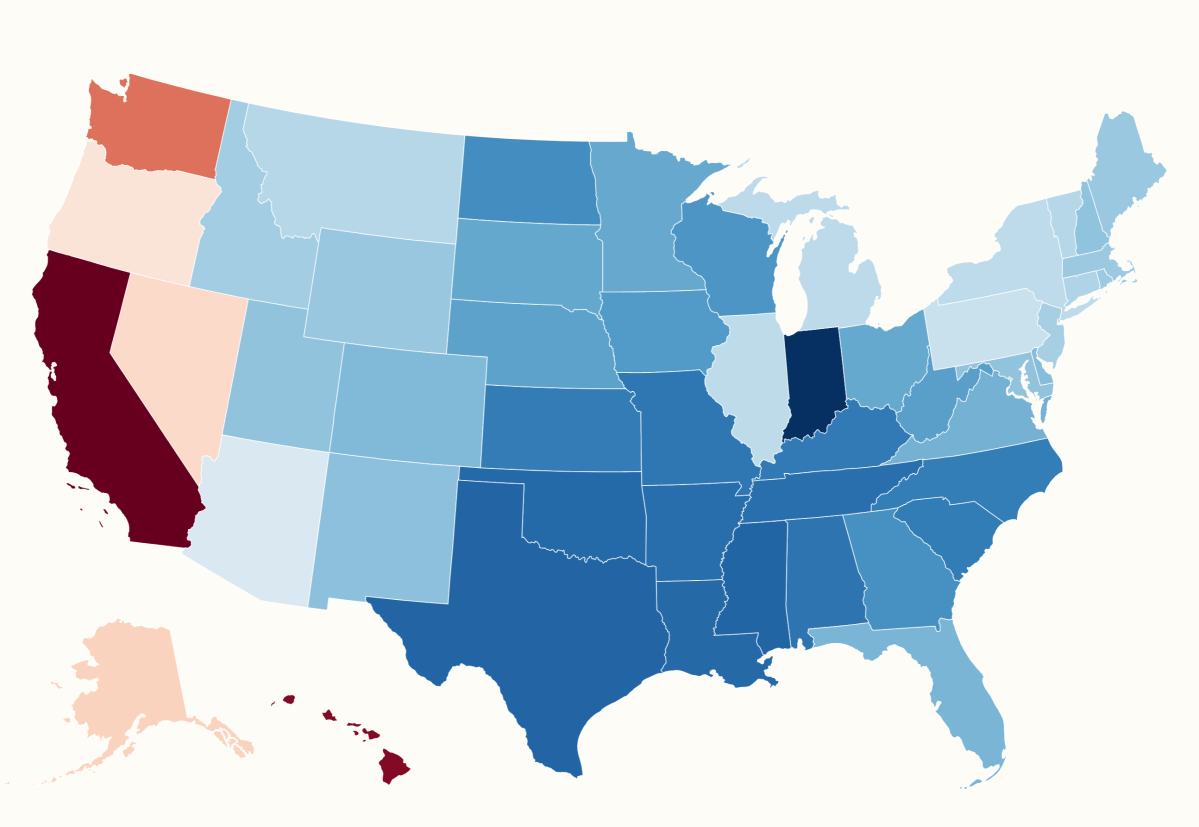
The average gas price in the United States has risen above $4 per gallon due to renewed conflict between the U.S. and Iran, which has disrupted global oil supplies. Prices vary widely by state, with California having the highest average price and Indiana the lowest.
Key Facts
The U.S. national average gas price reached $4 per gallon, up from $3.87 a week earlier.
Conflict between the U.S. and Iran, including the closure of the Strait of Hormuz, has caused a shortage of oil and higher fuel prices.
California has the highest gas price at $5.50 per gallon; Indiana has the lowest at $3.35 per gallon.
The Strait of Hormuz is a critical waterway that handles about 25% of the world’s oil shipments.
President Donald Trump has urged gas stations to lower prices to around $2.50 per gallon and said the Justice Department will investigate possible price gouging by oil companies.
The administration is considering ways to protect oil shipments through the Strait of Hormuz.
Rising fuel costs are causing public concern about affordability and inflation in the U.S.
Taxes and supply issues contribute to higher prices, especially on the West Coast where states rely more on Middle Eastern oil imports.
Read the Original
Want the full story? Tap a source to open the original
article.
Student loan defaults in the United States have reached record levels after the pause on payments ended following the COVID-19 pandemic. About 9.5 million borrowers, or one in five, are now more than nine months behind on their federal student loans, risking serious consequences like wage garnishment.
Key Facts
The pause on federal student loan payments began during the COVID-19 pandemic and ended in 2024.
Since the pause ended, defaults increased from 5.3 million to around 9.5 million borrowers.
$233.3 billion of the $1.7 trillion in federal student loans is currently in default.
Default means a borrower is more than nine months late on payments and could face wage or Social Security garnishment.
The Trump administration removed the SAVE income-driven repayment plan, reducing repayment options.
States with the highest default rates include Mississippi (28.3%), Louisiana, Alabama, and others, mostly in the South.
Puerto Rico has the highest default rate of any territory at 30.9%.
Borrowers from for-profit colleges have the highest default rates, with 33% more than 90 days behind on payments.
Read the Original
Want the full story? Tap a source to open the original
article.
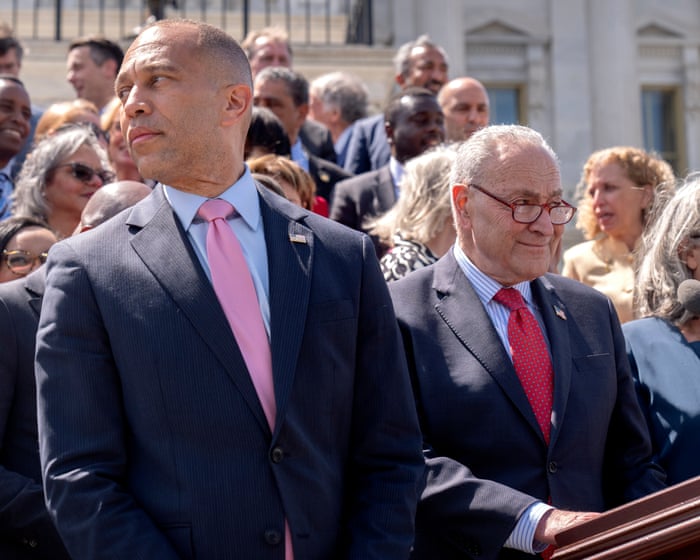
Many House Democrats recently voted against sending $3.3 billion in military aid to Israel, reflecting changing opinions among Democratic voters who increasingly oppose more support for Israel. However, party leaders like Hakeem Jeffries and Chuck Schumer continue to support Israel strongly, creating tension within the party.
Key Facts
Nearly half of House Democrats voted to block $3.3 billion in aid to Israel.
A New York Times poll found 74% of Democratic voters oppose more economic and military aid to Israel.
House Democratic leader Hakeem Jeffries sent a letter supporting Israel and opposing the aid cutoff.
Nancy Pelosi voted to cut off weapons aid, showing a shift from her earlier strong support for Israel.
Democratic leaders fear backlash and accusations of antisemitism, which influences their stance.
Some Democratic voters feel moral anguish about U.S. involvement in the Israeli-Palestinian conflict.
A UN commission and several human rights groups have reported ongoing violence described as genocide in Gaza.
The party’s leadership struggle over Israel policy could affect voter turnout and election results.
Read the Original
Want the full story? Tap a source to open the original
article.
Several prisoners in Hawai'i who are very sick and have been approved for early release cannot leave prison because long-term care facilities refuse to take them. This problem exists across the U.S., where nursing homes often reject former prisoners due to their criminal history or because of Medicaid payment rules.
Key Facts
Christian Alameda, a prisoner at Halawa Correctional Facility, was granted compassionate release after a stroke but remains in the prison infirmary because no long-term care facility would accept him.
At least three other prisoners in Hawai'i face the same issue and stay in the prison medical unit indefinitely.
Compassionate release allows very ill prisoners to leave prison early for medical care but usually requires placement in a nursing home or similar facility.
Many care facilities refuse prisoners due to their past crimes or concerns about safety.
Medicaid does not cover prisoners, so parolees must apply after release, and recent law changes limit when facilities can get paid for new patients.
Long waiting lists at nursing homes add to the difficulty of placing released prisoners.
Hawai'i has no specific compassionate release law and uses internal policies instead, unlike other states.
The limited resources and rules contribute to prisoners staying in prison medical units far longer than intended.
Read the Original
Want the full story? Tap a source to open the original
article.
Senate conservatives who support President Trump want to add the SAVE America Act to a temporary government funding bill to keep the government open after September 30. However, other Republicans are concerned that including this act could cause a government shutdown, leading to disagreements within the party.
Key Facts
The SAVE America Act is President Trump’s top priority.
Some Senate conservatives want to attach this act to a bill that funds the government temporarily.
The current government funding expires on September 30.
Other Republican lawmakers fear that adding the SAVE America Act could cause the government to shut down.
President Trump has increased pressure on lawmakers to include his priorities in the funding bill.
The disagreement is causing tension among Republicans in the Senate.
The stopgap funding measure is meant to keep government operations running while longer-term decisions are made.
Read the Original
Want the full story? Tap a source to open the original
article.
Several Democrats who want to run for president in 2028 are focusing on the issue of Israel. They believe how the party talks about Israel will be important for winning support in upcoming primary elections.
Key Facts
Democratic leaders planning to run in 2028 are paying more attention to Israel issues.
The topic of Israel is expected to be a major challenge in the next Democratic presidential primary.
Recently, Democrats in the House of Representatives were divided over an amendment related to Israel by Republican Rep. Thomas Massie.
This division shows how Israel policy is a sensitive topic within the Democratic Party.
Candidates are trying to shape the party's position on Israel early to gain an advantage.
The debate over Israel might affect how voters view Democratic candidates in the next presidential election cycle.
Read the Original
Want the full story? Tap a source to open the original
article.
The article discusses how political opinions in America have become a key part of people’s identities, making it hard for them to listen and agree. It points out that most Americans want common goals like safety, education, and honest government, but political division often gets in the way of finding common ground.
Key Facts
Many Americans feel tired of political division and want to find common ground.
Politics has shifted from a way to participate to a way people define their identities.
People's opinions on issues like guns, abortion, and immigration often shape how others see them.
Identity politics began to help overlooked groups be seen, but now sometimes cause more division.
When opinions become tied to personal identity, changing one's mind feels like a threat.
This makes political conversations more about defending ego than ideas.
Most Americans want safe communities, good schools, affordable healthcare, and honest leadership.
The article argues that disagreements should be about ideas, not personal attacks, to strengthen society.
Read the Original
Want the full story? Tap a source to open the original
article.
House Republicans have introduced a bill to stop automatic U.S. citizenship for children born in most U.S. territories after January 1, 2027, unless a parent is a U.S. citizen or legal resident. This effort follows a Supreme Court decision affirming birthright citizenship in the 50 states but leaving territorial citizenship questions open.
Key Facts
The bill is called the End Birthright Citizenship for Territories Act.
It was introduced by Representative Morgan Griffith, a Republican from Virginia.
The bill would end automatic citizenship at birth in Puerto Rico, Guam, U.S. Virgin Islands, and Northern Mariana Islands for births after January 1, 2027.
People born before that date would keep their citizenship.
American Samoa is not affected because its residents are nationals, not citizens, at birth.
The bill aims to prevent "birth tourism," where foreign nationals have children in U.S. territories to gain citizenship for them.
The legislation cites old Supreme Court cases about U.S. territories and Congress's power to make territorial citizenship laws.
Critics say the bill may be unconstitutional and could cause serious problems.
Read the Original
Want the full story? Tap a source to open the original
article.
Troy Jackson is becoming the main Democratic candidate for the Maine Senate race after several opponents quit the race. Democrats want to unite quickly to defeat Republican Senator Susan Collins in the upcoming November election.
Key Facts
Troy Jackson is a former state legislator and ex-president of Maine’s senate.
Several Democratic candidates, including Shenna Bellows and Nirav Shah, dropped out and endorsed Jackson.
The original Democratic nominee, Graham Platner, suspended his campaign due to multiple scandals.
Over two-thirds of delegates at county-level meetings have pledged to support Jackson at the state convention.
The nominating convention will be held on 25 July in Bangor to choose the new Democratic candidate.
Maine is seen as a key state that Democrats need to win to gain control of the US Senate.
Jackson unsuccessfully ran for governor earlier this year with endorsement from Platner.
The democratic party is aiming to quickly unify behind Jackson to strengthen their chances in the midterm elections.
Read the Original
Want the full story? Tap a source to open the original
article.
The national average price for gasoline has risen back to $4 per gallon as conflict between the U.S. and Iran increases. President Trump is considering expanding military actions in Iran, which has affected oil supplies and caused gas prices to rise.
Key Facts
The national average gas price reached $4.00 per gallon again, according to AAA.
Fighting between Iran and the U.S. has escalated, interrupting tanker traffic in the Strait of Hormuz.
The U.S. reinstated a naval blockade in the Strait of Hormuz amid rising tensions.
Oil prices increased as the agreement between the U.S. and Iran ended.
President Trump held meetings to discuss possibly expanding military strikes on Iran.
Recent U.S. strikes targeted Iranian attacks on commercial shipping and aimed to weaken Iran’s military.
Two-thirds of surveyed households reported financial difficulty due to rising gas prices.
Countries and companies are seeking alternatives to the Strait of Hormuz to avoid disruptions.
Read the Original
Want the full story? Tap a source to open the original
article.