The Trump administration fired Roger Rogoff, the top federal prosecutor in Seattle, who was initially appointed by a panel of judges. This dismissal highlights the Justice Department’s effort to increase the president’s control over selecting prosecutors.
Key Facts
Roger Rogoff was the lead federal prosecutor in Seattle.
He was appointed by a panel of 17 judges.
The Trump administration fired him on a Wednesday.
Acting Attorney General Todd Blanche had warned about this action.
The firing emphasizes the president’s power over prosecutorial appointments.
The Justice Department is asserting more control over these roles.
This event tests the limits of presidential authority regarding the Justice Department.
Read the Original
Want the full story? Tap a source to open the original
article.
The article claims that Democratic officials wrongly prosecuted President Donald Trump using what it calls “lawfare,” or politically motivated legal actions. It argues that new evidence suggests prosecutors in these cases may have committed crimes themselves, and it supports Todd Blanche, President Trump’s acting attorney general, to investigate and hold them accountable.
Key Facts
From 2022 to 2024, Democrats pursued multiple legal cases against President Trump in different places.
Special Counsel Jack Smith led federal probes related to the 2020 election and classified documents.
Senator Chuck Grassley revealed some of Smith’s team may have committed similar offenses as those accused of Trump.
Smith reportedly obtained text messages from 44 Republican members of Congress despite denying it.
There is an accusation that prosecutors conspired to violate constitutional rights through their legal actions.
Previous attempts to hold Democrat officials accountable, like the indictments of James Comey and Letitia James, were dismissed.
Todd Blanche is currently acting attorney general and recently had a hearing to become the permanent attorney general.
The article praises Blanche’s qualifications and supports him taking action against what it calls “lawfare” abuses.
Read the Original
Want the full story? Tap a source to open the original
article.
President Donald Trump made claims that China interfered in the 2020 US presidential election, but US intelligence agencies found no evidence to support this. China strongly denied the accusations and called them false. At the same time, President Trump pushed for a new voting law called the Save America Act, which aims to impose stricter voter ID rules and increase federal oversight of voter rolls.
Key Facts
President Trump claimed China interfered in the 2020 US election during a televised speech.
US intelligence agencies, in a 2021 report, found no proof that China tried to influence the 2020 election outcome.
China’s foreign ministry called Trump’s claims “pure fabrication” and denied any election interference.
The Save America Act is a new voting bill that requires strict ID to vote and federal monitoring of voter registrations.
The Save America Act also includes penalties for election officials who register voters without proper proof of citizenship.
Last month, a federal court blocked Trump’s attempt to enforce the Save Act by executive order.
House Republicans linked the Save Act to a spending bill and passed them mostly along party lines.
Democrats strongly oppose the bill, calling it voter suppression and an attempt to undermine democracy.
Read the Original
Want the full story? Tap a source to open the original
article.
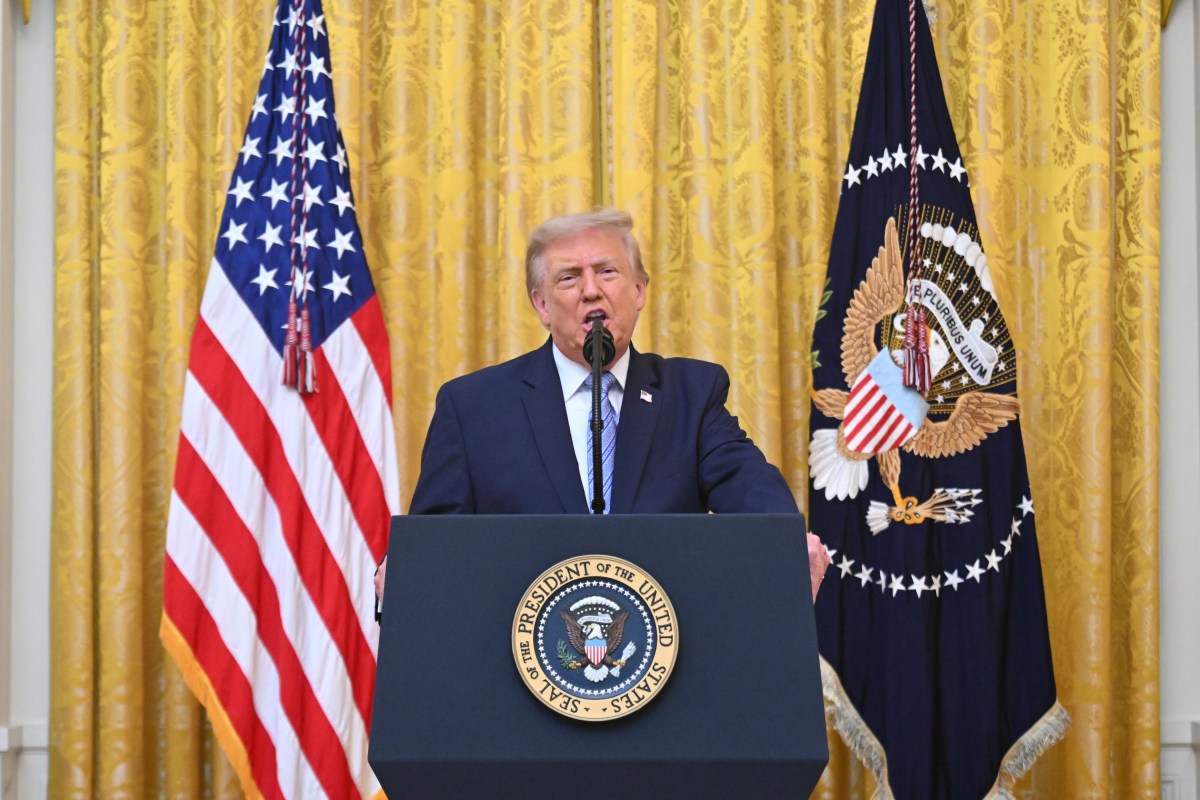
President Donald Trump gave a 30-minute speech focused on unproven claims about election fraud in the United States. He criticized TV broadcasters that did not air his speech live and warned he might revoke their licenses.
Key Facts
The speech took place three months before the U.S. midterm elections.
President Trump repeated claims about fraud in the 2020 election without providing proof.
He questioned the security of U.S. elections in general.
Some major U.S. broadcasters chose not to show the speech live.
President Trump threatened to take away broadcast licenses from those media companies.
The speech drew mixed reactions among U.S. media outlets.
The event happened in the East Room of the White House in Washington, D.C.
The issue is related to U.S. politics and media coverage.
Read the Original
Want the full story? Tap a source to open the original
article.
A federal judge in Michigan criticized the Department of Justice under President Trump for submitting a court filing that cited a fake legal case, possibly created by artificial intelligence (AI). The judge warned lawyers to carefully check their work when using AI to avoid fake or incorrect legal information in court documents.
Key Facts
Judge Hala Y. Jarbou, appointed by President Trump, found a DOJ filing cited a non-existent court case called Taylor v. Hott.
The case involved an ICE detainee challenging a government decision to keep him in detention despite a bond order.
The judge dismissed the case after the detainee was allowed release by posting a $35,000 bond.
The citation error suggested it was generated by AI tools but not properly checked by the lawyers.
Judge Jarbou warned lawyers to carefully verify any AI-generated work before submitting it to court.
She noted a rise in legal filings with false or made-up legal cases due to AI usage.
The judge did not impose penalties but gave a clear warning to the government to avoid future mistakes.
Similar issues with AI-generated legal filings occurred before, including a public reprimand of another lawyer for using AI incorrectly.
Read the Original
Want the full story? Tap a source to open the original
article.
Wu Shaoping, a Chinese human rights lawyer living in the US, was arrested by Immigration and Customs Enforcement (ICE) while working as an Amazon courier in Pennsylvania. Wu fled China in 2019 due to a government crackdown on human rights lawyers and is currently waiting for a decision on his asylum application.
Key Facts
Wu Shaoping left China in 2019 after a government crackdown on human rights lawyers.
He entered the US legally on a tourist visa and applied for asylum in 2020.
Wu worked as an Amazon courier while staying involved with human rights issues related to China.
ICE arrested Wu in Pennsylvania after asking for proof of citizenship; he showed his pending asylum application.
Wu is now in a detention facility in Pennsylvania, awaiting an immigration hearing scheduled for July 27.
Human rights groups worry Wu could be sent back to China, where he might face imprisonment.
Wu has been involved in sensitive legal cases supporting religious minorities and political dissidents in China.
Others linked to Chinese human rights activism continue to face arrests and imprisonment in China.
Read the Original
Want the full story? Tap a source to open the original
article.
President Donald Trump gave a speech in which he repeated broad claims about voter fraud and interference by China. He spoke ahead of the upcoming midterm elections, which many expect him to challenge.
Key Facts
President Trump made claims of voter fraud without providing supporting evidence.
He also alleged that China interfered in U.S. elections.
The speech was delivered from the East Room of the White House in Washington, D.C.
The speech happened on July 16, 2026.
The midterm elections are approaching, and many expect disputes over the results.
The speech included warnings but did not give detailed plans or proof.
The article notes what President Trump said and what he did not address.
Read the Original
Want the full story? Tap a source to open the original
article.
Classified documents released by the White House show that China and Russia targeted Joe Biden's 2020 presidential campaign, mainly to gather intelligence and spread negative information. President Donald Trump disputed the 2020 election results and claimed foreign interference changed the outcome, but reviews of the documents do not support these claims.
Key Facts
The White House posted classified documents about foreign interference in the 2020 election.
China targeted Biden’s campaign to gather intelligence, but did not plan to change the election outcome.
Russia aimed to harm Biden’s public image and support President Trump on social media.
President Trump used a prime-time speech to question the 2020 election’s legitimacy and push for tougher voting laws.
Independent reviews found no proof that foreign interference altered the election results.
The documents were released without full context and include partial investigation files and intelligence reports.
Many lawmakers and Democrats criticized Trump’s claims as unproven conspiracy theories.
Read the Original
Want the full story? Tap a source to open the original
article.
David Brouillette, an ICE agent and Army veteran, fatally shot a 25-year-old Colombian man in Maine. Brouillette has a history of mental health issues and violence, according to family members and court records, raising concerns about ICE’s hiring and screening process.
Key Facts
David Brouillette is a U.S. Immigration and Customs Enforcement (ICE) agent with nearly 10 years of federal law enforcement experience.
He shot and killed Johan Sebastián Durán Guerrero, a 25-year-old Colombian man, in Biddeford, Maine.
Brouillette’s ex-wife and daughter say he admitted to the shooting and has long-standing mental health and violence problems.
Court records reveal allegations of physical and verbal abuse by Brouillette toward his family.
His second ex-wife requested and received protection orders due to his alleged abusive behavior.
Democratic members of Congress have questioned ICE’s recruitment and training after this incident.
The Department of Homeland Security declined to identify Brouillette, citing officer safety.
Attempts to contact Brouillette for comment were unsuccessful.
Read the Original
Want the full story? Tap a source to open the original
article.
A woman shared her personal experience of testing HIV positive during medical exams required for joining the military in 2010. Despite the initial shock and struggles to accept her diagnosis, she has since worked on her health and openness about living with HIV.
Key Facts
The author was 23 years old and starting military enrollment when she had medical tests in 2010.
A new rapid HIV test using a mouth swab showed she was HIV positive.
Follow-up blood tests confirmed the HIV diagnosis after one week.
At diagnosis, her immune cell count was normal and her virus level was low.
She initially found it very hard to accept the diagnosis and felt devastated.
Her brother provided emotional support during this difficult time.
She did not start truly accepting her HIV status until around 2019.
Now, she follows a healthy lifestyle, takes HIV medication daily, and speaks openly about living with HIV.
Read the Original
Want the full story? Tap a source to open the original
article.
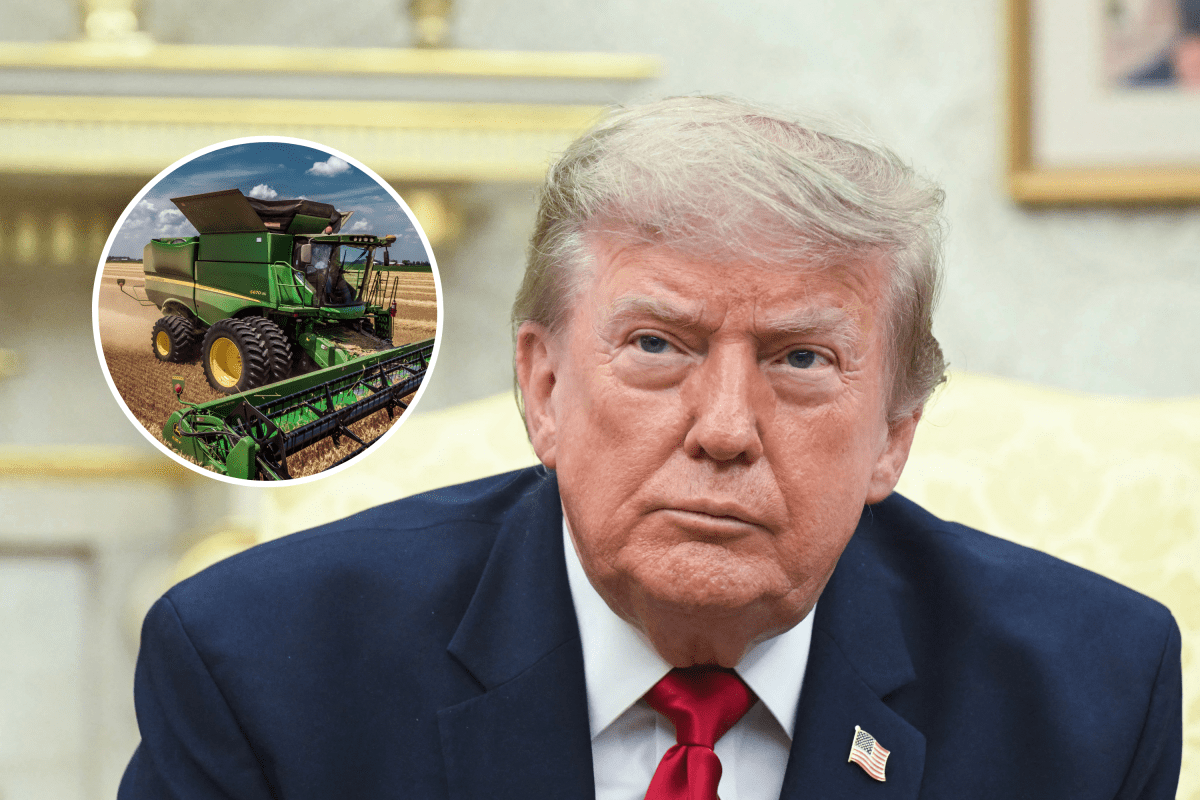
President Donald Trump’s approval rating among rural voters has returned to a positive level in July 2026 after several months of decline. This improvement comes after a sharp drop in rural support earlier in the year, which was largely influenced by economic pressures like inflation and rising farm costs.
Key Facts
A July 2026 Harvard CAPS/Harris poll shows Trump’s approval among rural voters at 52%, with 44% disapproving, resulting in a net +8 rating.
This is Trump’s first positive rural approval rating with this pollster since February 2026, when he had a +2 margin.
Earlier in May 2026, a Fox News poll found Trump’s rural approval dropped to a net -14, marking a 34-point drop from early 2025.
The economic issues affecting rural voters include inflation and higher farm costs, partly linked to international events like the Iran conflict.
Rural voters have traditionally been a strong support base for Republicans, so changes in their approval can impact competitive elections.
Trump’s national approval rating in the same July poll is 42%, showing his rural support is stronger than his overall national standing.
The July polling was conducted before the breakdown of a ceasefire in Iran, a situation that could affect economic conditions and voter sentiment.
White House officials say Trump has made progress on jobs, inflation, and housing affordability, efforts that may influence rural voter attitudes.
Read the Original
Want the full story? Tap a source to open the original
article.
Katsiaryna Bartko, a 33-year-old Belarusian cancer survivor, was hospitalized three times in four days while in U.S. Immigration and Customs Enforcement (ICE) custody in Kansas. She requires daily medication after thyroid cancer surgery, and there are concerns about whether she is receiving proper medical care during detention.
Key Facts
Katsiaryna Bartko is a Belarusian asylum seeker held at the Midwest Regional Reception Center in Leavenworth, Kansas, since June 19.
She has undergone thyroid cancer surgery, which requires her to take daily hormone and calcium supplements for life.
Bartko was hospitalized three times within four days due to critically low calcium levels and other health issues.
Her partner claims she was initially denied some prescribed medication while in ICE custody.
ICE and the detention center operator CoreCivic say Bartko is getting regular medical care and her health issues are being addressed.
Bartko’s low calcium levels can cause serious problems like muscle spasms and heart issues if untreated.
She was treated with intravenous calcium and diagnosed with additional infections and cysts during her hospital visits.
The case raises broader concerns about medical care quality and access for detainees under the Trump administration’s expanded immigration enforcement.
Read the Original
Want the full story? Tap a source to open the original
article.
Victorian Liberal MP Moira Deeming was removed as a candidate for the November state election after her party voted to cancel her endorsement. She had challenged the party’s decision in court but withdrew the legal action before the election.
Key Facts
Moira Deeming was disendorsed as the leading candidate for the Western Metropolitan Region in Victoria’s upcoming state election.
The Liberal Party held a meeting and decided to cancel her endorsement on Friday afternoon.
Deeming dropped a legal challenge she started to stop the party from removing her as a candidate.
She had accused fellow Liberal MP Matthew Guy of grabbing her in a headlock, but later said she misunderstood the situation.
CCTV footage showed Guy placing his hand on Deeming’s back, not a headlock.
Police investigated the incident and found no offence took place.
Matthew Guy said Deeming owed him a public apology and denied any wrongdoing.
Deeming sent a 12-page statement with a mediation proposal to end the court action before withdrawing it.
Read the Original
Want the full story? Tap a source to open the original
article.
Shay Taylor-Allen worked as a hospital janitor for ten years before becoming a doctor. After seeing her mother struggle with illness, she decided to pursue medicine and is now training as a resident doctor at the same hospital where she once worked as a janitor.
Key Facts
Shay Taylor-Allen began working as a janitor at Yale New Haven Hospital at age 18.
She felt "invisible" in her janitorial role but saw it as a steppingstone to other healthcare careers.
Her mother’s illness inspired her to study medicine to help patients better.
Taylor-Allen earned an undergraduate degree at Southern Connecticut State University.
She completed a master’s degree at Quinnipiac University.
She earned her medical degree from Howard University College of Medicine.
She worked as a janitor throughout her early college years and left the job when she started medical school in 2021.
Now she is a resident doctor in anesthesiology at Yale New Haven Hospital, the same place she started as a janitor.
Read the Original
Want the full story? Tap a source to open the original
article.
Some major TV networks in the U.S. did not show President Donald Trump’s election security speech live on their main channels. Fox News aired the full speech live, while others like ABC, NBC, and CNN only streamed it on smaller platforms or showed parts of it before switching to analysis.
Key Facts
President Trump gave a prime-time address about election security.
ABC, NBC, and CNN did not broadcast the speech live on their main TV channels.
These networks offered the speech on their streaming services or radio instead.
Fox News showed the entire speech live on its main channel.
CBS showed the speech briefly before switching to a special report.
MSNBC aired part of the speech before cutting to commentary.
President Trump threatened to punish NBC and ABC by asking for their licenses to be revoked.
The networks’ streaming options usually have fewer viewers than their main TV channels.
Read the Original
Want the full story? Tap a source to open the original
article.
Ian White, a 61-year-old man from Sheffield, felt very lonely and depressed after his marriage ended. He found support by joining FoodCycle, a charity that turns leftover food into free meals and brings people together, and now volunteers there to help others.
Key Facts
Ian White struggled with loneliness and depression after his marriage ended and lost a lot of weight.
A friend invited him to FoodCycle, where people share free meals made from surplus food.
White was initially nervous but soon felt welcome and made new friends.
He started volunteering at FoodCycle to give back after benefiting from their support.
White uses his experience as a former pub landlord to help serve meals and talk with guests.
FoodCycle runs meal clubs in Sheffield and nearby cities, serving thousands of free meals each year.
The charity is looking for volunteers to help cook, serve, and deliver food during the summer.
FoodCycle aims to reduce food waste while helping people feel connected and supported.
Read the Original
Want the full story? Tap a source to open the original
article.
President Donald Trump gave a primetime speech claiming the 2020 US presidential election was stolen and announced the release of declassified documents he says show foreign interference. He also questioned the security of electronic voting systems and discussed a new voting law called the SAVE America Act, which would require ID and proof of citizenship to vote.
Key Facts
President Trump made a 20-minute primetime address from the White House.
Some major US TV networks chose not to broadcast the speech live.
Trump claimed foreign countries, including China, interfered in the 2020 election.
He said electronic voting machines are unreliable.
He announced the release of declassified documents as evidence of election interference.
Trump discussed the SAVE America Act, aiming to require voter ID and citizenship proof.
The speech reinforced Trump’s long-held claim that the 2020 election was stolen.
The speech and related proposals are part of ongoing debates about election rules and integrity.
Read the Original
Want the full story? Tap a source to open the original
article.
Andy Burnham will face five major policy challenges as he takes office, including managing welfare costs, defence spending, and social care for older people. Each issue involves complex financial and social considerations that previous governments have struggled to solve.
Key Facts
The cost of sickness and disability benefits for working-age people is about £58 billion a year and may rise to £78 billion by 2030.
Personal Independence Payments (PIP), a benefit supporting disabled people, is expected to grow from 4 million to 5 million claimants by 2030.
Previous attempts to reform disability benefits have not reduced costs, and Labour’s 2023 plan to cut costs was reversed due to opposition.
Defence spending is planned to rise to 2.7% of GDP by 2030, but there is pressure to increase it to 3% or even 3.5%, which would require billions more annually.
Defence procurement projects face delays and inefficiencies, with only a few on track to be delivered on time and budget.
England’s social care system is underfunded, with about two million older people having unmet care needs.
Public social care funding is based on means testing, which some view as unfair and insufficient.
Policy reform ideas include offering therapy or other support instead of cash benefits for some disabled young people.
Read the Original
Want the full story? Tap a source to open the original
article.
President Donald Trump made claims about problems with U.S. election security during a primetime speech, repeating accusations about fraud that experts say are false. The White House released new documents on election security but they did not show any evidence of voting machines being hacked or votes switched.
Key Facts
President Trump said the U.S. election system falls "catastrophically short" and revisited claims of fraud.
The White House released declassified election security documents, but they do not show votes were switched or machines hacked.
The SAVE America Act, proposed election law changes including proof of citizenship to vote, remains stalled in the Senate.
Experts say the speech rehashed old, debunked conspiracy theories without new evidence.
President Trump claimed China obtained 220 million U.S. voter registration files, calling it the largest compromise of election data.
Voter registration data in the U.S. is mostly public and widely available, limiting the impact of such data access.
U.S. intelligence found no evidence that China or any foreign country tried to interfere with vote counting or alter the 2020 election results.
The National Intelligence Council assessed that China stayed on the sidelines during the 2020 election and did not choose sides openly.
Read the Original
Want the full story? Tap a source to open the original
article.
Northern Ireland will begin offering the meningitis B (MenB) vaccine to young people and university students starting 31 July 2026. The vaccine aims to protect those at higher risk, such as Year 14 pupils and under-25s starting university for the first time, from a serious bacterial infection.
Key Facts
The MenB vaccine will start being offered in Northern Ireland on 31 July 2026.
It targets Year 14 students and under-25s starting university or higher education for the first time this autumn.
The vaccine is given in two doses, about 28 days apart.
Meningitis B is a bacterial infection that can cause life-threatening problems like brain inflammation and blood poisoning.
The infection spreads through close contact, such as kissing, sharing drinks or vaping devices, or living closely with infected people.
Similar vaccine programs are being rolled out in England, Wales, and Scotland.
The Joint Committee on Vaccination and Immunisation (JCVI) now recommends all teenagers aged 15 and over get the vaccine due to increased risk.
The Northern Ireland Department of Health is considering expanding the vaccine program to younger teenagers following updated advice.
Read the Original
Want the full story? Tap a source to open the original
article.