Rep. Thomas Massie introduced a resolution to impeach Defense Secretary Pete Hegseth, accusing him of continuing the U.S. military actions in Iran without Congress's approval. The resolution forces a House vote and highlights ongoing disputes about the limits of presidential war powers.
Key Facts
Rep. Thomas Massie (R-Ky.) filed a resolution to impeach Defense Secretary Pete Hegseth.
Massie accuses Hegseth of ignoring Congress and illegally continuing U.S. hostilities in Iran.
The resolution is privileged, meaning it requires a full vote by the House of Representatives.
This move continues Massie’s efforts to limit military actions taken without Congress’s consent.
The House previously passed war powers resolutions in June and July demanding an end to U.S. military actions against Iran.
The House is scheduled to vote again on a war powers resolution related to Iran.
Democrats had earlier introduced six articles of impeachment against Hegseth for similar reasons.
GOP leaders in the House may try to prevent the resolution from advancing.
Read the Original
Want the full story? Tap a source to open the original
article.
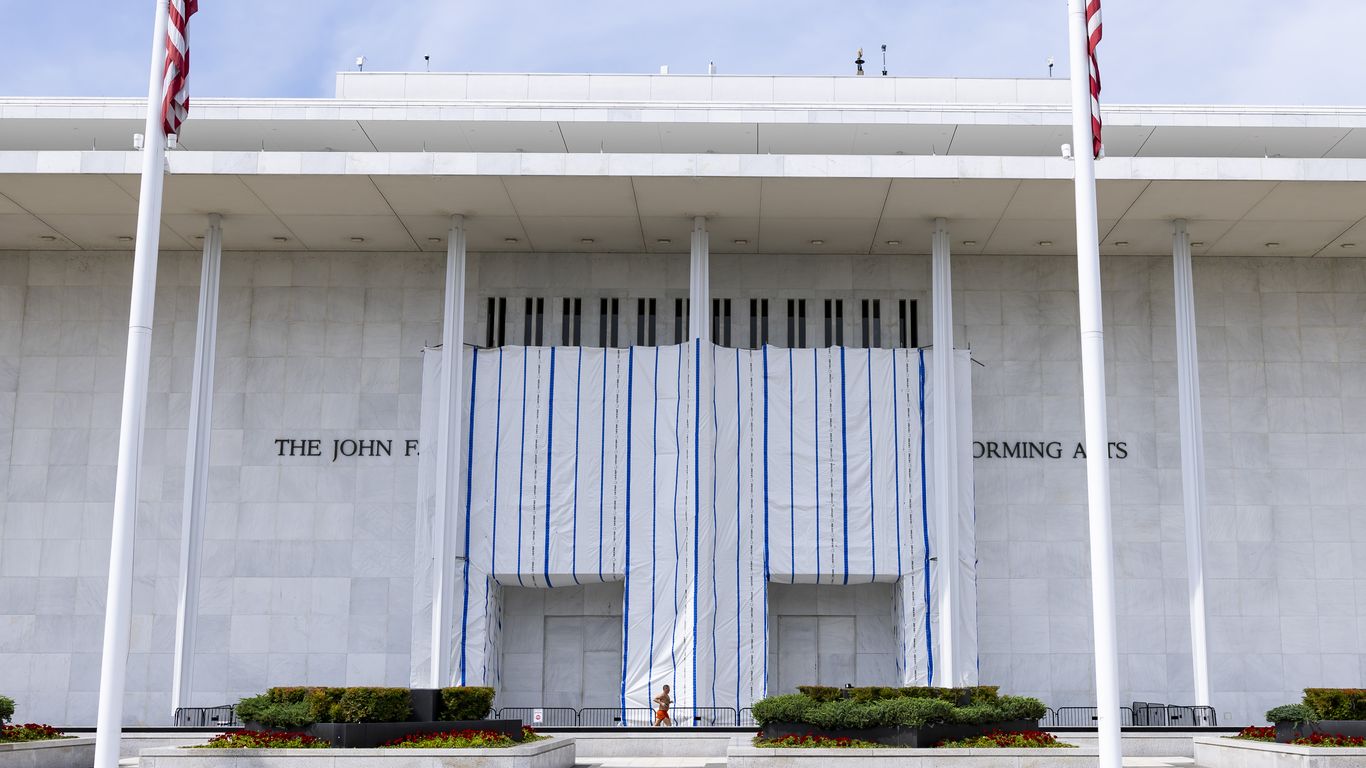
Two lawmakers from Washington, D.C., and Maryland introduced a bill to stop the building of permanent fences around the U.S. Capitol complex. They want the Capitol area to stay open and easy for people to visit after temporary fencing was put up following the January 6, 2021 attack.
Key Facts
The bill is called the “No Fencing at the United States Capitol Complex Act.”
It was introduced by Delegate Eleanor Holmes Norton (D-D.C.) and Senator Chris Van Hollen (D-Md.).
The goal is to prevent permanent fencing around the Capitol complex.
Temporary fences were installed after the January 6, 2021 attack on the Capitol.
The lawmakers believe the Capitol should remain open and accessible to the public.
The Capitol complex includes the buildings and grounds where Congress meets.
Read the Original
Want the full story? Tap a source to open the original
article.
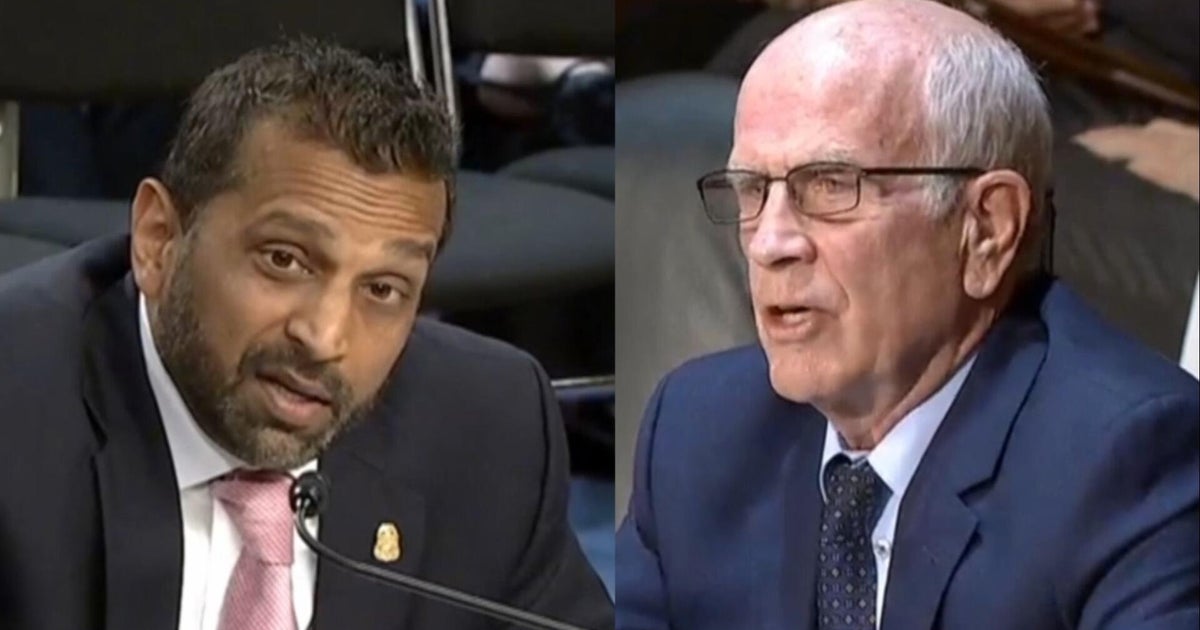
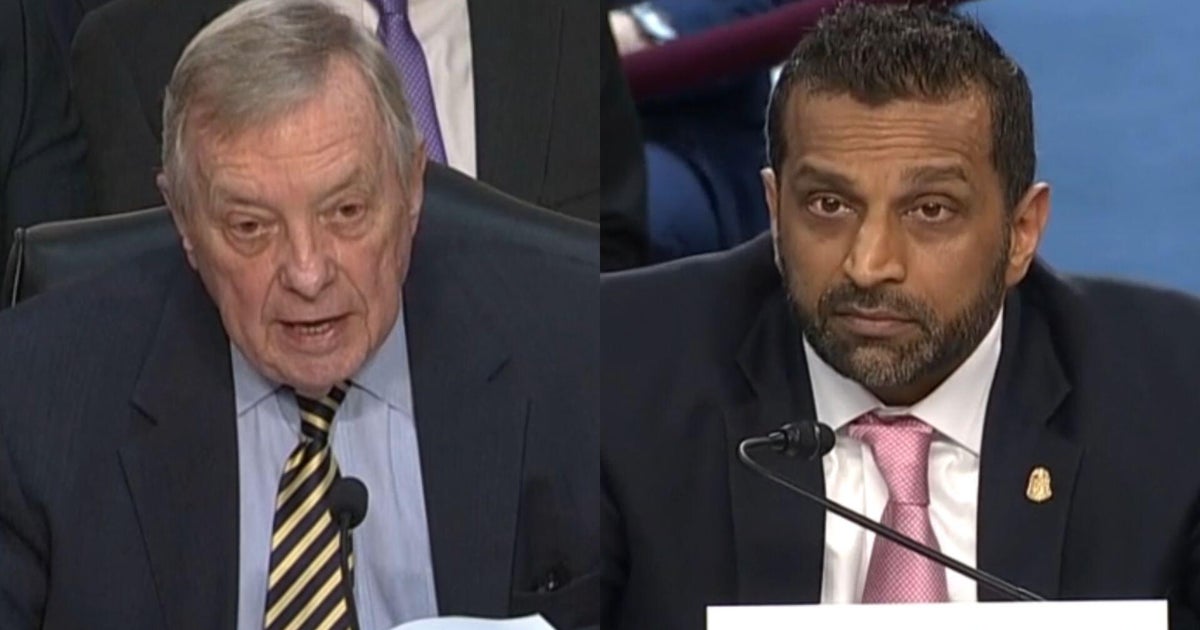
FBI Director Kash Patel and Senator Peter Welch debated the FBI's involvement in U.S. election security during a Senate hearing. They discussed election-related conspiracy theories and the FBI's presence at voting places ahead of the midterm elections.
Key Facts
The discussion happened during a Senate Judiciary Committee hearing.
FBI Director Kash Patel participated in the hearing.
Senator Peter Welch, a Democrat from Vermont, was involved in the debate.
They argued about conspiracy theories related to U.S. elections.
The role of the FBI at polling stations for the upcoming midterm elections was a main topic.
The hearing aimed to address concerns about election security and interference.
Read the Original
Want the full story? Tap a source to open the original
article.
A bill named after Senator Lindsey Graham would give President Donald Trump wider power to impose tariffs on Russia and its trading partners to pressure Russia during its war with Ukraine. The bill faces opposition from some Democrats and Republicans, who worry it could hurt US allies and raise prices for Americans.
Key Facts
The Lindsey O Graham Sanctioning Russia Act of 2026 aims to target Russia’s energy and defense industries.
The bill would allow President Trump to impose 100% tariffs on countries buying Russian oil, including China and India.
Some Democrats argue the bill gives the president too much tariff power and could harm US allies and the economy.
The bill passed the House rules committee and is scheduled for a full House vote soon.
Negotiations are ongoing to limit the number of countries affected by the tariffs to 11.
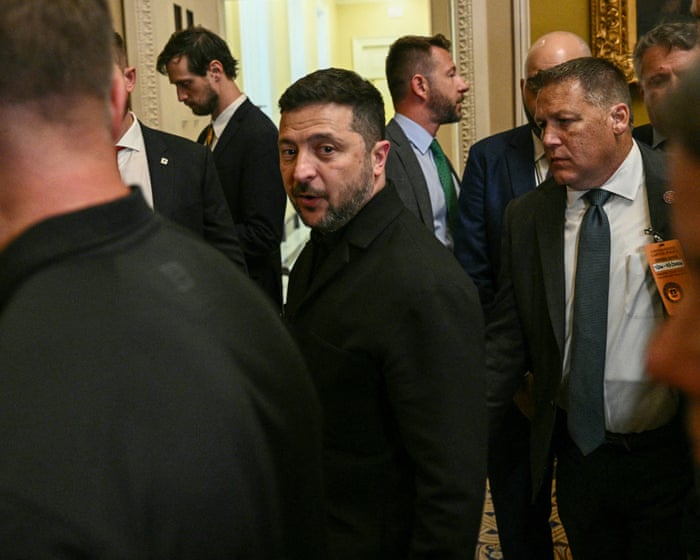
Ukraine’s President Zelenskyy supports increased sanctions to help end the war.
Critics worry the bill is partly caught up in US political disagreements before upcoming elections.
Some Democrats want clearer protections to prevent tariff abuse and to maintain support for Ukraine.
Read the Original
Want the full story? Tap a source to open the original
article.
Senator Dick Durbin said that President Donald Trump’s voting policies and executive actions represent the biggest challenge to the U.S. government since the Civil War. Durbin talked about the importance of protecting voter rights during an interview.
Key Facts
Senator Dick Durbin is the ranking member of the Senate Judiciary Committee.
Durbin said President Trump’s voting-related proposals and orders are a serious challenge to the government.
He compared the situation to challenges faced during the Civil War.
The discussion focused on voting rights and election laws.
Durbin was interviewed by CNN journalist Sara Sidner.
Democrats are concerned about securing and protecting voter rights.
The issue involves how voting policies affect the democratic process.
Read the Original
Want the full story? Tap a source to open the original
article.
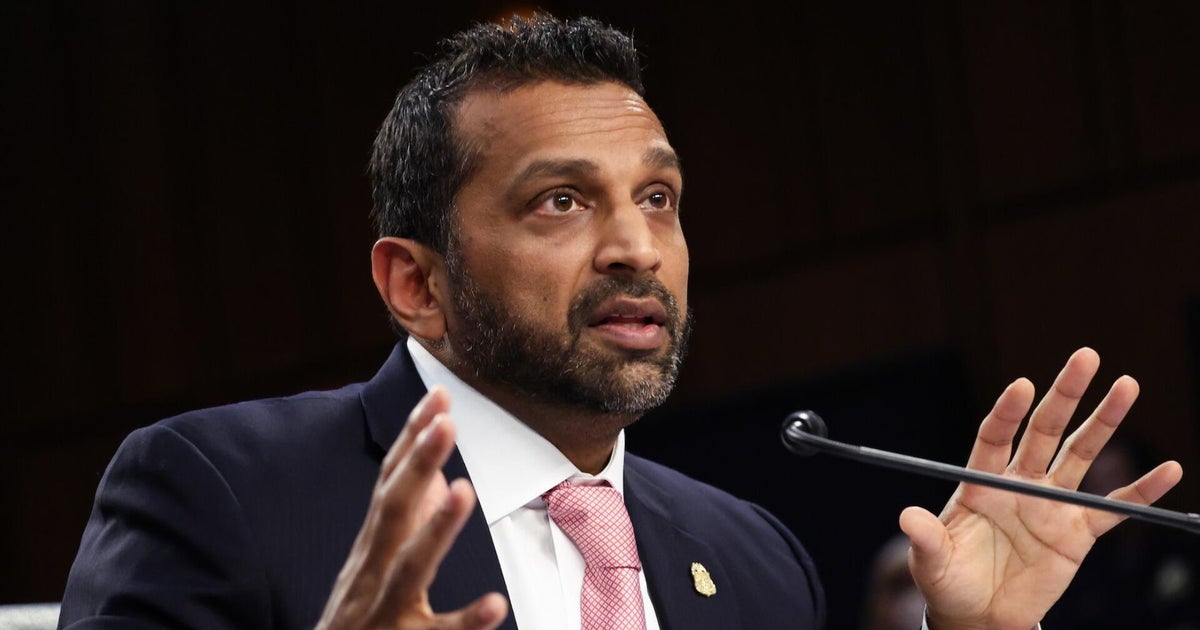
FBI Director Kash Patel testified at a Senate committee hearing where he explained recent changes to the FBI’s hiring standards. During the hearing, Senator John Kennedy questioned Patel about the reasons for these changes.
Key Facts
Kash Patel is the current FBI Director.
He appeared before the Senate Judiciary Committee on Tuesday.
GOP Senator John Kennedy questioned Patel during the hearing.
The main topic was changes to the FBI’s hiring criteria.
The hearing involved discussing the reasons and effects of these changes.
CBS News reporter Jake Rosen covered the event.
The hearing was part of congressional oversight of the FBI.
Read the Original
Want the full story? Tap a source to open the original
article.
Representative Lauren Boebert said that border security improved under policies during President Trump's second term. She noted fewer illegal border crossings and more money given to border enforcement.
Key Facts
Lauren Boebert is a Republican member of the U.S. Congress.
She praised border security efforts during President Trump's second term.
Illegal border crossings decreased according to her statements.
More funding was provided for border enforcement measures.
The article focuses on U.S. border security policies and their effects.
Read the Original
Want the full story? Tap a source to open the original
article.
Prosecutors in Los Angeles will not seek the death penalty for Nick Reiner, who is accused of killing his parents, director Rob Reiner and Michele Reiner. If convicted, Nick Reiner will face life in prison without parole, and his trial will not start in 2026.
Key Facts
Nick Reiner is accused of murdering his parents, Rob and Michele Reiner.
Prosecutors decided against asking for the death penalty after reviewing the case and consulting the family.
The Reiner family’s wishes influenced the prosecutors’ decision.
Nick Reiner’s siblings expressed clear views on the punishment.
The maximum punishment now is life in prison without parole if Nick is found guilty.
Rob and Michele Reiner were found stabbed to death in their home in Los Angeles last year.
Their daughter Romy discovered their bodies on December 14, 2025.
Nick Reiner has pleaded not guilty to murder charges.
Rob Reiner was a well-known film director, and Michele Reiner was an actress and photographer.
Read the Original
Want the full story? Tap a source to open the original
article.
A new poll shows that Americans trust Democrats more than Republicans on seven major issues ahead of the November midterm elections. These issues include the economy, health care, immigration, and foreign policy. President Donald Trump and the Republican Party face challenges as they have lower approval ratings compared to Democrats.
Key Facts
The poll surveyed 1,503 likely voters from September 8 to 13, 2026, with a margin of error of ±2.9 percentage points.
Democrats lead Republicans in trust on seven key issues: health care, immigration, deficit, economy, cost of living, foreign wars, and the Israeli-Palestinian conflict.
Democrats had the largest lead on health care (60% trust Democrats vs. 36% trust Republicans).
Republicans lead slightly (+2 points) only on AI policy, with 42% trusting Republicans and 40% trusting Democrats.
President Trump’s approval ratings are at record lows, which historically makes midterms harder for the president’s party.
Rising concerns about the economy, cost of living, and gas prices linked to the Iran war impact voter opinions.
Democrats have a lead on the “generic ballot,” meaning they have an advantage in overall voter preference for Congress.
The Republican National Committee stated Republicans have achievements like lowering drug prices, border security, job creation, and tax cuts.
Read the Original
Want the full story? Tap a source to open the original
article.
A federal judge blocked the Kennedy Center from putting President Donald Trump's name on the performing arts center. The judge said only Congress can rename the center, which honors President John F. Kennedy.
Key Facts
A judge ruled against the Kennedy Center's effort to add President Trump's name to the building.
The Kennedy Center's board now includes supporters of President Trump.
The board plans to decide on renovations that some members say should include Trump's name recognition.
U.S. District Judge Christopher R. Cooper said the board's attempt breaks an earlier court order.
The judge said only Congress has the authority to change the center’s name.
The center is officially named to honor President John F. Kennedy.
Read the Original
Want the full story? Tap a source to open the original
article.
The U.S. military has sent a weapon into space to help protect American troops, according to Air Force Secretary Troy Meink. He spoke about this new development at a military conference but did not share specific details about the weapon or when it was launched.
Key Facts
The United States has deployed a weapon into orbit.
The weapon is intended to protect American troops.
Air Force Secretary Troy Meink announced this information.
The announcement was made at the annual Air, Space and Cyber Conference.
Details about the type of weapon and its launch timing were not revealed.
The conference took place at National Harbor, Maryland.
This is the first public acknowledgment of deploying weapons in space by the Pentagon.
Read the Original
Want the full story? Tap a source to open the original
article.
A report from the Pentagon's inspector general says that spending $22.3 billion on munitions for the Iran war caused problems with military supplies. This big spending led to shortages in important weapon inventories across the U.S. military.
Key Facts
The Pentagon spent $22.3 billion on munitions related to the Iran war.
The inspector general released a report about this spending.
The report found that this caused "strategic inventory shortfalls," meaning some weapons and supplies ran low.
These shortages affected the military’s ability to maintain a full stock of necessary arms.
The issue highlights problems in managing military resources while supporting conflicts abroad.
CBS News’ national security analyst Aaron MacLean discussed the report’s findings.
Read the Original
Want the full story? Tap a source to open the original
article.
President Donald Trump criticized the Supreme Court after it rejected his request to limit mail-in voting for the 2026 midterm elections. The court decided that making major changes to mail ballot rules so close to the election was unlikely to succeed in court, allowing states to continue using their current mail voting systems.
Key Facts
President Trump pushed to restrict mail-in voting for the 2026 midterms by involving the U.S. Postal Service in deciding who could get ballots.
The Supreme Court rejected this last-minute proposal in an emergency ruling, saying it was unlikely to hold up legally.
Justices Samuel Alito and Clarence Thomas disagreed with the court’s rejection.
Trump said the justices who ruled against him were not the same people he had interviewed for the court.
He accused the court of making harmful decisions influenced by political left-wing pressures.
Trump has a history of publicly criticizing judges, including some he appointed, when they rule against him.
The court has supported Trump on other major issues, such as protecting former presidents from criminal trials for official acts.
Mail-in voting has minimal fraud, with only about four cases out of every 10 million ballots found by a 2025 Brookings report.
Read the Original
Want the full story? Tap a source to open the original
article.
During a Senate committee hearing, Senator Dick Durbin questioned Homeland Security Secretary Alejandro Mayorkas on the FBI's handling of shootings involving an ICE officer and a Border Patrol agent. Senator Durbin expressed concerns about how the FBI responded to these incidents.
Key Facts
Senator Dick Durbin is a Democratic member of the U.S. Senate.
He pressed Homeland Security Secretary Alejandro Mayorkas during a committee hearing.
The questioning focused on the FBI's response to shootings involving law enforcement officers.
The officers involved were from ICE (Immigration and Customs Enforcement) and the Border Patrol.
Senator Durbin raised concerns about how quickly and effectively the FBI acted in these cases.
The hearing was covered by CBS News.
The purpose was to examine law enforcement and federal agency coordination in shooting incidents.
Read the Original
Want the full story? Tap a source to open the original
article.
A group of lawmakers from both political parties, including Sen. Bernie Sanders and Rep. Chip Roy, spoke at a meeting in Washington urging careful rules for artificial intelligence (AI) to keep humans safe and in control. Meanwhile, President Trump dismissed fears about AI, saying strong leadership is enough to handle the technology.
Key Facts
Bernie Sanders and Steve Bannon, who have different political views, both support a human-focused approach to AI development.
The "Pro-Human Assembly" in Washington calls for rules to control AI’s growth.
AI researcher Jacob Coxon resigned from Anthropic, warning advanced AI could one day threaten humanity.
CEOs of leading AI companies like Anthropic, OpenAI, and Elon Musk have asked for a slowdown in advanced AI development.
President Trump posted on social media calling AI danger concerns a "HOAX" and said strong presidential leadership is what AI needs.
Rep. Chip Roy from Texas raised concerns about AI's impact on communities, jobs, and resources like water.
Polling shows many Americans worry AI will reduce jobs and don’t trust the government to regulate AI properly.
Democrats and Republicans in Congress are pushing bipartisan bills to evaluate and regulate advanced AI technologies.
Read the Original
Want the full story? Tap a source to open the original
article.
More American women are choosing not to have children, with research showing a growing number of child-free women, especially under age 30. Despite this increase, many women still face questions and social pressure about their choice, while men’s child-free status is often assumed to be temporary.
Key Facts
In 2024, there were 5.7 million more childless women of prime childbearing age in the U.S. than expected.
Among 44.2 million women aged 20 to 39, 52% had not yet had children.
The rise in child-free women is steepest among those younger than 30.
Women who choose not to have children often face social stigma and questions about their decision.
Men without children are usually assumed to be temporarily child-free until their partner changes her mind.
Tina, a 51-year-old woman from New York, shares her experiences and support for child-free women on TikTok.
Tina emphasizes that choosing not to have children should not affect a woman’s value or worth.
Traditional life expectations still influence how people view motherhood and childlessness.
Read the Original
Want the full story? Tap a source to open the original
article.
FBI Director Kash Patel explained changes to the FBI's hiring rules that now allow officials to consider applicants who were victims of human trafficking or abuse, rather than automatically disqualify them. The changes aim to give the FBI more flexibility in reviewing candidates with certain past experiences, while keeping people who willingly engaged in crimes from becoming agents.
Key Facts
The FBI changed hiring rules to reconsider people forced into acts like prostitution or abuse, instead of automatically rejecting them.
Applicants who willingly took part in criminal sexual acts are still disqualified.
The changes allow case-by-case reviews, especially for incidents happening before age 18.
The FBI made these changes to improve recruitment and keep experienced agents amid many departures.
Critics worry loosening the rules could lower FBI standards, while supporters say it helps protect victims who want to serve.
Senators, especially Democrats, raised concerns about the changes during a Judiciary Committee hearing.
More than 1,100 experienced FBI agents left the bureau in 2025, and the agency has lost many key staff members.
The FBI said the changes were not meant to lower standards but to treat unusual cases fairly.
Read the Original
Want the full story? Tap a source to open the original
article.
Many Americans, including over 500,000 people in Arkansas, have faced a shortage of fluoride in their drinking water due to supply problems. This shortage is caused by international issues affecting the chemical used to add fluoride, but some water utilities have already resumed fluoridation with adjusted levels.
Key Facts
Arkansas’s main water utility ran out of the fluoride chemical due to global supply chain problems.
The supply issues link to conflicts involving Iran and labor shortages in Israel.
Over 500,000 people in Central Arkansas were temporarily without fluoridated water.
The chemical used is hydrofluorosilicic acid, primarily imported from the Middle East.
A shipment arrived, allowing Arkansas to restart adding fluoride, though at a lower concentration (0.6 mg/L instead of 0.7 mg/L).
Other U.S. cities like Baltimore and parts of Maryland have also reduced fluoride levels this year due to shortages.
Officials expect these interruptions to be temporary and not cause long-term dental health problems.
The shortage occurs amid ongoing national debates about the safety and use of fluoride in tap water.
Read the Original
Want the full story? Tap a source to open the original
article.
The Pentagon’s inspector general has reported shortages in U.S. munitions and delays in restocking due to the war with Iran. This contradicts President Donald Trump’s statement that the U.S. has nearly unlimited ammunition supplies.
Key Facts
The U.S. spent over $22 billion on munitions from February to June during the Iran war.
The Pentagon inspector general noted “strategic inventory shortfalls” and production delays for ammunition.
President Trump has repeatedly denied shortages, calling contrary reports “fake news.”
The report marks the first independent insight into U.S. weapons stockpiles, which are usually classified.
Some missile defense stocks, like Patriot and THAAD interceptors, have been reduced by more than half.
U.S. equipment losses include four F-15e fighter jets, one F-35 Joint Strike Fighter, and 30 MQ-9 drones.
Total U.S. spending on the war from late February to June was $33.4 billion.
The Pentagon is working on faster procurement and production to solve the supply problems.
Read the Original
Want the full story? Tap a source to open the original
article.
A Russian businessman named Umar Kremlev paid for the expensive after-party at the May wedding of President Trump’s eldest son, Donald Trump Jr. This has raised worries about foreign influence on U.S. politics before the midterm elections.
Key Facts
The after-party was for the wedding of Donald Trump Jr. and Bettina Anderson.
Umar Kremlev, a Russian oligarch, funded the after-party events.
Concerns have been raised about potential influence from foreign adversaries in U.S. government circles.
The wedding took place in May.
This news comes ahead of the U.S. midterm elections.
Questions about foreign money in American politics have been rekindled.
The connection links President Trump’s family events to Russian financial support.
The reports focus on possible impacts on American political decisions.
Read the Original
Want the full story? Tap a source to open the original
article.