President Donald Trump has gained support from working-class voters despite cutting programs they rely on, such as Medicaid. Dr. Mehmet Oz, leading the Centers for Medicare and Medicaid Services, is further reducing Medicaid funding, which could harm healthcare access, especially in states with many working-class residents.
Key Facts
President Trump has maintained support among working-class voters even though he has supported policies cutting social safety net programs.
Dr. Mehmet Oz, known for selling health products on TV, lost a Senate race in Pennsylvania and is now in charge of Medicare and Medicaid services.
Oz has overseen a law that cut over one trillion dollars from Medicaid funding.
Nearly three million Black Americans and four million Latinos have already lost Medicaid coverage in recent years.
Oz criticizes both Democrats and some Republican governors for using hospital tax financing to fund Medicaid.
A proposed CMS rule under Oz seeks to crack down on these hospital funding practices, threatening healthcare in many states.
More than 140 rural hospitals have closed since 2010, and Oz’s policies may speed up more closures.
Polls show many Trump voters and swing voters oppose cutting Medicaid to pay for tax cuts.
Read the Original
Want the full story? Tap a source to open the original
article.
Immigration has been a continuous and important part of American history from the 1600s to today. Different groups have arrived in waves, each changing the country’s culture, economy, and population in unique ways.
Key Facts
The first settlers included English, Dutch, French, German, and Scots-Irish people arriving in the 1600s.
Millions of Africans were brought to America as slaves during the colonial period.
After 1776, immigration grew modestly and helped settle new territories as the U.S. expanded westward.
The mid-1800s saw the first large wave of immigrants from Ireland, Germany, and China.
These immigrants helped build railroads, factories, and cities during America’s early industrial growth.
Anti-immigrant attitudes began in this period, including the Chinese Exclusion Act of 1882, which restricted Chinese immigration.
From the 1880s to 1924, many immigrants came from Southern and Eastern Europe through places like Ellis Island.
Immigration shaped debates about citizenship, religion, and national identity throughout American history.
Read the Original
Want the full story? Tap a source to open the original
article.
During and after World War II, many African American and minority soldiers who showed great bravery were not immediately awarded the Medal of Honor, the highest U.S. military honor. Over the decades, the U.S. government has worked to recognize these overlooked veterans by reviewing their records and awarding medals to those previously ignored because of racial bias.
Key Facts
In 1945, President Truman awarded the Medal of Honor to 28 white servicemen, excluding African American soldiers despite their large participation in World War II.
Racism and segregation in the military affected Black, Hispanic, Asian, and Native American soldiers, limiting their recognition and promotion.
President Truman signed an executive order in 1948 to desegregate the U.S. military and promote equality regardless of race or background.
In 1993, President Clinton commissioned a study that led to the Medal of Honor being awarded to seven African American World War II veterans decades after the war.
Further reviews in the 1990s led to Medal of Honor awards for Asian American, Jewish, and Hispanic veterans who had been initially overlooked.
Efforts to correct past omissions highlight ongoing issues of racial inequality in military honors and recognition.
These posthumous awards help acknowledge the sacrifices and bravery of minority soldiers who fought both abroad and against discrimination at home.
Read the Original
Want the full story? Tap a source to open the original
article.
The article discusses the experiences of living Medal of Honor recipients, highlighting their courage in combat and their continued dedication to serving the public after military service. These recipients come from various wars and now work to share the values that earned them the medal while supporting veterans and communities.
Key Facts
There are currently 65 living Medal of Honor recipients from wars including Korea, Vietnam, Iraq, Afghanistan, and Operation Absolute Resolve in Venezuela.
Colonel Jack Jacobs recalls being advised by General Jimmy Doolittle to live up to the responsibilities of being a Medal of Honor recipient.
Recipients see the medal as representing not only their own actions but also honoring those who sacrificed their lives and those who were not recognized.
Most living recipients are now elderly, with many Vietnam-era recipients entering their 80s.
James Livingston said his Medal of Honor is part of his life but does not define him; he respects being recognized for all his service.
Medal recipients often engage in public service after the military, including veteran advocacy, memorial events, talks, and education.
Jim McCloughan, a Vietnam Medal of Honor recipient, returned to teaching and coaching after his service.
Read the Original
Want the full story? Tap a source to open the original
article.
A new film called Young Washington shows the early life of President George Washington, focusing on his struggles and growth before he became the first U.S. president. The movie aims to reveal the human side of Washington and explain how his early experiences shaped his values and ambitions.
Key Facts
The film Young Washington highlights George Washington’s youth and early challenges.
Director Jon Erwin was inspired by Washington’s story and the American Revolution.
Actor William Franklyn-Miller, a British newcomer, plays young Washington to bring fresh perspective.
Franklyn-Miller studied a book Washington read called Rules of Civility and Decent Behavior to understand his mindset.
The movie shows both Washington’s successes and his failures to make him relatable.
Famous actors Ben Kingsley and Kelsey Grammer also appear in the film.
The film was created to celebrate the 250th anniversary of the United States.
It aims to inspire appreciation for Washington’s role and American history.
Read the Original
Want the full story? Tap a source to open the original
article.
Singer Chris Brown was found responsible for a dog attack on his housekeeper, Maria Avila, in 2020. A jury in Los Angeles ordered Brown and his company to pay Avila nearly $13 million for her injuries and damages.
Key Facts
The attack happened at Brown’s home in Tarzana, California.
Avila was attacked by Brown’s 200-pound Caucasian shepherd dog named Hades.
The attack caused Avila severe injuries including disfigurement, scarring, vision loss, and nerve damage.
Brown and his company Black Pyramid LLC were found negligent and ordered to pay $12.9 million to Avila.
Avila’s sister Patricia and her husband Oscar Olivo also received financial awards related to the incident.
Brown claimed the dog was used for security and denied being present after the attack, saying he left to avoid media attention.
Avila said she was unable to return to work due to physical and emotional trauma from the attack.
Brown is currently on a US tour and will face a separate trial in the UK next October for a different incident.
Read the Original
Want the full story? Tap a source to open the original
article.
The Trump administration plans to keep working to end birthright citizenship, even after the Supreme Court ruled against them. They now want Congress to change the law to stop automatic citizenship for babies born in the U.S.
Key Facts
White House adviser Stephen Miller spoke about birthright citizenship on Al Jazeera.
The Supreme Court ruled against President Trump’s effort to end birthright citizenship.
The administration will continue its fight by asking Congress to change the law.
Birthright citizenship means being automatically granted citizenship when born in the U.S.
The Trump administration wants to stop this automatic citizenship.
Changing the law requires Congress to create new legislation.
The White House remains committed to this policy goal despite the court ruling.
Read the Original
Want the full story? Tap a source to open the original
article.
Sheridan Gorman, an 18-year-old student at Loyola University Chicago, was shot and killed in March by a man identified as Jose Medina-Medina. Her mother, Jessica Gorman, spoke at a House Judiciary subcommittee hearing to criticize sanctuary city policies that limit cooperation with federal immigration authorities.
Key Facts
Sheridan Gorman was killed on March 19 while walking with friends near a beach in Chicago.
The suspect, Jose Medina-Medina, is a Venezuelan national who was arrested and charged with first-degree murder and other crimes.
Medina-Medina was caught by U.S. Border Patrol in May 2023 and released into the country under the Biden administration.
He was released again in June after a shoplifting arrest in Chicago.
Jessica Gorman, Sheridan’s mother, spoke at a congressional hearing to argue that sanctuary city policies put illegal immigrants’ rights above American citizens’ safety.
The hearing focused on how policies that limit local cooperation with federal immigration agencies affect families of crime victims.
Some lawmakers, including Rep. Pramila Jayapal, said the committee should consider other immigration-related issues besides sanctuary policies.
The story is still developing and subject to updates.
Read the Original
Want the full story? Tap a source to open the original
article.
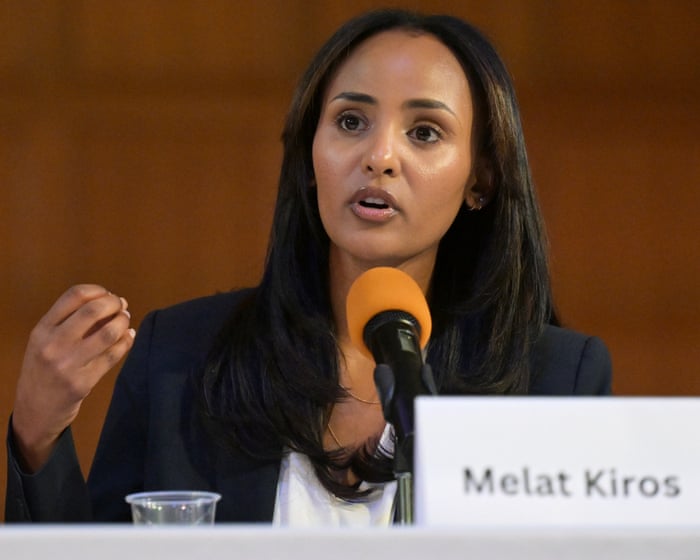
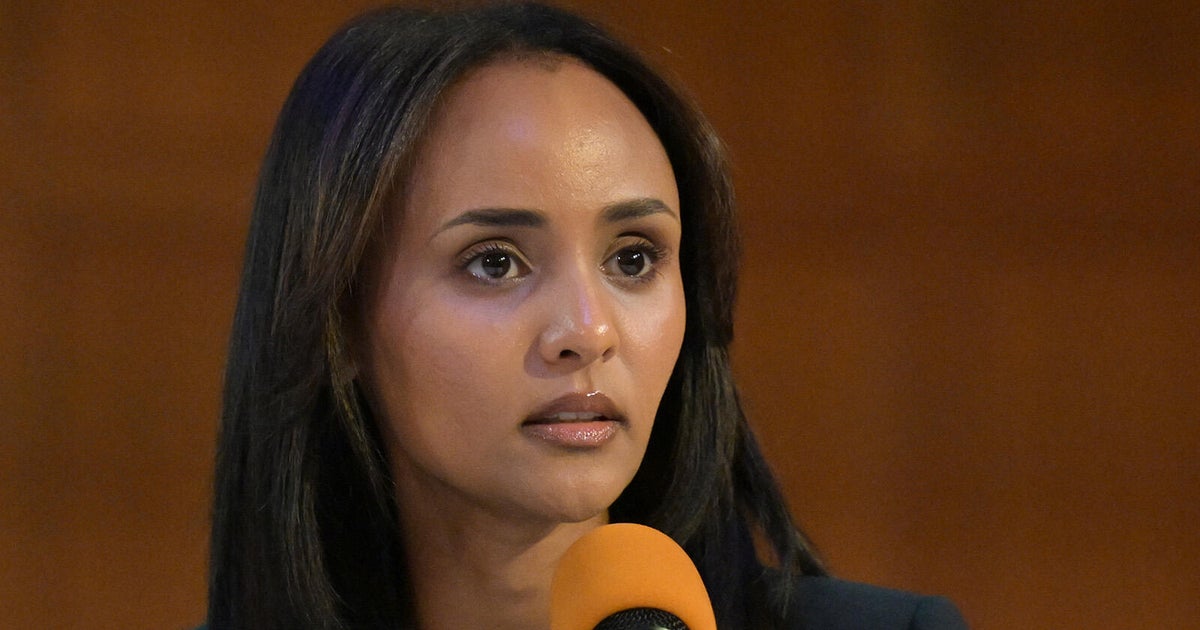
Melat Kiros, a democratic socialist, won the Democratic primary against 15-term Representative Diana DeGette in a Denver-area district. Other Democratic primaries in Colorado showed progressive wins, and Colorado Attorney General Phil Weiser defeated Senator Michael Bennet to become the Democratic candidate for governor.
Key Facts
Melat Kiros defeated Diana DeGette in the Democratic primary in Colorado.
Kiros is a 29-year-old former lawyer who moved to the U.S. from Ethiopia as a baby.
Kiros faced controversy for criticizing Democrats who support Israel and has called Israel’s actions in Gaza genocide.
Kiros is favored to win the general election in a mostly Democratic district.
Colorado Attorney General Phil Weiser beat Senator Michael Bennet for the Democratic nomination for governor.
Weiser has fought against President Trump’s policies in court, including freezing federal funds to Colorado.
Progressive Manny Rutinel won the Democratic nomination in a battleground district and will challenge Republican Gabe Evans.
Democrats need to gain seats in the upcoming November election to regain control of the U.S. House and Senate.
Read the Original
Want the full story? Tap a source to open the original
article.
The BBC asked people from several U.S. states how they feel about the country in its 250th year. The interviewees shared their views on the current state of the nation.
Key Facts
The interviews were conducted in states including California, New York, Texas, Florida, Georgia, Massachusetts, and Washington DC.
Americans were asked for their opinions about how the U.S. is doing in 2026.
The year 2026 marks the 250th anniversary of the United States.
The video report was produced and edited by Meiying Wu.
Multiple people helped film the video report.
The report captures a range of perspectives from different parts of the country.
The article focuses on public opinion about the nation's current condition.
The source of the report is the BBC.
Read the Original
Want the full story? Tap a source to open the original
article.
The US Supreme Court refused President Donald Trump’s request to end the rule that grants US citizenship to children born in the country, even if their parents are not citizens. This decision is important for immigration policy and has caused strong reactions from supporters of President Trump’s policies.
Key Facts
The Supreme Court denied President Trump’s effort to end birthright citizenship.
Birthright citizenship means anyone born in the US automatically becomes a citizen.
President Trump wanted to stop children of some immigrants from getting US citizenship at birth.
This policy is a key part of President Trump’s immigration platform.
The decision has caused upset among the MAGA movement, which supports President Trump.
The ruling keeps the current citizenship law unchanged.
The case involved children born to immigrant parents in the US.
Read the Original
Want the full story? Tap a source to open the original
article.
The UK justice secretary, David Lammy, agreed to increase the minimum prison sentences for men who murder their current or ex-partners in England and Wales. This decision came after campaigning by mothers whose daughters were killed by their partners and who argued existing sentences were too low because these crimes happened at home.
Key Facts
Women killed by their partners at home currently face lower maximum sentences than murders committed in public.
Mothers of victims campaigned for longer sentences after their daughters received less than 17 years in prison.
The killers used weapons found at home, which limited sentencing under existing laws.
Justice Secretary David Lammy met with the mothers and agreed to raise sentences by an extra 10 years.
The campaign group “Killed Women” was formed by families of women murdered by men.
The change aims to better reflect the severity of domestic murders and send a stronger message about justice.
The mothers expressed relief and emotion after the announcement but noted the long and difficult fight for change.
This is a UK domestic justice issue involving sentencing laws for domestic murders.
Read the Original
Want the full story? Tap a source to open the original
article.
The UK government plans to limit the salaries of academy school leaders to a maximum of £174,000 to prevent very high executive pay paid by public funds. This change will require government approval for pay above this limit and restrict pay raises to levels similar to those given to teachers.
Key Facts
Nearly 100 academy school leaders in England currently earn over £200,000 a year.
Only about 25% of the highest-paid academy executives are women.
The government will introduce a salary cap of £174,000 for academy trust executives.
Any pay above this cap will require government approval before being advertised.
Future pay increases for academy executives will be limited to the same percentage increases teachers receive.
Academy trust executive pay rules will become similar to those in the National Health Service (NHS) and further education colleges.
The decision aims to make pay fairer for taxpayers and ensure money supports teaching rather than high salaries.
Around 90% of England’s secondary schools are academies, but most pay less than the new cap.
Read the Original
Want the full story? Tap a source to open the original
article.
Two teenage boys convicted of raping two girls in Hampshire received sentences without jail time, causing public concern and a sentence review at the Court of Appeal. One of the victims, a 15-year-old girl named Jazmine, shared how the attack has deeply affected her life and how the legal process has been very hard for her.
Key Facts
Two teenage boys, aged 15, were convicted of raping two girls aged 14 and 15 in Hampshire.
The boys were given youth rehabilitation orders instead of prison sentences.
The judge said that custody should be a last resort for youth offenders and considered the boys’ mental and developmental conditions.
One boy has ADHD and anxiety; the other has a very low IQ and neurodevelopmental issues.
The attacks included multiple rapes, some filmed and shared on social media, leading to further abuse of the victims.
The victims spoke out about the lasting trauma and harm caused by the attacks.
The Attorney General sent the case to the Court of Appeal, calling the sentences too light.
The case drew responses from political leaders, including Prime Minister Keir Starmer, who expressed distress.
Read the Original
Want the full story? Tap a source to open the original
article.
The Supreme Court rejected President Donald Trump's appeal to overturn a jury's decision that he sexually abused writer E. Jean Carroll in the 1990s and later defamed her. Carroll's lawyers are now asking a judge to require Trump to pay nearly $5.8 million from the jury verdict without further delay.
Key Facts
E. Jean Carroll accused President Trump of sexually abusing her in a New York City store dressing room in 1996.
A jury found Trump liable for sexual abuse and defamation after Carroll spoke publicly about the attack in 2019.
The Supreme Court refused to hear Trump's appeal to overturn the jury verdict.
The amount owed to Carroll has increased to about $5.8 million with interest.
Carroll's lawyers say Trump is trying to delay payment despite previous denials of such delays.
Trump has resumed public criticism of Carroll after the court's decision.
Trump is also appealing a separate $83 million defamation damage award from another trial.
Carroll’s legal team insists that Trump should pay the owed money immediately.
Read the Original
Want the full story? Tap a source to open the original
article.
The Supreme Court made a 6-3 decision about birthright citizenship. The judges had different opinions, which suggests the Court might look at this issue again in the future.
Key Facts
The Supreme Court issued a 6-3 ruling on birthright citizenship.
The decision was split, showing disagreement among the justices.
Some justices wrote different opinions explaining their views.
This division suggests the Court may face more cases about birthright citizenship later.
Birthright citizenship refers to the right to citizenship for people born in the country.
The discussion involves how the Constitution applies to this right.
Read the Original
Want the full story? Tap a source to open the original
article.
Melat Kiros, a democratic socialist, defeated 15-term US Representative Diana DeGette in Colorado’s Democratic primary for the 1st congressional district. Kiros campaigned strongly against US support for Israel and received backing from prominent progressive groups and leaders.
Key Facts
Melat Kiros, 29, was born in Ethiopia and graduated from Notre Dame law school in 2022.
Kiros unseated Diana DeGette, who served 15 terms in Congress, in the primary election.
The race focused partly on differing views about Israel and US support amid the conflict in Gaza.
Kiros faced controversy for her comments on Gaza, a Boulder firebombing attack, and the 9/11 attacks.
President Donald Trump was mentioned in the broader context of Colorado political races, where Phil Weiser beat Michael Bennet for governor candidacy.
DeGette supports Israel’s right to exist but opposes providing offensive arms.
Kiros was endorsed by progressive groups like the Democratic Socialists of America and Justice Democrats and Senator Bernie Sanders.
The district strongly leans Democratic, making Kiros the favorite for the general election.
Read the Original
Want the full story? Tap a source to open the original
article.
Melat Kiros, a democratic socialist, is projected to win the Democratic primary for Colorado's First Congressional District, unseating longtime Rep. Diana DeGette. Kiros will now run against Republican Christy Peterson in the November general election.
Key Facts
Melat Kiros is 29 years old and has never held political office before.
Kiros received about 49.3% of the vote, while DeGette got 43.5%, and another candidate had 7.2%.
This district covers Denver and has been represented by DeGette since the mid-1990s.
Kiros supports democratic socialism and has backing from the Democratic Socialists of America and Senator Bernie Sanders.
A 2025 survey suggested more Denver voters favored socialism over capitalism.
Kiros secured 63% of delegate votes at the Denver Democratic Assembly earlier in 2026, showing strong early support.
DeGette is the longest-serving member of Colorado’s congressional delegation and serves on the House Committee on Energy and Commerce.
Kiros will face Republican Christy Peterson, who ran unopposed in her primary, in the November 3 general election.
Read the Original
Want the full story? Tap a source to open the original
article.
The U.S. Supreme Court refused to hear President Donald Trump’s appeal in a legal case where he was found liable for sexually abusing E. Jean Carroll and defaming her. Carroll’s lawyers are now asking a federal judge to order President Trump to pay her $5 million, the amount decided by a New York jury.
Key Facts
The Supreme Court rejected President Trump’s request to review the $5 million judgment in favor of E. Jean Carroll.
A New York jury found President Trump liable for sexually abusing Carroll in the mid-1990s and defaming her in 2022.
The $5 million award was previously held in escrow while President Trump appealed the verdict.
Carroll’s lawyers have asked a judge to enforce the payment now that the Supreme Court has declined to hear the appeal.
President Trump said he will keep fighting the case despite the Supreme Court’s decision.
Trump’s appeal included objections to the use of the "Access Hollywood" tape and testimony from two other women during the trial.
The case has been in litigation for over four years at multiple court levels.
Carroll’s attorneys emphasized it is time for the case to end and for the payment to be made.
Read the Original
Want the full story? Tap a source to open the original
article.
The U.S. Education Department has moved special education oversight to the Health and Human Services Department, led by Robert F. Kennedy Jr., who has made controversial statements about disabilities like autism. Disability advocates worry this move, along with new Justice Department guidelines easing the institutionalization of disabled people, could roll back hard-won rights to inclusion and independence.
Key Facts
The Education Department transferred special education oversight to the Department of Health and Human Services.
Robert F. Kennedy Jr. leads the Health and Human Services Department and has made disputed comments linking vaccines to autism.
Disability advocates fear a return to the “medical model,” which views disabilities as defects needing cure, replacing the “social model” that supports inclusion.
The Justice Department issued guidance that lowers the threshold for institutionalizing people with disabilities.
Since the 1960s, laws have expanded the rights of people with disabilities to live, learn, and work alongside nondisabled people.
The 1999 Supreme Court Olmstead v. L.C. ruling requires services to be provided in the least segregated, most integrated settings.
Advocates question whether Kennedy will support the goal of special education helping disabled students develop skills for independent living and work.
The changes raise concerns that people with disabilities may lose rights to live and learn equally in the community.
Read the Original
Want the full story? Tap a source to open the original
article.