Republican Representative Mark Harris from North Carolina said Congress will probably have to use a special budget process called reconciliation to approve more money for the Pentagon related to a war involving Iran. This process helps bypass a Senate rule that allows a minority of senators to block bills.
Key Facts
Rep. Mark Harris is a Republican from North Carolina.
Harris discussed the need to fund military actions involving Iran.
He said Congress might use budget reconciliation to approve the funding.
Budget reconciliation is a way to pass bills in the Senate with a simple majority.
The Senate filibuster allows a minority of senators to block normal legislation requiring 60 votes.
Using reconciliation avoids the filibuster obstacle in the Senate.
This approach is seen as necessary because Senate Democrats might block regular funding bills.
Read the Original
Want the full story? Tap a source to open the original
article.
Senator Thom Tillis said it is very unlikely that the SAVE America Act will pass in the Senate before the midterm elections. He mentioned this while discussing the law’s impact on states like North Carolina, which already require voters to show ID.
Key Facts
Senator Thom Tillis is from North Carolina and a member of the Republican Party.
The SAVE America Act focuses on voter eligibility and election laws.
Tillis said passing this act in the Senate before midterms is “impossible.”
North Carolina already has a voter ID requirement.
Tillis spoke about this during an interview on CNN with Jake Tapper.
The SAVE America Act is intended to protect or change voting rules across states.
The midterm elections will take place later this year.
Read the Original
Want the full story? Tap a source to open the original
article.
Senator Chris Murphy from Connecticut supports a new bill to raise the minimum wage in the U.S. The proposal would increase the hourly pay from $7.25 to $25 gradually over time.
Key Facts
Sen. Chris Murphy is a Democrat from Connecticut.
He introduced a bill to raise the minimum wage.
The current federal minimum wage is $7.25 per hour.
The bill aims to increase the minimum wage to $25 per hour.
The increase would happen gradually, not all at once.
The bill reflects a push for higher pay for workers.
This is a topic of debate within the Democratic Party and nationwide.
Read the Original
Want the full story? Tap a source to open the original
article.
Democratic Representative Suhas Subramanyam from Virginia expressed doubt that President Donald Trump will sign a bipartisan housing bill. Subramanyam criticized Trump for canceling the bill signing and mentioned that Trump has shown little concern about rising costs.
Key Facts
Rep. Suhas Subramanyam is a Democrat from Virginia.
He spoke on NewsNation’s program "The Hill Sunday."
Subramanyam criticized President Trump for canceling the signing of a bipartisan housing bill.
The bill in question involves cooperation from both political parties.
Subramanyam doubts that Trump will sign the housing bill.
Subramanyam said Trump has stated he does not care much about rising costs.
The discussion took place amidst concerns about housing affordability.
The bill aims to address housing issues through bipartisan support.
Read the Original
Want the full story? Tap a source to open the original
article.
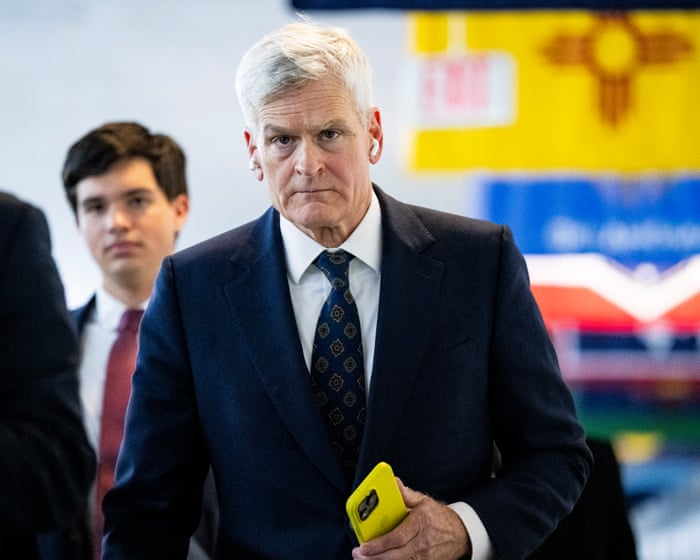
Senator Bill Cassidy explained why he voted to confirm Robert F. Kennedy Jr. as the Secretary of Health and Human Services. Cassidy said that Kennedy has strong views on vaccinations, even though many people disagree with him.
Key Facts
Senator Bill Cassidy represents Louisiana and is a member of the Republican Party.
Cassidy is a doctor and the chair of the Senate Health, Education, Labor, and Pensions Committee.
Cassidy voted to confirm Robert F. Kennedy Jr. as the HHS Secretary.
Kennedy has controversial opinions about vaccines that do not match public opinion.
Cassidy spoke about his vote in a Sunday interview.
The confirmation of Kennedy has drawn public attention because of his vaccine views.
Cassidy aimed to clarify his reasons for supporting Kennedy despite the controversy.
Read the Original
Want the full story? Tap a source to open the original
article.
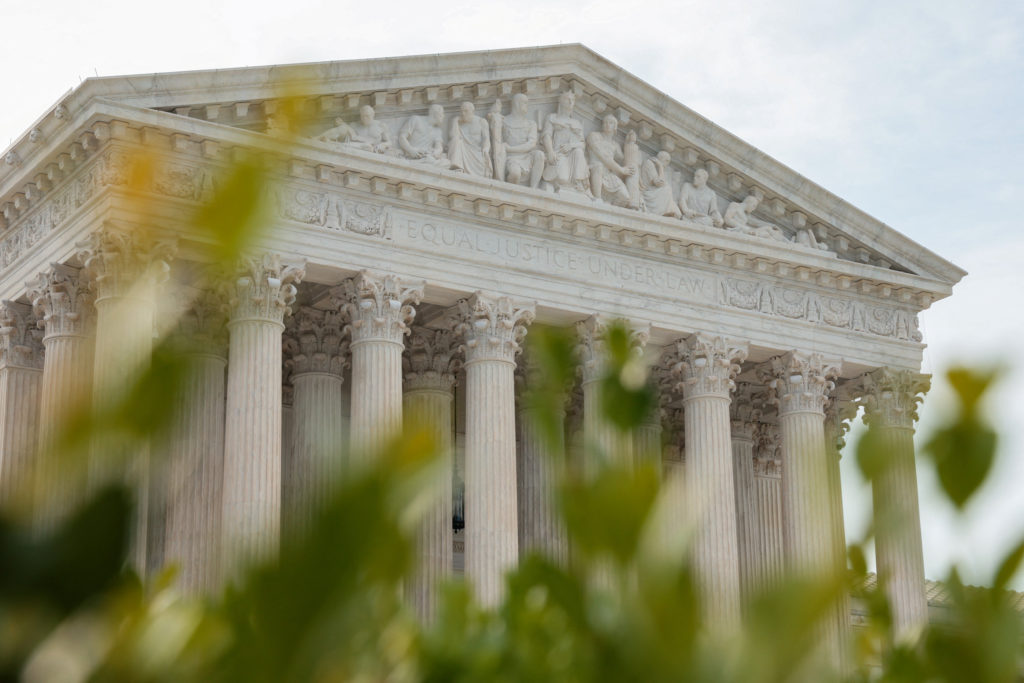
The U.S. Supreme Court decides cases through a detailed process that starts when a party asks the court to review a lower court's decision. The justices select a few cases to hear each term, then consider written arguments, hear oral arguments, and finally announce their decisions.
Key Facts
The Supreme Court only reviews cases if at least four of the nine justices agree to hear them.
About 4,000 cases are petitioned each term, but fewer than 80 are chosen for review.
Losing parties in lower courts file a petition called a writ of certiorari to ask the Supreme Court to hear their case.
Interested groups can submit amicus curiae ("friend of the court") briefs to share their views on important cases.
Justices rely on law clerks—young lawyers who help summarize and recommend which cases to pick.
After selecting cases, both sides submit written briefs and present oral arguments before the justices.
Oral arguments usually last one hour, split evenly between the two sides, during which justices ask questions.
Read the Original
Want the full story? Tap a source to open the original
article.
Many places in the United States still use old rainfall data from the 1970s to assess flood risks. This outdated information may not accurately show the current chances of flooding for Americans.
Key Facts
Flood risk is often measured using rainfall records.
Some areas use rainfall data that has not been updated since the 1970s.
Rainfall patterns have likely changed since that time.
Using old data can make flood risk estimates less accurate.
Accurate flood risk information is important for safety and planning.
Americans need up-to-date data to understand their true flood risk.
Read the Original
Want the full story? Tap a source to open the original
article.
New York City Mayor Zohran Mamdani defended democratic socialists during recent interviews. Senator Bill Cassidy criticized the Trump administration’s handling of vaccines. Mamdani-supported candidates won three important New York primary races, sparking discussions about the future direction of the Democratic Party.
Key Facts
Zohran Mamdani is the Mayor of New York City and a Democrat.
Mamdani supports democratic socialists and spoke in their defense.
Senator Bill Cassidy is a Republican from Louisiana.
Cassidy criticized President Trump’s administration related to vaccine management.
Three primary elections in New York saw candidates backed by Mamdani win.
These primary results have started debate about the Democratic Party’s political direction.
The news appeared during Sunday TV show interviews.
The focus is on politics within the United States.
Read the Original
Want the full story? Tap a source to open the original
article.
Senator Chris Murphy of Connecticut said the Democratic Party should challenge big corporations and include democratic socialists elected in places like New York City. He believes the party should be open to different views within its membership.
Key Facts
Senator Chris Murphy represents Connecticut.
He supports the Democratic Party addressing corporate influence.
Murphy said the party should be a "big tent," welcoming diverse opinions.
He mentioned democratic socialists elected in New York City as part of this diversity.
Murphy stated that capitalism is not working effectively.
His comments were made during a Sunday interview.
He has promoted this inclusive idea for several years.
Read the Original
Want the full story? Tap a source to open the original
article.
Three firefighters died and two were injured while fighting large wildfires on the Colorado-Utah border. The fires have spread widely, leading Colorado's governor to declare an emergency and activate the National Guard to help.
Key Facts
The firefighters were part of federal teams battling the Knowles and Gore fires.
The fires merged into the Snyder Mesa fire, burning about 28,000 acres in Colorado.
The deaths happened during a sudden fire spread called a "burnover incident."
The two injured firefighters were treated in a hospital for burns.
Colorado Governor Jared Polis declared a state of emergency and called in the National Guard.
In Utah, the largest fire is the Cottonwood Fire, covering over 93,000 acres and not contained.
Utah banned fireworks for the 4th of July to reduce fire risks.
Climate change is causing hotter, drier conditions that make wildfires more common and severe.
Read the Original
Want the full story? Tap a source to open the original
article.
Senator Bill Cassidy, who is leaving office, said Social Security is running out of money and could soon be unable to pay full benefits. He is trying to get agreement on changes to fix the program before this happens.
Key Facts
Senator Bill Cassidy represents Louisiana and is leaving the Senate soon.
He says Social Security is heading toward insolvency, meaning it may not have enough funds to pay all benefits.
If insolvency happens, Social Security benefits could be cut by about 22 percent.
Cassidy is working to build support for reforms to prevent these benefit cuts.
Social Security is a government program that pays money to retired or disabled people.
The issue is urgent because the current funding will not last long without changes.
Cassidy’s efforts focus on finding a plan that can pass with enough agreement from lawmakers.
Read the Original
Want the full story? Tap a source to open the original
article.
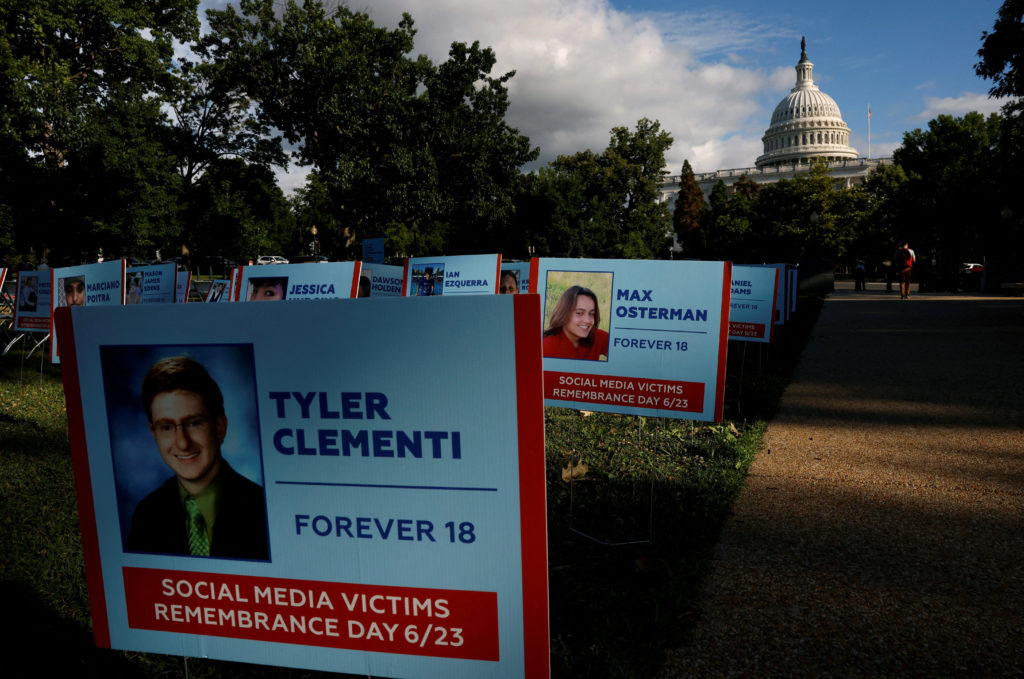
Two mothers who lost their teenage sons to harms linked to social media have become advocates for better protections for children online. While other countries have banned social media use by young teens, the U.S. is still working on laws but has seen recent legal cases hold tech companies partly responsible.
Key Facts
Two mothers lost their teen sons in 2020 due to social media-related harms: one from drug sales through Snapchat, the other from suicide after cyberbullying.
Their advocacy helped build a movement pushing for stronger social media safety laws for children.
Other countries like Australia, the U.K., Turkey, and Indonesia have banned social media use for kids under 15 or 16.
Recent U.S. jury verdicts have held companies like Meta and Google responsible for harm caused to children, showing internal company concerns likening social media to addictive drugs or casinos.
U.S. law Section 230 has protected social media companies from liability for user content, but lawsuits now focus on the companies’ design choices to bypass this protection.
The U.S. has slow-moving federal laws; the Children's Online Privacy Protection Act requires parental consent for data collection from kids under 13.
A new bipartisan bill, the Kids Internet and Digital Safety Act, advances some safety goals but has removed a key legal "duty of care" requirement for companies.
Families and advocates recognize more work is needed to create effective protections for children online.
Read the Original
Want the full story? Tap a source to open the original
article.
The Trump administration plans to change rules to stop some middle- and upper-class Americans from getting food stamps. This change aims to save taxpayers more than $10 billion each year and remove a few students who should not be in the National School Lunch Program.
Key Facts
President Trump’s administration is proposing a new rule about food stamps.
The rule would close a loophole used by some middle- and upper-class Americans.
The goal is to save taxpayers over $10 billion per year.
The change also targets a small number of students incorrectly receiving benefits.
The students in question are part of the National School Lunch Program.
The measure is designed to remove those students who are not eligible for the program.
Read the Original
Want the full story? Tap a source to open the original
article.
Democratic Socialists of America (DSA) are expanding their political efforts to states like Colorado and Wisconsin after recent election wins in New York. The group gained attention when Zohran Mamdani was elected mayor of New York City and has continued to grow with more victories.
Key Facts
The DSA is a political group focused on socialist ideas within the Democratic Party.
Zohran Mamdani was elected mayor of New York City last year as part of the DSA’s success.
Recently, the DSA won two more elections in New York.
Following these wins, the DSA plans to increase efforts in other states, including Colorado and Wisconsin.
The group aims to expand its influence in progressive politics beyond New York.
Their recent success has drawn attention to the growing progressive movement.
The movement focuses on social and economic reforms within the U.S. political system.
Read the Original
Want the full story? Tap a source to open the original
article.
Senator Bill Cassidy criticized Defense Secretary Pete Hegseth after several service members caught the flu at a Texas Air Force base. Cassidy spoke about the issue during an interview on the TV program "Face the Nation."
Key Facts
An influenza outbreak occurred at a Texas Air Force base.
Several service members were infected by the flu.
Senator Bill Cassidy, a doctor and medical expert, publicly criticized Defense Secretary Pete Hegseth.
Cassidy made his comments during a CBS News interview on “Face the Nation.”
Cassidy chairs the Senate Health, Education, Labor and Pensions (HELP) Committee.
Bill Cassidy is a Republican senator from Louisiana.
The criticism concerns how the flu outbreak was handled.
Read the Original
Want the full story? Tap a source to open the original
article.
New York City Mayor Zohran Mamdani said that democratic socialist candidates can win elections anywhere in the United States for any position. He supported three candidates who all won their Democratic primary races in New York, and he believes their message about helping working people is popular nationwide.
Key Facts
Zohran Mamdani is the mayor of New York City.
Mamdani endorsed three democratic socialist candidates: Claire Valdez, Darializa Avila Chevalier, and Brad Lander.
All three candidates won their Democratic primary races in New York.
Two of these candidates defeated current Democratic office holders.
Mamdani says their political message focuses on improving life for working people.
He believes this message will appeal to voters across the U.S., not just in New York.
Some prominent Democrats disagree and think democratic socialists won’t succeed outside of liberal areas like New York City.
Mamdani says the Democratic Party can include a wide range of views while standing firm on supporting working people.
Read the Original
Want the full story? Tap a source to open the original
article.
Senator Raphael Warnock, who is also a Baptist pastor, reacted to Vice President Vance's criticism of Pope Leo XIV. Warnock said he appreciates that Vance shared his personal religious experience in a new book but expressed concern about using faith in political arguments.
Key Facts
Senator Raphael Warnock represents Georgia and is a Baptist pastor.
Vice President Vance criticized Pope Leo XIV.
Vance wrote a new book called "Communion: Finding My Way Back to Faith."
Warnock appeared on CNN’s “State of the Union” to talk about this topic.
Warnock said his faith is not a weapon for political attacks.
Warnock is glad Vance shared his personal faith journey.
The discussion centers around faith and politics.
Read the Original
Want the full story? Tap a source to open the original
article.
Senator Mark Kelly criticized the Biden administration's handling of the U.S. southern border, saying it created problems by allowing undocumented immigrants to enter. He also said he feels free to disagree with President Donald Trump without facing backlash.
Key Facts
Senator Mark Kelly is from Arizona and a member of the Democratic Party.
Kelly criticized the Biden administration's border policies.
He said these policies created a crisis at the southern border.
According to Kelly, welcoming policies made it easier for undocumented immigrants to enter the U.S.
Kelly said he can criticize President Trump without fear of retaliation.
The focus is on immigration policy and border security.
The article discusses political views related to U.S. border management.
Read the Original
Want the full story? Tap a source to open the original
article.
Senator Bill Cassidy criticized President Trump for not keeping Congress informed about the conflict with Iran, saying Trump treats Congress like a minor part of government. Cassidy clashed with Trump over this issue but later received a briefing and dropped support for a resolution limiting war powers. Cassidy also expressed concern about the government’s focus on voting laws instead of helping American families with their expenses.
Key Facts
Senator Bill Cassidy is leaving his Senate seat after President Trump backed a challenger who won the primary runoff.
Cassidy accused President Trump of ignoring Congress’s constitutional role in being briefed on the Iran conflict.
Cassidy and three other Republican senators supported a war powers resolution to check the president’s authority.
Trump criticized them for this, leading to a heated argument with Cassidy.
After getting a briefing from Vice-President JD Vance and a special envoy, Cassidy stopped supporting the resolution.
Cassidy previously voted to convict President Trump in the impeachment trial over the January 6 Capitol attack.
He criticized Trump’s focus on new voting restrictions and urged him to prioritize economic issues affecting families.
Cassidy questioned the progress of the Iran war, citing costs of $29 billion and 13 American deaths so far.
Read the Original
Want the full story? Tap a source to open the original
article.
The Drug Enforcement Administration (DEA) is thinking about changing marijuana’s legal status from Schedule I to Schedule III. This change would mean that cannabis is officially recognized as having accepted medical uses, but the evidence for its medical benefits is not strong enough to support this.
Key Facts
The DEA is considering moving marijuana from Schedule I to Schedule III under U.S. drug laws.
Schedule I drugs are considered to have no accepted medical use and a high potential for abuse.
Schedule III drugs are seen as having accepted medical uses and less potential for abuse.
Moving marijuana to Schedule III would officially recognize its medical use.
Experts say the scientific evidence does not currently support marijuana’s medical use fully.
Some people believe this decision should be based on scientific facts, not politics.
The Controlled Substances Act is the law that classifies drugs into different schedules based on safety and medical use.
Read the Original
Want the full story? Tap a source to open the original
article.