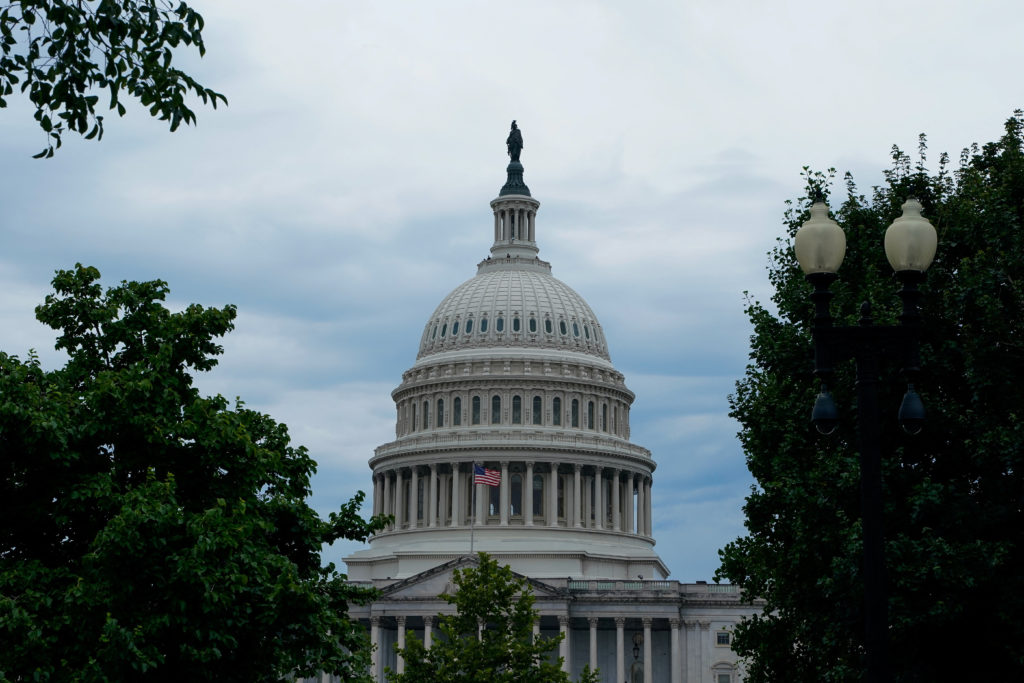
Senator Bill Cassidy, who lost his primary election to a candidate supported by President Donald Trump, is promoting a plan to invest $1.5 trillion into Social Security before he leaves the Senate. This comes after the Trump administration reported that Social Security may run out of money to pay full benefits in about seven years.
Key Facts
Senator Bill Cassidy from Louisiana lost his GOP primary to a Trump-backed challenger.
Cassidy wants to reform Social Security before his Senate term ends.
The Trump administration projected Social Security funds will be insufficient to pay full benefits in seven years.
Cassidy’s plan includes a $1.5 trillion investment to sustain the program.
Social Security is a government program that provides financial help to retirees and disabled people.
Cassidy spoke about his plan in an interview with CNBC.
His effort highlights concerns about the future of Social Security funding.
Read the Original
Want the full story? Tap a source to open the original
article.
The U.S. Senate will vote again on a resolution to limit war powers related to military actions against Iran. This follows President Donald Trump’s efforts to negotiate an end to the conflict and requests for Congress to fund ongoing military costs.
Key Facts
The Senate is holding its 10th vote on a resolution to block U.S. military action against Iran.
Previous attempts to pass the resolution have all failed due to Senate voting outcomes.
President Trump signed a Memorandum of Understanding with Iran, starting a 60-day period to finalize a broader deal on Iran’s nuclear program.
The Pentagon is asking Congress for about $80 billion to fund military supplies and costs related to the Iran conflict.
Some Republican lawmakers oppose the deal, especially the $300 billion fund proposed to help Iran rebuild.
Democrats are pushing for these votes to challenge the Trump administration’s military actions.
The House passed a similar resolution earlier with some Republican support, but Senate approval is uncertain.
Defense Secretary Pete Hegseth is requesting the additional war funding despite public concern over high costs and inflation.
Read the Original
Want the full story? Tap a source to open the original
article.
The U.S. Supreme Court ruled 6-3 against a Louisiana Rastafarian man who wanted to sue prison officials for forcibly shaving his hair, which he said violated his religious beliefs. The court said the law does not allow prisoners to sue individual state employees for money damages in these cases.
Key Facts
Damon Landor, a Rastafarian, was shaved bald against his will while in a Louisiana prison.
Landor argued this violated his religious rights, as he had not cut his hair for 20 years.
The Supreme Court’s majority said prisoners cannot sue individual state prison officials for damages under the Religious Land Use and Institutionalized Persons Act (RLUIPA).
RLUIPA requires prisons receiving federal money to respect inmates’ sincere religious beliefs and allow them to sue for appropriate relief.
Justice Neil Gorsuch wrote that the law does not hold individual officials personally liable because they are not part of the federal funding agreements with states.
The ruling was seen as a victory for states, which argued allowing such lawsuits could bankrupt them.
Justices Ketanji Brown Jackson, Sonia Sotomayor, and Elena Kagan dissented, warning the ruling limits prisoners’ ability to seek justice for religious discrimination.
Louisiana Attorney General Liz Murrill condemned the shaving but supported the court’s decision, saying the state is taking steps to prevent future incidents.
Read the Original
Want the full story? Tap a source to open the original
article.
The U.S. government has imposed new sanctions on five Cuban state companies that are key to Cuba’s economy, including those linked to the military-run conglomerate GAESA. These sanctions aim to limit foreign investment and pressure Cuba’s government by cutting off access to the U.S. financial system.
Key Facts
The U.S. targeted five Cuban companies, including three connected to GAESA, which controls about 40% of Cuba’s economy.
GAESA holds $14.5 billion in liquid reserves as of early 2024.
The sanctioned companies include Almacenes Universales S.A. (a major logistics and storage firm), Rafin S.A. (a financial arm of GAESA), and Banco Financiero Internacional S.A. (a bank used by foreign investors).
Other companies hit by sanctions are Geominera S.A. (mining) and Empresa Siderúrgica Jose Martí (steel production).
The daughter-in-law of former Cuban President Raúl Castro, Annalie Lilliam Rueda Cardero, was personally sanctioned.
Sanctions threaten foreign investors who work with these entities by risking bans or loss of access to U.S. financial services.
Cuban officials condemned the sanctions and said Cuba is stronger than expected despite U.S. pressure.
These sanctions come shortly after Cuba announced economic reforms intended to ease import restrictions for the private sector.
Read the Original
Want the full story? Tap a source to open the original
article.
The U.S. Energy Department announced $17.5 billion in loans to speed up the building of 10 large nuclear reactors, aiming to meet the growing electricity demand from data centers. These reactors could start construction by 2030 and provide power by the mid-2030s using a proven Westinghouse design.
Key Facts
The U.S. government will offer $17.5 billion in loan financing for 10 new nuclear reactors.
The reactors are intended to support rising power needs from large data centers.
Construction is expected to begin by 2030, with reactors operational around the mid-2030s.
All 10 reactors will use the Westinghouse AP1000 design, which has been tested but was delayed and costly in previous projects.
Seven utilities and energy companies have shown interest, with five sites expected to be selected for two reactors each.
The loans are to help buy nuclear components and are not direct construction loans.
The government aims to reduce costs and speed construction compared to past nuclear projects in the U.S.
President Donald Trump wants to increase U.S. nuclear power production four times over the next 25 years.
Data centers currently use around 4-5% of the country’s electricity, a figure expected to nearly triple by 2028.
Read the Original
Want the full story? Tap a source to open the original
article.
ABC is asking viewers to tell the Federal Communications Commission (FCC) to stop trying to control who can appear on the talk show The View. The FCC, led by Chairman Brendan Carr, is reviewing whether The View qualifies as a bona fide news program, which affects whether it must follow rules offering equal time to political candidates.
Key Facts
ABC aired a commercial urging viewers to comment to the FCC about The View’s status as a news program.
The FCC has historically classified shows like The View as bona fide news, exempting them from equal-time political rules.
The View received this news exemption in 2002 during President George W. Bush’s administration.
FCC Chairman Brendan Carr has started a proceeding to reconsider this exemption for The View, which could require the show to offer equal airtime to opposing political candidates.
This action came after The View interviewed Texas Democratic Senate candidate James Talarico.
Carr has also warned broadcast stations against using talk shows for partisan political purposes and has opened a review of Disney’s TV station licenses.
ABC and Disney claim the FCC’s actions are politically motivated and an attempt to punish their editorial choices.
The FCC said ABC’s ad contains misinformation but has not specified what part.
Read the Original
Want the full story? Tap a source to open the original
article.
Senator Thom Tillis criticized U.S. Attorney Jeanine Pirro for saying she would fully prosecute people accused of damaging the Lincoln Memorial reflecting pool. This comes after President Donald Trump gave pardons last year to those convicted in connection with the January 6 Capitol attack.
Key Facts
Senator Thom Tillis represents North Carolina as a Republican.
U.S. Attorney Jeanine Pirro threatened to prosecute people accused of vandalizing the Lincoln Memorial reflecting pool.
The vandalism is related to events around January 6, 2021, when the U.S. Capitol was attacked.
President Donald Trump issued pardons to people convicted of crimes tied to the January 6 attack.
Tillis said it is hard to take Pirro seriously in her prosecution threats because of the pardons.
The Lincoln Memorial reflecting pool was reportedly damaged during January 6 events.
Pirro’s comments suggest she intends to use all legal options against vandalism suspects.
Read the Original
Want the full story? Tap a source to open the original
article.
The U.S. Army plans to create two training ranges within the country to simulate battlefield conditions like those in Ukraine, including electronic warfare and drone operations. This will help soldiers practice with developers and improve their skills against drone threats. The Army also wants to develop cheaper interceptor drones because current high-tech missiles are too expensive for ongoing conflicts.
Key Facts
The Army will set up two domestic training ranges in 4 to 6 weeks to simulate Ukraine-like battlefield conditions.
These ranges will include electronic warfare and drone engagement exercises with drone makers and counter-drone developers.
Soldiers will train there to improve their skills alongside technology creators.
The U.S. currently restricts electronic jamming during domestic training, limiting some counter-drone exercises.
Russia produces 3,000 to 5,000 attack drones monthly and about 600,000 smaller drones, while Ukraine makes around 30,000 interceptor drones monthly.
The U.S. produces advanced interceptor missiles like Patriot and THAAD, costing millions each, but needs cheaper interceptors for long conflicts.
President Trump has met with major defense companies to speed up production of defense weapons.
The Army is seeking new, lower-cost interceptors to complement existing expensive missile systems described as the "Ferrari" of defense products.
Read the Original
Want the full story? Tap a source to open the original
article.
The Senate will vote again on a resolution to limit U.S. military action in Iran amid ongoing conflict and efforts by President Donald Trump to negotiate an end. The vote is unlikely to change past results, but some Republicans are beginning to question the war and the deal Trump signed with Iran.
Key Facts
The Senate is voting for the 10th time on a resolution to block U.S. military action against Iran.
President Trump launched the conflict independently and now needs Congress to approve funding.
The Pentagon is requesting $80 billion from Congress, mainly for supplies related to the Iran conflict.
Trump recently signed a Memorandum of Understanding with Iran, starting a 60-day period to reach a broader nuclear agreement.
Some Republican senators are unhappy with the deal, especially the $300 billion fund to help Iran rebuild.
President Trump plans to meet Republican senators to discuss the Iran deal amid criticism.
Vice President JD Vance is involved in negotiations aimed at stopping Iran’s nuclear program.
Democrats are encouraging Republicans to join them in opposing the Trump administration’s approach to Iran.
Read the Original
Want the full story? Tap a source to open the original
article.
The Senate approved the 21st Century Road to Housing Act with a strong bipartisan vote of 85-5. The bill aims to increase the supply of homes and make housing more affordable by easing construction rules and limiting big investors buying homes for profit. The legislation now goes to the House, where it is also expected to pass, before heading to President Donald Trump to become law.
Key Facts
The Senate passed the housing bill with an 85-5 vote.
The bill seeks to fix the housing shortage by encouraging more home building.
It limits Wall Street investors from buying homes that could go to families.
The law offers grants to convert empty buildings into affordable housing.
A study showed the US lacks 3.7 million housing units, contributing to high costs.
The cost of a starter home is $1 million or more in 242 cities, according to Zillow.
Supporters say the bill offers real bipartisan action to help Americans buy homes.
Some senators oppose the bill, saying housing regulations should be handled locally, not by the federal government.
Read the Original
Want the full story? Tap a source to open the original
article.
The Wall Street Journal editorial board praised the U.S. men’s national soccer team for including many players who are immigrants or children of immigrants. They said this shows how immigration can benefit the country, especially as the Supreme Court prepares to rule on President Trump’s order about birthright citizenship.
Key Facts
The U.S. men’s national soccer team includes many immigrants or children of immigrants.
The Wall Street Journal editorial board wrote positively about this fact.
The editorial highlighted immigration as a strength for the country.
The U.S. Supreme Court is expected to make a decision soon on President Trump’s order about birthright citizenship.
Birthright citizenship means being a citizen of the U.S. if you are born on American soil.
The editorial suggested President Trump might learn from the soccer team’s success regardless of the court’s ruling.
Read the Original
Want the full story? Tap a source to open the original
article.
President Donald Trump spoke to reporters on Tuesday before visiting a Mack Trucks factory in Pennsylvania. During this visit, he answered questions related to Iran.
Key Facts
President Donald Trump visited a Mack Trucks facility in Pennsylvania.
The visit took place on a Tuesday.
Before the visit, President Trump spoke to reporters.
He answered questions about Iran during this time.
The event was covered by CBS News.
Read the Original
Want the full story? Tap a source to open the original
article.
U.S. Immigration and Customs Enforcement (ICE) is trying to fine immigration lawyer Vinod Doddamani for filing false asylum claims, marking the first time ICE has taken this step against a lawyer. The Department of Homeland Security (DHS) says Doddamani submitted 32 cases with 64 fraudulent documents that were very similar in language and facts.
Key Facts
ICE announced it wants to fine attorney Vinod Doddamani for submitting false asylum claims.
Doddamani allegedly filed 32 immigration cases with 64 fake documents.
The documents had nearly identical language and details about supposed persecution.
A federal appeals court allowed the Department of Homeland Security to expand a fast deportation process to immigrants caught anywhere in the U.S. who cannot prove they have lived in the country for two years. The court overturned a lower judge’s block on this policy, saying it follows the law and gives migrants a chance to respond.
Key Facts
The fast deportation process, called expedited removal, has been used for nearly 30 years at the border.
In January 2025, the Trump administration expanded this process to apply nationwide, beyond just the border.
Immigrants caught anywhere in the U.S. who can’t prove two years’ presence can now face quick removal.
A judge blocked this expansion in August 2025, citing concerns about migrants’ legal rights.
The appeals court ruled 2-1 to allow the expansion, with two judges appointed by President Trump supporting it.
The ruling says immigrants receive notice and a chance to object, including proof of time in the U.S.
One judge appointed by Barack Obama dissented, saying the process is not enough for people caught inside the country.
DHS called the decision a win, saying they are applying the law correctly.
Read the Original
Want the full story? Tap a source to open the original
article.
Two New York Times reporters, Jonathan Swan and Maggie Haberman, declined to say if they have audio recordings from the Situation Room for their book about President Trump’s second term. They chose not to discuss details about the tapes during a TV interview.
Key Facts
Jonathan Swan and Maggie Haberman are reporters for the New York Times.
They co-authored a book about President Donald Trump’s second term.
Some audio tapes from the Situation Room may be related to their book.
When asked about access to these tapes, the reporters refused to comment.
The exchange happened during an interview on the show “The Last Word” with Lawrence O’Donnell.
The Situation Room is a secure location in the White House where important government events are monitored.
The reporters’ silence does not confirm or deny their access to the tapes.
Read the Original
Want the full story? Tap a source to open the original
article.
The U.S. Supreme Court decided in a 6-3 vote that a Rastafarian man in Louisiana cannot sue prison officials who shaved his dreadlocks against his will. The court ruled that the man does not have the right to bring this lawsuit against the prison workers.
Key Facts
The case involved a man who follows the Rastafari religion.
Prison officials in Louisiana forcibly cut his dreadlocks.
The man wanted to sue the officials for this action.
The Supreme Court ruled 6-3 against the man's right to sue.
The decision means prison officials are protected from this type of lawsuit in this case.
The ruling relates to how religious rights apply in prisons.
The case was one of the recent decisions discussed on CBS News.
Read the Original
Want the full story? Tap a source to open the original
article.
President Donald Trump said six people were arrested for damaging the Lincoln Memorial Reflecting Pool in Washington, D.C., amid problems with the pool’s recent $14 million renovation. The pool renovation, which included a new blue liner, is facing issues like algae growth and peeling paint just before the nation’s 250th anniversary.
Key Facts
Six people were arrested for damaging the Lincoln Memorial Reflecting Pool, according to President Trump.
Another seven people were cited for damaging the pool.
Trump claims there was a large 350-foot gash in the pool’s paint, but offers no proof.
One man was confirmed arrested for touching peeling paint on the pool liner.
The pool renovation cost over $14 million and involved installing a new liner with a color called “American flag blue.”
Algae growth has appeared in the pool soon after the renovation was declared complete.
Pieces of the pool liner have been found floating in the water.
Authorities including National Guard members and Park Police are guarding the area after claims of vandalism.
The pool is planned to have some water drained to allow permanent repairs either before or after the July 4th holiday.
Read the Original
Want the full story? Tap a source to open the original
article.
A U.S. appeals court has allowed President Trump’s administration to continue a faster deportation process for immigrants living inside the country. This process, called expedited removal, was previously used mainly at the border, but now the administration can apply it more broadly to immigrants who cannot prove they have lived in the U.S. for over two years.
Key Facts
The U.S. Court of Appeals for the D.C. Circuit reversed a lower court ruling that blocked the expanded use of expedited removal.
Expedited removal lets immigration officers quickly deport some non-citizens without a full court hearing.
The Trump administration wants to apply this faster deportation process to immigrants anywhere in the U.S., not just at the border.
Rights groups argue this violates due process, which means fair legal treatment guaranteed by the U.S. Constitution.
A lower court judge said this policy risks wrongly deporting people who should be allowed to stay.
The appeals court ruling supports the administration’s goal to speed up deportations within limits set by Congress.
Judge Justin Walker, appointed by President Trump, wrote the decision allowing the policy.
The original lawsuit was filed by Make the Road New York, an immigrant rights group.
Read the Original
Want the full story? Tap a source to open the original
article.
Voters are participating in important primary elections in New York. At the same time, South Carolina is holding a runoff election to choose the Republican candidate for governor.
Key Facts
Primary elections are taking place in New York.
These elections are considered important.
South Carolina is holding a runoff election.
The runoff is for the Republican candidate for governor.
CBS News reporters Shanelle Kaul and Skyler Henry are covering the events.
The elections involve candidates competing to represent their parties in the general election.
Voter participation is a key part of these elections.
Read the Original
Want the full story? Tap a source to open the original
article.
Senate Intelligence Vice Chair Mark Warner introduced a bill that would stop the president from appointing an acting director of national intelligence (DNI) without Senate approval. This move responds to President Donald Trump’s decision to name Bill Pulte as acting DNI while Pulte also leads another government agency.
Key Facts
Senator Mark Warner is the Vice Chair of the Senate Intelligence Committee.
He introduced a bill on Tuesday addressing the appointment process for acting DNI.
The bill would require Senate approval for any acting DNI appointment.
President Donald Trump appointed Bill Pulte as acting DNI.
Bill Pulte also serves as head of the Federal Housing Finance Agency (FHFA).
This appointment raised concerns because Pulte holds two significant roles simultaneously.
The bill aims to prevent future presidents from making similar appointments without Senate confirmation.
Read the Original
Want the full story? Tap a source to open the original
article.