President Donald Trump used a Father’s Day message on Truth Social to say the U.S. economy is doing very well and praised the military. Recent data shows the economy has good job numbers and low unemployment, but some challenges like inflation and cost of living remain.
Key Facts
President Trump posted a Father’s Day message on Truth Social praising the economy and military strength.
He claimed there are “record” job numbers and the “best economy ever.”
The U.S. labor market is strong, with low unemployment and steady job growth.
Inflation has decreased from its highest point but still affects many families.
Stock market indexes have stayed near record highs recently.
Public opinion on the U.S. military and foreign policy is mixed.
Many Americans disapprove of Trump’s handling of the economy, hurting his political standing.
This year’s Father’s Day message was more combative compared to previous years.
Read the Original
Want the full story? Tap a source to open the original
article.
Many Americans agree on the idea of increasing taxes on billionaires, showing strong support for this change. However, despite this popularity, it has been difficult for lawmakers to pass laws that raise taxes on the very wealthy.
Key Facts
Most Americans support raising taxes on billionaires.
Taxing billionaires is less controversial than other political issues.
Efforts to increase taxes on the superrich have faced obstacles in government.
The difficulty in passing tax changes involves political and legislative challenges.
Public opinion favors tax increases on the wealthiest individuals.
The debate focuses on how to make the tax system fairer for very rich people.
Lawmakers are divided on the best way to implement these tax changes.
Read the Original
Want the full story? Tap a source to open the original
article.
President Donald Trump hosted a UFC event called “Freedom 250” on the White House South Lawn on June 14, 2026. After the event, aerial photos showed significant damage to the grass at the Ellipse and South Lawn, prompting cleanup and restoration efforts supported by ScottsMiracle-Gro and the National Park Service.
Key Facts
The UFC fight event took place on the White House South Lawn and coincided with President Trump’s 80th birthday.
Tens of thousands of people watched the event from the nearby Ellipse, which showed major grass damage afterward.
Temporary structures, including a UFC octagon and lighting rigs, were installed on the South Lawn.
Cleanup and restoration began immediately after, with a $1 million commitment from ScottsMiracle-Gro to restore the grounds.
The UFC fight card ended with every match finishing by knockout or technical knockout; Justin Gaethje won the headline fight.
Five men were arrested for a foiled plot targeting senior officials during the UFC event.
The event averaged 7 million viewers in the U.S. and 17 million viewers across the U.S. and Latin America.
The event is part of broader physical changes to White House grounds made since President Trump returned to office, including demolition and proposed new structures.
Read the Original
Want the full story? Tap a source to open the original
article.
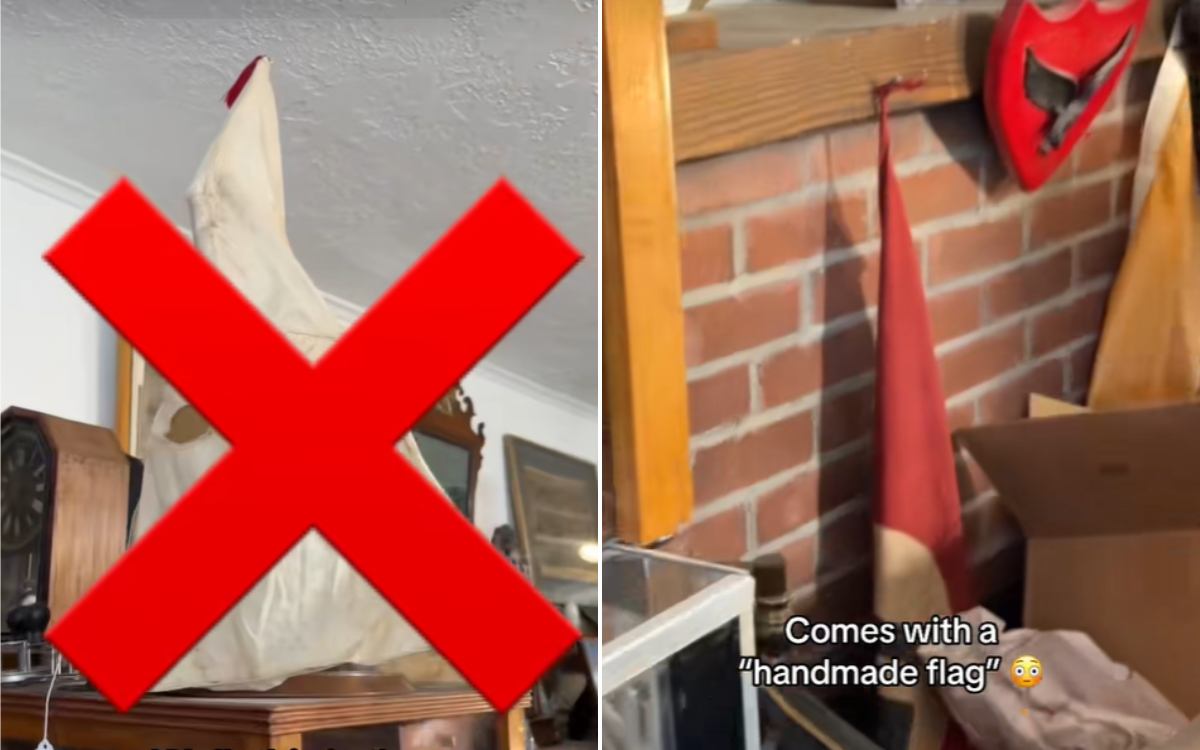
A man in Florida found a Ku Klux Klan (KKK) hood and a red flag with a swastika for sale in a local antique store. The store owner said the items came from an estate cleanout, and the hood was displayed with a $350 price tag. The discovery sparked online discussions about the display and sale of such controversial items.
Key Facts
Liam McNamara, a Florida resident and thrifting enthusiast, discovered the KKK hood in an antique store in Sarasota County.
The white hood is historically linked to the KKK, used to hide identities and intimidate people.
The hood was priced at $350 and came with a red flag featuring a swastika.
The store owner said the items were found in a home estate cleanout in South Venice.
The KKK was active in Florida in the 20th century but declined by the 1980s, with only small, rare rallies reported.
Wearing masks or hoods in public to hide identity for intimidation is illegal in Florida under a 1951 law.
McNamara shared a censored video of the find on TikTok, which received over 1 million views and sparked debate.
Some online comments supported buying the hood, while others opposed it being displayed openly for sale.
Read the Original
Want the full story? Tap a source to open the original
article.
About 4 million Americans will turn 18 in 2026, but less than one-third are expected to be registered to vote by the November elections. Many young people face barriers to voter registration, such as lack of driver’s licenses or state IDs, and voter registration is not fully integrated into the education system.
Key Facts
Fewer than 30% of 18-year-olds are registered to vote during midterm election years, compared to nearly 75% of people aged 45 and older.
Registered 18-year-olds often vote at rates similar to older voters, with over 80% turnout in states like Pennsylvania.
The 1993 “Motor Voter” law connects voter registration mostly to state Departments of Motor Vehicles (DMVs), but fewer teens are getting driver's licenses.
Only 44% of 17-year-olds and 60% of 18-year-olds have driver’s licenses, limiting their DMV contact and voter registration opportunities.
29 states require a driver’s license or state ID to register online, which blocks many teens and adults without these IDs from registering conveniently.
High schools could be used as places to register young people to vote before graduation, but only three states officially treat schools as voter registration agencies.
Some states, like Oregon and Michigan, have much higher youth voter registration rates, showing that improvements are possible.
States with low youth registration include Pennsylvania, Ohio, Connecticut, and Alabama, despite these states receiving much election coverage.
Read the Original
Want the full story? Tap a source to open the original
article.
Jasmine Araujo, diagnosed with breast cancer, shares her experience of finding symptoms, getting a diagnosis, and seeking treatment both in the U.S. and Mexico. Despite treatment, her cancer spread to other organs, and she now faces advanced stage 4 cancer.
Key Facts
Jasmine noticed symptoms like night sweats, itchiness, and a lump on her breast at age 31.
Her gynecologist initially dismissed the possibility of cancer but agreed to test after Jasmine insisted.
Tests confirmed she had breast cancer.
Friends raised money so she could get low-dose chemotherapy treatment in Mexico not available in the U.S.
Surgery removed the breast tumor, and radiation treatment followed.
Scans later revealed a small tumor in her lungs, missed by multiple doctors initially.
After radiation, cancer was found to have spread to her liver, bones, and lungs, classifying it as stage 4 cancer.
The cancer has continued to progress, reducing her energy and ability to continue her activism work.
Read the Original
Want the full story? Tap a source to open the original
article.
President Donald Trump said that several people have been arrested for allegedly damaging the Lincoln Memorial Reflecting Pool, which has shown algae growth and peeling paint after a $14.65 million renovation. The Park Service is working to clean and repair the pool, and President Trump claims the damage may have been caused by intentional vandalism.
Key Facts
The Lincoln Memorial Reflecting Pool recently underwent a $14.65 million renovation that included repair, resealing, and painting.
After the renovation, algae has been forming in the pool and the paint has started peeling.
President Trump announced that multiple people were arrested for vandalism at the Reflecting Pool.
The specific details of the vandalism arrests have not been provided by authorities.
Trump accused vandals of using chemicals and tools to damage the pool’s lining and facade.
The pool may need to be partially drained to fix the peeling lining, according to Trump.
The U.S. Park Police have not confirmed the arrests Trump mentioned.
Visitors have posted images and videos showing the algae and paint damage on social media.
Read the Original
Want the full story? Tap a source to open the original
article.
Prediction markets, where people can bet on events like sports or awards, are growing quickly in the US. Public health experts warn that resources to help people with gambling problems are not keeping up, while President Donald Trump supports federal control of these markets.
Key Facts
Prediction markets let users bet on events such as NBA games and UFC fights.
Major platforms like Kalshi and Polymarket are promoting their services widely, even in states where gambling is usually banned.
These platforms claim they are regulated federally by the Commodity Futures Trading Commission (CFTC) as “event derivatives,” not state-regulated gambling.
Many states and regulators want these markets to be subject to state gambling laws and have filed lawsuits against them.
President Trump supports the CFTC having exclusive control over prediction markets instead of states.
Since a 2018 Supreme Court decision, sports betting is legal in 39 states and DC, contributing to growth in digital gambling.
Public health resources for gambling addiction are limited and much lower than funding for alcohol or tobacco harms.
There is no dedicated federal funding for gambling addiction prevention or treatment currently.
Read the Original
Want the full story? Tap a source to open the original
article.
Starting in July, some people who receive Medicare will be able to get certain GLP-1 medications by paying a single flat monthly fee. This temporary program will last about 18 months, ending at the close of 2027, but many details about how it will work are still not clear.
Key Facts
The program begins in July and will run until the end of 2027.
It targets Medicare beneficiaries, meaning people who use the U.S. government health insurance for seniors and some disabled individuals.
Participants will pay one flat fee each month to access GLP-1 medications.
GLP-1 medications are drugs often used to treat conditions like type 2 diabetes or weight issues.
The program is temporary, lasting about a year and a half.
The Centers for Medicare and Medicaid Services (CMS) is managing the program.
Questions remain about specific details and how the program will function in practice.
This program aims to make these medications more affordable and easier to access for Medicare users.
Read the Original
Want the full story? Tap a source to open the original
article.
Congress is about to pass a housing bill called the 21st Century ROAD to Housing Act. The bill aims to make it easier to build homes by reducing some rules and limiting the role of big companies in the housing market.
Key Facts
The bill has support from both Republicans and Democrats.
It lowers certain government permitting rules to speed up housing construction.
The law seeks to limit the influence of large corporations in the housing market.
Lawmakers see the bill as a major achievement after months of negotiation.
The goal is to increase housing availability and affordability for Americans.
The bill reflects cooperation between the House and Senate members.
It is expected to help address housing shortages in communities across the U.S.
Read the Original
Want the full story? Tap a source to open the original
article.
The White House has sent Health and Human Services Secretary Robert F. Kennedy Jr. to campaign in important House districts before the November midterm elections. He is promoting his "Make America Healthy Again" plan, which focuses on improving the nation’s food and health programs supported by the government.
Key Facts
Robert F. Kennedy Jr. is the Health and Human Services Secretary.
He is traveling to important House districts ahead of the midterm elections.
Kennedy promotes the "Make America Healthy Again" (MAHA) agenda.
The MAHA plan aims to improve food quality and health initiatives in the U.S.
His visits support similar programs already part of the current administration.
The midterm elections will take place in November 2024.
Battleground districts are areas where election outcomes are closely contested.
The effort is part of the White House’s strategy to influence election results.
Read the Original
Want the full story? Tap a source to open the original
article.
The article explains different reactions in the U.S. to the war with Iran and the resulting peace deal. It highlights that most Americans were against the war but support any peace that can help reduce costs like gas and groceries. The article also points out lessons learned from the conflict and negotiations with Iran.
Key Facts
Four main groups in the U.S. have different views on the war and peace deal with Iran.
The largest group is people who opposed the war and now support the peace deal.
The smallest group supports both the war and the peace deal, mainly President Donald Trump’s team.
Congressional Democrats mostly oppose the president’s approach, while many Republicans supported the start of the war but are now doubtful about the peace deal.
The article lists lessons learned, such as the difficulty of removing the Iranian regime without ground troops, and the complexity of negotiating with Iran.
It states that attacking Iran has high costs due to their ability to disrupt the global economy and regional stability.
It says Israel cannot promise a quick war, and NATO would not support an American choice war with Iran.
The article suggests that economic pressure is more effective than military strikes to encourage change in Iran.
Read the Original
Want the full story? Tap a source to open the original
article.
Nine months after President Donald Trump sent an anti-crime taskforce to Memphis, a small group of local residents is trying to watch and document the taskforce’s actions. Some activists, including Hunter Demster, accuse the taskforce of intimidating people, making false arrests, and targeting the wrong houses, which has caused fear and distress in the community.
Key Facts
President Trump deployed an anti-crime taskforce to Memphis to help reduce crime.
Tennessee Governor Bill Lee said the law enforcement presence will last “forever.”
The American Civil Liberties Union (ACLU) of Tennessee filed a lawsuit accusing the taskforce of intimidation and false arrests.
Observers say the taskforce often raids the wrong homes, sometimes using heavy military-style gear.
Hunter Demster, a local activist, leads efforts to track the taskforce and support affected residents.
Demster works with a church program that documents taskforce activities and aids people impacted by immigration detentions.
Watching the taskforce has caused stress and fear for local activists.
Other community members, like teacher Dave Mason, are also involved in observing the taskforce.
Read the Original
Want the full story? Tap a source to open the original
article.
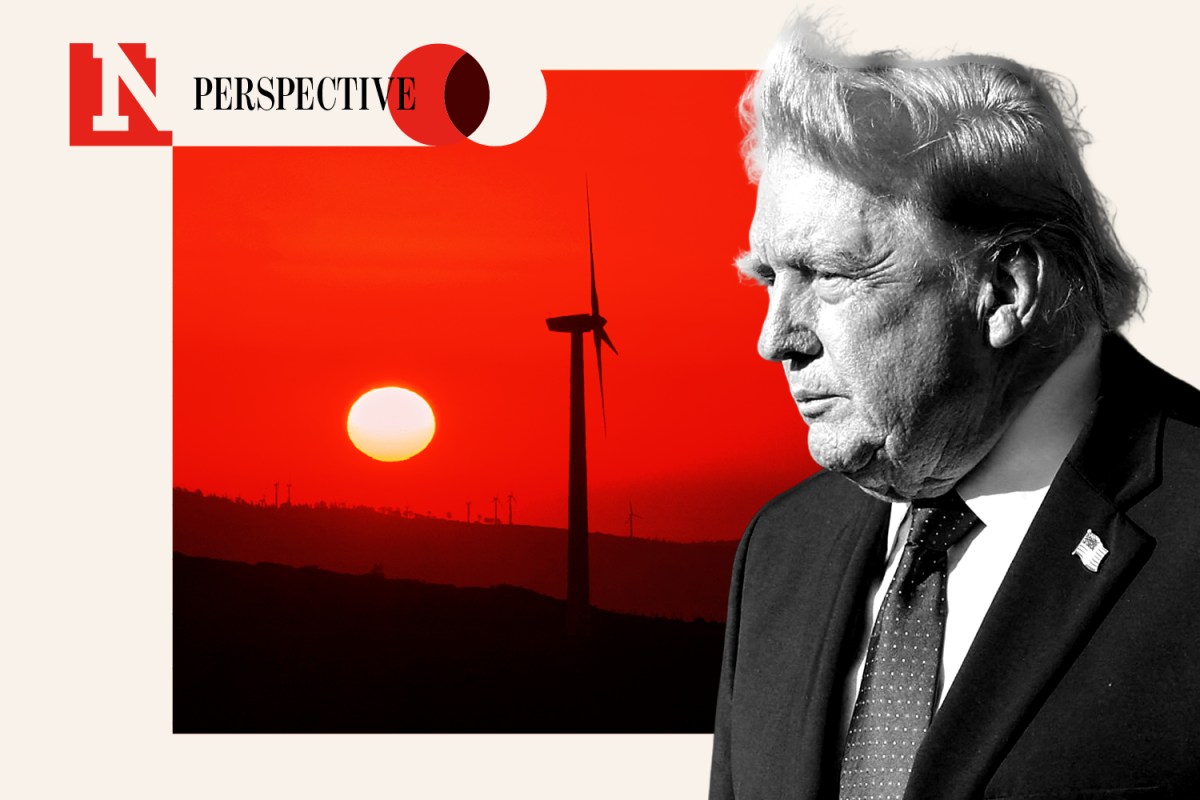
President Donald Trump has stopped new offshore wind energy projects and ended four existing wind leases by paying $765 million to the company Invenergy. His administration aims to focus more on energy sources like natural gas and geothermal power, arguing that offshore wind is expensive and slow to develop.
Key Facts
On January 20, 2025, President Trump’s administration withdrew all areas on the Outer Continental Shelf from new or renewed offshore wind leasing.
The government agreed to pay Invenergy $765 million to cancel four offshore wind leases off New Jersey, Maine, and California.
The total government spending to buy back offshore wind leases under Trump’s administration is nearly $2.6 billion.
Invenergy plans to use the money to invest in natural gas plants in the Midwest and geothermal projects in the West.
Interior Secretary Doug Burgum stated the deal aims to move toward more reliable and secure energy sources.
Several states, including New York, sued the government, calling the lease buybacks a misuse of taxpayer money and a way to favor oil and gas over renewable energy.
Offshore wind faces challenges like high costs, supply chain problems, and regulatory delays, but it still has mandates to provide significant capacity by 2040.
The Department of Energy and the National Renewable Energy Laboratory warned that offshore wind requires large investments in infrastructure to grow.
Read the Original
Want the full story? Tap a source to open the original
article.
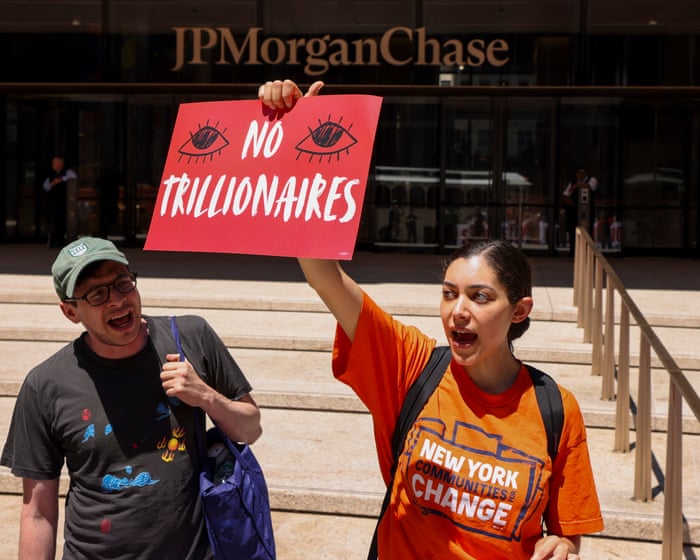
The article explains that income inequality in the United States has been a persistent problem across several presidencies. While President Obama made efforts to reduce inequality, tax policies under President Trump increased the income share of the richest households, and the overall distribution of wealth remains uneven.
Key Facts
By 2016, taxes and government money helped reduce income for the richest 1% by over 20%, raising income for the poorest 20% to the highest level since 1979.
Elon Musk recently became the world’s first trillionaire after SpaceX shares were sold publicly.
President Trump's 2017 tax law gave big tax cuts to wealthy Americans and increased the income share of the richest 1% to 13.2% by the end of his first term.
The 2020 CARES Act helped poor households during the Covid pandemic, temporarily raising their income share to 8.2%.
By 2022, the income share for the poorest fifth dropped to 7.4% under President Biden.
Trump’s later tax changes reduced the income of the poorest 10% by an average of $1,200 yearly and increased the richest 10% by $13,600 on average.
The US has a long history of low taxes on the wealthy and little political will to reduce income inequality.
Research shows the richest 400 Americans pay a smaller share of their income in taxes than the average worker, due to legal tax avoidance strategies.
Read the Original
Want the full story? Tap a source to open the original
article.
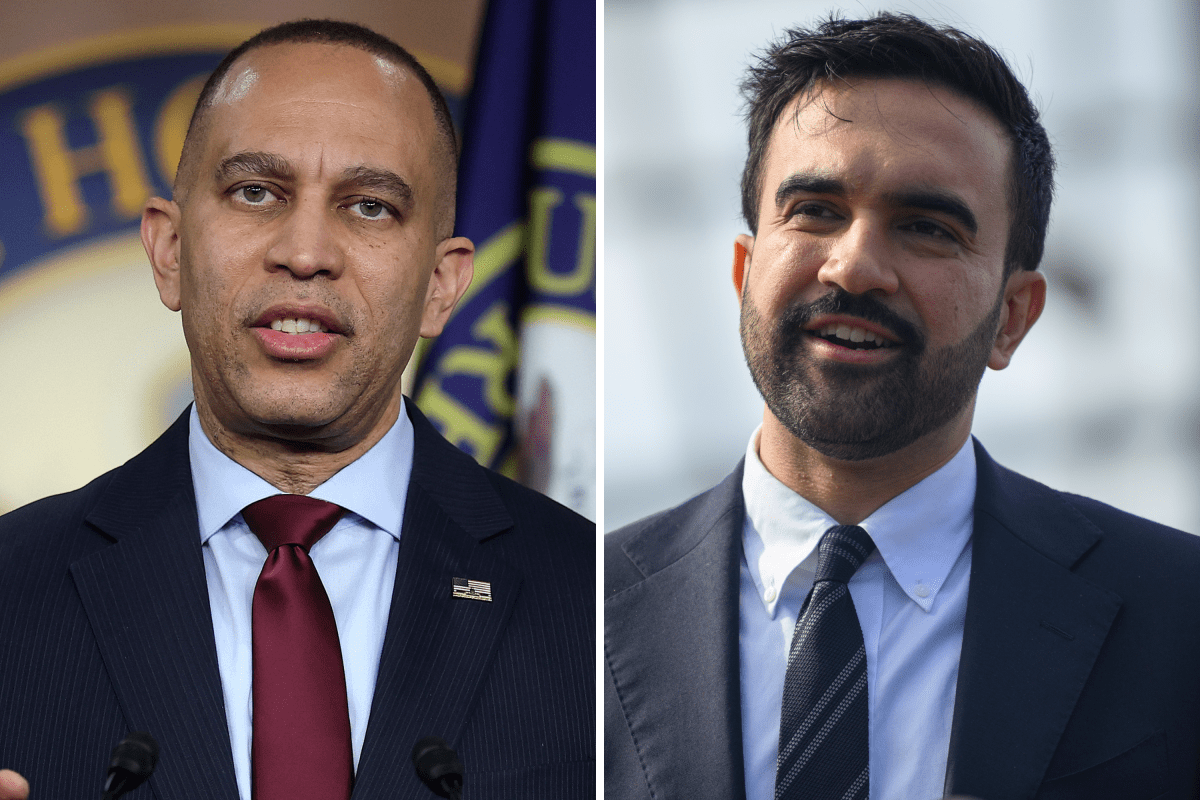
Two important Democratic primary races in New York City are highlighting a split between progressive Mayor Zohran Mamdani and Democratic House Minority Leader Hakeem Jeffries. Mamdani supports progressive challengers backed by the Democratic Socialists of America, while Jeffries supports the more moderate incumbent representatives.
Key Facts
Zohran Mamdani is the mayor of New York City and identifies as a Democratic socialist.
Hakeem Jeffries is the House Minority Leader and a moderate Democrat.
Two congressional primaries in New York are seen as a contest between Mamdani’s progressive movement and Jeffries’ Democratic establishment.
Mamdani supports challengers Brad Lander and Darializa Avila Chevalier, both linked to left-wing or socialist groups.
Jeffries supports incumbents Dan Goldman and Adriano Espaillat in these races.
The Democratic Socialists of America have grown in New York City over the past decade.
Jeffries focuses on uniting a broader, moderate Democratic coalition to retake the U.S. House majority.
Jeffries and Mamdani have a tense political relationship and have agreed to disagree publicly on these primaries.
Read the Original
Want the full story? Tap a source to open the original
article.
David "Davey" Hearn, a former US Olympian, was arrested near the Washington Reflecting Pool after touching peeling paint on the pool's bottom during a bike ride. He denies damaging the pool and faces a misdemeanor charge for destruction of government property.
Key Facts
Davey Hearn is a 67-year-old former US Olympian and canoe champion.
He was arrested by US Park Police and National Guard troops on Friday near the Reflecting Pool in Washington, DC.
The arrest happened after he touched a rubbery strip of peeling paint at the pool’s bottom during a bike ride.
The Reflecting Pool recently underwent a $13 million renovation, but the paint and algae problems persist.
President Donald Trump supports the pool’s makeover and called vandalism of the site a serious crime.
Hearn says he did not damage the pool and was only curious about the material used for painting.
He was held in jail for about five hours and was not allowed a phone call.
A video shows him being handcuffed and questioned near a water hose at the site.
Read the Original
Want the full story? Tap a source to open the original
article.
The head of the White House World Cup task force said it is surprising and notable that Iran’s football team received visas to enter the United States for the tournament. He also defended how the US has handled the team's participation, noting the team has had to stay in Mexico and travel back and forth for their games.
Key Facts
The team of Iran’s national football (soccer) players was granted visas to enter the US for the World Cup.
The White House World Cup task force is managing issues related to the tournament.
Andrew Giuliani, who leads the task force, called the visa approval “pretty amazing.”
Iran’s team has been based in Mexico during the tournament.
The team has been flying into the US for matches and then returning to Mexico.
The US government faced scrutiny over how it treated the Iranian team during the World Cup.
The official defended the US approach to the Iranian team's participation.
Read the Original
Want the full story? Tap a source to open the original
article.
The author shares personal experiences of often following her dad’s advice but feeling it didn’t suit her. She explains how, despite respecting her dad’s practical guidance, she eventually chose her own path, such as picking a different college than he recommended.
Key Facts
The author’s dad gave her practical advice on sports, education, and hobbies.
She followed his advice on tennis but did not make the high school team.
She struggled to connect with her dad’s interests like fishing, hunting, and science.
Her dad suggested a college close to his home with lower tuition.
She chose instead a smaller, more expensive college that felt right to her.
She questioned whether always taking her dad’s advice was the best choice.
The author decided to trust her own feelings and make independent decisions.
Read the Original
Want the full story? Tap a source to open the original
article.