Sarah Safer, daughter of Morley Safer, a longtime CBS 60 Minutes correspondent, expresses concern about recent changes at CBS and the firing of Scott Pelley, a current 60 Minutes anchor. She reflects on her father's commitment to journalism and worries that CBS and the current U.S. administration are undermining free press and honest reporting.
Key Facts
Morley Safer worked at 60 Minutes for 46 years and was a respected war correspondent.
Scott Pelley, a recent 60 Minutes anchor, was fired, prompting public concern.
Sarah Safer grew up with 60 Minutes as her father’s longtime work influenced her family life.
Morley Safer was known for critical reporting, including a famous Vietnam War story that drew political backlash.
Safer’s letters show he challenged CBS leadership about newsroom changes and budget cuts.
Sarah Safer suggests current CBS management and the government threaten free speech and honest journalism.
The article highlights the sacrifices journalists and their families make for the sake of truthful news.
Safer imagines her father would disapprove of the direction CBS News is heading today.
Read the Original
Want the full story? Tap a source to open the original
article.
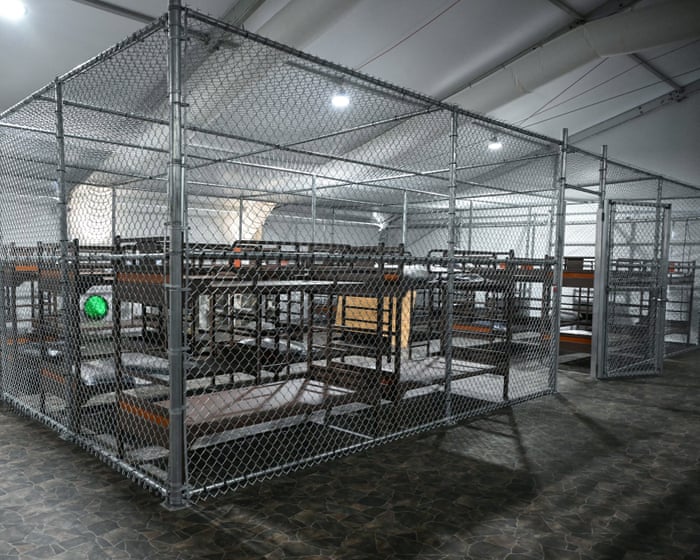
Detainees at a Florida immigration detention center called “Alligator Alcatraz” say guards denied them food and clean water unless they signed documents written in English that they did not understand. The detainees also complained about the poor quality of the water they received, which contained mosquito larvae and tasted rotten.
Key Facts
Detainees were pressured to sign English documents they could not understand.
Guards withheld food and fresh water to force detainees to sign.
The water provided sometimes had mosquito larvae and was described as rotten.
Some detainees need medication for conditions like diabetes and high blood pressure.
The detention center, run by the state for ICE, is located in the Florida Everglades.
The facility has been operating for about a year and is known for harsh treatment of detainees.
Reports say the center will close in June.
Advocacy groups say these practices violate basic human rights.
Read the Original
Want the full story? Tap a source to open the original
article.
Three teenage boys convicted of raping two girls in separate attacks in Hampshire were not sent to jail because of their intellectual disabilities and the potential for rehabilitation. A judge sentenced them to youth rehabilitation orders, which involve strict supervision but allow them to remain in the community.
Key Facts
Three boys were found guilty of 10 counts of rape in incidents that happened in 2024 and 2025.
Two boys, aged 14 at the time, raped a 15-year-old girl and later a 14-year-old girl; a third boy, aged 13, was involved in the second attack.
The boys have significant intellectual and neurological impairments, including ADHD and low IQ levels.
An expert from the Youth Justice Service said that custody would harm one boy due to his complex intellectual disabilities.
The judge emphasized rehabilitation over imprisonment, as guidelines recommend custody only as a last resort for children.
The two older boys received three-year youth rehabilitation orders with 180 days of intensive supervision; the youngest received an 18-month order.
The judge tailored his sentencing language to be understandable to the boys and described their crimes as serious.
The case and sentencing decisions are being reviewed by the Court of Appeal.
Read the Original
Want the full story? Tap a source to open the original
article.
A woman who owned a paddleboard company was sentenced to 10 years and six months in prison for causing the deaths of four people in dangerous river conditions in Wales. Her request to reduce the sentence was denied by the Appeal Court.
Key Facts
Four people died paddleboarding on the Western Cleddau river in Wales in October 2021.
The victims were Paul O'Dwyer, Andrea Powell, Morgan Rogers, and Nicola Wheatley.
Nerys Bethan Lloyd, 39, a former police officer, pleaded guilty to gross negligence manslaughter.
Lloyd was jailed in April 2025 for 10 years and six months.
Lloyd and co-instructor O'Dwyer were not qualified to lead the paddleboarding tour.
The river was in flood with strong currents due to heavy rain before the incident.
The court described the safety precautions as "abysmal".
The Appeal Court judges ruled the sentence was fair given the number of victims.
Read the Original
Want the full story? Tap a source to open the original
article.
Senate Republicans approved a bill to give nearly $70 billion to the Department of Homeland Security for immigration enforcement. The vote came after a long session called a “vote-a-rama,” which included debates over funds connected to President Trump and immigration policies.
Key Facts
Senate Republicans passed a bill to fund immigration enforcement with about $70 billion.
The vote happened after an 18-hour “vote-a-rama” where many changes to bills were proposed.
Democrats, led by Chuck Schumer, tried to block a $1.8 billion fund linked to President Trump but lost by one vote.
Senator Lisa Murkowski was the only Republican to vote against the immigration funding bill.
Senator Lindsey Graham praised the bill and thanked President Trump for his support of the funding.
Democrats criticized the bill for prioritizing funds that benefit President Trump over helping working families.
New abuse allegations surfaced against Greg Platner, a Democratic Senate candidate in Maine.
President Trump appointed Bill Pulte as acting director of national intelligence, mentioning he would investigate “rigged elections.”
Read the Original
Want the full story? Tap a source to open the original
article.
A man who spent 15 years in prison explains how difficult it was to adjust to the modern digital world after his release in 2010. Despite working many jobs, he struggled financially because he lacked basic digital skills needed for today's economy. He now leads a group helping people with criminal records gain the tools they need before leaving prison.
Key Facts
The author went to prison at 17 in 1995 and was released in 2010 at 32.
During his time in prison, he missed major advances in technology, like smartphones and online services.
After release, he worked long hours at multiple jobs but earned only $24,600 in a year.
Low income made it hard to support himself without family help.
The main challenge was lacking digital skills like applying for jobs online and using government websites.
He believes reentry support should start inside prison, not just after release.
He now runs TimeDone, an organization helping formerly incarcerated people build digital skills and connections.
Many returning citizens face obstacles unrelated to effort but linked to missing digital tools.
Read the Original
Want the full story? Tap a source to open the original
article.
Senate Democrats prevented a vote to extend special surveillance powers that will expire soon. They did this to show their opposition to President Trump’s pick, Bill Pulte, as acting director of national intelligence.
Key Facts
Senate Democrats blocked starting the debate on extending surveillance powers early Friday morning.
These surveillance powers are set to expire in about a week.
The block was a protest against President Trump’s appointment of Bill Pulte.
Bill Pulte was chosen to be the acting director of national intelligence (DNI).
All Senate Democrats except Senator John Fetterman voted against the motion.
Read the Original
Want the full story? Tap a source to open the original
article.
Senate Republicans approved funding for Immigration and Customs Enforcement (ICE) and Border Patrol through the end of President Donald Trump's second term, after an 18-hour session with many amendments. The vote was close and revealed some Republican senators breaking from the party on certain issues, especially regarding White House spending and weaponization funds.
Key Facts
The Senate voted 52-47 to fund ICE and Border Patrol through the end of President Trump's second term.
The vote happened during a long session with many amendments, called a "vote-a-rama."
Some Republican senators opposed parts of the funding, like money for White House renovations and the "anti-weaponization fund."
Sen. Lisa Murkowski (R-Alaska) was one Republican who voted against the final funding bill.
Several Republicans joined Democrats in votes against certain amendments, showing some division in the GOP.
The vote included debate over funding an "anti-weaponization fund" and spending tied to President Trump's ballroom.
Concerns about President Trump’s political decisions have caused some GOP senators to question his judgment.
There was also controversy over a nomination for acting director of national intelligence and a failed vote on renewing the FISA law (Section 702).
Read the Original
Want the full story? Tap a source to open the original
article.
Congress is considering a new law to strengthen military ties between the United States and Israel. This law would increase cooperation in weapons development and make the US and Israeli military industries work more closely together. Some lawmakers oppose this plan and want to remove it from the defense budget.
Key Facts
The proposed law is called the United States-Israel Futures Act and aims to join US and Israeli military research and production.
It includes joint projects, sharing technology, and co-producing weapons between the two countries.
Lawmakers Thomas Massie and Ro Khanna want to remove this section from the defense budget.
The American Israel Public Affairs Committee (Aipac) supports the legislation and has lobbied for it.
The Foundation for Defense of Democracies, a pro-Israel think tank, also promotes closer military ties with Israel.
President Donald Trump’s administration is involved in approving the overall defense budget, which includes this section.
Around 60% of Americans have an unfavorable opinion of Israel, despite efforts to deepen military cooperation.
The legislation was introduced by a bipartisan group of representatives and senators but has not yet passed both chambers.
Read the Original
Want the full story? Tap a source to open the original
article.
The Trump administration will present its argument to a federal appeals court to explain why it can build a White House ballroom without needing more permission from Congress. Meanwhile, construction is allowed to continue until the court decides if the project can move forward.
Key Facts
The Trump administration is arguing before the U.S. Court of Appeals for the D.C. Circuit.
The issue is whether the administration has the legal authority to build a White House ballroom without Congress’s approval.
The appeals court has temporarily allowed construction to go on during the legal review.
The court’s decision will decide the future of the construction project.
This case involves the balance of power between the executive branch and Congress regarding White House renovations.
The ballroom project is part of the White House expansion plans.
The legal battle reflects ongoing disputes over government building projects and approval processes.
Read the Original
Want the full story? Tap a source to open the original
article.
New York City Mayor Zohran Mamdani is using the excitement around the New York Knicks' strong performance in the NBA playoffs to boost support for progressive political ideas. He often shares his enthusiasm for the team on social media in a lighthearted way.
Key Facts
Zohran Mamdani is the Mayor of New York City.
The New York Knicks are having their best chance at an NBA championship in many years.
Mayor Mamdani is engaging with fans by showing excitement for the Knicks.
His social media posts about the Knicks are often playful and relatable.
Mamdani aims to connect the Knicks' success to advancing progressive politics.
Knicks fandom is a popular and influential topic in New York City.
Mamdani uses this moment to build political support among residents.
The article focuses on the link between sports enthusiasm and political messaging.
Read the Original
Want the full story? Tap a source to open the original
article.
A Republican congressman, Chip Roy, introduced a bill to change the H-1B visa program by stopping it from leading to a green card and ending a program called OPT that allows international students to work in the U.S. temporarily after graduation. The bill aims to protect American jobs, especially in science and technology fields, but is unlikely to pass because it lacks broad support in Congress.
Key Facts
Congressman Chip Roy, a Texas Republican, proposed the American White-Collar Worker Jobs Act on June 4.
The bill would remove the green card option for H-1B visa holders and end the OPT program for international students.
The H-1B visa lets U.S. employers hire foreign workers in jobs requiring special skills, like engineering and medicine.
Supporters say the program helps fill skill gaps; critics say it lowers wages and hurts American workers.
The bill is unlikely to pass due to narrow Republican control and no strong support from Democrats or moderate Republicans.
President Donald Trump said in 2025 that H-1B visas are necessary to bring in skills not found domestically.
The bill would require H-1B workers to prove they have a home outside the U.S. and do not plan to stay permanently.
The bill is supported by groups concerned about protecting American workers from job competition.
Read the Original
Want the full story? Tap a source to open the original
article.
On the biggest stories we show what the outlets agree on and where they differ. Readers keep that going, and get the daily digest by email every morning. Most choose $3.99/month.
The U.S. Senate blocked a plan to extend a key surveillance program used by intelligence agencies because of concerns about President Donald Trump’s choice, Bill Pulte, for director of national intelligence. The vote stopped the extension before the program’s June 12 expiration, with some Republicans joining Democrats in opposition due to Pulte’s appointment and worries over privacy.
Key Facts
The Senate voted 47-52 against a motion to set up a final vote on extending a surveillance program.
The surveillance program is part of the Foreign Intelligence Surveillance Act, allowing agencies to collect foreign communications without a warrant.
Some Republicans and most Democrats opposed the extension because of privacy concerns and President Trump’s appointment of Bill Pulte.
Bill Pulte is nominated to be director of national intelligence but faced criticism for lack of experience and past controversies.
Senate Majority Leader John Thune said the Senate will try again next week to extend the program.
Critics want stricter rules, including requiring warrants for accessing any incidental communication of Americans.
Senator Mark Warner, a top Democrat on the Intelligence Committee, voted against the extension because of Pulte’s nomination.
The surveillance program is important to U.S. intelligence agencies like the CIA, NSA, and FBI for national security work.
Read the Original
Want the full story? Tap a source to open the original
article.
Several U.S. states have ordered flags to fly at half-staff to honor public servants who recently died. These include a police officer in Pennsylvania and a firefighter-paramedic in Maryland. The flags show respect for their service and mark a time of mourning in these communities.
Key Facts
Pennsylvania Governor Josh Shapiro ordered statewide flag lowering for Officer Kristen Yeager, who died on May 29 in a car accident while on duty.
Yeager was 42 years old, a mother of three, and had worked in several Berks County police departments.
Communities in Pennsylvania have held large processions and displayed blue lights and ribbons to honor Yeager.
Maryland Governor Wes Moore ordered flags lowered on June 1 for Firefighter/Paramedic Demair Lloyd from Prince George’s County.
Lloyd had nearly 20 years of service and died from a medical emergency shortly after finishing a 24-hour work shift.
The flags at half-staff represent respect and mourning for public safety workers who died serving their communities.
Such observances are usually local but are occurring simultaneously in multiple states this week.
Read the Original
Want the full story? Tap a source to open the original
article.
James Handy, an 81-year-old American actor known for his roles in movies like Jumanji and Top Gun: Maverick, was stabbed to death at his home in Los Angeles. The son of Handy’s girlfriend, Michael Gledhill, 44, was arrested and charged with murder.
Key Facts
James Handy was found unconscious with multiple stab wounds in the front garden of his home in Tarzana, California.
Police arrested Michael Gledhill, the son of Handy’s girlfriend, on suspicion of murder.
Gledhill reportedly told police, “I just killed the man of sin,” when calling 911.
Handy had a long acting career with roles in TV shows like NYPD Blue, The West Wing, CSI: NY, and films like Jumanji and Top Gun: Maverick.
The Los Angeles Police Department said this appears to be an isolated incident, with no danger to the public.
Gledhill was taken to Van Nuys Jail and held on $2 million bail.
Handy was known as a supportive character actor over six decades.
Police say Gledhill lived at the home with his mother, who was Handy’s girlfriend.
Read the Original
Want the full story? Tap a source to open the original
article.
The U.S. Senate approved a $70 billion bill to enforce immigration laws by a close vote of 52 to 47. The bill did not include changes to the "anti-weaponization" fund and now moves to the House of Representatives for consideration.
Key Facts
The Senate voted early on June 5, 2026, to pass the immigration enforcement bill.
The bill allocates $70 billion for immigration enforcement efforts.
The vote was 52 in favor and 47 against.
Senator Lisa Murkowski was the only Republican to vote with all Democrats against the bill.
All other Senate Republicans supported the bill.
The bill does not address the "anti-weaponization" fund.
The House of Representatives is expected to consider the bill next week.
Senate Majority Leader John Thune led the amendment voting session for the bill.
Read the Original
Want the full story? Tap a source to open the original
article.
Hunter Biden, son of President Joe Biden, is openly discussing his past addiction and legal issues while engaging with critics online. He has started conversations with some who previously mocked him and is using his experiences to contrast his family with supporters of President Trump.
Key Facts
Hunter Biden struggled with addiction and legal problems for years but has been sober for seven years.
He appeared in a long interview with Candace Owens, a conservative podcaster who used to mock him, and they shared a respectful conversation.
Hunter is now responding directly to critics and trolls on X (formerly Twitter) with honesty and humor.
He highlights differences between his family and Trump supporters, saying the MAGA movement ignored corruption claims about Trump’s family.
Hunter defends his father as someone who never used public office for personal gain.
Some critics remain skeptical and question Hunter's engagement with conspiracy theories during his outreach.
Hunter calls himself the "MAGA whisperer" and says he embraces openness and honesty as his new approach.
Read the Original
Want the full story? Tap a source to open the original
article.
President Donald Trump's approval rating among men has dropped to a new low, with 38% approving and 59% disapproving, according to recent Economist/YouGov polls. This decline shows a significant loss of support in a key voting group that helped him win the 2024 election.
Key Facts
Trump’s net approval rating among men is now -21 points, meaning 21 percentage points more men disapprove than approve.
This is the first time his net approval among men has fallen below -20 points in this polling series.
The decline has been steady, dropping 37 points since early 2025 when Trump had a +16 net approval among men.
Men were an important part of Trump’s winning coalition in the 2024 election, especially in swing states.
The poll surveyed 1,604 U.S. adults from May 29 to June 1, 2026, with a margin of error of ±3.5 points.
Support among men moved from positive ratings in early 2025 to steadily negative throughout 2026.
The drop reflects a long-term trend rather than a response to a single event.
The White House has downplayed the recent polls, emphasizing Trump’s 2024 election win as the main sign of support.
Read the Original
Want the full story? Tap a source to open the original
article.
Darío Gil, Energy Department undersecretary, is leading efforts to improve U.S. science and technology through the Genesis Mission, which encourages research and government cooperation with industry and universities. This initiative recently formed a $1 billion information-sharing partnership with Japan and aims to strengthen U.S. competitiveness in key areas like AI, fusion energy, and quantum computing.
Key Facts
Darío Gil leads the Genesis Mission to boost science and technology research in the U.S.
The mission promotes sharing information between government, industry, and academic institutions.
The U.S. Energy Department and Japan formed a $1 billion partnership to share scientific information.
The program received over 5,000 research proposals, a record for the Energy Department.
Gil seeks more funding from Congress and wants bipartisan laws to support the Genesis Mission long-term.
Some critics say current government budget cuts make it hard to meet science research goals.
Gil is excited about breakthroughs in fusion energy (creating a small star on Earth) and fault-tolerant quantum computers.
The Energy Department plans to announce the first Genesis Mission award winners this summer, involving hundreds of research teams.
Read the Original
Want the full story? Tap a source to open the original
article.
The U.S. Court of Appeals for the D.C. Circuit will hear arguments about whether President Donald Trump can continue building a ballroom at the White House. The construction was stopped by a lower court because Congress did not approve it, but the Trump administration says the ballroom is important for national security.
Key Facts
President Trump plans to build a large ballroom at the White House as part of the East Wing Modernization Project.
A lower court judge halted the construction, ruling that the president lacks authority without Congress’s approval.
The appeals court temporarily allowed construction to continue while hearing the case.
The Trump administration argues the ballroom improves security by adding features like bomb shelters and spaces for medical care.
The administration also claims the group suing, the National Trust for Historic Preservation, does not have legal standing.
The National Trust argues only Congress controls White House grounds and supports the lower court’s decision.
The appeals court panel includes judges appointed by Presidents Obama, Trump, and Biden.
Senate Republicans recently removed $1 billion in security funding related to the ballroom project from an immigration bill.
Read the Original
Want the full story? Tap a source to open the original
article.