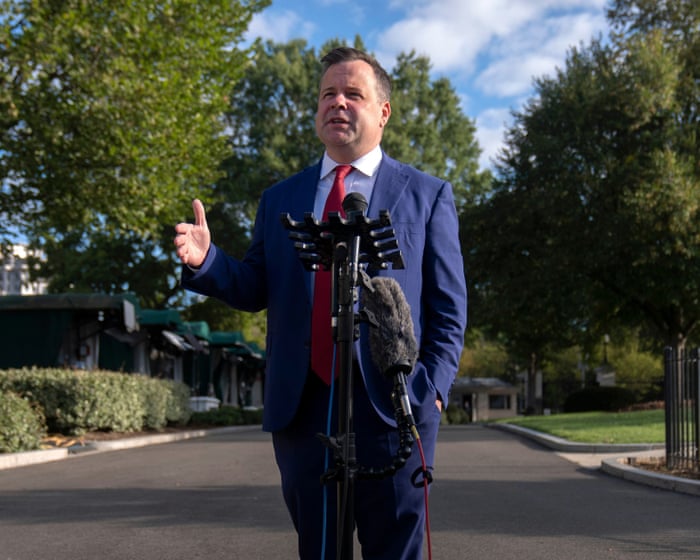
Acting Attorney General Todd Blanche told a House committee that the Justice Department will not continue with its "anti-weaponization" fund. However, he explained why the fund was created in the first place.
Key Facts
The DOJ had created a fund called the "anti-weaponization" fund.
This fund is now apparently inactive or defunct.
Todd Blanche, the Acting Attorney General, spoke to the House Appropriations Committee about the fund.
Blanche said the department will not move forward with the fund.
He defended the reasons behind setting up the fund initially.
The information was reported by CBS News and correspondent Aaron Navarro.
Read the Original
Want the full story? Tap a source to open the original
article.
Two recent national polls show that President Donald Trump's approval ratings are negative across all major policy areas, including ones he once led, such as immigration and border security. His approval ratings are below 50 percent on every issue tested, with economic concerns like inflation and the economy being his weakest points.
Key Facts
The Marquette Law School poll shows Trump’s overall job approval at 38% approve and 62% disapprove (-24 net).
The Harvard CAPS/Harris Poll shows 43% approve and 53% disapprove (-10 net) of Trump’s job performance.
Trump’s approval on border security is now negative for the first time in his second term, at -4 net in the Marquette poll.
Immigration approval is also underwater, with 44-49% approve but no majority support.
Economic issues like inflation and the economy receive the lowest approval ratings, with inflation at 35% approval (-30 net) in the Harvard poll.
Voters consider inflation and cost of living their top concerns, while immigration importance has decreased sharply.
The widespread negative ratings come as the 2026 midterm elections approach, a historically challenging time for presidents with low approval ratings.
Both polls sampled large, national groups of registered voters with a margin of error around 2.4-3.6%.
Read the Original
Want the full story? Tap a source to open the original
article.
California state Senator Scott Wiener and San Francisco Supervisor Connie Chan will compete in the November election for the U.S. House seat being vacated by Nancy Pelosi. Both candidates ran as Democrats and advanced past nine other contenders to the final race.
Key Facts
Nancy Pelosi, the current House Speaker, is retiring from her seat representing San Francisco.
Scott Wiener is a California state Senator running for the seat.
Connie Chan is a San Francisco Supervisor running for the same seat.
Chan has received Pelosi’s endorsement.
Both Wiener and Chan are Democrats.
Nine other candidates participated but did not advance to the November election.
Decision Desk HQ projects Wiener and Chan will face off in November.
Read the Original
Want the full story? Tap a source to open the original
article.
The Santa Clara County District Attorney's office issued an arrest warrant for Brandon Aiyuk, a wide receiver for the San Francisco 49ers. The warrant is for a misdemeanor charge related to showing speeding in a public way.
Key Facts
Brandon Aiyuk is a player for the San Francisco 49ers football team.
The warrant was issued by the Santa Clara County District Attorney's office.
He faces a misdemeanor charge called "exhibition of speeding."
The charge relates to a post that showed speeding.
The warrant means police can arrest him based on this charge.
The situation involves local law enforcement in Santa Clara County.
Read the Original
Want the full story? Tap a source to open the original
article.
Two hostages have been released during a standoff at a bank in Southern California that started on Tuesday. Police and negotiators are still working to resolve the situation.
Key Facts
The standoff began on a Tuesday at a bank in Southern California.
Hostages were taken inside the bank during the incident.
Two hostages have been released so far.
Police negotiators are actively involved in the situation.
The standoff is ongoing at the time of the report.
CBS News correspondent Jonathan Vigliotti is covering the event.
Read the Original
Want the full story? Tap a source to open the original
article.
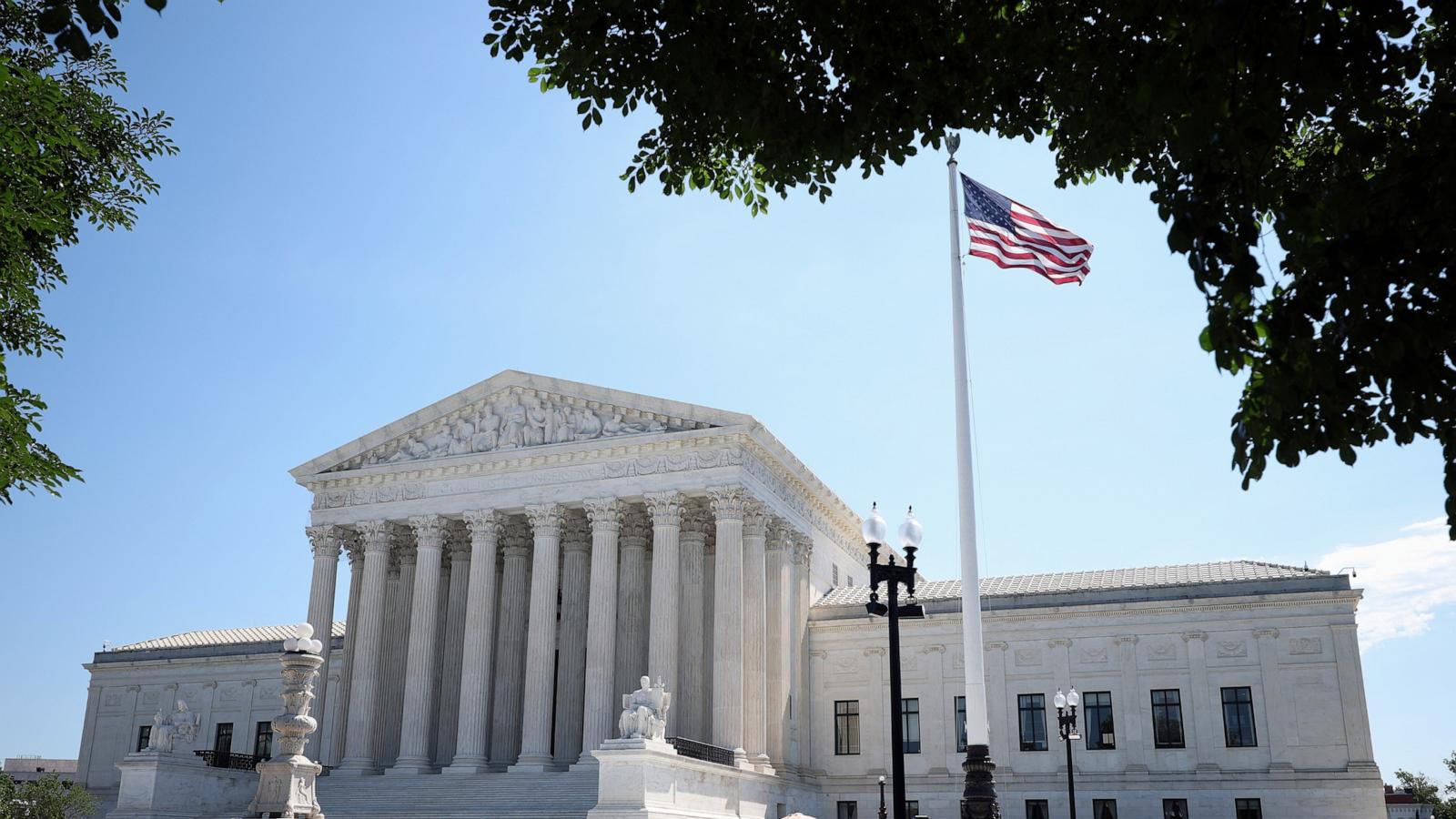
The U.S. Supreme Court allowed Alabama to use a new congressional district map that a lower court ruled as racially discriminatory against Black voters. This decision will let Alabama reduce the number of majority-Black districts, which could change the political balance in upcoming elections.
Key Facts
A lower court had blocked Alabama’s 2023 congressional map, calling it "intentional race-based discrimination."
The Supreme Court’s conservative majority overruled that ruling, allowing the map to be used for the 2026 midterm elections.
The disputed map reduces the number of majority-Black districts from two to one.
Alabama’s Republican leaders supported the new map, while civil rights groups opposed it.
Voters will face changes like updated voter registrations and new polling locations on short notice.
Justice Sonia Sotomayor dissented, warning the ruling would cause confusion and harm voting rights.
The NAACP criticized the decision, saying it weakens Black voters’ power.
Alabama’s governor announced a special primary election using the new map on August 11, 2026.
Read the Original
Want the full story? Tap a source to open the original
article.
Political experts from the Republican and Democratic parties shared their opinions on recent primary election results in several states. They discussed what the election outcomes might mean for their parties moving forward.
Key Facts
The discussion involved strategists Chuck Rocha and Kevin Sheridan.
Both Republican and Democratic perspectives were presented.
The focus was on primary election results from multiple states.
The talk aired on CBS News.
The analysis considered potential impacts on each party’s future campaigns.
Viewers could watch the segment on the CBS News app or website.
The results discussed are part of the ongoing election process in the United States.
Read the Original
Want the full story? Tap a source to open the original
article.
The article discusses a challenge faced by the Democratic National Committee (DNC). It suggests that winning elections is different from successfully creating lasting political influence, especially regarding infrastructure issues.
Key Facts
The DNC is the organization responsible for supporting Democratic candidates in elections.
Winning elections means getting candidates elected to office.
Building power means creating long-term political influence and achievements.
The article points out a problem with how Democrats handle infrastructure, which involves public projects like roads and bridges.
The DNC is struggling to turn election wins into sustained progress on infrastructure.
Infrastructure is a key issue for many voters and requires ongoing effort beyond campaigns.
The piece implies that winning votes alone does not solve practical problems.
Effective governance requires more than just electoral victories.
Read the Original
Want the full story? Tap a source to open the original
article.
President Donald Trump appointed Bill Pulte, a political ally with no intelligence experience, as acting director of national intelligence. This move has raised concerns among lawmakers and may threaten the renewal of a key surveillance program called Section 702 of the Foreign Intelligence Surveillance Act.
Key Facts
Bill Pulte was named acting director of national intelligence by President Trump after Tulsi Gabbard left the role.
Pulte is a major Republican donor and heir to a home building fortune, but has no background in intelligence.
Section 702 allows U.S. agencies to collect foreign communications without a warrant and is set to expire soon.
Some Democrats and Republicans worry Pulte’s appointment endangers the renewal of Section 702.
Senator Mark Warner criticized Pulte’s qualifications and raised concerns about misuse of private information.
Senate Majority Leader John Thune expressed doubts about Pulte and said a permanent nomination would face difficulties.
There are fears Pulte could use intelligence tools for political reasons, as he reportedly did at the Federal Housing Finance Agency.
Proposed legislation would extend Section 702 until 2029 with new safeguards and restrictions.
Read the Original
Want the full story? Tap a source to open the original
article.
President Donald Trump appointed Bill Pulte as acting director of national intelligence, replacing Tulsi Gabbard. Pulte, a businessman and federal housing regulator, has no experience in intelligence but will oversee agencies like the CIA and NSA while keeping his other government roles.
Key Facts
Bill Pulte was named acting director of national intelligence by President Trump.
Pulte previously led the Federal Housing Finance Agency since March 2025.
He is 38 years old and heir to the homebuilder company PulteGroup.
Pulte has no background in intelligence work or national security.
He has accused some Democratic officials of mortgage fraud, but no charges have been filed.
Pulte will keep his roles at FHFA and as chair of Fannie Mae and Freddie Mac.
He can serve as acting intelligence chief for up to 210 days without Senate approval.
Some Senate Republicans doubt he could be confirmed permanently.
Read the Original
Want the full story? Tap a source to open the original
article.
Columbia University agreed to a $21 million fund to compensate Jewish employees who said they faced harassment at work due to protests related to Israel’s war in Gaza. Some Jewish faculty filed claims saying they were harassed because of their support for Palestinian rights, not because they were Jewish, and they criticized the university’s handling of the situation.
Key Facts
Columbia University settled with the Trump administration to create a $21 million fund for Jewish employees claiming a hostile work environment.
The fund relates to events following protests against Israel’s war in Gaza after the Hamas attack on October 7, 2023.
Jewish faculty members filed complaints saying they faced harassment due to their pro-Palestinian views, not just for being Jewish.
Complaints include being followed, spat on, screamed at, doxed (personal information shared publicly), and receiving death threats.
The Equal Employment Opportunity Commission (EEOC) described this as the largest public settlement in nearly 20 years.
The settlement also involved a $200 million fine and other measures to resolve the dispute between Columbia and the federal government.
Title VII of the 1964 Civil Rights Act, which prevents workplace discrimination based on religion and other factors, is cited in this case.
Some faculty said the university’s focus on protecting Jewish employees’ safety suppressed pro-Palestinian speech and created a difficult environment for dissent.
Read the Original
Want the full story? Tap a source to open the original
article.
Campaigners in England are opposing government plans to cut funding for specialist assistive technology used by tens of thousands of disabled university students. They say the cuts could make studying harder for disabled students, increase dropout rates, and harm mental health, while the government believes free, widely available tools can replace some specialist software.
Key Facts
Nearly 10,000 people signed a petition against cutting funding for specialist assistive software in England’s Disabled Students’ Allowance (DSA).
Over 88,000 students used the DSA in 2023-24, with the government spending £203 million on it.
The Department for Education wants to stop funding specialist software except in rare cases, saying free tools now offer similar help.
Disability groups say free, general tools don’t match the personalized support of specialist software.
Specialist software includes tools for text-to-speech, speech-to-text, mind mapping, note-taking, and managing tasks.
Disabled students report that specialist tech is crucial for their learning and cannot be properly replaced by free apps.
Some students say replacing specialist tools with generic AI tools would create extra stress and academic difficulties.
The government consultation on this change ends on June 18.
Read the Original
Want the full story? Tap a source to open the original
article.
On the biggest stories we show what the outlets agree on and where they differ. Readers keep that going, and get the daily digest by email every morning. Most choose $3.99/month.
Republican Representatives Young Kim and Ken Calvert, both from California, are likely to compete against each other in the November election for California’s 40th Congressional District. Calvert leads the race with 36.2% of the vote, while Kim has 21.7% in a contest with five candidates.
Key Facts
Both Young Kim and Ken Calvert are Republican members of the U.S. House of Representatives from California.
They are competing for the same seat in California’s 40th Congressional District.
The election is scheduled for November.
Calvert currently has 36.2% of the vote.
Kim currently has 21.7% of the vote.
There are five candidates total in this race.
This is an example of a "member-on-member" contest, where two current officeholders run against each other.
Read the Original
Want the full story? Tap a source to open the original
article.
Zach Lahn won the Republican primary for governor in Iowa by beating Representative Randy Feenstra. This result is the first big primary loss linked to President Donald Trump in the 2026 election cycle.
Key Facts
Zach Lahn won the Iowa Republican primary for governor.
Lahn defeated Rep. Randy Feenstra in this race.
This race is part of the 2026 midterm elections.
The result marks President Donald Trump's first major primary loss in 2026.
The win could impact Trump’s influence in the Republican Party.
The Iowa governor’s race is an important statewide election.
Primaries decide which party candidates run in the general election.
This loss may affect future Republican primary contests in 2026.
Read the Original
Want the full story? Tap a source to open the original
article.
Hilda Solis, a Democrat and Los Angeles County Supervisor, and Pedro Casas, a Republican psychologist, won their primaries and will compete in the November election for California’s 38th Congressional District seat. The race is expected to favor the Democratic candidate.
Key Facts
The election is for California’s 38th Congressional District in the U.S. House of Representatives.
Hilda Solis is a Democrat and currently serves as a Los Angeles County Supervisor.
Pedro Casas is a Republican and works as a psychologist.
Both advanced from a primary election held on Tuesday.
Solis received 44.4 percent of the vote in the primary.
The district is seen as leaning strongly Democratic by election experts.
The general election will take place in November.
The winner will become a member of the U.S. House of Representatives.
Read the Original
Want the full story? Tap a source to open the original
article.
Congress needs to approve a bill soon to improve roads, bridges, and other transportation systems across the country. This bill will help states, businesses, and workers by creating steady support for building and fixing infrastructure in the future.
Key Facts
Congress is being urged to pass a surface transportation bill quickly.
The bill aims to provide long-term support for states and businesses.
It focuses on modernizing America's infrastructure like roads and bridges.
Improving infrastructure will help workers and future generations.
The goal is to create certainty and stable funding for transportation projects.
Read the Original
Want the full story? Tap a source to open the original
article.
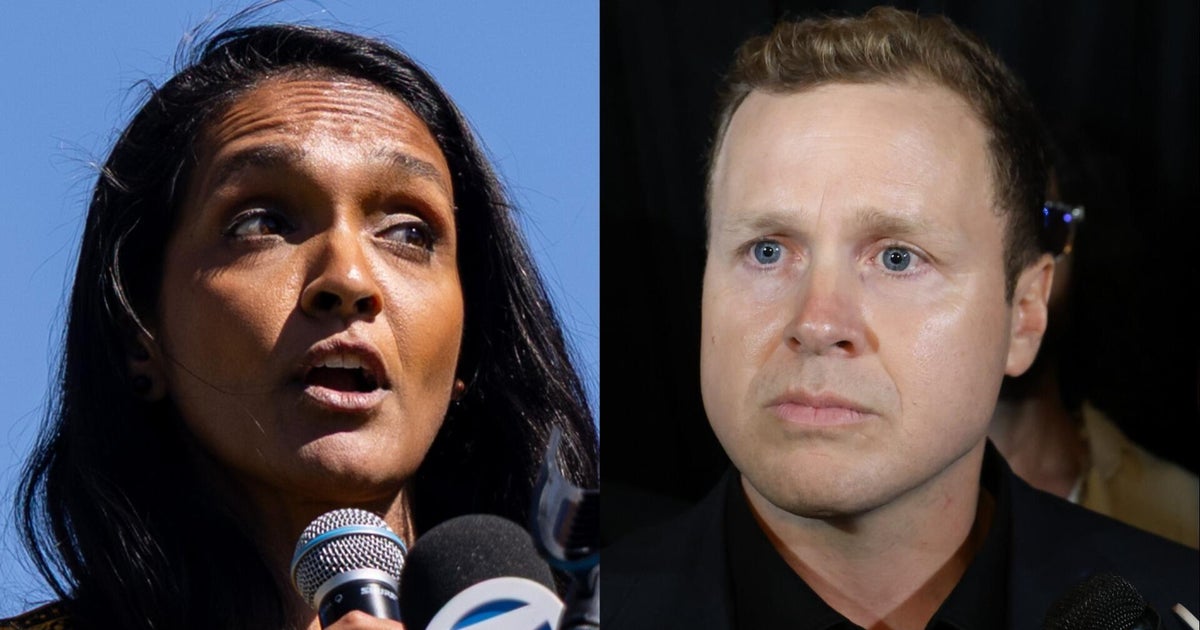
Spencer Pratt and Nithya Raman are competing to see who will run against Mayor Karen Bass in the Los Angeles mayoral election. They are waiting for the final vote count to know the result.
Key Facts
The race is for the mayor of Los Angeles.
Karen Bass is the current mayor and a candidate in the election.
Spencer Pratt and Nithya Raman are both running to challenge her.
The final decision depends on the vote count.
The winner will face Karen Bass in the November general election.
CBS News is reporting on the situation.
The announcement is pending as votes are still being counted.
Read the Original
Want the full story? Tap a source to open the original
article.
DHS Secretary Markwayne Mullin will speak to the House Homeland Security Committee about President Trump's budget request for the Department of Homeland Security (DHS) for the year 2027. The White House wants $63 billion for DHS in 2027, which is $2.2 billion less than the amount approved for 2026.
Key Facts
Markwayne Mullin is the current Secretary of Homeland Security.
He will testify before the House Homeland Security Committee.
The discussion is about President Trump’s fiscal year 2027 budget for DHS.
The White House is requesting $63 billion for DHS in 2027.
This request is $2.2 billion less than DHS’s approved budget for 2026.
The budget request is part of ongoing debates about government funding by the GOP.
The hearing is happening on a Wednesday morning.
Read the Original
Want the full story? Tap a source to open the original
article.
Each summary links back to the original reporting, so you can check the work. Support that, and get the daily digest every morning. Most choose $3.99/month.
President Donald Trump is taking the lead role in the Great American State Fair celebrating America’s 250th anniversary after most scheduled musical performers quit, worried the event was too linked to him. The president enjoys being the center of attention at events and plans to continue this approach during the upcoming World Cup and other celebrations.
Key Facts
Most musical performers pulled out of the 250th anniversary concert series because they felt it was too closely tied to President Trump.
President Trump announced he would be the main attraction at the Great American State Fair.
The fair starts June 25 and will open with a Trump rally instead of concerts.
There will be a UFC fight on the White House lawn on June 14 as part of the anniversary events.
Trump is known for enjoying hosting events and being the center of attention.
The anniversary celebrations are taking place in Washington, D.C., including preparations on the National Mall.
Experts say Trump’s personality strongly influences how events connected to him are managed.
Previous presidents have hosted events differently, with less focus on themselves.
Read the Original
Want the full story? Tap a source to open the original
article.
Senator Marco Rubio appeared before a House committee to answer questions about President Donald Trump’s budget plan for the State Department for 2027 and the ongoing conflict with Iran. He also had hearings with Senate panels where some Democrats expressed strong disagreement with his views.
Key Facts
Senator Marco Rubio testified before the House Foreign Relations Committee.
The main topics were President Trump’s fiscal year 2027 budget request for the State Department and the conflict with Iran.
Rubio had additional hearings with Senate committees on the same day.
Some Democrats strongly disagreed with Rubio’s positions during these hearings.
The discussions are part of the budget review and oversight related to U.S. foreign policy.
The State Department budget covers America’s international relations and diplomatic activities.
Iran remains a key issue in U.S. foreign affairs and budget discussions.
Read the Original
Want the full story? Tap a source to open the original
article.