The Justice Department said it will follow a judge's order that temporarily stops the Trump administration’s $1.8 billion "Anti-Weaponization Fund." This announcement came after reports indicated the administration might be stepping back from the fund.
Key Facts
A district judge ordered a temporary freeze on the "Anti-Weaponization Fund."
The fund is valued at $1.8 billion and was created during President Donald Trump’s administration.
The Department of Justice confirmed it will comply with the judge’s ruling.
Reports suggested the Trump administration might reduce support for the fund.
The fund's freezing has caused ongoing news coverage and developments.
The judge’s order is temporary while the case is still being reviewed.
The "Anti-Weaponization Fund" is related to efforts made by the Trump administration.
Read the Original
Want the full story? Tap a source to open the original
article.
The U.S. Justice Department announced it will stop its planned "Anti-Weaponization Fund" after a federal judge blocked the program. The fund was meant to help people who said they were unfairly targeted or treated badly, and the department said it disagreed with the court but will follow the order.
Key Facts
The Justice Department planned an “Anti-Weaponization Fund” to support anyone claiming unfair targeting.
The fund was open to all political groups, including Democrats, Republicans, and Independents.
A federal judge in the Eastern District of Virginia blocked the fund.
The DOJ strongly disagreed with the judge’s decision.
Despite disagreement, the DOJ will comply with the court order and end the fund effort.
The fund was designed to address abuse, harm, and hate experienced by individuals.
The announcement came amid criticism from Republican lawmakers.
The White House shared the DOJ’s official statement on social media platform X (formerly Twitter).
Read the Original
Want the full story? Tap a source to open the original
article.
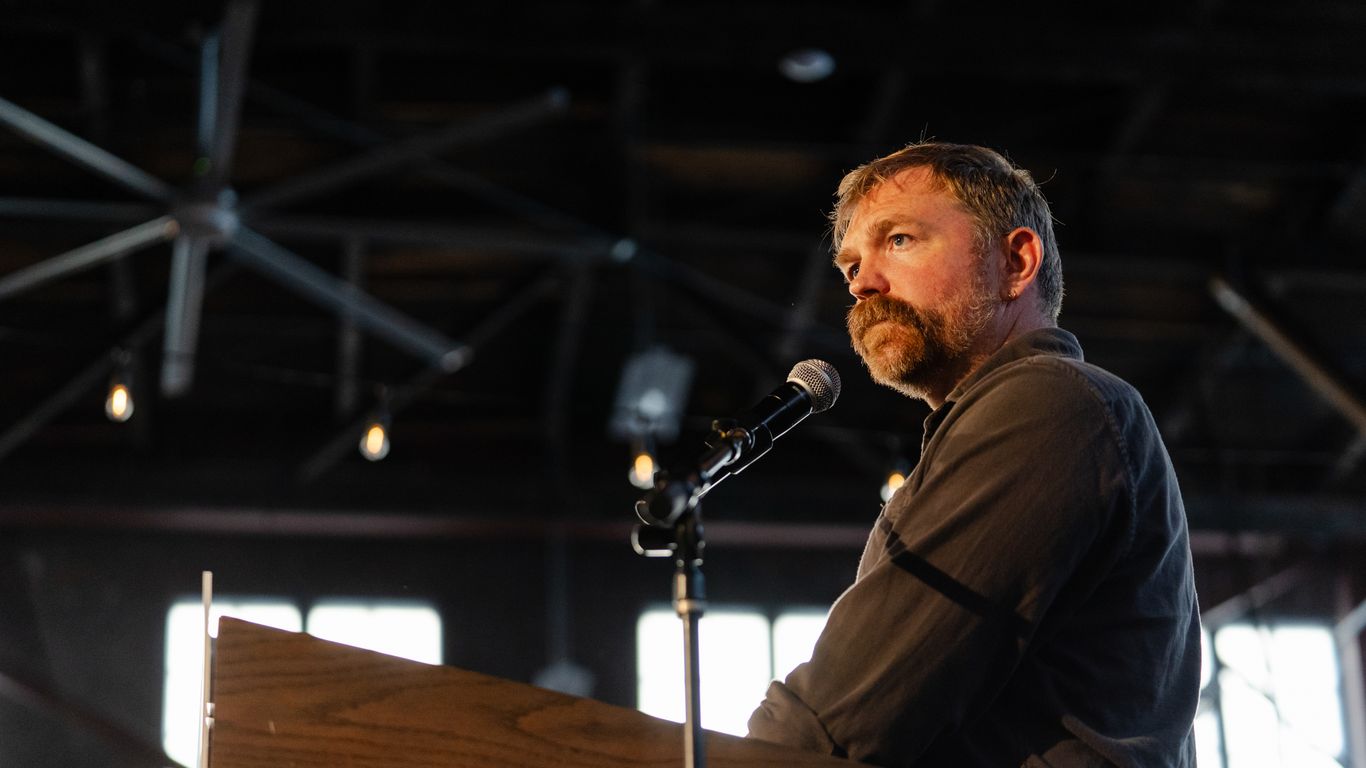
Maine Democratic Senate candidate Graham Platner is meeting with Democratic senators in Washington as they raise concerns about his sending explicit text messages to multiple women in 2023. Platner acknowledges the texts but disputes how the situation has been reported, while Democrats worry about his chances in the important Senate race.
Key Facts
Graham Platner is the frontrunner in the Maine Democratic Senate primary.
He is scheduled to meet with Democratic senators to discuss allegations about explicit texts he sent to up to a dozen women in 2023.
Senator Cory Booker said he has concerns and believes Platner should answer questions about the allegations.
Senate Minority Leader Chuck Schumer had supported another candidate, Janet Mills, who recently ended her campaign.
Platner is attending fundraisers in Washington, including one hosted by Ron Klain, a former chief of staff to President Biden.
Platner admits the explicit texts were sent after he married his wife Amy Gertner in late 2023.
Platner's campaign says the allegations have been sensationalized and calls the situation private and difficult.
Amy Gertner said that being newly married, dealing with infertility, and running a Senate campaign is challenging.
Read the Original
Want the full story? Tap a source to open the original
article.
Peter Mandelson, a Labour peer and president of his advisory firm Global Counsel, contacted government ministers after the 2024 general election to seek meetings and promote his company’s events. Documents show he tried to connect his firm with ministers in areas like trade, science, and clean energy while also running for chancellor of Oxford University.
Key Facts
Mandelson reached out to government ministers soon after the 2024 Labour election victory.
He used WhatsApp and email to arrange meetings with ministers like Spencer Livermore, Patrick Vallance, Douglas Alexander, and Sarah Jones.
He invited ministers to events organized by Global Counsel, sometimes linked to his Oxford chancellor campaign.
Mandelson’s firm, Global Counsel, advised clients and sought to influence government interest in research, innovation, trade, and clean energy.
Ministers showed interest and thanked Mandelson for introductions that helped them in their government roles.
A series of follow-up emails pressured ministers to confirm attendance at Global Counsel events.
These documents were released as part of an investigation into Mandelson’s appointment as US ambassador.
Lords like Mandelson can have financial interests related to lobbying but cannot provide direct parliamentary advice or services to clients.
Read the Original
Want the full story? Tap a source to open the original
article.
The U.S. State Department plans to close visa processing services at nearly 30 embassies and consulates across Africa. Instead, visa applications will be handled at 20 main hubs, requiring travelers to visit these centers for visa processing.
Key Facts
Almost 30 U.S. embassies and consulates in Africa will stop processing visas.
Visa services will be concentrated at 20 designated hubs across the continent.
Travelers in countries without visa processing will need to travel to the nearest hub for their visa application.
The affected embassies and consulates will still provide emergency services and diplomatic visas.
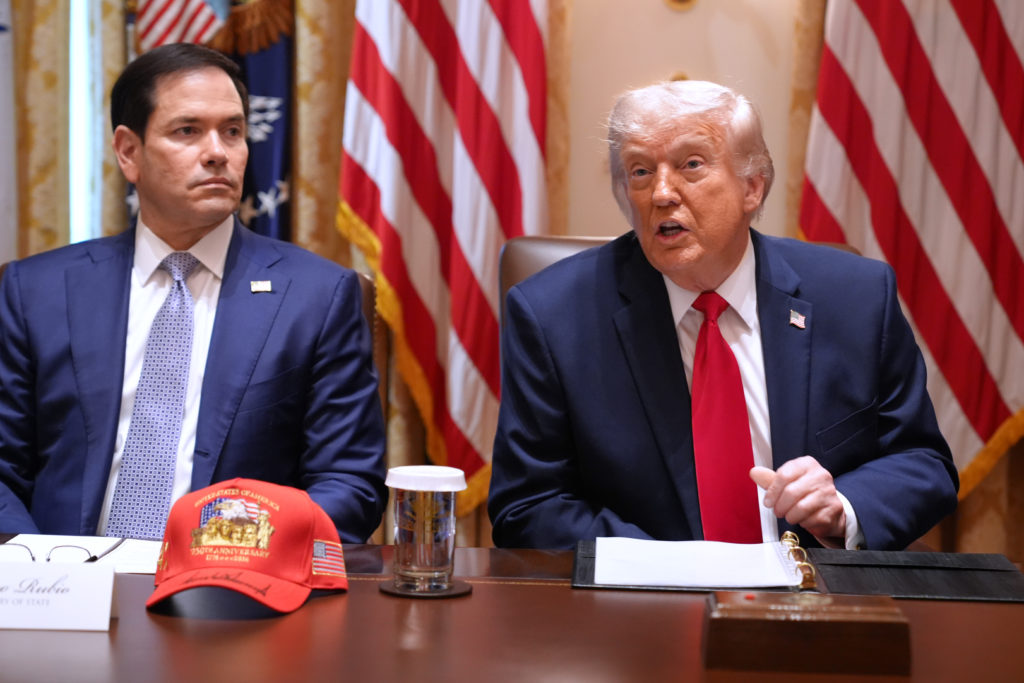
The changes were approved by Secretary of State Marco Rubio and likely to start soon.
This policy is part of broader actions by the Trump administration to reduce immigration pathways.
The list of 20 hubs includes cities like Nairobi, Lagos, Cape Town, and Dakar.
No exact date for the change has been announced yet.
Read the Original
Want the full story? Tap a source to open the original
article.
The U.S. State Department will reduce the number of embassies and consulates in Africa that handle visa applications from about 50 to 20. This change is expected to happen in June but no exact date has been set yet.
Key Facts
The U.S. has nearly 50 embassies and consulates in Africa currently processing visa applications.
The number will be cut down to 20 locations.
The decision comes from the U.S. State Department.
The change is planned for June but no specific day is given.
This means fewer places in Africa will handle U.S. visa requests soon.
The information comes from U.S. officials and a State Department memo seen by the Associated Press.
Those officials spoke anonymously because they were not allowed to comment publicly.
Read the Original
Want the full story? Tap a source to open the original
article.
The U.S. Justice Department will stop working on a $1.8 billion "anti-weaponization" fund after a judge temporarily blocked the program. The department said it disagrees with the decision but will follow the court's order for now.
Key Facts
The Justice Department planned a $1.8 billion fund called the "anti-weaponization" fund.
A district judge in the Eastern District of Virginia temporarily blocked the fund.
The fund aimed to help people who felt targeted or harmed unfairly, regardless of their political views.
Republicans in Congress opposed the fund and threatened it could hurt their political agenda.
The Justice Department expressed strong disagreement with the judge's ruling.
Despite their disagreement, the department said they will comply with the court's order.
The program has been paused and plans for it are shelved for the time being.
Read the Original
Want the full story? Tap a source to open the original
article.
Oregon Governor Tina Kotek has stopped the state’s DMV from giving undercover license plates to Immigration and Customs Enforcement (ICE). This decision comes amid concerns about ICE activities in the state.
Key Facts
Governor Tina Kotek is a member of the Democratic Party.
She ordered the Oregon DMV to stop giving undercover license plates to ICE.
The order was announced on a Saturday.
Undercover license plates are used to hide the identity of certain vehicles.
The decision relates to ICE’s actions within Oregon.
The governor’s office issued an official statement about the halt.
This change affects how ICE vehicles can be identified in Oregon.
Read the Original
Want the full story? Tap a source to open the original
article.
The governors of Texas and New York, Greg Abbott and Kathy Hochul, exchanged playful but pointed messages using a basketball meme before the NBA Finals between the Spurs and the Knicks. Their back-and-forth highlighted political differences between the two leaders and referenced ongoing debates on issues like gender in sports.
Key Facts
Texas Governor Greg Abbott shared an AI-created meme showing himself dunking over New York Governor Kathy Hochul.
Abbott added a caption comparing Texas "dunking" on New York to the Spurs playing against the Knicks.
The meme went viral shortly before the Knicks and Spurs meet in the NBA Finals, a matchup not seen since 1999.
Hochul responded by questioning the true rivalry and criticized Abbott for depicting a female opponent in the image.
Hochul and Abbott have opposing political views, with Abbott focusing on limited government and conservative policies, and Hochul supporting progressive social programs and protections.
Abbott emphasizes low taxes, business growth, and strict immigration enforcement.
Hochul supports cost-of-living relief, social welfare investments, and more inclusive immigration policies.
The exchange began after Hochul mistakenly referenced a 1993 Knicks championship, which the team did not win.
Read the Original
Want the full story? Tap a source to open the original
article.
Tina Peters, a former Colorado county clerk convicted for election machine tampering, was released from state prison after President Donald Trump and others pushed for her freedom. Colorado’s governor granted her clemency, but state officials and experts criticized the decision because Peters continues to promote false claims about election fraud.
Key Facts
Tina Peters was convicted for allowing unauthorized access to voting machines in Mesa County, Colorado.
She was sentenced to nine years in state prison for election-related crimes.
President Donald Trump publicly supported Peters and granted her a federal pardon, though it did not affect her state conviction.
Colorado Governor Jared Polis gave her clemency, citing that her sentence was unusually long for a first-time, non-violent offender.
Colorado Secretary of State Jena Griswold opposed Peters’s release, warning it could harm election security accountability.
After release, Peters continued to claim without evidence that elections were fraudulent.
Peters’s release and ongoing statements have drawn criticism from Democrats and election officials.
Trump’s support for Peters is part of a broader move backing election denial efforts from the 2020 presidential race.
Read the Original
Want the full story? Tap a source to open the original
article.
Senate Majority Leader John Thune said he wants the White House to cancel a $1.8 billion fund aimed at stopping the spread of weapons. He believes this should happen if Congress wants to approve a budget plan soon.
Key Facts
John Thune is the Senate Majority Leader and a Republican from South Dakota.
He spoke to reporters at the Capitol on Monday.
Thune prefers the White House to end a $1.8 billion fund focused on preventing weapon development or spread.
The fund is part of efforts to stop countries or groups from gaining dangerous weapons.
Thune’s position is linked to Congress passing a new budget reconciliation package.
Budget reconciliation is a process that helps pass budget-related bills with fewer votes.
Thune made his views clear but did not provide detailed alternatives in this statement.
Read the Original
Want the full story? Tap a source to open the original
article.
A US appeals court ruled that transgender troops currently serving can stay in the military, but the military can block new transgender enlistments. The decision challenges President Trump’s 2025 order to remove many transgender service members, and the case may go to the Supreme Court.
Key Facts
The appeals court ruled in a split decision on Monday about transgender military service.
Transgender troops already serving cannot be removed under this ruling.
The military can still stop transgender people from joining.
The ruling challenges Defense Secretary Pete Hegseth’s 2025 policy enforcing President Trump’s order to remove transgender troops.
Judge Robert Wilkins called the ban “arbitrary” and motivated by bias.
The ruling maintains a previous court order that protected six active transgender service members from dismissal.
The dissenting judge said only the executive and Congress should decide military membership rules, not courts.
The White House and Defense Department did not comment immediately after the ruling.
Read the Original
Want the full story? Tap a source to open the original
article.
A judge in Utah ruled that a key hearing for Tyler Robinson, who is accused of killing Charlie Kirk, will be open to the public and media. The hearing will present important evidence to decide if there is enough to go to trial, but some sensitive exhibits will be restricted from media copying.
Key Facts
Tyler Robinson is charged with aggravated murder in the shooting death of Charlie Kirk.
The preliminary hearing is scheduled for July 6-10 in Provo, Utah.
The judge denied the defense’s request to close parts of the hearing to the public and media.
Prosecutors want the hearing to remain open but limit media access to some evidence like forensic reports and videos.
Evidence includes DNA matching Robinson on the murder weapon, surveillance footage, witness statements, and a note allegedly written by Robinson.
The prosecutors plan to seek the death penalty if Robinson is convicted.
The defense will have a hearing on June 12 to address claims that a prosecutor made biased public comments about Robinson’s guilt.
The prosecutor denies expressing an opinion of guilt and says he was correcting misinformation in the media.
Read the Original
Want the full story? Tap a source to open the original
article.
The GEO Group, a Florida-based company that operates private prisons and immigration detention centers, runs the Delaney Hall detention center in Newark under a 15-year contract with ICE. The company faces protests and legal disputes over facility conditions, while its federal contracts provide most of its revenue and recently increased profits.
Key Facts
The GEO Group operates Delaney Hall, a roughly 1,000-bed immigration detention center in Newark, New Jersey.
Delaney Hall reopened in 2025 under a 15-year contract with U.S. Immigration and Customs Enforcement (ICE).
The facility has been the focus of protests and hunger strikes over conditions and medical care for detainees.
The city of Newark alleges the facility opened without proper permits and blocked inspections; GEO disputes this, citing federal control.
A federal appeals court ruled that New Jersey cannot stop private prisons from contracting with the federal government.
GEO’s largest shareholders are investment firms like BlackRock, State Street, and UBS.
GEO’s CEO is George Zoley, who returned in 2026; former senior ICE official Matthew Albence is part of its leadership.
Nearly two-thirds of GEO's revenue comes from federal contracts, mostly with ICE, the U.S. Marshals Service, and the Federal Bureau of Prisons.
GEO reported $254 million in profit last year and secured $520 million in new or expanded contracts in 2025.
Read the Original
Want the full story? Tap a source to open the original
article.
Starting July 1, major changes will take effect in the student loan system due to the One Big Beautiful Bill Act signed by President Trump. These changes include new limits on how much students and parents can borrow and fewer repayment options for loan borrowers.
Key Facts
The One Big Beautiful Bill Act was signed into law by President Trump last year and is reshaping student loans.
Student loan debt in the U.S. is nearly $1.9 trillion.
Parents using Parent PLUS loans will be limited to borrowing $20,000 per year and $65,000 total for one student, down from borrowing up to the total cost of attendance.
Graduate students will be capped at borrowing $20,500 per year and $100,000 total.
Students in some professional programs (like pharmacy, law, medicine) will have limits of $50,000 per year and $200,000 total.
New borrowers will no longer have access to Graduate PLUS loans, which previously allowed borrowing the full cost of attendance.
Most nursing students will not be affected by the new borrowing limits.
A lifetime borrowing cap of $257,500 will apply to new federal student loans starting July 1.
Borrowers currently in the SAVE repayment plan should contact their loan servicers as the program changes.
Read the Original
Want the full story? Tap a source to open the original
article.
A new report shows that Americans are spending a growing share of their income on health care, with some states having much higher costs than others. Alaska leads with residents spending over 10% of their income on medical care, while states like Utah spend about half that share.
Key Facts
Americans’ average out-of-pocket health care spending rose from $811 to $1,514 over 20 years, faster than inflation.
WalletHub ranked all 50 states by the share of median household income spent on essential medical services and medications.
Alaska residents spend the highest share, about 10.1% of median income, due to very high prices for doctors and medications.
Oregon is second, spending 9.3% of income on health care, primarily because of high service costs.
Maine ranks third, with high medical prices and lower income, leading to a large income share spent on care.
States spending the least on health care include Utah (5.11%), Virginia (5.62%), and California (5.64%).
Rising health care costs make it harder for many people to afford care and affect household budgets.
Inflation in housing and food also adds to financial stress, even in states where medical prices are lower.
Read the Original
Want the full story? Tap a source to open the original
article.
President Trump signed an executive order to change the US childhood vaccine schedule by following Denmark’s vaccine recommendations, which suggest fewer vaccines. Medical groups like the American Medical Association and American College of Physicians oppose this change, saying it lacks scientific support and could put children at risk.
Key Facts
President Trump signed an order to model US vaccine policy after Denmark’s schedule.
Denmark recommends 11 childhood vaccines, while the current US schedule recommends 17.
The plan would drop vaccines for diseases such as rotavirus, COVID-19, flu, meningococcal disease, hepatitis A, and hepatitis B.
The change was first promoted by Health Secretary Robert F. Kennedy Jr., who opposes vaccines.
The medical experts behind the assessment have no formal vaccine policy experience and oppose vaccines.
A judge temporarily blocked the changes, saying federal rules were violated.
Medical groups warn that changing vaccine schedules without strong evidence could harm public trust and health.
Danish health researchers say the US and Denmark are too different for this approach to work.
Read the Original
Want the full story? Tap a source to open the original
article.
Six states, including California and Iowa, are holding primary elections on Tuesday. These elections will help decide which candidates will run in the general elections later this year.
Key Facts
Six states have primary elections on Tuesday.
California and Iowa are among these six states.
Primaries are used to choose party candidates for upcoming general elections.
CBS News correspondent Fin Gómez provided an overview of these races.
Primary results can influence the choices voters have in the main elections.
Read the Original
Want the full story? Tap a source to open the original
article.
A group of former FBI employees has started a nonprofit called the FBI Support Network. The group aims to help current and former FBI agents who face legal trouble, counseling needs, or disciplinary actions related to their work and loyalty to the agency's values.
Key Facts
Former FBI agents created the FBI Support Network nonprofit.
The nonprofit will provide legal help to agents facing discipline.
It will offer counseling to agents pressured to break their oaths or values.
The group aims to support agents targeted by what they call a “retribution campaign.”
The nonprofit plans to speak out about issues affecting FBI employees.
The focus is on protecting agents upholding their official duties and promises.
The group’s goal is to aid those affected by internal conflicts within the FBI.
Read the Original
Want the full story? Tap a source to open the original
article.
U.S. Customs and Border Protection named Rosario “Pete” Vasquez as the new chief of the Border Patrol. Vasquez has over 26 years of experience and will replace Mike Banks, who stepped down last month after about 15 months in the position.
Key Facts
Rosario “Pete” Vasquez is appointed as the new Border Patrol chief.
He has more than 26 years of experience with the Border Patrol.
Vasquez will take over from Mike Banks.
Mike Banks resigned last month.
Banks served as Border Patrol chief for about 15 months.
The announcement was made by U.S. Customs and Border Protection.
The Border Patrol chief oversees border security and immigration enforcement.
Read the Original
Want the full story? Tap a source to open the original
article.