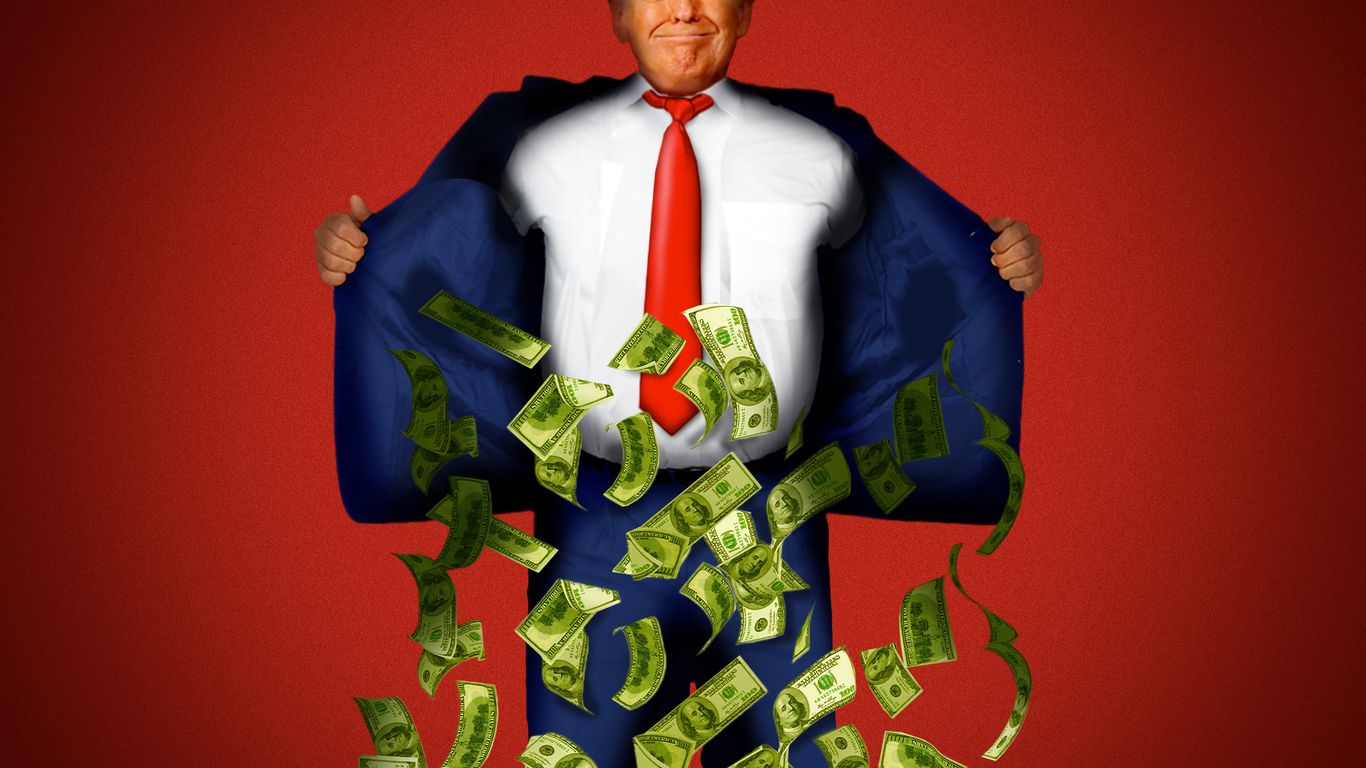
About 150 Democratic lawmakers filed a legal document saying President Trump cannot continue building a new ballroom in the White House East Wing without Congress's permission. They argue that only Congress controls federal property and must approve funding before such construction can happen.
Key Facts
The Democrats say President Trump needs clear approval from Congress to demolish or build on White House grounds.
Congress has only provided about $2.5 million for repairs, not for large construction projects.
The Trump administration claims a law allows routine repairs and says the new ballroom is necessary for national security.
A federal judge halted construction until Congress gives permission, but appellate judges temporarily allowed it to continue.
The new East Wing includes a ballroom, kitchen, and secure spaces.
Ethics groups warn that accepting private donations for the ballroom may cause conflicts of interest.
Architects and preservation experts argue the president does not have the right to demolish historic federal property without Congress.
Senate Republicans dropped a proposal to fund security improvements for the ballroom.
Read the Original
Want the full story? Tap a source to open the original
article.
A U.S. court has ordered the head of Customs and Border Protection to attend a hearing about how tariff refunds are handled under President Trump's administration. The hearing will take place on June 9 in New York.
Key Facts
The U.S. Court of International Trade issued the order on Wednesday.
The order requires the Customs and Border Protection commissioner to testify.
Commissioner Rodney Scott is the official named to appear.
The hearing concerns the process for tariff refunds.
The tariff refund process is part of policies under President Donald Trump's administration.
The hearing is scheduled for June 9 in New York.
Read the Original
Want the full story? Tap a source to open the original
article.
A 2024 report from The Commonwealth Fund compares healthcare in 20 countries and finds the US spends much more money but gets worse health results. The US has high costs, low life expectancy, many avoidable deaths, and lacks universal health coverage compared to similar countries.
Key Facts
The US spends 18% of its economy on healthcare, nearly twice the average of 9.3% in the other 19 countries.
US life expectancy is 79 years, below the average of 81.2 years, with only Mexico and Turkey lower.
The US has the second-highest rate of avoidable deaths and premature deaths among the countries studied.
The US has fewer primary care doctors (0.3 per 1,000 people) than any other country in the study; the average is 1.1.
Many Americans skip medications, tests, or treatments because they cannot afford them.
Maternal death in the US is nearly 19 deaths per 100,000 live births, with Black women experiencing a much higher rate of 50 deaths per 100,000.
Suicide rates in the US are high and increasing, especially in rural areas where access to healthcare is limited.
Unlike all other high-income countries studied except Mexico, the US does not have universal health coverage.
Read the Original
Want the full story? Tap a source to open the original
article.
Treasury Secretary Scott Bessent answered questions during a White House press briefing while press secretary Karoline Leavitt was on maternity leave. He declined to comment on any presidential ambitions and spoke about topics including the Trump administration’s talks with Iran and the upcoming launch of “Trump Accounts” for children.
Key Facts
Scott Bessent is the current Treasury Secretary.
He filled in as White House press spokesperson for Karoline Leavitt, who is on maternity leave.
Bessent was asked about his potential plans to run for president but did not provide an answer.
He discussed the Trump administration’s ongoing negotiations with Iran.
Bessent talked about the planned launch of “Trump Accounts,” bank accounts designed for children.
The briefing lasted more than 30 minutes.
The news relates to events within the U.S. government under President Trump.
Read the Original
Want the full story? Tap a source to open the original
article.
Treasury Secretary Scott Bessent spoke at a White House press briefing to address a Washington Post article about a new $250 bill featuring President Trump's image. Bessent questioned the accuracy of the article and responded to reporters from the newspaper.
Key Facts
Treasury Secretary Scott Bessent hosted a White House press briefing.
The topic was a Washington Post story about a commemorative $250 bill with President Trump's face.
Bessent expressed confusion about the article's claims.
He directly addressed journalists from the Washington Post during the briefing.
The $250 bill is described as commemorative, meaning it is a special edition and not regular currency.
No official confirmation about the bill's release or details was given in the briefing.
Read the Original
Want the full story? Tap a source to open the original
article.
Larry Kudlow, a Fox Business Network host, called New York City Mayor Zohran Mamdani a "pure communist" and compared him to Joseph Stalin, the former Soviet leader. Kudlow said Mamdani’s political views are similar to Stalin’s policies of taking control of businesses.
Key Facts
Larry Kudlow made critical comments about NYC Mayor Zohran Mamdani on Fox Business Network.
Kudlow described Mamdani as a “pure communist.”
He compared Mamdani to Joseph Stalin, who led the Soviet Union in the 1920s-1940s.
Kudlow referenced Stalin’s policy of confiscating the means of production, meaning taking control of businesses and industries.
Zohran Mamdani is a democratic socialist and the current mayor of New York City.
Read the Original
Want the full story? Tap a source to open the original
article.
Republican lawmakers want to create a new $250 bill with President Donald Trump's face to celebrate the United States’ 250th anniversary. However, federal law currently prohibits living people from appearing on U.S. currency, and there is no $250 bill denomination, so the proposal faces legal and legislative challenges.
Key Facts
A bill was introduced by Rep. Joe Wilson to require a $250 bill featuring President Trump’s portrait.
U.S. law says only dead people can appear on paper money, meaning the bill would need new laws to be allowed.
The Bureau of Engraving and Printing is planning and preparing for a commemorative note but won’t print it without congressional approval.
The Treasury Department said President Trump’s signature will appear on paper currency for the 250th anniversary, the first time for a sitting president.
U.S. Treasurer Brandon Beach supports the idea and asked for design mock-ups but acknowledges legal limits.
The current law only recognizes standard denominations; $250 is not one of them.
The bill has stalled in the House Committee on Financial Services and has shown little progress so far.
Developing new currency designs usually takes several years of testing and approval.
Read the Original
Want the full story? Tap a source to open the original
article.
President Donald Trump’s administration has sued four states—Maine, Massachusetts, Oregon, and Washington—for refusing to give confidential license plates to vehicles used by federal immigration agents. The government says these plates protect agents’ safety and help their work, while the states argue that ICE agents should be visible and accountable to the public and state authorities.
Key Facts
The Department of Justice filed lawsuits against four Democrat-leaning states over secret license plates for ICE vehicles.
The states refuse to issue these plates to keep ICE agents visible and accountable.
The Trump administration claims the plates protect agents from harassment and increase operational safety.
Secret plates hide the owners’ identity in license plate databases, preventing public tracking.
States argue ICE largely focuses on civil matters, not criminal cases, and does not deserve secret protections.
Some watchdog groups oppose secret identification because it may allow ICE agents to act without accountability.
Massachusetts Governor Maura Healey criticized ICE for arresting US citizens and lawful residents without proper cause.
The dispute reflects larger political debates over ICE’s role, transparency, and effectiveness in immigration enforcement.
Read the Original
Want the full story? Tap a source to open the original
article.
Two House Democrats asked the Government Accountability Office (GAO) to investigate how the Trump administration decided on disaster aid requests. They want the GAO to review how FEMA recommends disaster declarations to the president, especially after some denials of aid.
Key Facts
Representatives Bennie Thompson from Mississippi and Timothy Kennedy from New York requested the GAO review.
The investigation focuses on the Trump administration’s handling of disaster declarations.
FEMA advises the president on whether to approve disaster aid requests.
Some disaster aid requests were denied during President Trump’s term.
The GAO is a congressional watchdog that audits government actions.
The Democrats want to understand the criteria FEMA uses to recommend disaster help.
This request follows public attention on denied disaster aid.
The goal is to ensure fairness and transparency in disaster aid decisions.
Read the Original
Want the full story? Tap a source to open the original
article.
Nearly 100 firefighters are working to control a large apartment building fire in Dallas. There is a possibility that an explosion occurred at the scene.
Key Facts
About 100 firefighters responded to the fire.
The fire is in a major apartment building in Dallas, Texas.
Authorities reported the possibility of an explosion related to the fire.
Firefighters are actively battling the blaze.
The situation was reported by CBS News Texas.
Read the Original
Want the full story? Tap a source to open the original
article.
The Department of Justice under President Trump is suing four states—Maine, Massachusetts, Oregon, and Washington—for refusing to give undercover license plates to ICE agents. These states, led by Democratic governors, say they do not want state resources used to support secret ICE immigration arrests.
Key Facts
The DOJ filed lawsuits against Maine, Massachusetts, Oregon, and Washington state on Thursday.
These states stopped issuing confidential license plates to ICE agents used in undercover immigration arrests.
ICE says other law enforcement agencies have had these plates for undercover work, and ICE needs them too.
Maine and Massachusetts officials say ICE uses aggressive tactics and do not want to support civil immigration enforcement.
The DOJ says the states are unfairly treating federal ICE agents differently from local police, violating the Constitution.
The DOJ claims denying these plates puts ICE agents at risk from harassment and attacks while working.
Massachusetts Governor Maura Healey and Maine Attorney General Aaron Frey defend their policies as lawful and necessary.
Oregon has paused issuing new undercover plates to federal agencies while reviewing their rules.
Read the Original
Want the full story? Tap a source to open the original
article.
Nithya Raman, a progressive candidate and Los Angeles City councilmember, is gaining support in the upcoming Los Angeles mayoral primary, closely competing with incumbent Mayor Karen Bass and reality TV star Spencer Pratt. The election is highly competitive, with all three candidates polling close to each other ahead of the June 2 primary, where a runoff will occur if no one wins more than 50% of the vote.
Key Facts
Nithya Raman is a progressive Democrat and member of the Democratic Socialists of America.
Raman focuses on housing, tenant protections, homelessness, and public transit policies.
Karen Bass is the current mayor of Los Angeles and the first woman elected to the position.
Spencer Pratt is a reality TV personality running as an independent with a Republican registration.
Pratt’s campaign highlights public safety, homelessness, and wildfire mismanagement, including his own loss in the Palisades Fire.
Recent polls show Raman, Bass, and Pratt separated by a few percentage points, with no clear front-runner.
The primary election is on June 2, and a runoff will happen if no candidate wins over 50%.
Pratt has used AI-generated videos and aggressive social media tactics against Bass and Raman, drawing sharp criticism.
Read the Original
Want the full story? Tap a source to open the original
article.
Treasury Secretary Scott Bessent avoided answering questions about a possible agreement between U.S. and Iranian negotiators. President Trump has not officially approved this agreement.
Key Facts
Treasury Secretary Scott Bessent spoke at the White House press briefing on Thursday.
He was asked about a reported memorandum of understanding between the U.S. and Iran.
Bessent did not provide clear answers about the deal.
President Trump has not formally agreed to the reported agreement.
The discussion took place during a question-and-answer session with reporters.
The agreement mentioned is described as tentative and not final.
Bessent indicated he thought it would be a mistake to comment further.
Read the Original
Want the full story? Tap a source to open the original
article.
Treasury Secretary Scott Bessent said that lawmakers in Congress are considering a plan to create a $250 bill featuring President Donald Trump’s face. This bill would be made to celebrate the 250th anniversary of the United States.
Key Facts
Treasury Secretary Scott Bessent spoke about the possibility of a new $250 bill.
The bill would have President Donald Trump's image on it.
This is meant to honor the 250th birthday of the United States.
Legislation about this bill is currently moving through Congress.
The $250 bill is a new idea, not a common currency note.
The plan is still in the discussion and approval stage.
The announcement was made during a press event on Thursday.
The U.S. government controls the release of new bills and decides their designs.
Read the Original
Want the full story? Tap a source to open the original
article.
A recent internal poll shows Nebraska’s Republican Governor Jim Pillen and Democratic challenger Lynne Walz in a close race for governor. Pillen leads by 2 points, but the race is tighter than expected in this usually Republican state as Walz gains support.
Key Facts
The poll surveyed 900 likely voters in Nebraska from April 25-29 and has a margin of error of ±3.3 points.
Governor Jim Pillen has 47% support; Lynne Walz has 45%.
In July 2025, Pillen had a 12-point lead over Walz (51% to 39%).
Walz’s name recognition increased from 24% in July 2025 to 53% in April 2026.
Walz served as a state senator from 2017 to 2025; Pillen became governor in 2023 and is backed by President Donald Trump.
Political experts say Pillen is favored but the race could be more competitive than usual in Nebraska.
Prediction markets give Pillen an 82-88% chance of winning.
Walz’s campaign focuses on lowering costs and improving the state, claiming voters want a change.
Read the Original
Want the full story? Tap a source to open the original
article.
The U.S. Treasury Department is thinking about creating a $250 bill with President Donald Trump's picture, but current law does not allow living people on U.S. money. A law change would be required, and a bill proposed by Rep. Joe Wilson aims to make this happen, though it has not progressed in Congress.
Key Facts
U.S. law says only dead people can appear on currency.
Rep. Joe Wilson proposed a bill in 2025 to allow President Trump’s portrait on a $250 bill.
The Treasury Department is preparing in case the law changes but says they will follow the current rules.
New currency designs usually take years and are only shown shortly before release to prevent counterfeiting.
The Bureau of Engraving and Printing is involved in planning but no official design is confirmed.
The $250 bill would celebrate the 250th anniversary of the United States.
President Trump’s image has also been planned for a $1 coin and his signature will appear on future money.
The Wilson bill has been stalled in the House Committee on Financial Services since it was introduced.
Read the Original
Want the full story? Tap a source to open the original
article.
Bob Fenton, the acting head of FEMA, said the agency is prepared for hurricane season. The Trump administration encourages states to take more responsibility for handling disaster recovery.
Key Facts
Bob Fenton is the acting administrator of FEMA.
FEMA is ready to respond to hurricanes this season.
The Trump administration wants states to be more involved in disaster recovery.
Fenton spoke about this readiness in an interview with CBS News.
The focus is on cooperation between federal and state governments for disaster response.
Read the Original
Want the full story? Tap a source to open the original
article.
A recent report by former minister Alan Milburn warns that job and career opportunities for young people are shrinking. Without action, one in six young people may be out of work, education, or training within five years, as current education, health, and welfare systems fail to prepare them for adult life.
Key Facts
Alan Milburn released a report on youth employment challenges.
Job and career chances for young people are not increasing but decreasing.
One in six young people could be without work, education, or training in five years if no action is taken.
The education, health, and welfare systems are considered not fit for preparing young people for adult life.
The report warns of a possible "lost generation" facing multiple difficulties.
The discussion involved presenters Adam Fleming, Alex, Simon Jack, and Sarah Montague.
The content was part of a BBC Newscast episode on May 28, 2026.
The program aims to analyze political news and current affairs affecting the UK.
Read the Original
Want the full story? Tap a source to open the original
article.
An anti-crime taskforce set up by President Trump and Tennessee Governor Bill Lee in Memphis faces accusations of using strong intimidation tactics against people trying to watch their actions. The ACLU has filed a lawsuit claiming that taskforce officers harassed, surveilled, and even falsely arrested community observers.
Key Facts
The Memphis taskforce was launched in September after an executive order by President Trump to tackle violent crime.
The taskforce includes more than 2,000 state and federal police officers and involves the National Guard.
The ACLU of Louisiana says agents have followed cars, watched homes, and arrested community observers without proper cause.
One activist, Hunter Demster, reported a vehicle almost hitting him and said unmarked cars outside his home caused fear.
James West lost his Global Entry border screening privileges after photographing the taskforce, with officials suspecting him of a law enforcement investigation or terrorism-related conduct.
Jessica Chodor said she was tackled and arrested by police while filming the taskforce, spending 27 hours in jail before charges were dropped.
The lawsuit claims the taskforce’s actions violate constitutional rights by retaliating against people who monitor police activity.
Tennessee’s Halo law, passed in 2025, makes approaching police officers within 25 feet a class B misdemeanor.
Read the Original
Want the full story? Tap a source to open the original
article.
The U.S. Treasury Department is planning for a new $250 bill that would feature President Donald Trump’s image. However, a law from 1866 bans living people from appearing on U.S. money, so this plan cannot move forward without approval from Congress.
Key Facts
Treasury officials are working on a new $250 bill with President Trump’s portrait.
A law passed in 1866 prohibits living people from being on U.S. currency.
The last living person to appear on U.S. money was before 1866.
The Bureau of Engraving and Printing (BEP) cannot legally print this bill without a change in the law.
A mock-up of the bill shows Trump’s face above “250 AMERICA” for the nation’s 250th anniversary.
The plan is supported by some Treasury officials and was shown by Representative Andy Barr and U.S. Treasurer Brandon Beach.
Producing new currency usually takes many years, which may delay the bill beyond the 2026 anniversary.
The BEP director was reassigned amid disagreements about the bill’s legality and timeline.
Read the Original
Want the full story? Tap a source to open the original
article.