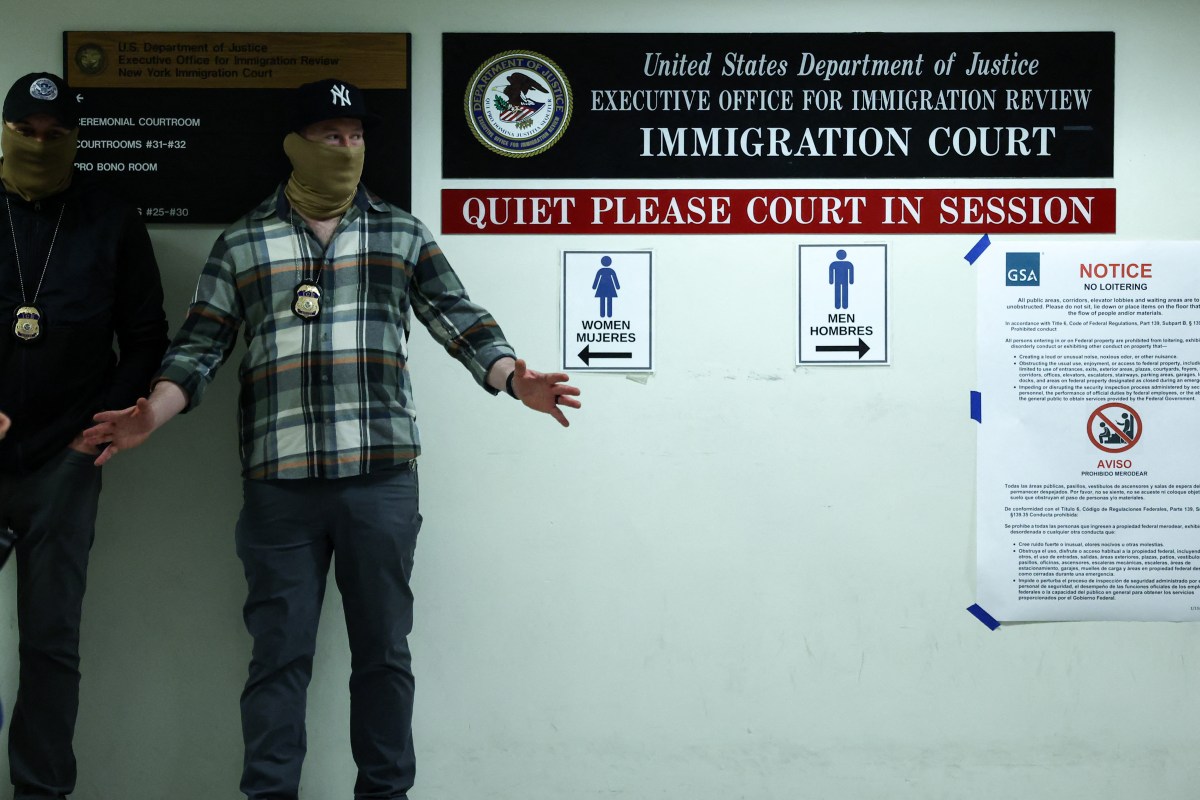
The Trump administration plans to increase the fine for immigrants who miss court hearings and are later deported from $5,130 to $18,000. This change aims to cover the costs of deportation and encourage immigrants to attend their hearings, as missed hearings have greatly increased in recent years.
Key Facts
The proposed fine increase is from $5,130 to $18,000 for immigrants who fail to appear at immigration court hearings.
This fine applies after an immigration judge issues an in absentia removal order, meaning the person is deported when they do not show up.
The number of missed immigration hearings rose from about 62,500 in 2022 to an estimated 309,700 in 2025.
The higher fine is meant to help pay the costs of locating, detaining, and deporting people who miss hearings.
The new fine proposal is open for public comment for 30 days starting May 20.
Some immigrants might pay the fine all at once, in payments, or include it in fees if they try to come back to the U.S. later.
Experts worry the $18,000 fine could be a heavy financial burden and question how well the government can enforce it.
Reasons for missing hearings include delayed court backlogs, outdated mail addresses, lack of legal help, and fear of ICE arrests at courts.
Read the Original
Want the full story? Tap a source to open the original
article.
Jahmiel Jackson, aged 24, is running for Congress in Pennsylvania’s 3rd District in the 2026 elections. He started as a Democrat but recently changed his party affiliation to Independent.
Key Facts
Jahmiel Jackson is 24 years old.
He is one of the youngest candidates for Congress in the country.
He plans to run in the 2026 midterm elections.
Jackson is running for Pennsylvania’s 3rd Congressional District.
He began his campaign as a Democrat.
He recently left the Democratic Party.
Now, he is running as an Independent candidate.
His campaign aims to change the current political landscape.
Read the Original
Want the full story? Tap a source to open the original
article.
The U.S. government has issued a highest-level travel warning advising Americans not to visit several African countries due to a spreading Ebola outbreak. Health officials say the risk to the U.S. public is low but have increased screenings for travelers returning from the affected regions.
Key Facts
The U.S. State Department gave a Level 4: Do Not Travel warning for the Democratic Republic of Congo, Uganda, and South Sudan.
The Ebola outbreak started in the Ituri Province of the Democratic Republic of Congo and spread to Uganda and nearby areas.
More than 500 suspected Ebola cases and 130 suspected deaths are reported in the affected regions.
Rwanda is under a "Reconsider travel" advisory.
Non-U.S. citizens who visited the affected countries within 21 days face entry restrictions into the U.S.
U.S. citizens returning from these regions are subject to extra health screening at airports and symptom monitoring for at least 30 days.
An American medical worker contracted a rare Ebola strain in Congo and is being evacuated for treatment.
Officials say there is no evidence of Ebola spreading inside U.S. communities.
Read the Original
Want the full story? Tap a source to open the original
article.
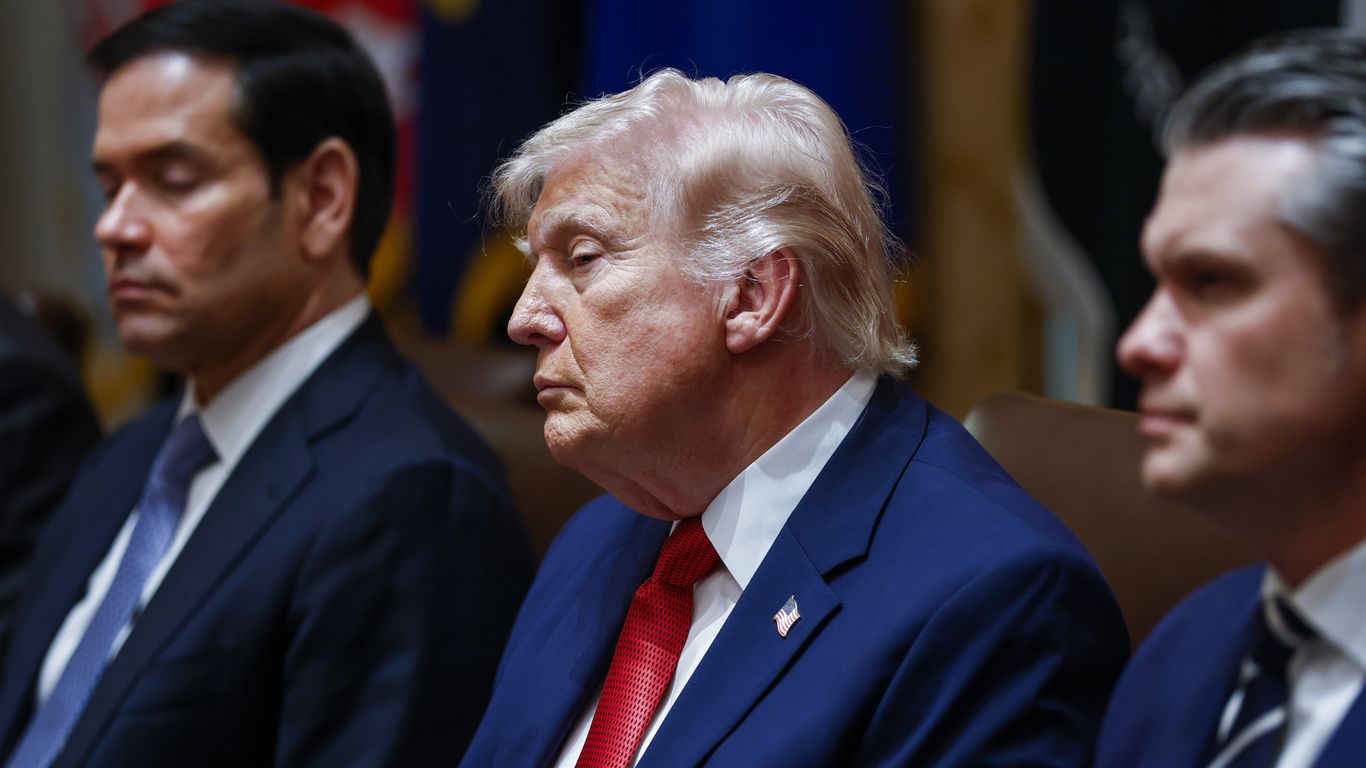
President Donald Trump has endorsed Texas Attorney General Ken Paxton in the Republican primary runoff against Senator John Cornyn. Paxton is a close ally of Trump but has faced multiple legal and ethical controversies, while Cornyn is a longtime Senate Republican leader.
Key Facts
President Trump supports Ken Paxton to challenge incumbent Senator John Cornyn in the Texas Republican primary runoff.
Paxton has a history of legal troubles, including a federal corruption indictment settlement, impeachment by the Texas legislature, and a divorce amid allegations of affairs.
Paxton backed Trump’s effort to overturn the 2020 election results and supported him during Trump’s 2024 trial.
Many Senate Republicans, including Senators Susan Collins and Lisa Murkowski, criticize Paxton for ethical issues and were disappointed by Trump’s endorsement.
John Cornyn served in Senate Republican leadership from 2012 to 2024 and is seen as loyal to the party and Trump, but he delayed endorsing Trump’s 2024 re-election campaign.
Cornyn and Paxton have clashed during the campaign over issues like gun regulation and immigration enforcement.
Trump has recently endorsed challengers against other incumbent Republicans, such as Senator Bill Cassidy in Louisiana and Congressman Thomas Massie in Kentucky.
Cornyn supporters argue that Paxton’s scandals and weaknesses could risk the Republican seat in a state that has historically voted Republican.
Read the Original
Want the full story? Tap a source to open the original
article.
Nigel Farage, leader of Reform UK, has not appeared publicly for six days, missing a planned rally and other party events. His absence comes amid an investigation into a £5 million gift he received from a crypto billionaire, which has led to questions about his finances and recent activities.
Key Facts
Nigel Farage cancelled a scheduled Reform UK rally in Sunderland six days ago without clear explanation.
The rally was important as it targeted a Labour stronghold area during the election campaign.
Farage is under investigation by the parliamentary standards watchdog over a £5 million gift from crypto billionaire Christopher Harborne.
Farage initially said the money was for security but later called it a “reward” for his Brexit campaigning.
Shortly after receiving the gift, Farage bought a £1.4 million property in cash.
Accounts for Farage’s media company stated no withdrawal of money matched the house purchase time.
Farage skipped the announcement of a new Reform candidate for the Makerfield by-election, posting only a brief supportive tweet instead.
Reform UK has made leadership changes recently, including replacing the party chair and removing the party treasurer from corporate roles.
Read the Original
Want the full story? Tap a source to open the original
article.
US Secretary of State Marco Rubio criticized the World Health Organization (WHO) for being late in identifying the Ebola outbreak in the Democratic Republic of the Congo (DRC) and Uganda. The US has reduced its health aid but plans to open clinics in the affected areas while experts warn that cuts to US public health resources increase risks from infectious diseases.
Key Facts
Marco Rubio said the WHO was slow to identify the Ebola outbreak in DRC and Uganda.
President Trump withdrew the US from the WHO, leading to job losses at the organization.
The US has committed about $13 million to help fight Ebola and aims to open 50 clinics in DRC.
The Ebola outbreak has killed an estimated 131 people in the DRC.
Experts say blaming the WHO is unfair because it faces limited resources and security challenges.
The WHO declared the Ebola outbreak a “public health emergency of international concern.”
The WHO warned against closing borders or restricting travel as it may make disease spread worse.
US health agencies are facing layoffs during President Trump’s second term, raising concerns about the country’s readiness against infectious diseases.
Read the Original
Want the full story? Tap a source to open the original
article.
President Donald Trump recently visited China for three days, accompanied by several top U.S. business leaders. An adviser said the trip was uncomfortable for some CEOs, who were not fully included in meetings and were seen by the Chinese as "useful idiots." The visit focused on improving U.S.-China relations, technology transfer concerns, and discussions about Taiwan.
Key Facts
President Trump visited China for the first time in nearly a decade by a sitting U.S. president.
Some top CEOs accompanying Trump, including Elon Musk, Tim Cook, Larry Fink, and Steven Schwarzman, found the trip awkward and exclusionary.
The Chinese reportedly did not allow some executives into key meetings, viewing them mainly as tools for gaining technology.
Adviser Peter Navarro criticized the U.S. approach to sharing technology in China, saying it has harmed American companies before.
Trump aimed to have Chinese leader Xi Jinping open China’s market to U.S. industries like tech, finance, agriculture, and aerospace.
The visit included a long discussion between Trump and Xi about Taiwan, a sensitive issue in U.S.-China relations.
Trump later criticized the Taiwanese president for wanting independence, which could lead to conflict with China.
Representatives from the involved companies did not comment on Navarro’s statements at the time of the report.
Read the Original
Want the full story? Tap a source to open the original
article.
Two teenage gunmen opened fire at the Islamic Center of San Diego, killing three men before dying by apparent suicide. Police had been searching for one teen after his mother reported he ran away with weapons, and the attack is being investigated as a hate crime.
Key Facts
The shooting took place at the Islamic Center of San Diego, the largest mosque in San Diego County.
The two gunmen were 17 and 18 years old.
The teens were found dead from self-inflicted gunshot wounds shortly after the attack.
The mother of one teen called police about 9:40 a.m. saying he had run away with her guns and vehicle and was suicidal.
Police used license plate readers and alerted local schools to find the suspects before the shooting happened.
The mosque had non-Muslim visitors touring earlier that day to learn about Islam.
A security guard named Amin Abdullah was killed and praised for his heroic actions during the attack.
No students at the mosque’s school, which offers Islamic education, were harmed.
Read the Original
Want the full story? Tap a source to open the original
article.
Several candidates from well-known political families are running in the 2026 U.S. midterm elections. These candidates often use their family names to gain recognition and support, while also trying to show their own unique ideas and values.
Key Facts
Jim Kingston is running for Congress in Georgia, hoping to take his father Jack Kingston’s old seat.
Jim Kingston says President Donald Trump has endorsed him.
Tom Begich, running for governor in Alaska, comes from a family with a history in Democratic politics.
Christine Pelosi, daughter of former Speaker Nancy Pelosi, is running for a California state senate seat.
John E. Sununu from New Hampshire is running in a Republican primary to return to the U.S. Senate; his family has held prominent political roles in the state.
Political science experts say family name recognition plays a big role in elections.
Candidates from legacy families try to balance using their family history with their own individual messages.
Political involvement across generations in families is compared to traditional trades passed down over time.
Read the Original
Want the full story? Tap a source to open the original
article.
Georgia is holding important primary elections for U.S. Senate and governor races. Republicans are competing to challenge Democratic Senator Jon Ossoff and to win the governor's nomination, while Democrats are choosing their candidate to try to win the governor’s office.
Key Facts
Georgia’s primary election is set for Tuesday and includes key races for U.S. Senate and governor.
Democratic Senator Jon Ossoff is running for reelection without a primary challenger and has raised nearly $60 million.
Ossoff is critical of President Trump and focuses on fighting political corruption.
Republicans in the Senate race include Mike Collins, Buddy Carter, and Derek Dooley, each promoting different approaches and conservative records.
Buddy Carter has accused Mike Collins of misusing taxpayer money; Collins denies the claims.
The Republican governor’s race is marked by high spending, with billionaire Rick Jackson spending over $61 million.
Lieutenant Governor Burt Jones, supported by President Trump, and others like Brad Raffensperger and Chris Carr, are competing for the Republican nomination.
Democrats have several candidates for governor, including former Atlanta Mayor Keisha Lance Bottoms and former Republican Geoff Duncan.
If no candidate wins a majority on Tuesday, the top two will advance to a runoff election in June.
Read the Original
Want the full story? Tap a source to open the original
article.
There is an ongoing discussion within the Democratic Party about the future direction of its progressive movement. Leaders are debating how wide the movement should be, who should lead it, and whether it should resemble the party's approach from 2016 or 2020.
Key Facts
The Democratic Party is having an internal conversation about its progressive movement.
People are considering how broad the movement should become.
There is debate about who will lead or define the movement.
The discussion includes whether the movement should follow strategies like those in 2016 or 2020.
This negotiation is happening quietly within the party.
Read the Original
Want the full story? Tap a source to open the original
article.
President Donald Trump has endorsed Texas Attorney General Ken Paxton in the Republican Senate run-off against incumbent Senator John Cornyn. The race is very close, with concerns among Republicans about Paxton’s chances in the general election.
Key Facts
President Trump supported Ken Paxton, praising his loyalty and criticizing John Cornyn for not supporting him.
Neither Paxton nor Cornyn won a majority in the Texas primary, leading to a run-off election.
Texas has open primaries where voters can choose which party’s primary to vote in, but they must stick to one party’s primary.
Paxton has faced controversies including adultery, felony securities fraud charges, and impeachment.
Polls show a tight race between Paxton and Cornyn in the run-off, with some polls favoring Paxton and others Cornyn.
Republicans are worried Paxton might lose in the general election to Democrat James Talarico, who polls show is competitive or leading.
Trump’s endorsement may upset Senate Republicans, who favored Cornyn and rely on his support in the Senate.
Republicans currently have a Senate majority with 53 seats, while Democrats have 45 seats and 2 independents who vote with them.
Read the Original
Want the full story? Tap a source to open the original
article.
Each summary links back to the original reporting, so you can check the work. Support that, and get the daily digest every morning. Most choose $3.99/month.
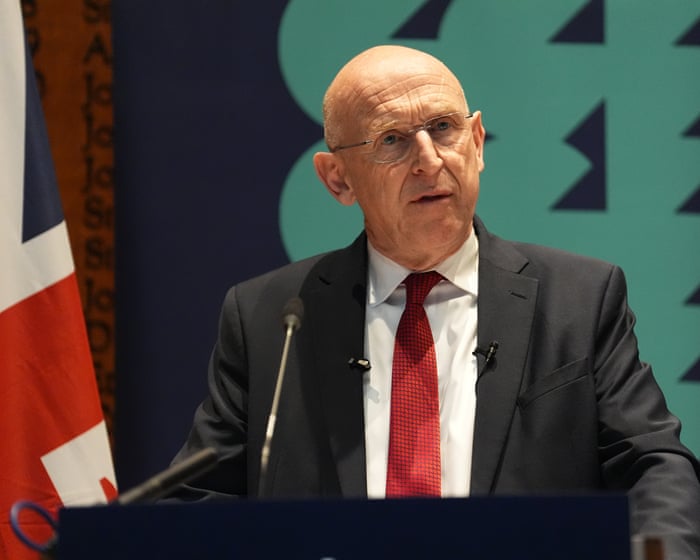
John Healey, the UK Labour defence secretary, warned that infighting among Labour Party members threatens the party’s ability to govern effectively. He urged members to focus on national issues like defense and the economy instead of personal political ambitions.
Key Facts
Healey criticized Labour figures competing to become prime minister, saying it damages the party’s credibility.
He emphasized the seriousness of current times, including Russia’s attack on Ukraine and economic problems for British families.
Healey called for the party to focus on governing, not personal ambitions or public image.
He mentioned increased defence spending under Labour, aiming for 3.5% of GDP by 2035.
The Ministry of Defence expects defence jobs to employ over half a million people in the next decade.
The long-delayed defence investment plan, which faces an £18 billion overspend, has not yet been published.
Healey criticized rival parties: Reform for ties to "pro-Russian" backers and Greens for wanting to reduce the defence industry.
Andy Burnham, Wes Streeting, and Al Carns are among those seen as challenging Labour leadership, though Healey did not name them directly.
Read the Original
Want the full story? Tap a source to open the original
article.
A video has spread widely online showing teens causing damage and fighting inside a Chipotle restaurant near the Navy Yard. The chaotic behavior scared customers and raised concerns about local youth violence. Commentators suggest holding parents responsible for their children’s actions.
Key Facts
A group of teens destroyed property inside a Chipotle restaurant near the Navy Yard.
The teens threw chairs and fought each other during the incident.
Customers at the restaurant hid to avoid getting hurt.
The event happened in a neighborhood close to the article’s author.
The video of the incident was shared a lot on social media.
There are calls for parents to be held accountable for their children’s violence.
This is part of a larger concern about youth behavior and safety in the area.
Read the Original
Want the full story? Tap a source to open the original
article.
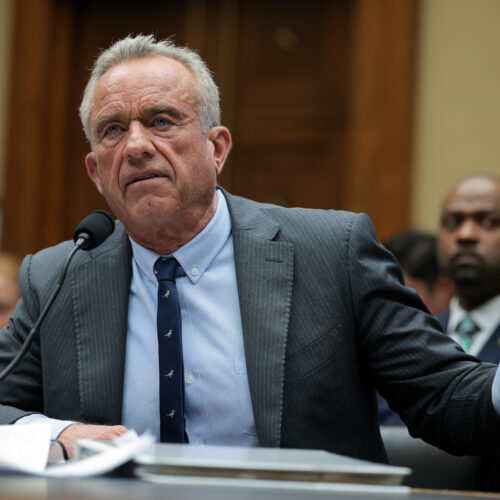
The U.S. Health Department withdrew a revised charter for a CDC vaccine advisory panel after it failed to meet federal public notice rules. The charter, pushed by Health Secretary Robert F. Kennedy Jr., would have allowed anti-vaccine allies to join the advisory committee and influence vaccine policies. A court had previously blocked Kennedy’s changes to the CDC vaccine panel and schedule due to lack of qualifications and regulatory violations.
Key Facts
The Health Department pulled a new charter for the CDC’s vaccine advisory panel (ACIP) due to not following public notification rules.
Health Secretary Robert F. Kennedy Jr. wanted to appoint anti-vaccine allies to the advisory panel.
The revised charter aimed to focus on alleged vaccine injuries and include fringe groups in federal vaccine policy decisions.
In June 2025, Kennedy fired all 17 expert members of ACIP and replaced them with unqualified anti-vaccine supporters.
The new ACIP removed long-standing, evidence-based vaccine recommendations, including a universal hepatitis B vaccine dose at birth.
Studies showed that removing the hepatitis B birth dose would likely increase infections, cancers, deaths, and healthcare costs.
In January, Kennedy reduced the childhood vaccine schedule from 17 vaccines to 11 without using ACIP’s advice.
A federal judge blocked Kennedy’s vaccine changes and ruled new ACIP members were unqualified, nullifying their decisions.
Read the Original
Want the full story? Tap a source to open the original
article.
President Donald Trump is using his influence to support certain Republican candidates in primary elections across several states. Voters will decide if his endorsements help those candidates defeat Republicans who have opposed him. Meanwhile, Pennsylvania Governor Josh Shapiro is backing Democratic candidates aiming to win House seats in the fall.
Key Facts
President Trump is backing challengers against Republicans who have disagreed with him, such as Rep. Thomas Massie in Kentucky.
Massie has opposed Trump on issues like the release of Epstein files, war with Iran, and tax legislation.
Trump’s endorsement helped unseat five Indiana Republicans who voted against his redistricting plan.
In Georgia’s Republican governor race, Trump supports Burt Jones, who has spent $19 million, competing against Rick Jackson, who spent $83 million.
Trump did not endorse any Republican in Georgia’s Senate race, leaving multiple candidates competing to run against Democrat Jon Ossoff.
In Alabama, Trump endorsed Rep. Barry Moore for Senate to replace Tommy Tuberville, who is running for governor.
Pennsylvania Gov. Josh Shapiro is supporting Democratic House candidates to try to flip Republican seats.
Some Republicans in Georgia who opposed Trump’s 2020 election claims, like Brad Raffensperger, are running for governor, with Raffensperger working to win back Republican voters.
Read the Original
Want the full story? Tap a source to open the original
article.
Acting Attorney General Todd Blanche appeared before the Senate and answered many questions from senators on different topics. The discussion included issues related to Jeffrey Epstein and a fund aimed at preventing the misuse of federal funds for political purposes.
Key Facts
Todd Blanche is the Acting Attorney General of the United States.
He testified before the U.S. Senate on Tuesday.
Senators asked him tough questions on various topics.
One topic was related to Jeffrey Epstein.
Another topic involved an "anti-weaponization fund," which aims to stop federal money from being used in political conflicts.
The testimony was covered by CBS News.
Nikole Killion, a CBS congressional correspondent, provided the report.
The full testimony can be viewed on the CBS News app and website.
Read the Original
Want the full story? Tap a source to open the original
article.
President Donald Trump held a meeting with his top national security team to discuss military options against Iran after pausing planned attacks. He said Iran has just a few days to reach a diplomatic deal, while U.S. officials and Gulf leaders urged giving negotiations more time to avoid Iranian retaliation.
Key Facts
President Trump met Monday evening with national security officials to review military plans for Iran.
He announced a pause in planned attacks originally scheduled for Tuesday.
Trump set a deadline of two to three days for a diplomatic breakthrough with Iran.
Before the pause, Trump was close to ordering a strike, saying he was "an hour away."
Gulf leaders warned about possible Iranian retaliation on their infrastructure if attacks proceeded.
The meeting included Vice President Vance, Secretary Rubio, Defense Secretary Hegseth, CIA Director Ratcliffe, and others.
U.S. officials report the latest Iranian counter-offer showed little progress.
Trump indicated he might resume military action soon if diplomacy fails.
Read the Original
Want the full story? Tap a source to open the original
article.
On the biggest stories we show what the outlets agree on and where they differ. Readers keep that going, and get the daily digest by email every morning. Most choose $3.99/month.
Senator Bill Cassidy from Louisiana said he does not regret voting to convict President Donald Trump in an impeachment trial five years ago, even though it may have cost him his Senate seat. Cassidy lost his Republican primary after Trump endorsed his opponent and now speaks openly about supporting the Constitution.
Key Facts
Senator Bill Cassidy voted to convict President Donald Trump in an impeachment trial related to the Jan. 6, 2021, Capitol attack.
Cassidy lost the Republican primary in Louisiana after Trump endorsed another candidate.
Cassidy says he has no regrets and feels proud of upholding the Constitution.
Some Republican colleagues, loyal to Trump, reacted quietly or critically to Cassidy’s loss.
Senator Lindsey Graham said those who oppose Trump politically will lose elections.
Alaska Senator Lisa Murkowski, who also voted to convict Trump, expressed regret about Cassidy’s defeat.
Cassidy worked to show support for Trump after the impeachment vote, including backing a Trump nominee despite some disagreements.
Cassidy hinted he may speak more about recent political issues but did not criticize Trump directly in his latest comments.
Read the Original
Want the full story? Tap a source to open the original
article.
The NAACP has started a campaign called “Out of Bounds” asking Black athletes, their families, fans, and alumni to boycott college sports programs in eight southern states. These states have made changes to voting maps that reduce Black voting power, and the campaign wants these states to restore fair political representation.
Key Facts
The NAACP’s “Out of Bounds” campaign targets public universities in Tennessee, Louisiana, Alabama, Florida, Mississippi, South Carolina, Texas, and Georgia.
These states have changed voting maps to reduce Black political representation after a Supreme Court decision weakened the Voting Rights Act.
The campaign asks athletes being recruited to these schools to delay committing until fair voting maps are restored.
Current athletes are encouraged to speak out, ask their schools to oppose voting suppression, and consider transferring.
Fans, alumni, and donors are urged not to buy tickets or merchandise for these programs and to support historically Black colleges and universities (HBCUs) instead.
The NAACP links athletic programs’ financial success to Black athletes while their states diminish Black political power.
Past athlete-led protests, such as those in Mississippi and at the University of Missouri, influenced change in social and racial issues.
The Congressional Black Caucus opposes legislation that benefits major sports institutions while Black voting rights are being reduced in the South.
Read the Original
Want the full story? Tap a source to open the original
article.