President Trump's administration is suing the Catholic Diocese of Las Cruces to take land in New Mexico for building a border wall. The land includes a religious site at Mount Cristo Rey, where many people hold annual pilgrimages.
Key Facts
The Trump administration wants 14 acres of land at Mount Cristo Rey in Dona Ana County, New Mexico.
Homeland Security Secretary Markwayne Mullin filed the lawsuit to seize the land using eminent domain, a legal process to take private land for public use.
The government offered $183,071 as compensation for the land.
The land includes a shrine with a 29-foot limestone statue of Jesus Christ and hosts annual pilgrimages with up to 40,000 visitors.
The Catholic Diocese is fighting the land seizure by citing their right to religious freedom under the First Amendment and a related law protecting religious expression.
Local resistance has delayed border wall construction in some areas and even removed parts of the wall in Texas parks.
The Trump administration says landowners will have little choice but to allow construction or face eminent domain.
Neither the Department of Homeland Security nor the Diocese gave comments when asked.
Read the Original
Want the full story? Tap a source to open the original
article.
South Carolina’s state Senate voted against extending their session to redraw Republican-favored congressional districts. This decision comes after President Trump encouraged Republicans to support the extension before the upcoming midterm elections.
Key Facts
South Carolina’s Senate voted 29 to 17 against extending the legislative calendar.
The extension was needed to redraw congressional district lines favoring the Republican Party.
President Donald Trump urged Republicans in South Carolina to support the extension.
The decision prevents changes to district maps before the midterm elections this fall.
Redrawing districts is called redistricting and can impact election outcomes.
The vote is seen as a setback for President Trump’s efforts in the state.
The South Carolina Senate declined to act on the redistricting plan despite party pressure.
Read the Original
Want the full story? Tap a source to open the original
article.
There has been an outbreak of hantavirus linked to a cruise ship, with 11 people confirmed or suspected to be infected. Health officials in Nebraska and Georgia are watching 18 Americans who might have been exposed to the virus.
Key Facts
A hantavirus outbreak occurred on a cruise ship.
11 cases have been confirmed or are suspected.
18 Americans are being monitored for possible exposure.
Health officials involved are from Nebraska and Georgia.
Hantavirus is a virus that can cause serious illness and is often linked to rodents.
The situation is being followed closely by medical experts.
CBS News is reporting updates on the situation.
Read the Original
Want the full story? Tap a source to open the original
article.
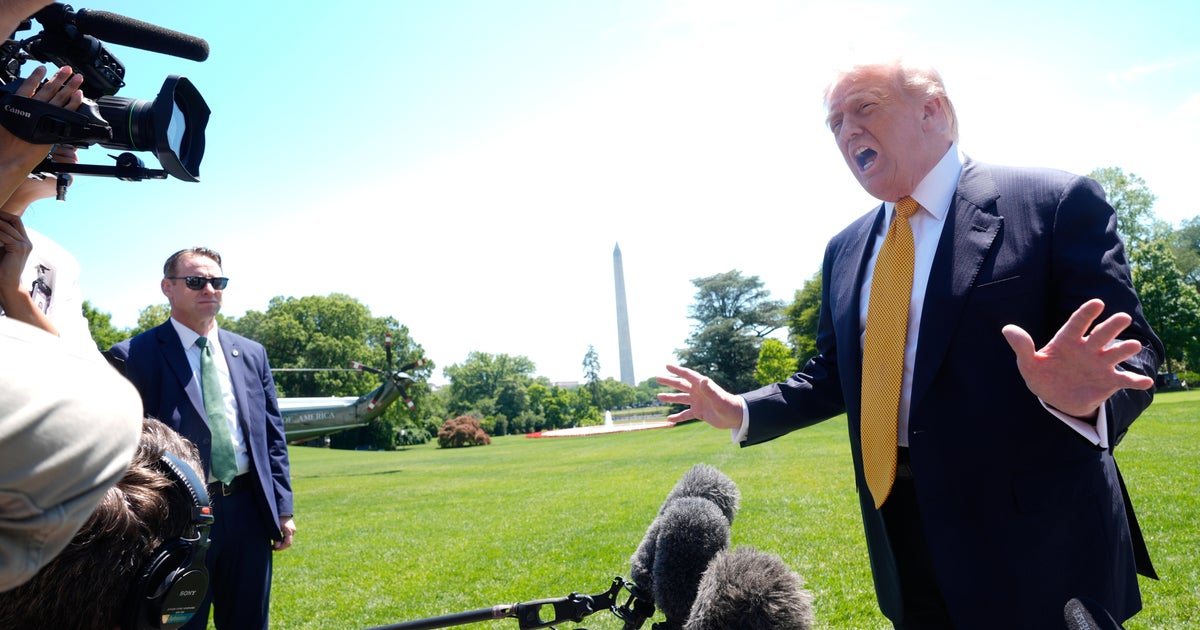
President Donald Trump said he does not consider how Americans’ financial situations are affected when he negotiates deals with Iran. He made this statement before leaving for a trip to China.
Key Facts
President Trump spoke to reporters before traveling to China.
He said he does not think about the financial impact on Americans when negotiating with Iran.
The statement was reported by CBS News.
The topic was related to ongoing negotiations or deals with Iran.
There was no further explanation given about the reasons behind his statement.
This comments come during his time as the current U.S. president.
Read the Original
Want the full story? Tap a source to open the original
article.
A Texas federal prosecutor has subpoenaed NYU Langone Health to get information about minors who received gender-affirming care from 2020 to 2026. This action is part of President Donald Trump’s effort to limit gender-affirming medical treatments for youth across the US.
Key Facts
The subpoena was issued on May 7 by the US attorney’s office in northern Texas.
NYU Langone Health is asked to provide patient information, medical providers’ names, and details about treatments.
New York state law requires the hospital to notify patients and the attorney general 30 days before sharing protected health information.
In January 2025, President Trump signed an executive order aiming to stop gender-affirming medical care for children at federally funded places.
After the order, NYU Langone canceled gender-affirming care for new trans youth patients and stopped its youth program in February 2026.
LGBTQ groups are suing to challenge President Trump’s executive order.
Research shows gender-affirming care can improve mental health for transgender and non-binary youth.
Hospital and the Department of Justice have not yet publicly commented on the subpoena.
Read the Original
Want the full story? Tap a source to open the original
article.
South Carolina state senators voted against a plan to redraw the state's congressional districts despite pressure from President Donald Trump. The vote fell short by two votes of the needed two-thirds majority, with some Republicans joining Democrats in rejecting the proposal.
Key Facts
South Carolina senators voted 29-17 against the redistricting plan, missing the two-thirds majority requirement.
President Trump publicly urged South Carolina Republicans to approve the redistricting plan.
The US Supreme Court weakened the Voting Rights Act, which has led states like Tennessee and Louisiana to change their maps, affecting Black-majority districts.
South Carolina’s Republican majority leader, Shane Massey, opposed the plan, saying it would hurt the state’s influence.
Currently, Republicans hold six of South Carolina’s seven congressional districts; the one Democrat-held district would have been partially redrawn.
The Democratic district is represented by James Clyburn, a senior member known for securing federal funding for the state.
Massey believes the state's existing map is already heavily in favor of Republicans and fears changes may backfire.
The legislative session ended without the redistricting plan passing because the required supermajority was not reached.
Read the Original
Want the full story? Tap a source to open the original
article.
The Missouri Supreme Court decided to allow a new congressional district map that favors the Republican Party. This map is expected to help Republicans gain an extra seat in the U.S. House of Representatives in the upcoming midterm elections.
Key Facts
The Missouri Supreme Court made a unanimous decision to keep the new congressional map.
The map favors the Republican Party, often called the GOP (Grand Old Party).
The new district lines may give Republicans one more seat in the House of Representatives.
The court heard arguments from lawsuits that tried to stop the new map but rejected them.
The court’s role was to check if the map was legal, not to decide if it was fair or unfair.
This decision was made shortly after oral arguments were presented in court.
The upcoming midterm elections will use this new map.
Read the Original
Want the full story? Tap a source to open the original
article.
Acting US Attorney General Todd Blanche defended subpoenas issued to journalists investigating leaks of classified information. These subpoenas relate to coverage of the war against Iran, and the Justice Department is focusing on stopping leaks that could harm national security.
Key Facts
The subpoenas target journalists linked to reports on the Iran war.
The Wall Street Journal revealed it received grand jury subpoenas for reporter records.
Acting Attorney General Blanche said prosecuting leakers is a priority of the current administration.
Blanche warned anyone with information on leaks could be subpoenaed, including reporters.
President Donald Trump criticized media coverage of the Iran war, calling some reports false and harmful.
The Justice Department ended a policy that protected journalists from revealing sources, increasing leak investigations.
The Wall Street Journal said the subpoenas attack protected newsgathering under the Constitution.
FBI agents searched a Washington Post reporter’s home for a classified leak probe earlier this year.
Read the Original
Want the full story? Tap a source to open the original
article.
Texas Attorney General Ken Paxton has filed a lawsuit against Netflix. He claims the company spies on people in Texas, including children, and uses deceptive business practices by secretly collecting and selling user data to make more money from ads.
Key Facts
Ken Paxton is the Attorney General of Texas.
He filed a lawsuit against Netflix on Monday.
The lawsuit accuses Netflix of spying on people in Texas, including children.
Paxton says Netflix’s platform is designed to be addictive.
He claims Netflix secretly collects and sells user data.
The data is reportedly sold to help Netflix make more money from advertising.
Netflix is said to earn billions of dollars annually through this practice.
Read the Original
Want the full story? Tap a source to open the original
article.
President Donald Trump said he does not consider Americans' financial problems when negotiating with Iran. He stated the main concern is to prevent Iran from getting a nuclear weapon.
Key Facts
President Trump was asked if Americans' financial struggles affect his Iran negotiations.
He replied that they do not influence him at all.
He said the most important issue is stopping Iran from obtaining nuclear weapons.
The remarks were made during a recent interview or press event.
Trump did not mention specific financial concerns or solutions tied to the negotiations.
The negotiation aims to end conflict and control Iran’s nuclear program.
Read the Original
Want the full story? Tap a source to open the original
article.
President Donald Trump's effort to redraw U.S. House districts showed mixed results, with South Carolina senators opposing his goals while Missouri’s top court approved a new map favoring Republicans. The battle over redistricting has grown after a Supreme Court decision weakened protections for minority voting districts, leading several states to change their district maps ahead of the November midterm elections.
Key Facts
South Carolina senators rejected President Trump’s plan to redraw House districts.
Missouri’s highest court approved a new congressional map that could help Republicans win an extra seat.
A Supreme Court ruling reduced the power of the federal Voting Rights Act, allowing states to change voting districts with large minority populations.
Louisiana’s Republican lawmakers are cautious after the Supreme Court invalidated a majority-Black district for racial gerrymandering.
Alabama's governor set a special primary for four districts after the court overturned a map with two mostly Black districts.
Republicans expect to gain up to 14 new House seats from redistricting in various states.
Democrats hope to gain six new seats through redistricting in California and Utah.
The Virginia Supreme Court recently blocked a redistricting plan that may have helped Democrats gain four seats.
Read the Original
Want the full story? Tap a source to open the original
article.
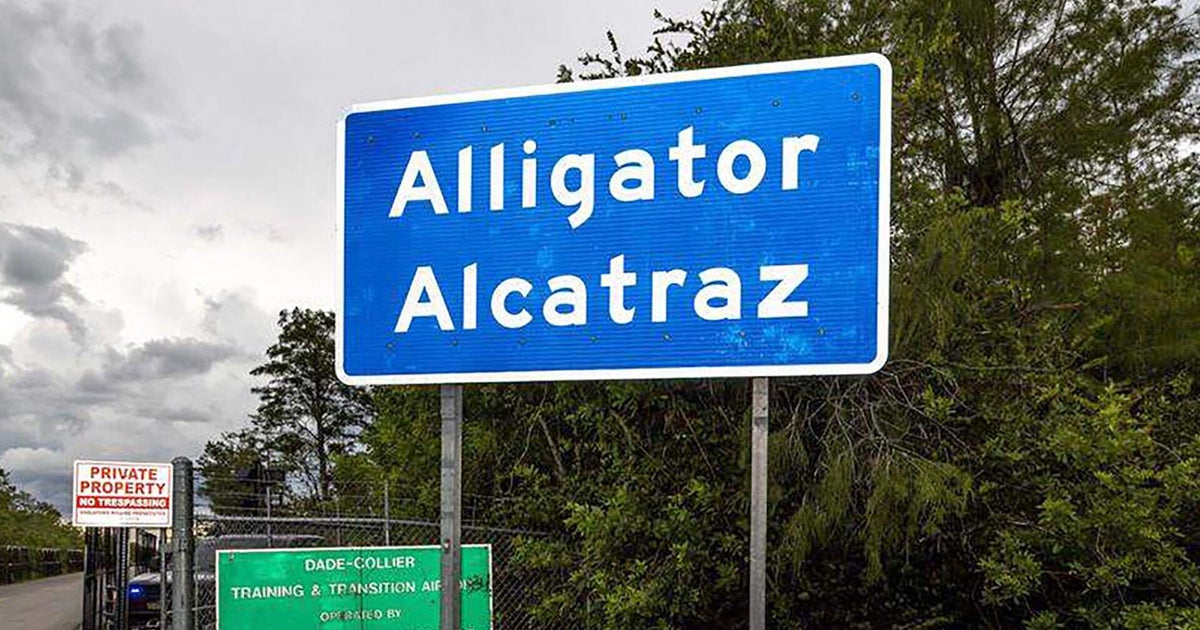
Florida plans to close the Alligator Alcatraz detention center by June, removing about 1,400 detainees in the next weeks. The closure is due to rising costs, now nearly $1 billion, with uncertainty over how much the federal government will reimburse the state.
Key Facts
The Alligator Alcatraz facility will close by June, with all detainees transferred or deported.
Operating costs have surged to almost $1 billion.
The center opened on July 3, 2025, funded by Florida state tax money.
Florida requested $608 million reimbursement from the federal government, which is partly approved but delayed.
Additional operating costs of about $300 million may not be reimbursed by the federal government.
The facility will be demobilized by taking down fences and removing structures, then repurposed as a small pilot training airport.
Rising costs and risk to Florida taxpayers prompted the decision to close the detention center.
The center was supported by Governor Ron DeSantis and praised by President Donald Trump as a model facility.
Read the Original
Want the full story? Tap a source to open the original
article.
Marty Makary resigned as Commissioner of the Food and Drug Administration (FDA) after the Trump administration forced the approval of fruity flavored e-cigarettes. His resignation came amid disagreements over vaping product approvals and other FDA policies during President Donald Trump’s term.
Key Facts
Marty Makary stepped down as FDA Commissioner following a White House decision to remove him.
President Trump confirmed the resignation and praised Makary’s work.
Makary reportedly resigned due to pressure to approve fruit-flavored e-cigarettes, which he opposed because they could attract youth and increase addiction.
The Trump administration pushed a faster approval process for flavored vaping products to support its “save vaping” campaign.
Makary also faced criticism from anti-abortion activists over delays in approving an abortion pill called mifepristone.
He had conflicts with other health officials and struggled with agency management.
Some public health experts criticized changes Makary made to vaccine review policies that aligned with Health Secretary Robert F. Kennedy’s anti-vaccine views.
Kyle Diamantas was named acting FDA commissioner after Makary’s resignation.
Read the Original
Want the full story? Tap a source to open the original
article.
President Donald Trump said on Tuesday that he does not know the contractor working on the Lincoln Memorial Reflecting Pool renovation. This contradicts his earlier statement that he spoke with someone he knew about the project. The renovation has faced criticism for its high cost and the decision to award the contract without a competitive bidding process.
Key Facts
President Trump initially said he spoke to someone he knew about the Reflecting Pool renovation.
On Tuesday, he stated he does not know the contractor.
The project is focused on restoring the Lincoln Memorial Reflecting Pool.
The contract was given without a competitive bidding process, known as a no-bid contract.
The cost of the renovation has sparked public criticism.
President Trump has a vision for the renovation that includes painting the basin a certain color.
Questions have been raised about transparency and spending on the project.
Read the Original
Want the full story? Tap a source to open the original
article.
Republican members of Congress held two hearings to question Defense Secretary Pete Hegseth about issues including the war in Iran, President Trump’s plan to fund the Defense Department, spending priorities, and the low supply of weapons. The hearings focused on the Pentagon’s management during the ongoing U.S.-Israeli conflict in Iran.
Key Facts
Republicans in both the House and Senate held back-to-back hearings on the Pentagon.
Defense Secretary Pete Hegseth faced questions about the war in Iran.
They discussed President Trump’s unusual plan to provide funding for the Defense Department.
The hearings highlighted concerns about how the Pentagon spends money.
Lawmakers raised alarms about America’s shrinking supply of munitions (bullets, bombs, etc.).
The hearings happened during the ongoing U.S.-Israeli conflict involving Iran.
The focus was on holding the Defense Department accountable for its actions and resources during the conflict.
Read the Original
Want the full story? Tap a source to open the original
article.
President Donald Trump’s efforts to redraw U.S. House districts had mixed outcomes on May 12, 2026. South Carolina’s Senate rejected new district maps aligned with Trump’s goals, while Missouri’s top court approved a new map favoring Republicans. This redistricting follows recent Supreme Court decisions that have affected how states can create voting districts.
Key Facts
South Carolina’s Senate did not approve district maps supported by President Trump.
Missouri’s Supreme Court upheld a redistricting plan that may give Republicans an extra U.S. House seat.
The redistricting fight has grown since a Supreme Court ruling weakened the federal Voting Rights Act.
The Supreme Court ruled against a majority-Black district in Louisiana, calling it an illegal racial gerrymander.
Alabama plans a special primary after the court overturned a map with two majority-Black districts, replacing it with one such district.
Republicans expect to gain up to 14 House seats from new maps in several states, including Texas and Missouri.
Democrats believe they could gain six seats from new maps in states like California and Utah.
The Virginia Supreme Court recently blocked a redistricting plan that might have helped Democrats win more seats.
Read the Original
Want the full story? Tap a source to open the original
article.
A new bipartisan bill in the U.S. Senate aims to increase monthly disability payments for veterans and surviving family members receiving benefits from the Department of Veterans Affairs. If passed, the bill would automatically raise existing payment amounts for millions of veterans without changing disability ratings or eligibility rules.
Key Facts
The bill is Senate Bill S. 4487, introduced by Republican Senator Jerry Moran with support from 15 senators across both parties.
It proposes to increase the base monthly disability compensation and survivor payments starting in late 2026.
The increase would apply automatically to all veterans and survivors already receiving VA disability and Dependency and Indemnity Compensation (DIC).
The bill does not create new benefit categories or change how disability ratings are assigned.
Nearly 6 million veterans currently receive VA disability compensation, so the increase could affect millions of people.
Service-connected disabilities include injuries or illnesses related to military service, such as PTSD, hearing loss, and respiratory diseases.
The bill seeks to address rising living costs by boosting payments beyond routine cost-of-living adjustments.
It has bipartisan support, which may improve its chances of becoming law, though the timeline is unclear.
Read the Original
Want the full story? Tap a source to open the original
article.
Senator Patty Murray questioned the Pentagon’s estimate of the war cost in Iran during a Senate hearing. She pointed out that the $29 billion figure given by Pentagon officials might be too low because it does not include the cost of damage to U.S. military facilities. Defense Secretary Pete Hegseth did not provide a damage cost but emphasized the importance of preventing Iran from getting a nuclear weapon.
Key Facts
Senator Patty Murray challenged the Pentagon’s cost estimate of the war on Iran, calling it too low.
The Pentagon’s comptroller said the war cost had risen to $29 billion.
The estimate apparently does not include damage to U.S. military facilities in Iran.
Murray asked Defense Secretary Pete Hegseth for the cost of damage, but he did not give a number.
Hegseth focused on the cost of preventing Iran from acquiring nuclear weapons.
President Donald Trump is making efforts to confront Iran’s nuclear program despite the costs.
The hearing was held before a Senate Appropriations subcommittee.
The issue reflects ongoing debates about the financial impact of U.S. actions in Iran.
Read the Original
Want the full story? Tap a source to open the original
article.
There are no ads, so there is no reason to bait you. Readers who chip in keep it that way. Most choose $3.99/month, and get the daily digest every morning.
A recent poll from The Economist/YouGov shows President Donald Trump's net approval rating at -22 percent, matching former President Joe Biden's lowest rating over three weeks. Trump's approval is low across several key voter groups, which could affect the Republican Party's performance in the upcoming midterm elections.
Key Facts
President Trump's net approval rating is -22 percent, the lowest in his two terms.
This rating matches President Biden's lowest three-week average.
Trump's overall approval rating is 36 percent; disapproval is 58 percent.
Approval among Hispanics is 35 percent, Gen Z at 25 percent, and independents at 24 percent.
Nearly half of U.S. adults strongly disapprove of Trump's job performance.
The poll surveyed 1,549 U.S. adults from May 9 to 11, with a margin of error of ±3.5%.
Economic concerns, inflation, and the war with Iran are mentioned as possible factors influencing public opinion.
The White House said the administration is focused on tax cuts, deregulation, and energy policies to support the economy.
Read the Original
Want the full story? Tap a source to open the original
article.
President Donald Trump said his main concern in negotiations with Iran is stopping the country from getting nuclear weapons, not the financial impact on Americans. He emphasized that preventing Iran from obtaining nuclear arms is more important than issues like inflation or gas prices.
Key Facts
President Trump said he does not consider Americans' financial struggles when dealing with Iran.
His primary focus is to prevent Iran from developing nuclear weapons.
Inflation in the U.S. reached 3.8% annually in April 2023, the highest this year.
Many Americans are feeling financial pressure due to high gas prices, with an average price of $4.50 per gallon.
The Strait of Hormuz has been mostly closed, affecting oil supply and prices.
Secretary of State Marco Rubio warned that a nuclear-armed Iran could control oil prices by threatening the straits.
Polls show over half of Americans find high gas prices financially difficult.
Analysts predict gas prices could reach $5 per gallon if the Strait of Hormuz remains closed.
Read the Original
Want the full story? Tap a source to open the original
article.