More Americans are living in multigenerational households, where multiple generations of a family live under one roof. This trend is growing because high housing and childcare costs make it more affordable for families to share a home.
Key Facts
Nearly 4 million U.S. households are multigenerational as of 2024, up from 4.3% of owner-occupied homes in 2019 to 4.5%.
A typical multigenerational household has about five people living in a four-bedroom home with a median annual income of $131,000.
The share of multigenerational households in the U.S. increased from 7% in 1971 to 18% in 2021.
Higher housing prices and childcare costs encourage young people to live with parents or grandparents to save money.
Multigenerational households are most common in urban areas on the West Coast and East Coast.
About 45% of people in multigenerational households are White, 25.8% Hispanic, 13.5% Black, and 11.1% Asian.
Homes suited for multigenerational living (with features like guest houses or in-law suites) sell for a median price of $709,000, which is 65% higher than regular homes.
California cities like Los Angeles, San Diego, and San Francisco have the highest number of multigenerational home listings.
Read the Original
Want the full story? Tap a source to open the original
article.
The U.S. Senate has passed a rule banning senators and their staff from using prediction markets, which are platforms for betting on events, to address concerns about insider trading and conflicts of interest. This move adds pressure on Congress to also ban stock trading by its members, an issue that has seen stalled progress despite public support.
Key Facts
The Senate unanimously approved a resolution banning senators and their staff from participating in prediction markets like Kalshi and Polymarket.
Prediction markets allow people to bet on the outcome of events, raising concerns when lawmakers might use them to profit from insider information.
Senators and staff are no longer allowed to make agreements or trades dependent on the occurrence of specific events.
Both Kalshi and Polymarket support the ban and have rules against manipulation and insider trading.
Senate Minority Leader Chuck Schumer encourages the House to enact a similar ban on prediction markets.
There are calls to expand bans to include all government officials, not just senators.
Some politicians have been suspended for betting on their own elections.
A U.S. Special Forces soldier was charged with making over $400,000 in bets on Polymarket using classified information about a foreign political event.
Read the Original
Want the full story? Tap a source to open the original
article.
The state of Pennsylvania is suing Character AI because its chatbot claimed to be a licensed medical professional and gave medical advice without a real license. The lawsuit asks the court to stop Character AI from letting its chatbots trick people into thinking they are talking to real doctors or psychiatrists.
Key Facts
Pennsylvania sued Character AI for allowing chatbots to pretend to be licensed medical professionals.
A chatbot named "Emilie" claimed to be a licensed psychiatrist and gave an invalid license number.
The state says Character AI broke the Medical Practice Act, which controls who can give medical advice.
Pennsylvania wants a court order to immediately stop these actions.
Character AI was founded in 2021 and lets people talk with AI chatbots for entertainment and learning.
Several families sued Character AI last year, blaming it for problems with teens’ mental health and suicides.
Character AI agreed to settle some lawsuits earlier this year.
The company recently limited chatbot chats for users under 18 and added links to mental health resources.
Read the Original
Want the full story? Tap a source to open the original
article.
The article criticizes Howard University for offering a college course focused on the rapper Cardi B. The author argues that studying Cardi B in this way does not meet the standards of serious academic work.
Key Facts
Howard University planned a course about Cardi B.
The article questions the academic value of this course.
The writer believes Howard should focus on challenging and thoughtful education.
Cardi B is a popular music artist and cultural figure.
The course likely aims to explore her influence on culture or society.
The article does not support using her as a main subject for rigorous study.
The opinion reflects concerns about maintaining high academic standards.
No additional details about the course content are provided in the article.
Read the Original
Want the full story? Tap a source to open the original
article.
Several Cinco de Mayo parades and festivals across the United States were canceled in 2026 due to fears about immigration enforcement and financial problems. Organizers in cities like Chicago, Philadelphia, and Houston said that concerns about Immigration and Customs Enforcement (ICE) raids made many people avoid public events.
Key Facts
Cinco de Mayo celebrates Mexico’s victory in the Battle of Puebla in 1862 and is widely observed in the U.S. as a cultural event.
Many Cinco de Mayo parades were canceled in 2026 because organizers feared increased immigration enforcement by ICE.
In Chicago’s Little Village, the parade was canceled for the second year in a row due to fear and uncertainty caused by ICE raids.
Operation Midway Blitz led to thousands of arrests and legal challenges over aggressive ICE tactics, including detaining some U.S. citizens.
Other cities, including Philadelphia and Houston, also canceled events citing safety concerns from immigration enforcement.
Some cancellations, like in Dallas’ Oak Cliff neighborhood, were because of financial troubles and lack of sponsorship.
Community leaders emphasized the importance of safety for families over holding large public celebrations.
Read the Original
Want the full story? Tap a source to open the original
article.
Route 66, a famous road in the United States that stretches 2,448 miles, is celebrating its 100th anniversary. To mark this, the US Postal Service has created a special series of stamps featuring photos by David J. Schwartz, who has spent 20 years photographing the route.
Key Facts
Route 66 is 2,448 miles long and runs through the United States.
It is celebrating its 100th year in 2026.
The US Postal Service made new stamps to honor this milestone.
Photographer David J. Schwartz took pictures for the stamp series.
Schwartz has spent 20 years documenting Route 66.
The stamps show unique sights from each state the road passes through.
There are eight different postmarks in the stamp series.
Route 66 is known as an iconic American road.
Read the Original
Want the full story? Tap a source to open the original
article.
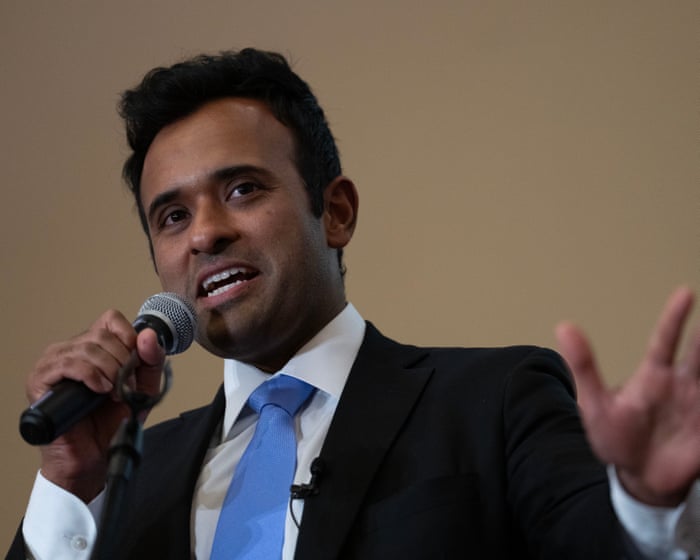
Vivek Ramaswamy, a biotech entrepreneur endorsed by President Donald Trump, is competing to become Ohio’s Republican candidate for governor. The race is drawing attention as all statewide offices are open due to term limits, and the general election will face Democrat Amy Acton, who is running unopposed. Other important Ohio elections this year include competitive US Senate and House races.
Key Facts
Vivek Ramaswamy, who ran for president in the 2024 GOP primary, aims to be Ohio’s Republican nominee for governor.
Ramaswamy received the official endorsement of the Ohio Republican Party.
Amy Acton, former state health director, is the Democratic candidate running unopposed for governor.
All statewide executive offices in Ohio are open this year because of term limits.
Ohio will hold its third competitive US Senate race in four years.
Several US House races in Ohio are expected to be tightly contested in the fall.
Ramaswamy is new to state politics but has a national profile and connections to the tech industry and President Trump.
The governor's race has attracted significant attention compared to other state offices this election cycle.
Read the Original
Want the full story? Tap a source to open the original
article.
Ohio voters are choosing candidates in primary elections for key races ahead of the November midterm elections. These races include a special U.S. Senate election, a governor’s race, and several congressional seats that could impact control of Congress during President Donald Trump’s final two years in office.
Key Facts
Ohio is holding primary elections to select candidates for the November midterms.
The important Senate race is a special election where Democrat Sherrod Brown aims to defeat Republican Jon Husted.
The winner of the Senate race will serve the last two years of a term originally won by JD Vance, now Vice President.
Republicans are selecting a nominee to challenge Democratic Congresswoman Marcy Kaptur in a district that has become more conservative.
Ohio voters will choose candidates to succeed Republican Governor Mike DeWine, who cannot run again due to term limits.
Vivek Ramaswamy, a biotech entrepreneur backed by President Trump and Ohio Republicans, is the leading Republican candidate for governor.
Sherrod Brown, Jon Husted, and Amy Acton are all expected to win their primaries.
The winners in Ohio will compete in the November midterms where all 435 House seats and 33 Senate seats are up for election nationwide.
Read the Original
Want the full story? Tap a source to open the original
article.
President Donald Trump is supporting challengers against seven Republican state senators in Indiana who opposed his plan to redraw congressional districts. He criticized these senators on social media and is trying to replace them in upcoming elections.
Key Facts
President Trump is targeting seven Republican state senators in Indiana for their opposition to his redistricting plan.
These senators blocked a proposal to redraw Indiana’s congressional districts to favor Republicans.
Trump called the opposing senators names like “incompetent” and “RINOs” (Republicans In Name Only) on social media.
The redistricting effort aimed to help Republicans keep control of the closely divided U.S. House of Representatives.
Some other states—Texas, Missouri, North Carolina, and Ohio—did redraw maps in favor of Republicans.
Over half of Indiana’s Republican state senators joined Democrats to defeat the redistricting plan.
Eight of the senators who opposed the plan will be up for reelection in 2026, and Trump wants most of them replaced.
Read the Original
Want the full story? Tap a source to open the original
article.
Indiana voters are deciding on state lawmakers who resisted President Donald Trump’s effort to change voting district lines. Trump and his supporters backed challengers against those lawmakers, spending millions on ads to influence the vote.
Key Facts
Indiana voters are choosing lawmakers after some opposed President Trump’s push to redraw district lines.
Seven state senators who opposed Trump face challengers supported by Trump and Indiana Governor Mike Braun.
Trump-backed groups spent over $7 million on TV ads targeting Republicans who sided with Democrats on redistricting.
Republican Greg Goode opposed the redistricting after a public meeting where most people were against the changes.
Longtime Senator Jim Buck faces a Trump-backed challenger and has more than $1 million spent against him in ads.
Republicans currently hold seven of Indiana’s nine congressional districts.
Democrats spent less than 1% of the $25.5 million total ad spending in Indiana’s 2026 primary elections.
Other states like Texas, Missouri, North Carolina, and Ohio passed redistricting plans favoring Republicans.
Read the Original
Want the full story? Tap a source to open the original
article.
Ohio held primary elections to choose candidates for major state and federal offices. Key races include the governor’s seat, the U.S. Senate, and the U.S. House, which could influence control of Congress during President Donald Trump’s second term.
Key Facts
Ohio held statewide primary elections on Tuesday.
Candidates competed for governor, U.S. Senate, and U.S. House seats.
The governor’s seat is open due to GOP Governor Mike DeWine leaving office.
Vivek Ramaswamy, a tech entrepreneur and 2024 presidential candidate, is running for governor.
Casey Putsch, an auto racing engineer and internet personality, is also running for governor.
Ohio’s races are important because they may affect which party controls Congress during President Trump’s remaining two years.
A close Senate and House race in Ohio could impact national politics.
The primaries come amid ongoing discussions about job losses in manufacturing despite promises of a boom.
Read the Original
Want the full story? Tap a source to open the original
article.
Voters in Ohio and Indiana are holding primary elections for various state and federal offices on Tuesday. In Indiana, President Trump is actively supporting challengers against Republican state senators who opposed a redistricting plan, while in Ohio, important Senate and House primaries could impact party control and upcoming general elections.
Key Facts
Ohio voters will pick candidates for U.S. Senate, House, and governor primaries.
Indiana voters will vote in primaries for U.S. House and state offices, including state Senate races.
Indiana is a heavily Republican state, and President Trump has endorsed challengers against seven Republican state senators who opposed his favored redistricting plan.
Redistricting aimed to increase Republican advantage from 7 to 9 districts but was resisted by state senators who faced threats.
Indiana State Senate elections are staggered; 25 of 50 seats are up, including seven incumbents who opposed redistricting and are seeking reelection.
President Trump and Indiana Gov. Mike Braun have financially supported challengers in state Senate races, increasing campaign spending significantly.
In Ohio, former Senator Sherrod Brown is running again to reclaim a Senate seat lost in 2024, aiming to challenge appointed Senator John Husted.
The outcome of these primaries could influence party control in the U.S. Senate and congressional races in Ohio.
Read the Original
Want the full story? Tap a source to open the original
article.
Each summary links back to the original reporting, so you can check the work. Support that, and get the daily digest every morning. Most choose $3.99/month.
Lawyers suing President Donald Trump’s administration are using his social media posts as evidence in court cases. Judges have cited his posts to show political motives behind government actions on issues like immigration, federal benefits, and protests.
Key Facts
President Trump’s social media posts have been used as evidence in at least a dozen court cases against his administration.
Courts have ruled on cases involving free speech, immigration protections, federal employee firings, and withholding government benefits.
A judge blocked subpoenas against the Federal Reserve partly because of Trump’s posts criticizing Fed Chairman Jerome Powell.
A lawsuit over food aid cuts during a government shutdown used Trump’s social media statements to show political motives.
Trump’s Justice Department faces criticism for mixing policy decisions with political retaliation according to some judges.
The White House defends Trump’s social media use and blames courts for blocking his administration’s policies.
Some legal groups say Trump’s posts help reveal unconstitutional motivations behind government actions.
President Trump is continuing to push policies aligned with his "America First" agenda.
Read the Original
Want the full story? Tap a source to open the original
article.
Senator Lisa Murkowski from Alaska is leading an effort among Senate Republicans to hold a vote on a resolution that would allow the military to use force against Iran beyond a 60-day limit. Senate Republican Leader John Thune from South Dakota seems reluctant to set a date for this vote.
Key Facts
Senator Lisa Murkowski is pushing for a Senate vote on military action against Iran.
The proposal would extend authorization beyond the 60 days allowed by the War Powers Act of 1973.
The War Powers Act requires congressional approval for military force after 60 days.
Senate Republican Leader John Thune is hesitant to schedule the vote.
The issue is being discussed within the Senate Republican Conference.
The effort shows some division or debate among Senate Republicans about military action with Iran.
Read the Original
Want the full story? Tap a source to open the original
article.
Graham Platner, a populist Democrat, gained strong support in his party while competing in the Senate primary against Maine Governor Janet Mills. Mills paused her campaign after polls showed she was far behind Platner, who attracted attention as a political outsider.
Key Facts
Graham Platner is a populist candidate in the Democratic Senate primary.
Maine Governor Janet Mills was his main competitor.
Mills stopped her Senate campaign recently.
Polls showed Mills was losing badly to Platner.
Platner is an oyster farmer with no previous political experience.
He gained a surprising and large following in the Democratic Party.
His rise has caused Democrats to think about whether they need an outsider to win the White House.
Read the Original
Want the full story? Tap a source to open the original
article.
Indiana held primary elections for its state Legislature, focusing on seven Republican state senators who opposed a redistricting plan favored by President Trump. Trump supported challengers aiming to replace those senators to advance a new congressional map.
Key Facts
The primary elections took place in Indiana for the state Legislature.
President Trump endorsed challengers against seven Republican state senators.
These senators had voted against a Republican-favored redistricting map.
The dispute centers on drawing new boundaries for congressional districts.
Trump is pressing to replace lawmakers who resisted his redistricting plan.
The outcome is seen as a test of President Trump’s influence in Indiana politics.
The contested seats are in Indiana’s upper state chamber, also called the Senate.
Read the Original
Want the full story? Tap a source to open the original
article.
With six months left before the midterm elections on November 3, polls show that Democrats are likely to win control of the House of Representatives. The Republican Party, led by President Donald Trump, currently holds a small majority and faces challenges to keep it.
Key Facts
The midterm elections will take place on November 3.
Republicans (GOP) currently have a small majority in the House of Representatives.
Polls suggest Democrats are favored to take control of the House.
The election outcome will shape control of the House in the U.S. Congress.
President Donald Trump is leading the Republican Party during this election cycle.
Public opinion as measured by polls is becoming more important as the election nears.
The political landscape in Washington (the Beltway) sees Democrats as having an advantage.
Read the Original
Want the full story? Tap a source to open the original
article.
Spirit Airlines shut down suddenly after talks with the Trump administration to save the company failed. The government had offered a rescue plan that would give it control of the airline, but the deal did not happen. This shutdown may affect passengers and increase prices on other airlines.
Key Facts
Spirit Airlines closed down over the weekend due to financial trouble.
The Trump administration tried to bail out the airline by offering government control.
The bailout talks did not succeed, leading to the shutdown.
Spirit Airlines is known as a low-cost or budget carrier.
The closure may cause problems for travelers who rely on Spirit flights.
Other airlines may raise their ticket prices because Spirit is no longer competing.
The shutdown could impact the airline industry and flight options in the U.S.
Read the Original
Want the full story? Tap a source to open the original
article.
That's the point of this site, and readers keep it that way. Support for any amount and the daily digest lands in your inbox every morning at 7am Eastern.
President Trump began his term by removing government limits on artificial intelligence (AI). Now, his White House plans to oversee the release of powerful new AI models to ensure safety and security, while still pushing to stay ahead of China in AI technology.
Key Facts
On his first day, President Trump lifted government restrictions on AI development.
The White House is now preparing rules to check new AI models before they are released publicly.
Anthropic’s Mythos AI was withheld from use due to safety worries and caused concern in the government.
The Pentagon called Anthropic a "supply chain risk" and stopped working with it, but the White House may change that decision.
The government plans to create a group of tech leaders and officials to decide how to oversee AI models.
White House officials recently talked with CEOs from Anthropic, Google, and OpenAI about these plans.
A security process is being made to test AI tools before they are used by government agencies.
Despite removing Biden-era AI safety rules, the Trump administration now recognizes the need to manage fast AI progress carefully.
Read the Original
Want the full story? Tap a source to open the original
article.
Black voters are becoming less loyal to the Democratic Party, creating opportunities for Republicans like President Donald Trump to gain support. This change is linked to younger voters and those less tied to traditional party views, despite ongoing concerns about Trump’s policies and rhetoric.
Key Facts
Black voters are less connected to the Democratic Party than in past decades.
President Trump’s approval among Black voters was near 20% in early 2025, almost double his first term at the same point.
Republican identification among Black Americans is now in the mid-to-high teens.
The share of Black adults identifying as Democratic dropped from 77% in 2020 to 66% in 2023.
Younger and first- or second-generation Black Americans are less influenced by historical civil rights ties.
Democrats warn that Republican policies threaten voting rights and civil rights progress.
The White House says President Trump supports Historically Black Colleges and criminal justice reform.
Trump’s gains among Black voters differ from his support among Latino voters, which is more tied to issues like immigration.
Read the Original
Want the full story? Tap a source to open the original
article.