The New York Times says the FBI looked into one of its reporters after an article questioned the security details around Kash Patel’s girlfriend. The FBI and Patel have said this investigation did not happen.
Key Facts
The New York Times reported that the FBI investigated a reporter from its paper.
The reporter wrote a story about the security situation of Kash Patel’s girlfriend.
Kash Patel and the FBI have denied that any investigation took place.
FBI agents spoke with Patel’s girlfriend, Alexis Wilkins.
The FBI checked databases for information on Times journalist Elizabeth Williamson.
The situation involves concerns about privacy and security protections.
Read the Original
Want the full story? Tap a source to open the original
article.
The House Ethics Committee is facing criticism for not acting fairly. Some people say it is protecting certain members of Congress from serious accusations instead of reviewing issues without bias.
Key Facts
The House Ethics Committee oversees the behavior of members of Congress.
Concerns have risen that the committee is being used for political reasons.
Some members believe the committee protects specific politicians from serious charges.
The committee is expected to act as an impartial judge of misconduct.
This situation has caused a crisis of trust in the committee’s role.
The article suggests the issue involves a Democratic Speaker, but details are limited.
The committee’s effectiveness and fairness are being questioned publicly.
Read the Original
Want the full story? Tap a source to open the original
article.
The Senate Republicans approved a budget plan early Thursday to fund the Department of Homeland Security (DHS), which has been closed since mid-February. This plan starts the process for Congress to vote next month on a package related to immigration enforcement funding.
Key Facts
Senate Republicans passed a budget resolution early Thursday morning.
This resolution allows for funding the Department of Homeland Security.
DHS has been shut down since mid-February due to lack of funding.
The resolution creates a way for Congress to vote next month on a budget package.
The budget package will focus on immigration enforcement.
President Donald Trump ordered the Navy to sink mine-laying vessels in the Strait (as mentioned in the article title).
Two Republican senators, including Lisa (last name not provided), are involved in the process.
Read the Original
Want the full story? Tap a source to open the original
article.
Primary election contests are growing stronger in California and Michigan. At the same time, the Department of Homeland Security is running low on funds, and President Trump is changing his approach to Iran policy. The House of Representatives is also facing challenges after several members resigned.
Key Facts
Primary elections are becoming more competitive in California and Michigan.
The Department of Homeland Security is experiencing a shortage of money to operate.
President Donald Trump has announced a significant change in his Iran policy.
Several members of the U.S. House of Representatives have resigned recently.
These resignations are causing difficulties and unrest within the House.
Funding debates are expected soon in Washington due to the DHS budget issues.
Read the Original
Want the full story? Tap a source to open the original
article.
Big Brothers Big Sisters of America is a nonprofit organization that has provided mentorship and opportunities to millions of young people for over 100 years. The group connects adults with children to offer guidance and support.
Key Facts
Big Brothers Big Sisters has been active for more than a century.
It is a nonprofit organization focused on mentoring youth.
The program pairs adult volunteers with children who need guidance.
Mentors help kids with personal, educational, and social growth.
The organization works across many communities in the U.S.
Its goal is to provide positive role models and opportunities for youth.
Read the Original
Want the full story? Tap a source to open the original
article.
A former Labour MP, Karl Turner, has asked for Prime Minister Keir Starmer to be investigated by a committee for possibly misleading Parliament over the appointment of Peter Mandelson as ambassador to Washington. This comes after Oliver Robbins testified that there was pressure to approve Mandelson’s vetting, contradicting Starmer’s statements during Prime Minister’s Questions.
Key Facts
Karl Turner, an independent MP who lost the Labour whip, wrote to the Commons speaker asking for Starmer to face the privileges committee.
The privileges committee previously found that Boris Johnson lied to Parliament about lockdown parties.
Turner claimed Starmer’s description of evidence during Prime Minister’s Questions was inaccurate or misleading.
Oliver Robbins testified that there was “constant pressure” on him regarding Mandelson’s vetting approval.
Starmer had sacked Robbins last week after Robbins overturned a security vetting recommendation against Mandelson.
Conservative, Liberal Democrat, and SNP MPs want the privileges committee to investigate Starmer.
The Justice Department has lowered the drug classification for some marijuana products, moving FDA-approved and state-licensed medical marijuana items to Schedule III. This change is intended to help research and improve medical treatment options for patients.
Key Facts
The Justice Department issued an order to reschedule certain marijuana products.
FDA-approved marijuana products and those under state medical licenses are now in Schedule III.
Schedule III is a lower classification under the Controlled Substances Act, meaning less strict rules.
Acting Attorney General Todd Blanche signed the order.
The change supports more research on marijuana’s safety and effectiveness.
This action follows President Donald Trump’s December executive order to begin rescheduling marijuana.
Rescheduling aims to provide better care for patients and more reliable information for doctors.
Read the Original
Want the full story? Tap a source to open the original
article.
President Donald Trump plans to host an exclusive cryptocurrency event on April 25 at his Mar-a-Lago club for buyers of his $Trump memecoin. The event has raised concerns among Democrats and ethics experts who say it may involve using the presidency for personal financial gain.
Key Facts
The event will be held at Mar-a-Lago on April 25 and is only open to the top 297 buyers of the $Trump memecoin.
The top 29 investors will get a special reception with President Trump.
$Trump is a memecoin, which means its value comes from social media hype, not real assets.
President Trump launched the $Trump memecoin just before his 2025 inauguration.
Last May, Trump held a similar dinner for memecoin buyers that raised $148 million and drew criticism for potential conflict of interest.
The memecoin website warns Trump might not attend, and those who qualify might get a special digital token (NFT) if he cannot.
Ethics experts say the event could violate federal rules against using public office for personal profit, and some call it close to bribery.
Democratic senators have written to the company behind the event to question how much Trump and his family are earning from these crypto ventures.
Read the Original
Want the full story? Tap a source to open the original
article.
It costs more than $300,000 to raise a child in the United States until they turn 18, according to LendingTree. The report explains the different expenses parents face while raising a child.
Key Facts
The total cost to raise a child in the U.S. is over $300,000.
This estimate covers expenses until the child reaches 18 years old.
Costs include things like food, housing, education, healthcare, and clothing.
The information comes from LendingTree, a financial services company.
The report aims to help parents understand and manage the costs of raising children.
The data shows raising children can be a significant financial responsibility.
Factors like location and family income can affect the total cost.
Read the Original
Want the full story? Tap a source to open the original
article.
The US Senate approved a $70 billion funding plan for Immigration and Customs Enforcement (ICE) and Border Patrol to keep the Department of Homeland Security operating. The bill now goes to the House of Representatives and aims to fund the agencies for three years during President Donald Trump’s current term.
Key Facts
The Senate voted 50-48 to advance the $70 billion funding plan for ICE and Border Patrol.
This plan aims to reopen the Department of Homeland Security, which has been partly shut down since February.
Democrats opposed the bill due to concerns over immigration enforcement policies and recent protests.
Republicans are using a budget reconciliation process to pass the bill with a simple majority, avoiding the usual 60-vote threshold.
ICE is responsible for immigration arrests, detentions, and deportations in the US.
The funding would cover the remainder of President Trump’s term, roughly three years.
Senate Democrats proposed amendments to focus on lowering healthcare and household costs.
The House Republican leaders want funding for ICE and Border Patrol before considering other Homeland Security funding bills.
Read the Original
Want the full story? Tap a source to open the original
article.
California has seen a big drop in gun violence and homicides over three years, reaching the lowest number of killings recorded in the state’s history. This drop is linked to strict gun laws, risk protection orders, violence prevention programs, and efforts focused on groups most affected by gun violence.
Key Facts
Homicides in California fell 35% from 2,304 in 2022 to 1,768 in 2024.
The largest drop in killings was among Black and Latino teenage and young adult males, with decreases of around 48-52%.
Suicides by gun also dropped to record lows during this period.
California credits strict gun laws, emergency risk protection orders (also called red-flag laws), and investments in violence prevention for the decline.
Despite the overall drop, about 90% of gunshot victims were male, and 75% were Black or Latino males in their 20s.
Domestic violence homicides increased by 21% from 2014 to 2024, with Black and Latina women disproportionately affected.
Federal government cuts under President Trump’s administration have reduced funding for community gun violence prevention programs.
As a result, California has seen a rise in applications for state-level violence prevention grants to fill funding gaps.
Read the Original
Want the full story? Tap a source to open the original
article.
President Donald Trump signed an executive order to speed up research on psychedelic drugs and improve access to them. The order directs the FDA to quickly review certain psychedelic drug candidates and supports the use of some psychedelics under “right to try” laws for seriously ill patients. This marks a change in the government's approach to these drugs, which have been illegal for decades.
Key Facts
President Trump signed an order to accelerate psychedelic drug research and increase access.
The FDA will fast-track reviews of three psychedelic drugs: psilocybin for depression and MDMA for PTSD.
The order includes making ibogaine available under “right to try” laws, which help terminally ill patients try experimental treatments.
This move could cause conflict with the DEA because schedule I drugs like psychedelics are usually excluded from “right to try.”
The Department of Health and Human Services announced $139 million to support new behavioral health therapies, including psychedelics.
The order aims to boost participation in clinical studies, especially among military veterans.
Psychedelic drugs have been illegal at the federal level since 1970 under the Controlled Substances Act.
Rescheduling these drugs to allow medical use will be part of the process following FDA approvals, according to the order.
Read the Original
Want the full story? Tap a source to open the original
article.
Natural disasters can destroy important records that show who people are. This damage could make it harder for some people to prove their identity when they want to vote.
Key Facts
Natural disasters cause widespread destruction.
Important personal records may be lost or damaged during disasters.
These records are often needed as proof of identity.
Without these records, people might face difficulties voting.
The article links this issue with the SAVE America effort.
The topic focuses on how voting rights could be impacted by record loss.
Read the Original
Want the full story? Tap a source to open the original
article.
The article discusses the idea that the Federal Reserve’s independence is not absolute and was created for specific historical reasons. It explains that Congress set up the Fed’s independence and can change its rules, and questions if the current way the Fed operates fits today’s economic challenges in the U.S.
Key Facts
The Federal Reserve’s independence began after World War II to control inflation and prevent politicians from keeping government borrowing costs low.
This independence was established by the 1951 Treasury-Fed Accord, a legal agreement between the Fed and the government.
The Federal Reserve Act gives Fed governors 14-year terms and protects them from being fired without cause, ensuring operational independence.
Congress created the Fed and can change its rules, goals, and how it is governed.
The Fed’s dual mandate to promote maximum employment and stable prices became law in 1977.
President Donald Trump publicly criticized Fed Chair Jerome Powell and took legal actions against some Fed officials.
Some experts argue that the Fed’s independence should be flexible to better handle modern economic issues like housing shortages and industrial growth.
Coordination between the government and the Fed might be more effective than strict separation of their roles.
Read the Original
Want the full story? Tap a source to open the original
article.
Acting Attorney General Todd Blanche signed an order to reclassify state-licensed medical marijuana from Schedule I to Schedule III, which means it is now considered less dangerous under federal rules. This change may help increase research and ease some tax and regulatory limits on medical marijuana, but it does not legalize recreational use or fully remove marijuana from federal drug restrictions.
Key Facts
Medical marijuana licensed by states was moved from Schedule I to Schedule III in the federal drug classification.
Schedule III includes drugs like some pain medications, ketamine, and testosterone.
The reclassification may allow more detailed scientific studies on marijuana’s effects.
This federal change does not legalize recreational marijuana use nationwide.
Marijuana remains illegal under federal law and still on the controlled substances list.
The change could reduce some taxes and regulatory challenges for the cannabis industry.
President Donald Trump announced plans to reclassify marijuana but not legalize it before this order.
Acting Attorney General Todd Blanche said the change will help doctors and patients about medical treatments using marijuana.
Read the Original
Want the full story? Tap a source to open the original
article.
President Donald Trump’s acting attorney general, Todd Blanche, signed an order that changes the federal classification of state-licensed medical marijuana from a high-risk drug to a less dangerous category. This move does not legalize marijuana but reduces restrictions, offers tax breaks, and promotes research on medical cannabis.
Key Facts
Medical marijuana licensed by states has been moved from Schedule I to Schedule III under federal law.
Schedule I drugs are considered to have no medical use and a high risk of abuse; Schedule III drugs are less strictly controlled.
The order provides tax breaks to licensed medical marijuana businesses.
It makes it easier for researchers to study medical marijuana without penalties.
The Department of Justice will start a hearing process in late June to consider broader marijuana reclassification.
President Trump instructed his administration to speed up the marijuana reclassification process.
About 40 states currently have medical marijuana programs that are supported by this change.
The action helps medical marijuana operators register more easily with the Drug Enforcement Administration (DEA).
Read the Original
Want the full story? Tap a source to open the original
article.
The Trump administration has officially changed the federal classification of cannabis from a Schedule I to a Schedule III drug. This change makes cannabis less restricted under federal law, allowing for more research and medical use, but the drug remains illegal federally.
Key Facts
Cannabis was moved from Schedule I, considered highly dangerous with no medical use, to Schedule III, a less strict category.
Schedule III drugs are seen as having accepted medical uses and lower potential for abuse, similar to Tylenol with codeine.
President Donald Trump signed an executive order last year to start this reclassification.
Acting Attorney General Todd Blanche ordered the reclassification for cannabis products regulated by the FDA and those with state medical licenses.
The change will take effect 30 days after it is published in the Federal Register, but it can be legally challenged during this time.
The DEA will hold a hearing on the reclassification in late June.
Most states already allow medical or recreational marijuana use despite the federal ban.
Trump also recently signed another order to improve access to psychedelic drugs for medical treatment.
Read the Original
Want the full story? Tap a source to open the original
article.
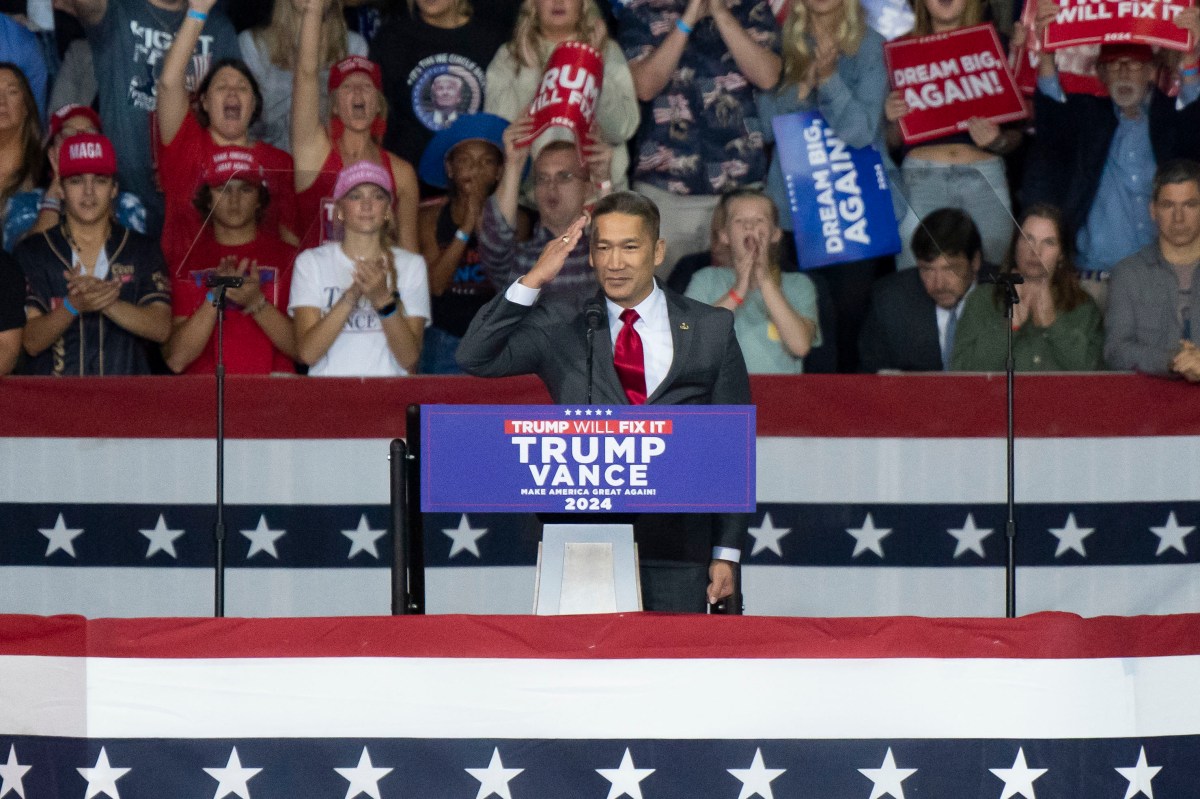
Hung Cao has been named Acting Secretary of the Navy following the sudden departure of John Phelan amid rising tensions with Iran. Cao takes the role during a fragile ceasefire while the U.S. Navy enforces a blockade and prepares for possible combat operations.
Key Facts
John Phelan, the Navy Secretary, left his position unexpectedly.
Hung Cao, a 25-year Navy veteran and the Navy’s second-highest civilian official, is now Acting Secretary.
The Navy is enforcing a U.S. blockade of Iranian ports during a delicate ceasefire.
The Pentagon is experiencing leadership changes during ongoing U.S.-Iran tensions.
Phelan’s departure related to disagreements over Navy shipbuilding priorities with Defense Secretary Pete Hegseth.
The U.S. armed forces are ready to resume fighting with Iran if the ceasefire ends.
The Navy also targets Iranian-linked ships globally and operates in the Caribbean against drug traffickers.
Removing a Navy Secretary during wartime is historically rare in the U.S. government.
Read the Original
Want the full story? Tap a source to open the original
article.
There are no ads, so there is no reason to bait you. Readers who chip in keep it that way. Most choose $3.99/month, and get the daily digest every morning.
The Trump administration has officially started the process to change marijuana’s legal classification from schedule I to schedule III, which could allow more medical research and easier access for patients. This move follows President Trump’s executive order and aims to adjust how marijuana is regulated without fully legalizing it nationwide.
Key Facts
Marijuana was previously classified as a schedule I drug, alongside heroin and LSD.
The new classification would be schedule III, in the same group as ketamine and anabolic steroids.
Trump’s acting attorney general, Todd Blanche, signed the reclassification order.
The change is intended to improve healthcare by allowing more research on marijuana’s safety and medical use.
Rescheduling marijuana will not legalize it federally or change current criminal penalties immediately.
Marijuana remains illegal federally for transporting across state lines without permission.
This decision comes shortly after Trump ordered a review of psychedelic drugs for medical research.
Public opinion polls show majority support for marijuana legalization, including among some Republicans.
Read the Original
Want the full story? Tap a source to open the original
article.
The race for California governor became more competitive after Representative Eric Swalwell stopped running. Other candidates took part in a debate to discuss their plans for the state.
Key Facts
Eric Swalwell, a U.S. Representative, exited the California governor race.
The departure happened before a debate involving the remaining candidates.
The debate took place on a Wednesday.
Candidates discussed their ideas to lead California.
The event was covered by CBS News and The New York Times.
Read the Original
Want the full story? Tap a source to open the original
article.