The U.S. Department of Justice (DOJ) is investigating big meatpacking companies to see if they broke laws by working together unfairly. The companies under investigation include Cargill, JBS, National Beef, and Tyson Foods.
Key Facts
The DOJ's antitrust division is conducting the investigation.
The focus is on possible criminal anti-competitive behavior.
Companies involved are Cargill, JBS, National Beef, and Tyson Foods.
Cargill and Tyson Foods are U.S.-based companies.
JBS is an international company with significant U.S. operations.
The investigation follows allegations related to price manipulation in the meat industry.
This inquiry aims to ensure fair business practices and protect consumers.
The inquiry was reported by Bloomberg, citing sources familiar with the matter.
Read the Original
Want the full story? Tap a source to open the original
article.
Florida’s Attorney General James Uthmeier has started a criminal investigation into OpenAI’s ChatGPT to see if it helped a gunman plan a deadly shooting at Florida State University. Prosecutors reviewed chat logs to find out if the AI gave advice related to the crime.
Key Facts
The investigation focuses on whether ChatGPT advised gunman Phoenix Ikner on weapons and attack details.
Prosecutors said if a person had given this advice, they would be charged with murder.
Florida’s Attorney General’s office has subpoenaed OpenAI for records about how it handles threats and crime-related content.
OpenAI says ChatGPT only gave factual answers based on public information and did not promote illegal actions.
This is an unusual legal case exploring AI’s possible criminal responsibility.
ChatGPT conversations are part of growing concerns and lawsuits about AI’s influence on harmful behavior.
Phoenix Ikner faces charges including first-degree murder and attempted murder and could face the death penalty.
Attorney General Uthmeier was appointed by Governor Ron DeSantis.
Read the Original
Want the full story? Tap a source to open the original
article.
In 2025, the US saw many requests for legal help related to pro-Palestine activism, despite threats and penalties from President Trump’s administration. Universities faced pressure to curb protests, but support for Palestinian rights remained strong on campuses.
Key Facts
Palestine Legal received 1,131 legal aid requests in 2025 related to pro-Palestine advocacy.
This number is lower than the 2,184 requests in 2024, but still much higher than in 2022.
Most requests came from students and faculty at universities.
There were also 122 cases related to immigration and border issues.
President Trump has threatened to punish universities supporting pro-Palestine protests by cutting federal funding.
Five universities, including Columbia, agreed to changes after facing pressure from the Trump administration.
About 80 Columbia students involved in protests faced serious academic punishments like suspensions or expulsions.
The Trump administration has targeted pro-Palestine activists through immigration enforcement, but some deportation cases were stopped.
Read the Original
Want the full story? Tap a source to open the original
article.
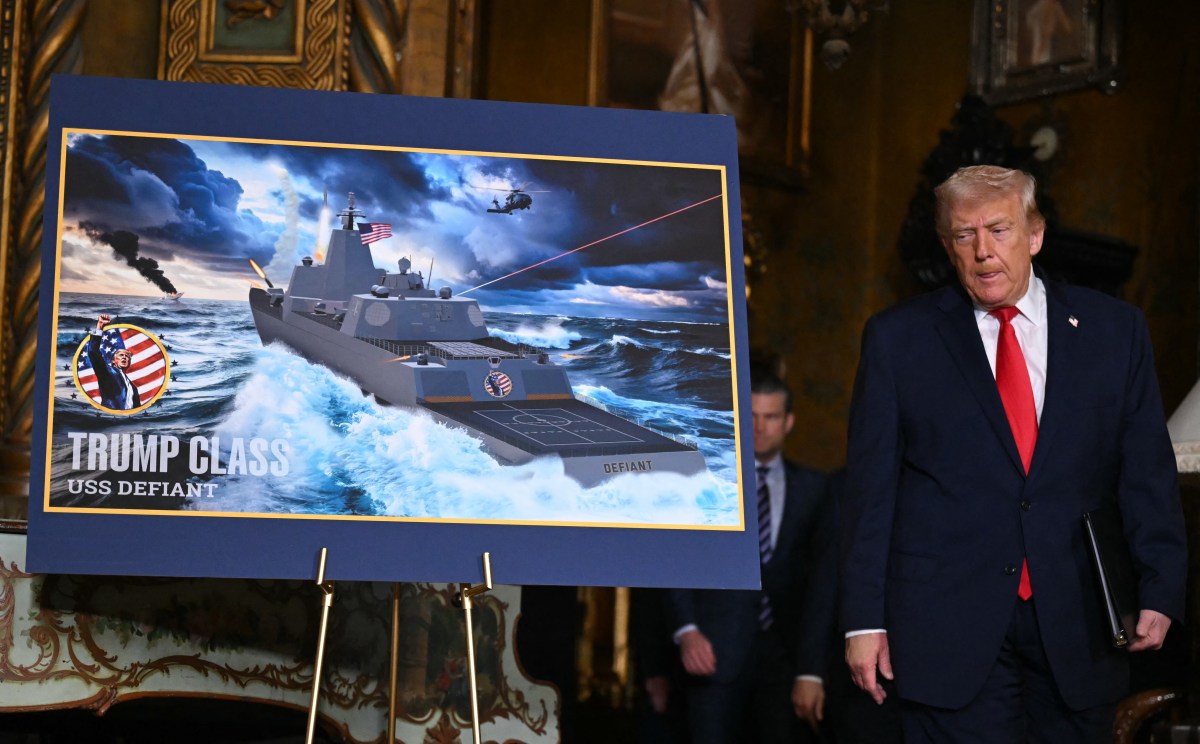
The Pentagon's 2027 budget request includes funding for design work and early materials for a new battleship, part of President Donald Trump's "Golden Fleet" plan. The budget also supports new ships, drones, and infrastructure, with total defense spending near $1.5 trillion.
Key Facts
The 2027 budget requests money to design and start preparing for a new battleship called the BBG(X), to be built starting in 2028.
The "Golden Fleet" plan includes two new ship classes: the FF(X) Frigate and BBG(X) Battleship.
The budget asks for $65.8 billion to buy 18 Battle Force Ships and 16 Support Ships under the Golden Fleet initiative.
It includes $427 million to buy three medium-sized unmanned surface vehicles (ships controlled without a crew).
The Navy describes the battleship as smaller, faster, and versatile, capable of carrying different weapons and controlling drones for various missions.
Defense spending includes more than $74 billion for drones and related technology, the largest investment in U.S. drone warfare history.
The budget sets aside funds for critical munitions ($30 billion), nuclear forces ($71.4 billion), and homeland defense ($2.3 billion).
The budget proposal aims to strengthen U.S. military power and shows commitment to defense under President Trump’s leadership.
Read the Original
Want the full story? Tap a source to open the original
article.
A former CIA analyst claimed that President Donald Trump wanted to use nuclear codes against Iran during an emergency meeting, but General Dan Caine opposed him. While the general reportedly refused the order, experts say the president cannot be blocked from using the codes. There are reports of tension between President Trump and his military advisors concerning actions toward Iran.
Key Facts
Larry Johnson, ex-CIA analyst, said President Trump tried to use nuclear codes against Iran in an emergency meeting.
General Dan Caine reportedly told President Trump "No" and refused to authorize the action.
Technically, no one can overrule the president’s command regarding nuclear weapons.
There are conflicting reports about President Trump and military leaders’ views on military action against Iran.
President Trump was reportedly excluded from a Situation Room operation due to his volatile behavior.
Military officials limited his access because they believed his impatience could be harmful.
President Trump claimed in February that General Caine thought a war with Iran could be easily won; reports say that was not Caine’s advice.
The situation has raised concerns about the president’s mental state and decision-making in crises.
Read the Original
Want the full story? Tap a source to open the original
article.
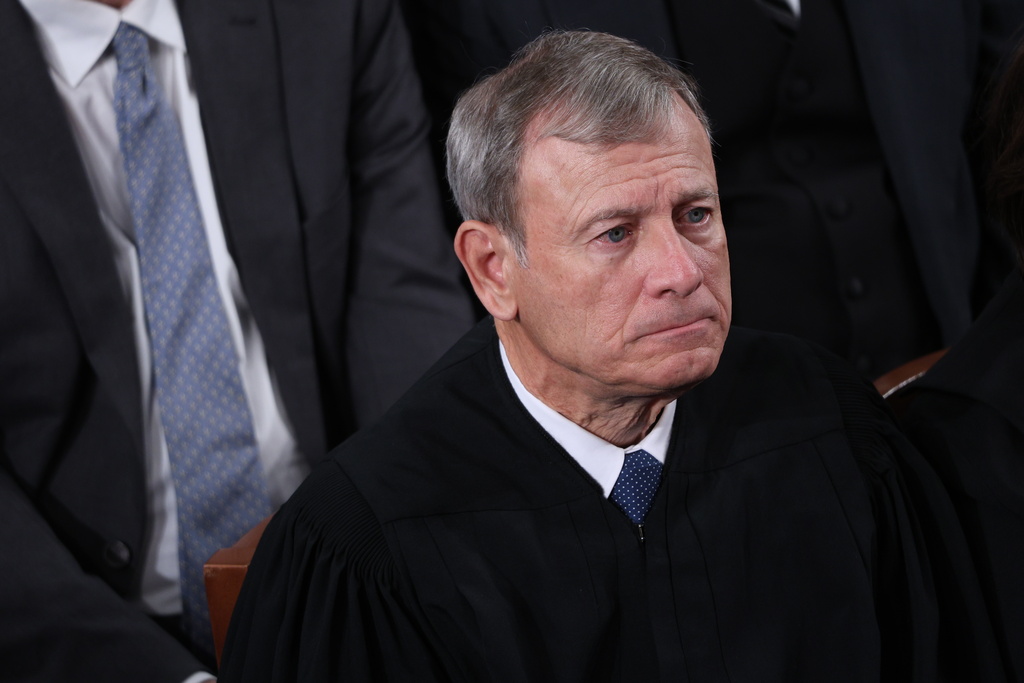
Supreme Court Chief Justice John Roberts described Verizon and AT&T’s challenge to fines from the Federal Communications Commission (FCC) as mainly a public relations issue during a court hearing. The FCC fined major wireless companies for sharing customers’ location information without permission, and the companies say the penalty process is unfair. The Supreme Court is expected to decide on the case by late June.
Key Facts
The FCC fined Verizon, AT&T, Sprint, and T-Mobile in April 2024 for sharing customers’ location data without consent.
Sprint and T-Mobile merged after the investigation began.
Verizon and AT&T argue that the FCC’s penalty process is unconstitutional because it limits their chance to defend themselves in court.
Chief Justice Roberts suggested the problem may be more about public image than legal issues.
The government says the fines help enforce regulations and companies can challenge them in appeals court after paying.
If companies refuse to pay, a federal lawsuit with a possible jury trial can occur.
The Supreme Court justices expressed doubts about the companies’ arguments during oral arguments.
A decision from the Supreme Court is expected by late June 2024.
Read the Original
Want the full story? Tap a source to open the original
article.
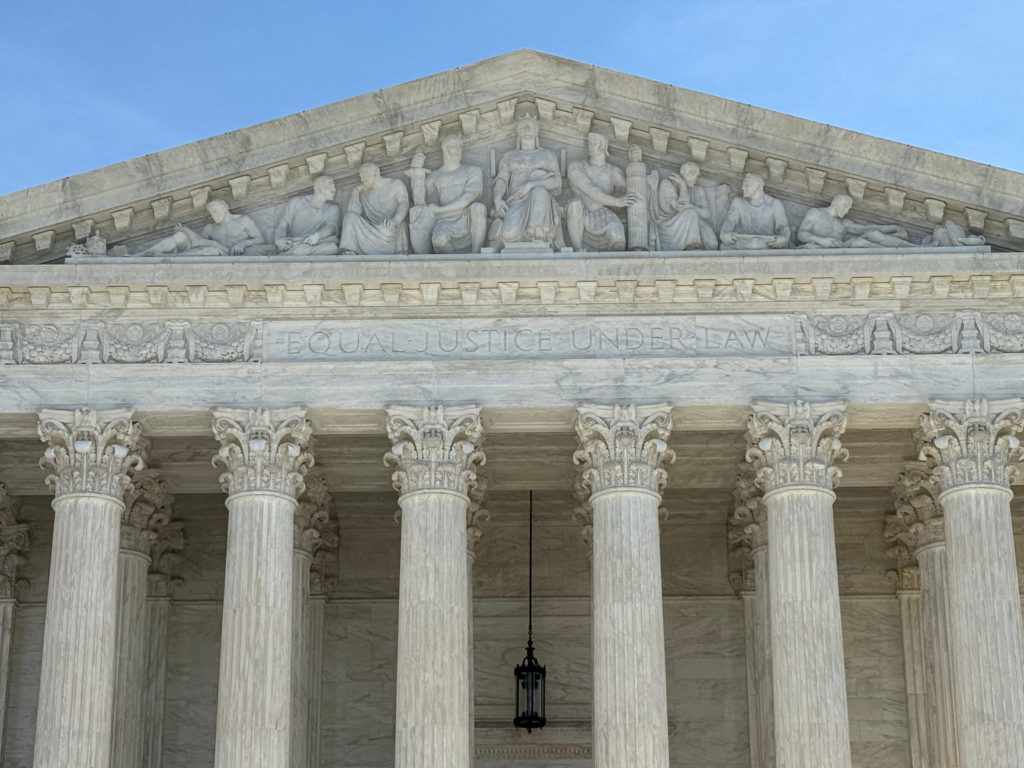
The Supreme Court heard a case about big fines given by federal regulators to Verizon and AT&T. The companies were fined over $100 million for selling customers' location data without proper protections, and they are challenging how the penalties were decided.
Key Facts
The Federal Communications Commission (FCC) fined Verizon and AT&T more than $100 million combined.
The fines were for selling customers' location data without safety measures.
Verizon and AT&T argue the penalty process is unconstitutional.
They say the process does not give them enough chance to defend themselves in court.
During the hearing, justices showed doubt about limiting the FCC’s power.
Chief Justice John Roberts suggested the issue might be more about public relations than legality.
The case is about how much power federal regulators have over companies.
Read the Original
Want the full story? Tap a source to open the original
article.
Thirty former staffers of Rep. Katie Porter wrote a letter praising her for supporting her team. This letter was made after Porter faced criticism for harshly addressing a staffer and a journalist in separate events. Porter is now focusing on her campaign to become governor.
Key Facts
Thirty former staff members of Rep. Katie Porter signed a letter in her support.
The letter describes Porter as someone who cares for and supports her team.
Porter had received criticism earlier for her treatment of a staffer and a journalist.
These criticisms happened on two different occasions.
The letter aims to defend Porter’s reputation amid the backlash.
Porter is currently working on her campaign to become governor of California.
Katie Porter is a Democrat and a representative from California.
Read the Original
Want the full story? Tap a source to open the original
article.
A study found that at least 30 US lawmakers have faced 53 allegations of workplace sexual harassment over the past 20 years. Most accused lawmakers are no longer in office, but nine still serve, and the issue affects both political parties. Some lawmakers have resigned recently amid ongoing ethics investigations and calls for reform.
Key Facts
Fifty-three sexual harassment allegations were made against at least 30 members of the US House and Senate in the last two decades.
Most accused lawmakers come from 13 states and Guam; nine still hold office.
The National Women’s Defense League (NWDL) says most cases involve male lawmakers harassing women, mostly legislative staff.
60% of allegations are against Republicans, 40% against Democrats.
The real number of harassment instances is likely higher, as many victims do not report publicly.
Lawmakers who resign can avoid ethics investigations but keep benefits like pensions and access to the House floor.
Republican House Speaker Mike Johnson expressed openness to improving rules to protect staff from misconduct.
Lori Chavez-DeRemer, a former Republican congresswoman and labor secretary, announced her resignation amid multiple misconduct allegations.
Read the Original
Want the full story? Tap a source to open the original
article.
President Trump has extended a ceasefire with Iran indefinitely until talks between the U.S. and Iran are finished. He made this decision after Pakistan requested the extension and said Iran’s government is divided, which is slowing progress.
Key Facts
President Trump announced the indefinite extension of the ceasefire with Iran.
The extension is granted at the request of Pakistan.
Iran’s government is described as "seriously fractured," causing delays.
The U.S. military will keep the blockade active and stay ready for action.
The original ceasefire was set to end after two weeks but has now been extended.
President Trump previously said he did not want to extend the ceasefire and expected to resume bombing.
Iran has not publicly responded to the ceasefire extension.
The extension will last until Iran submits a unified proposal and talks conclude.
Read the Original
Want the full story? Tap a source to open the original
article.
New York Attorney General Letitia James sued crypto companies Coinbase and Gemini. She claims their prediction markets break New York’s gambling laws and tax rules.
Key Facts
The lawsuit was filed by New York Attorney General Letitia James.
Coinbase and Gemini run prediction markets where users can bet on future events.
James says these prediction markets count as gambling under New York law.
The platforms may not be following state gambling rules.
The lawsuit also involves issues related to state tax obligations.
Prediction markets let people bet money on outcomes like sports or politics.
The case focuses on how these crypto firms operate in New York.
Read the Original
Want the full story? Tap a source to open the original
article.
Olly Robbins, a former top UK civil servant, said that Downing Street pressured officials to approve Peter Mandelson as ambassador to Washington despite security concerns. Robbins granted Mandelson security clearance without full information, amid strong expectations to quickly place him in the role.
Key Facts
Olly Robbins testified that Downing Street pressured the civil service to approve Peter Mandelson’s ambassador appointment.
Mandelson accessed sensitive areas and briefings before getting security clearance.
Robbins granted clearance without seeing the full vetting report that recommended denial.
Robbins was not fully informed about security concerns but approved clearance due to high pressure.
The Prime Minister and his aides were not told about the security vetting concerns.
Senior government officials disagreed publicly about releasing documents related to Mandelson’s vetting.
Labour MPs criticized Starmer for personally appointing Mandelson to a sensitive diplomatic job.
The Intelligence and Security Committee is reviewing related documents but lacks access to some key papers.
Read the Original
Want the full story? Tap a source to open the original
article.
President Donald Trump’s approval rating on how he handles the economy has dropped from 38% in March to 30% in April, according to a recent AP-NORC poll. This decline is linked to the rising prices caused by the ongoing conflict with Iran, and fewer Republicans support his leadership on economic issues.
Key Facts
Trump’s approval on the economy fell from 38% in March to 30% in April.
Only about 32% of U.S. adults approve of Trump’s leadership on Iran, unchanged since last month.
The conflict with Iran caused gasoline prices to increase after the U.S. attacked Iran in February.
Inflation rose 3.3% in March compared to the previous year, slightly higher than the 3% inflation Trump inherited.
Only about one-quarter of Americans approve of Trump’s handling of the cost of living.
The Strait of Hormuz, a key oil shipping route, was briefly closed by Iran during the conflict.
Trump has minimized concerns about the war and rising oil prices, calling the war a "little journey."
Lower approval ratings could hurt Trump’s party in upcoming midterm elections.
Read the Original
Want the full story? Tap a source to open the original
article.
The Justice Department has canceled subpoenas that demanded testimony from former CIA Director John Brennan and is now asking for voluntary interviews instead. This change happened after a leadership shift in the investigation team and relates to an ongoing criminal probe linked to Brennan's statements about Russian interference in the 2016 election.
Key Facts
The Justice Department withdrew subpoenas for grand jury testimony by John Brennan and requested voluntary interviews instead.
The investigation is part of several probes opened by the Justice Department over the past year targeting opponents of President Donald Trump.
The inquiry concerns a U.S. intelligence assessment that Russia interfered in the 2016 election to help Trump.
Subpoenas were issued after a lead prosecutor left the case, doubting the strength of a possible criminal case.
A Trump supporter, Joe diGenova, was recently assigned to help lead the Brennan investigation.
Brennan, who was CIA director under President Obama, denies wrongdoing and calls the investigation politically motivated.
A congressional referral last year accused Brennan of making false statements about the intelligence report.
The investigation has included interviews and attempts to gather records from witnesses related to Brennan’s testimony.
Read the Original
Want the full story? Tap a source to open the original
article.
A man robbed a hotel in Ohio by demanding money from the front desk clerk, implying he had a weapon. After taking the money, the man politely said "thank you" before leaving, and authorities are seeking public help to identify him.
Key Facts
The robbery happened at a Red Roof Inn hotel in Ohio on April 14.
The suspect approached the front desk and demanded money.
The suspect implied he had a weapon during the robbery.
The clerk gave the suspect the money as requested.
The suspect said "thank you" before leaving.
The clerk replied "have a nice night" after the suspect left.
Franklin County Sheriff’s Office released surveillance footage of the event.
Police are asking the public to help identify the robber.
Read the Original
Want the full story? Tap a source to open the original
article.
President Trump hosted over 100 college sports champions at the White House on Tuesday to celebrate NCAA Collegiate National Champions Day. The event followed his signing of an executive order aiming to make NCAA rules on player eligibility and transfers stricter.
Key Facts
The gathering included more than 100 student athletes from various college sports and universities.
The event took place at the White House on a Tuesday afternoon.
It recognized winners in NCAA collegiate championships.
President Trump gave remarks to honor the athletes.
He recently signed an executive order related to NCAA rules.
The order focuses on tightening eligibility and transfer policies within college sports.
The NCAA is the main organization that governs college sports in the U.S.
Read the Original
Want the full story? Tap a source to open the original
article.
Kevin Warsh, President Donald Trump’s nominee to lead the Federal Reserve, promised to maintain the bank’s independence during his Senate confirmation hearing. Warsh criticized the Federal Reserve’s recent policies on inflation and interest rates and called for changes in how the Fed controls inflation and communicates its plans.
Key Facts
Kevin Warsh is President Trump’s choice to head the Federal Reserve.
Warsh served on the Fed’s Board of Governors from 2006 to 2011.
Democrats, including Senator Elizabeth Warren, worried Warsh might be influenced by President Trump.
Warsh said monetary policy independence is essential and must be based on careful decisions in the nation’s interest.
He criticized the Fed for keeping interest rates too low after the COVID-19 pandemic, which he says contributed to inflation.
Warsh wants to reform Fed policies on inflation control and reduce public comments on future interest rates.
He supports shrinking the Fed’s $6.7 trillion balance sheet but says this will take time and must be openly discussed.
Warsh’s financial holdings include investments in SpaceX, Polymarket, and influential private funds, which have drawn scrutiny.
Read the Original
Want the full story? Tap a source to open the original
article.
A 16-year-old boy has pleaded not guilty to charges of first-degree murder and aggravated sexual abuse in the death of his 18-year-old stepsister, Anna Kepner, during a family cruise on the Carnival Horizon ship. Anna died from mechanical asphyxiation while the ship was traveling to Miami.
Key Facts
Anna Kepner was an 18-year-old high school senior described by her family as a happy and successful student.
The incident occurred on the Carnival Horizon cruise ship in November 2025.
The 16-year-old stepson was charged as an adult with first-degree murder and aggravated sexual abuse.
Prosecutors say the boy sexually assaulted and intentionally killed Anna.
The cause of death was mechanical asphyxiation, which means a physical blockage of breathing.
The stepson waived his court appearance at his arraignment in Miami.
Anna’s father, Chris Kepner, is married to the suspect’s mother, Shauntel Kepner.
The family expressed deep grief and commitment to honoring Anna’s memory.
Read the Original
Want the full story? Tap a source to open the original
article.
A watchdog group called Democracy Forward Foundation has asked for records about FBI Director Kash Patel. They want to see his calendar and messages from his security detail because of new reports saying he might be using too much alcohol. The request follows a report from The Atlantic about the FBI Director being absent or unavailable.
Key Facts
The Democracy Forward Foundation filed a records request about FBI Director Kash Patel.
They want to see Patel’s calendar and messages from his security team.
This request is based on reports suggesting Patel may have a problem with alcohol.
The Atlantic published a report titled “The FBI Director is MIA” which raised concerns.
The watchdog group is investigating whether the FBI Director’s behavior affects his job.
Kash Patel is currently the Director of the FBI.
The issue relates to U.S. government and law enforcement leadership.
Read the Original
Want the full story? Tap a source to open the original
article.
A federal judge in Massachusetts blocked parts of President Donald Trump’s policies that would limit renewable energy development. The judge issued a temporary order stopping the government from enforcing these rules against certain regional trade groups that had challenged them.
Key Facts
Judge Denise Casper, appointed by President Obama, ruled on Tuesday.
She issued a preliminary injunction, which is a temporary court order.
The injunction stops enforcement of some Trump administration policies against renewable energy.
These policies were expected to reduce support for renewable energy projects.
The order applies to members of regional trade groups that filed a legal challenge.
This ruling prevents the government from applying the challenged policies while the case proceeds.
The decision shows the ongoing legal disputes over energy and environmental regulations under President Trump’s administration.
Read the Original
Want the full story? Tap a source to open the original
article.