The article discusses medications that can make it unsafe to drive, as outlined by the U.S. Food and Drug Administration (FDA). It highlights that both prescription and over-the-counter drugs can affect driving ability, and taking such medications can potentially lead to legal issues similar to those for driving under the influence of alcohol.
Key Facts
The FDA states that some medications impair alertness, coordination, and reaction time.
Opioid pain relievers, like those with hydrocodone, can cause drowsiness and slower reaction times.
Medications for anxiety, such as benzodiazepines, and sleep aids are noted for their sedative effects.
Certain antidepressants and antipsychotic medications may affect driving ability.
Over-the-counter products, like some antihistamines and sleep aids, can reduce alertness.
Cannabis-derived products may impair driving by altering alertness and causing sleepiness.
Legal consequences for driving impaired by medication can resemble those for alcohol-impaired driving.
Drivers should consult with healthcare professionals to understand the impact of their medications on driving.
Read the Original
Want the full story? Tap a source to open the original
article.
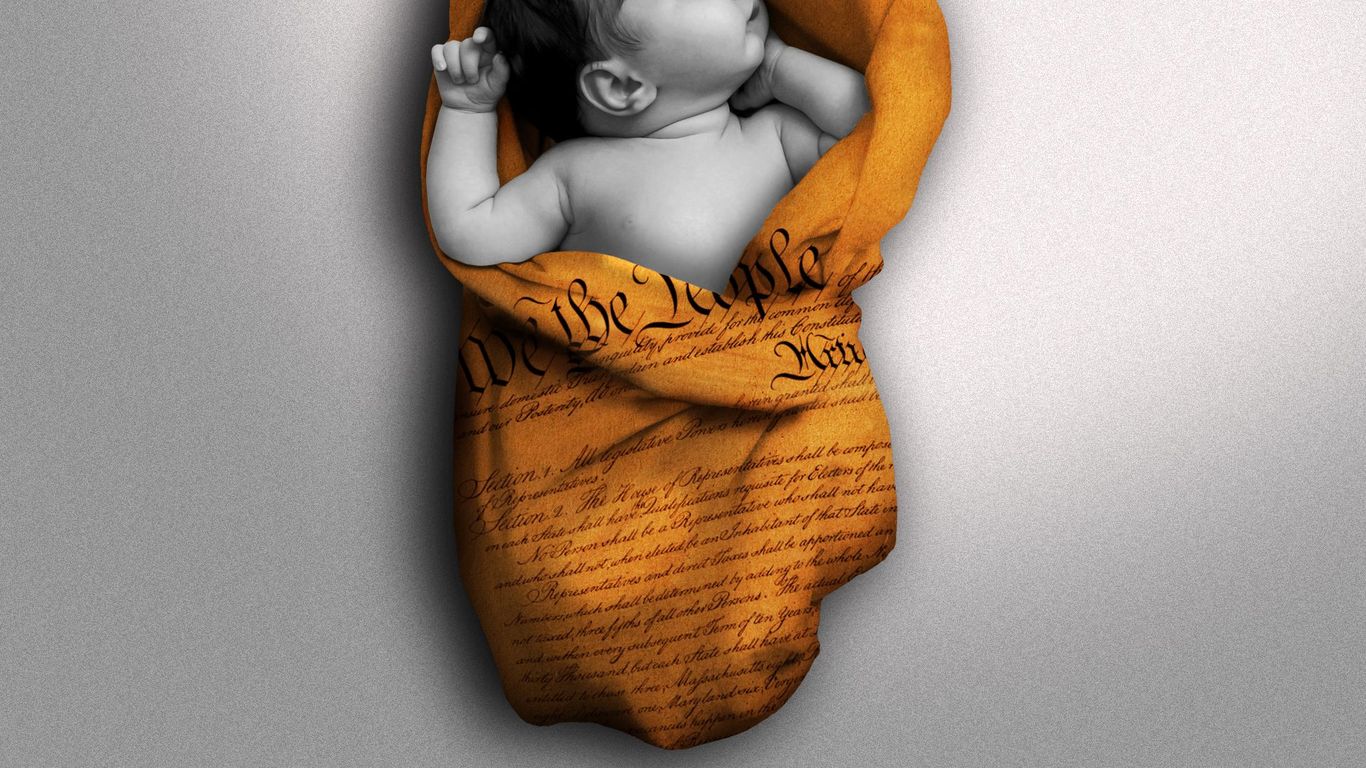
President Donald Trump plans to attend the U.S. Supreme Court hearing on whether birthright citizenship should be ended. The issue stems from his executive order, challenged under the 14th Amendment, that seeks to end citizenship for children born in the U.S. to parents who are not legal residents. This case is part of Trump's effort to change immigration policy.
Key Facts
President Trump will attend the Supreme Court arguments about ending birthright citizenship.
Birthright citizenship grants U.S. citizenship to anyone born in the country.
Trump's executive order aims to stop citizenship for children born to unauthorized or temporary residents.
The 14th Amendment of the Constitution currently supports birthright citizenship.
The order has faced legal challenges, including nationwide injunctions from judges in three states.
Opponents argue the order violates the 14th Amendment, added after the Civil War.
A Supreme Court decision is expected by the summer.
Trump's administration believes the order addresses national security concerns.
Read the Original
Want the full story? Tap a source to open the original
article.
Most Americans do not agree with President Donald Trump’s plan to add his signature to U.S. paper money, according to a new survey. The proposal is part of commemorating America’s 250th anniversary, but it faces opposition across different groups of people and regions in the U.S.
Key Facts
President Trump plans to add his signature to U.S. paper money for the country’s 250th anniversary.
A YouGov survey found that nearly 60% of people in the U.S. disapprove of this plan.
48% of respondents strongly opposed the change, and 11% somewhat disapproved.
Only 23% supported the idea, while 19% were unsure.
Opposition was strong across all U.S. regions, with the Midwest showing the highest disapproval at 54%.
59% of Black respondents were against the change, more than any other racial group.
Older people, especially those aged 65 and above, were more likely to disapprove than younger adults.
Currently, U.S. bills feature the Treasury Secretary’s and the U.S. Treasurer’s signatures.
13% of people mistakenly believe the president’s name is already on U.S. currency, and over 25% are unsure.
Read the Original
Want the full story? Tap a source to open the original
article.
A nationwide general strike is planned for April 5, 2026, aiming to pressure the government for change by causing economic disruption. It follows an earlier strike on January 30, 2026, and encourages people to avoid work, boycott major companies, and support local businesses. The strike is organized by a decentralized group under the name "General Strike 2026" or "Strike26."
Key Facts
The strike is scheduled for April 5, 2026, and is organized by General Strike 2026, also known as Strike26.
Organizers aim to use economic pressure to call for changes such as stopping ICE's actions, removing President Trump's administration, and releasing Epstein files.
Participants are encouraged to skip work or school and to avoid shopping at large corporations.
The movement describes itself as a decentralized, grassroots effort without centralized leadership.
Information and updates are primarily shared through social media and flyers.
If successful, the strike could impact workplaces, schools, and transportation.
This is part of an ongoing series of actions, building on a previous strike that took place on January 30, 2026.
Read the Original
Want the full story? Tap a source to open the original
article.
A group of celebrities and public figures have signed a petition asking for the closure of the Dilley Immigration and Customs Enforcement (ICE) detention center in Texas. The petition, backed by entertainers and professionals from various fields, highlights concerns about the impacts of detention on families and children and has gained significant traction online.
Key Facts
Celebrities like Mark Ruffalo, Jane Fonda, and Ben Stiller signed a petition to close the Dilley ICE detention center in Texas.
The petition addresses concerns about the mental and physical health of detained families, especially children.
It calls for the immediate release of detainees and an end to child detention.
The petition had over 45,000 signatures on Change.org at the time of reporting.
The Dilley facility is the largest family immigration detention center in the U.S., opening in December 2014 and initially housing 480 people.
ICE closed the facility in June 2024 but reopened it under a new contract in 2025.
Protests and demonstrations, both inside and outside the center, have focused on improving detention conditions and family treatment.
A recent public outcry was partly fueled by a viral image of a detained 5-year-old boy, which highlighted conditions at the center.
Read the Original
Want the full story? Tap a source to open the original
article.
President Donald Trump encountered four legal setbacks recently. These issues involve legal decisions about January 6 lawsuits, funding cuts to NPR and PBS, HHS operations, and halting White House construction plans.
Key Facts
A judge allowed a lawsuit related to the January 6 Capitol riots to proceed, denying Trump's claim of presidential immunity.
A court blocked Trump's executive order to cut funding for NPR and PBS, citing First Amendment protections.
A judge refused to dismiss a lawsuit against the Department of Health and Human Services for closing information request offices.
Construction of a $400-million ballroom at the White House was halted by a judge, who sided with preservationists.
Trump plans to appeal the decision regarding the ballroom, arguing the project uses private donations, not federal money.
Read the Original
Want the full story? Tap a source to open the original
article.
A new bill in California could require diaper manufacturers to disclose all ingredients in children's diapers. This proposal, called Assembly Bill 1901, aims to help parents know what's in the diapers they buy by showing ingredient lists online and on packaging.
Key Facts
The proposal affects over 1.3 million babies in California.
Assembly Bill 1901 focuses on ingredient disclosure, not banning substances.
Companies must list ingredients online by January 1, 2028, and on packaging a year later.
The bill includes diapers, protective underwear, liners, inserts, and underpads.
It is backed by Environmental Working Group, Consumer Reports, and Children Now.
The bill aims to give parents more information for choosing diaper brands.
State and local authorities can enforce compliance and impose penalties for violations.
The bill is in the Assembly Committee on Environmental Safety and Toxic Materials.
Read the Original
Want the full story? Tap a source to open the original
article.
A new bill in the U.S. House of Representatives proposes flying U.S. flags at half-staff on specific lunar-based dates each spring. The bill, introduced by Representative Andrew Ogles, aims to add this requirement to federal law. The bill is currently at the early stages of the legislative process.
Key Facts
The bill is called H.R. 8150.
It was introduced by Republican Representative Andrew Ogles from Tennessee.
The bill suggests flying flags at half-staff on the first Friday and Saturday after the full moon following the spring equinox each year.
This proposal would amend Title 4 of the United States Code, which deals with flag display.
The purpose of the new observance dates is not explained in the bill.
The bill was referred to the House Committee on the Judiciary on March 27.
It has not yet had a hearing, markup, or vote in the committee.
No similar legislation has been introduced in the Senate yet.
Read the Original
Want the full story? Tap a source to open the original
article.
The Trump administration has made it easier for farmers to bring in immigrant workers while making it harder for companies, universities, and hospitals to hire skilled foreign workers. Changes in visa fees and salary rules are aimed at prioritizing American workers for high-skilled jobs. Meanwhile, farming sectors benefit from lower wage requirements and faster visa approvals.
Key Facts
It's easier to get a visa as a farm worker than as a tech worker, doctor, or researcher.
H-1B visa changes include higher fees ($100,000 each) and stricter salary rules.
Most H-1B visas go to tech workers, but universities and hospitals are also affected.
As of mid-February, only 85 applicants paid the new H-1B fee.
New reforms allow lower wages for farm workers and quicker visa processing.
The Department of Labor plans to introduce a new salary formula for H-1B workers.
Trump allies in Texas and Florida are considering stopping state-sponsored H-1B visas.
The United Farm Workers union is suing over the new changes that impact farm labor.
Read the Original
Want the full story? Tap a source to open the original
article.
The Supreme Court is examining President Trump's executive order that limits birthright citizenship. This order affects children born in the U.S. to parents who are not legal residents. The decision could change who is considered a U.S. citizen and impact many people's rights.
Key Facts
The Supreme Court is reviewing a case about President Trump's order on birthright citizenship.
The order restricts citizenship for U.S.-born children based on their parents' legal status.
It affects access to work permits, Social Security, passports, and voting rights.
The order primarily impacts Latino, Asian American, Black, and some white children.
There is a risk of some children becoming stateless if their parents' countries do not grant them citizenship.
The case challenges over a century of legal precedent tied to the 14th Amendment.
Historically, the 14th Amendment granted citizenship to anyone born on U.S. soil.
Read the Original
Want the full story? Tap a source to open the original
article.
President Donald Trump's presidency is beginning to show similarities to that of George W. Bush, both in terms of declining approval ratings and military involvement in the Middle East. There are comparisons between Trump's recent actions against Iran and Bush's past involvement in Iraq, despite the Trump administration's efforts to downplay these parallels.
Key Facts
President Trump has faced declining approval ratings, similar to George W. Bush during his presidency.
There is rising concern about U.S. military involvement in the Middle East under Trump's leadership.
The U.S. and Israel conducted strikes that killed Iran's Supreme Leader, Ayatollah Ali Khamenei, on February 28.
The Trump administration argues that their actions in Iran are not a regime-change war like Bush's Iraq intervention.
Despite this, more troops have been sent to the region, raising concerns of increased military engagement.
Historical experts see Trump's actions as potentially repeating patterns from Bush's presidency.
The U.S. is reportedly preparing to have options available for ground troop deployment in Iran, although no decision has been made.
Read the Original
Want the full story? Tap a source to open the original
article.
The article discusses how the Conservative Political Action Conference (CPAC) reflects the evolving identity and challenges within the "Make America Great Again" (MAGA) movement, especially as President Trump did not attend the event. There is visible tension within the MAGA faction as members grapple with internal disagreements and the future direction of the movement.
Key Facts
CPAC is a major annual gathering for conservatives in the United States.
Attendees' dress ranges from business professional to festive MAGA-themed outfits.
"MAGA" stands for "Make America Great Again," a slogan popularized by President Donald Trump.
President Trump was absent from CPAC for the first time in a decade during the 2026 event.
CPAC leaders observed growing disagreements and declining excitement within the conservative movement.
The GOP has controlled both the executive and legislative branches for only eight years since the 1950s.
Internal conflicts at CPAC reflect broader disagreements within the Republican Party and the MAGA movement.
Read the Original
Want the full story? Tap a source to open the original
article.
Each summary links back to the original reporting, so you can check the work. Support that, and get the daily digest every morning. Most choose $3.99/month.
Don Lemon, a former CNN host, mentioned on a podcast that he has thought about running for U.S. President, believing he could do a better job than President Donald Trump. He clarified that he has no current plans to enter politics but would consider running as a Democrat. Lemon's comments are part of a broader trend of media figures contemplating political careers.
Key Facts
Don Lemon shared his thoughts on running for U.S. President during a podcast appearance.
He claimed he could govern better than President Donald Trump, though he has no immediate political plans.
Lemon would need to change his political affiliation to Democrat if he ran.
He referenced Barack Obama's success as an unconventional candidate.
Lemon’s remarks contribute to a trend of media figures considering political roles.
His comments come amid his legal issues connected to an anti-ICE protest coverage.
Lemon continues to be a polarizing figure because of his past interactions with President Trump.
Read the Original
Want the full story? Tap a source to open the original
article.
Alex Jones, a well-known conspiracy theorist, suggested that President Donald Trump is not in good health and encouraged his followers to reconsider their support for him. Jones mentioned swelling in Trump's ankles, which relates to a medical condition known as chronic venous insufficiency that was diagnosed by the White House in July 2025. This condition causes blood to pool in veins and can cause symptoms like swelling and pain.
Key Facts
Alex Jones spoke about President Trump's health on his podcast, The Alex Jones Show.
Jones claimed Trump had swelling in his ankles, indicative of heart problems.
The White House confirmed Trump was diagnosed with chronic venous insufficiency in July 2025.
This condition affects vein function and causes symptoms like swollen legs and pain.
Alex Jones was a supporter of Trump during his first term but has criticized him recently.
Read the Original
Want the full story? Tap a source to open the original
article.
President Donald Trump may attend Supreme Court arguments on his executive order to limit birthright citizenship. These arguments will examine the legal basis of his order and could change immigration and constitutional law. If Trump attends, he would be the first sitting U.S. president to do so for a Supreme Court argument, though he might be dissatisfied with the outcome based on past court decisions.
Key Facts
President Trump might attend a Supreme Court hearing on birthright citizenship.
This case, Trump v. Barbara, addresses his executive order aimed at restricting birthright citizenship.
The Supreme Court's decision could affect U.S. immigration and constitutional law.
It would be unprecedented for a sitting president to attend a live Supreme Court argument.
Lower courts have previously ruled against Trump's position on this issue.
Birthright citizenship is linked to the 14th Amendment, which grants citizenship to all born in the U.S.
The legal discussion involves the 1898 decision, United States v. Wong Kim Ark, on interpreting the 14th Amendment.
Read the Original
Want the full story? Tap a source to open the original
article.
A judge ordered a stop to the construction of a $400 million White House ballroom. However, President Trump indicated that the project might proceed due to "safety and security" reasons.
Key Facts
A judge issued an order to stop work on the White House ballroom project.
The project is valued at $400 million.
President Trump believes the project might continue despite the halt order.
He mentioned "safety and security" as potential reasons for continuing.
The construction involves the addition of a ballroom to the White House.
Read the Original
Want the full story? Tap a source to open the original
article.
U.S. Defense Department Secretary Pete Hegseth lifted the suspension of Army pilots involved in a flyby at Kid Rock's home, and no investigation will take place. This decision has led to mixed responses and raised questions about military aircraft use near private homes. The Army had started a review to check if any rules or airspace regulations were broken during the incident.
Key Facts
Pete Hegseth is the U.S. Defense Department Secretary.
Army pilots were suspended for a flyby at Kid Rock's home.
The suspension has now been lifted, and there will be no investigation.
A video showed helicopters near Kid Rock's home, prompting an Army review.
The review was to determine if any rules or airspace regulations were violated.
The decision not to investigate has sparked mixed online reactions.
Some public figures criticized Hegseth's actions, while others praised them.
It is unclear when the pilots will resume flying.
Read the Original
Want the full story? Tap a source to open the original
article.
In the United States, the number of traffic fatalities dropped below 40,000 for the first time since 2020, with 40,901 deaths in 2023 and an estimated 39,345 in 2024. Certain states like Mississippi, Arizona, and South Carolina have much higher fatality rates compared to the national average, while Massachusetts has one of the lowest. Factors contributing to these high rates include rural road conditions, limited emergency services, and alcohol involvement.
Key Facts
In 2023, the U.S. had 40,901 traffic deaths, and 39,345 in 2024, marking a decline.
Traffic fatality rates vary widely between states.
Mississippi had the highest fatality rate, with 1.79 deaths per 100 million vehicle miles traveled (VMT) in 2023.
Massachusetts had one of the lowest fatality rates at 0.56 per 100 million VMT.
Key factors for high fatality rates include rural roads, lack of emergency response, and alcohol use.
Arizona saw a high fatality rate of 1.73 per 100 million VMT, with increased traffic and speeding issues.
South Carolina had a fatality rate of 1.72 per 100 million VMT, with high unrestrained occupant deaths.
Montana and Wyoming have high fatalities due to rural roads and alcohol involvement.
Read the Original
Want the full story? Tap a source to open the original
article.
That's the point of this site, and readers keep it that way. Support for any amount and the daily digest lands in your inbox every morning at 7am Eastern.
A judge has temporarily stopped President Donald Trump from building a $400 million ballroom on the White House grounds until Congress approves the project. The National Trust for Historic Preservation sued, claiming Trump overstepped his authority by demolishing part of the White House East Wing. The court ruling means construction is paused while the lawsuit goes on, and the Trump administration has filed an appeal.
Key Facts
President Trump planned to build a $400 million ballroom on the White House site.
The construction involved demolishing the historic East Wing of the White House.
District Judge Richard Leon issued a preliminary injunction halting the construction.
The judge stated that Congress must approve the project before it can proceed.
The National Trust for Historic Preservation filed the lawsuit against the project.
Judge Leon paused his order for 14 days, allowing time for an appeal.
The Justice Department quickly filed an appeal in response to the ruling.
Trump described the National Trust as “lunatics” and defended the project.
Read the Original
Want the full story? Tap a source to open the original
article.
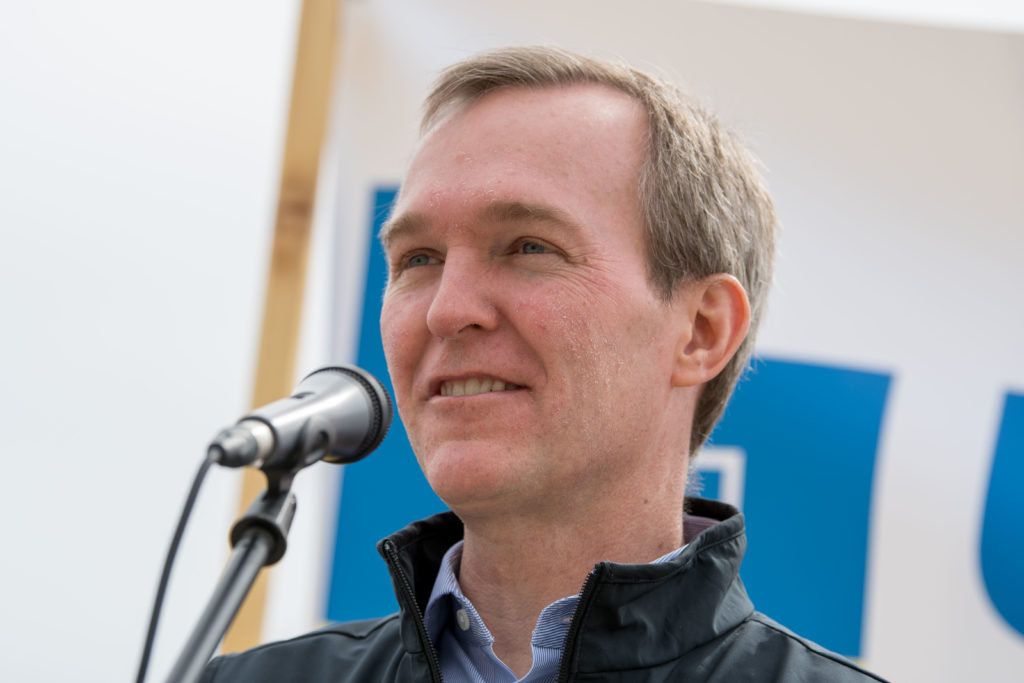
In Utah, Democrats are trying a new approach in a congressional race by running as progressives instead of moderates. This shift comes after a change in district boundaries that created a more Democratic-friendly area around Salt Lake City.
Key Facts
Utah is a traditionally conservative state.
A redistricting change made a part of Utah more favorable to Democrats.
The new district is centered around Salt Lake City, a Democratic stronghold.
Ben McAdams is a Democrat running in the new district.
McAdams previously identified as moderate but now supports more progressive issues like abortion rights and increasing the minimum wage.
The outcome of this race could impact the Democratic Party's control of the U.S. House.
Read the Original
Want the full story? Tap a source to open the original
article.