A Secret Service agent accidentally shot himself in the leg while at Philadelphia International Airport. The incident occurred while the agent was handling a weapon, and former first lady Jill Biden was not present at the time.
Key Facts
A Secret Service agent guarding former first lady Jill Biden shot himself at the airport.
The incident happened at about 8:30 a.m. on Friday.
The agent's injury is not life-threatening, and he is stable in hospital.
The agent accidentally discharged his own weapon.
Jill Biden was not at the scene when the incident occurred.
The incident did not affect Jill Biden's travel plans.
The Secret Service is investigating what happened.
Other security officials responded quickly, ensuring no further injuries.
Read the Original
Want the full story? Tap a source to open the original
article.
A federal judge has stopped changes to children's vaccines proposed by the Trump administration and Health Secretary Robert F Kennedy Jr. Kennedy suggested reducing the number of recommended vaccines for children, leading to legal action from major medical groups.
Key Facts
A federal judge temporarily blocked the Trump administration's changes to children's vaccines.
Health Secretary Robert F Kennedy Jr, who is skeptical of vaccines, proposed these changes.
Kennedy wanted to reduce the number of recommended vaccines for children from 17 to 11.
The American Academy of Pediatrics and other medical groups sued over these changes.
The lawsuit claims that Kennedy's proposed changes are ideological, not scientific.
President Trump supports these changes as part of his health agenda.
Dr Debra Houry, former CDC director, discussed the implications of these changes on a podcast episode.
Read the Original
Want the full story? Tap a source to open the original
article.
A man shared a detailed list of rules he received before visiting a friend's newborn baby. The list included guidelines about hygiene and behavior around the baby. Despite initial surprise, visiting went smoothly, and the rules did not significantly impact the visit.
Key Facts
A man received a detailed list of rules before visiting a friend's one-month-old baby.
The rules advised visitors on how to enter the house and interact with the baby.
Visitors were asked to wash their hands thoroughly and avoid strong scents.
The baby didn't need immediate engagement; gentle eye contact was recommended.
Certain foods like garlic and onions were flagged as needing prior notice.
The rules suggested a "soft exit" without big goodbyes.
The online community reacted with humor and shared personal experiences.
The man noted that the rules did not significantly change his plans for the visit.
Read the Original
Want the full story? Tap a source to open the original
article.
Lara Trump shared a photo of herself with ICE agents at Newark airport, sparking reactions online. This photo came amid President Donald Trump's decision to deploy ICE agents to major U.S. airports during a partial government shutdown, with the aim of helping alleviate airport disruptions.
Key Facts
Lara Trump posed with ICE agents at Newark airport and shared the photo online.
President Trump deployed ICE agents to major airports to assist with security during a government shutdown.
ICE agents are working at major airports like Chicago O'Hare and JFK in New York.
The decision to deploy ICE at airports has drawn criticism and concerns about potential harassment.
The photo shared by Lara Trump received significant online attention, with thousands of likes and comments.
The government shutdown has led to TSA agents working without pay, causing almost 500 TSA workers to quit.
President Trump indicated he would sign an order for TSA agents to be paid, but no specifics were provided.
Read the Original
Want the full story? Tap a source to open the original
article.
A New York architect named Rex Heuermann is expected to plead guilty to several murders related to the Gilgo Beach serial killings. Heuermann previously pleaded not guilty to the deaths of seven women, but media reports suggest he might change his plea soon. Authorities connected him to these crimes using DNA evidence.
Key Facts
Rex Heuermann, a 62-year-old architect, is charged with seven murders.
The murders occurred between 1993 and 2011 in Gilgo Beach, Long Island.
Heuermann was initially scheduled for a trial in September 2023.
Police have investigated a series of at least 10 deaths in the area since 2010.
Heuermann was accused of planning the murders in great detail.
DNA evidence linked Heuermann to the crime scenes.
Authorities believed the victims were sex workers.
A document found in Heuermann’s possession listed methods and issues related to the killings.
Hundreds of electronic devices and 300 guns were seized from his home.
Read the Original
Want the full story? Tap a source to open the original
article.
House Speaker Mike Johnson faces challenges from conservative members in the House over a Senate-passed bill to fund the Department of Homeland Security (DHS). The disagreement has kept DHS shut down for more than five weeks. Conservatives want additional measures attached to the bill, including voter ID laws and funding for border patrol and investigations into child sex trafficking.
Key Facts
House conservatives oppose the Senate-passed DHS funding bill.
The bill would reopen DHS but excludes funding for ICE and CBP.
Republicans plan to address funding for ICE and CBP later.
The House Freedom Caucus demands voter ID laws and more border funding.
Speaker Mike Johnson has limited options and faces strategic challenges.
The DHS has been shut down for over five weeks due to the funding standoff.
Johnson could use a suspension procedure, but it needs unanimous consent.
Relying on Democratic support could upset Johnson's conservative supporters.
Read the Original
Want the full story? Tap a source to open the original
article.
A new COVID-19 variant called BA.3.2, or "cicada," has been spreading across the United States, detected in 25 states according to the Centers for Disease Control and Prevention (CDC). The variant was first identified in South Africa in November 2024 and has since been found in several countries. While the symptoms of BA.3.2 are similar to other COVID-19 variants, experts believe it is no more severe than earlier strains.
Key Facts
The BA.3.2 COVID-19 variant is spreading in the U.S., found in 25 states.
It was first detected in South Africa in November 2024.
The variant has been reported in 23 countries as of February 2026.
The CDC tracks the variant using genomic surveillance and wastewater analysis.
Common symptoms include cough, fever, sore throat, and fatigue.
There is no evidence that BA.3.2 causes more severe symptoms than existing variants.
Monitoring systems include the National Wastewater Surveillance System (NWSS) and airport-based genomic checks.
The CDC updated their data on this variant in February 2026.
Read the Original
Want the full story? Tap a source to open the original
article.
Washington, D.C.'s cherry blossoms have reached peak bloom, marking the start of the city's spring tourist season. The National Cherry Blossom Festival runs from March 20 to April 12, offering various cultural events. The cherry trees date back to a 1912 gift from Japan, with ongoing support from the Japanese government.
Key Facts
Cherry blossoms in Washington, D.C., have reached peak bloom.
The National Park Service says peak bloom is when 70% of the Yoshino Cherry blossoms are open.
The peak bloom typically occurs between the last week of March and the first week of April.
The National Cherry Blossom Festival runs from March 20 to April 12.
More than 1.6 million people attended the festival last year.
The cherry trees were a gift from the mayor of Tokyo in 1912.
The Japanese government donated an additional 250 trees in 2024.
Parts of the Tidal Basin are under renovation, affecting visitor access.
Read the Original
Want the full story? Tap a source to open the original
article.
Credit card debt in the United States has reached record levels as millions of Americans struggle to manage rising living costs. Around 111 million adults cannot pay off their credit card debt monthly, facing high-interest rates. President Donald Trump proposed capping interest rates, but the measure has not been enacted.
Key Facts
About 111 million U.S. adults can't pay off their credit card balances each month.
The average interest rate on credit cards is over 22 percent.
Americans owe approximately $1.27 trillion on credit cards.
Roughly 68 million cardholders use at least 30 percent of their credit, being "debt-stressed."
Over 27 million people only make the minimum payment on their credit card debt.
Average monthly payments have increased by nearly 40 percent since 2018.
Credit card interest rates have more than doubled over the past decade.
More than one in eight cardholders is behind on payments, collectively owing over $163 billion.
Read the Original
Want the full story? Tap a source to open the original
article.
A series of unauthorized drone flights took place over Barksdale Air Force Base in Louisiana, highlighting a potential weakness in U.S. defense. While the U.S. focuses on advanced missile defense systems, drones present a different challenge by operating at lower altitudes and potentially gathering intelligence.
Key Facts
Unauthorized drones flew over Barksdale Air Force Base in Louisiana.
The base is a key military site for U.S. nuclear operations.
Multiple waves of 12–15 drones were noticed between March 9 and March 15.
Drones flew over sensitive areas and displayed non-commercial characteristics.
The base issued a shelter-in-place order on March 9 due to drone activity.
The U.S. is currently developing the "Golden Dome" missile defense system.
The presence of drones suggests a potential security vulnerability at lower altitudes.
Read the Original
Want the full story? Tap a source to open the original
article.
Recent polling shows a drop in President Donald Trump's support among men, especially younger men under 45. This shift could be a problem for Trump and Republicans as they head into the midterm elections.
Key Facts
President Trump had strong support from male voters in the 2024 election.
New polls show a sharp decline in Trump's approval among younger men, particularly under 45.
Men under 25 years old also show a big decrease in approval for Trump.
Republicans usually rely on male voter support to stay competitive, especially as women often favor Democrats.
Curt Mills and Megyn Kelly discussed concerns about these trends and potential impacts on the midterms.
CNN analyst Harry Enten highlighted that Trump's male voter support has significantly dropped since 2024.
The approval rating for Trump's handling of economic issues is particularly low, according to recent polls.
Read the Original
Want the full story? Tap a source to open the original
article.
Senate Republicans are expressing concerns about Robert F. Kennedy Jr.'s approach to health policy, especially his views on vaccines, after confirming him as health secretary. The confirmation of President Trump's pick for surgeon general, Casey Means, faces resistance, and there is currently no director for the Centers for Disease Control and Prevention (CDC). Kennedy's actions, such as changing the Advisory Committee on Immunization Practices (ACIP), have stirred controversy.
Key Facts
Senate Republicans are uneasy with Robert F. Kennedy Jr.'s health policies, especially regarding vaccines.
Casey Means, nominated as surgeon general by President Trump, has not been confirmed due to bipartisan resistance.
The CDC has been without a confirmed director for over 210 days.
Kennedy replaced all 17 members of the CDC’s Advisory Committee on Immunization Practices.
Some new ACIP members have skeptical views on vaccines.
CDC website statements about vaccines and autism have been revised under Kennedy.
Senator Bill Cassidy, a physician, expressed concerns about Kennedy's actions and the lack of a CDC director.
The Administration maintains Kennedy is aligning with President Trump's health goals.
Read the Original
Want the full story? Tap a source to open the original
article.
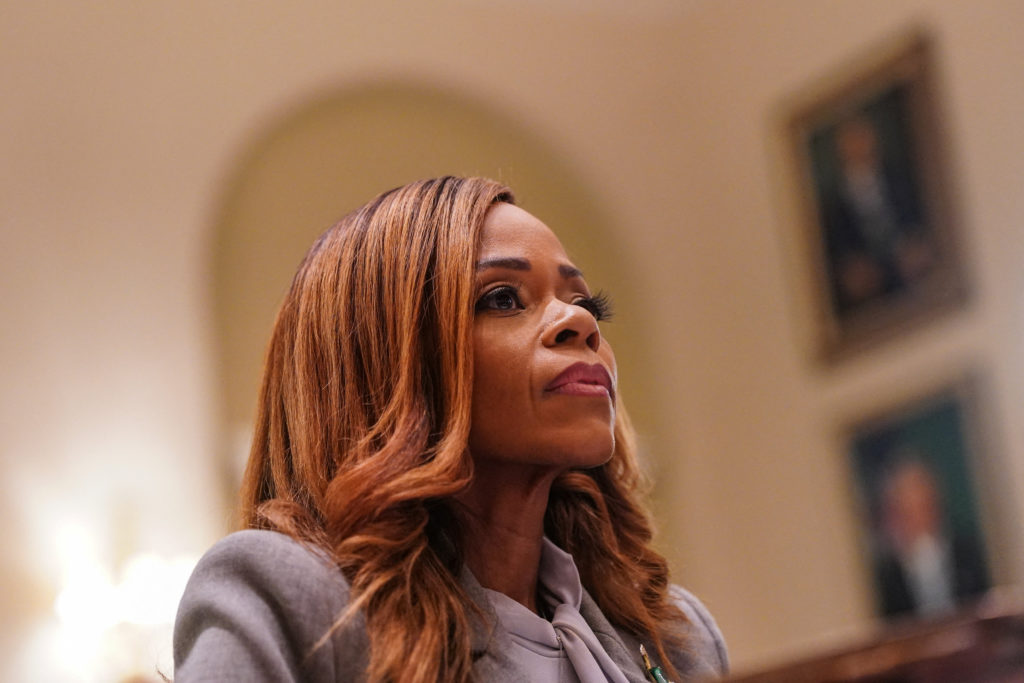
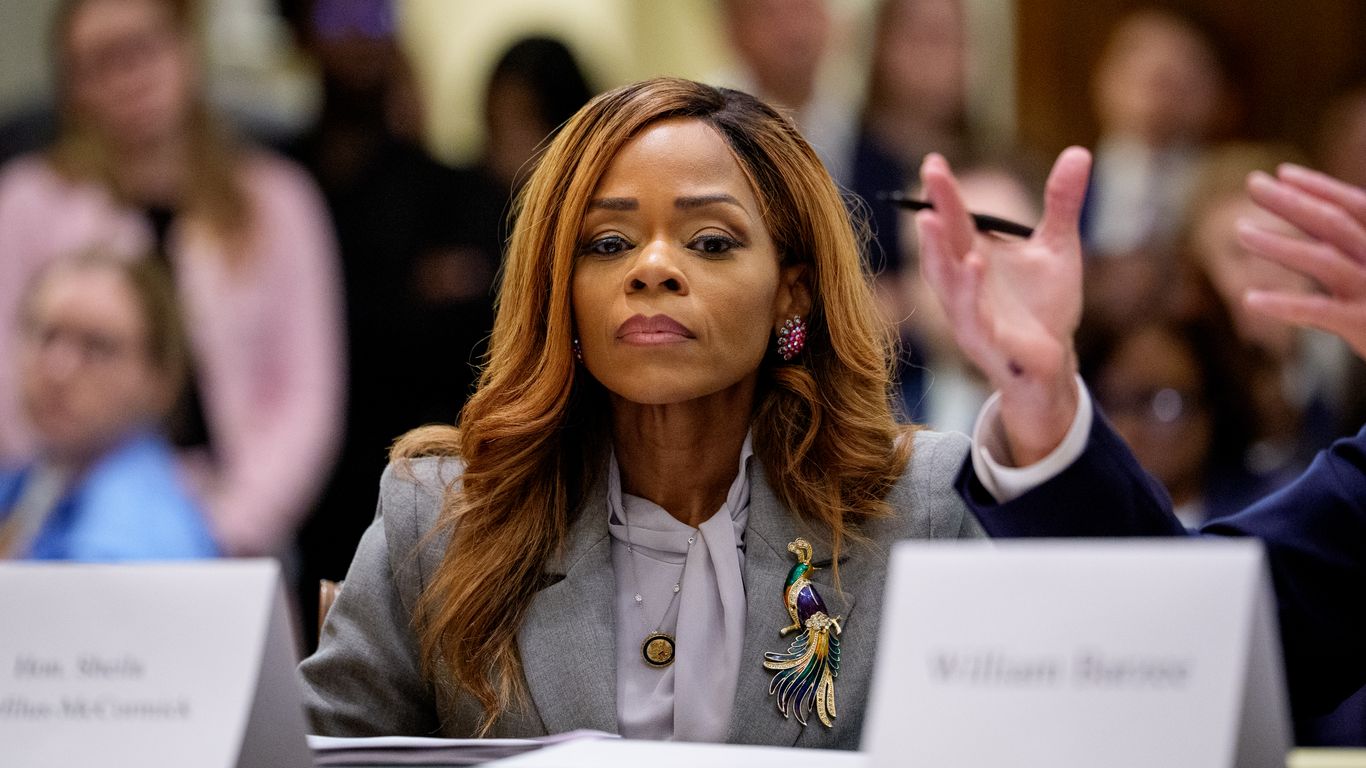
The House Ethics Committee found Representative Sheila Cherfilus-McCormick guilty of 25 ethics violations. She is accused of misusing $5 million in FEMA funds related to a COVID-19 contract and funneling money to her campaign. The decision could lead to her expulsion from Congress.
Key Facts
The House Ethics Committee announced findings against Rep. Sheila Cherfilus-McCormick.
She is accused of 25 out of 27 ethics violations.
She reportedly misused $5 million in federal FEMA funds.
The funds were linked to a COVID-19 vaccination contract for her family business.
Allegedly, the money was laundered through multiple accounts.
A significant portion of the laundered money went to her campaign.
Congress may vote on whether to expel her from office.
Read the Original
Want the full story? Tap a source to open the original
article.
The House Ethics Committee found that Democratic Rep. Sheila Cherfilus-McCormick from Florida violated House rules 25 times. The violations relate to the misuse of $5 million in disaster relief funds, allegedly using them to fund her 2022 campaign. Cherfilus-McCormick denies wrongdoing, but she also faces federal charges linked to these funds.
Key Facts
The House Ethics Committee determined that Rep. Sheila Cherfilus-McCormick committed 25 ethics violations.
The committee's allegations are connected to her family's health care business receiving $5 million in overpaid disaster relief funds.
Cherfilus-McCormick reportedly used this money to support her 2022 congressional campaign.
She faces federal charges for allegedly misusing the $5 million and buying items like a diamond ring.
Cherfilus-McCormick, her brother, her former chief of staff, and her accountant are all charged.
She pled not guilty to the federal charges and did not testify at the ethics hearing.
Her lawyer argued that the ethics hearing process was unfair and lacked a full trial with evidence and witnesses.
The ethics panel comprises four Democratic and four Republican members.
Read the Original
Want the full story? Tap a source to open the original
article.
President Donald Trump's supporters expressed frustration after the Senate passed a funding deal for the Department of Homeland Security that excluded additional money for Immigration and Customs Enforcement (ICE). The funding package covers other parts of the department, like the Transportation Security Administration, and now awaits approval from the House of Representatives.
Key Facts
The Senate passed a funding package for the Department of Homeland Security (DHS).
The package did not include extra funding for Immigration and Customs Enforcement (ICE).
The deal includes funding for the Transportation Security Administration (TSA).
Some supporters of President Trump and lawmakers criticized the deal.
Senate Majority Leader John Thune faced criticism for his role in the compromise.
The agreement ended a weeks-long stalemate between Democrats and Republicans.
Democrats opposed the ICE funding increase due to disagreements over its enforcement practices.
The House of Representatives will next consider the deal.
Read the Original
Want the full story? Tap a source to open the original
article.
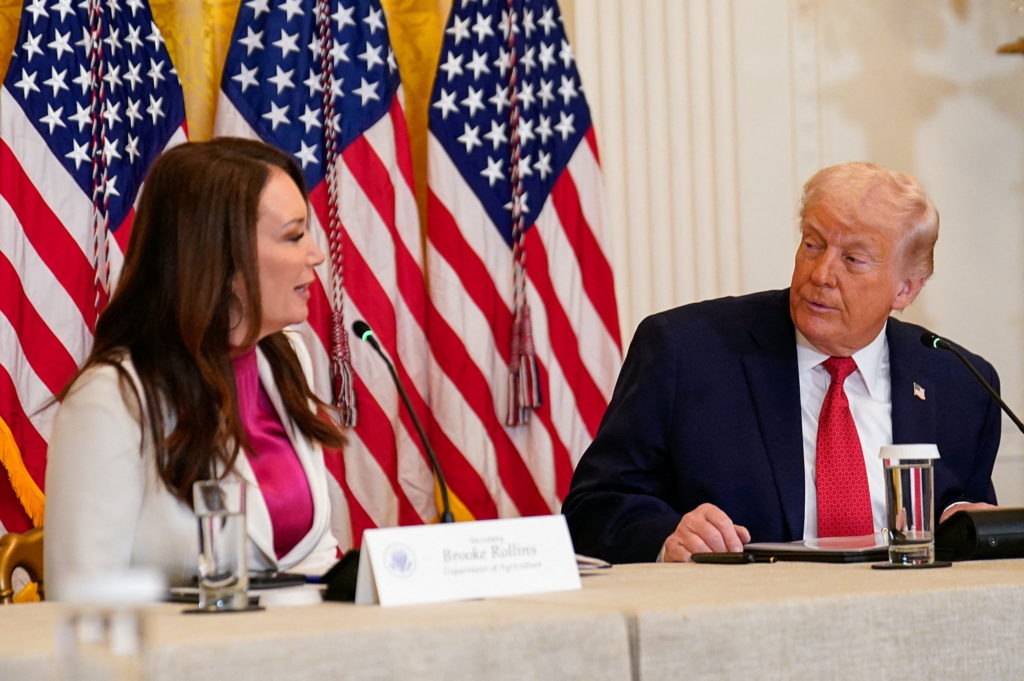
The Trump administration has eased restrictions on some financial and potash companies linked to Belarus. President Trump plans to announce policies to help U.S. farmers cope with fertilizer shortages caused by the war with Iran, which has disrupted exports from the Persian Gulf.
Key Facts
The U.S. has relaxed rules for Belarus-linked financial and potash companies.
President Trump is expected to speak about supporting U.S. farmers.
The ongoing war with Iran has stopped nitrogen fertilizer exports from the Persian Gulf.
Fertilizer costs have increased dramatically, affecting U.S. farmers' ability to purchase it.
President Trump aims to introduce policies to help American farmers affected by these shortages.
Read the Original
Want the full story? Tap a source to open the original
article.
A House Ethics Committee found Rep. Sheila Cherfilus-McCormick guilty of financial misconduct after a hearing. The committee will meet later to decide on possible punishments, which could include fines or expelling her from the House. Cherfilus-McCormick denies the charges, which involve improper handling of campaign money and financial disclosures.
Key Facts
The House Ethics Committee found Sheila Cherfilus-McCormick guilty of 25 out of 27 charges.
Charges include campaign finance violations, false financial disclosures, and misuse of funds.
The issue involves a $5 million overpayment to her family's health care company.
A decision on punishment will be made by the committee in mid-April.
Her attorney argued that she wasn't involved in the financial tasks of her campaign.
The committee's finding follows a two-year investigation.
Cherfilus-McCormick maintains her innocence and has pleaded not guilty to related criminal charges.
Read the Original
Want the full story? Tap a source to open the original
article.
A new report from the Department of Education suggests limiting screen time for children under five to one hour per day, and avoiding screens for children under two unless engaging interactively. This advice is based on concerns that too much screen time can negatively affect children's development and health. Parents are encouraged to manage their own screen habits, engage with their children during screen time, and use alternative activities.
Key Facts
The Department of Education recommends no more than one hour of screen time per day for children under five.
Children under two should ideally avoid screens except for shared, interactive use.
Excessive screen time is linked to negative impacts on social, emotional, language, and brain development, as well as sleep, eyesight, and weight.
About 98% of children are using screens daily by age two.
Parents are advised to lead by example by managing their own screen habits.
Suggested alternatives to screen use include interactive activities like reading or talking during mealtime and bedtime.
Special guidelines apply for children using assistive technologies for special educational needs.
Key early development, including brain growth and language skills, occurs before age five.
Read the Original
Want the full story? Tap a source to open the original
article.
That's the point of this site, and readers keep it that way. Support for any amount and the daily digest lands in your inbox every morning at 7am Eastern.
The U.S. Department of State advises passport applicants to expect processing times of four to six weeks for regular service and two to three weeks for expedited service, excluding mailing time. Travelers are encouraged to apply early and check their application status online to avoid delays. Guidance coincides with a legislative proposal to require proof of citizenship for voter registration.
Key Facts
Routine passport processing takes about four to six weeks; expedited service takes two to three weeks.
Mailing times can increase the total wait time for passport applications and deliveries.
In-person passport appointments may be available for urgent travel within 14 days, or 28 days if a foreign visa is needed.
Processing times vary based on demand and application volume.
The SAVE Act proposes that proof of U.S. citizenship, like a passport, be required to register to vote in federal elections.
First-time passport applicants must apply in person and provide proof of citizenship, identification, a photo, and fees.
Passport applications can be found online and at facilities like post offices and libraries.
Passport pictures need to be recent, clear, and follow specific size and background guidelines.
Read the Original
Want the full story? Tap a source to open the original
article.
The U.S. State Department will increase its screening for many nonimmigrant visa applicants by expanding social media reviews. This change is part of efforts to enhance national security and more closely monitor who enters the United States. The new rules will take effect on March 30.
Key Facts
The State Department will broaden social media checks from March 30 for a variety of visa types, not just H-1B visas.
Visa categories affected include A-3, G-5, H-3, certain H-4 dependents, fiancé and spouse visas, religious worker visas, and several humanitarian and witness-related visas.
Applicants will need to set their social media profiles to public for easier review by consular officers.
The goal is to identify any security concerns and ensure applicants do not intend to harm the U.S.
The State Department views each visa decision as a national security issue.
Similar social media reviews have led to delays in visa processing, with longer waits for interviews or approvals.
Visa applicants are reminded that obtaining a visa is a privilege, not a guaranteed right.
Read the Original
Want the full story? Tap a source to open the original
article.