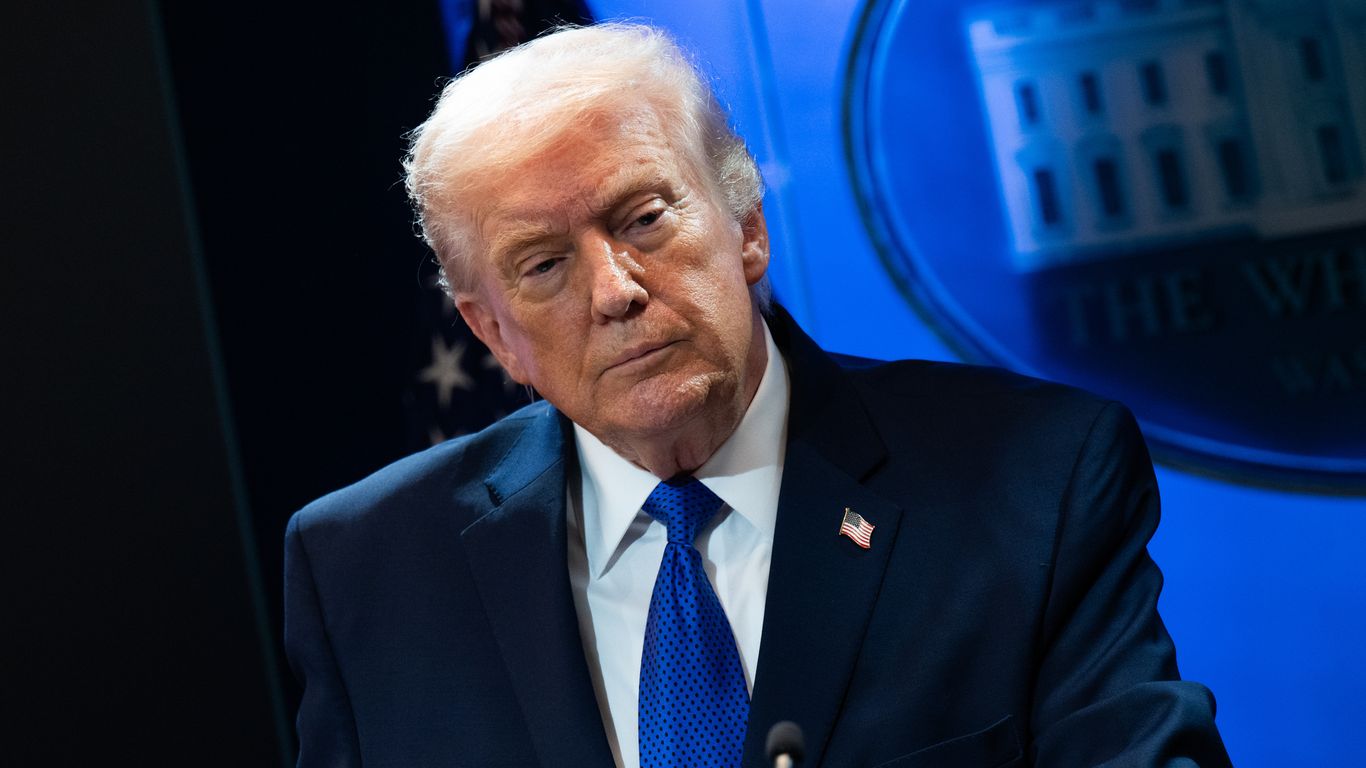
President Donald Trump and Vice President JD Vance criticized the U.S. Supreme Court after it overturned trade tariffs set by the White House. The Supreme Court ruled 6-3 against President Trump's tariff policy, leading to strong remarks from both leaders.
Key Facts
President Trump criticized Supreme Court justices after they struck down his trade tariffs.
The Supreme Court ruling was a 6-3 decision against the tariffs.
President Trump appointed two of the justices, Neil Gorsuch and Amy Coney Barrett, during his first term.
Trump expressed disappointment in the justices, suggesting foreign influence without evidence.
He praised Justices Clarence Thomas, Samuel Alito, and Brett Kavanaugh for their dissent.
Vice President JD Vance accused the court of "lawlessness" in a social media post.
The Supreme Court has six justices appointed by Trump’s Republican Party.
Read the Original
Want the full story? Tap a source to open the original
article.
President Donald Trump criticized six Supreme Court justices for their decision to strike down his administration's global tariffs. The court ruled that presidents cannot impose broad tariffs without specific authority. Trump expressed disappointment with the justices and promised to find other ways to implement tariffs.
Key Facts
President Trump criticized six Supreme Court justices for blocking his global tariffs.
The ruling stated that presidents need specific authority to impose broad tariffs.
The six justices who opposed Trump's position are split between conservative and liberal views.
Chief Justice John Roberts wrote the decision, with support from Justices Gorsuch and Barrett, whom Trump appointed.
Trump accused the court of being influenced by "foreign interests" without providing evidence.
Trump praised Justices Thomas, Alito, and Kavanaugh, who supported his tariff power.
Justice Kavanaugh stated that blocking the tariffs would mean refunding billions in revenue.
Read the Original
Want the full story? Tap a source to open the original
article.
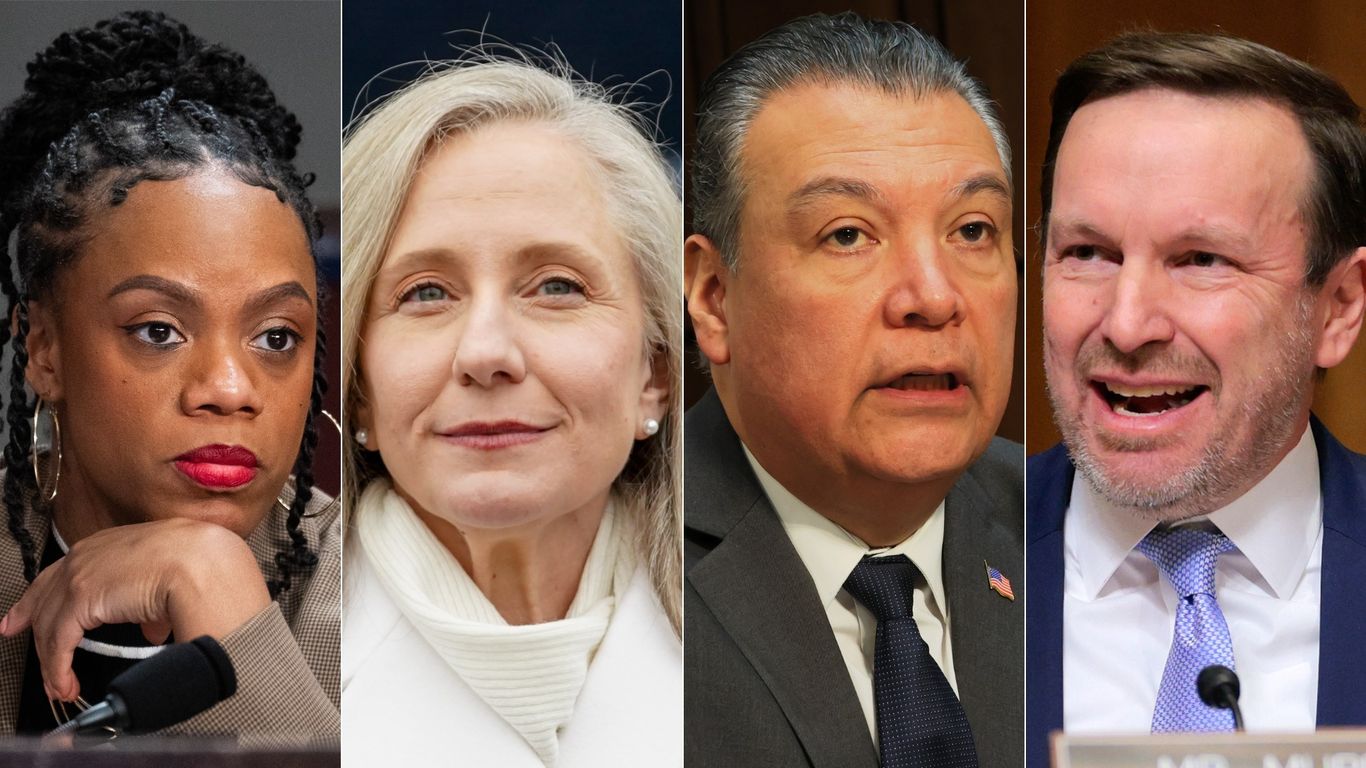
Top Democrats plan different responses to President Trump's upcoming State of the Union speech. These responses aim to show their disagreement with his agenda. The Democratic reactions include official responses, speeches in Spanish, and counter-rallies.
Key Facts
Democrats are organizing varied responses to President Trump's State of the Union address.
Virginia Governor Abigail Spanberger will give the official Democratic response.
Spanberger made history as the first female governor of Virginia and is considered a moderate politician.
Senator Alex Padilla will deliver the Democratic response in Spanish, focusing on immigration issues.
Representative Summer Lee will speak for the party's progressive wing.
Democrats are also arranging counter-rallies alongside the speech.
The official Democratic response is usually broadcast on television.
Political responses from different party factions have become common in recent years.
Read the Original
Want the full story? Tap a source to open the original
article.
President Donald Trump criticized the U.S. Supreme Court's decision to overturn his tariffs on global imports. The court said Trump had gone beyond his legal authority. In response, President Trump announced a new 10% tariff under a different law.
Key Facts
President Trump criticized the Supreme Court's decision on tariffs.
The Supreme Court ruled Trump overstepped his authority under the International Emergency Economic Powers Act.
The decision stated that the Act does not allow the President to impose tariffs.
In response, Trump announced a new 10% tariff on global imports.
Trump plans to use a different legal statute for the new tariffs.
The BBC's Bernd Debusmann reported on the press briefing.
Read the Original
Want the full story? Tap a source to open the original
article.
The United States Supreme Court ruled that President Donald Trump's global tariffs were illegal. The decision stated that he did not have the authority to impose these tariffs under a 1977 law. The case will go back to a lower court to sort out potential refunds.
Key Facts
The Supreme Court found Trump's global tariffs illegal with a 6-3 vote.
Chief Justice John Roberts wrote the decision, saying the 1977 law doesn't allow sweeping tariffs.
Trump argued the tariffs were needed due to national emergencies like trade deficits and drug issues.
The court ruled the law was meant for specific emergencies, not broad trade changes.
Trump called the ruling "a disgrace."
Three justices disagreed, saying Trump could impose tariffs under other laws.
An estimated $130 billion in tariffs has been collected so far.
The case goes back to the US Court of International Trade to address possible refunds.
Read the Original
Want the full story? Tap a source to open the original
article.
The Supreme Court ruled against President Trump's authority to impose certain global tariffs. Some Republicans privately welcomed this decision as it helped avoid internal disagreements on trade policy. The ruling might lead Congress to consider new actions regarding tariffs.
Key Facts
The Supreme Court ruled 6-3 that President Trump could not impose certain tariffs without Congressional approval.
The decision specifically nullified a 10% global tariff and additional tariffs on several countries.
Other tariffs, like those on aluminum and steel, remain in place.
Some Republicans were relieved by the ruling, as it helped avoid public disputes with the President.
The ruling has potential political implications for upcoming elections.
President Trump is exploring other ways to impose tariffs using different legal powers.
Congress may need to vote on the future of remaining tariffs in a few months.
There is discussion within the Republican party about legislative efforts to support new or existing tariffs.
Read the Original
Want the full story? Tap a source to open the original
article.
The Supreme Court invalidated President Trump's tariffs but did not clarify if $175 billion in collected fees should be refunded. As a result, businesses seeking refunds must wait for a decision from the trade court. In response, President Trump plans to impose a new 10% global tariff.
Key Facts
The Supreme Court ruled against President Trump's tariffs, questioning their legality.
The court did not specify if collected tariffs, totaling $175 billion, should be refunded.
Large companies like Costco and Revlon have already sued for potential refunds.
President Trump criticized the Supreme Court for not resolving the refund issue.
He announced a new global 10% tariff to replace the overturned ones.
Justice Brett Kavanaugh suggested the ruling could lead to significant refund issues.
Businesses may wait years for the trade court to decide on refund mechanisms.
The situation affects a vast number of importers and products.
Read the Original
Want the full story? Tap a source to open the original
article.
President Donald Trump criticized the US Supreme Court after it ruled 6-3 against his global tariffs. Despite the decision, Trump announced he would impose a new 10 percent global tariff for 150 days using other legal approaches. He stated these would be additional to current tariffs on certain goods.
Key Facts
President Trump called the Supreme Court's ruling a "disgrace" after it blocked his global tariffs.
The court decision was made with a 6-3 vote, stopping Trump's use of emergency powers for tariffs.
Trump plans to enforce a new 10 percent global tariff for 150 days.
The new tariff will start in about three days.
Existing tariffs on steel, aluminum, and auto parts will remain.
Trump called the Supreme Court's liberal justices "a disgrace" and criticized conservatives who joined them.
Trump believes he can still apply tariffs using other trade authorities permitted by law.
Read the Original
Want the full story? Tap a source to open the original
article.
President Donald Trump criticized the Supreme Court after it blocked many of his global tariffs. Despite the ruling, he announced a new 10% tariff on worldwide imports.
Key Facts
The U.S. Supreme Court struck down the legal basis for many of President Trump's global tariffs.
President Trump described the court's decision as "deeply disappointing."
In response, President Trump announced a new 10% tariff on global imports.
Trump's announcement came after a press conference following the Supreme Court ruling.
The tariffs are a part of President Trump's economic plans.
The discussion about this event was featured in a podcast episode by Americast, a BBC News podcast series.
Read the Original
Want the full story? Tap a source to open the original
article.
Rachel Reyes, the mother of Ruben Ray Martinez, a U.S. citizen killed by a federal immigration agent in Texas last year, is seeking justice and answers. Martinez was shot during a night-time traffic stop by a Homeland Security Investigations team, an event not initially disclosed by the Department of Homeland Security. The family and their lawyers are calling for a thorough investigation into the incident.
Key Facts
Rachel Reyes is the mother of Ruben Ray Martinez, a U.S. citizen who was killed in Texas.
Martinez was shot by a federal immigration agent during a late-night traffic stop.
The Department of Homeland Security did not disclose the shooting at the time it happened.
Reyes and her family have been seeking justice and answers for over a year.
The family's lawyers demand a full investigation into why Homeland Security Investigations was involved.
There is a call for transparency and accountability in the case.
Updates to the story are ongoing as it develops.
Read the Original
Want the full story? Tap a source to open the original
article.
President Donald Trump expressed his disappointment after the U.S. Supreme Court overturned global tariffs he implemented last year. The court ruled that President Trump overstepped his authority by using a law meant for national emergencies. In response, Trump announced plans to impose a new 10% tariff using a different legal option.
Key Facts
President Donald Trump reacted to the U.S. Supreme Court's decision to strike down global tariffs he had imposed.
The Supreme Court said President Trump exceeded his authority by using a law for national emergencies to implement the tariffs.
The tariffs were supposed to affect global trade and had been in place since last year.
In response to the court's decision, President Trump plans to use section 122 of the 1974 Trade Act.
Trump announced he will issue an executive order to impose a new 10% global tariff under this section.
Read the Original
Want the full story? Tap a source to open the original
article.
President Donald Trump criticized the U.S. Supreme Court for overturning his global tariffs known as "Liberation Day" tariffs. He indicated that he does not intend to return the tariff fees already collected by the government.
Key Facts
The Supreme Court overturned President Trump's "Liberation Day" global tariffs.
President Trump criticized the Supreme Court's decision.
The tariffs affected international trade by adding extra charges on goods.
Tariffs are taxes charged on imports or exports.
President Trump stated he does not plan to return the fees collected from these tariffs.
These tariff fees had already been collected by the U.S. government.
Read the Original
Want the full story? Tap a source to open the original
article.
That's the point of this site, and readers keep it that way. Support for any amount and the daily digest lands in your inbox every morning at 7am Eastern.
President Donald Trump criticized the Supreme Court after it ruled against tariffs he had imposed. The Court decided that the President did not have the legal power to set these tariffs without a proper national emergency.
Key Facts
President Donald Trump criticized the Supreme Court.
The Court struck down tariffs that Trump imposed in 2025.
The decision was a 6-3 vote by the justices.
The Court said Trump didn't have the authority to use a law meant for emergencies to impose these tariffs.
Trump called some of the justices a "disgrace."
Read the Original
Want the full story? Tap a source to open the original
article.
The Supreme Court decided against President Trump's tariffs, stating he did not have the legal authority to impose them under the current law. In response, President Trump announced his plan to implement a 10% global tariff using a different legal approach.
Key Facts
The Supreme Court ruled against most of President Trump's tariffs.
The decision was made with six justices in favor and three against.
The court said the president lacked the authority under an economic emergency law.
President Trump plans to impose a 10% tariff globally using another law.
The discussion on the ruling included insights from legal analyst Amy Howe.
Read the Original
Want the full story? Tap a source to open the original
article.
Rep. Summer Lee will deliver the Working Families Party's response to President Trump's State of the Union address. This response is part of a tradition where rising stars on the left share their views after the President's speech. The main Democratic response will be provided by Virginia Governor Abigail Spanberger, highlighting differences within the Democratic Party.
Key Facts
Rep. Summer Lee is from Pennsylvania and will speak for the progressive Working Families Party.
This response follows a tradition of rising stars delivering speeches, with past speakers like Reps. Ayanna Pressley and Rashida Tlaib.
Lee plans to address concerns about a "rigged system" favoring the wealthy.
The main Democratic response will come from Virginia Governor Abigail Spanberger.
Spanberger represents a more moderate view within the Democratic Party.
The speeches happen amid Democratic Party debates between progressive and moderate factions.
Progressive and moderate Democrats are competing in primary elections across the country.
House Minority Leader Hakeem Jeffries has encouraged Democrats to quietly attend or boycott the State of the Union, avoiding protests inside the chamber.
Read the Original
Want the full story? Tap a source to open the original
article.
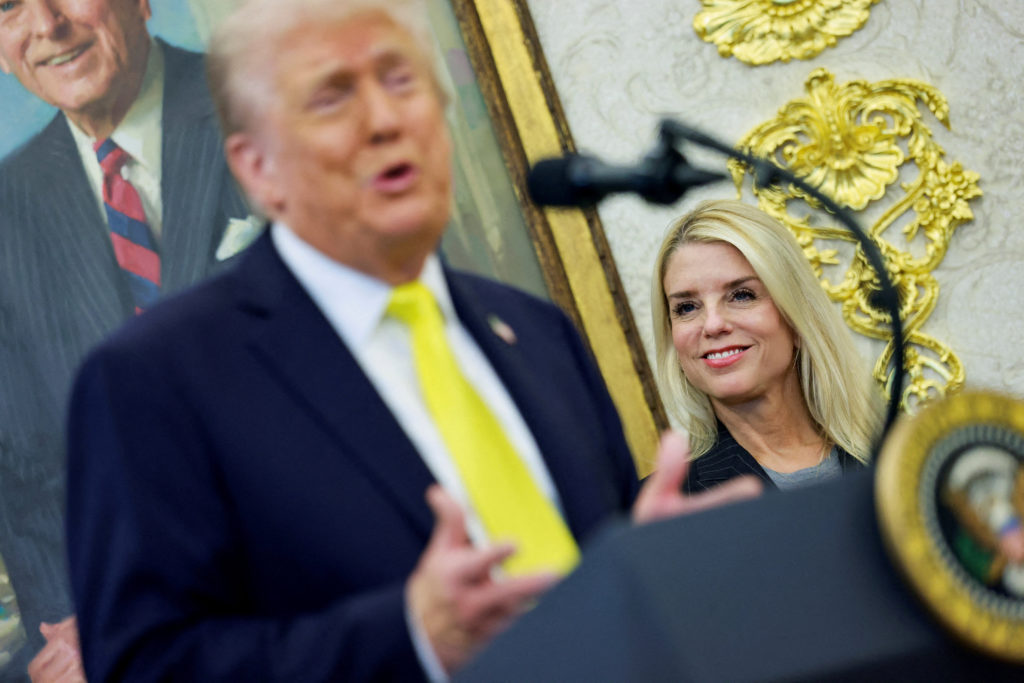
President Donald Trump, now in his second term, has included individuals in his administration who previously supported his false claims about the 2020 election. These include people in high positions, such as the attorney general and lawyers in the Justice Department, like Kurt Olsen, who now lead efforts related to that election.
Key Facts
President Donald Trump claims the 2020 election was fraudulent, despite being investigated.
Several people in Trump's current administration supported these false claims.
Kurt Olsen, who pushed false 2020 election claims earlier, is now leading a new investigation into the election.
The Justice Department's lawyers, influenced by these claims, are involved in related lawsuits.
In January, authorities seized ballots and records from Fulton County, Georgia, related to 2020 claims.
Fulton County has been a focus due to its history of election conspiracy theories aligned with Trump.
Read the Original
Want the full story? Tap a source to open the original
article.
The US Supreme Court ruled against President Trump's use of a national emergency declaration to enforce widespread global tariffs. This decision affects how tariffs, or taxes on imported goods, are applied when linked to national emergencies.
Key Facts
The US Supreme Court made a decision against President Trump's tariff policy.
These tariffs were linked to a national emergency declaration.
The ruling affects how future tariffs can be imposed in similar situations.
President Trump used a national emergency as a reason for these tariffs.
The Court clarified that the United States is not at war with every nation, influencing their decision.
Read the Original
Want the full story? Tap a source to open the original
article.
The Environmental Protection Agency (EPA) plans to reduce restrictions on toxic emissions from coal power plants. This change might allow plants to release more harmful pollutants like mercury. Some groups believe this could harm people's health and increase medical costs.
Key Facts
The EPA is scaling back rules on toxic emissions from coal-burning power plants.
The changes could allow more pollutants, such as mercury, to be released.
Mercury and other pollutants can be harmful to human health.
The rollback of these limits might lead to higher health care expenses.
Environmental groups, like the Natural Resources Defense Council, are expressing concerns.
Discussions took place with John Walke from the Natural Resources Defense Council about the potential impacts.
Read the Original
Want the full story? Tap a source to open the original
article.
President Trump expressed disappointment after the Supreme Court ruled against his wide-ranging tariffs plan. He believed the tariffs would help grow the U.S. economy and reduce national debt.
Key Facts
President Trump said he is "absolutely ashamed" of the Supreme Court's decision.
The case related to Trump's tariffs was described by him as the "most important case ever."
The Supreme Court's decision is seen as a setback to Trump's economic and foreign policy.
Trump hoped the tariffs would boost the U.S. economy and pay down national debt.
The Supreme Court ruled that Trump's global tariffs were illegal.
Trump mentioned he might need to find new solutions if tariffs are not allowed.
He previously argued that removing tariffs could affect U.S. national security.
Read the Original
Want the full story? Tap a source to open the original
article.
President Trump met with governors from both political parties at the White House. At the same time, the Supreme Court ruled against tariffs, which might impact states like Wyoming. Wyoming's economy heavily depends on trade and energy production.
Key Facts
President Trump held a meeting with governors from different political parties at the White House.
The Supreme Court announced a major decision against tariffs during the meeting.
Tariffs had been affecting several states, including Wyoming.
Wyoming relies significantly on trade and energy production for its economic stability.
The effects of the Supreme Court's ruling on Wyoming were discussed with Governor Mark Gordon.
Read the Original
Want the full story? Tap a source to open the original
article.