Sen. Susan Collins of Maine supports the SAVE America Act, which requires proof of citizenship to vote in federal elections. She backs the current version of the bill, which was adjusted to remove the need for voters to prove citizenship every time they vote. She also opposes removing the Senate's filibuster rule.
Key Facts
Senator Susan Collins supports the SAVE America Act related to voting in federal elections.
The bill requires voters to show proof of citizenship to vote in federal elections.
Collins supports the amended version of the bill which simplifies the process by not requiring proof every time a person votes.
The requirement to show documents like passports or birth certificates was removed from the bill.
Collins opposes eliminating the legislative filibuster in the Senate, which currently requires 60 votes to pass most legislation.
The filibuster rule helps protect the rights of the minority party in the Senate.
Read the Original
Want the full story? Tap a source to open the original
article.
A judge in Illinois has temporarily stopped the Trump administration from cutting $600 million in public health grants to four states led by Democrats: California, Colorado, Illinois, and Minnesota. The states sued to prevent the cuts, which were for programs focused on disease tracking and health issues in specific communities. The judge's decision keeps the funding in place for at least 14 days while the case continues.
Key Facts
President Donald Trump's administration attempted to cut $600 million in health grants to four Democratic-led states.
A federal judge in Illinois blocked the cuts for 14 days.
The grants funded disease tracking and health studies for LGBTQ+ people and communities of color.
The U.S. Department of Health and Human Services aimed to end the grants, saying they don't match new CDC priorities.
Colorado Attorney General Phil Weiser noted the funds would have been pulled the same day the judge's decision was made.
The four states view the cuts as retaliation for opposing the administration’s immigration policies.
Illinois Attorney General Kwame Raoul argues the cuts violate the Constitution.
Similar attempts to cut funding in these states have been blocked by courts before.
Read the Original
Want the full story? Tap a source to open the original
article.
A potential partial shutdown of the U.S. government could lead to airport delays, particularly affecting Transportation Security Administration (TSA) workers who may have to work without pay, causing travel disruptions. Lawmakers have not yet agreed on a funding deal for the Department of Homeland Security (DHS) due to disagreements over immigration policies. The shutdown could affect several DHS agencies, including the Coast Guard and TSA, but air traffic controllers will not be affected due to separate funding.
Key Facts
Major travel groups are concerned a government shutdown will disrupt airport operations and lead to travel delays.
If a shutdown happens, TSA workers might not get paid, which could cause delays if they don't show up for work.
Lawmakers are in a deadlock over DHS funding due to different stances on immigration policy changes.
President Trump has not yet reached an agreement with Democrats on funding DHS.
The shutdown would affect the Coast Guard but not air traffic controllers, as they are already funded.
Last year, there was a 43-day government shutdown, the longest in U.S. history, causing widespread disruptions.
The DHS has some backup funds from a previous act, but many agencies would still be affected if the shutdown continues.
Congress is scheduled for a recess, but they may return if a funding deal is close.
Read the Original
Want the full story? Tap a source to open the original
article.
The article discusses the experiences of U.S. citizens who were detained by immigration officers. It highlights concerns about how these individuals were treated, especially following two fatal incidents in Minnesota.
Key Facts
Videos show violent encounters with immigration officers across the U.S.
There is public concern about the treatment of detained U.S. citizens.
Recent incidents in Minnesota led to increased public outrage.
Renee Good and Alex Pretti were killed by immigration agents in Minnesota.
The article features reports from people who were detained.
Read the Original
Want the full story? Tap a source to open the original
article.
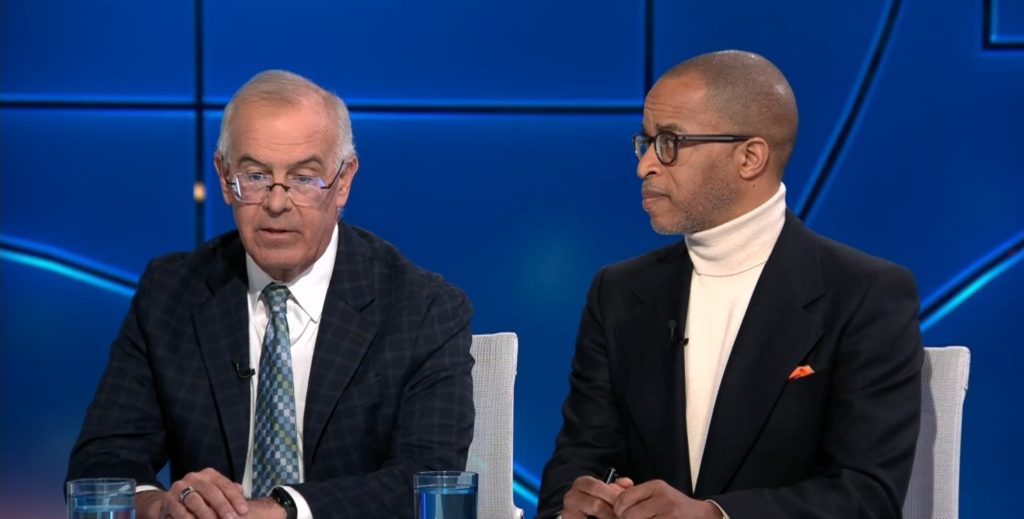
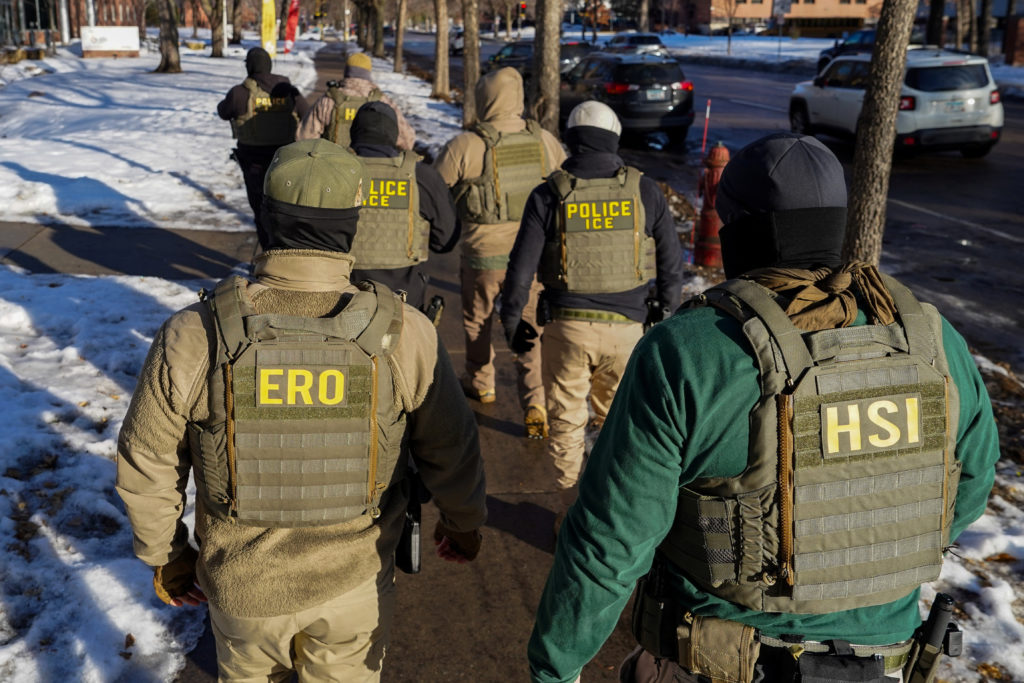
President Trump's administration has decided to remove Immigration and Customs Enforcement (ICE) from Minnesota. European leaders are addressing changes in global politics. Parts of the U.S. government are preparing for another shutdown.
Key Facts
President Trump's administration is withdrawing ICE from Minnesota.
ICE is a U.S. agency that handles immigration enforcement.
European leaders are dealing with changes in world politics.
A government shutdown in the U.S. means some federal services might stop or slow down.
There are ongoing discussions about U.S. politics involving key figures like David Brooks and Jonathan Capehart.
The article discusses political events affecting both national and international landscapes.
Read the Original
Want the full story? Tap a source to open the original
article.
A new book titled "Forgotten Souls" looks into the lives of 27 Tuskegee Airmen who went missing during World War II. The author, Cheryl W. Thompson, highlights both their contributions and the racism they faced while serving.
Key Facts
27 Tuskegee Airmen disappeared during World War II.
The book “Forgotten Souls” tells their stories.
The author of the book is Cheryl W. Thompson.
Cheryl W. Thompson’s father was also a Tuskegee Airman.
The book discusses racism the airmen faced while serving in the military.
The Tuskegee Airmen were African American pilots in World War II.
Read the Original
Want the full story? Tap a source to open the original
article.
Some U.S. senators are asking the Social Security Administration to change its policy on retroactive payments after the Social Security Fairness Act. The Act was meant to increase benefits for certain retirees, but some have not received full back payments as intended. The policy change could affect teachers, firefighters, police officers, and their surviving spouses.
Key Facts
The Social Security Fairness Act eliminated the Windfall Elimination Provision and the Government Pension Offset.
This change was supposed to increase Social Security benefits for some retirees who have pensions.
The current policy only allows six months of retroactive payments, not the full year some are arguing for.
Senators from both political parties have asked the SSA to extend these retroactive payments to twelve months.
About 2.8 million people could be affected by the current retroactive payment limit.
There are concerns about the SSA's funding and whether it can support increased payments beyond 2033.
The new policy could increase the income for retirees and may have tax implications.
Read the Original
Want the full story? Tap a source to open the original
article.
President Donald Trump announced his plan to enforce voter ID laws for the upcoming midterm elections, stating he would use an executive order if Congress does not act. He has made claims about election fraud since the 2020 election and is focusing on election integrity as the midterms approach. Trump also mentioned the possibility of presenting a new legal argument to support his voter ID initiative.
Key Facts
President Trump wants voter ID laws to be in place for the next midterm elections.
He plans to use an executive order if Congress does not pass a voter ID law.
Trump has frequently claimed there was voter fraud in the 2020 election.
He believes many Democrat voters agree with the idea of voter ID.
The SAVE Act, passed by House Republicans, faces opposition in the Senate.
Trump accuses Democrats of trying to make major changes in government structure, like adding new states and altering the Supreme Court.
Trump argues that voter ID is necessary to prevent what he calls election "cheating."
Read the Original
Want the full story? Tap a source to open the original
article.
Investigators are examining DNA samples to rule out persons of interest in the case of Nancy Guthrie, who has been missing since January 31. Nancy, the mother of television host Savannah Guthrie, was last seen at her home in Tucson, Arizona, and her disappearance remains under investigation.
Key Facts
Nancy Guthrie, aged 84, went missing from her Tucson, Arizona home on January 31.
DNA samples were collected from gloves and other items found during the investigation.
Investigators are comparing DNA from the crime scene with samples from Nancy’s family and others who accessed her home.
Ransom notes were sent to news outlets after her disappearance, raising public attention.
Sheriff Nanos stated that clues suggest Nancy did not leave her home voluntarily and needs daily medication that is critical for her health.
A person was questioned and released by police but has not been fully cleared.
The FBI and local law enforcement are seeking public help to find a person of interest seen in surveillance footage near the time of Nancy’s disappearance.
The police have requested video footage from residents in the area to aid in the investigation.
Read the Original
Want the full story? Tap a source to open the original
article.
President Trump announced a change to a significant environmental rule, which could lead to fewer greenhouse gas restrictions for industries like car manufacturers. This decision might increase greenhouse gas emissions and face legal challenges. It also potentially makes U.S. cars cheaper but could limit export options due to international climate rules.
Key Facts
President Trump reversed an Obama-era environmental rule called the endangerment finding.
This rule was important for U.S. greenhouse gas regulations, especially for vehicle makers.
With the rule gone, industries may face fewer limits on emitting greenhouse gases.
Environmental groups plan to challenge this change in court.
Experts warn that greenhouse gas emissions could significantly increase by 2055.
The change could reduce costs for car manufacturers, potentially lowering car prices.
Some believe U.S. automakers may struggle to export cars due to global climate standards.
The Environmental Protection Agency (EPA) is involved in the regulation changes.
Read the Original
Want the full story? Tap a source to open the original
article.
Homeland Security Secretary Kristi Noem spoke about a voting and election bill, known as the SAVE Act, in Phoenix. The bill focuses on requiring proof of citizenship for voter registration and mandating photo identification to vote.
Key Facts
Kristi Noem is the Secretary of Homeland Security.
Noem discussed the SAVE Act at a news conference in Phoenix.
The SAVE Act is designed to add more rules for voting and elections.
The bill would require people to show proof of citizenship to register to vote.
It also mandates that voters present a photo ID when casting a ballot.
The U.S. House of Representatives passed this Republican-backed bill.
Noem emphasized the bill as a measure to enhance election security.
Studies show that noncitizen voting is rare and not done in an organized way.
Read the Original
Want the full story? Tap a source to open the original
article.
A new poll shows early Democratic favorites for the 2028 presidential race, with Kamala Harris leading. Other possible candidates include Gavin Newsom, Alexandria Ocasio-Cortez, and Pete Buttigieg. The poll reflects early voter preferences, while betting odds show varying predictions for the race.
Key Facts
Kamala Harris has 39% support among Democrats for the 2028 presidential nomination.
Gavin Newsom has 21% support, while Alexandria Ocasio-Cortez has 10%.
Pete Buttigieg and Josh Shapiro each have 7% support; Mark Kelly has 6%.
Other potential candidates include Gretchen Whitmer with 4% and JB Pritzker with 3%.
The poll surveyed 1,148 voters on February 10, 2026.
A separate Harvard/Harris poll also shows Harris leading, with Newsom at 30%.
Betting odds from Kalshi show Newsom favored with a 32% chance of winning the primary.
Several potential candidates attended the Munich Security Conference to discuss U.S. foreign policy.
Read the Original
Want the full story? Tap a source to open the original
article.
Federal authorities are investigating if two immigration officers lied about a shooting involving a Venezuelan man in Minneapolis. The charges against Julio Cesar Sosa-Celis and another man have been dropped following new evidence that contradicts the officers' statements. The officers are on leave while the investigation continues.
Key Facts
Federal authorities are looking into whether two immigration officers lied about a shooting in Minneapolis.
Video evidence suggests that the officers may have given false testimony.
The charges against Julio Cesar Sosa-Celis and Alfredo Alejandro Aljorna have been dismissed.
A judge dismissed the case with prejudice, meaning charges cannot be brought back.
The officers involved have been placed on administrative leave during the investigation.
If found guilty, the officers could face being fired and criminal charges.
The investigation follows several incidents questioning federal agents' use of deadly force.
The ICE director emphasized that officers are held to high standards of conduct.
Read the Original
Want the full story? Tap a source to open the original
article.
The Trump administration recently concluded a large-scale immigration operation in Minnesota. Over two and a half months, this operation resulted in 4,000 arrests and two fatal shootings involving U.S. citizens.
Key Facts
The immigration operation lasted for two and a half months in Minnesota.
The operation led to 4,000 arrests.
There were two fatal shootings by immigration officers during the operation.
The individuals killed were U.S. citizens named Renee Good and Alex Pretti.
The events took place in the city of Minneapolis.
The operation ended following months of protests.
Read the Original
Want the full story? Tap a source to open the original
article.
The U.S. Supreme Court is reviewing major policies proposed by President Trump in his second term, such as global trade tariffs and ending birthright citizenship. The court's decision will determine if these policies can proceed. Experts and analysts discuss how the Supreme Court's decisions could affect presidential power.
Key Facts
The focus is on whether the Supreme Court will allow President Trump's key policies to become law.
Examples of these policies include global trade tariffs and ending birthright citizenship.
The court is also considering his power to remove leaders of independent agencies.
Legal experts examine how past court decisions impacted similar policies by previous presidents.
Concerns exist that current Supreme Court justices may be expanding presidential power.
Key guests include Kate Shaw, a former Supreme Court clerk and law professor.
The discussion is part of a BBC podcast episode hosted by Justin Webb and Anthony Zurcher.
Read the Original
Want the full story? Tap a source to open the original
article.
Senator John Fetterman from Pennsylvania spoke about the need for Democrats to focus on their core values and improve their public image before upcoming midterm elections. He highlighted issues like government shutdowns and the importance of support systems like SNAP. Recent polls show low approval ratings for Democrats, following a long government shutdown.
Key Facts
Senator John Fetterman is a Democrat from Pennsylvania.
He emphasized the importance of Democrats focusing on core values and improving their public image.
Fetterman spoke on a podcast about fixing the Democratic Party's "brand" for long-term success.
He mentioned issues like government shutdowns and SNAP, a food assistance program.
Recent polls show a low approval rating for Democrats, with 18 percent approval noted after a 43-day government shutdown.
In December 2025, Gallup reported a Congressional approval rating of about 17 percent.
As of January 2026, Democrats' favorability improved to around 29 percent, according to YouGov polls.
Read the Original
Want the full story? Tap a source to open the original
article.
President Donald Trump mentioned to soldiers at Fort Bragg in North Carolina that he might consider moving to the state. He highlighted the local pride in the restored name of the military base, which was changed back from Fort Liberty. Currently, President Trump resides at the White House but often stays at his Mar-a-Lago estate in Florida.
Key Facts
President Donald Trump said he might move to North Carolina, specifically near Fort Bragg.
He praised the area's people and their pride in the military base's restored name.
Fort Bragg had been changed to Fort Liberty under the Biden administration.
The base's name was restored to Fort Bragg by the Trump administration earlier this year.
The new name honors a World War II soldier named Pvt. Roland L. Bragg.
President Trump's official residence is the White House, but he often stays at Mar-a-Lago in Florida.
Mar-a-Lago has been Trump's declared primary residence since 2019.
Read the Original
Want the full story? Tap a source to open the original
article.
A U.S. judge ordered the Trump administration to bring back some Venezuelan migrants deported to a prison in El Salvador, with the U.S. government covering the costs. These deportations were part of President Trump's immigration crackdown, using a law from the 18th century. The judge criticized the administration for not following his earlier instructions.
Key Facts
A judge ordered the return of some Venezuelan migrants deported to El Salvador.
The deportations were based on accusations of gang membership.
President Trump used a law from the 18th century called the Alien Enemies Act.
The judge criticized the government for ignoring his past orders.
The U.S. must pay for the migrants' return flights.
The Venezuelan men want to clear their names.
They can file legal documents challenging their deportations and gang membership claims.
The administration is investigating a possible contempt violation for not following court orders.
Read the Original
Want the full story? Tap a source to open the original
article.
The "Make America Healthy Again" movement aims to support Republicans in the upcoming midterm elections by focusing on health issues, but it needs to handle vaccine topics carefully. Health Secretary Robert F. Kennedy Jr.'s views on vaccines could influence voters, with Democrats using these views as a warning against Republicans. A survey suggests that emphasizing personal choice in vaccinations could help Republicans gain support.
Key Facts
The "Make America Healthy Again" (MAHA) movement could help Republicans in midterm elections.
Health Secretary Robert F. Kennedy Jr.'s vaccine stance is crucial in the campaign.
Democrats plan to highlight Kennedy's vaccine views as a voter concern.
Kennedy's supporters see potential in drawing swing voters interested in health issues.
A memo from MAHA Action suggests Republicans can appeal to about 10% of voters focusing on health frustrations.
The memo advises framing the vaccine discussion as a matter of personal choice.
The proposal to remove vaccine manufacturers' liability protection is seen as a way to improve vaccine safety but may lead to legal challenges.
Polling shows that removing long-standing vaccine recommendations could hurt political performance.
Read the Original
Want the full story? Tap a source to open the original
article.
Puerto Rico's Governor Jenniffer González signed a law recognizing unborn children as human beings. The law, called the Keishla Madeline Law, was named after a pregnant woman killed in 2021. It classifies the killing of a pregnant woman and her unborn child as first-degree murder.
Key Facts
Governor Jenniffer González signed an amendment to Senate Bill 923 without prior public hearings.
The law recognizes a fetus as a human being at any stage of gestation within the uterus.
The law is named after Keishla Rodríguez, who was murdered in April 2021.
The amendment updates the Penal Code to classify the killing of a pregnant woman as first-degree murder.
Some fear the law could impact medical decisions related to pregnancy.
Dr. Carlos Díaz Vélez expressed concerns about women with complicated pregnancies facing challenges in receiving care.
Puerto Rico's legal stance on abortion remains unchanged, but there are worries about potential legal ambiguities.
Read the Original
Want the full story? Tap a source to open the original
article.