The Heritage Foundation released a report called "Saving America by Saving the Family: A Foundation for the Next 250 Years," which emphasizes traditional family values to improve the future of the U.S. The report suggests that a strong family structure, including marriage and children, is essential for positive social and economic outcomes. The Heritage Foundation has previously influenced Republican policies, including those of President Trump.
Key Facts
The Heritage Foundation is a conservative think tank based in Washington, D.C.
Their report advocates for traditional family values, marriage, and children.
The report claims strong families lead to better social and economic outcomes.
It discourages promoting single parenthood and same-sex marriage.
The U.S. currently has a low birthrate of 1.7 births per woman.
The number of single-person households in the U.S. was 38.1 million in 2023.
President Trump and Republicans have considered the Foundation's past work.
Read the Original
Want the full story? Tap a source to open the original
article.
In 2026, Democrats have won several legislative special elections in the U.S., including in areas typically held by Republicans. These victories could indicate the potential outcomes of the upcoming midterm elections. Key elections have occurred in states like Louisiana, Minnesota, New York, and Texas.
Key Facts
Democrats have flipped some Republican-held seats in 2026 special elections.
In Louisiana, Democrat Chasity Verret Martinez won against Republican Brad Daigle in a district previously carried by President Trump.
Democratic candidates Shelley Buck and Meg Luger-Nikolai won special elections in Minnesota, resulting in an even split in the state legislature.
In New York, Democrat Jeremy Zellner won a special election for the 61st State Senate District.
Texas saw Democrat Christian Menefee and Democrat Taylor Rehmet win special elections in their respective districts.
Experts suggest these victories might signal Democratic momentum for the November midterm elections.
Read the Original
Want the full story? Tap a source to open the original
article.
Americans are expected to get an increase in tax refunds by about $1,000 for the tax year 2025 due to President Trump’s new tax policies. However, tariffs on imports have raised costs for households, potentially offsetting these tax benefits. Middle and upper-middle-income families may see the most significant boost in their tax refunds.
Key Facts
The average tax refund is set to increase by $1,000 due to new tax rules.
Tariffs have increased household costs by about $1,000 last year and could go up to $1,300 in 2026.
The One Big Beautiful Bill Act made changes that affect how much tax people owe and their refunds.
Tariffs have made some everyday items like coffee and beef more expensive.
Middle and upper-middle-income earners ($60,000 to $400,000) will likely see the largest tax refund increases.
The State and Local Tax (SALT) cap was raised from $10,000 to $40,000, benefiting those in high-tax states.
The IRS offers a "Where's My Refund" tool for checking the status of tax refunds online.
Read the Original
Want the full story? Tap a source to open the original
article.
Immigration officials testified before the House Homeland Security Committee after two U.S. citizens died in a recent immigration crackdown in Minneapolis. Key officials from ICE, CBP, and USCIS answered questions about the government's immigration policies and the actions of their agents.
Key Facts
The hearing took place at the House Homeland Security Committee.
This was the first hearing since two U.S. citizens died in an immigration crackdown in Minneapolis.
Todd Lyons is the acting head of Immigration and Customs Enforcement (ICE).
Rodney Scott is the commissioner of Customs and Border Protection (CBP).
Joseph Edlow is the director of U.S. Citizenship and Immigration Services (USCIS).
Officials answered questions about current immigration policies and actions by agents.
Read the Original
Want the full story? Tap a source to open the original
article.
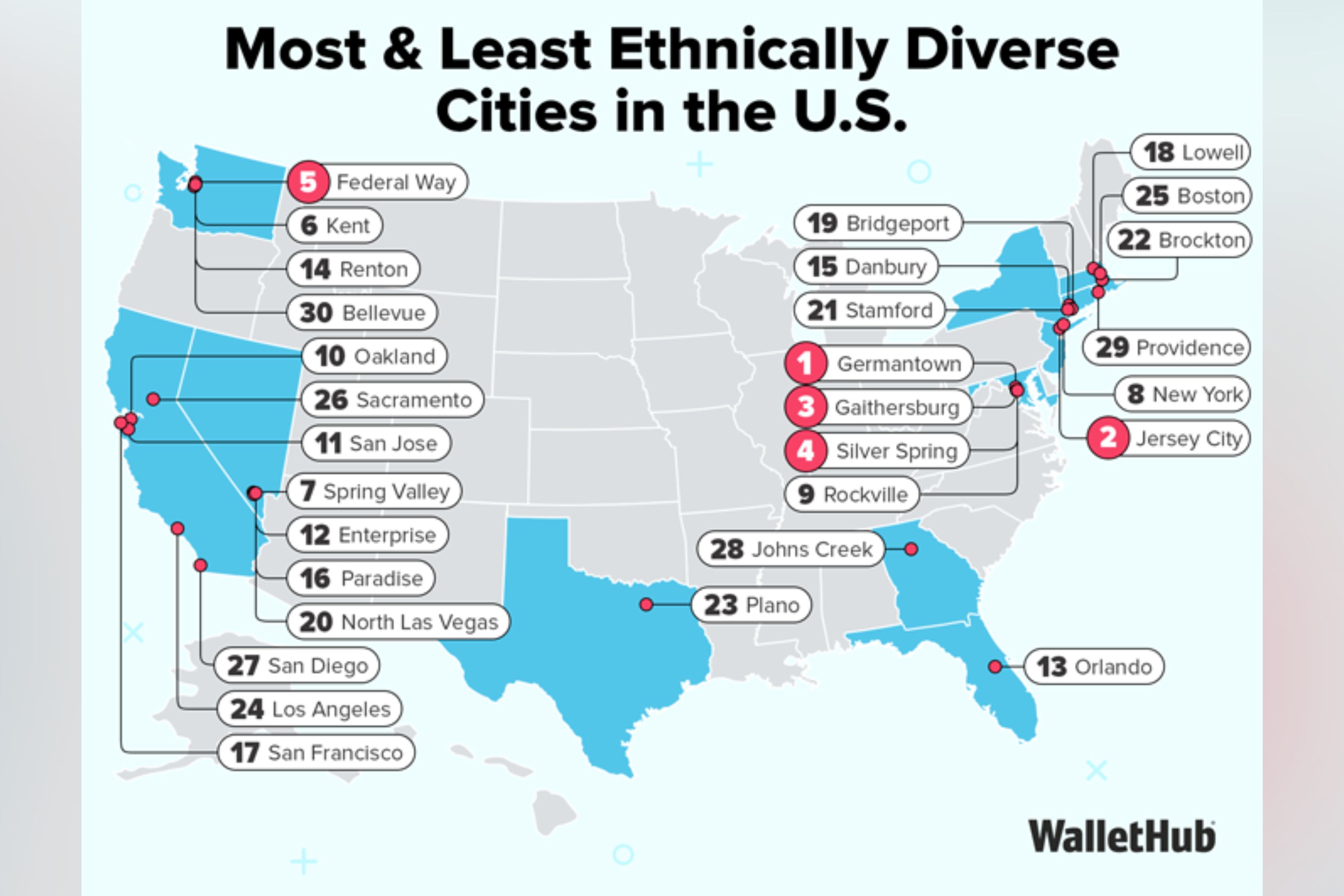
A report by WalletHub ranks the most and least ethnically diverse cities in the United States. Germantown, Maryland, ranks as the most diverse, while Hialeah, Florida, ranks as the least diverse. The report uses a method that measures ethnic, language, and birthplace diversity in 501 cities.
Key Facts
Germantown, Maryland, ranks first in ethnic diversity with a mix of white, Black, Hispanic, and Asian residents.
Jersey City, New Jersey, is second, with Asians being the largest single ethnic group.
Gaithersburg, Maryland, ranks third in diversity, with significant numbers of non-English speakers and immigrants.
The report uses the Herfindahl-Hirschman Index to measure diversity in 501 cities.
Ethnic diversity scores were based on ethnoracial, linguistic, and birthplace diversity.
Germantown has the fifth-highest language diversity, with a large number of residents speaking languages other than English.
The least diverse city according to the report is Hialeah, Florida.
Read the Original
Want the full story? Tap a source to open the original
article.
A California fire captain, Christopher James Ramstead, is accused of sexually abusing three children over more than 20 years. He faces nine felony charges and is currently being held without bail. Investigators believe there might be more victims and are encouraging others to come forward.
Key Facts
Christopher James Ramstead is a fire captain with the Pasadena Fire Department.
He is accused of sexually abusing three children over more than two decades.
Ramstead pleaded not guilty to nine felony counts related to child abuse.
He faces up to 135 years to life in prison if convicted.
He was put on administrative leave and the alleged crimes did not occur during his official duties.
Ramstead was initially released on bail but was later taken into custody again.
Authorities suspect there could be additional victims and are continuing their investigation.
Read the Original
Want the full story? Tap a source to open the original
article.
Senator Lisa Murkowski from Alaska is opposing the SAVE Act, a bill supported by President Donald Trump. This bill aims to require proof of U.S. citizenship for voter registration in federal elections. Murkowski argues that it oversteps federal authority and could interfere with state-run election processes.
Key Facts
The SAVE Act stands for Safeguard American Voter Eligibility Act.
It would change the National Voter Registration Act.
The bill requires documents like a U.S. passport or birth certificate to prove citizenship when registering to vote in federal elections.
The SAVE Act would require ongoing checks of voter lists to ensure only U.S. citizens are registered.
Senator Lisa Murkowski believes this law would take away the states' power to manage federal elections.
Murkowski is a Republican senator, yet opposing this measure, which has wide support in her party.
She expressed her concerns before the upcoming 2026 midterm elections.
The bill is regarded as increasing federal involvement in elections.
Read the Original
Want the full story? Tap a source to open the original
article.
U.S. lawmakers accused the Department of Justice (DOJ) of wrongly hiding information in files related to Jeffrey Epstein. After complaints, the DOJ released a less redacted version of the files, which sparked further discussion about compliance with a transparency law. The files' release is part of the Epstein Files Transparency Act signed by President Trump.
Key Facts
U.S. lawmakers say the DOJ hid too much information in Jeffrey Epstein's files.
Congress reviewed about three million pages of these files.
The Epstein Files Transparency Act requires these files to be released.
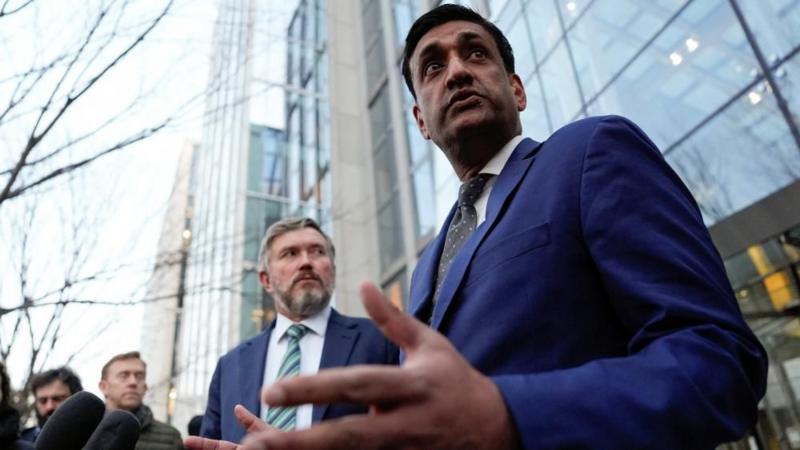
Democratic Representative Ro Khanna and others noted names were wrongly hidden.
The DOJ has started releasing less-redacted versions in response to complaints.
Deputy Attorney General Todd Blanche emphasized the DOJ's commitment to transparency.
Some redactions were related to personally identifiable information, like email addresses.
There is ongoing controversy over whether the DOJ's actions fully comply with the law.
Read the Original
Want the full story? Tap a source to open the original
article.
An 84-year-old woman named Nancy Guthrie, the mother of TV host Savannah Guthrie, has been missing for over a week. Authorities are investigating her disappearance as a potential kidnapping, but there are no demands for ransom, leading to concerns about other, possibly dangerous motives. The FBI and local police are working on the case, and there have been ransom notes sent to media outlets.
Key Facts
Nancy Guthrie, mother of Savannah Guthrie, went missing from her home in Tucson, Arizona, on January 31.
Authorities suspect kidnapping or abduction but have not confirmed a ransom demand.
Ransom notes were sent to media, but their authenticity is in question.
Nancy needs medication daily, which could be life-threatening if missed.
The FBI has not identified any suspects or established contact with the kidnappers.
Experts suggest the case might involve motives other than ransom.
Savannah Guthrie is asking for public help to find her mother.
AI experts are helping investigate the origin of the ransom notes.
Read the Original
Want the full story? Tap a source to open the original
article.
Several U.S. states will hold special elections in 2026 to fill vacant seats in Congress before the November midterm elections. Key districts involved include Georgia's 14th, New Jersey's 11th, and California's 1st Congressional Districts. These elections may impact the current slim Republican majorities in the House and Senate.
Key Facts
Special elections in Georgia, New Jersey, and California will fill Congressional seats.
Georgia's 14th District election is to replace Marjorie Taylor Greene, who resigned.
New Jersey's 11th District election follows Mikie Sherrill's exit to become governor.
California's 1st District election follows the death of Republican Doug LaMalfa.
Democrats and Republicans will compete in each district, with political maps influencing outcomes.
Republicans currently hold narrow majorities in both the House and Senate.
Read the Original
Want the full story? Tap a source to open the original
article.
Members of Congress were allowed to see uncensored files from the Justice Department about Jeffrey Epstein. They found details that suggest important people may have been involved in Epstein's crimes, but their names were hidden. The Justice Department says it wants to keep personal victim information private.
Key Facts
Congress members reviewed unredacted Justice Department files on Jeffrey Epstein.
The files include about 3 million documents made public since 2025.
President Trump signed the Epstein Files Transparency Act in November.
Lawmakers found evidence suggesting involvement of notable people, but their identities are redacted.
One redacted person was identified as Sultan Ahmed bin Sulayem from the UAE.
The files include information on possible victims as young as 9 years old.
Representative Jamie Raskin reported seeing many redactions without clear reasons.
Read the Original
Want the full story? Tap a source to open the original
article.
Minnesota's new state flag has become popular at protests against Operation Metro Surge, a large Department of Homeland Security initiative targeting undocumented immigrants. The operation led to public backlash and protests, resulting in the deaths of two U.S. citizens. Sales of the new flag, redesigned and adopted in 2024, have increased significantly.
Key Facts
Minnesota's new state flag has been widely used at anti-ICE protests.
Operation Metro Surge, a DHS initiative, started in Minnesota to target undocumented immigrants.
DHS described this operation as their largest ever; it expanded beyond just Minneapolis and St. Paul.
Two U.S. citizens were fatally shot during this operation, leading to widespread protests.
Governor Tim Walz called for ICE to leave Minnesota.
The flag design was changed in 2024 to reflect Minnesota's diversity.
The new flag's sales have risen by 75% since the operation began.
The old flag was seen as offensive, which led to calls for change.
Read the Original
Want the full story? Tap a source to open the original
article.
A study by LendingTree found that owning a home is more expensive than renting in all major U.S. cities. Homeowners with a mortgage pay about 37% more each month than renters. Rising costs have made it harder for many people to afford to buy their first home.
Key Facts
Owning a home is more expensive than renting in all major U.S. cities according to LendingTree.
Homeowners with a mortgage pay about $548 more per month compared to renters.
Homeownership costs have increased due to higher home prices, borrowing costs, property taxes, and insurance.
From 2019 to 2024, median housing costs for homeowners grew by 25%, but incomes rose only 23%.
The share of first-time homebuyers fell to 21%, and their average age reached 40 years.
Median monthly rent is $1,487, while median monthly housing costs for homeowners with a mortgage is $2,035.
San Francisco has the largest cost gap between renting and owning a home, at $1,565 per month.
Planned falls in mortgage rates may improve housing affordability for first-time buyers.
Read the Original
Want the full story? Tap a source to open the original
article.
Senator Susan Collins, a Republican from Maine, announced she will run for reelection. Democrats plan to challenge her as the race could impact which party controls the U.S. Senate.
Key Facts
Susan Collins is a Republican senator from Maine.
Collins announced her intention to run for reelection.
The election is important because it can affect which party controls the U.S. Senate.
Democrats are preparing to challenge Senator Collins in this race.
The election for Susan Collins' seat is considered significant in national politics.
Read the Original
Want the full story? Tap a source to open the original
article.
House Democrats are expanding their list of target districts for the 2026 midterm elections by adding five Republican-held seats. They aim to win a majority by capturing districts they believe are winnable due to voter dissatisfaction with economic issues. The Democratic Congressional Campaign Committee (DCCC) has identified 44 seats they consider competitive.
Key Facts
Democrats are targeting five additional Republican-held districts for the 2026 elections.
New target states include Colorado, Minnesota, Montana, South Carolina, and Virginia.
The DCCC's list now includes 44 districts, up from an initial list of 35.
Democrats see economic discontent as a reason to focus on these districts.
President Trump won in all these targeted districts by 13 percentage points or less.
The DCCC says Democrats have overperformed in special elections since President Trump took office.
Republicans have a reported fundraising advantage with more funds than the Democrats.
Democrats have set up nominee fund pages to support candidates in these newly targeted districts.
Read the Original
Want the full story? Tap a source to open the original
article.
A new bill proposes removing passport fees for veterans who have received the Purple Heart or the Medal of Honor. The bill is supported by lawmakers from both major political parties and aims to lift financial barriers for these decorated veterans when they travel internationally.
Key Facts
The bill aims to eliminate passport fees for veterans who received the Purple Heart or the Medal of Honor.
Current adult passport fees are $130, plus a $35 execution fee for first-time applicants.
The bill is known as the Passports for Purple Hearts and Medals of Honor Act.
It was introduced by Democratic Representative Mike Levin and Republican Representative Jim Baird.
The bill would amend the Passport Act of 1920 to waive fees for these veterans.
The legislation has strong backing from veteran organizations.
The bill was introduced on February 5, 2026, and is currently with the House Committee on Foreign Affairs.
The Purple Heart is awarded for being wounded or killed in combat, and the Medal of Honor is the highest U.S. military decoration for valor.
Read the Original
Want the full story? Tap a source to open the original
article.
Lawmakers in Florida are considering several bills to provide property tax relief, but Governor Ron DeSantis prefers eliminating property taxes altogether. Three bills are currently up for a vote in the Florida House, but the Senate has not passed similar measures yet.
Key Facts
Governor DeSantis favors abolishing property taxes in Florida.
Three different property tax relief bills are advancing in Florida's legislature.
House Joint Resolution 203 proposes to phase out non-school homestead property taxes over 10 years.
House Joint Resolution 213 suggests limiting property assessment increases to once every three years.
House Joint Resolution 209 proposes increasing the homestead exemption by $200,000 for insured properties.
The Florida Senate has not passed any similar property tax bills.
Florida does not have a personal income tax, making property tax a major revenue source.
Governor DeSantis has not proposed a specific solution yet but mentioned upcoming proposals.
Read the Original
Want the full story? Tap a source to open the original
article.
A recent poll by Rasmussen Reports shows that more voters think President Joe Biden did a better job as president than President Donald Trump. The poll asked people to compare Trump and Biden, with 48% favoring Biden and 40% favoring Trump. This poll reflects a broader trend of mixed opinions about Trump's current presidency.
Key Facts
Rasmussen Reports conducted the poll with 1,094 voters and a margin of error of 3 percentage points.
48% of voters believed Biden was a better president than 40% who favored Trump.
The poll occurred between February 2 and 4, 2026.
Trump had promised a "Golden Age" for the U.S., but only 27% think it has arrived, while 58% disagree.
Real Clear Politics showed Trump with a 42.3% average approval rating during the poll period.
Nate Silver reported Trump's net approval at negative 13.7 points, with 46% strongly disapproving.
Trump returned to office criticizing Biden for economic struggles and immigration issues.
The findings reflect several polls indicating declining approval for Trump's handling of the economy and immigration.
Read the Original
Want the full story? Tap a source to open the original
article.
Staying informed here is free for everyone. If it's worth something to you, pay what you want. Supporters also get the daily digest by email every morning.
The Texas Democratic Senate primary between Jasmine Crockett and James Talarico has escalated with claims of racial insensitivity. This internal conflict could signal larger tensions for Democrats nationally, similar to challenges faced in the 2024 election. The outcome will influence who faces the GOP candidate in the general election.
Key Facts
Jasmine Crockett and James Talarico are competing in the Texas Democratic Senate primary.
The primary has involved accusations of racial insensitivity and derogatory comments.
A viral TikTok post accused Talarico of making a racist remark about Colin Allred.
Colin Allred publicly criticized Talarico and endorsed Crockett in response.
Talarico denies making the alleged comment and claims he was misunderstood.
The primary winner will run against the GOP Senate candidate, with John Cornyn among those in the race.
The situation highlights challenges with identity politics within the Democratic Party.
There are concerns about repeating past issues seen in the 2024 election, where identity-focused strategies impacted voter support.
Read the Original
Want the full story? Tap a source to open the original
article.
Ghislaine Maxwell used her right to stay silent to avoid self-incrimination during a virtual appearance before a U.S. House committee investigating the government’s handling of Jeffrey Epstein’s case. Her lawyer explained she did this because she is challenging her conviction in court. The committee asked her six questions, which she refused to answer.
Key Facts
Ghislaine Maxwell appeared before the House Oversight and Government Reform Committee.
She used the Fifth Amendment, which allows a person to not answer questions that might incriminate them.
Maxwell's deposition focused on the federal government's handling of Jeffrey Epstein's case.
Her lawyer cited a pending habeas petition that argues her trial was unfair.
The committee asked Maxwell six specific questions related to Epstein's activities and her involvement.
The Oversight Committee released video footage of the deposition.
Maxwell has a pending court case seeking to overturn her conviction or reduce her sentence.
Her lawyer suggested Maxwell would speak fully if granted clemency by President Trump.
Read the Original
Want the full story? Tap a source to open the original
article.