A group of preservationists is taking legal action against President Trump concerning his renovation of the White House ballroom. Elsewhere, flooding and landslides are affecting Washington and Oregon, and various international events are unfolding, including a financial decision by the E.U. and a historic win in skiing.
Key Facts
Preservationists are suing President Trump over changes made to the White House ballroom.
Flooding and landslides are reported in Washington and Oregon.
Residents in Gaza are cleaning up after a winter storm caused flooding in camps.
The European Union has decided to freeze $250 billion in Russian assets.
Lindsay Vonn, a famous skier, achieved a milestone in a World Cup race.
Read the Original
Want the full story? Tap a source to open the original
article.
President Trump plans to change federal laws about marijuana, which could make it less restricted and easier to study or use for medical purposes. Currently, marijuana is in the same strict category as drugs like heroin, but reclassifying it could lead to regulatory changes and boost cannabis businesses. Federal law generally overrides state laws, but many states have already changed their rules to allow marijuana use in some form.
Key Facts
President Trump intends to relax federal restrictions on marijuana.
Marijuana is currently classified as a Schedule I substance, meaning it's seen as highly addictive with no medical use.
Reclassifying marijuana could ease regulations and encourage medical research.
Federal law generally prohibits marijuana use, but many states have legalized or decriminalized it for recreational or medical use.
States like Colorado and Washington legalized recreational marijuana in 2012.
Some states allow medical use of marijuana but still penalize recreational use.
Cannabis stocks increased after news of Trump's potential policy change.
If reclassified, marijuana would be treated like Schedule III drugs, such as ketamine and anabolic steroids.
Read the Original
Want the full story? Tap a source to open the original
article.
President Donald Trump is deciding who should be the next Federal Reserve chair. He has narrowed it down to two candidates: Kevin Warsh and Kevin Hassett. Trump's decision depends on whether Jerome Powell, the current chair, leaves his position next year.
Key Facts
President Trump is considering Kevin Warsh and Kevin Hassett for Federal Reserve chair.
Jerome Powell was reappointed by Joe Biden and his term runs until 2026.
Trump has expressed dissatisfaction with Powell, whom he nominated during his first term.
Trump prefers a Fed chair who supports lower interest rates.
Kevin Warsh was a Fed governor from 2006 to 2011 and has experience in economics and statistics.
Kevin Hassett is a former leader of the Council of Economic Advisors and has a background in economics.
Trump wants the Fed chair to consult with the president on interest rates, although this is not a current practice.
Read the Original
Want the full story? Tap a source to open the original
article.
House Republicans have introduced a new health care plan that aims to expand access to association health plans and increase oversight of pharmacy benefit managers. The plan would let enhanced Affordable Care Act (ACA) subsidies expire at the end of the year, but offers limited future support for some lower-income individuals starting in 2027. Speaker Mike Johnson presented the proposal as Congress is nearing the end of its current session without an agreement on continuing the existing ACA subsidies.
Key Facts
House Republicans proposed a new health care plan.
The proposal aims to expand association health plans.
It seeks to increase oversight of pharmacy benefit managers.
The plan allows enhanced ACA subsidies to expire by the end of the year.
Limited assistance for some lower-income enrollees is delayed until 2027.
Speaker Mike Johnson revealed the proposal amid ongoing congressional discussions.
There is no bipartisan agreement yet on extending current ACA subsidies.
Some Democrats argue the plan could lead to higher insurance premiums for families.
Read the Original
Want the full story? Tap a source to open the original
article.
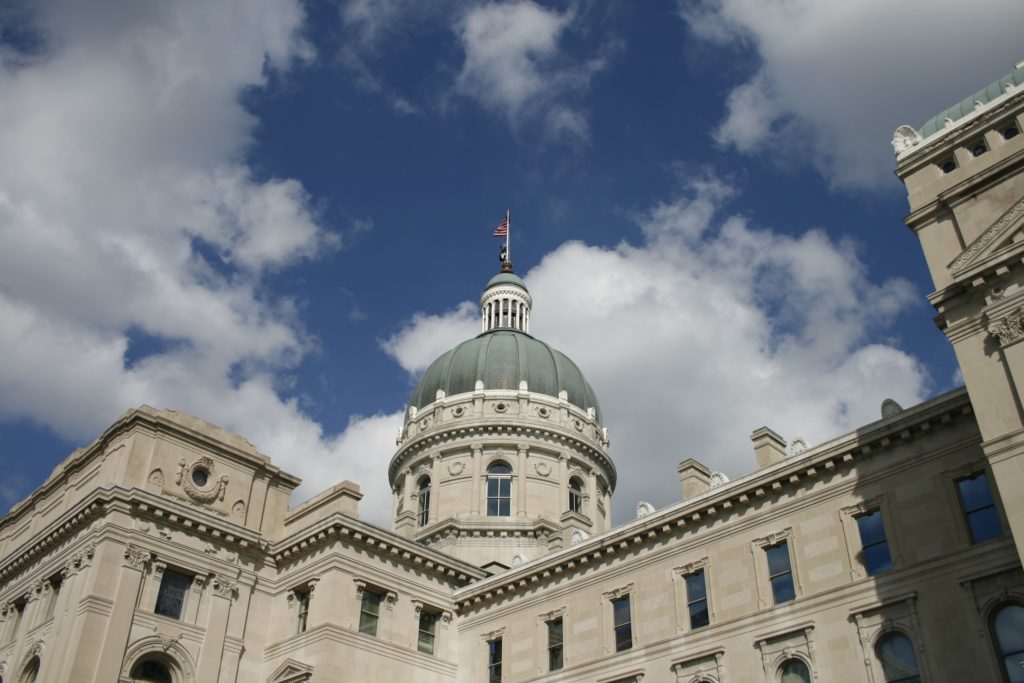
Indiana state senators, including some Republicans, voted against a plan that would have redrawn congressional districts. This plan aimed to create more Republican seats in the U.S. House. Senator Mike Bohacek was one of the Republicans who opposed the maps.
Key Facts
President Trump supports changing congressional maps to favor Republicans.
Some Indiana Republican state senators opposed these changes.
The plan could have added two more Republican seats in the U.S. House of Representatives.
Indiana Sen. Mike Bohacek voted against the proposed maps.
Both Republican and Democrat senators voted together to block the plan.
The decision happened on a Thursday.
Geoff Bennett interviewed Sen. Mike Bohacek about his decision.
Read the Original
Want the full story? Tap a source to open the original
article.
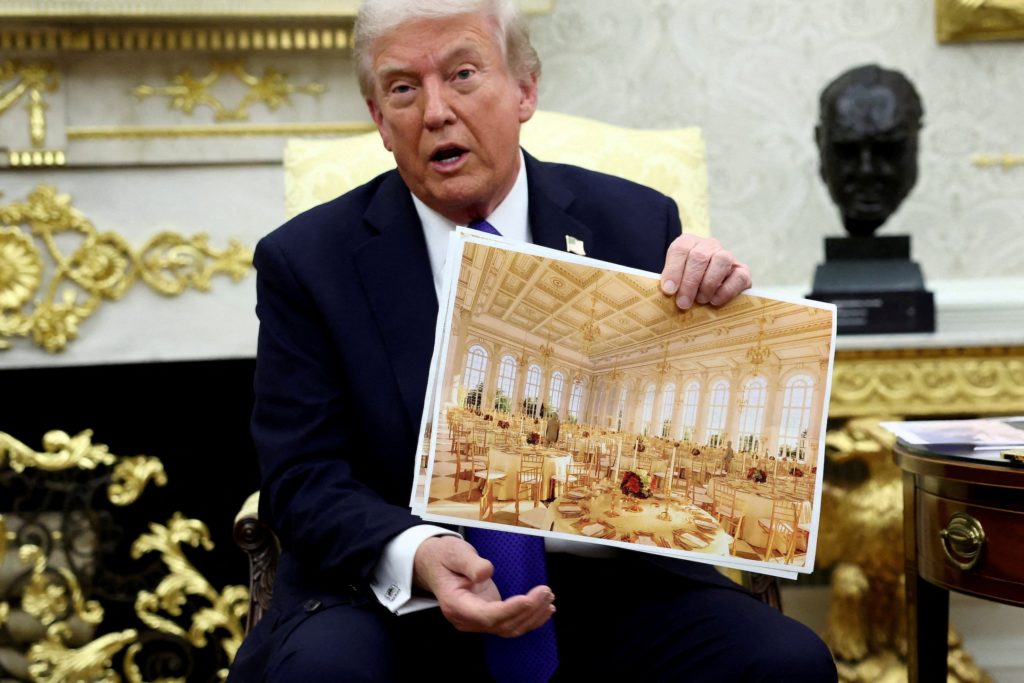
A nonprofit group called the National Trust for Historic Preservation has filed a lawsuit to stop President Trump from building a large ballroom at the White House. They claim the project hasn't followed legal procedures required for such a significant construction. The lawsuit is the first official attempt to block the expansion.
Key Facts
The National Trust for Historic Preservation is suing to stop the construction of a new ballroom at the White House.
The planned ballroom is a 90,000-square-foot addition to the east wing.
Preservationists criticize the project for changing the historic character of the White House.
The lawsuit claims that the Trump administration did not follow necessary legal steps.
The legal requirements allegedly not followed include not filing plans with the National Capital Planning Commission and not obtaining congressional approval.
President Trump believes the project is legal and says it is funded by private donors.
The ballroom will seat nearly 1,000 people, larger than initially announced.
The construction cost has increased from $200 million to $300 million.
Read the Original
Want the full story? Tap a source to open the original
article.
Columnists David Brooks and Jonathan Capehart discuss recent events that appear to be challenges for President Trump's influence on the Republican Party. These issues may also affect his leadership in his current term.
Key Facts
President Donald Trump is facing challenges within the Republican Party.
These challenges could affect his ability to lead during his current term.
The discussion is part of a wider analysis of recent political events.
David Brooks writes for The New York Times.
Jonathan Capehart is affiliated with MS NOW.
Amna Nawaz hosted the discussion about President Trump's recent issues.
Read the Original
Want the full story? Tap a source to open the original
article.
The U.S. Congress has released photos from Jeffrey Epstein's estate showing well-known figures, including President Donald Trump and former President Bill Clinton. Democrats in Congress are urging for transparency in the Epstein case, calling for the release of all related files. This comes after a law was passed requiring the release of government documents about Epstein while protecting the identities of victims.
Key Facts
The U.S. Congress released 19 photos showing figures like President Trump and Bill Clinton at Jeffrey Epstein's estate.
Democrats in Congress seek the release of all files related to Epstein, accusing Trump of covering up details.
President Trump denies having a close relationship with Epstein, claiming he was just a neighbor.
A law was passed requiring the Trump administration to release government documents related to Epstein by December 19.
Epstein was convicted of sex offences, and his death in 2019 was ruled a suicide.
Associates of Epstein include notable figures like ex-President Clinton and others from business and politics.
The released photos and the handling of the Epstein case have led to public calls for more transparency from the government.
Read the Original
Want the full story? Tap a source to open the original
article.
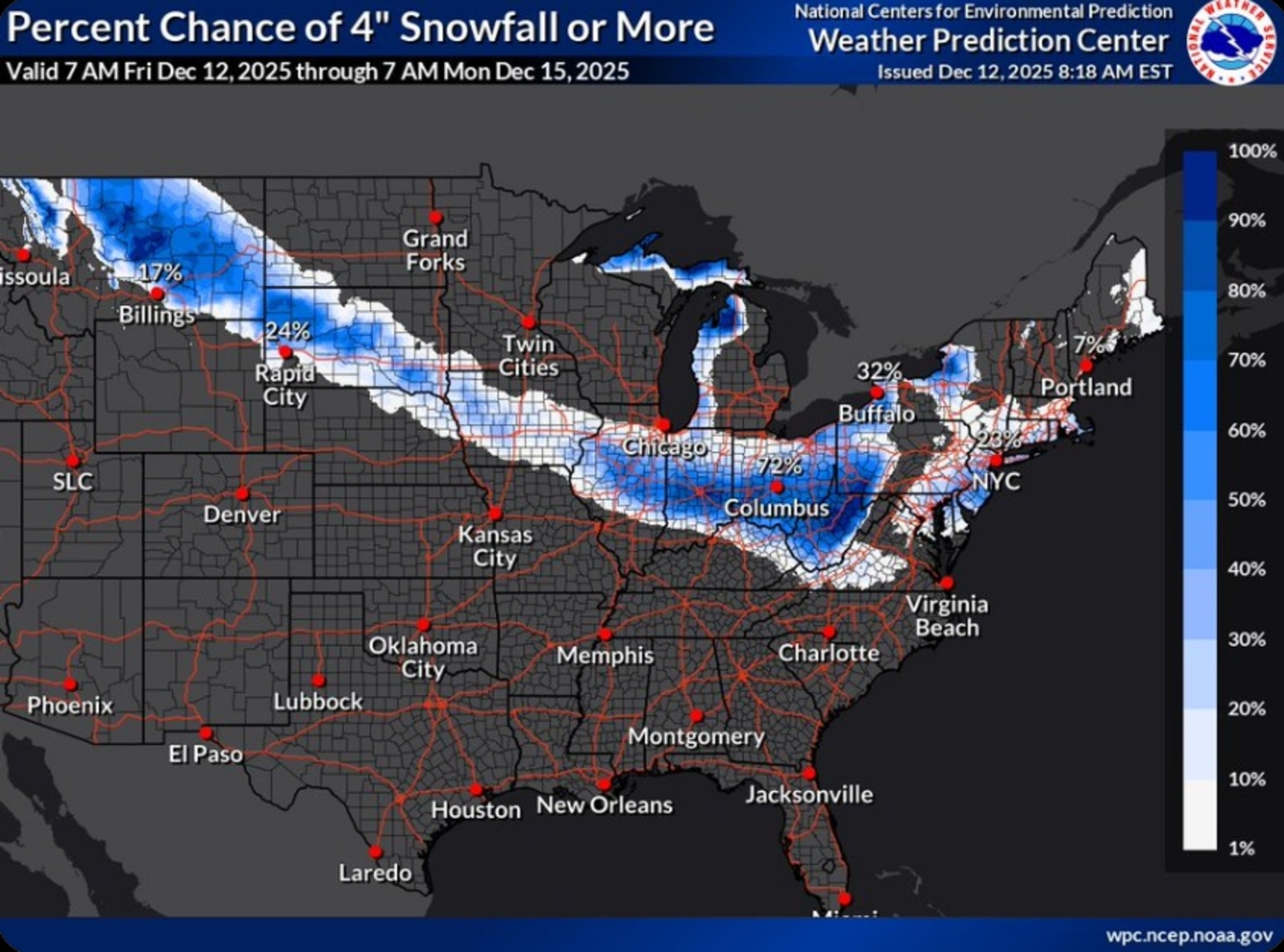
A winter storm is expected to bring significant snowfall to various states in the U.S. over the weekend, particularly affecting the Midwest and Northeast. The National Weather Service (NWS) has issued warnings and advisories in anticipation of the storm, which could include up to 14 inches of snow in some areas and extremely cold temperatures in others.
Key Facts
The storm could drop 4 inches or more of snow in several states, including major cities like New York City, Philadelphia, and Boston.
The National Weather Service has issued winter storm warnings and advisories ahead of the storm.
Areas with high chances of heavy snowfall include Indianapolis, Columbus, Ohio, and central West Virginia.
New York City has a 23% chance of receiving 4 inches of snow or more.
Some parts of the U.S. could experience feels-like temperatures as low as 40 degrees below zero.
The cold front is bringing blustery conditions and is expected to produce lake-effect snow near the Great Lakes.
Up to 14 inches of snow is possible in parts of Ohio, Pennsylvania, and New York between Saturday and Monday.
Read the Original
Want the full story? Tap a source to open the original
article.
Atlantic City Mayor Marty Small Sr. is on trial for allegedly assaulting his teenage daughter. He denies the allegations and claims he only punished her by limiting her social activities. Both he and his wife face charges related to child endangerment, and they have pleaded not guilty.
Key Facts
Marty Small Sr., Mayor of Atlantic City, is accused of assaulting his daughter.
The daughter testified that the mayor hit her and struck her with a broom.
Mayor Small denies these claims and says he only restricted her social life.
He faces charges of endangering a child, making threats, and witness tampering.
Mayor Small's wife, La'Quetta Small, is also charged in the case.
If convicted, Mayor Small could face up to 25 years in prison.
Both have pleaded not guilty to the charges.
Jurors are expected to start deliberations soon.
Read the Original
Want the full story? Tap a source to open the original
article.
A group focused on preserving historic sites is suing the White House to stop the construction of a new ballroom. The group argues that the White House did not follow legal review processes before starting the project. President Trump says the construction is legal and funded by private donors.
Key Facts
A lawsuit has been filed by the National Trust for Historic Preservation to stop the White House ballroom construction.
The group claims the White House did not get the necessary reviews before starting construction.
The White House says President Trump has the legal power to make changes and improvements.
The ballroom plans include expanding guest capacity from 500 to 1,350 people.
The construction is funded by private donations, according to President Trump.
The lawsuit mentions ignoring of required reviews from the National Capital Planning Commission and Congress.
The White House project is already underway with extensive construction activities taking place.
Read the Original
Want the full story? Tap a source to open the original
article.
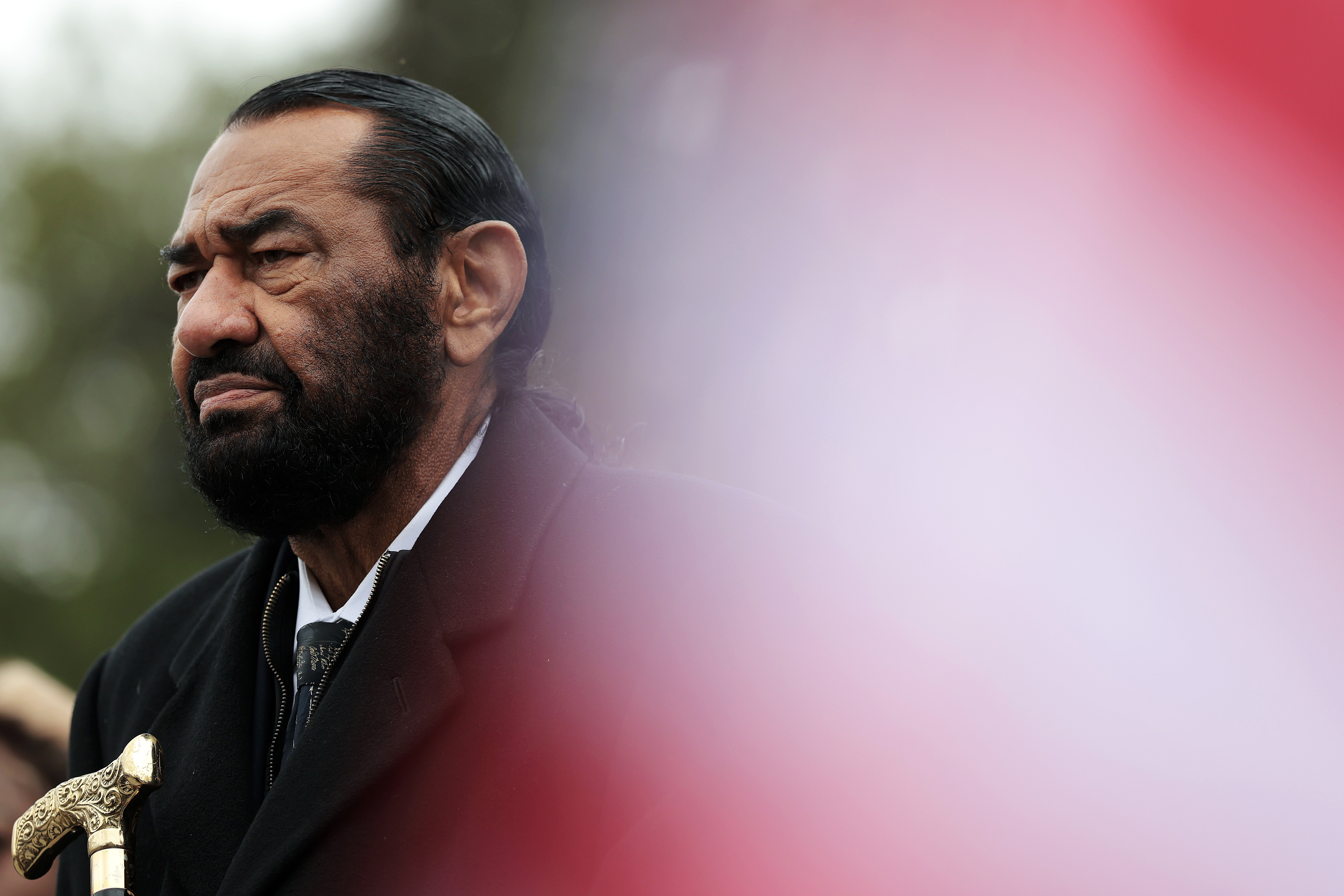
Democratic Representative Al Green attempted again to impeach President Donald Trump but failed to get enough support in the House. Despite the failure, Green is determined to continue his efforts, backed by his belief in liberty and justice. House Republicans and some Democrats opposed the move, while others voted "present."
Key Facts
Al Green is a Democratic Representative from Texas who has repeatedly tried to impeach President Trump.
Green failed to get enough votes in the House for his latest impeachment attempt.
23 Democrats opposed Green's motion, 47 voted "present," and 140 Democrats voted against tabling the resolutions.
214 House Republicans voted to table the impeachment effort; six did not vote.
President Trump was previously impeached twice; once in 2019 over issues with Ukraine, and again after the January 6, 2021, Capitol riot.
Green expressed determination to continue impeachment efforts against Trump.
Democrats filed impeachment articles against other cabinet members, not just Trump.
House Democratic leaders expressed concerns about Trump's behavior, while Republicans considered the impeachment efforts a distraction.
Read the Original
Want the full story? Tap a source to open the original
article.
Staying informed here is free for everyone. If it's worth something to you, pay what you want. Supporters also get the daily digest by email every morning.
A group focused on protecting historic sites has sued President Trump to stop the White House ballroom project. They want the project to go through reviews and get Congress's approval before it can continue.
Key Facts
President Trump is planning a White House ballroom project.
The project involves demolishing the East Wing.
The National Trust for Historic Preservation filed the lawsuit.
The lawsuit asks a federal court to halt the project.
The group wants independent design reviews and environmental checks.
They also seek public input and Congress's agreement.
Critics include historic preservationists and some political opponents.
Read the Original
Want the full story? Tap a source to open the original
article.
President Donald Trump signed an executive order to limit states from creating their own rules about artificial intelligence (AI). Former adviser Steve Bannon criticized this order, calling it unenforceable. Some state and federal lawmakers have voiced their opposition, arguing that states should have the right to regulate AI.
Key Facts
President Donald Trump signed an executive order to challenge state laws on AI.
The order tasks the attorney general with forming a task force to address state AI regulations.
It calls for the Commerce Department to list what it considers "burdensome" regulations.
States such as California, Colorado, Texas, and Utah have already implemented some AI regulations.
Steve Bannon criticized the order, suggesting it cannot be enforced.
Some state laws target issues like data privacy and the use of deepfakes.
Democratic senators have also criticized the order, arguing it limits necessary state-level protections.
The Senate recently voted against a 10-year ban on state AI regulations within certain legislation.
Read the Original
Want the full story? Tap a source to open the original
article.
A federal appeals court blocked the release of hundreds of immigrants arrested during a Chicago-area crackdown. The court ruled that each case must be assessed individually and extended the rules on how immigration agents can make arrests. The crackdown led to thousands of arrests and was questioned by a federal judge for its tactics.
Key Facts
A federal appeals court stopped the immediate release of over 600 immigrants.
The court requires individual assessments for each detainee's case.
The 2022 agreement outlines how immigration agents can arrest people without a warrant.
President Trump's administration's crackdown in Chicago led to more than 4,000 arrests.
A district judge initially ordered the release of the immigrants on bond.
The court said the administration wrongly categorized all detainees as needing detention.
The consent decree involves immigrant arrests in six Midwestern states.
The agreement was extended until February, although the government challenged this extension.
Read the Original
Want the full story? Tap a source to open the original
article.
The U.S. Department of Justice has sued Fulton County, Georgia, over access to 2020 election voting records. The department also filed lawsuits against Colorado, Hawaii, Massachusetts, and Nevada for not providing voter registration lists. These legal actions add up to a total of 18 states and one county facing lawsuits.
Key Facts
The Justice Department’s Civil Rights Division filed a lawsuit against Fulton County, Georgia.
The lawsuit seeks access to voting records from the 2020 presidential election.
Fulton County previously involved claims against President Donald Trump concerning election interference.
The lawsuit demands that Fulton County comply with a subpoena for election materials.
Federal lawsuits were also filed against the states of Colorado, Hawaii, Massachusetts, and Nevada.
The lawsuits claim these states did not provide voter registration lists upon request.
A total of 18 states and Fulton County have been sued by the Department of Justice over similar issues.
Read the Original
Want the full story? Tap a source to open the original
article.
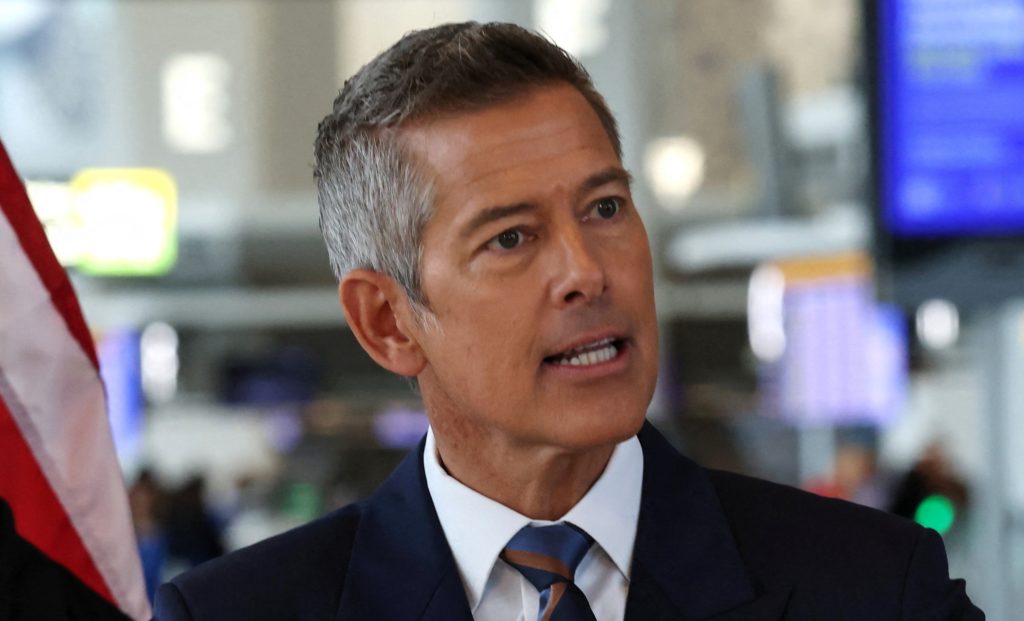
U.S. Transportation Secretary Sean Duffy announced that New York might lose $73 million in highway funds if it does not address issues in its system for issuing commercial driver's licenses to immigrants. New York officials claim they are following federal guidelines, but Duffy wants to ensure that only qualified individuals receive these licenses.
Key Facts
Sean Duffy is the U.S. Transportation Secretary.
New York issues commercial driver's licenses to immigrants that may remain valid beyond their legal stay.
Duffy threatened to cut $73 million in highway funds to New York unless the system is corrected.
New York officials assert they comply with federal rules and verify immigration status.
Duffy has focused on four states with Democratic governors to check the licensing process.
A truck crash in Florida involving an unauthorized driver prompted Duffy to start this review.
The regulations for these licenses have existed for several years.
Read the Original
Want the full story? Tap a source to open the original
article.
Some churches in the United States have altered their Nativity scenes to comment on immigration policies. They have depicted figures like Mary, Joseph, and baby Jesus in scenarios reflecting modern immigration issues, such as being detained or in hiding.
Key Facts
Churches in places like Evanston and Dedham are using Nativity scenes to protest U.S. immigration policies.
In Evanston, the baby Jesus is shown with zip ties, and Mary wears a gas mask.
The Roman soldiers are portrayed as ICE agents, which stands for Immigration and Customs Enforcement.
A church in Dedham replaced the baby Jesus with a sign that read "ICE was here."
The displays aim to highlight the struggles of immigrants under current immigration enforcement.
These creative Nativity scenes are both praised and criticized by different groups.
Read the Original
Want the full story? Tap a source to open the original
article.
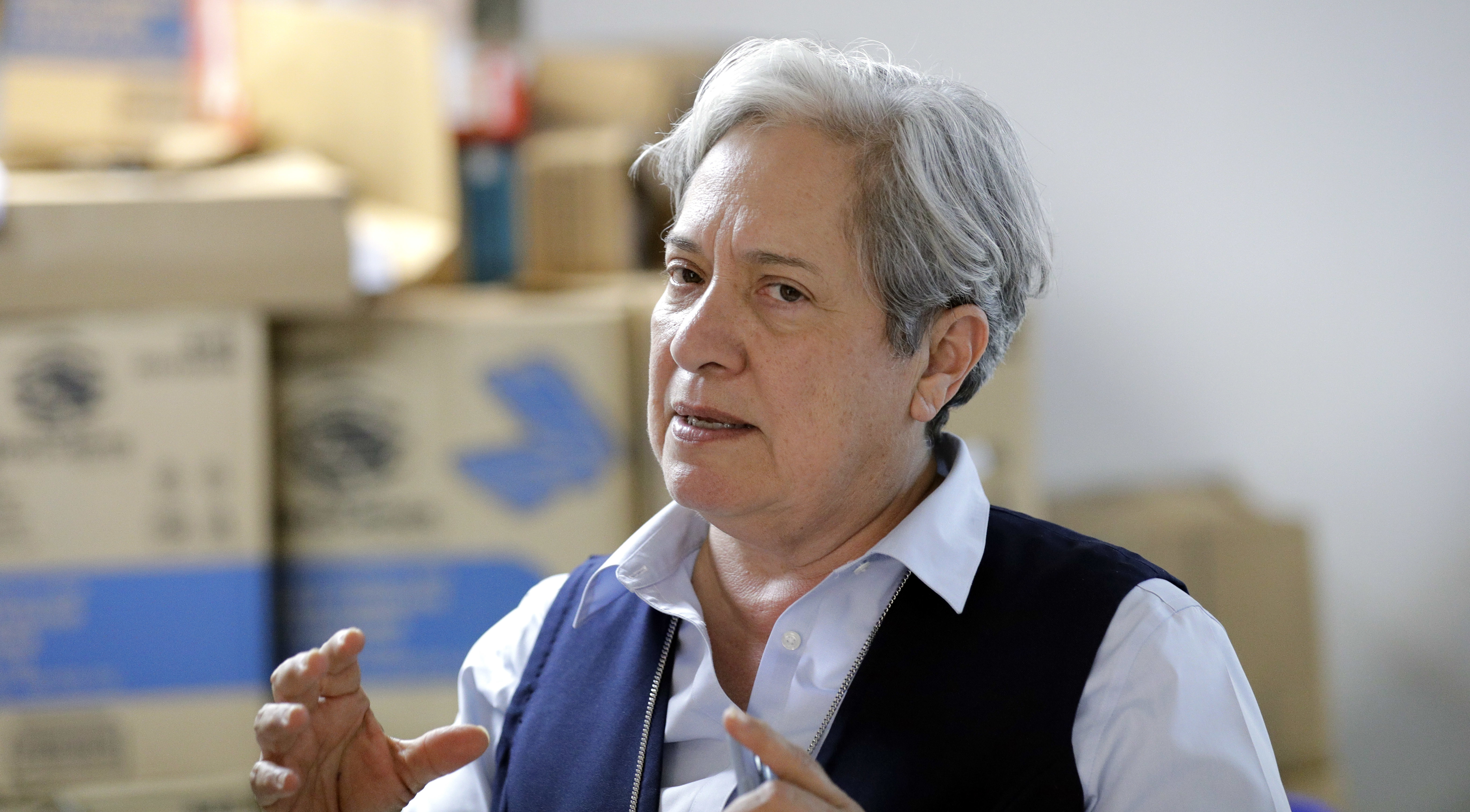
The Department of Homeland Security (DHS) stopped federal funding for a Texas charity run by Sister Norma Pimentel that helps migrants. DHS claims the charity had reporting issues, while some, like Catholic writer Christopher Hale, believe it shows a bias against organizations helping migrants. This action affects future support and policy for migrant aid at the U.S. border.
Key Facts
Sister Norma Pimentel runs a charity called Catholic Charities of the Rio Grande Valley (CCRGV) that assists migrants in South Texas.
The DHS has suspended federal funding to CCRGV, citing "pervasive" reporting violations.
The organization, according to DHS, had inconsistent records and billed outside permitted times.
DHS attorney Joseph N. Mazzara highlighted concerns regarding data accuracy and misuse of funds.
Christopher Hale suggests the funding cut might be a part of the Trump administration's negative stance on migrant support.
The reduced funding raises concerns about the charity's ability to continue aiding migrants released by U.S. Customs and Border Protection.
The situation underscores a conflict between government immigration policies and faith-based humanitarian efforts.
Read the Original
Want the full story? Tap a source to open the original
article.
A new poll by AP-NORC shows that many Americans find holiday shopping more difficult this year. High prices for groceries, electricity, and gifts are causing people to dip into savings and search for deals.
Key Facts
AP-NORC conducted a poll about holiday shopping in the U.S.
Many Americans say prices for groceries, electricity, and holiday gifts are higher than usual.
More than half of the people surveyed are using their savings for holiday shopping.
About half find it harder to afford holiday gifts.
Many are delaying big purchases or cutting back on things they don't really need.
President Donald Trump is in office during this economic situation.
Read the Original
Want the full story? Tap a source to open the original
article.