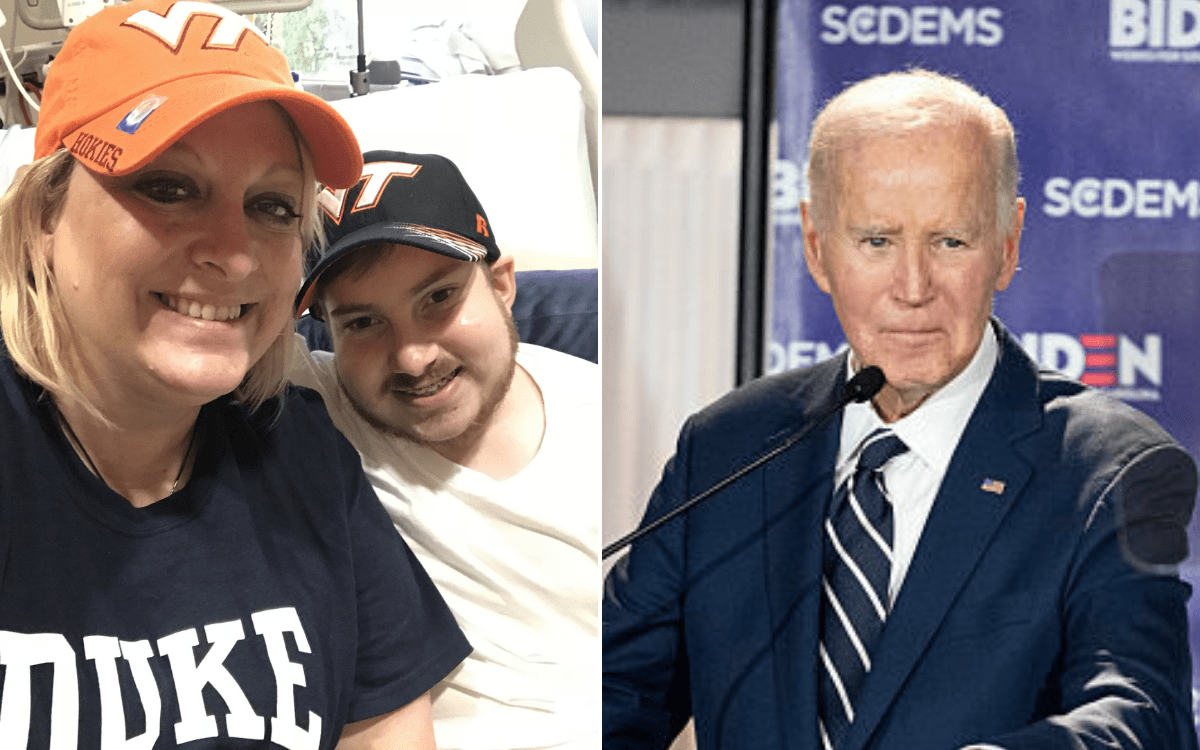
A mother named Melina Newcomb, who lost her son Levi to cancer, wrote to President Joe Biden after learning of his own cancer diagnosis. President Biden replied personally, offering condolences and words of comfort about shared grief and hope.
Key Facts
Melina Newcomb’s son Levi died from cancer in 2019 at age 19.
Levi had a brain tumor diagnosed at age 4 and later developed a second cancer caused by radiation treatment.
President Joe Biden lost his son Beau to brain cancer in 2015.
In May 2025, President Biden was diagnosed with advanced prostate cancer that had spread to his bones.
Newcomb sent a supportive message to Biden in August 2025 after hearing people could email him well wishes.
Biden responded personally, expressing sympathy and encouragement about sharing love and hope despite grief.
Newcomb described her experience of grief and how Biden’s reply gave her comfort.
Read the Original
Want the full story? Tap a source to open the original
article.
President Donald Trump’s approval rating among adults aged 30 to 44 has hit a new low of negative 43 points, according to a recent Economist/YouGov poll. This age group shows much stronger disapproval compared to the overall U.S. adult population, signaling challenges for Trump ahead of the 2026 midterm elections.
Key Facts
Only 27% of adults aged 30 to 44 approve of President Trump’s job performance, while 70% disapprove.
The negative net approval rating among this group is -43 points, the lowest since January 2025.
Among all U.S. adults, Trump has a -24 point net approval rating (36% approve, 60% disapprove).
The 30-44 age group’s approval has dropped by 42 points since January 2025, when it was nearly even.
The poll surveyed 1,592 U.S. adults from August 28 to 31, 2026, with a margin of error of 3.5 points.
Approval ratings among younger adults have declined steadily throughout 2025 and 2026.
The White House says election results, not polls, are the true measure of public opinion.
Poll data reflects opinions at the time of survey and may not predict future votes.
Read the Original
Want the full story? Tap a source to open the original
article.
A recent study shows fewer Americans are moving within the country compared to the pandemic years. High housing costs and expensive mortgages are making many people stay put, especially in larger cities.
Key Facts
Domestic moves in the U.S. dropped significantly in the second quarter of 2026.
Longer-distance moves fell more sharply than moves within the same city.
High housing prices and mortgage costs are major reasons people are staying in their homes.
Many homeowners have low-interest mortgages, making it costly to sell and move.
Young adults find homeownership harder due to a lack of affordable homes.
Some people are moving to smaller Midwestern cities with cheaper housing.
Remote work increased moves during the pandemic but this trend slowed in 2023-2024.
43.5 million U.S. households spent more than 30% of their income on housing in 2024.
Read the Original
Want the full story? Tap a source to open the original
article.
About 50 members of the US military’s Joint Staff took lie detector tests after classified information about low ammunition supplies was leaked to the media. The Pentagon is investigating these leaks and says it takes national security seriously.
Key Facts
US investigators conducted polygraph tests on around 50 Joint Staff members.
The investigation focuses on leaks about low US ammunition levels, including missiles and air defense weapons.
The Joint Staff includes 1,500 to 2,000 military and civilian personnel involved in military planning.
The Pentagon says protecting classified information is key to US and troop security.
This large-scale polygraph testing of senior military staff is unusual and considered unprecedented.
Leaks have raised concerns about strained weapon supplies amid ongoing operations involving Iran.
President Donald Trump has called for strict action against leaks and labeled critical leak reports as “treasonous.”
Defense Secretary Pete Hegseth has removed or blocked the promotion of many senior officers amid internal Pentagon tensions.
The Pentagon also fired the top editors of Stars and Stripes following critical stories about conditions on a US aircraft carrier.
President Trump supports Defense Secretary Hegseth and praised his work publicly.
Read the Original
Want the full story? Tap a source to open the original
article.
A woman named Corie A. Walsh from Frankfort, Illinois, has been charged with killing her two-year-old son. Walsh reportedly became interested in a high-profile murder trial and told police she killed her son because she believed he was the "anti-Christ."
Key Facts
Corie A. Walsh is 40 years old and lives in Frankfort, Illinois.
Walsh’s two-year-old son, Barrett Walsh, was found unresponsive and later died at a hospital.
Police found the child hanging in the basement on a device attached to a rafter.
Walsh was taken to a hospital for non-life-threatening injuries and is now in custody.
She faces three counts of First-Degree Murder.
Walsh told police she killed her son because she thought he was the "anti-Christ."
She had been following and discussing the Lindsay Clancy murder trial online shortly before the incident.
The Lindsay Clancy trial involved the death of Clancy’s three children and recently ended in a mistrial.
Read the Original
Want the full story? Tap a source to open the original
article.
The trial of Lindsay Clancy, a Massachusetts mother accused of killing her three children, ended in a mistrial after the jury could not agree on a verdict. Clancy's defense argued she had postpartum psychosis, a rare mental illness after childbirth, while the prosecution said the killings were deliberate.
Key Facts
Lindsay Clancy is charged with murdering her three young children.
Her defense claimed she suffered from postpartum psychosis, affecting her responsibility.
The prosecution argued the deaths were intentional and planned.
The jury deliberated for 40 hours but could not reach a unanimous decision, so the judge declared a mistrial.
The case has caused strong debate across the U.S. on social media and in families.
Postpartum psychosis is a rare condition involving severe mental issues after childbirth, but some experts questioned whether it applied here.
Clancy attempted suicide after the incident and was left paralyzed.
Supporters of Clancy see her as a victim of mental illness, while others believe she should be criminally punished.
Read the Original
Want the full story? Tap a source to open the original
article.
Missouri asked the U.S. Supreme Court to allow new congressional districts supported by President Donald Trump to be used in the upcoming midterm elections. This request follows a ruling from Missouri’s highest court that blocked the new map and called for a statewide vote to decide if the new districts should be kept.
Key Facts
Missouri’s highest court stopped the use of new congressional district maps until voters decide on them in November.
The new districts were created to help Republicans win an additional House seat.
Over 300,000 petition signatures were submitted to require a public vote on the new map.
Missouri’s Secretary of State initially rejected the petition, saying the state constitution doesn’t allow votes on congressional redistricting.
The Missouri Supreme Court disagreed and said the old district map must be used for the general election.
Missouri’s Attorney General asked the U.S. Supreme Court to block the state court’s decision immediately.
The U.S. Supreme Court is reviewing the appeal with Justice Brett Kavanaugh involved in the process.
Missouri currently has six Republican and two Democratic U.S. House members.
Read the Original
Want the full story? Tap a source to open the original
article.
A government watchdog found that former Labor Secretary Lori Chavez-DeRemer created a harmful and unpleasant work environment. The report said she often drank alcohol during work hours and did not report costly gifts as required.
Key Facts
Lori Chavez-DeRemer was the Labor Secretary until she resigned in April.
A report from the Labor Department’s Office of Inspector General criticized her leadership.
The report described the workplace under her as toxic, intimidating, and humiliating.
She reportedly drank alcohol regularly during the workday.
Chavez-DeRemer failed to properly report expensive gifts she received.
The investigation was completed and the report was released on Thursday.
Read the Original
Want the full story? Tap a source to open the original
article.
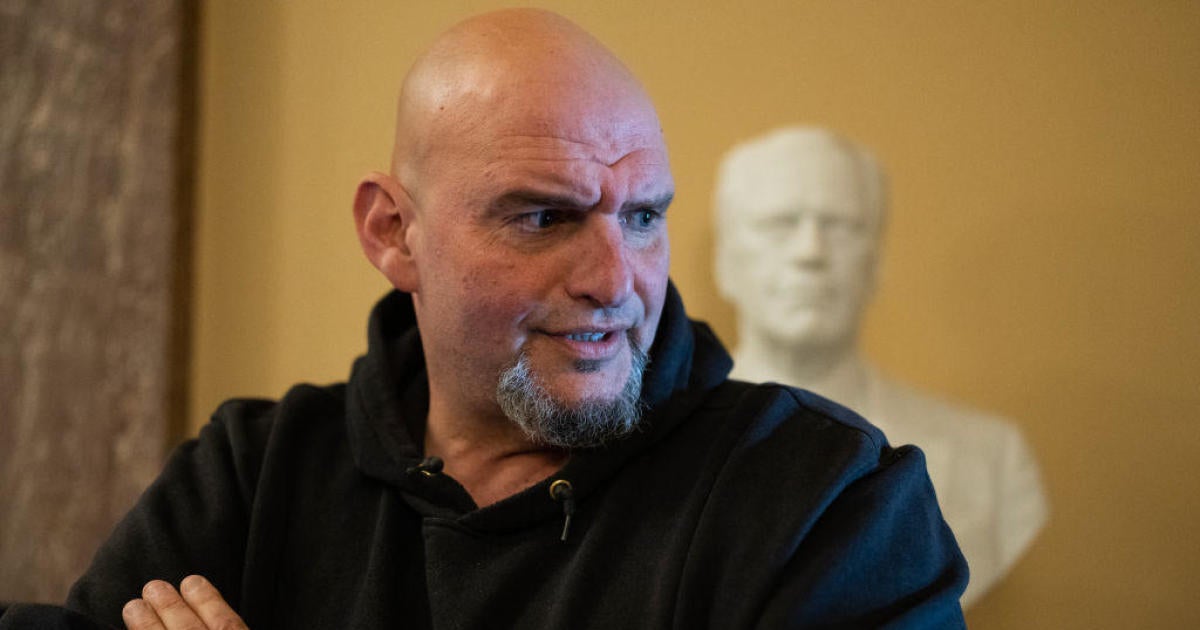
Senator John Fetterman, a Democrat from Pennsylvania, has shown reluctance to carry out some duties like meeting constituents and attending funerals, according to text messages shared by staff and reported by The Wall Street Journal. He has also disagreed with many members of his party and supported some of President Donald Trump’s decisions.
Key Facts
Text messages reveal Fetterman avoided meeting groups like paralyzed veterans and representatives from a children's hospital.
He refused to attend funerals for three slain police officers, citing the length of the ceremony and travel time.
Fetterman appeared on Fox News instead of meeting veterans when he said he was sick.
Some Democratic colleagues criticized Fetterman’s behavior as disrespectful and lazy.
Fetterman was elected to the Senate in 2022 despite suffering a stroke during the campaign.
He has supported President Trump’s decision on the Iran war and voted against limiting Trump’s war powers.
Fetterman has broken with Democrats on various issues but said he would not switch parties unless the party turns "anti-Israel."
Fetterman is known for a casual style, often wearing hoodies and shorts instead of formal clothing.
Read the Original
Want the full story? Tap a source to open the original
article.
Vietnam War veterans and an architectural historian are asking a court to stop the government from starting work on President Trump’s planned triumphal arch in Washington D.C. They want an emergency order to delay the project before construction begins.
Key Facts
Vietnam War veterans Michael Lemmon, Shaun Byrnes, and Jon Gundersen are suing over the arch.
Architectural historian Calder Loth is also part of the lawsuit.
They are seeking a temporary restraining order to stop the project from moving forward.
The arch is a triumphal arch proposed by President Donald Trump.
The planned construction is set to begin soon in the Washington D.C. area.
Veterans oppose the arch and want to halt the groundbreaking event.
The legal action aims at preventing the administration from continuing with the plans immediately.
Read the Original
Want the full story? Tap a source to open the original
article.
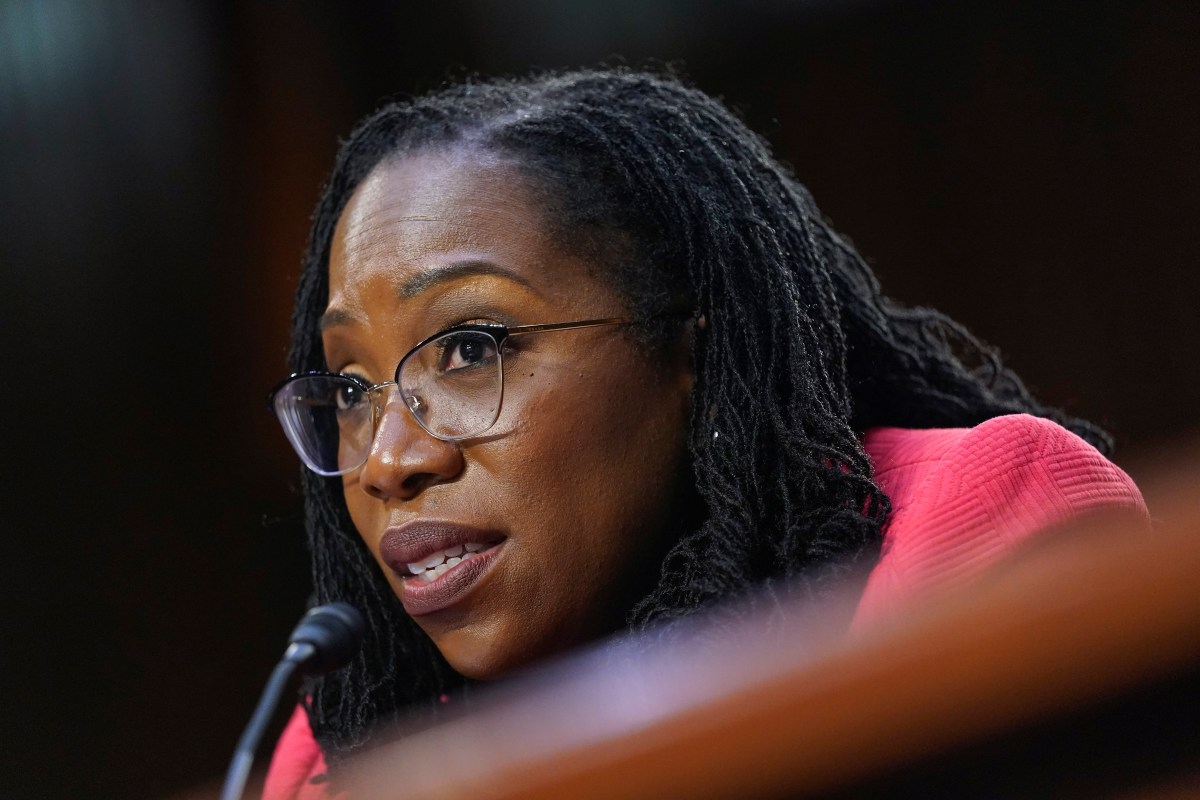
The Supreme Court allowed political party committees to keep using discounted rates for TV and radio ads, a decision that helps Republican groups before the 2026 midterm elections. Justice Ketanji Brown Jackson disagreed with this decision, saying the issue should be reviewed by courts, but the Court’s order for now keeps the lower ad prices in place.
Key Facts
The Supreme Court allowed political party committees to access discounted broadcast ad rates.
This benefits Republican campaign groups ahead of the 2026 midterm elections.
The Federal Communications Commission (FCC) had set guidance allowing party committees to qualify for the lowest ad rates when working with candidates.
Some Democrats, including former Senator Sherrod Brown, challenged this policy, saying the discount should only apply to individual candidates.
The Fourth Circuit Court ruled against the Republican committees, but the Supreme Court intervened to pause that ruling’s effect.
Justice Ketanji Brown Jackson was the only Supreme Court Justice to disagree with the majority’s order.
The ruling is a temporary stay and does not settle the legal question about the FCC's ad rate rules.
Republican committees have more cash on hand for advertising than Democratic committees, according to recent Federal Election Commission reports.
Read the Original
Want the full story? Tap a source to open the original
article.
A federal judge has allowed the Pentagon to continue firing journalists from the Stars and Stripes military news outlet. The judge ruled that the journalists did not prove their free speech rights were violated when dismissed after reporting on issues in the military.
Key Facts
A federal judge named Trevor McFadden denied a request to block the Pentagon from firing Stars and Stripes journalists.
The journalists argued their First Amendment rights were violated because they spoke out for editorial independence.
The judge said the firings were legal because the journalists gave pre-approved interviews as government employees, not as private citizens.
The fired journalists had reported on poor conditions and mental health problems aboard the USS Abraham Lincoln.
Stars and Stripes publisher Max Lederer retired after the Pentagon installed a new deputy publisher without telling him.
The Department of Defense and Defense Secretary Pete Hegseth are named in the lawsuit from the journalists.
Other lawsuits have been filed accusing the Pentagon of censoring and interfering with Stars and Stripes’ independence.
Former ombudsman Jacqueline Smith also sued the Pentagon claiming she was fired for an opinion piece, violating her free speech rights.
Read the Original
Want the full story? Tap a source to open the original
article.
A mistrial was declared in the murder case against Lindsay Clancy, who is charged with killing her three children in 2023. The jury could not agree after weeks of testimony about her mental health, and a hearing on September 29 will determine what happens next.
Key Facts
Lindsay Clancy is charged with murdering her three children by strangulation.
The trial ended in a mistrial because the jury could not reach a decision.
The case involved conflicting testimony about Clancy’s mental health, including postpartum psychosis.
Clancy was a former labor and delivery nurse and remains in a psychiatric hospital.
A hearing on September 29 will consider if Clancy should be found not guilty, retried, offered a plea deal, or if the case might be dropped.
Prosecutors want justice for the children and are deciding whether to retry the case.
Clancy admits to strangling her children but says her mental illness caused her actions.
After the killings, Clancy was found injured and paralyzed from jumping out of a second-story window.
Read the Original
Want the full story? Tap a source to open the original
article.
A Massachusetts murder trial involving Lindsay Clancy, who killed her three children, ended in a mistrial after the jury could not agree on a verdict. The court briefly delayed the mistrial to consider an appeal by Clancy’s lawyer, but the appeal was denied, and the mistrial was declared.
Key Facts
Lindsay Clancy is accused of killing her three young children in 2023.
Clancy’s defense says she was suffering from postpartum psychosis, a rare mental illness, during the killings.
Prosecutors argue Clancy was aware of her actions and should face criminal responsibility.
The jury spent seven days trying to reach a verdict but became deadlocked.
A single juror was reportedly unwilling to follow the court’s instruction about reasonable doubt.
Clancy’s attorney asked for a last-minute appeal to delay the mistrial and question or dismiss the juror.
The state’s top court denied the appeal, and the judge formally declared the mistrial.
Prosecutors must decide whether to retry the case.
Read the Original
Want the full story? Tap a source to open the original
article.
A new U.S. visa policy may increase the risk of arrest and deportation for people who enter the country legally and later apply for asylum. An immigration lawyer, Dree Collopy, warns this change might turn the legal immigration system into a tool for detaining more people.
Key Facts
The U.S. has introduced a new visa policy affecting asylum seekers.
The policy could make people who enter the U.S. legally more likely to be arrested and deported if they seek asylum later.
Immigration lawyer Dree Collopy expressed concern about this change.
Collopy believes the policy could turn legal immigration into a way to detain more migrants.
The policy affects those trying to use legal channels to protect themselves.
This is part of a broader immigration crackdown in the U.S.
Read the Original
Want the full story? Tap a source to open the original
article.
A judge in Massachusetts declared a mistrial in the murder case against Lindsay Clancy after the jury could not agree on a verdict. Clancy, accused of killing her children in 2023, admitted to the act but said she was not guilty due to postpartum psychosis, a mental health condition.
Key Facts
Lindsay Clancy was on trial for three counts of first-degree murder.
She admitted to killing her children but pleaded not guilty.
Her defense argued she had postpartum psychosis, a severe mental illness after childbirth.
The trial lasted five weeks and received a lot of public attention in the U.S.
The jury could not come to a unanimous decision, leading to a mistrial.
The mistrial means the case may be tried again or resolved in another way.
The trial raised discussions about mental health and criminal responsibility.
Read the Original
Want the full story? Tap a source to open the original
article.
The Tetris Company said the White House may have broken copyright rules with a new online game called "Build the Wall," which looks and plays a lot like Tetris. The White House created the game to promote President Trump’s policies, using a style similar to old arcade games.
Key Facts
The White House launched an online arcade with games inspired by President Trump’s policies.
One game called "Build the Wall" works like the classic game Tetris.
The Tetris Company warned the White House that this could be illegal because of copyright protection.
Copyright means protecting the creator’s rights to their original work or design.
The warning was made publicly on Friday, a day after the site launched.
The dispute focuses on whether the game copied Tetris’s game mechanics and look.
No official response from the White House is mentioned in the article.
The situation involves intellectual property rights on digital games.
Read the Original
Want the full story? Tap a source to open the original
article.
The trial of Lindsay Clancy ended in a mistrial after the jury could not reach a verdict. Clancy was charged with killing her three children but pleaded not guilty, claiming she suffered from postpartum psychosis. The trial received wide attention, focusing on the roles of the defense attorney and prosecutors.
Key Facts
Lindsay Clancy faced three murder charges for the deaths of her children at their home in Duxbury, Massachusetts.
Clancy pleaded not guilty, saying she was suffering from postpartum psychosis when the deaths occurred.
The trial lasted nearly six weeks and was widely broadcast on TV and online.
The jury deliberated for seven days but could not agree on a verdict, leading to a mistrial.
Kevin Reddington was Clancy’s defense attorney and worked mostly alone on the case with help from his son.
Jennifer Sprague and Shanan Buckingham were the prosecutors from Plymouth County’s District Attorney’s office.
The prosecutors argued that Clancy was responsible for the deaths despite her mental health claims.
A next court date is set for September 29 to discuss what will happen after the mistrial.
Read the Original
Want the full story? Tap a source to open the original
article.
A judge declared a mistrial in the case of Lindsay Clancy, a U.S. mother charged with killing her three children. The jury could not agree on a verdict, so the trial ended without a decision.
Key Facts
Lindsay Clancy was on trial for the murder of her three children.
The jury was unable to reach a unanimous decision.
Because there was no agreement, the judge declared a mistrial.
A mistrial means the case did not end with a clear verdict.
It is uncertain what will happen next in the case.
The trial was closely followed by the public and media.
Read the Original
Want the full story? Tap a source to open the original
article.
Top U.S. military officials were given lie detector tests this summer as part of an investigation into leaks of secret information about advanced weapons. No one was found guilty of leaking, and the investigation involved many high-ranking officials but not all of them.
Key Facts
Some of the highest-ranking U.S. military leaders took polygraph (lie detector) tests regarding secret weapon information leaked to the media.
The leak concerned the rapid use of advanced U.S. munitions during an ongoing war.
President Donald Trump was very upset about these leaks.
Several dozen officials, including commanders at U.S. Central Command, were tested.
No official failed the lie detector questions about leaking information.
Not all leaders were tested; for example, the chairman of the Joint Chiefs of Staff was not tested.
The Pentagon and Justice Department created a task force to find and prosecute leak suspects.
The FBI did not conduct these polygraph tests; military investigators did.
Read the Original
Want the full story? Tap a source to open the original
article.