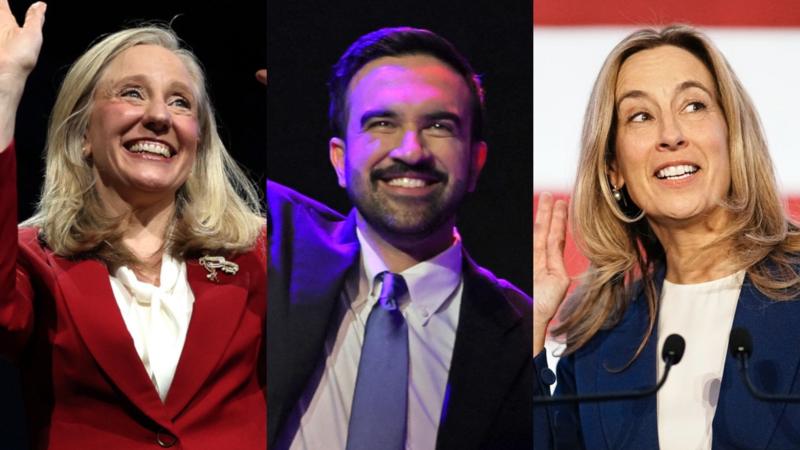
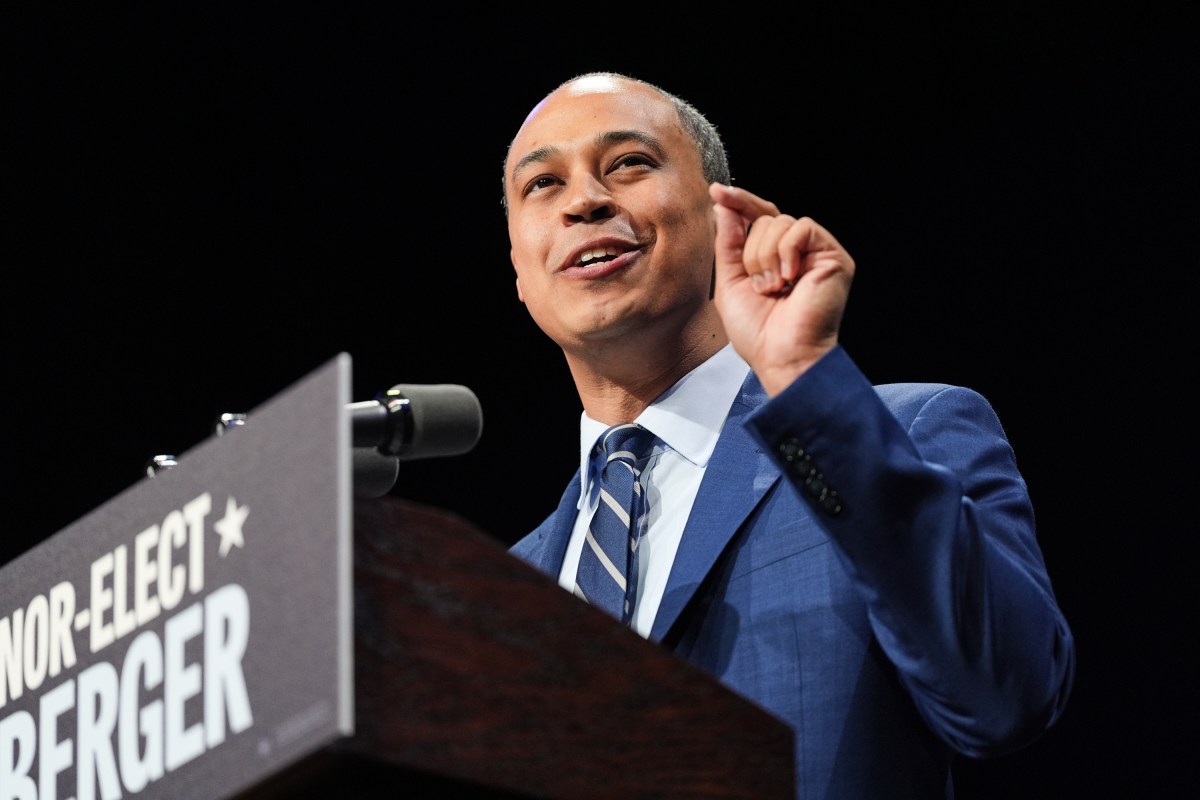
Abigail Spanberger has been elected as Virginia's first woman governor. She plans to oppose certain policies from President Trump that she views as harmful. Spanberger aims to address economic challenges faced by federal workers and improve affordability in Virginia.
Key Facts
Abigail Spanberger is elected as Virginia's first woman governor.
Spanberger is a Democrat who defeated Republican Lt. Gov. Winsome Earle-Sears.
She has a background in the CIA and served three terms in the U.S. House of Representatives.
Spanberger is known for being a pragmatic centrist.
She plans to oppose policies from President Trump that affect federal workers negatively.
Spanberger aims to make life more affordable for Virginians.
She intends to start working with Virginia's General Assembly as soon as she takes office.
Spanberger focuses on economic issues that impact Virginians.
Read the Original
Want the full story? Tap a source to open the original
article.
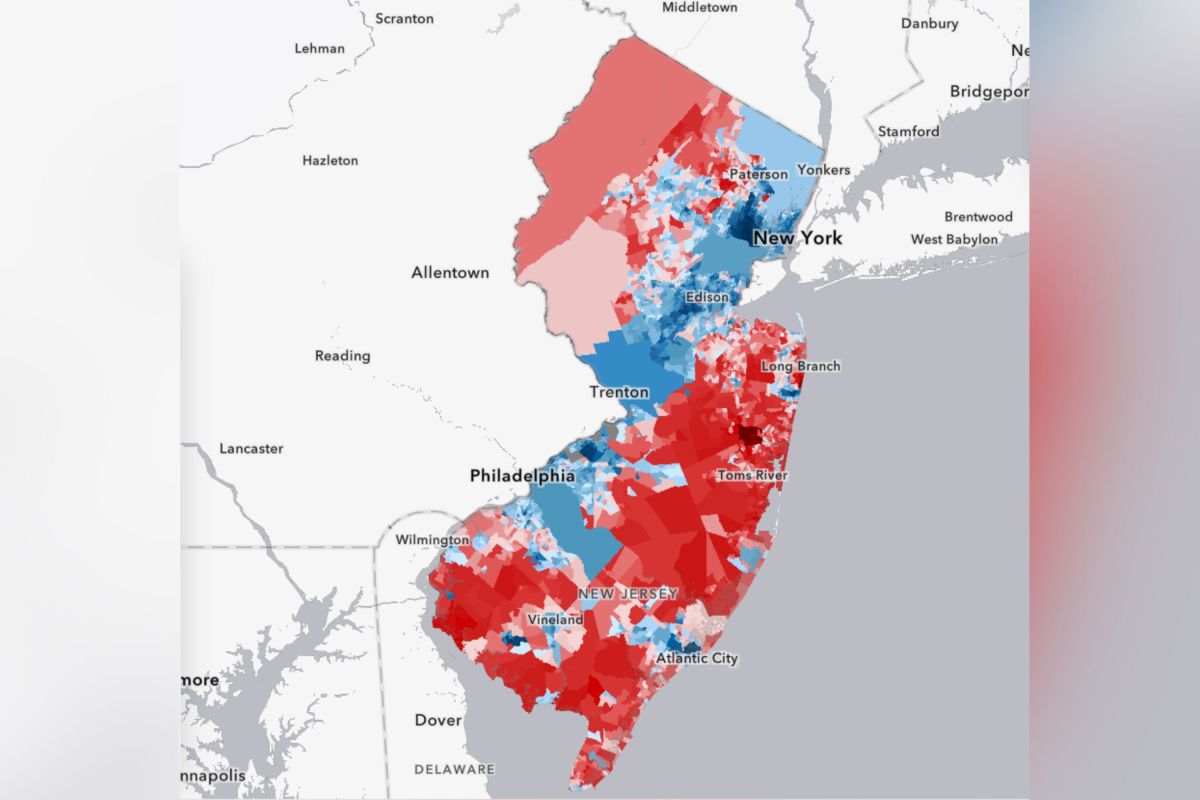
Mikie Sherrill won the New Jersey governor's race, defeating the Republican candidate endorsed by President Donald Trump. This victory marked the first time since the 1960s that a governor from the same party was elected for three consecutive terms in New Jersey. Sherrill emphasized that voters wanted leadership to address issues like utility costs and health care.
Key Facts
Mikie Sherrill is the new governor-elect of New Jersey.
She won with about 13% more votes than her opponent, Jack Ciatterelli, who had President Trump's endorsement.
Sherrill’s victory means New Jersey has elected a governor from the same party three times in a row, last done in the 1960s.
Sherrill mentioned her military background and experience as a mother when discussing her appeal to voters.
She plans to focus on issues such as high utility costs and health care challenges in New Jersey.
Sherrill stated that New Jersey residents are concerned about certain federal policies from President Trump's administration.
This election highlighted the importance of leadership and addressing local community issues.
Read the Original
Want the full story? Tap a source to open the original
article.
Mikie Sherrill, a Democratic candidate, won the New Jersey governor's race against Republican Jack Ciattarelli. Sherrill received 56.2% of the votes, whereas Ciattarelli received 43.2%. Her victory marks the third consecutive Democratic gubernatorial win in New Jersey.
Key Facts
Mikie Sherrill won the New Jersey governor's race.
Sherrill received 56.2% of votes, totaling 1,792,793 votes.
Republican Jack Ciattarelli got 43.2% of votes, totaling 1,378,391 votes.
This is the third straight Democratic win for the New Jersey governor's position.
Sherrill is a former Navy helicopter pilot and a four-term Congress member.
Ciattarelli was endorsed by President Donald Trump.
In other notable elections, Zohran Mamdani won the New York mayoral seat, and Abigail Spanberger won the Virginia governor's race.
Sherrill will be New Jersey’s second female governor, following Christine Todd Whitman.
Read the Original
Want the full story? Tap a source to open the original
article.
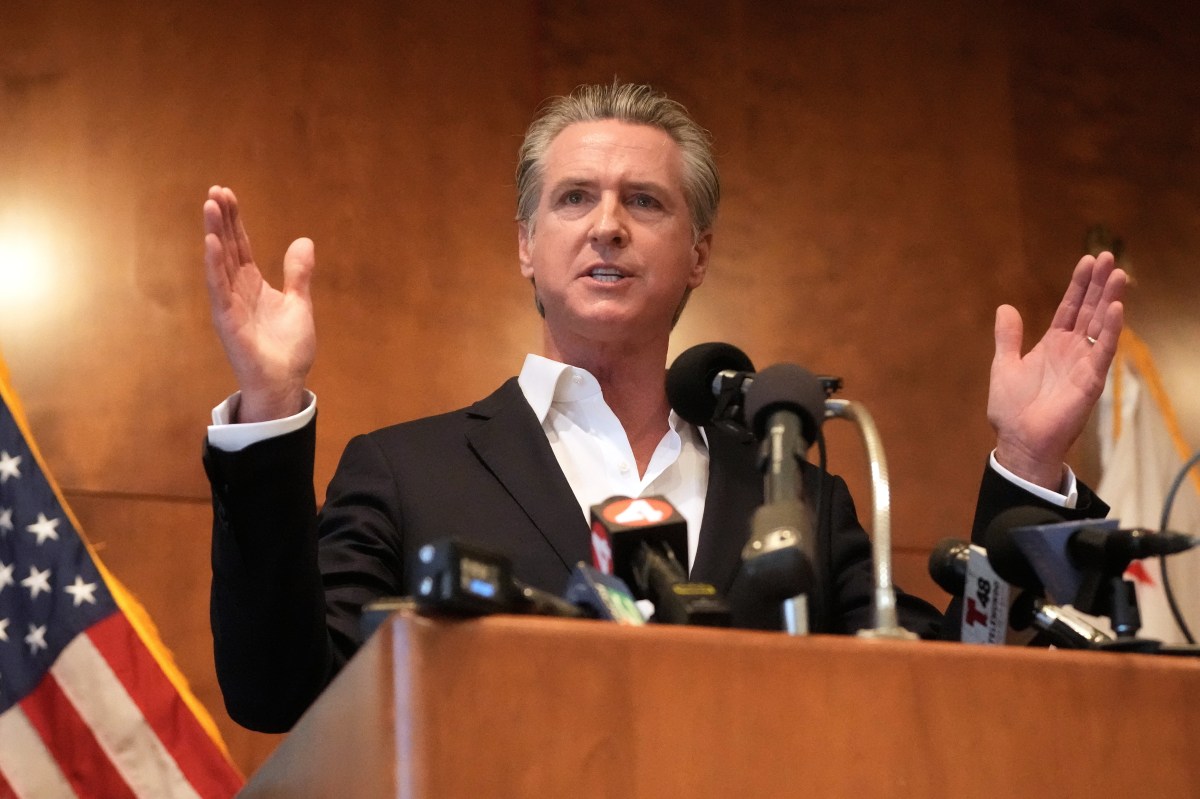
California voters approved Proposition 50, which changes electoral district boundaries to favor Democrats. This move aims to counter President Donald Trump's redistricting strategies in Republican states. The new district maps will be used in future elections, impacting control of Congress.
Key Facts
California voters passed Proposition 50 to change electoral district boundaries.
The measure is intended to benefit Democrats in upcoming elections.
Governor Gavin Newsom supported the proposition to counter redistricting by President Trump.
The approved changes could help Democrats gain up to five seats in the House.
New district maps will apply to elections in 2026, 2028, and 2030.
President Trump criticized the measure as unfair and rigged.
Former President Barack Obama supported the proposition, opposing Republican strategies.
Critics, including Arnold Schwarzenegger, argue the measure undermines voter power and challenges independent redistricting efforts.
Read the Original
Want the full story? Tap a source to open the original
article.
Zohran Mamdani, elected as New York City's first Muslim mayor, plans to challenge federal immigration enforcement policies, particularly those of ICE. Mamdani supports sanctuary city policies, aiming to protect immigrants from deportation despite President Trump's administration's efforts to increase immigration enforcement. Mamdani won the election with over 1 million votes, running on a platform of affordability and immigrant protection.
Key Facts
Zohran Mamdani will become New York City's first Muslim mayor.
Mamdani secured 50.4% of the vote, defeating Andrew Cuomo and Curtis Sliwa.
President Trump endorsed Cuomo and threatened to withhold federal funding if Mamdani won.
Mamdani criticized ICE as a "rogue agency."
Mamdani aims to support immigrants by blocking ICE deportations, though he cannot control ICE activities inside federal courthouses.
Mamdani's platform includes universal child care, free bus rides, and rent freezes.
Mamdani's stance signals a push for progressive governance and immigration protection.
Read the Original
Want the full story? Tap a source to open the original
article.
The article discusses the idea of building "supercities" in California. These are new, large, planned urban areas that could address issues like housing shortages, economic decline, and bureaucratic delays in development. The article suggests these cities would be affordable, bypass regulatory constraints, and help boost the economy.
Key Facts
California is experiencing challenges like expensive housing and a slowing economy.
The proposal is to create seven new large urban centers, called supercities.
These cities would be built on undeveloped land such as farmland and coastal areas.
Supercities aim to be affordable and sustainable for a wide range of people.
The idea is to free new developments from bureaucratic delays and regulations.
Supercities could create many jobs and boost the economy.
The vision includes immediate planning for affordable housing to address homelessness.
New local governments would manage these cities, allowing flexible policies.
Read the Original
Want the full story? Tap a source to open the original
article.
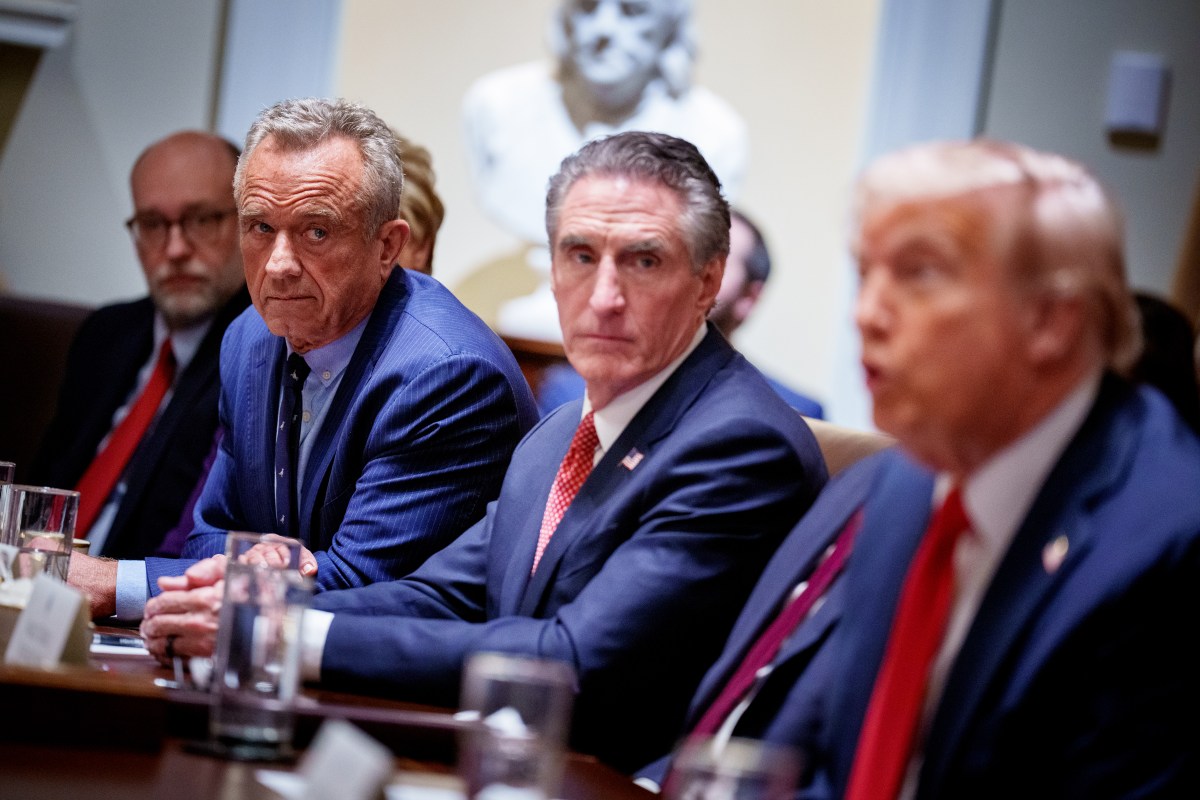
The article discusses President Donald Trump's second administration, highlighting the influence of various individuals with extreme views within his administration. It describes how these individuals drive significant policy changes without a cohesive plan. Key figures mentioned include Russell Vought, Stephen Miller, Peter Navarro, and Robert F. Kennedy Jr., each noted for controversial actions and ideas.
Key Facts
President Donald Trump leads his administration without a clear central plan.
Russell Vought, a self-described Christian nationalist, influenced major federal funding decisions.
Stephen Miller is noted for his role in a stringent deportation campaign.
Peter Navarro, an economist, is criticized for his economic policies, including using a fictitious identity to support his views.
Robert F. Kennedy Jr. serves as Secretary of Health and Human Services and is known for his anti-vaccine beliefs.
The administration allows individuals with extreme views to influence significant national policies.
Vought's actions included an alleged illegal freeze on $400 billion in federal funds.
The policies and actions by these administration members are said to have major impacts both domestically and internationally.
Read the Original
Want the full story? Tap a source to open the original
article.
The Trump administration canceled a grant program, affecting funds that were promised to improve an Oregon hospital so it could handle earthquakes and tsunamis. This decision leaves Columbia Memorial Hospital in Astoria without $14 million needed for crucial safety upgrades.
Key Facts
Columbia Memorial Hospital in Astoria, Oregon, needs upgrades to withstand earthquakes and tsunamis.
The hospital is located in the Cascadia subduction zone, which is prone to earthquakes.
FEMA initially promised $14 million to help the hospital with these upgrades.
The grant program, Building Resilient Infrastructure and Communities (BRIC), was canceled in April by the Trump administration.
This cancellation impacts over $3 billion in hazard mitigation funds across the country.
The hospital began construction in September without having the FEMA funds.
There is currently no alternative plan to cover the $14 million funding gap.
Read the Original
Want the full story? Tap a source to open the original
article.
California voters approved Proposition 50, which changes the way congressional districts are drawn in the state. This new plan tends to favor Democrats by altering district boundaries, potentially increasing the number of Democratic seats in Congress. The changes are set to take effect for the 2026, 2028, and 2030 elections.
Key Facts
Proposition 50 was approved by California voters on Tuesday.
The measure allows for a new congressional map under Assembly Bill 604.
The new map changes existing district lines, favoring Democratic-leaning areas.
The new districts will be used for elections from 2026 through 2030.
Governor Gavin Newsom supported the measure as a response to Republican redistricting in states like Texas.
The shift could help Democrats in the 2026 midterm elections by potentially gaining up to five additional seats.
Currently, Republicans hold a slim majority in the U.S. House of Representatives.
Proposition 50 calls for more independent redistricting efforts across the United States.
Read the Original
Want the full story? Tap a source to open the original
article.
Zohran Mamdani won the New York City mayoral election, defeating former governor Andrew Cuomo. Mamdani's victory is seen as a significant moment for the Democratic Party, emphasizing a shift toward working-class interests. This win has sparked discussions on the future direction of the party in the United States.
Key Facts
Zohran Mamdani won the mayoral election in New York City against Andrew Cuomo.
Mamdani advocates for aligning the Democratic Party more with working-class Americans' interests.
Andrew Cuomo described the election as a "civil war" between moderates and progressives.
Justice Democrats, a progressive organization, highlighted Mamdani's win as a warning to corporate Democrats.
Senator Chuck Schumer remained neutral in the election, reflecting some hesitation among national Democrats.
Democratic strategists view Mamdani's victory as indicative of the party's evolving direction.
Mamdani is known for his affiliation with the Democratic Socialists of America and his support for Palestinian rights.
The election was seen as a push against the political status quo in liberal politics.
Read the Original
Want the full story? Tap a source to open the original
article.
Democrats won two seats in the Mississippi state Senate, breaking the Republican supermajority. This change resulted from special elections held after a court ordered the redistricting of certain districts to improve Black voter representation.
Key Facts
Democrats broke the Republican supermajority in the Mississippi state Senate.
Special elections were held due to a court order to redraw districts for better Black representation.
Democrats gained seats in Senate Districts 2 and 45 and in a House district.
The redistricting followed a 2022 lawsuit claiming diluted Black voting power.
Approximately 40% of Mississippi's population is Black, but this wasn't reflected in political representation.
A panel of federal judges, appointed by former President George W. Bush, ordered the redistricting.
The new mapping led to seven special elections, with demographic changes favoring Democrats.
The election results await official certification by county boards.
Read the Original
Want the full story? Tap a source to open the original
article.
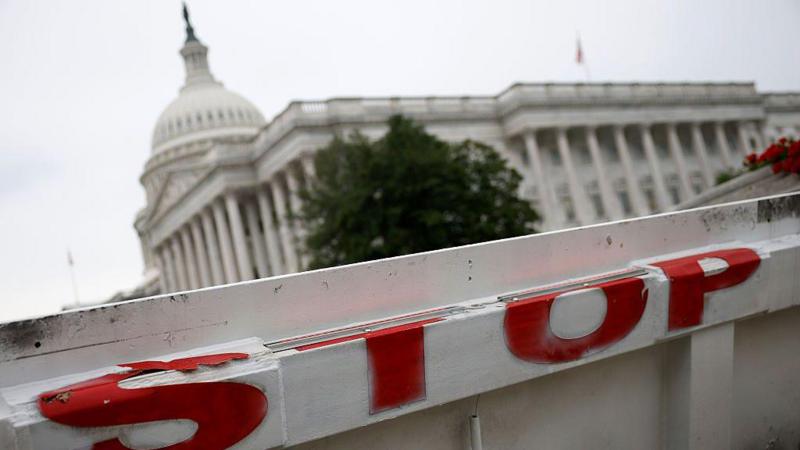
The U.S. government shutdown has now lasted 36 days, marking the longest in American history. The shutdown started on October 1 because Congress could not agree on a funding deal, impacting government workers and essential services. There is hope for a resolution, but no deal has been reached yet.
Key Facts
The shutdown began on October 1 and is now the longest in U.S. history at 36 days.
It started because Congress could not agree on a new funding deal.
Government workers have missed paychecks, and services for millions of Americans are affected.
Senate Majority Leader John Thune expressed optimism about a possible resolution soon.
The previous longest shutdown was 35 days during President Trump's first term in 2019.
Transportation Secretary Sean Duffy warned that parts of U.S. airspace might need to close if the shutdown continues.
SNAP recipients are affected, with funds distributed only after a court order.
Attempts to pass a short-term funding bill have repeatedly failed in the Senate.
Read the Original
Want the full story? Tap a source to open the original
article.
That's the point of this site, and readers keep it that way. Support for any amount and the daily digest lands in your inbox every morning at 7am Eastern.
Millions of people in several U.S. states voted in local elections. Democrats won key races, including Zohran Mamdani winning the New York City mayoral race, making him the city's youngest mayor since 1892. Candidates Mikie Sherill and Abigail Spanberger also secured wins in New Jersey and Virginia gubernatorial races.
Key Facts
Millions voted in elections held in New York, Virginia, New Jersey, and California.
Zohran Mamdani won the New York City mayoral race.
Mamdani will be the youngest New York City mayor since 1892.
Democrats won major races in the elections.
Mikie Sherill won the gubernatorial race in New Jersey.
Abigail Spanberger won the gubernatorial race in Virginia.
Read the Original
Want the full story? Tap a source to open the original
article.
Zohran Mamdani won the New York mayoral election, defeating Andrew Cuomo. Mamdani focused on issues like affordable housing and public services, while facing challenges like large donor opposition and accusations against his views. His victory showed that many voters preferred his straightforward approach and policies over traditional political influence.
Key Facts
Zohran Mamdani won the New York mayoral election.
Mamdani focused on affordable housing, rent protections, and public services like universal childcare and free city buses.
He faced opposition from Andrew Cuomo, who received support from Wall Street and major donors.
Mamdani was criticized for his views on Zionism and Israel, which some claimed were controversial.
Accusations of socialism and anti-Semitism against Mamdani did not sway voters.
The election highlighted a shift in voter priorities towards practical solutions over traditional political support.
Mamdani opposed making Israel his first foreign visit as mayor, focusing instead on local issues.
His win indicated voter support for change in how political influence is measured and applied.
Read the Original
Want the full story? Tap a source to open the original
article.
Democrat Jay Jones won the election for Virginia's attorney general, despite past text messages that sparked controversy. The messages, sent in 2022, showed him joking about killing a Republican lawmaker and his family. The outcome has led to strong reactions from some political figures who are critical of the election result.
Key Facts
Jay Jones, a Democrat, won the race for Virginia attorney general.
Controversy arose due to texts Jones sent in 2022 during his time as a Virginia legislator.
The texts mentioned violence against former Speaker Todd Gilbert, linking him with historical figures Adolf Hitler and Pol Pot.
Jones apologized for the texts, expressing remorse and taking responsibility.
Jones narrowly defeated Jason Miyares, the Republican incumbent, who had held the position since 2022.
MAGA supporters and commentators voiced strong disapproval of Jones's victory online.
The situation is ongoing with further developments expected.
Read the Original
Want the full story? Tap a source to open the original
article.
Democrats recently won several important elections across the United States. They gained governorships in Virginia and New Jersey, elected a new mayor in New York, and succeeded in judicial races in Pennsylvania. These victories are seen as positive momentum for the Democratic Party as they look ahead to the 2026 midterm elections.
Key Facts
Democratic candidates won governorship elections in Virginia and New Jersey.
Zohran Mamdani, part of the Democratic Socialists, was elected mayor of New York City.
Democrats won multiple judicial positions in Pennsylvania.
Supporters used social media to celebrate the results, using the phrase "woke is back."
The election results are viewed as a positive sign for Democrats after losing the 2024 presidential election.
Read the Original
Want the full story? Tap a source to open the original
article.
In the 2025 elections, Democrats performed well in various states, including Virginia, New Jersey, and Pennsylvania. The economy, specifically the cost of living, emerged as a key issue in voters' minds. President Trump and the Republican Party faced challenges as Democrats gained support, even from independent voters.
Key Facts
The elections took place on November 4, 2025.
Democrats achieved strong results in many races, including governor positions in Virginia and New Jersey.
The cost of living was a major concern for voters, influencing their choices.
President Trump continues to emphasize immigration as a key issue, but the economy dominated voters' priorities.
In Virginia, independent voters favored Democrat Abigail Spanberger by 19 points in the governor's race.
In New Jersey, independents supported Democrat Mikie Sherrill by 13 points.
Republicans struggled to gain support from independents and faced internal challenges related to President Trump's popularity.
Read the Original
Want the full story? Tap a source to open the original
article.
A record-long government shutdown in the U.S. is happening due to disagreements over healthcare-related subsidies under the Affordable Care Act (ACA). Democrats want to keep these subsidies, while Republicans are divided on whether to negotiate before reopening the government. This shutdown is the longest in U.S. history, affecting many government services.
Key Facts
The U.S. government shutdown has lasted 36 days, making it the longest ever.
The central issue is a debate over subsidies for health insurance under the ACA.
Democrats refuse to agree on temporary funding without extending these subsidies.
Some Republicans support extending subsidies despite overall party opposition.
The shutdown has affected services like food assistance and air traffic control.
The debate is set to impact the upcoming midterm elections in 2026.
Extending subsidies is important for some districts where constituents face higher costs.
Republican lawmakers, including some notable critics of Obamacare, are divided on the issue.
Read the Original
Want the full story? Tap a source to open the original
article.
The U.S. government shutdown has become the longest in the country's history, starting on October 1, 2025, due to a deadlock in Congress over budget negotiations. More than a month has passed, affecting over 1 million federal workers and causing disruptions across multiple sectors. The disagreement is primarily over funding Affordable Care Act subsidies, with no resolution yet in sight.
Key Facts
The government shutdown began on October 1, 2025.
This shutdown is now the longest in U.S. history, surpassing a 35-day shutdown in 2018-2019.
More than 1 million federal workers are working without pay, and about 600,000 have been furloughed.
The Senate has unsuccessfully attempted 14 times to pass a temporary funding bill.
Democrats want to extend Affordable Care Act subsidies; Republicans want to discuss this after reopening the government.
Air traffic, national parks, and federal services like the IRS are experiencing significant disruptions.
Federal food benefits such as SNAP have stopped temporarily, although the administration plans to restart them with delays and possibly reduced amounts.
President Trump blames Democrats for the deadlock, while Senate Republicans reject his call to bypass Democrats by ending the filibuster.
Read the Original
Want the full story? Tap a source to open the original
article.
Iowa is experiencing a shortage of OB-GYN doctors. Some doctors believe that Iowa's strict abortion laws are making the problem worse by discouraging new doctors from practicing in the state. Hospitals are struggling to hire enough staff to handle the increase in birth rates.
Key Facts
Iowa has a severe shortage of obstetricians and gynecologists (OB-GYNs).
The Grinnell Regional Medical Center is experiencing a rise in births after a nearby hospital stopped delivering babies.
The state enacted a law in July 2024 banning abortions early in pregnancy.
Doctor Jonna Quinn left Iowa due to increasing work pressures and the state's abortion ban.
The Supreme Court’s decision to overturn Roe v. Wade in 2022 led to many states, including Iowa, passing abortion bans.
These laws have put more stress on medical treatments for miscarriages and other pregnancy issues.
Studies show lack of maternity care can increase risks like low birthweight and higher infant and maternal mortality.
Iowa has the lowest number of OB-GYNs per person in the U.S. based on recent federal data.
Read the Original
Want the full story? Tap a source to open the original
article.