The U.S. Department of Education is evaluating how to move some of its education programs to other government agencies. This is part of President Donald Trump's broader plan to close the Education Department, which requires approval from Congress. Some programs, like student loans and adult education, are already in the process of being shifted to other departments.
Key Facts
The U.S. Department of Education is considering shifting some education programs to other federal agencies.
Layoffs have occurred in the Education Department’s Office of Special Education Programs.
Closing the Department of Education requires an act of Congress.
The department is already moving adult education and workforce programs to the Department of Labor.
There are negotiations to transfer a $1.6-trillion student-loan portfolio to the Treasury Department.
No formal agreements have been signed for these changes.
The Individuals with Disabilities Education Act (IDEA) program could move to the Department of Health and Human Services (HHS).
A federal judge has temporarily stopped layoffs as a legal challenge progresses.
Read the Original
Want the full story? Tap a source to open the original
article.
President Donald Trump has had nearly 50 of his nominees for government positions withdraw their nominations since he returned to office in January. The withdrawals include Paul Ingrassia, who stepped back following backlash over controversial text messages. These withdrawals often occur due to lack of support needed for confirmation from Republican senators.
Key Facts
Paul Ingrassia withdrew his nomination for the Office of Special Counsel after his controversial text messages became public.
Ingrassia's texts included offensive remarks about Martin Luther King Jr. Day and having a "Nazi streak."
Republican senators criticized Ingrassia's texts, leading to his withdrawal.
President Trump has had about 50 nominations withdrawn since January.
To secure a nomination, a majority vote from the Senate is needed, and the Republicans hold a 53-47 majority.
Some nominees withdraw without giving a specific reason for their decision.
Read the Original
Want the full story? Tap a source to open the original
article.
A woman in Indiana, Preslie Stewart, broke her piggy bank but realized later that she could have simply opened it using a stopper at the bottom. She shared the moment on her Instagram with the aim to entertain viewers, despite feeling a bit silly afterward.
Key Facts
Preslie Stewart lives in Indiana and works as a full-time content creator.
She decided to smash her piggy bank because it was full of cash and to create content for her Instagram account.
The piggy bank, named Schmebulock, had a plastic stopper at the bottom that she overlooked.
Stewart realized her mistake of not checking the piggy bank's bottom after smashing it.
The piggy bank was personal to her; she painted it herself to resemble a character from the show Gravity Falls.
Stewart enjoyed the experience of smashing the piggy bank and aimed to make people laugh with her video.
A survey highlighted that over half of U.S. adults do nothing with their spare change, unlike Stewart, who saved hers.
Read the Original
Want the full story? Tap a source to open the original
article.
The Department of the Treasury and the IRS announced temporary relief measures to help businesses and lenders adjust to new car loan interest reporting requirements under President Donald Trump's One Big Beautiful Bill Act. These measures include allowing taxpayers to deduct interest on certain car loans and providing simplified reporting options.
Key Facts
The IRS is offering temporary relief for businesses and lenders required to report car loan interest payments.
The One Big Beautiful Bill Act allows taxpayers to deduct interest on qualified new car loans.
To qualify, vehicles must be assembled in the U.S. and loans must start between December 31, 2024, and January 1, 2029.
Lenders can meet reporting requirements using online portals or statements without facing penalties in 2025.
The rule applies to lenders who receive at least $600 per year in interest from a borrower.
Borrowers should keep vehicle identification numbers (VINs) and proof of U.S. assembly for eligibility claims from 2025 to 2028.
Read the Original
Want the full story? Tap a source to open the original
article.
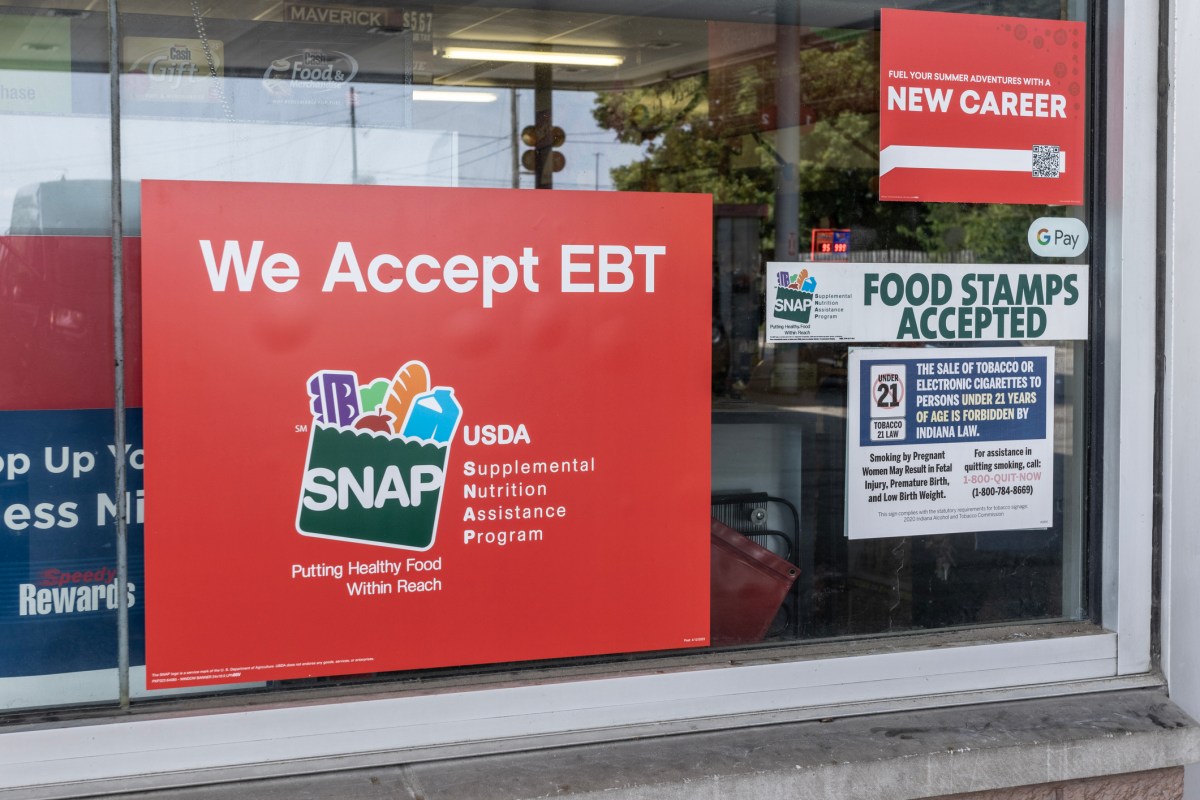
There might be a delay in SNAP benefits for nearly 3 million people in Florida due to a government shutdown. The delay is caused by the lack of a budget or funding measure from Congress. SNAP benefits help low- and no-income Americans buy groceries.
Key Facts
SNAP benefits, which help people buy groceries, may be delayed in Florida for November.
Almost 3 million Floridians depend on SNAP benefits.
The delay is due to a government shutdown after Congress did not pass a budget.
SNAP funding requires congressional approval, even though it is a mandatory program.
Florida's Department of Children and Families confirmed benefits might not be on time if the shutdown continues.
Other states, like California, Minnesota, Wisconsin, and North Carolina, have issued similar warnings.
Around 42 million Americans rely on SNAP benefits nationwide.
A government shutdown means many agencies cannot operate as usual due to lack of funding.
Read the Original
Want the full story? Tap a source to open the original
article.
A recent poll shows that a majority of Americans are worried about rising health care costs. There is also concern about the ongoing government shutdown affecting health care access and costs.
Key Facts
6 out of 10 Americans are very worried about rising health care costs.
4 out of 10 Americans fear they might not be able to pay for medication or health insurance.
81% of U.S. adults consider health care very important.
Only 30% of people approve of President Trump's handling of health care.
The government shutdown could impact Affordable Care Act tax credits.
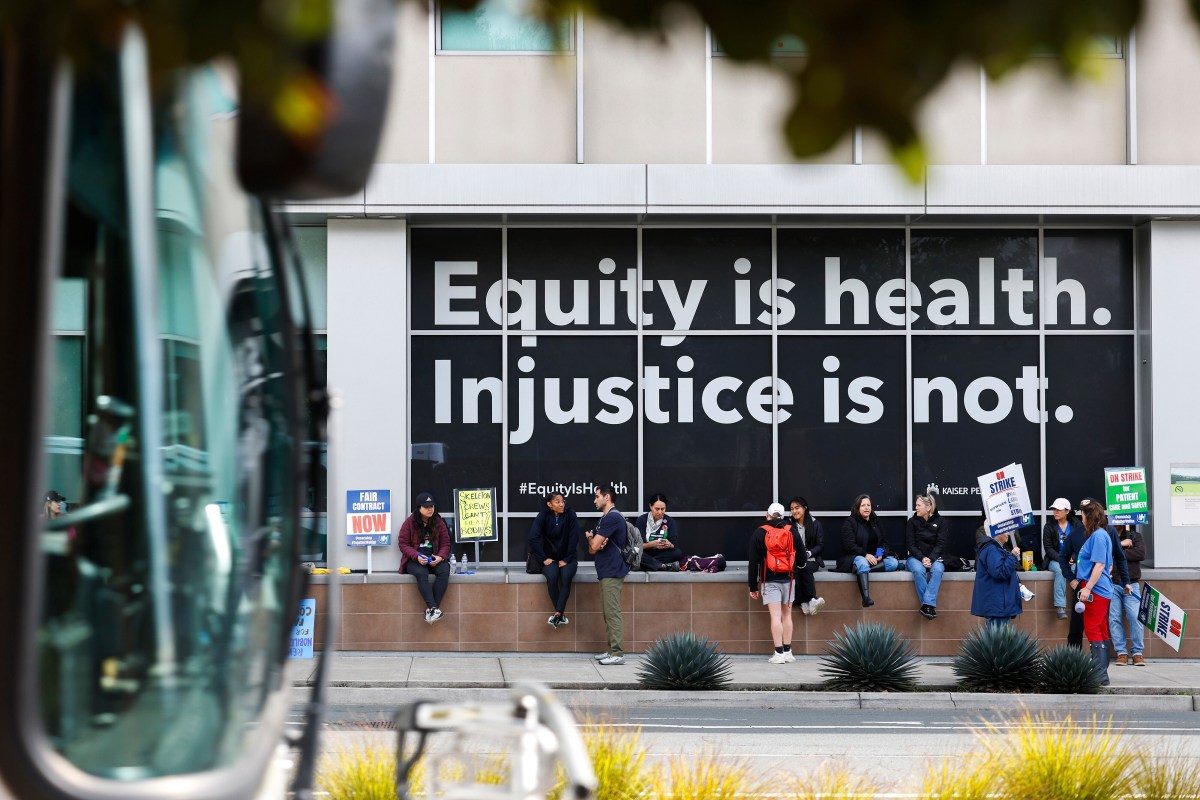
Some health care workers are striking over wages and staffing issues.
A study links health care lobbying to rising consumer costs.
There is a call for state regulation to prevent health care monopolies.
Read the Original
Want the full story? Tap a source to open the original
article.
A teenager used skills from a short "life" course to prevent his family's eviction. After learning about debt and grants, he successfully applied for an emergency grant and showed it to his mother's landlord, stopping the eviction process.
Key Facts
A teacher shared the story on social media about a teenager in her "life" course.
The course lasted four weeks and included topics like debt management.
The teenager applied for an emergency grant to help his family.
The grant was awarded, and the teenager used it to stop an eviction.
The act received widespread praise online, with the post liked over 46,000 times.
The course covered various life skills such as conflict resolution and mental health.
Social media users praised both the student and the teacher for their actions.
Read the Original
Want the full story? Tap a source to open the original
article.
A financial aid package of $20 billion was provided by President Donald Trump to Argentina, leading to concerns among U.S. soya bean farmers. They are worried because Argentina's soya bean farmers are taking market share from American producers. This aid is part of efforts to stabilize Argentina's economy but has sparked debate about its impact on American farmers.
Key Facts
President Donald Trump provided Argentina with a $20 billion financial aid package.
U.S. soya bean farmers are upset because they are losing market shares to Argentina.
Senator Chuck Grassley and others criticized the aid, questioning its impact on U.S. farmers.
President Trump justified the aid by highlighting Argentina's severe economic struggles.
Trump’s trade war with China has already negatively impacted U.S. soya bean farmers.
The aid package occurred shortly before key legislative elections in Argentina.
Critics argue that the U.S. might buy Argentinian bonds at high prices, risking financial losses.
The aid agreement between the U.S. and Argentina was signed on October 20.
Read the Original
Want the full story? Tap a source to open the original
article.
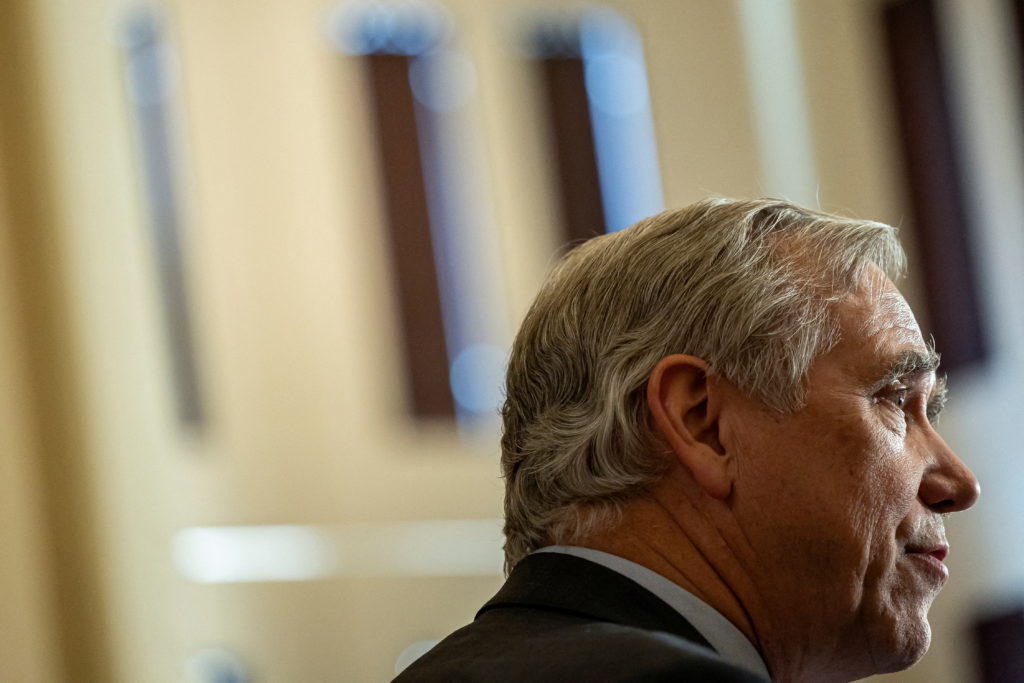
The U.S. Senate is experiencing a deadlock as the government shutdown extends into its 22nd day. Democratic Senator Jeff Merkley spoke on the Senate floor for over 15 hours to protest President Donald Trump during this shutdown.
Key Facts
Senator Jeff Merkley from Oregon spoke for over 15 hours in the Senate.
Merkley is protesting against President Trump's actions during the government shutdown.
The government shutdown has lasted since October 1.
Democrats want federal health care subsidies extended as part of ending the shutdown.
Republicans want the government reopened before discussing health care subsidies.
Merkley’s speech came after Senator Cory Booker set the record for the longest continuous floor speech in April.
Senate staff, security, and support workers, who are currently unpaid, had to work overtime due to Merkley’s speech.
Read the Original
Want the full story? Tap a source to open the original
article.
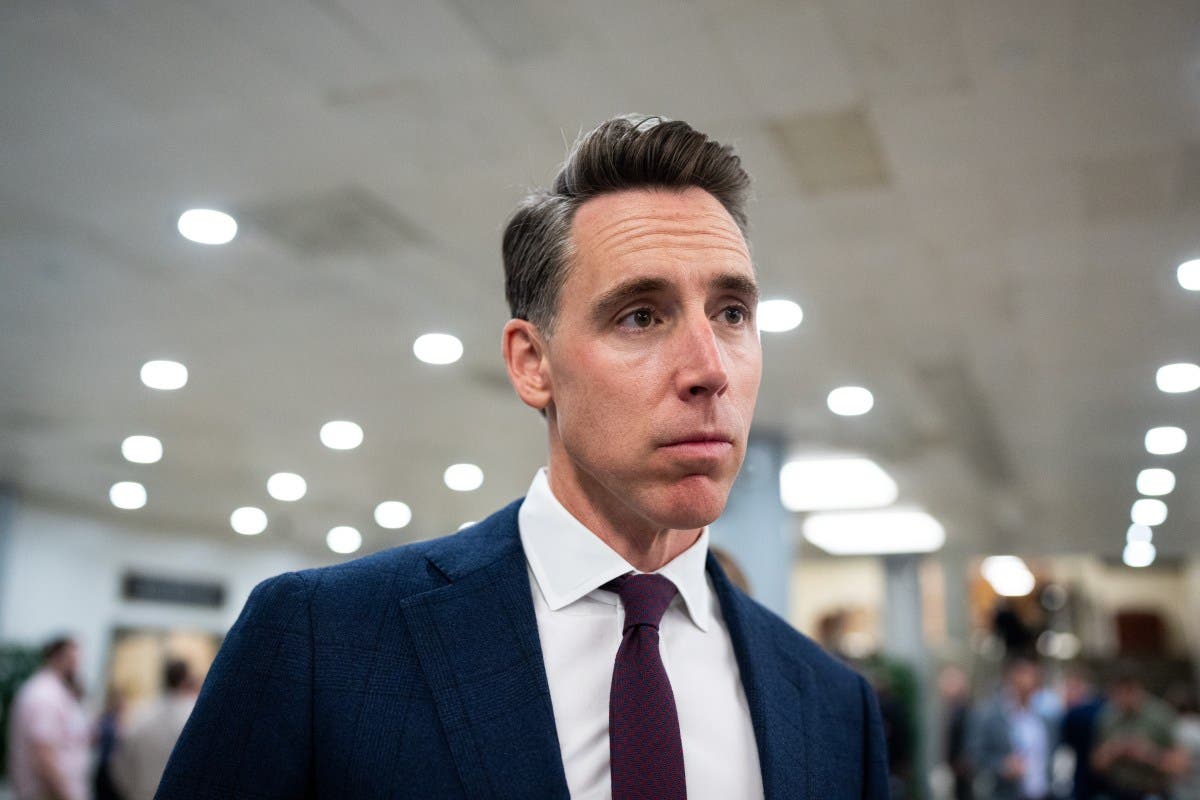
Missouri Senator Josh Hawley has proposed a bill to restore funding for the Supplemental Nutrition Assistance Program (SNAP) during the ongoing government shutdown. The disagreement between political parties on government spending could affect SNAP benefits, which help about 42 million Americans buy food.
Key Facts
Senator Josh Hawley, a Republican from Missouri, introduced a bill to fund SNAP during the government shutdown.
SNAP, also known as food stamps, helps nearly one in eight Americans with food purchases.
The current government shutdown is the second-longest in U.S. history.
Without new funding from Congress, several states like Texas and New York may not distribute SNAP benefits in November.
Political disagreements over spending are halting progress on restoring funding.
Approximately 42 million people depend on SNAP benefits each month.
Read the Original
Want the full story? Tap a source to open the original
article.
California Governor Gavin Newsom announced that the state's military will assist families affected by a government shutdown that has halted federal food benefits. President Donald Trump stated that he would only negotiate if Democrats agree to end the shutdown. The situation continues to develop.
Key Facts
California Governor Gavin Newsom is deploying the state's military to help families.
The help is for families whose federal food benefits are paused due to the shutdown.
Governor Newsom made the announcement on social media platform X.
He mentioned the need to help Californians not go hungry.
President Trump wants Democrats to end the shutdown before he agrees to talks.
Trump specifically mentioned wanting to meet with Senate Minority Leader Chuck Schumer and House Minority Leader Hakeem Jeffries.
The government shutdown has been going on for three weeks.
This is a breaking news situation, meaning more updates are expected.
Read the Original
Want the full story? Tap a source to open the original
article.
The Mayor of Chicago, Brandon Johnson, wants to bring back a corporate tax that the city stopped using over ten years ago. This move aims to address a predicted $1.15 billion budget shortfall but has met with opposition from local businesses and Illinois Governor J.B. Pritzker. The tax is expected to generate $100 million a year that will fund programs to reduce violence and support youth employment.
Key Facts
Chicago faces a projected $1.15 billion budget deficit for the 2026 fiscal year.
Mayor Brandon Johnson proposes reintroducing a corporate tax initially dropped in 2014.
The tax would require companies with 100 or more employees in the city to pay $21 per employee each month.
Only about 3% of businesses in Chicago would be affected by this tax.
The tax is estimated to bring in $100 million annually for violence prevention and youth employment programs.
Chicago's biggest revenue source is property taxes, but the mayor will not increase these.
The mayor's spending plan includes taxes on big tech companies and social media firms, among others.
Illinois Governor J.B. Pritzker opposes the proposed tax, arguing it could harm job growth.
Read the Original
Want the full story? Tap a source to open the original
article.
On the biggest stories we show what the outlets agree on and where they differ. Readers keep that going, and get the daily digest by email every morning. Most choose $3.99/month.
Recent studies show that more Americans think religion is becoming more influential in the United States. This change follows policies by President Donald Trump that emphasize religion, such as those about prayer in schools. While a majority still believe religion's role is declining, fewer people hold this view than before.
Key Facts
A Pew Research Center poll showed that 31% of U.S. adults in 2025 thought religion was gaining influence, up from 18% in 2024.
Gallup reported a rise from 20% to 34% in people who believe religion’s influence is growing from last year to this year.
Policies under President Trump, such as guidance on religious prayer in schools, emphasize religion.
59% of Americans had a positive view of religion’s influence in 2025, up from 49% in 2022.
More Republicans than Democrats view religion positively, with Republicans about twice as likely to do so.
In 2025, 58% felt there was some conflict between their religious beliefs and mainstream American culture.
Polling was based on Pew Research Center’s American Trends Panel, with 9,544 Americans responding.
Read the Original
Want the full story? Tap a source to open the original
article.
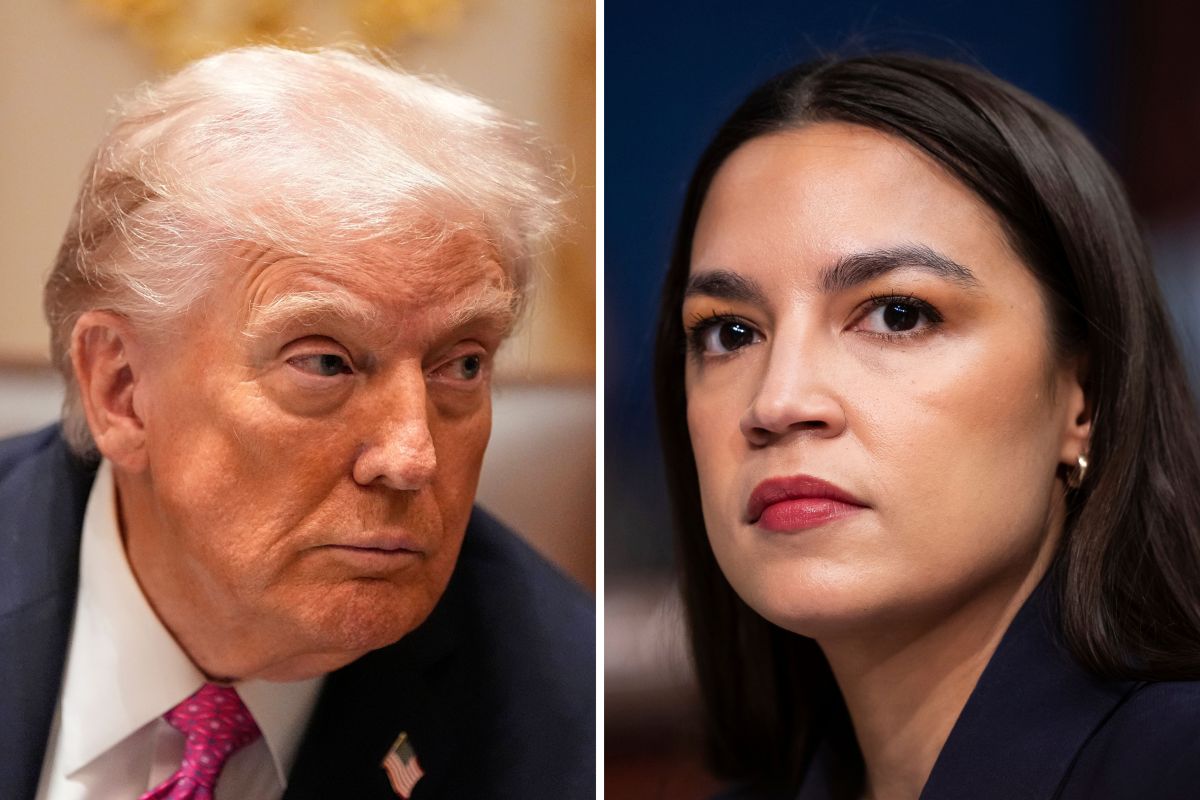
President Donald Trump is now ranked 13th in popularity among U.S. politicians according to YouGov, while Alexandria Ocasio-Cortez is ranked 6th. In previous rankings, Trump was ahead of Ocasio-Cortez, but recent changes in public opinion have shifted the positions. The rankings reflect current public perceptions of both figures in the political landscape.
Key Facts
President Trump is the 13th most popular politician in the U.S.
Alexandria Ocasio-Cortez is now ranked 6th in popularity.
The YouGov poll shows 43% of people have a positive view of Ocasio-Cortez, while 35% view Trump positively.
In a previous ranking, Trump held the 17th position and Ocasio-Cortez was 18th.
Trump's approval dropped by two percentage points, and his net approval fell by four points, according to a separate poll.
Ocasio-Cortez has risen 12 places in the rankings and gained seven percentage points in popularity.
Trump mentioned Ocasio-Cortez's energy in a Fox News interview, while she criticized Trump's leadership approach in a CNN town hall.
Read the Original
Want the full story? Tap a source to open the original
article.
Several cities in California, including Santa Clara County and San Jose, are establishing areas where federal immigration authorities, specifically ICE, cannot conduct operations. The Department of Homeland Security (DHS) responded by stating they will continue to enforce immigration laws. This action takes place as local leaders aim to protect immigrant communities and ensure public spaces remain accessible to all residents.
Key Facts
Santa Clara County and San Jose are working to create "No ICE" zones to restrict immigration enforcement on public property.
The Santa Clara County Board of Supervisors approved the plan to keep ICE from operating on county facilities.
The City of San Jose is expected to adopt similar measures soon.
These "No ICE" zones are inspired by similar policies in cities like Chicago.
In June 2025, President Donald Trump sent federal troops to Los Angeles to support immigration enforcement, which led to legal challenges.
A federal judge later ruled the military deployment violated the Posse Comitatus Act, which limits military involvement in domestic matters.
Despite this ruling, a portion of the National Guard troops remain federally activated in California through February 2026.
DHS officials argue they must continue enforcement to target serious criminals, regardless of local policies.
Read the Original
Want the full story? Tap a source to open the original
article.
President Donald Trump reportedly wants the Department of Justice (DOJ) to pay him around $230 million for investigations conducted while Joe Biden was President. This request has raised concerns about potential conflicts of interest because President Trump now leads the DOJ. If the DOJ denies his complaints, Trump may choose to file a lawsuit.
Key Facts
President Trump is asking the DOJ for $230 million due to past investigations.
The concerns are about conflicts of interest, as Trump now controls the Justice Department.
The New York Times reported Trump filed two administrative complaints related to past investigations.
The DOJ would need approval from top officials for any settlement.
Ethics experts worry about potential violations of the Constitution concerning payments to the President.
The complaints were filed to explore settlement options without going to court.
Senator Richard Blumenthal and others have expressed serious concerns about the case.
DOJ spokesman said DOJ officials follow guidance from career ethics officers.
Read the Original
Want the full story? Tap a source to open the original
article.
President Donald Trump has chosen Lt. Gen. Christopher LaNeve to be the new Army vice chief of staff, even though Gen. James Mingus is currently in that role and hasn't completed the usual three-year term. This decision is part of many recent changes in military leadership during President Trump's administration.
Key Facts
President Trump nominated Lt. Gen. Christopher LaNeve to become the Army vice chief of staff.
Gen. James Mingus currently holds the position and has been in it for less than two years.
The standard tenure for the vice chief of staff is typically at least three years.
The nomination reflects a pattern of surprise military leadership changes under President Trump and Defense Secretary Pete Hegseth.
Officials did not provide reasons for Mingus' potential removal or LaNeve's promotion.
Recent similar surprising changes include early retirements of other military leaders.
Lt. Gen. Christopher LaNeve is currently serving as a top aide to Defense Secretary Hegseth.
Read the Original
Want the full story? Tap a source to open the original
article.
Paul Ingrassia, President Donald Trump's nominee for the Office of Special Counsel, withdrew his nomination after offensive text messages surfaced. The texts showed Ingrassia making derogatory comments, leading to a lack of support from Republican senators. The White House confirmed Ingrassia is no longer the nominee.
Key Facts
Paul Ingrassia was nominated by President Trump to lead the Office of Special Counsel.
Ingrassia withdrew his nomination after text messages with offensive language were revealed.
In the texts, he made negative comments about Martin Luther King Jr. and referred to himself as having “a Nazi streak.”
Several Republican senators, who are usually Trump supporters, said they would not support Ingrassia's nomination.
The White House confirmed that Ingrassia is no longer the nominee for the position.
The Office of Special Counsel is responsible for protecting government employees who report wrongdoing.
Ingrassia's withdrawal follows other instances where Trump nominees faced backlash and withdrew.
Senate Minority Leader Chuck Schumer criticized the situation and suggested Ingrassia should be removed from his current role as a White House liaison.
Read the Original
Want the full story? Tap a source to open the original
article.
Staying informed here is free for everyone. If it's worth something to you, pay what you want. Supporters also get the daily digest by email every morning.
A motion seeks to disqualify Lindsey Halligan, the interim U.S. Attorney for the Eastern District of Virginia, from prosecuting former FBI Director James Comey. Judge Cameron McGowan Currie has been chosen to oversee the case, with new deadlines set for arguments from both sides.
Key Facts
Judge Cameron McGowan Currie will oversee the case about disqualifying Lindsey Halligan.
Lindsey Halligan is an interim U.S. Attorney for the Eastern District of Virginia.
The case involves former FBI Director James Comey.
Chief Judge Albert Diaz appointed Currie to ensure neutrality in the case.
Judge Currie has a long legal career, appointed as a federal judge in 1994 by President Clinton.
The government has until November 3, 2025, to respond to the motion.
Disqualification motions against federal prosecutors are uncommon.
Read the Original
Want the full story? Tap a source to open the original
article.
Republicans want to change certain Affordable Care Act (ACA) tax credits as a condition for renewing them, but time to make these changes is short. Enrollment for ACA begins on November 1, and some changes may not be possible by then. Republicans and Democrats are in disagreement, affecting progress on the issue.
Key Facts
Republicans demand changes to ACA tax credits to renew them.
ACA enrollment starts on November 1, leaving little time for change.
Experts say big changes, such as income caps, may be too late to implement for next year.
Some suggest a one-year extension with no changes, then adjustments in 2027.
Insurers warn of challenges if changes are rushed.
An ongoing issue is stopping subsidies from funding elective abortions.
A government shutdown complicates negotiations, with Republicans wanting government to reopen before talks continue.
Read the Original
Want the full story? Tap a source to open the original
article.