Patagonia, an outdoor clothing company, joined a lawsuit against President Donald Trump’s decision to reduce the size of two national monuments in Utah. The lawsuit challenges the 2017 orders that shrank Bears Ears and Grand Staircase-Escalante monuments.
Key Facts
Patagonia joined a legal fight against the Trump administration’s actions on national monuments.
The lawsuit concerns Bears Ears and Grand Staircase-Escalante in Utah.
In 2017, President Trump signed orders to shrink these two protected areas.
Native American groups and environmental organizations are also part of the lawsuit.
The groups want to reopen lawsuits originally filed in 2017.
The lawsuits aim to protect the monuments and preserve their land.
Bears Ears and Grand Staircase-Escalante are large areas with cultural and natural importance.
Read the Original
Want the full story? Tap a source to open the original
article.
England’s higher education regulator, the Office for Students (OfS), has apologized for mistakes it made when it tried to fine the University of Sussex £585,000. The fine was later canceled by a high court, which found the OfS acted unfairly and without proper consideration in a case involving free speech issues connected to a former professor.
Key Facts
The OfS tried to fine the University of Sussex £585,000 for allegedly breaking free speech rules.
The university challenged this fine in court, and the high court overturned the fine, saying the OfS was biased and did not keep an open mind.
The OfS admitted it made mistakes and apologized publicly for its actions in the case.
The regulator promised to improve by treating universities with more respect and trying less severe measures before imposing fines.
An internal review by the company KPMG found the OfS was too confrontational, lacked proper records, and had poor leadership oversight.
The review said the OfS’s decision-making was too concentrated in a few senior leaders, reducing independent opinions.
The OfS’s current leaders, who were not involved in the original fine decision, thanked the university for their help in reaching this point.
The case started after protests in 2021 over comments by former professor Kathleen Stock regarding transgender rights.
Read the Original
Want the full story? Tap a source to open the original
article.
A woman experienced a serious ankle injury from an accident that revealed her bones were unusually soft and nearly hollow. Further medical tests showed multiple hidden health problems, including a tiny, overactive parathyroid gland, which affected her bone strength and overall health.
Key Facts
The woman suffered an ankle injury when her car accidentally rolled over her foot.
During surgery, doctors found her bones were very soft, not typical for her age.
An X-ray showed she also had a fractured knee without realizing it before.
She had symptoms like back pain, fatigue, mild depression, heartburn, and brain fog that she thought were normal aging or family traits.
A bone scan and other medical tests revealed more hidden health problems.
She was referred to an endocrine surgeon who found an overactive parathyroid gland.
The overactive gland can cause bone weakness and other symptoms by affecting calcium levels in the body.
Read the Original
Want the full story? Tap a source to open the original
article.
Legal experts say that after a mistrial for Lindsay Clancy, several options remain. These include offering her a plea deal or choosing not to try her again in court.
Key Facts
Lindsay Clancy’s trial ended in a mistrial.
A mistrial means the trial was not completed or did not reach a verdict.
Legal experts suggest a plea deal could be offered.
A plea deal is when the accused agrees to plead guilty to a lesser charge or receives a lighter sentence.
Another option is to decide not to put Lindsay Clancy on trial again.
These options depend on the prosecuting side and the court’s decisions.
Read the Original
Want the full story? Tap a source to open the original
article.
The jury in the trial of Lindsay Clancy, who is accused of killing her three young children, has been unable to reach a decision after six days of discussions in Plymouth, Massachusetts. The jury is divided on whether Clancy is legally responsible for the deaths.
Key Facts
Lindsay Clancy is on trial for the murder of her three children.
The trial is taking place in Plymouth, Massachusetts.
The jury has been deliberating for six days without reaching an agreement.
The jury is deadlocked, meaning they cannot decide if Clancy is guilty or not.
Clancy was a labor and delivery nurse before the trial.
The case has brought attention to postpartum mental illness, which affects mothers after childbirth.
The jury has twice told the judge they cannot agree on a verdict.
The case continues to be closely followed across the United States.
Read the Original
Want the full story? Tap a source to open the original
article.
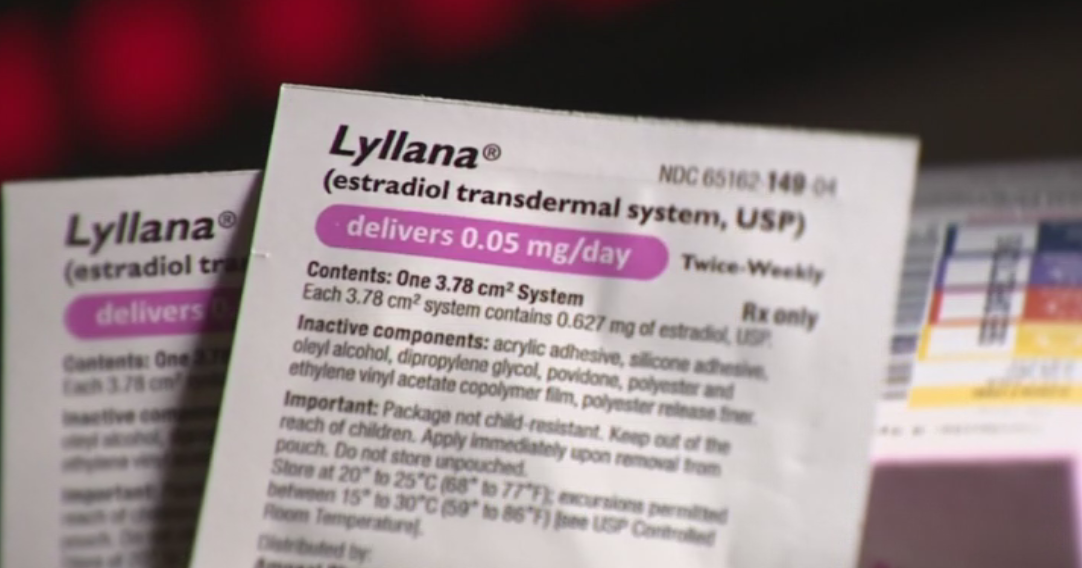
Many women across the U.S. are having trouble finding estrogen patches, which are used to treat menopause symptoms. Doctors and lawmakers want the FDA to officially declare a shortage so more patches can be made and patients can get their medicine.
Key Facts
Estrogen patches are in short supply nationwide due to a big increase in demand.
The FDA removed a strong safety warning on hormone therapy products in early 2024, leading to more prescriptions.
Prescriptions for estrogen patches rose from about 594,000 in June 2024 to 1.6 million in May 2026.
Some women struggle to find the patches and have to travel far or reduce usage.
Doctors say hormone therapy helps prevent serious health issues after menopause, like heart disease and osteoporosis.
A formal FDA shortage declaration could encourage more production and new companies to make the patches.
Without a shortage declaration, pharmacies may give smaller supplies, causing patients to pay more copays.
Lawmakers argue the FDA’s current shortage database does not reflect the recent surge in demand accurately.
Read the Original
Want the full story? Tap a source to open the original
article.
Liz Oyer, a former U.S. pardon attorney, is suing the Department of Justice because she was fired after refusing to suggest that actor Mel Gibson get his gun rights back. She was dismissed in March 2025 amid many other DOJ staff changes.
Key Facts
Liz Oyer worked as a pardon attorney for the U.S. Department of Justice.
She did not recommend restoring Mel Gibson’s gun rights.
Oyer was fired in March 2025.
Her firing happened during a large wave of DOJ staff changes.
Oyer is now suing the DOJ over her termination.
The case involves the restoration of gun rights, which means allowing someone to legally own guns again.
The DOJ is the government agency responsible for enforcing federal laws.
Read the Original
Want the full story? Tap a source to open the original
article.
The article calls on Republicans to clearly say that racism is wrong, reject conspiracy theories about 9/11, and urge President Trump to distance himself from people who spread hateful and racist ideas.
Key Facts
The article emphasizes the need to denounce racism openly.
It refers to the false claim that 9/11 was an inside job.
The article urges President Donald Trump to disassociate from individuals using hateful and bigoted language.
It highlights the importance of taking a stand against racist comments within the Republican Party.
The article criticizes anyone who tolerates or spreads racist and conspiratorial views.
Read the Original
Want the full story? Tap a source to open the original
article.
The U.S. Justice Department is trying to use an old maritime law called prize law to quickly claim Iranian oil tankers seized at sea. This law, rarely used since the Spanish-American War, could help the government take control of these ships and their cargo more easily than current legal methods.
Key Facts
The Justice Department wants to revive prize law, a centuries-old law about seized ships and cargo.
Prize law was last commonly used during the Spanish-American War in the late 1800s.
The law allows courts to decide if seized ships carrying enemy goods can become U.S. property.
Prize law cases are handled by U.S. district courts when military forces capture ships.
To win a prize case, the U.S. must prove the ship is carrying illegal goods, enemy soldiers, fake papers, or breaking rules like blockades.
If successful, the government can sell the captured cargo and send funds to the U.S. Treasury.
Similar old laws were used recently by the Trump administration for deportations and sanctions enforcement.
Experts warn that using this old law could face legal and practical challenges, like moving seized ships to certain courts.
Read the Original
Want the full story? Tap a source to open the original
article.
James Dolphs Elmore Jr. was sentenced to 20 years in prison for manslaughter in the 1986 death of 16-year-old Laura Miller. His case is connected to the "Texas Killing Fields," where the bodies of more than 30 women and girls were found near Houston since the 1970s.
Key Facts
James Dolphs Elmore Jr., aged 61, was sentenced to 20 years after being found guilty of manslaughter.
Laura Miller, 16 years old, died from a cocaine dose Elmore prepared, which was administered by Clyde Hedrick.
The "Texas Killing Fields" is a site near Interstate 45 southeast of Houston where many female victims were found.
The killings date back to the 1970s and involve over 30 victims.
Clyde Hedrick, Elmore's friend, was believed to be responsible for some deaths but died by suicide before facing indictment.
Hedrick had a prior manslaughter conviction and was on parole at the time of his death.
Tim Miller, Laura’s father, founded Texas EquuSearch, an organization for finding missing people.
Most cases related to the "Texas Killing Fields" remain unsolved.
Read the Original
Want the full story? Tap a source to open the original
article.
California lawmakers have passed a bill to clarify how schools should spend the state's $1 billion yearly arts education funding. The bill aims to help schools understand the rules so they use the money correctly and increase arts programs for students.
Key Facts
California voters passed Proposition 28 in 2022 to fund arts education in K-12 schools.
Schools must use Prop. 28 money to add to, not replace, existing arts programs.
Confusion about the rules caused many districts to return their arts funding to the state.
The new bill, AB 2440, clears up these rules and defines what counts as an arts class.
Schools can now share arts teachers and resources and better manage funds from outside groups.
Austin Beutner, who led Prop. 28, initially opposed the bill but agreed after a compromise.
The bill passed with full support and aims to give schools clearer guidance on spending arts funding.
There is still a shortage of arts teachers in California, with some districts needing thousands more.
Read the Original
Want the full story? Tap a source to open the original
article.
A Missouri candidate named Thomas Ross appeared in court on federal drug charges for allegedly trying to plant cocaine and Adderall on his political opponent during a Republican primary. Ross is accused of asking a campaign manager to place these drugs on his rival, Louise Secker, before the August 4 primary election.
Key Facts
Thomas Ross is charged with conspiracy to distribute a controlled substance.
He allegedly tried to plant cocaine and a prescription drug called Adderall on his opponent, Louise Secker.
Ross gave a campaign manager a glove containing the drugs to place in Secker’s purse or vehicle.
The drug planting attempt happened before the August 4 Republican primary in Missouri.
Ross narrowly defeated Secker by only a few dozen votes in the primary.
Missouri Republican Party chairman Peter Kinder asked Ross to drop out of the race.
The FBI found text messages from Ross discussing the plan to plant the drugs.
U.S. Attorney R. Matthew Price emphasized the importance of honesty and integrity in elections.
Read the Original
Want the full story? Tap a source to open the original
article.
A government report found that the U.S. Secret Service did not update its protection policies or explain why after several drone-related security incidents. This failure contributed to security gaps before the 2024 assassination attempt on President Donald Trump and other close calls.
Key Facts
From 2015 to 2025, the Secret Service faced 83 security incidents but updated policies after only 25 of them.
The agency did not document reasons for not updating policies in response to some drone incidents.
In 2024, a man attempted to assassinate President Trump in Butler, Pennsylvania, by taking a shot after using a drone to scout the area.
Other security breaches included an armed man near Trump at a golf course and another man getting close at the White House Correspondent’s Dinner.
The Secret Service failed to update eight of 22 protection policies within the required four-year period.
A key agreement between the Secret Service and the Diplomatic Security Service about overseas protection has not been updated since 1991 and does not address new threats like drones.
The report suggests the Secret Service should document why policies are not changed after incidents and improve review processes.
Read the Original
Want the full story? Tap a source to open the original
article.
The Trump administration delayed a survey designed to study PFAS, harmful chemicals, in wastewater from various industries. This survey, submitted nearly two years ago during the Biden administration, aimed to identify key sources of PFAS pollution to help create new rules for limiting it.
Key Facts
PFAS are man-made chemicals linked to cancer, vaccine resistance, and other health issues.
Many wastewater treatment plants receive water contaminated with PFAS but cannot remove the chemicals effectively.
The EPA planned a nationwide survey of wastewater treatment plants to find out which industries release the most PFAS.
This survey was sent to the White House Office of Management and Budget for approval in October 2024.
Approval for the survey has been delayed nearly two years, which is much longer than the usual 60-day review period.
Former EPA officials involved in the study say the delay has hindered progress on regulating PFAS pollution.
The Trump administration has taken some steps to address PFAS but also delayed major drinking water limits and scrapped some Biden-era PFAS wastewater rules.
The EPA and White House office did not comment on the delay when asked.
Read the Original
Want the full story? Tap a source to open the original
article.
Representative Thomas Massie introduced a bill called the Flock-Off Act. The bill would stop local governments and police from using federal money to buy or upgrade special cameras that read license plates or scan faces.
Key Facts
The bill is called the Flock-Off Act.
It focuses on automated license plate reader cameras (ALPRs) and biometric surveillance cameras.
It would block federal funding for buying, installing, maintaining, operating, or upgrading these cameras.
The bill targets local governments and law enforcement agencies.
Automated license plate reader cameras capture and record license plate numbers automatically.
Biometric surveillance cameras scan and identify people’s faces or other physical traits.
Rep. Thomas Massie represents Kentucky.
The bill aims to limit federal support for this type of surveillance technology.
Read the Original
Want the full story? Tap a source to open the original
article.
Billionaire Leon Black refused to appear before a US House committee investigating Jeffrey Epstein and instead sued to challenge the committee’s subpoenas. Black argues the subpoenas are invalid and that revealing certain documents would harm women who want privacy.
Key Facts
Leon Black did not respond to subpoenas from the House Oversight Committee related to Jeffrey Epstein.
Black filed a federal lawsuit claiming the subpoenas have no valid purpose and violate privacy agreements.
He previously left a committee hearing in June when asked about nondisclosure agreements (NDAs) linked to Epstein.
Black says he hired Epstein for wealth management and paid him $158 million for legitimate services.
The committee may hold Black in contempt of Congress, which could lead to prosecution.
Black denies any wrongdoing related to Epstein and says he only learned about Epstein’s crimes after they were made public.
He faced allegations from a former partner who claimed abuse, but her lawsuit was dismissed due to a signed NDA and settlements.
Black left his investment firm, Apollo Global Management, in 2021, citing stress from media attention around Epstein ties.
Read the Original
Want the full story? Tap a source to open the original
article.
The Pentagon has paused a new rule that required all male active-duty and reserve military members aged 30 and older to get tested for low testosterone. This decision came shortly after the rule was announced.
Key Facts
The Pentagon issued a rule for mandatory testosterone testing for male service members aged 30 and above.
The rule applied to both active-duty and reserve military personnel.
The testing focused on screening for testosterone deficiency through blood tests.
The guidance was announced on a Wednesday.
The Pentagon decided to temporarily withdraw this testing requirement the following day.
This pause was confirmed by a Pentagon official to The Hill news outlet.
Read the Original
Want the full story? Tap a source to open the original
article.
A statement was made praising some Democratic Party members who voted to reject socialism. The statement also expressed opposition to other political systems such as fascism, communism, Nazism, and any form of collectivism.
Key Facts
Some Democrats voted to condemn socialism.
The speaker supports this vote and opposes socialism.
The speaker also opposes fascism, communism, Nazism, and collectivism.
Collectivism refers to systems where the group or state controls resources, not individuals.
The statement criticizes fellow Democrats who oppose the condemnation of socialism.
Read the Original
Want the full story? Tap a source to open the original
article.
Two people died and several others were hurt in a shooting at an apartment in Minneapolis. New information about the incident is recently becoming available.
Key Facts
The shooting took place at an apartment in Minneapolis.
Two people were killed in the shooting.
Several other people were injured.
Authorities are releasing new details about what happened.
CBS News correspondent Jonah Kaplan reported on the story.
Additional updates are available on the CBS News app and website.
Read the Original
Want the full story? Tap a source to open the original
article.
President Donald Trump is temporarily removing tariffs on up to 300,000 metric tons of imported beef trimmings. This move aims to reduce the cost of ground beef for consumers in the United States.
Key Facts
President Trump is lifting tariffs, which are taxes on imported goods.
The lifted tariffs apply to beef trimmings, a part of meat used in ground beef.
The limit for this tariff removal is 300,000 metric tons of beef trimmings.
This action is temporary, not permanent.
The goal is to lower ground beef prices in the U.S. market.
Tariffs usually make imported products more expensive.
Ground beef prices have been a concern for some consumers.
Read the Original
Want the full story? Tap a source to open the original
article.