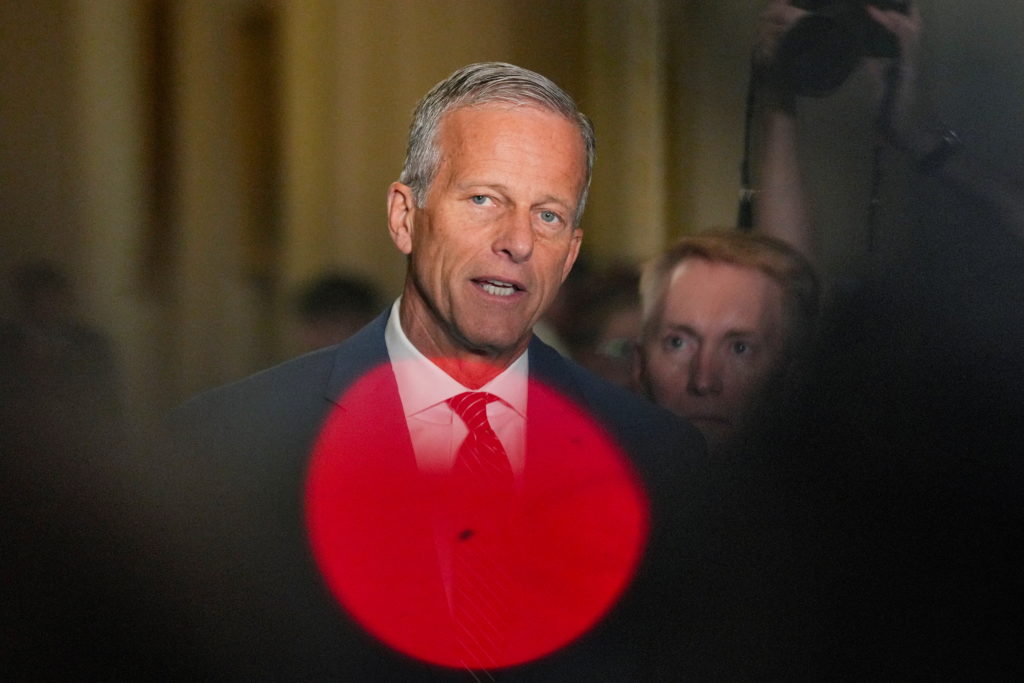
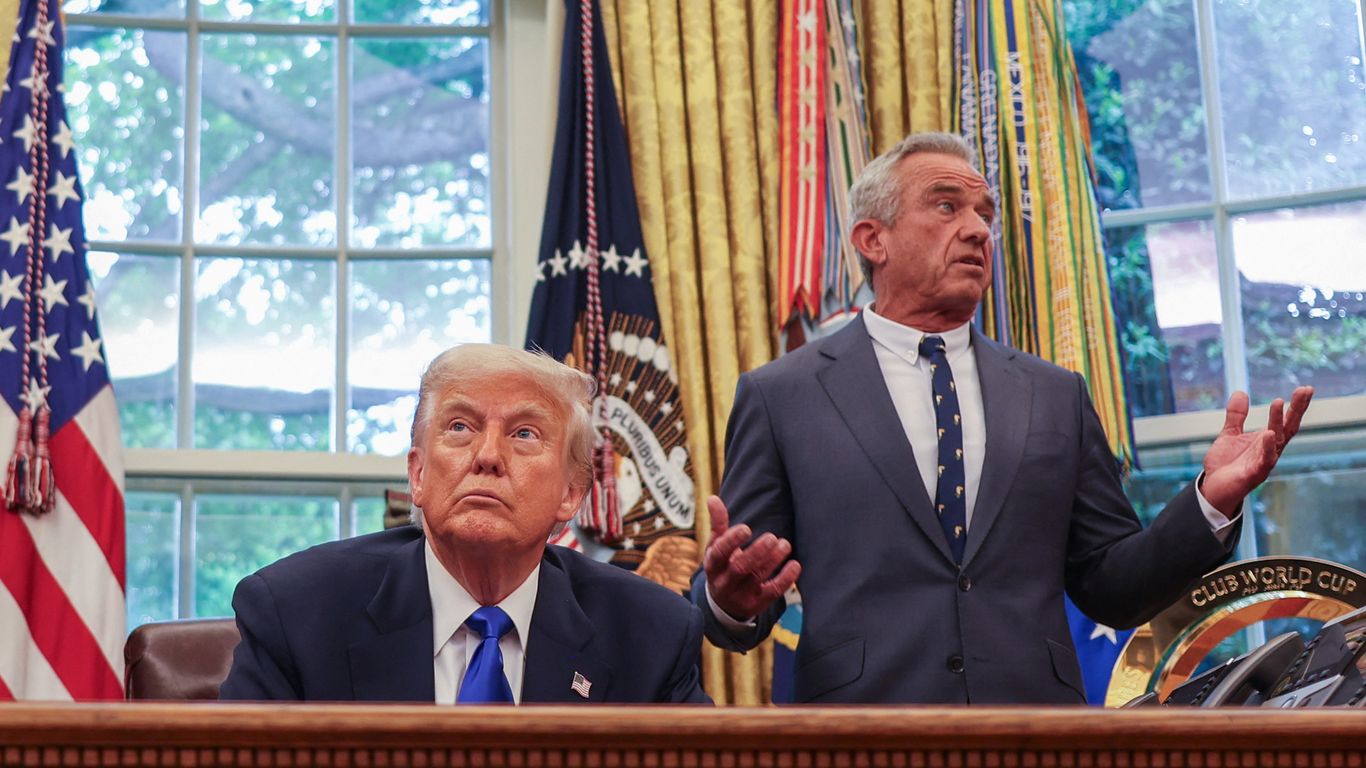
Senate Republicans want to change the rules to make it easier to confirm President Trump's non-judicial nominees by grouping them together. Currently, each nominee is approved one at a time, which can take days. This change aims to speed up the process because Democrats have slowed it down through full Senate procedures.
Key Facts
The Senate confirms over 1,300 government positions, but each is currently approved individually.
Senate Democrats are using full procedures for each nomination, slowing the process.
Republicans propose grouping non-judicial nominees for faster confirmation.
The change doesn't apply to Cabinet positions with longer procedures.
The goal is to address a backlog of about 150 nominees.
John Thune leads the Republican effort for this rule change.
The proposal involves overruling a Senate parliamentarian decision without needing a two-thirds majority.
Votes and debate on the rule change are expected on Thursday, with a large group of nominees possibly confirmed next week.
Read the Original
Want the full story? Tap a source to open the original
article.
President Trump visited a D.C. restaurant shortly before his special authority over local police operations was due to expire. His visit highlighted his past efforts to crack down on crime in the city, which he claims have been successful. The outing included protests from some people and cheers from restaurant patrons.
Key Facts
President Trump visited Joe's Seafood restaurant in Washington, D.C., making it his first restaurant outing in the city during his second term.
His visit followed a month after he declared a crime emergency in D.C., where federal and local law enforcement teamed up to reduce crime.
Trump's special control over the D.C. police was set to end shortly after his restaurant visit.
He claimed crime in D.C. had significantly dropped and stated the city was now safe.
Protests occurred outside the restaurant, including members of the group CODEPINK, who voiced their opposition to Trump's policies.
The restaurant received mixed reviews online after hosting Trump, with some people critical of the decision.
Trump's previous outings, like his visit to the U.S. Open, have also seen both support and opposition from the public.
Read the Original
Want the full story? Tap a source to open the original
article.
Various efforts across the United States aim to reduce political and social divisions. These efforts include mentoring programs for young men, using artificial intelligence to gather community opinions, and creating a system to promote respectful political discourse. Each approach focuses on building understanding and trust among people.
Key Facts
Jordan Bowman founded "Journeymen" in Raleigh, NC, to help young men who feel isolated and lack direction.
Journeymen provides mentorship to encourage young men to express their emotions healthily.
In Bowling Green, KY, leaders used AI from Google's Jigsaw to gather community input for future planning.
The AI survey engaged one-tenth of residents and found 80% agreement on community goals.
Tim Shriver introduced "The Dignity Index" to evaluate the respectfulness of political speech.
The Dignity Index aims to promote discourse that respects and values others.
Each initiative attempts to bridge societal and political divides in the U.S.
Read the Original
Want the full story? Tap a source to open the original
article.
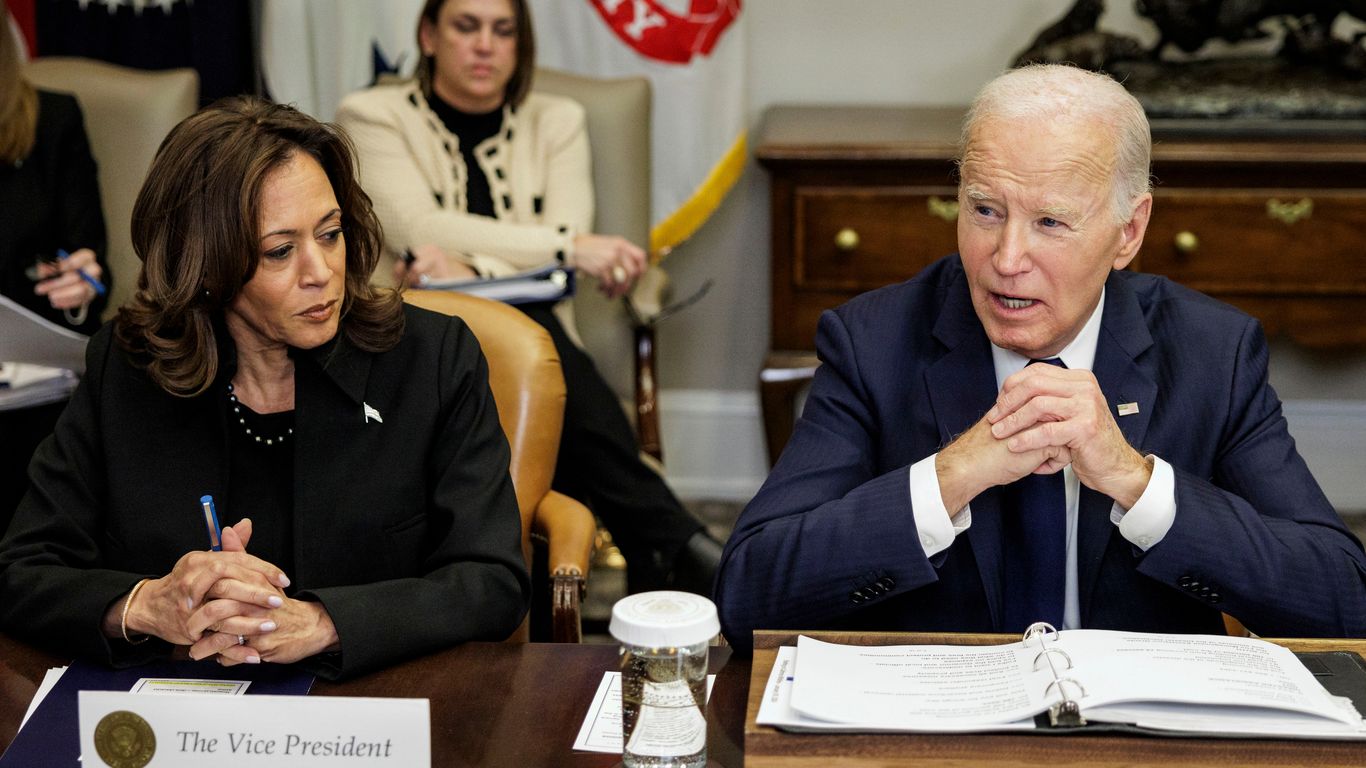
Former Vice President Kamala Harris discusses decisions around President Biden's 2024 presidential campaign in her new book. She describes these decisions as reckless and criticizes how they were handled, emphasizing the impact on her own role and the political environment. The book covers events between Biden exiting the race and Trump winning the election.
Key Facts
Harris blames "recklessness" for Biden's 2024 campaign decision.
She believes the decision was more about personal ambition than considering the high stakes.
Harris' book, "107 Days," will be released on September 23.
The book covers the time frame when Biden left the race and Trump won.
Harris notes Biden’s poor debate was due to exhaustion, not incapacity.
She felt Biden’s White House did not defend her enough against attacks.
Harris believes the White House halted positive comments on her work.
Her presidential campaign was the shortest in modern U.S. history.
Read the Original
Want the full story? Tap a source to open the original
article.
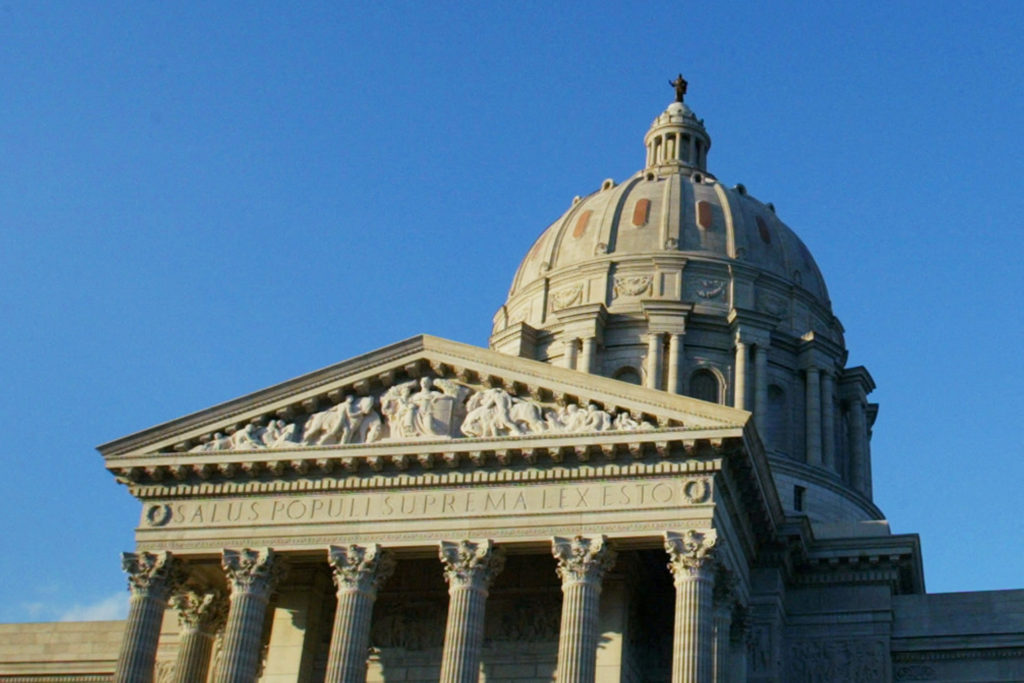
Missouri's Republican-controlled House approved a plan to change the state's U.S. House districts to help Republicans win an extra seat. This redistricting, supported by former President Donald Trump, aims to boost Republican chances in the next elections. The new plan will now go to the state Senate for further approval.
Key Facts
Missouri Republicans want to redraw congressional districts to gain an extra seat.
The plan is backed by former President Donald Trump.
The proposal targets a Kansas City district currently held by Democrat Emanuel Cleaver.
If passed, Republicans could hold seven of Missouri's eight House seats.
Former President Trump supports the plan to help keep a Republican majority in Congress.
The Missouri House also passed a separate measure changing the rules for citizen-led ballot initiatives.
The redistricting plan is part of a larger national political strategy by the Republican Party.
The proposed changes may face legal challenges and could be delayed by a public referendum.
Read the Original
Want the full story? Tap a source to open the original
article.
Three fired FBI agents have filed a lawsuit claiming they were dismissed for not showing loyalty to former President Trump. The lawsuit says the FBI leadership acted on political motives, which led to the removal of these agents before they could retire. The dismissed agents were experienced in national security and other important FBI operations.
Key Facts
Three senior FBI agents have been fired and are now suing the FBI and the Justice Department.
The lawsuit claims the firings were politically motivated as a way to show loyalty to former President Trump.
Kash Patel, the FBI Director, is accused of prioritizing the White House's directives over federal law.
The agents, known for their expertise in security and crime prevention, argue that this hurts national security.
The lawsuit mentions violations of the agents' First and Fifth Amendment rights, including free speech and due process.
The fired agents are Brian Driscoll, Steven Jensen, and Spencer Evans, each with notable service histories.
The FBI has not commented on the firings, citing no comment on personnel matters.
This lawsuit is the second against the FBI by its agents this year.
Read the Original
Want the full story? Tap a source to open the original
article.
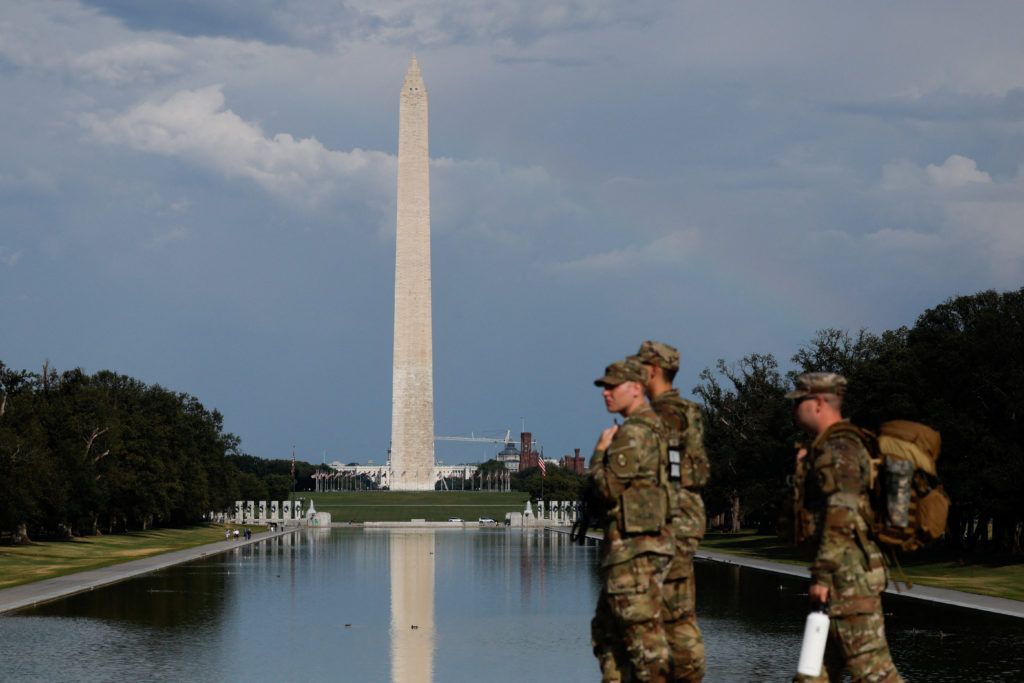
President Trump's emergency order in Washington, D.C., which allowed for federal control of the city's police and increased law enforcement, is ending. The House is considering new bills that could take away more local control from the District of Columbia. The city's autonomy remains a major issue, with debates ongoing in Congress about its governance.
Key Facts
Trump's emergency order placed D.C.'s police under federal control for 30 days to address crime.
This order is expiring after Congress declined to extend it.
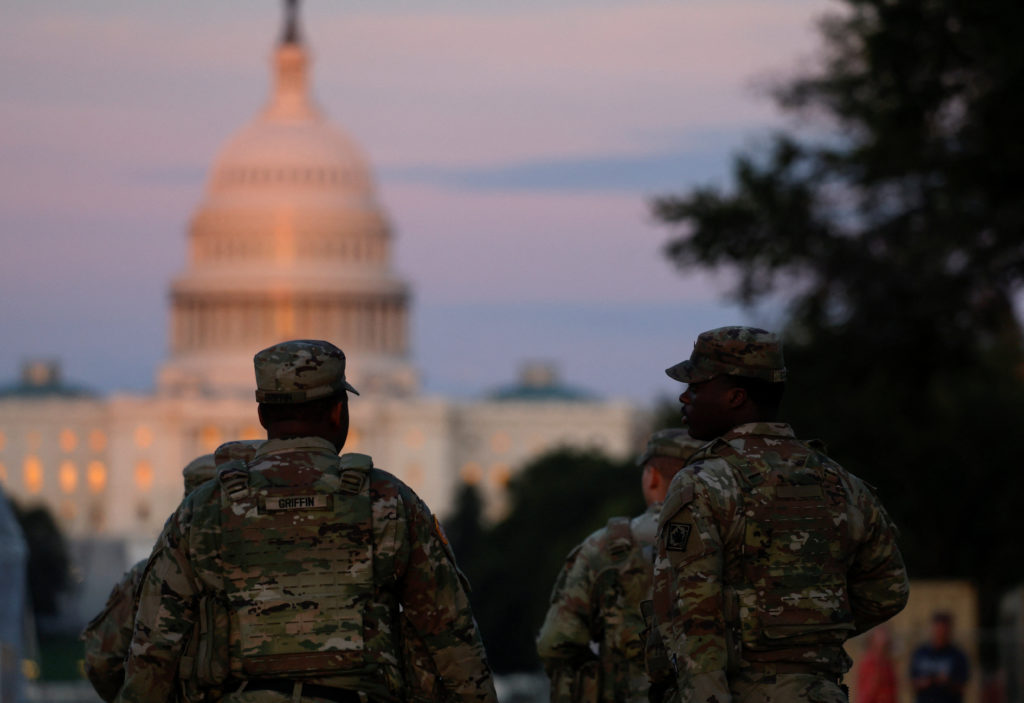
The National Guard and some federal agencies remain in the city.
A House committee is debating 13 bills that could change D.C.'s laws and authority.
Proposals include changing the age for trying juveniles and altering the bail system.
Congressional authority over D.C. allows it significant influence over the city's governance.
D.C. Mayor Bowser opposes these proposals, highlighting the importance of local control.
Republican representatives support measures to ensure safety and maintain federal authority over D.C.
Read the Original
Want the full story? Tap a source to open the original
article.
President Trump's increase in federal law enforcement in Washington, D.C., led to more arrests and a decrease in reported crime, including fewer guns and homeless encampments. The emergency order allowing this surge is set to end, and Trump's attention may shift to other cities. D.C.'s Mayor Muriel Bowser has worked with federal authorities despite some political differences.
Key Facts
A federal law enforcement surge in D.C. led to over 2,100 arrests from August 7 to September 8.
The initiative included the seizure of 222 firearms and the dismantling of 50 homeless encampments.
Violent crime in D.C. dropped by 39%, and homicides decreased by 53% compared to the same period last year.
The National Guard, along with D.C. police, patrolled key transportation areas and helped with cleanup operations.
Crime rates were reportedly on a downward trend before the federal surge began.
President Trump's approval rating saw a slight increase during this period, coinciding with heightened public concern about crime.
D.C. Mayor Muriel Bowser cooperated with the federal initiative, noting its impact on reducing crime while acknowledging prior trends.
Read the Original
Want the full story? Tap a source to open the original
article.
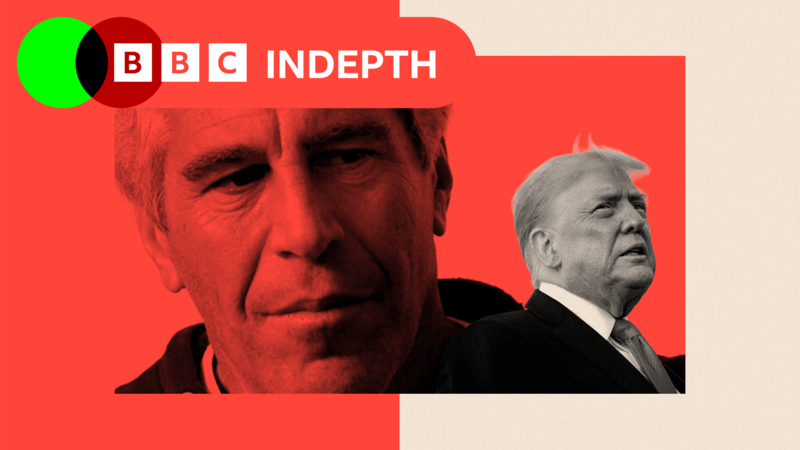
Donald Trump's involvement with Jeffrey Epstein has re-emerged due to a 2003 book of personal notes given to Epstein, including an alleged note from Trump. While Trump denies writing the note, its existence has impacted his political standing. The authenticity of the note is in question, but its public release adds to the controversy.
Key Facts
Jeffrey Epstein was a financier and convicted sex offender.
A 2003 book of personal notes, linked to Epstein, has been publicly released.
The book includes a note allegedly from Donald Trump, which he denies writing.
Trump's critics are using the note to question his ties to Epstein.
Trump's team has taken legal action against the Wall Street Journal over the note's publication.
The note's existence has led to political challenges for Trump.
Trump's strategy has been to deny involvement, but the note's existence complicates this.
Epstein's connections with powerful people remain a topic of public interest.
Read the Original
Want the full story? Tap a source to open the original
article.
California is considering a bill that would let healthcare providers prescribe abortion drugs without their names on the prescription label. This measure aims to protect doctors involved in telehealth abortions, especially in response to legal challenges from states with abortion bans. Other states, such as New York and Massachusetts, have already enacted similar laws.
Key Facts
California is looking at a bill to let doctors prescribe abortion drugs anonymously.
The two-drug combination, mifepristone and misoprostol, is used in over 60% of U.S. abortions.
About 25% of abortions are done via telehealth, according to the Society of Family Planning.
Shield laws protect California doctors from legal actions from states that ban abortions.
Approximately 12,000 abortions per month occur under these shield laws.
Five other states — New York, Maine, Massachusetts, Vermont, and Washington — have passed similar laws.
Legal challenges in states like New York and California have tested these shield laws' effectiveness.
Critics argue that these laws prevent other states from enforcing their abortion restrictions.
Read the Original
Want the full story? Tap a source to open the original
article.
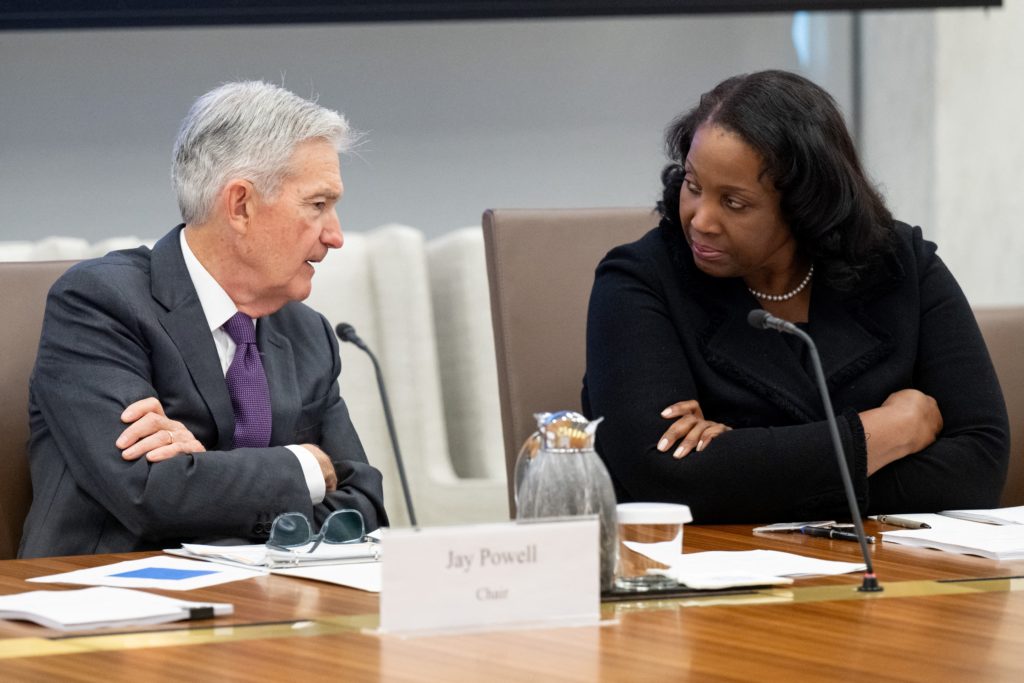
A federal court ruled that Federal Reserve Governor Lisa Cook can keep her position while she challenges President Donald Trump's attempt to fire her. The court found that the allegations against Cook were not sufficient legal grounds for her removal and allowed her to continue working as the legal process continues.
Key Facts
Lisa Cook is a governor on the Federal Reserve Board.
President Trump attempted to fire Cook on allegations of mortgage fraud.
A federal judge blocked the firing, saying Cook could stay in her role during her legal fight.
The judge found the allegations did not provide enough legal reason for her dismissal.
Federal Reserve governors can only be removed for actions taken during their time in office.
The decision allows Cook to participate in upcoming Federal Reserve meetings.
The court noted that the law intends to protect Fed governors from political pressure.
The ruling might be appealed by the Trump administration.
Read the Original
Want the full story? Tap a source to open the original
article.
The U.S. government, led by Commerce Secretary Howard Lutnick, is considering taking a share of the money from patents developed by major universities with federal funding. Lutnick argues that because the U.S. taxpayer funds the research, the government should benefit from the profits generated by these patents. This approach follows other government moves to gain financial stakes in private companies.
Key Facts
The U.S. government is looking to share in patent profits from federally funded university research.
Commerce Secretary Howard Lutnick expressed the government's interest in gaining financial benefits from university patents.
The Trump administration already takes a cut from private companies like Intel and Nvidia.
Lutnick suggests the government should get half of the benefits from patents funded by taxpayer money.
Lutnick has contacted universities like Harvard and plans to contact the University of California system about this proposal.
The Bayh-Dole Act of 1980 currently allows universities to keep ownership of patents from federal funding.
The proposal suggests that sharing patent revenue could help fund U.S. Social Security and reduce deficits.
Not all universities profit significantly from commercializing patents, as many face financial and logistical challenges.
Read the Original
Want the full story? Tap a source to open the original
article.
Democrats face pressure to allow a government shutdown as they negotiate with Republicans over a funding bill. Democratic leaders need at least seven Democratic senators to support a funding bill, but some Democrats argue against working with Republicans. There is also interest in including provisions related to healthcare in the funding negotiations.
Key Facts
Democrats face pressure to consider a government shutdown starting on October 1.
Republicans control both the House and Senate, needing Democratic support to pass funding.
Senate Minority Leader Chuck Schumer seeks a bipartisan agreement with Republicans.
Some Democrats oppose helping Trump during this stage of his presidency.
Schumer has faced criticism for past votes to keep the government open.
Democrats want to negotiate on healthcare provisions, including extending Affordable Care Act tax credits.
A short-term funding bill is an option being discussed to avoid an immediate shutdown.
Seven Democratic votes in the Senate are needed to pass a government funding bill.
Read the Original
Want the full story? Tap a source to open the original
article.
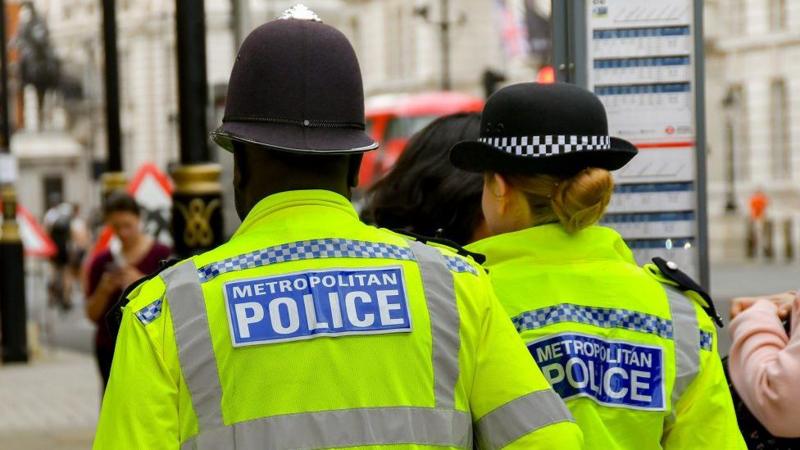
The policing watchdog in the UK has suggested that police should stop recording non-crime hate incidents, which are acts motivated by prejudice but do not break the law. Key officials, including Sir Andy Cooke and Sir Mark Rowley, believe current rules place police in a difficult position and suggest revising the policy. There is a debate about whether such incidents interfere with free speech without addressing actual crime.
Key Facts
Non-crime hate incidents are actions viewed as motivated by prejudice but do not constitute a criminal offense.
Sir Andy Cooke, Chief Inspector of Constabulary, called for a stop to recording these incidents, suggesting a different way to gather intelligence.
Such incidents became a focus following a police visit to a journalist over a social media post.
Police guidance on recording such incidents began in 2005 after recommendations from the Stephen Lawrence case inquiry.
Sir Andy advocates for allowing open speech without fear of legal repercussions unless it's criminal.
Conservative voices have suggested scrapping these records to focus police efforts on more pressing issues.
The Metropolitan Police chief also supports changes to the laws concerning these incidents.
Public debate continues over balancing free speech with the need to monitor potential escalation of hate incidents.
Read the Original
Want the full story? Tap a source to open the original
article.
Former President Trump has discussed sending National Guard troops to Chicago to address crime, but Illinois Governor JB Pritzker views this as an attempt to gain power before the 2026 Congressional elections. The Department of Homeland Security launched a separate initiative called "Operation Midway Blitz" to detain people without legal status. Governor Pritzker disagrees with the Trump administration's immigration policies and believes they may harm the community.
Key Facts
President Trump has threatened to send National Guard troops to Chicago.
Governor JB Pritzker believes Trump's actions are a power grab before the 2026 elections.
Trump currently cannot legally send troops without the governor's approval.
DHS started "Operation Midway Blitz" to detain individuals without legal status.
Governor Pritzker is concerned about racial profiling in immigration efforts.
A Supreme Court ruling overturned a decision against racial profiling in immigration checks.
Pritzker argues many long-term residents without legal status should remain in the U.S.
Pritzker believes Trump's Chicago focus is temporary and politically motivated.
Read the Original
Want the full story? Tap a source to open the original
article.
President Trump's control over the D.C. police force will end at midnight on September 10, 2025. This marks the conclusion of his unusual involvement in managing the capital's police.
Key Facts
President Trump had taken control of the D.C. police force.
His control is set to end at midnight on September 10, 2025.
This takeover was considered unprecedented, meaning it had not happened before.
The change will take place on a Wednesday.
Opinions differ on how this control and its ending will affect the situation.
Read the Original
Want the full story? Tap a source to open the original
article.
Fake sober living homes in Arizona were created to take advantage of Medicaid by pretending to help people recover from substance abuse. These fraudulent homes have caused distrust, making it difficult for those who genuinely need recovery support to find credible help.
Key Facts
Fake sober living homes in Arizona targeted Medicaid by pretending to provide addiction treatment.
These homes were fraudulent, meaning they were not genuinely helping individuals.
Survivors of these scams say they have caused distrust in recovery services.
The scams make it harder for people seeking real recovery help to trust available services.
The issue was reported on a national news program, highlighting its significance.
These events have impacted people who depend on recovery support in Arizona.
Read the Original
Want the full story? Tap a source to open the original
article.
A new tool from the Trump administration has been used to check the citizenship status of over 33 million voters in the United States. While this system aims to verify voter information, many states are hesitant to use it due to questions about data security and the handling of the collected information. The tool uses Social Security numbers, names, and birth dates to confirm citizenship and death records.
Key Facts
The Trump administration introduced a tool to verify the citizenship of voters.
Over 33 million voters' citizenship status has been checked using this tool.
The system is called SAVE and was updated to use partial Social Security numbers and other personal data.
Some states, both Democrat-led and Republican-led, are hesitant to use the tool due to uncertainty about data safety.
USCIS, a part of the Department of Homeland Security, manages the tool but has not answered questions about data handling.
States like Ohio and Louisiana have used the tool to identify inactive or ineligible voters.
DHS is encouraging more states to use the tool by tying grant money to its implementation.
Concerns exist about data storage, access, and legal authority to use the tool in certain states.
Read the Original
Want the full story? Tap a source to open the original
article.
Staying informed here is free for everyone. If it's worth something to you, pay what you want. Supporters also get the daily digest by email every morning.
President Trump's control over Washington, D.C.'s police is set to expire, having been initiated under the Home Rule Act during a declared "crime emergency." The Home Rule Act allows such federal control for 30 days, but no further extension seems forthcoming as Congress has not signaled any intent to authorize it.
Key Facts
President Trump declared a "crime emergency" in D.C. on August 11, 2025, taking control of the Metropolitan Police Department.
This takeover was possible under the 1973 Home Rule Act but is limited to 30 days unless Congress extends it.
Trump's control over the D.C. police expires soon, with Congress not showing plans to approve an extension.
D.C. Mayor Muriel Bowser was credited by Trump for the cooperation and reduction in crime rates, though she insists the federal presence is not ideal.
Bowser has issued an order to maintain cooperation with federal law enforcement without extending Trump's control.
A proposed emergency police commissioner by the Trump administration was blocked by the courts.
D.C. police, under federal oversight, have engaged in activities like setting up traffic checkpoints, arresting over 1,669 people.
The issue of police control has moved to legislative discussions, with Congress currently not supporting further federal intervention.
Read the Original
Want the full story? Tap a source to open the original
article.
The Trump administration announced it is sending 100 cease-and-desist letters to pharmaceutical companies to stop them from running what it considers misleading ads. It also plans to close a loophole that has allowed some drug companies to hide important safety information in their ads. These actions aim to increase transparency and safety information in drug advertising.
Key Facts
The Trump administration is sending 100 cease-and-desist letters to pharmaceutical companies over misleading ads.
A new memorandum directs Health and Human Services to enforce transparency in drug ads.
Thousands of warning letters from the FDA are also being sent to remove misleading ads.
A loophole from 1997 allowed drug companies to hide important safety details by directing consumers to other sources.
The administration's actions aim to improve public trust and safety by requiring full disclosure in ads.
Trump's efforts to change drug advertising rules may face legal challenges.
Disclosing all side effects in ads may increase their length and cost for companies.
Read the Original
Want the full story? Tap a source to open the original
article.