Reports suggest that members of the Trump administration are considering offering New York City Mayor Eric Adams a diplomatic role as the ambassador to Saudi Arabia. This position is reportedly being proposed to persuade Adams to drop out of the upcoming mayoral race to weaken the left-leaning Democratic candidate Zohran Mamdani. Adams denies any plans to leave the race.
Key Facts
Eric Adams, a former Democrat, is running as an independent in the New York City mayoral race.
The Trump administration is reportedly considering Adams for the role of ambassador to Saudi Arabia.
This plan aims to weaken Zohran Mamdani, the left-leaning Democratic candidate.
Adams has been accused of helping Trump's deportation efforts in exchange for dropping charges against him, which he denies.
Zohran Mamdani surprised many by winning the Democratic primary against Andrew Cuomo.
Adams reportedly meets regularly with Steve Witkoff, a special envoy from Trump's team.
Adams has publicly stated he intends to stay in the mayoral race.
Read the Original
Want the full story? Tap a source to open the original
article.
President Trump is threatening to send the National Guard to cities like Chicago, Baltimore, and New Orleans, despite a judge ruling against such actions in Los Angeles. The judge found this use of the military for domestic purposes violated the law, but Trump's administration is still considering further deployments. Local officials in some states oppose these plans and might fight them in court.
Key Facts
President Trump has threatened to deploy the National Guard to Chicago, Baltimore, and New Orleans.
A federal judge in San Francisco ruled that Trump's previous deployment of the National Guard to Los Angeles was illegal under the Posse Comitatus Act.
The Posse Comitatus Act limits the military's role in domestic law enforcement.
Despite crime being down, Trump argues troop deployment is essential for public safety in these cities.
The Department of Homeland Security requested logistical support from the Pentagon for immigration enforcement in the Chicago area.
Illinois Governor JB Pritzker and Maryland's governor oppose Trump's plan, while Louisiana's governor supports it.
The deployment of National Guard troops in Washington, D.C., faced legal challenges due to claims of illegal use of military forces.
Governors typically control National Guard deployment within their states, which could lead to legal battles if Trump attempts to override them.
Read the Original
Want the full story? Tap a source to open the original
article.
A federal court recently lifted a temporary block on the Trump administration's plan to significantly reduce staff at the Consumer Financial Protection Bureau (CFPB). The CFPB, created after the 2008 financial crisis, has returned over $21 billion to consumers but now faces potential cuts under new administration policies. Debate continues over the impact on consumer protections and the financial industry.
Key Facts
The Consumer Financial Protection Bureau (CFPB) was established after the 2008 financial crash to protect consumers from harmful financial practices.
A federal appeals court lifted a block on the Trump administration's plan to cut jobs at the CFPB.
The CFPB has returned more than $21 billion to consumers since it was created.
The Trump administration aims to reduce the CFPB's activities, with the assistance of the Department of Government Efficiency (DOGE).
Key figures, such as Elon Musk, have contributed financial support to pro-Trump efforts and have business interests potentially affected by CFPB actions.
The CFPB oversees traditional and digital financial products, including fintech platforms like Apple Pay and Google Pay.
A federal court recently vacated a cap on credit-card late fees, following the Trump administration's policy direction.
The CFPB may be left with only a minimal staff to manage consumer protection.
Read the Original
Want the full story? Tap a source to open the original
article.
The unemployment rate for Black women increased to 7.5% in August, according to data from the Bureau of Labor Statistics. This rise is mainly due to cuts in the federal workforce by President Trump, which disproportionately affect Black women.
Key Facts
The unemployment rate for Black women was 7.5% in August.
In January, the rate was 5.4%.
The overall unemployment rate has only increased by 0.3 percentage points.
President Trump reduced jobs in the federal workforce.
These job cuts have had a larger impact on Black women.
Black women make up 28% of employees in some targeted federal agencies.
The federal government has lost 97,000 jobs so far this year.
Read the Original
Want the full story? Tap a source to open the original
article.
The U.S. job market showed signs of weakening in August, with only 22,000 jobs added and the unemployment rate increasing slightly to 4.3%. This has raised concerns about the state of the American economy, prompting speculation about potential interest rate cuts.
Key Facts
The U.S. added 22,000 jobs in August, which was fewer than expected.
The unemployment rate rose from 4.2% to 4.3%.
Previous job numbers for May and June were revised down, showing weaker hiring.
The Labor Department reported job losses in June for the first time since 2020.
Investors expect the Federal Reserve might cut interest rates due to the weak job market.
U.S. President Trump dismissed the head of the Bureau of Labor Statistics, alleging without evidence that job data was manipulated.
Economists believe that tariff and immigration policies might be contributing to the job market issues.
The federal government reduced its workforce by 15,000 jobs in August.
Read the Original
Want the full story? Tap a source to open the original
article.
The article discusses potential changes to U.S. federal cannabis laws. President Trump is considering reclassifying cannabis to make penalties less severe, while Congress re-introduced a bill aiming to remove the ban on marijuana. Despite state-level legalizations, cannabis remains a federally restricted substance.
Key Facts
Seth Ferranti was imprisoned for 21 years in the 1990s for non-violent drug offenses related to cannabis.
Marijuana is legal in some states but still classified as a Schedule I drug federally, making it illegal.
Nearly 90% of Americans support legalizing marijuana for at least medical use.
Democrat lawmakers re-introduced the MORE Act to end the federal ban on cannabis.
President Trump is considering changing cannabis from Schedule I to Schedule III, which reduces penalties but does not fully legalize it.
The current federal classification of cannabis limits tax deductions for cannabis businesses under tax code section 280E.
Federal prohibition affects banking services for cannabis businesses, forcing them to rely on cash transactions.
As of 2023, cannabis is fully legal in 24 states and allowed for medical use in 12 others.
Read the Original
Want the full story? Tap a source to open the original
article.
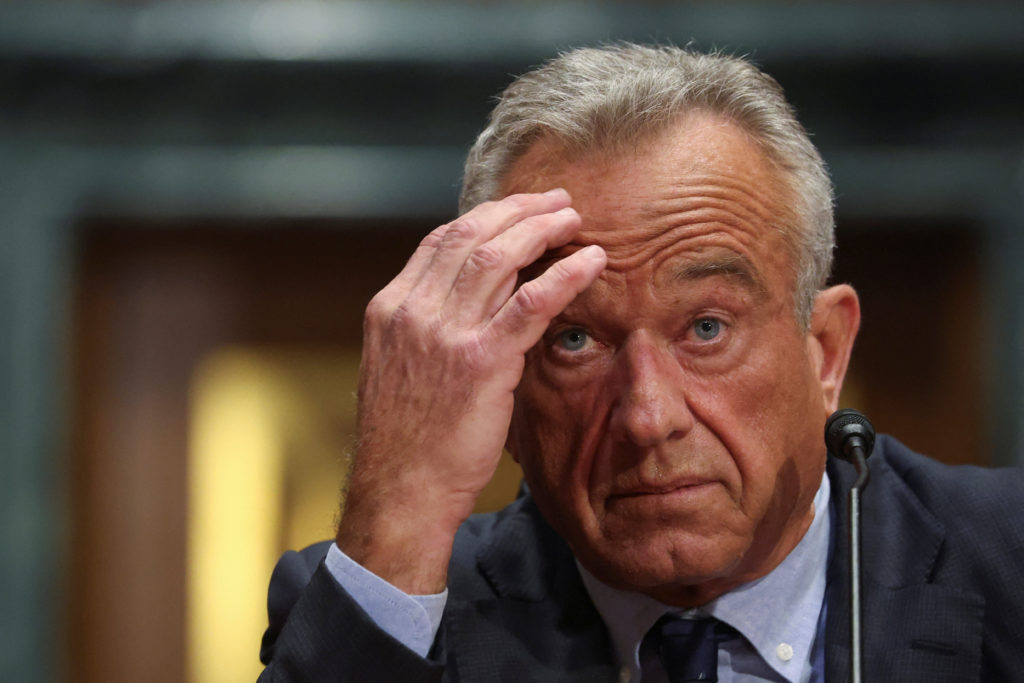
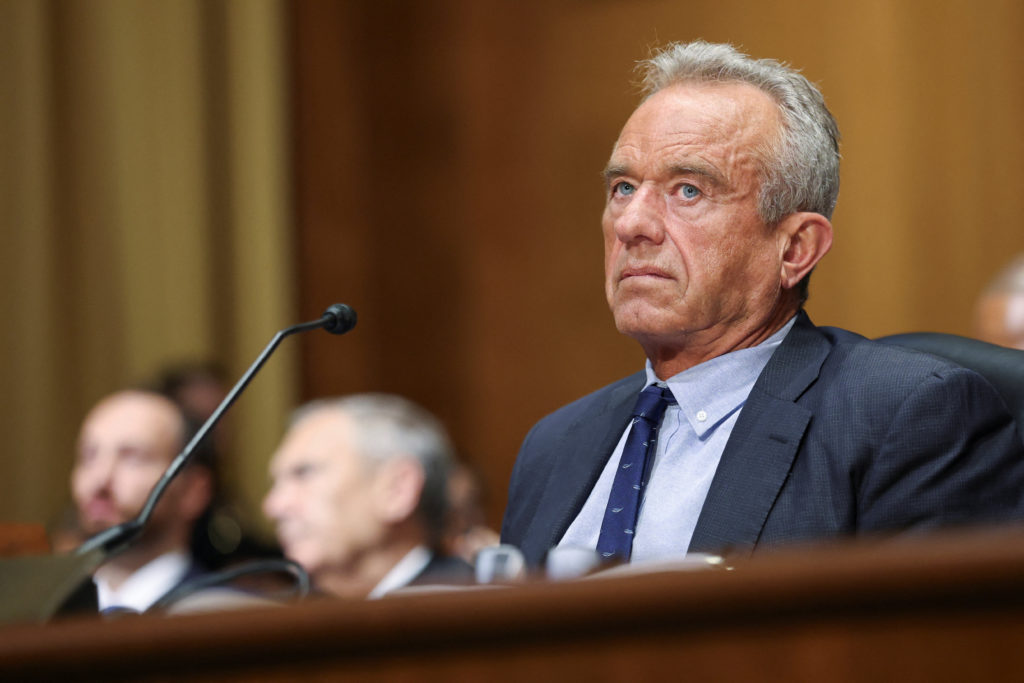
Robert F. Kennedy Jr. testified before the U.S. Senate Finance Committee about COVID-19 vaccines and related topics. He disagreed with several senators' statements about his record and beliefs on health issues. The hearing included fact-checking of Kennedy's statements and discussions about vaccine access and statistics.
Key Facts
Robert F. Kennedy Jr. testified about his past comments and management of health agencies related to COVID-19.
Kennedy disputed claims made by senators about his views on antidepressants and school shootings.
He argued against the idea that he was limiting access to COVID-19 vaccines.
Kennedy acknowledged support for Operation Warp Speed, despite his earlier criticisms of COVID-19 vaccines.
Senator Mark Warner questioned Kennedy on the number of Americans who died from COVID-19; Kennedy responded that he did not know.
Over 1 million Americans have died from COVID-19 according to statistical estimates, with many having underlying health issues.
The FDA has guidelines on who can receive the updated COVID-19 vaccine. This includes people 65 and older and those with health conditions making them more vulnerable to severe COVID-19.
Read the Original
Want the full story? Tap a source to open the original
article.
President Trump announced plans to sign an executive order allowing the Department of Defense to use the title "Department of War," its original name. A formal name change would require Congress to pass new legislation. Pentagon chief Pete Hegseth has supported this change and made various cultural shifts within the department.
Key Facts
President Trump plans to sign an executive order to give the Department of Defense the old name "Department of War."
A formal name change cannot happen without new legislation from Congress.
The Department of War was the original name when it was created in 1789 and was changed to the Department of Defense in 1947.
Pentagon chief Pete Hegseth has publicly supported the name change and conducted a social media poll on the topic.
Hegseth has made other cultural changes at the Pentagon, including the removal of diversity programs and certain books from military libraries.
These actions have included removing transgender troops and addressing what Hegseth sees as impacts of "woke culture" on the military.
Read the Original
Want the full story? Tap a source to open the original
article.
U.S. Health Secretary Robert F. Kennedy Jr. faced criticism for stating that everyone can get the COVID-19 vaccine, despite new guidelines limiting availability to certain groups. The FDA updated its guidance to allow the vaccine mainly for those aged 65 and over or individuals with underlying health conditions. The availability and insurance coverage of the vaccine depend largely on state policies and additional approvals.
Key Facts
Robert F. Kennedy Jr. stated everyone can get the COVID-19 vaccine, which was disputed.
The FDA updated its vaccine guidance, limiting it to people 65 and over and those with certain health conditions.
Healthy people under 65 might need a doctor's prescription and could pay out-of-pocket.
The COVID-19 vaccine availability varies by state.
Most health insurance plans cover vaccines recommended by the CDC.
Kennedy replaced all members of the CDC’s advisory committee, some with antivaccine views.
The CDC's advisory panel has not yet issued current vaccine guidance.
The panel is scheduled to meet on September 18-19.
Read the Original
Want the full story? Tap a source to open the original
article.
The Trump administration is investigating Medicaid spending in six Democratic-led states that provide health coverage to immigrants without permanent legal status. The federal review focuses on ensuring Medicaid funds are not misused for healthcare services that these immigrants receive. California, after reporting a $500 million overcharge to the federal government, is a primary focus of these investigations.
Key Facts
The Trump administration is reviewing Medicaid spending in six states: California, Colorado, Illinois, Minnesota, Oregon, and Washington.
The investigations aim to find any waste, fraud, or abuse in payments for health care to immigrants without legal status.
Federal rules allow Medicaid payments for emergency and pregnancy care for immigrants without permanent legal status.
California reported it overcharged the federal government by at least $500 million for services to these immigrants, risking possible legal actions.
Some Democratic-led states cut or adjusted their Medicaid programs due to high costs of covering immigrants.
The Trump administration reduced taxpayer spending on immigrant health care and pushed to remove people living in the U.S. illegally from Medicaid.
California's attorney general criticized the investigations as politically motivated against states supporting immigrants.
A federal judge blocked attempts to hand over Medicaid data to deportation officials following a lawsuit by 20 states.
Read the Original
Want the full story? Tap a source to open the original
article.
Four Democratic senators sent a letter to the Smithsonian Institution, urging it to resist any pressure from the White House to change its programs and exhibitions. This comes after President Trump criticized the Smithsonian for its portrayal of American history and suggested it should focus more on achievements rather than past issues. The senators argue that the Smithsonian operates independently and not under presidential control.
Key Facts
Four Democratic senators sent a letter to the Smithsonian's secretary, Lonnie G. Bunch.
The letter advises against White House pressure to alter its mission and values.
President Trump criticized the Smithsonian for its portrayal of U.S. history.
The White House memo listed specific criticisms regarding 22 exhibitions and programs.
The Smithsonian is funded by both private donations and federal appropriations from Congress.
Oversight of the Smithsonian is managed by Congress, not the executive branch.
Senators involved include Alex Padilla, Catherine Cortez Masto, Gary Peters, and Jeffrey A. Merkley.
NPR reported some criticized exhibitions were temporary and are no longer on display.
Read the Original
Want the full story? Tap a source to open the original
article.
U.S. employers added 22,000 jobs in August, which was lower than expected and fewer than in July. The unemployment rate increased to 4.3% and concerns arise regarding economic policies and job market stability. Tariffs and past interest rate hikes may be affecting hiring decisions.
Key Facts
U.S. employers added 22,000 jobs in August, down from 79,000 in July.
Economists expected about 80,000 new jobs for August.
The unemployment rate increased to 4.3%, the highest since 2021.
Factories cut 12,000 jobs, construction companies lost 7,000 jobs, and the federal government lost 15,000 jobs in August.
Health care and social assistance added nearly 47,000 jobs.
The job market is growing slower than previous years, averaging fewer than 75,000 new jobs a month this year.
Tariffs and interest rate hikes are contributing to hiring uncertainty.
Average hourly earnings rose by 0.3% from July and 3.7% from August 2024.
Read the Original
Want the full story? Tap a source to open the original
article.
On the biggest stories we show what the outlets agree on and where they differ. Readers keep that going, and get the daily digest by email every morning. Most choose $3.99/month.
Some states in the U.S. are taking their own actions to provide COVID-19 vaccines, countering restrictions set by Health Secretary Robert F. Kennedy Jr. These states are making plans to ensure vaccine access independently, causing a mix of policies across the country. This variation could lead to public confusion and less effective public health responses.
Key Facts
Several states, including Massachusetts, California, and New Mexico, are setting their own COVID-19 vaccine policies.
Massachusetts requires insurers to cover vaccines recommended by its health department, not just CDC guidelines.
New Mexico's health department issued an order for vaccine access despite federal restrictions.
States like California, Oregon, and Washington are creating their own vaccine recommendations.
Illinois is considering purchasing COVID-19 vaccines directly from manufacturers to ensure access.
Florida has announced it will end all school vaccine mandates.
The Health and Human Services (HHS) department reminded states to respect vaccine exemptions under the federal program for free vaccines.
Conflicting vaccine policies are similar to divides seen in other areas like abortion and gender-affirming care.
Read the Original
Want the full story? Tap a source to open the original
article.
Robert F. Kennedy Jr., United States Health and Human Services Secretary, faced questions from US senators about his past comments and actions related to COVID-19 vaccines and antidepressants. During the Senate Finance Committee hearing, Kennedy disputed claims from senators and defended his views. The hearing also covered topics like vaccine distribution and the accuracy of COVID-19 death statistics.
Key Facts
Robert F. Kennedy Jr. appeared before the Senate Finance Committee to discuss health management and vaccines.
Kennedy disagreed with senators on statements they attributed to him about COVID-19 vaccines and antidepressants.
Kennedy rejected Senator Mark Warner's statistic that over a million Americans died from COVID-19, citing unreliable data.
According to multiple reports, more than 1 million Americans have died from COVID-19.
Kennedy praised Operation Warp Speed, calling it "genius" for its rapid vaccine development.
Senator Maggie Hassan accused Kennedy of limiting access to COVID-19 vaccines, which he denied.
The FDA restricts the latest COVID-19 vaccines to people over 65 and those 6 months or older with high-risk conditions.
People outside the FDA's specified groups can still receive vaccines but might need to do so "off-label."
Read the Original
Want the full story? Tap a source to open the original
article.
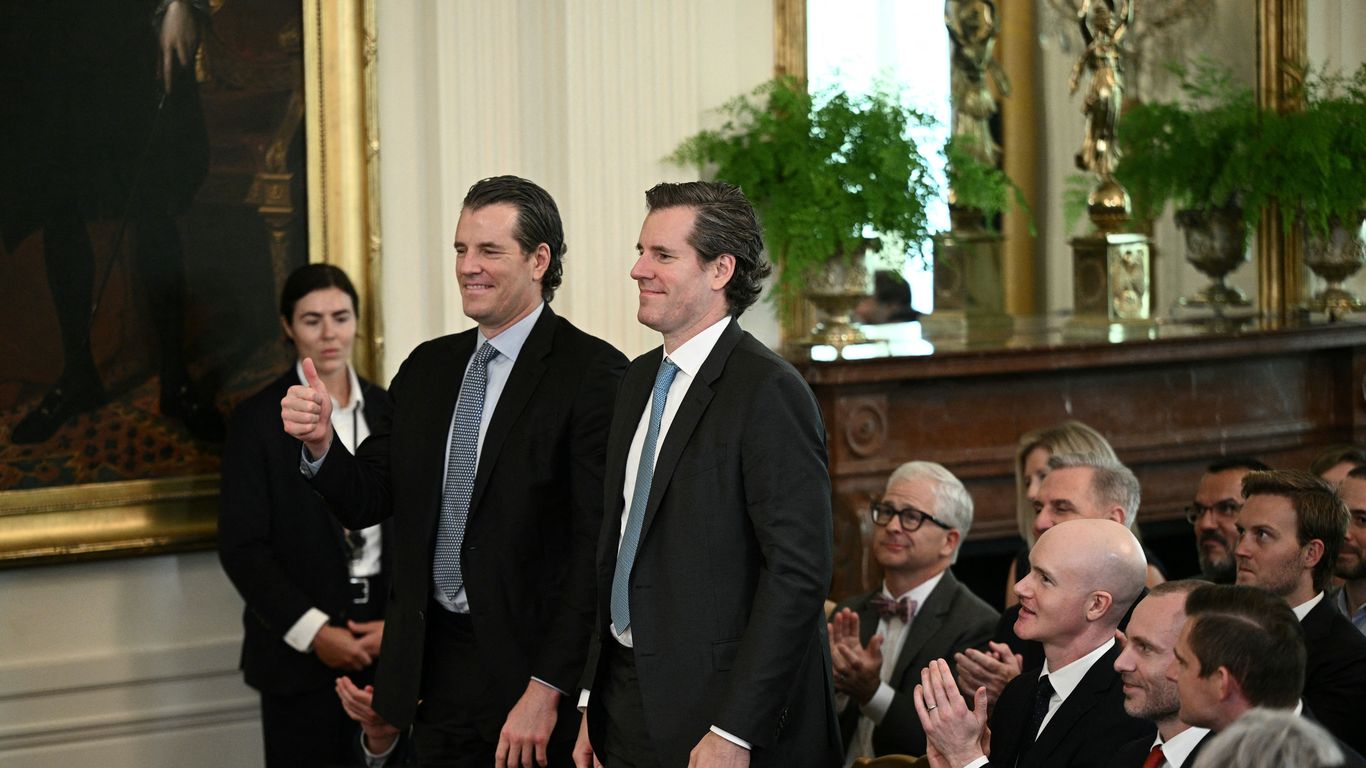
The Winklevoss twins, Cameron and Tyler, are significant donors in Republican politics, especially in supporting pro-Trump and pro-cryptocurrency candidates. They have donated millions to various Republican committees and groups, with a focus on making America a global leader in cryptocurrency. The twins have also become influential figures in the crypto industry and have strengthened ties with key political figures, including Donald Trump.
Key Facts
The Winklevoss twins have donated over $32 million to Republican causes this year.
A large portion, $21 million, went to the newly established Digital Freedom Fund, a super PAC for pro-Trump and pro-crypto candidates.
They have donated more than $2.6 million to the Congressional Leadership Fund and National Republican Congressional Committee.
They contributed $1 million to the pro-Trump MAGA Inc. super PAC.
Over $1.6 million was given to the National Republican Senatorial Committee and Senate Leadership Fund.
The twins have established connections with Donald Trump and other political figures, influencing crypto-related policies.
They played a part in the Rockbridge Network, a group of conservative donors.
They own Gemini, a cryptocurrency platform, and are noted for their involvement in the tech and crypto industries.
Read the Original
Want the full story? Tap a source to open the original
article.
During a Senate hearing, Democratic Senator Maria Cantwell criticized Health Secretary Robert F. Kennedy Jr. for cutting mRNA vaccine research funds. Cantwell warned that these actions leave the U.S. vulnerable to future pandemics. Both Democrats and Republicans questioned Kennedy's decisions regarding vaccine research and CDC changes.
Key Facts
Senator Maria Cantwell criticized Robert F. Kennedy Jr. in a Senate hearing.
The hearing discussed President Trump's 2026 health care agenda.
Kennedy faced criticism from both parties for canceling mRNA vaccine research funding.
Kennedy's decisions to change CDC policies, including firing the vaccine advisory panel, were questioned.
Critics worry that questioning vaccine safety research could undermine public health.
Kennedy defended his actions, stating they were necessary to restore the CDC's credibility.
Cantwell expressed concerns that cuts in vaccine research would harm U.S. pandemic preparedness.
Read the Original
Want the full story? Tap a source to open the original
article.
Health Secretary Robert F. Kennedy Jr. appeared before the Senate, where senators asked him questions about vaccines and other health-related topics. The session lasted nearly three hours and involved both Democratic and Republican senators.
Key Facts
Robert F. Kennedy Jr. is the current Health Secretary.
He was questioned by senators from both political parties.
The main topic was vaccine access, but other health issues were also discussed.
The Senate hearing lasted almost three hours.
NPR provided coverage and analysis of the hearing.
Read the Original
Want the full story? Tap a source to open the original
article.
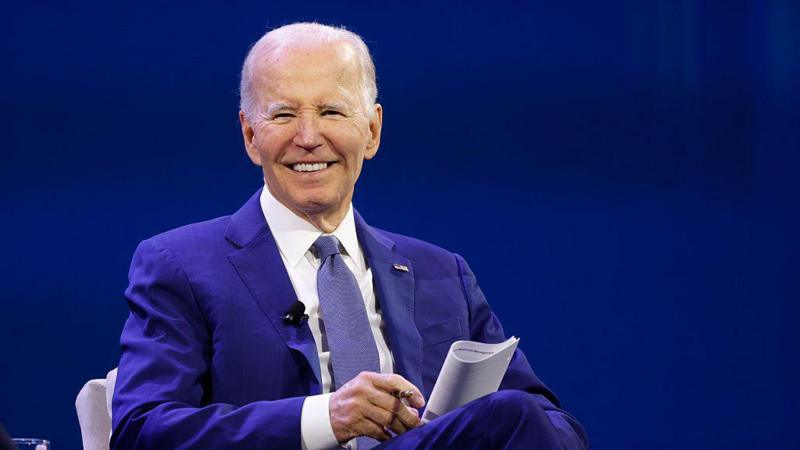
Joe Biden, former US President, recently had surgery to remove skin cancer. This procedure, known as Mohs surgery, involves removing skin until no cancer remains. Biden has had other battles with cancer in the past.
Key Facts
Joe Biden, former US President, had skin cancer surgery.
The surgery is called Mohs surgery and removes cancerous skin.
Biden is 82 years old.
In 2023, Biden had a cancerous lesion taken off his chest.
He was diagnosed with aggressive prostate cancer in May.
Biden had non-melanoma skin cancers removed before his presidency.
Biden's advocacy against cancer is personal; his son, Beau, died of brain cancer.
Read the Original
Want the full story? Tap a source to open the original
article.
President Donald Trump plans to rename the Department of Defense to the Department of War to create a more assertive image. The change is expected to be announced through an executive order, but making it permanent requires legislative action.
Key Facts
President Trump intends to rename the Department of Defense to the Department of War.
The name change aims to project a more forceful image for the department.
An executive order is expected to announce this change on Friday.
The Department of Defense was originally called the Department of War before 1947.
The change will only be fully permanent after new laws are passed by Congress.
US Defense Secretary Pete Hegseth supports the name change, emphasizing a "warrior ethos."
Trump linked the name change to past US military successes.
It is unclear how the name change will be made permanent, with further legal and legislative actions necessary.
Read the Original
Want the full story? Tap a source to open the original
article.
D.C. Attorney General Brian Schwalb is taking legal action against the Trump administration to stop the use of National Guard troops in Washington, D.C. He claims that using armed soldiers for policing American citizens is not legal.
Key Facts
D.C. Attorney General Brian Schwalb filed a lawsuit.
The lawsuit is against the Trump administration.
Schwalb wants to stop National Guard troops from being used in D.C.
He argues that it's unlawful to use soldiers to police citizens.
The lawsuit was reported on September 5, 2025.
Read the Original
Want the full story? Tap a source to open the original
article.