At least two people died and five others were hurt in a mass shooting in Minneapolis, Minnesota. The person suspected of doing the shooting is also dead.
Key Facts
The shooting happened in Minneapolis, Minnesota.
Two people were killed in the incident.
Five other people were injured.
The suspected shooter died, either during or after the shooting.
A man who escaped the shooting shared his reaction to the scene.
The report was covered by CBS News and reporter Jarred Hill.
Read the Original
Want the full story? Tap a source to open the original
article.
Moshe Marvit, who was fired by President Donald Trump from the Federal Mine Safety and Health Review Commission, has decided to stop his legal fight against his removal. He disagrees with a recent Supreme Court ruling that expanded the President’s power to fire officials, which affects how independent some government agencies can be.
Key Facts
President Donald Trump fired Moshe Marvit from the Federal Mine Safety and Health Review Commission.
Marvit challenged his firing in court but decided to drop the case.
This decision followed a Supreme Court ruling that gave the President more power to remove certain government officials.
The ruling affects the independence of some federal agencies, including the mine safety commission.
Marvit disagrees with the Supreme Court’s decision but accepted that it limits the agency’s independence.
The Federal Mine Safety and Health Review Commission deals with overseeing safety rules in mines.
Read the Original
Want the full story? Tap a source to open the original
article.
Gloria Steinem, a well-known journalist and activist who played a major role in the U.S. women's movement, died at 92. She helped bring women's rights issues like abortion and equality into the public eye for over 60 years.
Key Facts
Gloria Steinem died peacefully at her home in New York City at age 92.
She became famous in 1963 when she worked undercover as a Playboy Bunny to expose poor pay and sexism.
Steinem co-founded Ms. magazine, focusing on feminism and women's issues.
She fought to legalize abortion before the Roe v. Wade decision and worked to protect those rights afterward.
Steinem helped start the National Women's Political Caucus and testified for the Equal Rights Amendment in 1970.
She traveled and worked with Black feminist leaders who challenged racism and classism within feminism.
Her last memoir, "An Unexpected Life," will be published soon.
Her home in New York will continue as a place for social justice activities.
Read the Original
Want the full story? Tap a source to open the original
article.
Vice President Vance will speak about a new training program to help rebuild the U.S. manufacturing workforce. This program is part of President Donald Trump’s plan to boost manufacturing jobs in America.
Key Facts
Vice President Vance will give a speech on Thursday.
The event marks the opening of the Foundry School.
The Foundry School is a project under the State Department’s Pax Silica initiative.
This school will train people like entrepreneurs, engineers, and technicians.
The goal is to strengthen American manufacturing and create more jobs.
The program supports President Trump’s focus on increasing domestic production.
It aims to prepare leaders for industrial and manufacturing roles.
Read the Original
Want the full story? Tap a source to open the original
article.
Hillary Clinton praised Gloria Steinem as a key figure in the fight for women's equality after Steinem’s death at age 92. Clinton encouraged young women to continue working for equality and described Steinem’s optimism and activism as important for progress.
Key Facts
Gloria Steinem, a founder of Ms. magazine and a leader in the women’s liberation movement, died at age 92.
Hillary Clinton called Steinem "one of the architects" of women’s equality.
Clinton shared memories of how Steinem helped people understand gender discrimination in schools, jobs, and scholarships.
Steinem’s work helped open doors for women in sports (Title IX), space exploration (Sally Ride), and reproductive rights (Roe v. Wade).
Clinton said Steinem was optimistic and believed in lifting others up to expand opportunities for all women.
Clinton encouraged young women not to be discouraged by challenges but to help others succeed as well.
Steinem’s activism significantly influenced social and legal changes advancing women’s rights.
Read the Original
Want the full story? Tap a source to open the original
article.
President Donald Trump encouraged Republicans running in close November midterm elections to focus on his record when campaigning. He promised to support these candidates by joining their campaign events.
Key Facts
President Trump spoke to Republican lawmakers at a White House Rose Garden dinner.
He advised candidates in tight races to highlight his achievements.
Trump said he would join candidates on the campaign trail to help them.
The advice was given with months left before the November midterm elections.
The goal is to strengthen Republican chances in competitive districts.
Trump emphasized that Republicans have strong stories linked to his presidency.
Read the Original
Want the full story? Tap a source to open the original
article.
The U.S. federal debt has surpassed $40 trillion under President Donald Trump. Despite his 2016 promise to eliminate the debt in eight years, the debt has more than doubled, partly due to large tax cuts for the wealthy and corporations.
Key Facts
The federal debt has grown to over $40 trillion during President Trump’s time in office.
In 2016, Trump promised to erase the federal debt within eight years.
Trump’s tax cuts, known as the “big, beautiful bill,” are expected to increase the debt by $3.4 trillion over the next decade.
The total federal debt grew by $11.6 trillion during Trump’s presidency, including his first term.
Almost half of the $4.4 trillion in tax cuts went to the richest 5% of Americans.
Rising federal debt has contributed to higher long-term interest rates and more expensive mortgages.
The U.S. will face more than $2 trillion yearly in interest payments on the debt by the mid-2030s, doubling current costs.
The growth in debt and tax policy have raised concerns about affordability for everyday Americans in areas like housing, childcare, and healthcare.
Read the Original
Want the full story? Tap a source to open the original
article.
Gloria Steinem, a key figure in the women's liberation movement in the United States, died at age 92. She passed away peacefully at her home in New York City, surrounded by loved ones.
Key Facts
Gloria Steinem was a leading voice in the women's liberation movement.
She died at the age of 92.
Her foundation announced her death on Instagram.
Steinem died peacefully at her home in New York City.
She spoke with BBC in December 2023 about her legacy and hopes for a fairer world.
Steinem aimed to make the world more fair and representative during her lifetime.
She influenced feminism and women's rights in the United States.
Read the Original
Want the full story? Tap a source to open the original
article.
A city in New York called Oswego, located by Lake Ontario, has opposed President Donald Trump’s plan to rename the lake “Lake America.” The city government and local lawmakers reject the name change, saying the lake’s original name is important to their history and community.
Key Facts
President Trump wants to rename Lake Ontario to “Lake America” after trade talks with Canada failed.
He signed an executive order directing the Interior Department to make the name change official.
Most Americans do not support changing the long-established name of the lake.
Oswego County in New York, which voted 62% for President Trump in 2024, opposes the change.
Oswego’s Mayor Robert Corradino, a Republican, said the city government does not support the renaming.
The Oswego County Legislature passed a resolution rejecting the new name, citing historical importance and costs involved.
The lake’s original name has been used for hundreds of years and is tied to local identity.
Renaming the lake could cause financial costs for taxpayers and businesses in the area.
Read the Original
Want the full story? Tap a source to open the original
article.
A federal judge in Boston is deciding whether to extend a ban on the U.S. Postal Service requiring states to use a new mail voting system for upcoming elections. The judge previously issued a temporary order blocking the system, which was created under an executive order by President Donald Trump, and this case could go to the Supreme Court.
Key Facts
Judge Indira Talwani is hearing arguments about extending a ban on new mail voting rules by the U.S. Postal Service.
The new system was ordered by President Donald Trump as part of an executive order for the midterm elections.
The judge already issued a 14-day temporary ban last week, which will expire soon as states prepare to send out mail ballots.
Talwani previously blocked the system for the November election, saying it was too late for major changes.
The Supreme Court ruled that her earlier stop was premature since the Postal Service had not finalized the details of the new system until recently.
Voting rights groups argue the president cannot set mail voting rules because the Constitution gives that power to states and Congress.
Election officials say the Postal Service’s requirements are too difficult for them to follow before elections.
Some mail ballots have already been sent out in areas like Wisconsin ahead of the potential new rules.
Read the Original
Want the full story? Tap a source to open the original
article.
The Environmental Protection Agency (EPA) has proposed a change that would remove the federal rule requiring states to notify the public and seek comments before approving air pollution permits for data centers and other industrial buildings. This could reduce public awareness and input on new data centers being built across the United States.
Key Facts
The EPA proposal would end the federal requirement for public notice and comment on air pollution permits for data centers.
States could still allow public comments but would no longer be required to do so.
The change might make it harder for local communities to learn about planned data centers before approval and construction.
The proposal comes amid rapid growth of large data centers supporting artificial intelligence and cloud computing.
Critics say the move reduces transparency and public involvement in environmental decisions.
Some environmental groups oppose the proposal, saying communities should have a chance to voice concerns.
The EPA spokesperson said the critics’ claims about the proposal are false.
The issue has caused protests and political debate in several states.
Read the Original
Want the full story? Tap a source to open the original
article.
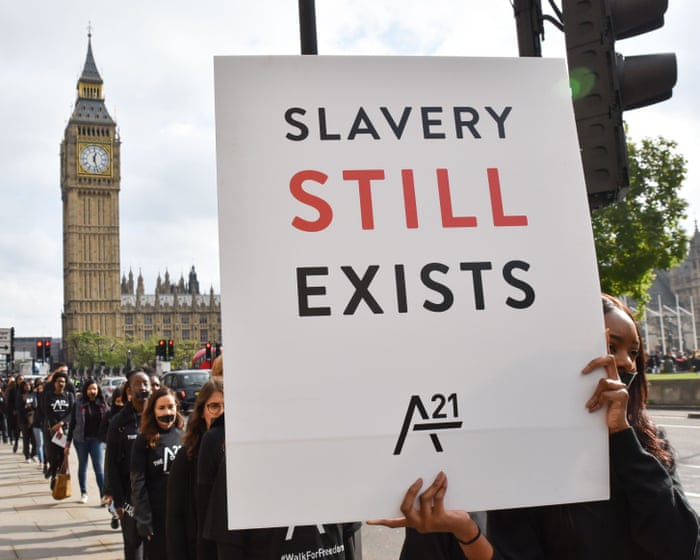
The UK Home Office will allow care workers, chefs, and others identified as victims of modern slavery to change employers without losing their visa status. This change helps workers escape abusive conditions by letting them work for any employer during their visa period if they are officially recognized as victims.
Key Facts
People on skilled worker visas in the UK currently have their immigration tied to one employer who sponsors them.
If these workers leave their abusive employer, they risk losing their visa and might have to leave the UK.
Modern slavery includes forced labor, unpaid wages, threats, confiscated passports, and poor living conditions.
The new rule lets victims who get a “conclusive grounds” decision through the UK’s referral system switch employers without losing their visa.
Over 6,600 UK employers have lost their license to sponsor workers due to abuse, with a 140% increase in the last year.
Officials will refer abusive employers to the police when criminal behavior is found.
The government plans to make it easier for sponsored workers to change jobs in future immigration policies.
The number of skilled worker visas granted has dropped significantly since care worker visa applications were stopped in mid-2025.
Read the Original
Want the full story? Tap a source to open the original
article.
Mitchell Berman, an emergency room nurse, is running as a Democrat to win a Wisconsin House seat held by Republican Bryan Steil. Berman focuses on his working-class background and criticizes policies like tariffs and loss of manufacturing jobs that he says have made life harder for local people.
Key Facts
Mitchell Berman is a Democratic candidate and an emergency room nurse with over 20 years of healthcare experience.
He is running in a swing district in Wisconsin currently held by Republican Bryan Steil.
Berman highlights his working-class and union background to connect with voters.
The district has seen a decline in manufacturing jobs, dropping from 560,000 in 2001 to 460,000 in 2025.
Healthcare jobs have surpassed manufacturing jobs in Wisconsin for the first time.
Tariffs, supported by President Trump and defended by Steil, have caused job losses and increased costs for families in Wisconsin.
Berman says Steil’s policies have failed to lower costs for people and have worsened economic struggles.
Berman draws on experience with union fights for fair pay and benefits and opposes tariffs that broadly hurt manufacturing jobs.
Read the Original
Want the full story? Tap a source to open the original
article.
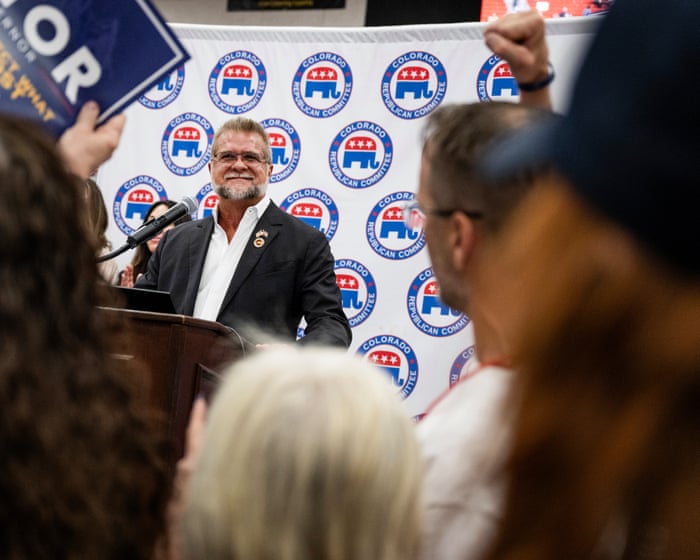
Victor Marx, the Republican nominee for Colorado governor, founded the All Things Possible ministry, which funds surveillance and law enforcement work focused on combatting sex trafficking. His ministry has been involved in controversial practices, including privately funding police salaries and equipment in Florida without public oversight.
Key Facts
Victor Marx is the Republican candidate for governor of Colorado and founder of the All Things Possible ministry (ATP).
ATP focuses on rescuing victims of sex trafficking and has operated internationally and domestically since 2003.
The ministry has funded surveillance equipment and salaries for law enforcement agencies outside Colorado, including in Florida.
Marx’s campaign manager, Harry “Buddy” Jericho, is also involved in ATP and an intelligence company paid by the ministry.
ATP organizes “Skull Games,” events gathering intelligence on trafficking victims and suspects to share with police.
Private donations fund police work in Florida through ATP, raising questions about accountability and influence on law enforcement.
Marx narrowly won the Republican primary despite controversial claims about his past and unusual campaign stories.
ATP and Marx's campaign say they are separate organizations, though some leadership and funding overlap exists.
Read the Original
Want the full story? Tap a source to open the original
article.
A TikTok trend called the "Illiterate Boyfriend" test shows women asking their male partners to pronounce difficult words. Many men struggle with these words, which has sparked discussion online about education differences between men and women in dating.
Key Facts
The "Illiterate Boyfriend" test involves women asking men to pronounce hard words like "gnocchi," "hyperbole," and "hors d’oeuvres."
Many men fail to pronounce several words correctly in the videos shared on TikTok.
The trend has gained millions of views and sparked mixed reactions, with some viewers criticizing men’s vocabulary skills.
A 2024 Pew Research report shows that 47% of women ages 25-34 have a bachelor’s degree, compared to 37% of men the same age.
Experts say there is currently more educated women than men, which affects dating patterns.
Intelligence is rarely listed as a top trait people look for in partners, compared to qualities like humor and kindness.
The test mainly reflects formal spelling knowledge, which may not relate to emotional or social intelligence.
Read the Original
Want the full story? Tap a source to open the original
article.
Gloria Steinem, the feminist activist who died at age 92, was a strong critic of President Donald Trump. She often spoke out against his views and behavior, especially concerning women's rights and sexual misconduct.
Key Facts
Gloria Steinem co-founded Ms. Magazine and was a well-known feminist activist.
She died recently at the age of 92.
Steinem criticized President Trump after his 2016 election win, saying he did not represent her values.
In 2017, she called Trump the "harasser in chief" during discussions about sexual misconduct allegations.
Steinem believed Trump's presidency increased awareness and activism on women's and marginalized groups' issues.
In 2026, when asked what advice she would give Trump on his 80th birthday, she told him to "resign."
Her criticism of Trump remained consistent throughout his political career.
Read the Original
Want the full story? Tap a source to open the original
article.
Laura Loomer, a right-wing activist, used offensive language to insult two Democratic lawmakers, Angie Nixon and LaMonica McIver. Her comments were widely criticized as racist, including a rare public condemnation from Republican Representative Marjorie Taylor Greene.
Key Facts
Laura Loomer called Representative LaMonica McIver a "ghetto black communist b****" on social media.
Loomer made similar remarks about Florida Senate candidate Angie Nixon, mocking her speech and using offensive language.
Marjorie Taylor Greene publicly condemned Loomer's comments as racist and politically harmful.
McIver responded by saying she prayed Loomer would get help.
LaMonica McIver faces federal charges related to an arrest incident at an immigration detention center; she denies wrongdoing and claims political motivation behind the charges.
A federal appeals court allowed two of the charges against McIver to proceed, rejecting her constitutional defense claim.
Loomer refused to back down and defended her remarks despite criticism from members of both political parties.
Greene has previously criticized Loomer for controversial remarks about other political figures, including Vice President Kamala Harris.
Read the Original
Want the full story? Tap a source to open the original
article.
Two Republican members of the U.S. House of Representatives introduced a bill called the "Flock-Off Act" to stop federal funding for flock cameras. The bill would require federally funded flock cameras to be removed and prevent local governments from using federal money to operate them within 180 days.
Key Facts
The bill is called the "Flock-Off Act."
It was introduced by Representatives Thomas Massie (Kentucky) and Eric Burlison (Missouri).
The bill aims to ban federal funding for flock cameras, which are surveillance cameras used for monitoring purposes.
If passed, federally funded flock cameras must be removed, and local governments must stop using them within 180 days.
The bill does not ban flock cameras completely; it only stops the use of federal money for them.
Federal funds could still be used for automated license plate readers (ALPRs) but only for toll-related purposes.
Five other Republican House members have co-sponsored the bill: Lauren Boebert, Paul Gosar, Ro Khanna, Chip Roy, and Victoria Spartz.
The bill responds to public concerns about privacy and possible police abuse linked to these cameras.
Read the Original
Want the full story? Tap a source to open the original
article.
Gloria Steinem, a leading feminist author and activist, has died at age 92 in New York City. She co-founded Ms. Magazine and spent her life speaking out for women's rights and equality.
Key Facts
Gloria Steinem died at 92 years old.
She co-founded Ms. Magazine, a publication focused on women's issues.
Steinem was a well-known figure in the U.S. feminist movement.
She traveled extensively to speak at colleges, rallies, and community centers.
Early in her career, she worked as a journalist and reported undercover on Playboy.
A 1969 meeting about abortion rights inspired her to become an activist.
Steinem had a secret illegal abortion at age 22, which influenced her views.
She said people must meet in person to truly understand each other.
Read the Original
Want the full story? Tap a source to open the original
article.
Gloria Steinem was a key leader in the American feminist movement. She fought for women’s rights like abortion, equal pay, and same-sex marriage, and helped start the feminist magazine Ms.
Key Facts
Gloria Steinem was born in 1934 in Toledo, Ohio.
Her childhood was difficult; her father left when she was 10 and she helped care for her mentally ill mother.
In the late 1950s, Steinem spent two years in India working with women activists.
She undercover reported on the harsh working conditions of Playboy Bunnies in 1963.
By 1968, she was a columnist on social issues and women’s rights for New York Magazine.
Her 1970s article "After Black Power, Women's Liberation" brought her national fame.
In 1972, she co-founded Ms. magazine, the first magazine created by and for women focused on feminist issues.
Steinem spoke out against sexism, the death penalty, and female genital mutilation during her career.
Read the Original
Want the full story? Tap a source to open the original
article.