Three people died in a shooting at a gay bar in Tucson, Arizona, including the shooter. Police are investigating the attack as a possible hate crime and have increased security at other LGBTQIA+ friendly places in the area.
Key Facts
The shooting happened just after midnight on Monday at a gay bar called Venture-N.
Two victims, Vincent Anthony Siqueiros (42) and Cameron Davis Capara (33), were killed at the scene.
The suspected shooter, Ousman Ceesay (44), died later at a hospital.
Ceesay had a note listing several LGBTQIA+ businesses and appeared to target the victims in the parking lot.
Police say there is no current threat to the community but are investigating all leads.
The event is seen as a potential hate crime against the LGBTQIA+ community.
Local groups are organizing a candlelight vigil to honor the victims.
Tucson’s mayor and police chief condemned the shooting as an attack on the LGBTQIA+ community.
Read the Original
Want the full story? Tap a source to open the original
article.
Three people were killed and the shooter died after a shooting outside a gay bar in Tucson, Arizona. Police are investigating the event as a possible hate crime targeting the LGBTQ+ community.
Key Facts
The shooting happened just after midnight at Venture-N, a gay bar in Tucson.
The suspect was 44-year-old Ousman Ceesay, who died after being shot.
Victims included 42-year-old Vincent Anthony Siqueiros and 33-year-old Cameron Davis Capara.
Police found a note with names of LGBTQIA+ businesses on the suspect.
Tucson police said there is no longer any danger to the public.
Officials are treating the incident as a hate crime and the investigation is ongoing.
Tucson’s mayor described the shooting as an attack on the LGBTQ+ community and spoke about the need for better gun safety laws.
LGBTQ+ people in the US face higher risks of violent crime compared to heterosexual people, according to research.
Read the Original
Want the full story? Tap a source to open the original
article.
President Donald Trump signed an order renaming Lake Ontario to "Lake America" for US maps. Google Maps has changed the lake’s name for users in the United States, while Canadian and other international versions still show the original name or both. MapQuest and Apple Maps have refused to rename the lake, with MapQuest gaining app downloads after rejecting the change.
Key Facts
President Trump issued an executive order to rename Lake Ontario as “Lake America” on US maps.
Google Maps updated the lake’s name only for users located in the United States.
In Canada, the lake is still called Lake Ontario, and outside the US, some maps show both names.
Apple Maps and MapQuest continue to use the name Lake Ontario.
MapQuest publicly rejected the name change and saw a large increase in downloads in the US.
The US government’s Geographic Names Information System (GNIS) officially adopted “Lake America.”
The name change is part of ongoing tensions and trade conflicts between the US and Canada.
President Trump promoted the new name using AI-generated images on social media mocking Canada.
Similar renaming efforts include changing the Gulf of Mexico to the “Gulf of America” for US users.
Read the Original
Want the full story? Tap a source to open the original
article.
A South Florida doctor, Wladimir Lorentz, refused to answer questions under the Fifth Amendment during a House hearing about birth tourism, a practice where foreign nationals come to the U.S. to give birth. Lawmakers are investigating how this industry operates and its effects on U.S. immigration and healthcare systems.
Key Facts
Dr. Wladimir Lorentz, founder of Miami Medical Concierge Services, was subpoenaed to testify about birth tourism but declined to answer questions citing a federal investigation.
Birth tourism involves foreign nationals traveling to the U.S. to give birth so their children automatically gain U.S. citizenship.
The company advertised "over 2,000 deliveries of international patients" and provided detailed guides for foreign clients on how to arrange births in the U.S.
Experts estimate about 20,000 to 26,000 birth tourists come to the U.S. each year, with 200,000 to 300,000 children born to foreign nationals in the last decade.
Birth tourism raises concerns about fraud, the financial impact on hospitals and taxpayers, and national security risks.
Children born to birth tourists have full citizenship, allowing them to sponsor their parents for visas later.
Emergency medical care for these births is often covered by Medicaid or charity programs, which can lead to high costs for healthcare systems.
The issue is part of a larger effort by some lawmakers to review and possibly restrict birthright citizenship policies.
Read the Original
Want the full story? Tap a source to open the original
article.
The rise of data centers used for artificial intelligence (AI) has become a surprising political topic in the United States ahead of the midterm elections in November. President Donald Trump criticized people opposing these AI data centers, while Elon Musk urged US companies to find energy sources outside of China to support the growing AI industry.
Key Facts
AI data centers need a lot of energy to run and are rapidly increasing in number.
The issue of AI data centers was discussed at the G20 summit in North Carolina.
Elon Musk told G20 countries that US companies should look for new energy sources outside China.
The growth of AI data centers has sparked political debate in the US before the midterm elections.
President Donald Trump called opponents of these data centers “backwards and poor.”
Amazon Web Services is one of the major companies operating AI data centers in the US.
The topic links technology development with energy concerns and politics.
The discussion shows how AI growth affects US domestic politics and energy policies.
Read the Original
Want the full story? Tap a source to open the original
article.
President Trump named Pastor Darrell Scott as the tobacco health adviser for the Centers for Disease Control and Prevention (CDC). Pastor Scott is known as a long-term supporter of President Trump and has advocated for underserved communities.
Key Facts
President Trump appointed Pastor Darrell Scott as the CDC's tobacco health adviser.
Scott is a longtime supporter of President Trump.
The announcement was made on President Trump's social media platform, Truth Social.
Pastor Scott has worked on issues related to underserved communities in America.
The role involves advising on tobacco-related health matters at the CDC.
Tobacco use causes significant health problems in the U.S.
The CDC is the main public health agency in the United States focused on disease control.
Read the Original
Want the full story? Tap a source to open the original
article.
A federal judge dismissed the remaining claims in a lawsuit filed by Lizzo’s former wardrobe stylist, Asha Daniels, against Lizzo’s production company. The judge ruled that the allegations of bullying, sexual and racial harassment, and disability discrimination did not meet legal standards to proceed.
Key Facts
The lawsuit was filed by Asha Daniels in September 2023 against Lizzo’s production company, Big Grrrl Big Touring, Inc.
Daniels alleged bullying, sexual harassment, racial harassment, and disability discrimination at the workplace.
In 2022, Lizzo was dismissed as an individual defendant in the case.
The judge decided the accusations did not show enough evidence of hostility or discrimination under Title VII (a law against workplace discrimination).
Daniels' claim of disability discrimination related to an injury caused by a wardrobe manager but was ruled not to meet the American Disabilities Act (ADA) standards.
Lizzo has denied all the allegations and called the lawsuits false.
Daniels’ lawyer disagreed with the ruling and said they might take further legal action.
A separate lawsuit by three former backup dancers against Lizzo is still ongoing.
Read the Original
Want the full story? Tap a source to open the original
article.
President Donald Trump supports building more data centers, saying they bring jobs and help the U.S. compete with China. However, many Republican officials have started opposing large data center projects because of concerns about higher electricity costs, water use, and local impacts.
Key Facts
President Trump called data centers important for economic growth and warned that rejecting them could harm communities.
Several Republican governors, senators, and House members are calling for limits or more local control over data center approval.
Many voters, including Trump supporters, are worried about new data centers raising power bills and using too much water.
Polls show a majority of Americans oppose building data centers near their homes.
Critics cite noise, strain on power grids, higher utility bills, and environmental effects as reasons to slow data center growth.
Tech companies like Meta, Microsoft, Amazon, and Google continue to build large AI-focused data centers.
An analysis found that Republican officials have become more negative about data centers in social media and newsletters since April 2024.
There are over 3,000 data centers across the U.S., with many concentrated in states like Virginia, Texas, and California.
Read the Original
Want the full story? Tap a source to open the original
article.
A Pennsylvania police officer has been charged with voluntary manslaughter after fatally shooting a 22-year-old college student who was waiting for friends at the wrong house. The officer reportedly had non-lethal options available but still used deadly force, according to the district attorney.
Key Facts
Glenwood Earl Pysher IV, age 22, was shot and killed by Upper Pottsgrove Police Cpl. Sean Farrell on August 23, 2026.
Pysher was at the wrong house late at night, waiting for friends to pick him up.
Farrell had non-lethal tools on his belt, such as a taser, but did not use them.
Pysher was behind a car, had his hands raised, and was unarmed during the shooting.
The Montgomery County District Attorney, Kevin Steele, charged Farrell with voluntary manslaughter.
Farrell turned himself in to detectives and was awaiting a court hearing via video.
The family’s attorney expressed gratitude to the prosecutor and seeks justice for the shooting.
Body camera footage was reviewed during the investigation.
Read the Original
Want the full story? Tap a source to open the original
article.
Michigan Senate candidate Abdul El-Sayed said President Trump is making him the main focus of the 2024 midterm elections. El-Sayed believes this attention could give him a big platform if he wins in November.
Key Facts
Abdul El-Sayed is running for the U.S. Senate in Michigan as a Democrat.
President Donald Trump has mentioned El-Sayed in relation to the 2024 midterm elections.
El-Sayed said Trump’s attention puts him at the center of the midterms.
He thinks this focus might help him gain more attention if he wins.
The midterm elections will take place in November 2024.
Read the Original
Want the full story? Tap a source to open the original
article.
Emil Michael, a top Pentagon official in charge of military AI policy, sold millions of dollars in stock from AI companies while working at the Pentagon. His stock sales include shares in Elon Musk’s AI company xAI and another firm called Perplexity, raising concerns about conflicts of interest.
Key Facts
Emil Michael oversees military artificial intelligence policy at the Pentagon.
He sold between $5 million and $25 million in stock from the AI company Perplexity in June.
Earlier, he profited between $24 million and more from selling shares in Elon Musk’s xAI.
Michael received a personal loan from Perplexity of up to $500,000 and briefly served on its advisory board.
Ethics rules say he promised not to profit from some unvested stocks, but it is unclear which shares he sold.
Perplexity has a contract with the US government's General Services Administration.
Michael also sold stock from Brex LLC, a financial software company, for $4.25 million to $24 million.
The Pentagon says Michael and other officials follow all ethics laws and rules.
Read the Original
Want the full story? Tap a source to open the original
article.
A Republican congressman, Thomas Massie, accused Leon Black and magician David Copperfield of being co-conspirators with Jeffrey Epstein in sex trafficking. He urged the Department of Justice to investigate them and others, while pushing for new laws to release more withheld files related to Epstein’s crimes.
Key Facts
Thomas Massie accused Leon Black and David Copperfield of helping Jeffrey Epstein with sex trafficking.
Massie asked the Department of Justice to start an immediate investigation.
Nearly a year after President Trump signed the Epstein Transparency Act, millions of related files remain unreleased.
Leon Black faces possible contempt of Congress for not confirming attendance at a House hearing.
Black claims his relationship with Epstein was limited to legal and financial work and denies knowing about Epstein’s crimes until after charges.
The House oversight committee chairman threatened to hold Black in contempt if he does not cooperate.
FBI documents say Copperfield had a “clear connection” with Epstein, but Copperfield denies friendship.
Massie and two other representatives started a petition to force a vote on a new law for more transparency on Epstein files.
Read the Original
Want the full story? Tap a source to open the original
article.
The Lancaster County coroner is investigating the death of a second child who tested positive for measles. This comes as the Trump administration reviews the situation closely.
Key Facts
Lancaster County Coroner Stephen Diamantoni confirmed a second child’s death linked to measles.
The coroner’s office is actively investigating the cause of the deaths.
The deaths have caused concern and led to scrutiny from the Trump administration.
Measles is a contagious viral illness that can be dangerous, especially for young children.
The state is working to understand how the infections spread and caused these fatalities.
Public health officials may increase efforts to prevent further cases.
Read the Original
Want the full story? Tap a source to open the original
article.
Milo Yiannopoulos, a British commentator, has said he regrets supporting President Donald Trump after being detained and deported by the U.S. immigration agency ICE. Yiannopoulos described his treatment during deportation as harsh and said he feels ashamed of his past support for Trump.
Key Facts
Milo Yiannopoulos once supported President Donald Trump.
He was detained and deported by U.S. Immigration and Customs Enforcement (ICE).
Yiannopoulos called his deportation process fast, rough, and harsh.
He criticized the people influencing President Trump’s actions.
Yiannopoulos said he regrets supporting Trump and feels ashamed.
He described his deportation experience as a “politically motivated weekend of hell.”
The comments were made during an interview on Piers Morgan Uncensored.
Yiannopoulos’s statement reflects personal views on his past political support after his deportation experience.
Read the Original
Want the full story? Tap a source to open the original
article.
Two Democratic members of the U.S. House of Representatives supported Republican bills without telling their party leaders beforehand. This surprised House Democratic leaders as the bills were important for Republican messaging before the midterm elections.
Key Facts
Two Democrats, Rep. Jared Golden from Maine and Rep. Marie Gluesenkamp Perez, voted with Republicans.
Their votes helped the Republican Party move forward with certain bills.
House Democratic leaders had no prior notice about these members crossing party lines.
Rep. Katherine Clark, the Democratic whip, expressed being blindsided by this action.
The votes occurred ahead of the important midterm election season.
The bills supported were primarily for Republican messaging purposes.
This event shows divisions or unexpected actions within the Democratic Party in the House.
Such cross-party votes can affect party strategies and legislative outcomes.
Read the Original
Want the full story? Tap a source to open the original
article.
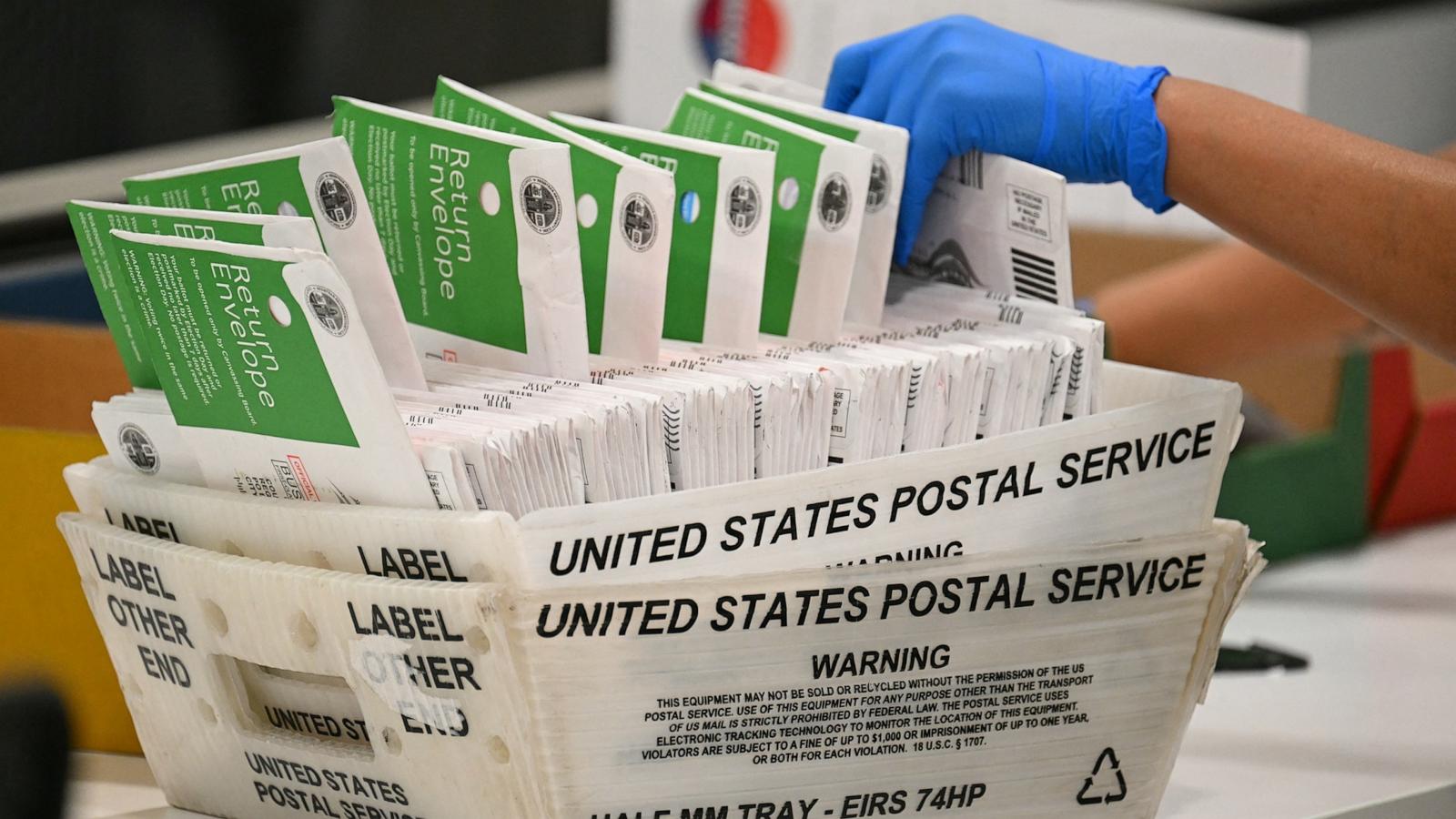
A whistleblower warned that the U.S. Postal Service’s new mail-in ballot system, proposed by President Donald Trump, is rushed and flawed. They said this system could cause major problems and possibly disrupt the upcoming midterm elections by rejecting or mishandling ballots.
Key Facts
The USPS is developing a new electronic system to track mail-in ballots, requiring states to send voter information linked to barcodes on ballots.
Postal workers would only deliver ballots to voters listed in the state-provided database.
A whistleblower with direct knowledge described the system as rushed, chaotic, and prone to "catastrophic failures."
The new USPS system is currently paused by a federal judge due to legal challenges about its lawfulness.
The first mail-in ballots under the current system will be sent soon to overseas military voters from North Carolina.
Critics, including voter advocates, fear the system could prevent some eligible voters from getting ballots because of added bureaucracy and possible errors.
Senator Richard Blumenthal sent a letter to the USPS Postmaster General demanding answers and urging the USPS to stop the plan.
There are allegations that USPS may have continued working on the system despite court orders to pause.
Read the Original
Want the full story? Tap a source to open the original
article.
The House of Representatives approved a funding plan that keeps the U.S. government running until December 11. This decision prevents a government shutdown just before the November midterm elections.
Key Facts
The House passed a continuing resolution to fund the government.
The funding will last through December 11, 2026.
The vote was supported by members from both political parties.
This action stops a potential government shutdown.
The decision was made ahead of the midterm elections in November 2026.
The Senate is expected to vote on the final approval of the resolution soon.
A government shutdown means many federal services stop because funding runs out.
Read the Original
Want the full story? Tap a source to open the original
article.
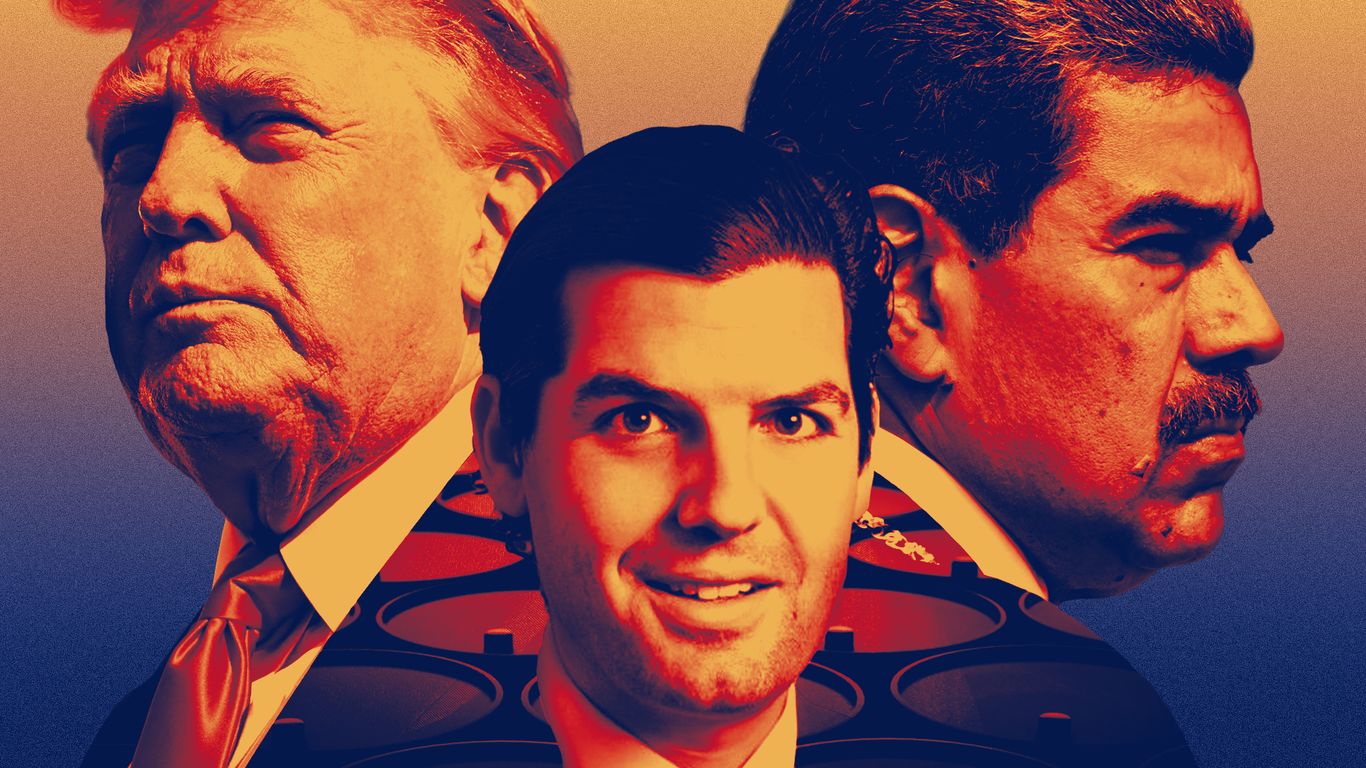
U.S. officials are working with Venezuelan businessman Alejandro Betancourt to gain control over large oilfields in Venezuela. The Pentagon holds a stake in Betancourt’s company, giving the U.S. rights to buy oil at cost, and officials defend this deal as a practical way to increase American access to oil despite Betancourt’s controversial background.
Key Facts
Alejandro Betancourt leads North American Blue Energy Partners, the company partnering with the U.S. government in Venezuela.
The Pentagon’s Office of Strategic Capital owns 35% of the company.
The U.S. can buy 20% of the oil output at cost after the company pays Venezuelan taxes.
U.S. officials describe Betancourt as a proven oil operator vetted by the administration.
Betancourt has past ties to the Trump administration and helped activities against Venezuelan leader Nicolás Maduro.
In 2018, Betancourt was named a "conspirator" in a money laundering case but was never charged due to lack of evidence.
Swiss authorities paused legal proceedings, allowing Betancourt to travel and finalize the oil deal.
Some experts question the legality and long-term impact of the U.S.-Venezuela oil agreement.
Read the Original
Want the full story? Tap a source to open the original
article.
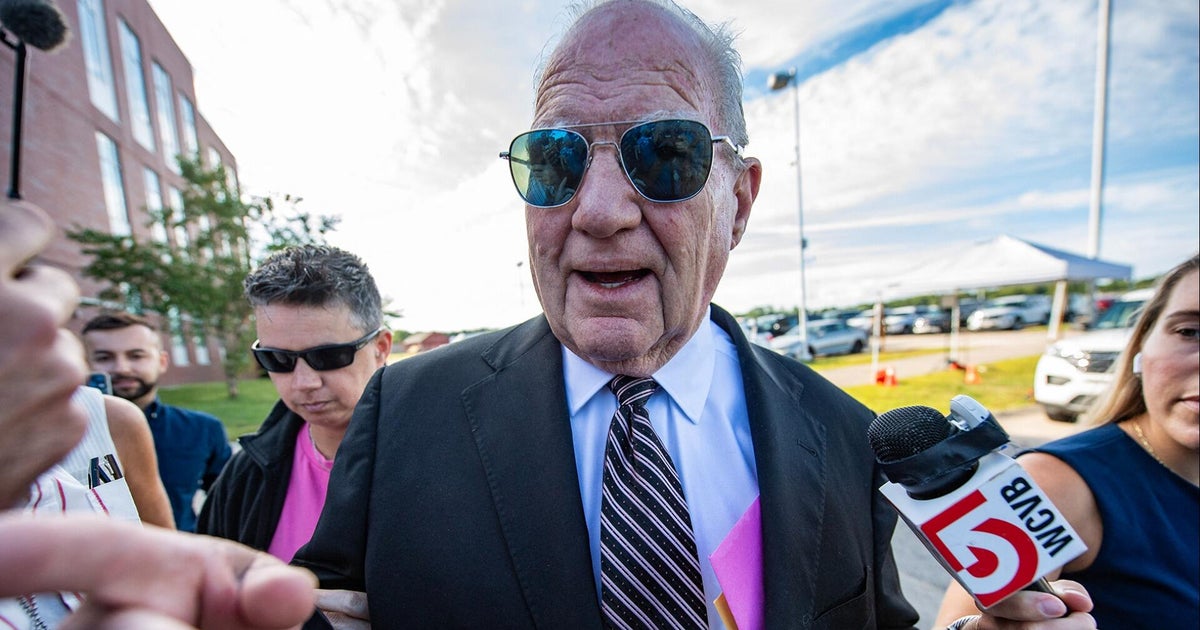
Many people have gathered at a courthouse in Massachusetts where Lindsay Clancy's trial is underway. These people want to meet her defense lawyer, Kevin Reddington.
Key Facts
Lindsay Clancy is on trial in Massachusetts.
Kevin Reddington is her defense attorney.
Supporters have come to the courthouse to meet Kevin Reddington.
The event has attracted public interest and media coverage.
CBS News reporter Shanelle Kaul is reporting on the situation.
Read the Original
Want the full story? Tap a source to open the original
article.
Two Democratic members of Congress voted with Republicans to approve a set of bills supported by the GOP. This helped stop some conservative Republicans from blocking the vote and allowed Speaker Mike Johnson’s plans for the week to move forward.
Key Facts
Two Democrats joined Republicans to advance GOP-backed bills.
The vote passed with a tally of 210 in favor and 208 against.
Five Republicans voted against the bills, showing some dissent.
Speaker Mike Johnson (R-La.) was leading the agenda that the bills were part of.
This kind of cross-party voting is uncommon.
The move prevented conservatives from blocking the vote.
Representatives Jared Golden and another Democrat were part of the cross-party votes.
Read the Original
Want the full story? Tap a source to open the original
article.