David Becker, a CBS News election expert, said there is not enough time to put into effect President Donald Trump’s executive order that would limit mail voting. He believes the order will almost certainly not be applied for the 2026 elections.
Key Facts
President Donald Trump issued an executive order to restrict mail voting.
David Becker is an election analyst for CBS News.
Becker said there is "no time" to start this order before upcoming elections.
He stated the order will likely not affect the 2026 elections.
The discussion was on the CBS News program "Face the Nation with Margaret Brennan."
Read the Original
Want the full story? Tap a source to open the original
article.
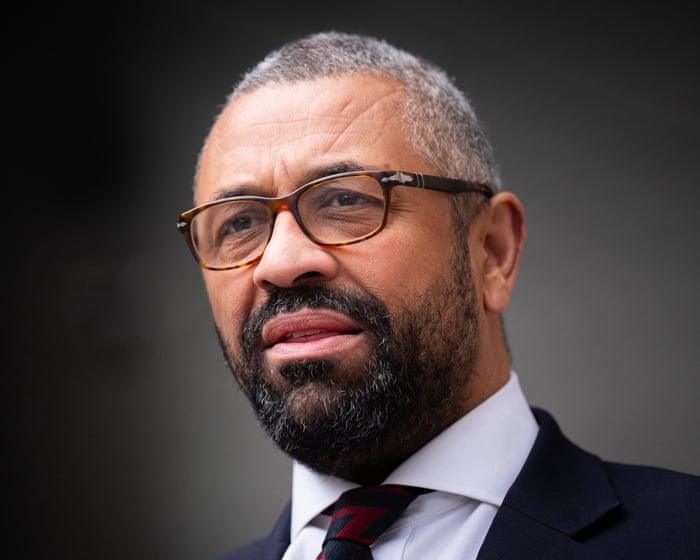
James Cleverly plans to run as the Conservative candidate for London mayor with a focus on traditional Conservative values like business and opportunity. He aims to appeal to moderate voters and support Kemi Badenoch's leadership, avoiding divisive culture war topics.
Key Facts
James Cleverly wants to be the next mayor of London for the Conservative Party.
He says his campaign will focus on business and opportunity, traditional Conservative ideas.
Cleverly supports Conservative leader Kemi Badenoch and denies resigning because of party shifts.
He plans a milder campaign than Susan Hall, the last Conservative mayoral candidate.
Cleverly is seen as moderate compared to other Conservatives moving more to the right.
The London mayoral election system in 2028 allows voters to choose a first and second preference.
Cleverly may try to attract Liberal Democrat voters to improve his chances.
Current mayor Sadiq Khan might seek a fourth term despite some voters wanting a new candidate.
Read the Original
Want the full story? Tap a source to open the original
article.
Rep. Ro Khanna said that if Rep. Alexandria Ocasio-Cortez decides to run for president in 2028, it will not change his own plan to possibly run. He gave this answer during a CNN interview on the show "State of the Union."
Key Facts
Rep. Ro Khanna is a Democrat from California.
Rep. Alexandria Ocasio-Cortez is a Democrat from New York.
Ocasio-Cortez is considering running for president in 2028.
Khanna said her potential run would not affect his own decision about running.
The discussion took place on CNN's "State of the Union" program.
Dana Bash is the CNN host who asked Khanna the question.
Both are considered part of the progressive wing of the Democratic Party.
Khanna’s answer was given in a straightforward way, with no further detail about his own plans.
Read the Original
Want the full story? Tap a source to open the original
article.
Senator Ted Cruz said the U.S. is working on several operations related to the conflict with Iran. He supported President Donald Trump’s message describing these efforts as "accomplished," despite the war reaching six months.
Key Facts
Senator Ted Cruz spoke about U.S. activity in the conflict with Iran on Sunday.
The conflict with Iran has lasted six months as of Friday.
President Donald Trump posted a message on Truth Social saying "Mission accomplished" about U.S. efforts.
NBC’s Kristen Welker showed this message to Senator Cruz during an interview.
Cruz said the U.S. is involved in more than one mission connected to the conflict.
Cruz defended the Trump administration’s handling of the conflict.
Read the Original
Want the full story? Tap a source to open the original
article.
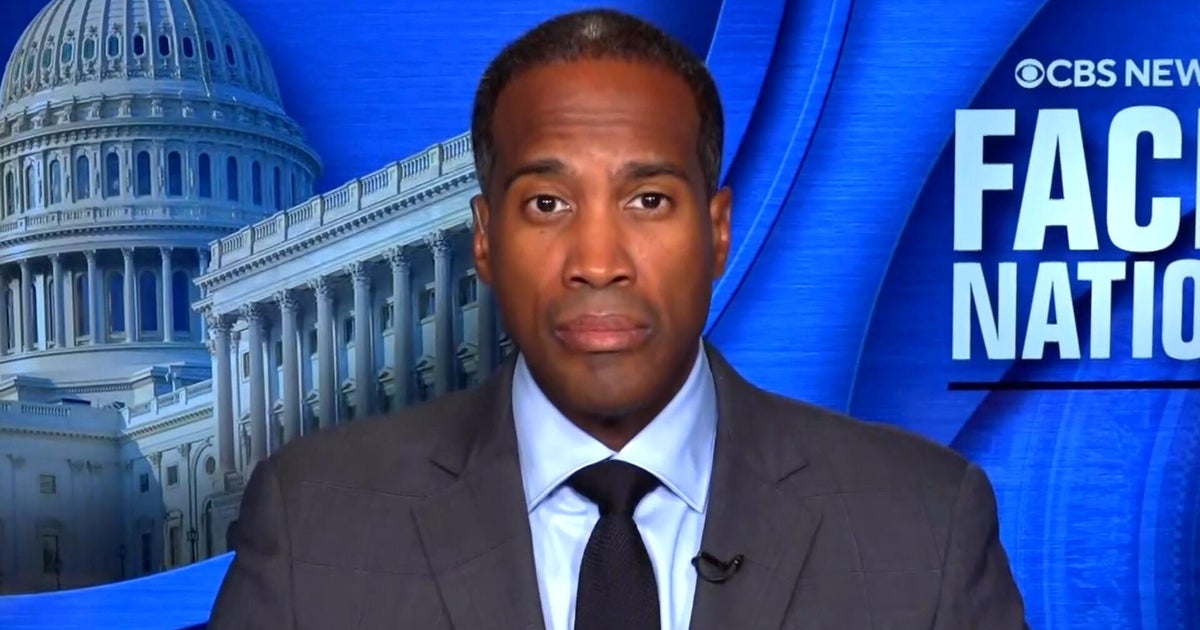
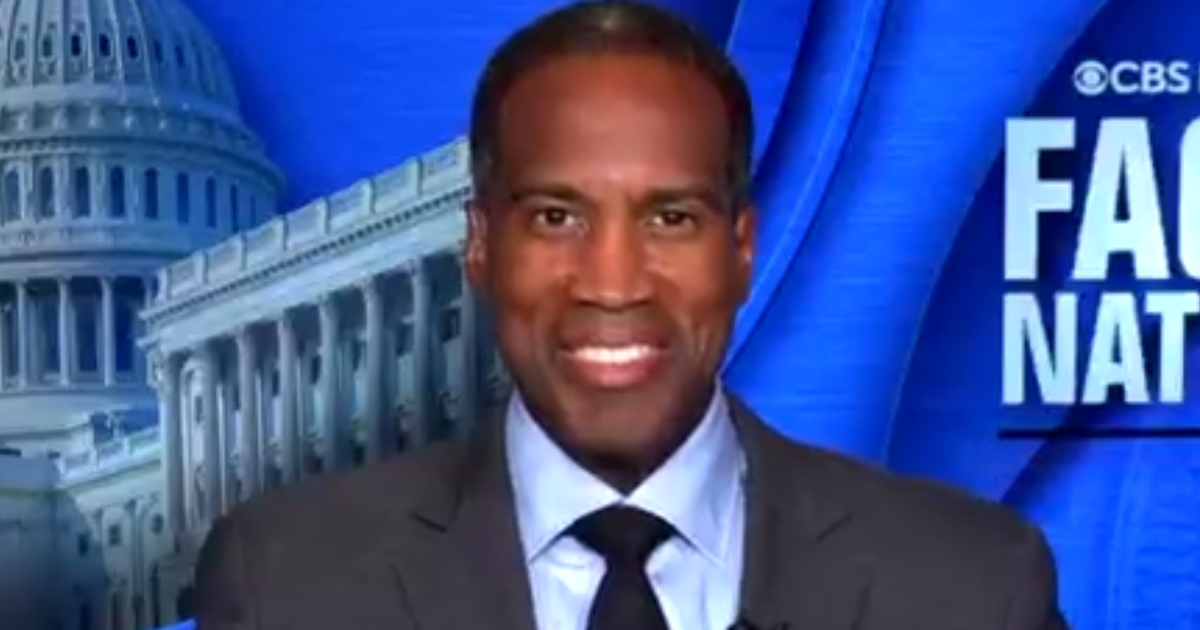
John James, a Republican running for governor of Michigan, spoke about the ongoing trade conflict between the U.S. and Canada. He said the tariffs should not hurt people in Michigan, especially those working in the auto industry.
Key Facts
John James is a Republican candidate for governor in Michigan.
There is a trade war between the United States and Canada.
This trade conflict may affect Michigan and its auto industry.
James said tariffs should not negatively impact Michigan residents.
He has communicated with members of the U.S. trade team about this issue.
The statement was made during an interview on the TV show "Face the Nation."
Michigan's economy relies heavily on the auto industry, which could be vulnerable to tariffs.
Read the Original
Want the full story? Tap a source to open the original
article.
The mayor of Olive Branch, Mississippi, Ken Adams, questioned the decision to lower flags to half-staff nationwide to honor Dolly Parton. President Donald Trump ordered flags to be lowered for seven days after Parton's death, but Adams said this honor should be reserved for military heroes, presidents, and major national events.
Key Facts
Dolly Parton died on August 25 at the age of 80.
President Donald Trump ordered U.S. flags to fly at half-staff nationwide for seven days for Parton.
Ken Adams, mayor of Olive Branch, Mississippi, expressed concerns that lowering flags for every well-known person could lessen the gesture’s meaning.
Adams said the honor of lowering flags should be reserved for military heroes, presidents, first responders, or major national events.
Adams emphasized local government should have a say in such decisions, with mayors for cities, governors for states, and the president for the country.
Adams clarified his stance was not disrespectful toward Dolly Parton or political, but about the significance of the flag gesture.
Olive Branch has about 47,000 residents and Adams was elected mayor in 2021.
Adams has a background as a county judge and FedEx leader and is described as a Republican.
Read the Original
Want the full story? Tap a source to open the original
article.
Five years after the U.S. military left Afghanistan, Afghan people living in the United States face many challenges. Since President Donald Trump took office for his second term in 2024, his administration has used new rules to reduce the number of Afghan refugees allowed to enter and to deport some Afghans already in the U.S.
Key Facts
It has been five years since the U.S. withdrew its military forces from Afghanistan.
Afghan citizens in the U.S. are experiencing difficult conditions compared to when they first arrived.
President Donald Trump began his second term in 2024.
Since then, his administration has applied new measures to deport some Afghans.
The administration has also reduced the number of Afghan refugees allowed to come to the U.S.
These changes affect both Afghan people already living in the U.S. and those seeking to enter the country.
The situation marks a significant change from previous refugee policies involving Afghans.
Read the Original
Want the full story? Tap a source to open the original
article.
A shooting occurred early Sunday morning at a block party in Trenton, New Jersey, leaving two people dead and eight others injured. Police and the prosecutor are investigating the incident, which involved multiple shooters firing into a crowd on a residential street.
Key Facts
The shooting took place around 12:25 a.m. on the 100 block of Locust Street in East Trenton.
Two people, a 33-year-old woman and a 42-year-old man, died from gunshot wounds.
Eight other victims, including two men and six women aged 23 to 43, were wounded and stabilized.
The shooting happened during a large, unauthorized adult gathering with about 100 people.
More than 50 spent shell casings were found at the scene, and several vehicles were hit by gunfire.
Trenton officials are planning measures to prevent similar unauthorized gatherings in residential areas.
The Mercer County Prosecutor’s Office Homicide Task Force is leading the investigation.
Local leaders, including the mayor and council members, are urging community support and information sharing to help law enforcement.
Read the Original
Want the full story? Tap a source to open the original
article.
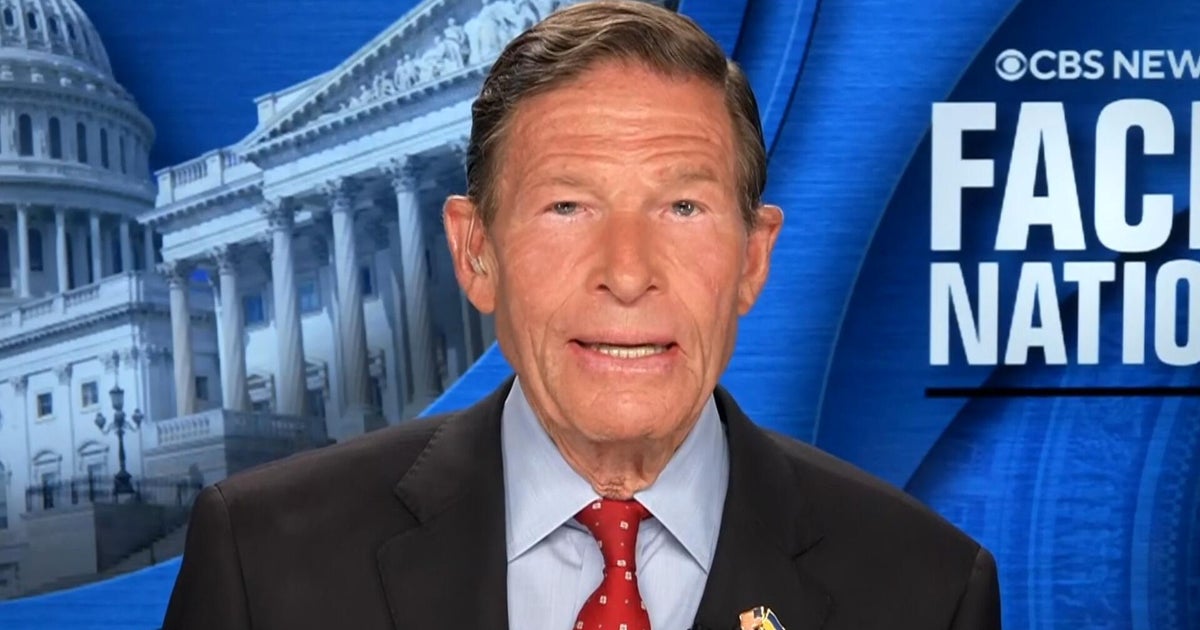
Senator Richard Blumenthal, a Democrat from Connecticut, called on the House of Representatives to pass a bill imposing sanctions on Russia. He described the situation as urgent after returning from a trip to the Ukraine region.
Key Facts
Senator Richard Blumenthal is from Connecticut.
He recently visited the Ukraine region.
Blumenthal wants the House to pass a Russia sanctions bill.
The Senate has already passed this sanctions bill.
He called the current moment one of "extreme urgency."
The discussion took place on the TV program "Face the Nation."
The sanctions bill targets Russia amid ongoing concerns related to Ukraine.
Read the Original
Want the full story? Tap a source to open the original
article.
Rep. John James, Republican nominee for governor in Michigan, discussed concerns about his opponents’ associations, the ongoing war with Iran, and economic issues affecting Michigan during an interview on "Face the Nation." He supports diplomatic and economic efforts to prevent Iran from obtaining nuclear weapons and plans to focus on lowering living costs in Michigan by reducing regulations.
Key Facts
Rep. John James is a Republican Congressman from Michigan and the state's gubernatorial candidate.
He accused some Senate candidates of associating with extremists who made controversial remarks about 9/11.
James served in the military, graduating from West Point in 2004 and values reducing the cost of war.
He supports the current U.S. administration’s diplomatic and economic strategy to prevent Iran from acquiring nuclear weapons.
The war with Iran has lasted longer than initially expected, and many Americans disapprove of it.
James aims to lower energy, housing, and healthcare costs in Michigan by reducing government regulations.
Michigan depends heavily on trade with Canada, which is responding to U.S. tariffs with matching tariffs starting September 8.
James has knowledge of Michigan’s automotive industry, which could be impacted by trade disputes.
Read the Original
Want the full story? Tap a source to open the original
article.
Three teenagers have been charged with the murder of a 17-year-old boy named David Wynter, who was stabbed at Brent Civic Centre in Wembley on August 25. Police continue to investigate and have asked the public to share any information or videos related to the case.
Key Facts
David Wynter, 17, died after being stabbed at Brent Civic Centre on August 25.
A 15-year-old boy was charged with murder two days after the stabbing.
Two more individuals, a 17-year-old and an 18-year-old named Jahquarn St Hillaire, were charged with murder and carrying a weapon on Saturday.
A 20-year-old man, Diego Farquharson, was charged with helping an offender.
The 15-year-old is in custody and will appear at the Old Bailey court on September 24.
The other two teenagers will appear at Willesden Magistrates' Court on Monday.
Police have increased patrols in the area following the incident.
David Wynter’s family is receiving support from the Metropolitan Police.
Read the Original
Want the full story? Tap a source to open the original
article.
Mass shootings happened overnight in two U.S. cities, Chicago and Trenton, New Jersey. Three people died and 18 others were injured during the shootings, and police are still investigating.
Key Facts
A shooting occurred around 11:37 p.m. in Washington Park on Chicago’s South Side, killing one man and injuring nine others.
Victims in Chicago ranged in age from 23 to 45 years old, including five men and four women.
Police did not immediately announce any arrests and said there may have been more than one shooter in Chicago.
In Trenton, New Jersey, at least two people were killed and nine others injured in a shooting in a residential area early Sunday morning.
The Trenton shooting took place on Locust Street in the Greenwood & Hamilton neighborhood.
The injured in Trenton were treated at Capital Health Regional Medical Center; no arrest was announced.
Police and homicide investigators in both cities continue to look into the reasons and details behind the shootings.
No police officers were hurt in either shooting incident.
Read the Original
Want the full story? Tap a source to open the original
article.
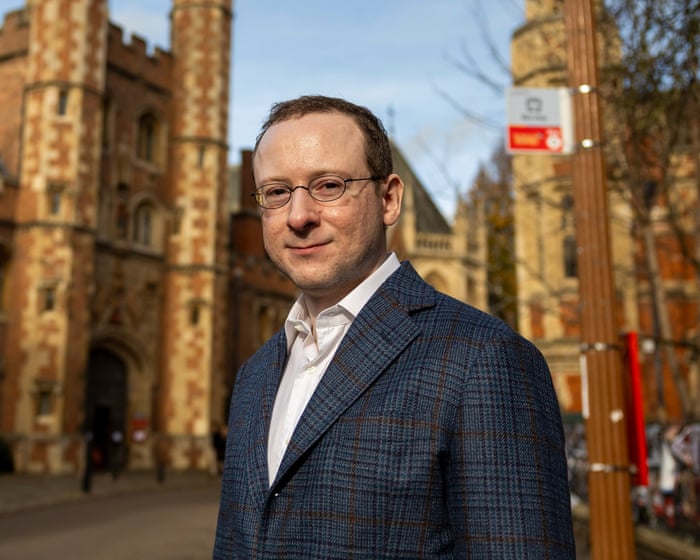
Nathan Cofnas, an American academic at Ghent University, has been banned from teaching on campus for three months but can continue his research remotely. The university took this action after a review connected to allegations against Cofnas and the death of sociologist Jason Arday, who had been accused of plagiarism by Cofnas.
Key Facts
Nathan Cofnas was suspended from teaching on Ghent University’s campus for three months but is permitted to work on his research from home.
Cofnas’s suspension followed an investigation launched after the death of Jason Arday, who Cofnas had accused of plagiarism.
Ghent University limited Cofnas’s activities to his original research topics during the disciplinary period.
The US ambassador to Belgium, Bill White, criticized the suspension and helped negotiate an agreement allowing Cofnas to continue his work.
Cofnas has faced controversy for allegations of having a far-right agenda and limited expertise in his research area.
Jason Arday was found dead on August 14, shortly after Cofnas’s plagiarism accusation.
Cofnas is known for criticizing some policies of President Donald Trump but also voted for him and remains a registered Republican.
The university is still investigating to decide if further disciplinary action is needed.
Read the Original
Want the full story? Tap a source to open the original
article.
President Donald Trump said he will report NBC News host Kristen Welker to the Federal Communications Commission (FCC). He was upset because Welker said that candidates he supports have had mixed results in recent elections.
Key Facts
President Trump plans to report Kristen Welker to the FCC.
Kristen Welker is the host of NBC’s “Meet the Press.”
Welker commented that candidates supported by Trump have had mixed success in the latest elections.
Trump criticized Welker’s hosting of the program.
The FCC is a government agency that regulates TV and radio broadcasts.
The report could lead to a review or punishment.
The dispute arose from political coverage on a national TV show.
Read the Original
Want the full story? Tap a source to open the original
article.
If the United States stops changing clocks for daylight saving time, summer mornings could start earlier and be darker for a longer time. This would happen because the country would stay on standard time all year, changing how daylight fits into daily schedules.
Key Facts
Daylight saving time means setting clocks forward in spring and back in fall to have more evening daylight.
Permanent standard time means clocks stay the same all year without changes.
Without daylight saving, summer sunrises would happen earlier, possibly before 5 a.m. in many places.
Early sunrises mean mornings could be dark longer during summer months.
How people experience daylight affects sleep, school start times, and activities.
Some experts suggest permanent standard time could improve health by aligning better with natural body clocks.
Others worry earlier dark evenings could affect businesses and evening activities.
Read the Original
Want the full story? Tap a source to open the original
article.
White House border official Tom Homan denied claims that ICE is arresting parents at bus stops in Connecticut. Senator Chris Murphy had suggested that this was happening, but Homan said there is no evidence of such arrests in the past two years.
Key Facts
Tom Homan is the White House border czar.
Senator Chris Murphy made claims about ICE arresting parents at bus stops.
These alleged arrests were said to have occurred in Connecticut.
Homan said no one can show any example of such arrests in elementary school areas in the last two years.
The discussion relates to immigration enforcement activities by ICE.
Homan's comments came during a Sunday interview.
Read the Original
Want the full story? Tap a source to open the original
article.
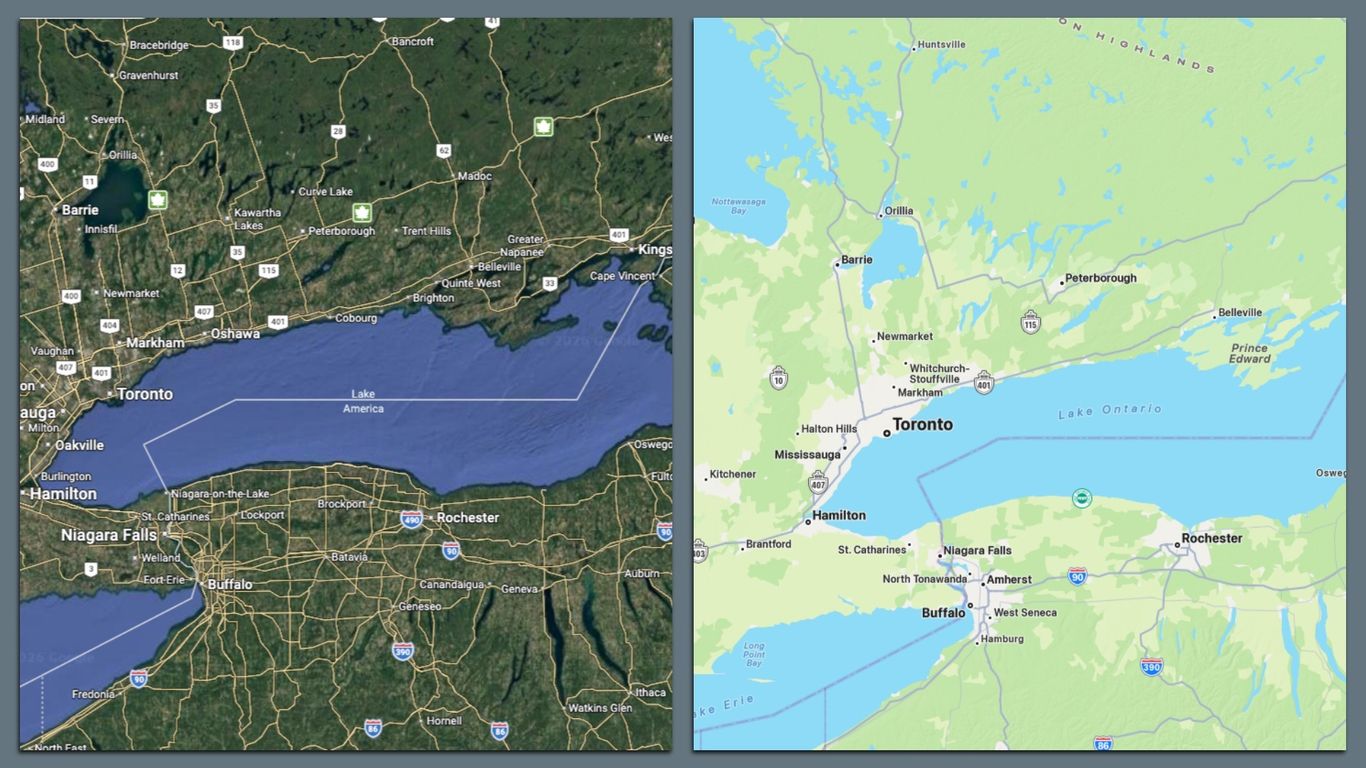
President Donald Trump issued an order to rename Lake Ontario as "Lake America." Google Maps updated its name in the U.S. to "Lake America," while Apple Maps and MapQuest continue to use "Lake Ontario." This decision has caused debate among tech companies and political leaders.
Key Facts
President Donald Trump signed an executive order on August 27 to rename Lake Ontario as "Lake America."
Google Maps updated the lake’s name to "Lake America" for users inside the U.S., but still shows "Lake Ontario" for users outside the U.S.
Google’s change follows updates from the U.S. Geographic Names Information System (GNIS), an official government source.
Apple Maps and MapQuest have not changed the lake’s name and continue to use "Lake Ontario."
MapQuest explicitly said it will not change the name despite the order.
Ontario Premier Doug Ford criticized the name change, saying it would not be accepted locally.
Google’s name change approach is similar to a prior case when it renamed the Gulf of Mexico to "Gulf of America" after a Trump order.
Some U.S. Democrats plan to introduce a bill to counter President Trump’s "Lake America" order.
Read the Original
Want the full story? Tap a source to open the original
article.
Police have released one man arrested in connection with a deadly house fire in Grangetown, Middlesbrough, while a second man remains in custody. The fire killed a woman and her seven-year-old niece and seriously injured others.
Key Facts
A 31-year-old man was arrested for murder but has now been released without charges.
A 23-year-old man is still being questioned by police about the fire.
The fire happened early on a Wednesday in Grangetown, near Middlesbrough.
Natalie McDonald, 34, and her niece Valentina Foster, 7, died in the fire.
A 48-year-old woman is in critical condition in the hospital.
Three more people suffered injuries that are not life-threatening.
Police said they are still investigating what caused the fire.
Authorities confirmed that the fire is not connected to a recent fatal crash on the A66 highway.
Read the Original
Want the full story? Tap a source to open the original
article.
Google has started changing the name of Lake Ontario to "Lake America" on its maps in the U.S. after President Donald Trump signed an executive order to rename the lake. The lake will still show as "Lake Ontario" in Canada, while other countries will see both names, following Google’s policy on different place names.
Key Facts
President Donald Trump signed an order to rename Lake Ontario as "Lake America."
The lake lies between Ontario, Canada, and New York State, USA.
Google maps shows "Lake America" only to users in the United States.
Canadian users see the lake labeled as "Lake Ontario."
Elsewhere, Google displays both names with "Lake America" in parentheses.
The name change follows a trade conflict and tariff imposition between the U.S. and Canada.
The U.S. Interior Secretary was directed to update the official U.S. geographic names database.
Similar changes were made earlier for the Gulf of Mexico, renamed the "Gulf of America" in U.S. federal use.
Read the Original
Want the full story? Tap a source to open the original
article.
The Trump administration sent over 100 deported people from countries like Afghanistan, Cuba, and Nicaragua to eight African nations in about 10 days. These deportees were sent to countries where they had no ties, as part of a broader U.S. effort to deport people to "third countries" instead of their home nations.
Key Facts
ICE flew deportees from Afghanistan, Cuba, Nicaragua, and other countries to Burundi, Cameroon, Central African Republic, Equatorial Guinea, Eswatini, Liberia, Rwanda, and Sierra Leone.
None of the deportees had connections to the African countries where they were sent.
Deportees included people from Iran, Nepal, Turkey, Venezuela, and some African detainees sent to other African countries.
More than 30 countries worldwide have agreements to receive deportees from the U.S., including some in Latin America and Africa.
Some African countries receiving deportees face armed conflict, political instability, and human rights problems.
Deportees sent to Africa included both people with criminal records and those without serious offenses, such as illegal entry.
One Afghan deportee had legal protections due to helping American forces but was still sent to the Central African Republic, a dangerous country under a strong U.S. travel warning.
The Department of Homeland Security said deportees can choose to go to their home country or another safe country and receive a free flight and $3,000 if they choose to go home.
Read the Original
Want the full story? Tap a source to open the original
article.