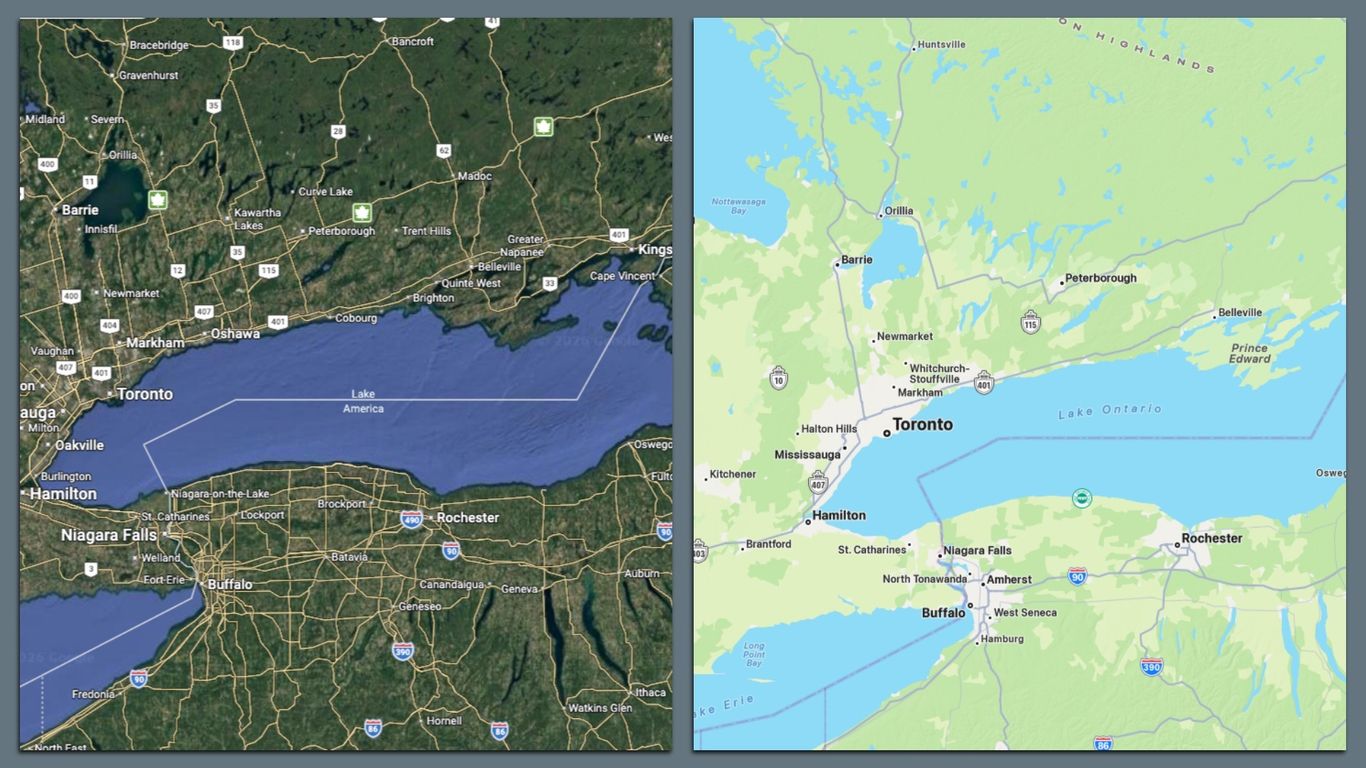
President Donald Trump issued an order to rename Lake Ontario as "Lake America." Google Maps updated its name in the U.S. to "Lake America," while Apple Maps and MapQuest continue to use "Lake Ontario." This decision has caused debate among tech companies and political leaders.
Key Facts
President Donald Trump signed an executive order on August 27 to rename Lake Ontario as "Lake America."
Google Maps updated the lake’s name to "Lake America" for users inside the U.S., but still shows "Lake Ontario" for users outside the U.S.
Google’s change follows updates from the U.S. Geographic Names Information System (GNIS), an official government source.
Apple Maps and MapQuest have not changed the lake’s name and continue to use "Lake Ontario."
MapQuest explicitly said it will not change the name despite the order.
Ontario Premier Doug Ford criticized the name change, saying it would not be accepted locally.
Google’s name change approach is similar to a prior case when it renamed the Gulf of Mexico to "Gulf of America" after a Trump order.
Some U.S. Democrats plan to introduce a bill to counter President Trump’s "Lake America" order.
Read the Original
Want the full story? Tap a source to open the original
article.
Police have released one man arrested in connection with a deadly house fire in Grangetown, Middlesbrough, while a second man remains in custody. The fire killed a woman and her seven-year-old niece and seriously injured others.
Key Facts
A 31-year-old man was arrested for murder but has now been released without charges.
A 23-year-old man is still being questioned by police about the fire.
The fire happened early on a Wednesday in Grangetown, near Middlesbrough.
Natalie McDonald, 34, and her niece Valentina Foster, 7, died in the fire.
A 48-year-old woman is in critical condition in the hospital.
Three more people suffered injuries that are not life-threatening.
Police said they are still investigating what caused the fire.
Authorities confirmed that the fire is not connected to a recent fatal crash on the A66 highway.
Read the Original
Want the full story? Tap a source to open the original
article.
Google has started changing the name of Lake Ontario to "Lake America" on its maps in the U.S. after President Donald Trump signed an executive order to rename the lake. The lake will still show as "Lake Ontario" in Canada, while other countries will see both names, following Google’s policy on different place names.
Key Facts
President Donald Trump signed an order to rename Lake Ontario as "Lake America."
The lake lies between Ontario, Canada, and New York State, USA.
Google maps shows "Lake America" only to users in the United States.
Canadian users see the lake labeled as "Lake Ontario."
Elsewhere, Google displays both names with "Lake America" in parentheses.
The name change follows a trade conflict and tariff imposition between the U.S. and Canada.
The U.S. Interior Secretary was directed to update the official U.S. geographic names database.
Similar changes were made earlier for the Gulf of Mexico, renamed the "Gulf of America" in U.S. federal use.
Read the Original
Want the full story? Tap a source to open the original
article.
The Trump administration sent over 100 deported people from countries like Afghanistan, Cuba, and Nicaragua to eight African nations in about 10 days. These deportees were sent to countries where they had no ties, as part of a broader U.S. effort to deport people to "third countries" instead of their home nations.
Key Facts
ICE flew deportees from Afghanistan, Cuba, Nicaragua, and other countries to Burundi, Cameroon, Central African Republic, Equatorial Guinea, Eswatini, Liberia, Rwanda, and Sierra Leone.
None of the deportees had connections to the African countries where they were sent.
Deportees included people from Iran, Nepal, Turkey, Venezuela, and some African detainees sent to other African countries.
More than 30 countries worldwide have agreements to receive deportees from the U.S., including some in Latin America and Africa.
Some African countries receiving deportees face armed conflict, political instability, and human rights problems.
Deportees sent to Africa included both people with criminal records and those without serious offenses, such as illegal entry.
One Afghan deportee had legal protections due to helping American forces but was still sent to the Central African Republic, a dangerous country under a strong U.S. travel warning.
The Department of Homeland Security said deportees can choose to go to their home country or another safe country and receive a free flight and $3,000 if they choose to go home.
Read the Original
Want the full story? Tap a source to open the original
article.
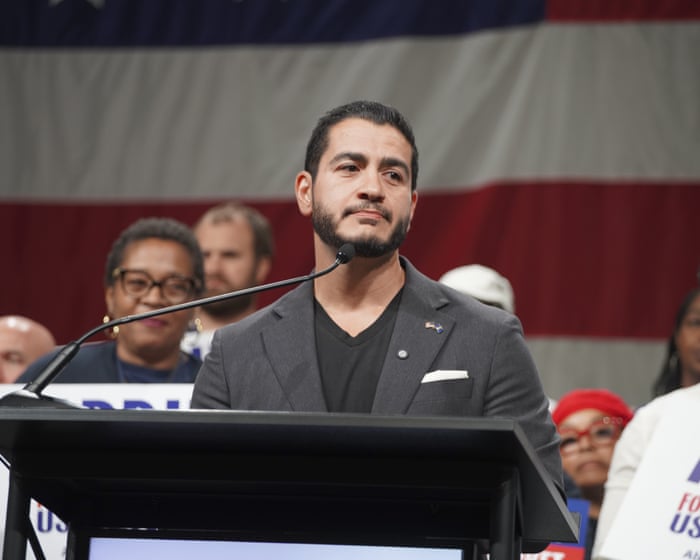
Michigan Democratic Senate candidate Abdul El-Sayed apologized for comments he made after a March attack on a synagogue. He said his words were misunderstood and he did not mean to justify the attack.
Key Facts
Abdul El-Sayed is running for U.S. Senate in Michigan as a Democrat.
He apologized to the Michigan Jewish Democratic Caucus for comments made after a synagogue attack.
The attack involved a man driving into a synagogue and shooting a security guard before dying by suicide.
The attacker lost family members in an Israeli airstrike on Lebanon the week before.
El-Sayed said his earlier comments tried to explain, not justify, the attacker's actions.
He has faced criticism and allegations of antisemitism linked to his remarks and associations.
El-Sayed defeated Haley Stevens in the Democratic primary and will face Republican Mike Rogers in November.
The Senate race is important in deciding control of the U.S. Senate after the midterm elections.
Read the Original
Want the full story? Tap a source to open the original
article.
Accessory Dwelling Units (ADUs) are small homes built on the same property as a main house, often in the backyard. These homes have become important in the western United States as wildfires have destroyed houses, creating a need for more affordable and available housing.
Key Facts
ADUs are separate, fully usable homes located on the same land as a main house.
They are sometimes called carriage houses or "granny flats."
Wildfires in the western U.S. have displaced many people from their homes.
ADUs provide a housing option where traditional housing is limited or costly.
There are practical and legal challenges in creating and using ADUs.
ADUs can help address housing shortages by using existing property spaces.
Local rules and laws affect how easy it is to build and use ADUs.
Read the Original
Want the full story? Tap a source to open the original
article.
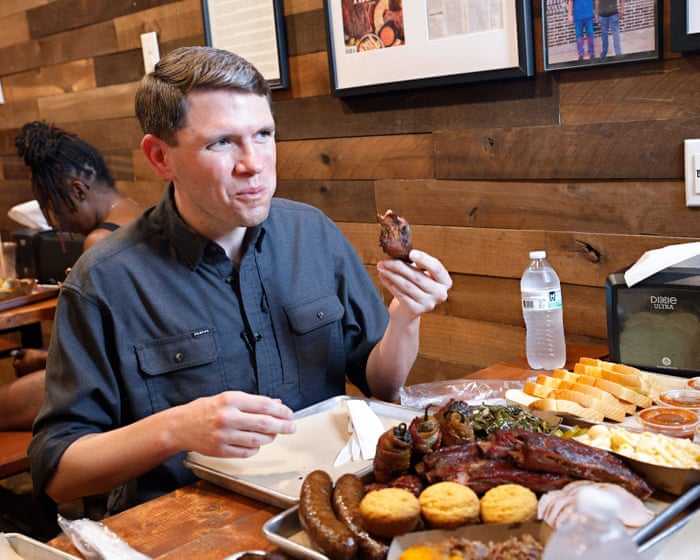
U.S. Republicans have started using the word "vegan" as an insult against their political opponents. Some Democratic candidates have faced attacks linking their plant-based diets or support for vegan ideas to being unfit for office, especially in agricultural areas.
Key Facts
Republicans called Democratic candidate James Talarico a "vegan" to criticize him during a Texas Senate race.
Ken Paxton, also a Texas politician, used nicknames like “Tofu Talarico” and called Talarico “a vegan who thinks God is non-binary.”
Other Democrats, like Manny Rutinel in Colorado and Amish Shah in Arizona, were also labeled vegan activists to hurt their campaigns.
Candidates accused of veganism have often denied being strictly vegan or exaggerated that aspect of their past to avoid voter backlash.
Attacking veganism as a political tactic works because many voters in farming and ranching communities see it as a negative or extreme position.
The article explains that veganism involves self-discipline for a greater cause, which could be a good quality for politicians.
Vegans often face ridicule and strong criticism, similar to what politicians commonly experience.
Reducing meat consumption is linked by some politicians like Talarico to climate change and environmental concerns.
Read the Original
Want the full story? Tap a source to open the original
article.
Many people across the United States are opposing the building of large tech datacenters because they use a lot of water and pollute the air. This opposition has turned into a big political issue, influencing elections and causing some politicians to change their positions.
Key Facts
Google wants to build a 550-acre datacenter near Monrovia, Indiana, but local residents strongly oppose it.
People from different backgrounds and political views in Indiana are united against datacenters.
Opposition to datacenters has grown nationwide, with more than 500 counties and towns banning or pausing new projects.
Three-quarters of Americans now oppose local datacenter development, up significantly from the previous year.
Politicians like Senator Sherrod Brown use opposition to datacenters in election campaigns against their rivals.
Some Republican leaders, including Texas Governor Greg Abbott and Michigan Senate candidate Mike Rogers, have expressed concerns or called for moratoriums on datacenter construction.
Datacenters are criticized for their heavy water use and pollution, causing environmental and community concerns.
The opposition movement may have a strong impact on American politics by affecting how parties and voters align on this issue.
Read the Original
Want the full story? Tap a source to open the original
article.
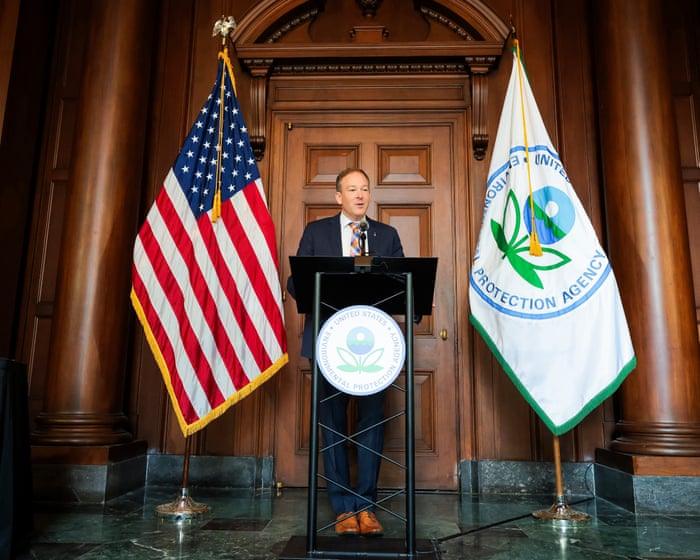
The Environmental Protection Agency (EPA) is reviewing the safety of a chemical flame retardant called TBBPA that is used in many everyday products. Public health groups say the EPA’s new report downplays the risks of this toxic chemical, especially for children, by relying on industry data and unusual methods. The EPA currently suggests no restrictions are needed despite concerns about health effects like cancer and developmental harm.
Key Facts
TBBPA is a flame retardant used widely in electronics, children’s clothing, furniture, and other products.
Independent studies and international agencies consider TBBPA likely to cause cancer and harm to children’s development.
The EPA’s draft risk assessment says TBBPA does not pose an unreasonable risk at current exposure levels.
Public health advocates accuse the EPA under President Trump of manipulating science to favor industry.
TBBPA easily escapes from products and ends up in household dust, increasing exposure risks especially for crawling infants.
The chemical is linked to hormone disruption, brain damage, immune problems, and reproductive harm.
Production of TBBPA is large—over 552 million pounds were made in 2016—and it is found in about 70% of electronics globally.
Environmental groups argue the EPA ignored many sources of exposure and current research showing the chemical is harmful.
Read the Original
Want the full story? Tap a source to open the original
article.
A woman shared her story about giving up her daughter for adoption when she was 14 years old. After many years without contact and some difficult emotions, the daughter found her birth mother at work when she was 20 years old.
Key Facts
The mother was 14 years old when she became pregnant after moving away from her boyfriend.
She kept her pregnancy secret until about seven months and then told her parents, who were worried but supportive.
She chose an open adoption, meaning she and the adoptive family stayed in some contact but she could not see the baby initially.
The baby, named Melissa Anne, was born in 1993 and placed with a loving adoptive family.
The mother received letters and photos from the adoptive family for five years, then communication stopped.
She struggled emotionally but eventually healed and built a new life with a second daughter.
After Melissa turned 18, there was no contact until two years later, when Melissa and the adoptive father found the birth mother at her workplace.
The reunion happened unexpectedly when Melissa, now 20, appeared at the birth mother’s workplace.
Read the Original
Want the full story? Tap a source to open the original
article.
Jonathan Zimmerman, a professor at the University of Pennsylvania, suggests bringing back the military draft. He believes it would motivate students to speak out against the war in Iran and make sure all citizens share the duty of national defense fairly.
Key Facts
Jonathan Zimmerman is a professor at the University of Pennsylvania.
He supports reinstating the military draft in the United States.
The draft would require people to serve in the military.
Zimmerman thinks the draft would increase student activism against the Iran war.
He argues the draft would spread defense responsibilities more equally among citizens.
The discussion is related to the ongoing war involving Iran.
Zimmerman’s view is focused on fairness and encouraging civic engagement.
Read the Original
Want the full story? Tap a source to open the original
article.
Massachusetts Congressman Seth Moulton is challenging Senator Ed Markey in the Democratic primary, arguing that Markey is too old to serve another Senate term. The campaign has sparked debate among young Democrats, some of whom support Moulton’s call for change, while others back Markey despite concerns about his age and technology knowledge.
Key Facts
Senator Ed Markey is 80 years old and would be 86 at the end of another term.
Seth Moulton, 47, is running against Markey in the Democratic primary in Massachusetts.
Moulton’s campaign focuses on the idea that Markey is too old to effectively represent younger generations.
Markey seemed unfamiliar when asked about using artificial intelligence tools like ChatGPT or Claude.
Many young Democrats support Moulton, wanting leaders who understand new issues like AI, housing costs, and student debt.
Some young voters and groups, including High School and College Democrats, support Markey.
Popular progressive leaders like Rep. Alexandria Ocasio-Cortez endorse Markey.
The primary election will take place on September 1, 2026, and often decides the Senate winner in Massachusetts.
Read the Original
Want the full story? Tap a source to open the original
article.
U.S. Immigration and Customs Enforcement (ICE) plans to buy robotic dogs from Boston Dynamics to help inspect dangerous areas and support law enforcement work. These robots will allow officers to remotely check risky or hard-to-reach places, improving safety and decision-making.
Key Facts
ICE may spend between $1 million and $2 million to purchase Boston Dynamics SPOT robots and related equipment.
The robots can be remotely operated to inspect hazardous, unstable, or confined spaces before officers enter.
The robots weigh about 75 pounds, can move over rough ground and stairs, and send live information back to operators.
Accessories like cameras, thermal imagers, and mapping tools can be added to the robots.
Boston Dynamics prohibits the use of their robots as weapons or for autonomous targeting.
Similar robots have been used by police, military, and emergency responders to improve safety and gather information.
The Department of Homeland Security forecast does not specify if the robots will be used in immigration enforcement.
ICE is increasing its use of technology in enforcement, including surveillance systems and electric-shock gloves.
Read the Original
Want the full story? Tap a source to open the original
article.
Prime Minister Andy Burnham announced plans to end the use of indefinite jail terms known as Imprisonment for Public Protection (IPP) during this parliament. IPP sentences, introduced in 2005 and abolished in 2012 but not applied retroactively, kept some prisoners jailed or on licence indefinitely. Campaigners and former prisoners welcomed the move as a step toward justice and healing.
Key Facts
IPP sentences allowed for minimum jail time but no maximum time, leading to indefinite imprisonment.
Introduced in 2005 to detain serious offenders seen as public risks, but often used for less serious crimes.
The sentence was abolished in 2012, but those already sentenced continued under its terms.
People on IPP were also on licence (a type of supervised release) indefinitely after prison.
Andy Burnham pledged to end these sentences during the current parliamentary term.
Campaign group Ungripp, led by a former IPP prisoner, called the announcement a long-awaited justice.
Families affected by IPP sentences described ongoing trauma and the need for swift, compassionate government action.
The campaign highlights tragic cases, such as Tommy Nicol, who died by suicide while serving under IPP conditions.
Read the Original
Want the full story? Tap a source to open the original
article.
President Trump announced a deal for the U.S. to gain majority control of more than 65 million barrels of Venezuelan oil. This agreement caused different reactions among U.S. politicians, with some opposing it and others supporting it.
Key Facts
The U.S. will acquire majority control of over 65 million barrels of Venezuelan oil.
President Trump announced the deal over the weekend.
Senate Democrats criticized the deal, saying it risks U.S. soldiers' safety for private profits.
Republican Senator Bernie Moreno from Ohio defended the deal.
The deal has sparked debate within the U.S. political community.
Read the Original
Want the full story? Tap a source to open the original
article.
New York City is increasing inspections and rules for cooling towers after deadly outbreaks of legionnaires’ disease over the past two summers. The disease spreads from bacteria in cooling tower water that is not properly cleaned, causing serious lung infections. The city plans more testing, staff hires, and stricter regulations to prevent future outbreaks.
Key Facts
Legionnaires’ disease is a serious pneumonia caused by the legionella bacteria.
Cooling towers in large air-conditioning systems can spread the bacteria if not cleaned regularly.
New York City had two major outbreaks recently, with several deaths and many illnesses.
The city found 59 out of 180 cooling towers tested had legionella bacteria.
Routine cleaning, disinfecting, and water testing of cooling towers can prevent the disease.
New York City’s inspections of cooling towers dropped significantly before the 2025 outbreak due to staff shortages.
The city will spend $13 million in 2027 to increase inspections and hire 23 water specialists.
New laws require building owners to test cooling tower water every 31 days during operation, the strictest rule in the U.S.
Read the Original
Want the full story? Tap a source to open the original
article.
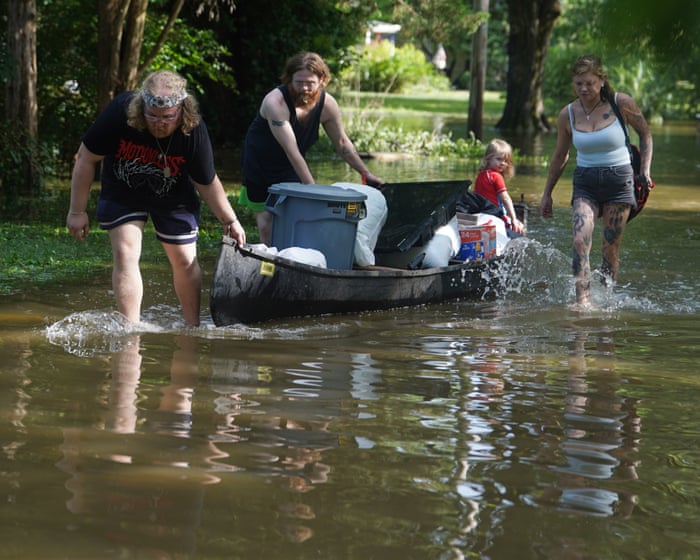
Severe flooding hit Cambridge City and other parts of Indiana, damaging many homes and infrastructure, and leaving over 1,000 people homeless. The state and federal response has faced criticism due to limited funds and delays, while political disagreements have hindered climate-focused measures.
Key Facts
Flooding from Creitz Creek damaged about one-third (250) of the 1,700 homes in Cambridge City, Indiana, with 175 homes severely affected.
The storm dumped around 10 inches of rain in one morning, three times the usual August rainfall for the town.
The flooding destroyed infrastructure, including part of Interstate-70, an important highway near Cambridge City.
Over 1,000 people in Indiana became homeless due to the floods, and seven people died.
Neighboring states Ohio and Michigan increased environmental agency funding, while Indiana cut its funding by 19% between 2010 and 2024.
Indiana’s state legislature blocked efforts to form a climate solutions taskforce, and the state had only $2 million in its disaster relief fund before the floods.
President Donald Trump approved Federal Emergency Management Agency (FEMA) aid capped at $5 million for more than 50 counties affected by the floods.
FEMA has delayed disaster declaration approvals; Indiana’s governor’s recent request has not yet been answered, despite the disaster’s estimated cost of $5 billion.
Read the Original
Want the full story? Tap a source to open the original
article.
Some Republican senators are known as the “Wounded Bear” or YOLO Caucus because they face few political risks. Even though they speak out more against President Trump's choices and policies, they rarely vote against him when it matters.
Key Facts
A group of Republican senators is nicknamed the “Wounded Bear” or YOLO Caucus.
These senators have little to lose politically.
They are more willing to criticize President Trump’s nominations and policies.
Despite objections, they seldom vote “no” on important matters.
Their behavior shows limited opposition in actual votes despite public dissent.
Read the Original
Want the full story? Tap a source to open the original
article.
The Minnesota Supreme Court refused Mike Lindell’s request to recount votes in the state’s governor primary election. This decision confirms that Lindell lost the primary by 11 percentage points.
Key Facts
Mike Lindell is the founder of MyPillow and ran in Minnesota’s gubernatorial primary.
Lindell requested a recount of the primary election results.
The Minnesota Supreme Court rejected his request on Saturday.
Chief Justice Natalie E. Hudson wrote the court’s six-page ruling.
The ruling said Lindell’s claim did not have enough legal basis.
The outcome confirms Lindell lost the primary by 11 points.
Lindell had challenged the loss, but the court decision ends that challenge.
Read the Original
Want the full story? Tap a source to open the original
article.
Two people died and nine others were shot in a mass shooting early Sunday morning in Trenton, New Jersey. Police reported the shooting happened around 12:25 a.m. on Locust Street, but the condition of the injured was not yet confirmed.
Key Facts
The shooting occurred in Trenton, New Jersey.
It took place around 12:25 a.m. Eastern Time on Sunday.
A total of 11 people were shot.
Two people died from their injuries.
Nine people were wounded but their health status is unknown.
The police shared the information with CBS News Philadelphia.
The incident happened on the 100 block of Locust Street.
Authorities are still investigating and updates will follow.
Read the Original
Want the full story? Tap a source to open the original
article.