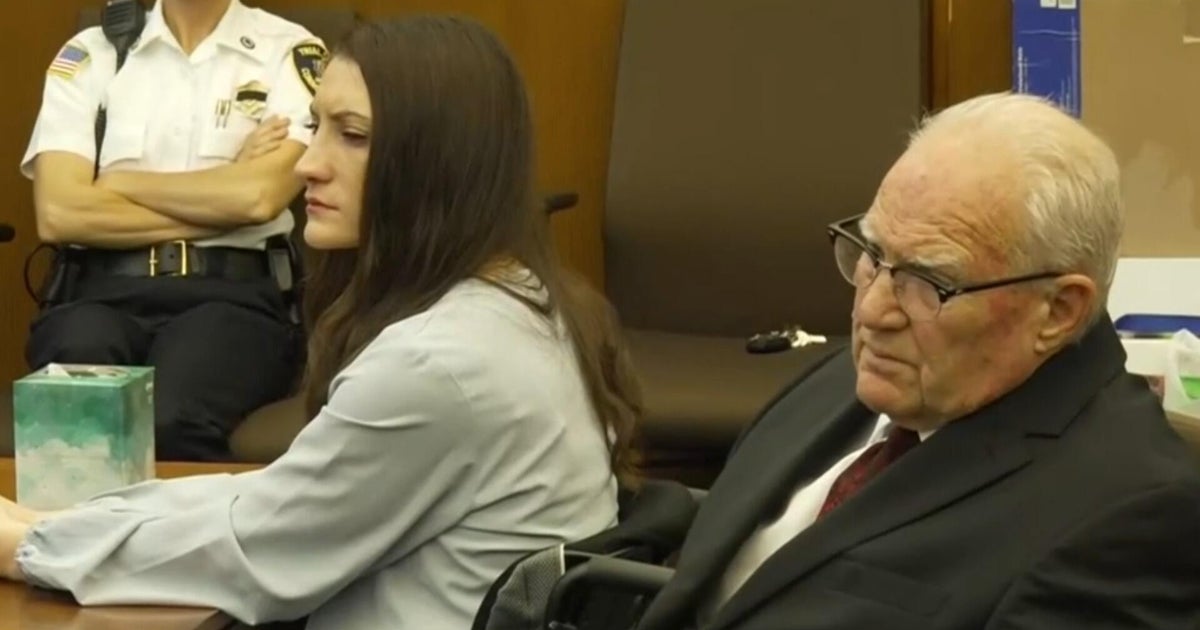
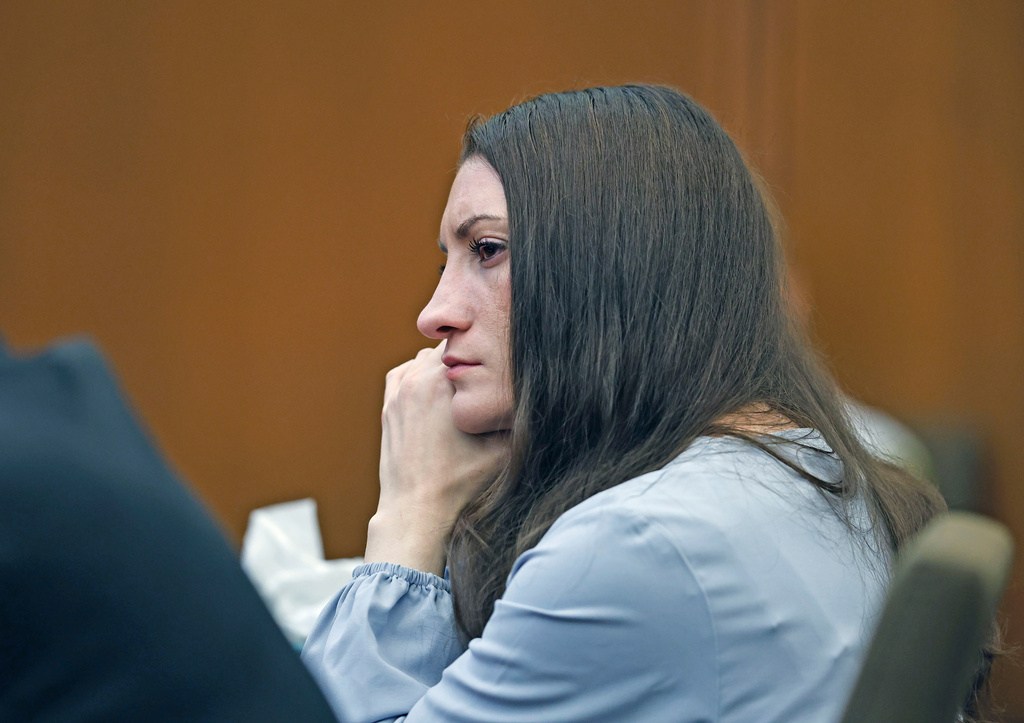
The jury in Lindsay Clancy's murder trial is continuing its discussions on the second day after both sides finished their closing statements. The prosecution and defense presented their cases before the jury began deciding.
Key Facts
The trial involves Lindsay Clancy and a charge of murder.
The prosecution shared their arguments explaining why they believe Clancy is guilty.
The defense presented reasons why Clancy should not be found guilty.
The jury started deliberating after hearing both sides’ closing arguments.
Jury deliberations have extended into a second day, showing the decision is not immediate.
Reporting on the trial is provided by CBS News correspondent Shanelle Kaul.
The trial is being closely followed and updated by CBS News.
Read the Original
Want the full story? Tap a source to open the original
article.
The U.S. Army used a powerful laser system to destroy three drones near the border with Mexico. Officials said the drones were connected to Mexican drug cartels.
Key Facts
The U.S. military used a high-energy laser called the Army Multipurpose High Energy Laser system.
The laser shot down three drones near the U.S.-Mexico border.
The operation happened late Tuesday and early Wednesday.
Officials say the drones were linked to Mexican drug cartels.
This marks a notable use of laser technology for border security.
The U.S. southern border faces threats involving drug cartel activities.
The Army is exploring new technologies to improve border protection.
Read the Original
Want the full story? Tap a source to open the original
article.
The Trump administration has ended a rule that protected old-growth forests and restricted roads, drilling, and logging on millions of acres of national forests. This change could harm habitats of over 400 endangered animal and plant species and affect drinking water supplies for many communities.
Key Facts
The rollback removes the 2001 Roadless Area Conservation Rule, which had protected about 58 million acres of forest land and rivers.
Over 7 million acres of endangered species habitat and nearly 1,800 miles of rivers could be exposed to new development.
The affected areas include forests in the Rocky Mountains, Alaska, the south-west, and south-east US.
Species at risk include grizzly bears, gray wolves, wild salmon, Mexican spotted owls, hellbenders, and various rare plants.
The Tongass National Forest in Alaska, home to many wild salmon and important to the local fishing economy, is included in the rollback.
Drinking water for millions of people in cities like Bozeman, Atlanta, Phoenix, and Albuquerque is supplied by these protected forest watersheds.
Conservation groups warn that more roads and logging may lead to dirtier water, fragmented wildlife habitats, and increased wildfire risks.
Read the Original
Want the full story? Tap a source to open the original
article.
President Donald Trump has imposed high tariffs on Canadian goods, claiming Canada has treated the U.S. unfairly in trade. Canada responded with its own tariffs on American products. This trade conflict comes amid other challenges for President Trump, including issues with Iran and political opposition at home.
Key Facts
President Trump accused Canada of ripping off the United States on trade and imposed 50% tariffs on Canadian cars, trucks, auto parts, and steel.
Canada retaliated by putting tariffs up to 50% on about 700 American goods.
Trump is using the Hawley-Smoot Tariff Act of 1930 to justify his tariffs, a law linked to worsening the Great Depression.
The Canadian prime minister said Canada will not allow the U.S. to dominate it through trade pressure.
President Trump is also facing difficulties with the Iran conflict, which he started without a clear plan.
He is confronting criticism from Republicans and others in the U.S. over his policies and actions.
U.S. courts have ruled against some of Trump’s previous tariff attempts, calling them unconstitutional.
There are ongoing disputes with universities, media companies, and financial markets about Trump’s policies.
Read the Original
Want the full story? Tap a source to open the original
article.
A jury is deciding whether Lindsay Clancy should go to prison or a psychiatric hospital after she killed her three children in 2023. The trial has focused attention on postpartum psychosis, mental health care gaps, and the stigma that stops some mothers from getting help.
Key Facts
Lindsay Clancy killed her three young children in January 2023.
The five-week trial is held in Plymouth County Superior Court.
Clancy has not denied the killings, but the jury must decide her legal responsibility.
The case highlights postpartum psychosis, a serious mental illness after childbirth.
Stigma and fear often cause mothers to hide symptoms like hallucinations or paranoia.
Clancy reported many symptoms but denied suicidal or violent thoughts in key doctor visits.
Legal tools exist to help families intervene, such as emergency hospitalization laws.
Families sometimes cannot force treatment due to a fragmented mental health system.
Read the Original
Want the full story? Tap a source to open the original
article.
Many elected officials face pressure to lower high energy bills. Some suggest removing strict climate laws that limit using cheap fossil fuels to reduce costs.
Key Facts
Energy bills in New York and other places are very high.
Officials are looking for ways to make energy cheaper.
Climate laws restrict the use of fossil fuels like coal, oil, and natural gas.
Fossil fuels are seen as more affordable and plentiful sources of energy.
Some people suggest ending these climate laws to lower energy prices.
The article indicates President Trump is not responsible for the high energy bills.
The debate involves balancing energy costs and environmental laws.
Read the Original
Want the full story? Tap a source to open the original
article.
With primary elections ending, Democrats and Republicans are preparing for the November general election by focusing on different campaign messages. Democrats are emphasizing the economy, especially concerns about high prices for fuel, groceries, and healthcare. Republicans are concentrating on warning voters about socialism and left-wing extremism within the Democratic Party, while continuing to blame Democrats for economic problems.
Key Facts
Primary elections have ended, and both parties are preparing for the November general election.
Democrats want to focus on economic issues like high costs of gas, food, and healthcare.
Republicans emphasize concerns about socialism and left-wing extremists in the Democratic Party.
Republican President Donald Trump and his party aim to maintain full control of Washington.
Some Republican strategists admit the focus on socialism may not work well everywhere.
Voters say the economy is their top concern, even though inflation has decreased from its peak.
The Republican National Committee's recent talking points rarely mention “gasoline” despite high fuel costs.
The ongoing war in Iran and its economic effects are viewed as negative and complicating the political messaging.
Read the Original
Want the full story? Tap a source to open the original
article.
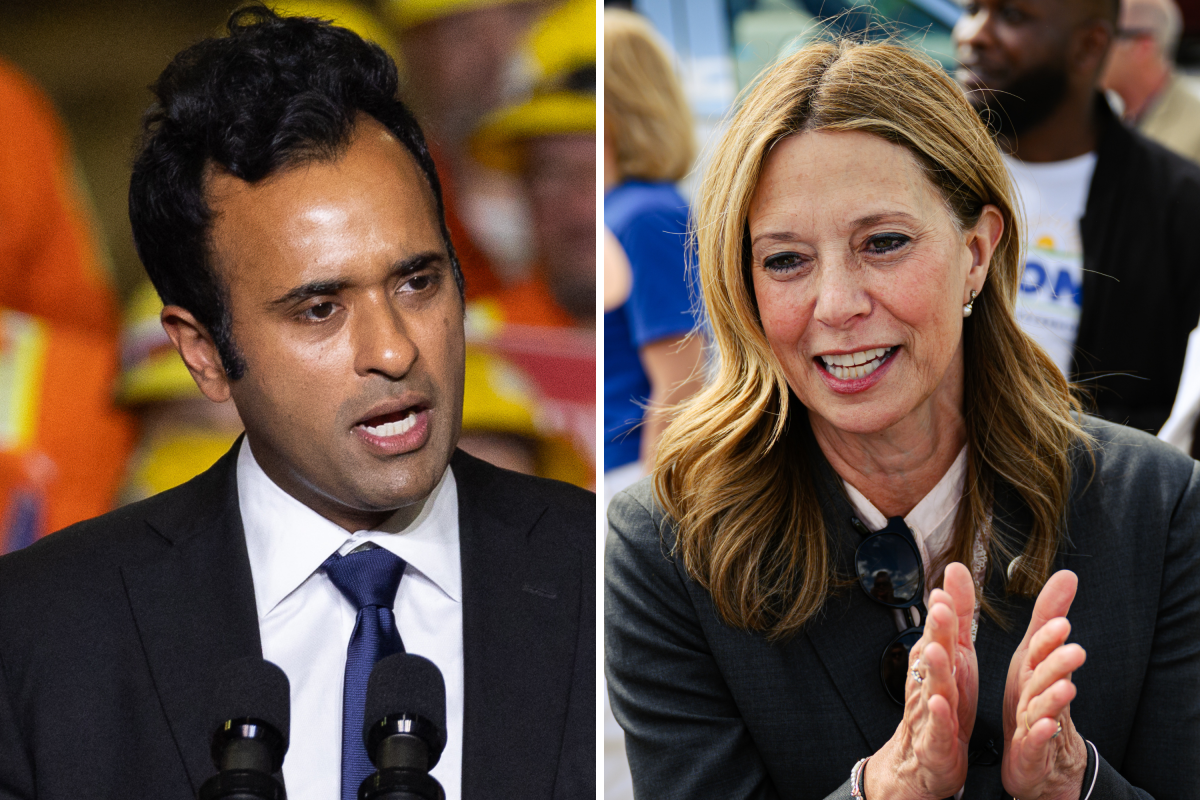
Republican Vivek Ramaswamy has lost his lead over Democrat Amy Acton in prediction markets for the Ohio governor's race. Polls show the race is very close as both candidates compete to replace the term-limited Republican governor.
Key Facts
Prediction markets Polymarket and Kalshi now give Acton a slight edge over Ramaswamy in winning the Ohio governor’s race.
Polymarket shows Acton with a 54% chance, Ramaswamy with 47%; Kalshi shows Acton at 55%, Ramaswamy at 45%.
Recent polling averages also show a very tight race, with Acton slightly ahead by about 0.2 percentage points.
Ohio tends to vote Republican in presidential elections and was won by President Trump by 11.2 points in 2024.
The current governor, Mike DeWine, is a Republican who cannot run again due to term limits.
Prediction markets work by allowing people to buy and sell bets on the election outcome, which can reflect the latest information quickly.
Polls from different organizations show mixed results, with some favoring Ramaswamy and others favoring Acton, all within margins of error.
Both parties may need to invest resources because the race is unexpectedly close for an open Republican seat.
Read the Original
Want the full story? Tap a source to open the original
article.
Attorney General Todd Blanche spoke in an interview about balancing his loyalty to President Donald Trump with his responsibility to uphold the law. He faces criticism over decisions that appear to favor Trump and his allies, while also working to stabilize a Justice Department affected by staff losses and public distrust.
Key Facts
Todd Blanche is the current U.S. Attorney General and closely aligned with President Donald Trump.
Blanche’s confirmation was nearly blocked because of his close ties to Trump.
He has authorized a $1.8 billion fund to compensate Trump allies who claim political prosecution.
Blanche approved a deal giving Trump and his family immunity from tax audits.
He is managing a Justice Department with many resignations and low trust.
Blanche insists he acts with integrity and follows the rule of law despite political pressures.
The department has ongoing investigations involving politically sensitive cases.
Critics, including some Republicans, question Blanche’s independence from the White House.
Read the Original
Want the full story? Tap a source to open the original
article.
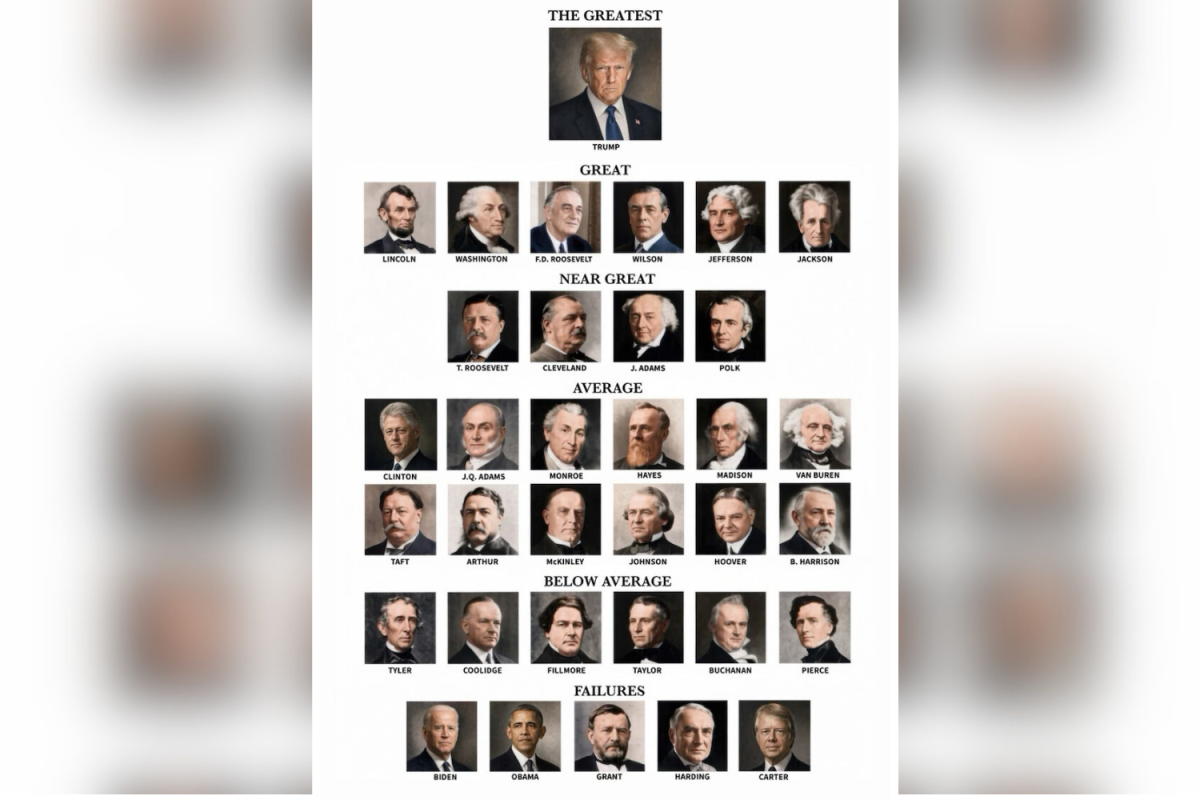
President Donald Trump shared a list ranking U.S. presidents, putting himself alone in the highest category as "The Greatest." His ranking is based on an older survey by historians but places several recent presidents, including Joe Biden and Barack Obama, in the "Failures" category.
Key Facts
President Trump posted a presidential ranking on Truth Social, naming himself in a unique top category called "The Greatest."
Famous presidents like Abraham Lincoln, George Washington, and Franklin D. Roosevelt are placed one level below Trump in the "Great" category.
Presidents Joe Biden, Barack Obama, and Jimmy Carter were labeled as "Failures" in Trump’s ranking.
The list is modeled after a 1948 survey by historian Arthur M. Schlesinger Sr., which categorized presidents from "Great" to "Failures."
Some well-known presidents like Ronald Reagan, Dwight D. Eisenhower, and John F. Kennedy were completely missing from Trump’s chart.
Trump’s list reflects his personal political views and history of praising certain presidents like Andrew Jackson and William McKinley.
Historians' surveys usually rank Lincoln, FDR, and Washington highest, with Trump ranked last and Reagan much higher than in Trump’s list.
Polls show Trump currently has more support among Republican voters than Reagan and other past GOP presidents.
Read the Original
Want the full story? Tap a source to open the original
article.
President Trump is planning to impose 50% tariffs on Canadian goods starting January 1, affecting products like cars, honey, and hockey sticks. This trade move worries people in Detroit and Michigan, where many depend on Canadian trade, and it might influence the upcoming midterm elections.
Key Facts
Detroit and Windsor, Ontario, trade about $1 billion in goods daily.
President Trump plans 50% tariffs on many Canadian products beginning January 1.
Many Michigan residents oppose these tariffs and say they cause higher prices.
Michigan is an important swing state for the upcoming midterm elections.
Democrats hope to use opposition to tariffs to win key races in Michigan.
Michigan residents pay about $3,200 more annually due to tariffs because of the state’s Canadian border.
Both the U.S. and Canadian economies are likely to suffer if the tariffs take effect.
Democratic candidate Abdul El-Sayed is campaigning against tariffs and President Trump’s policies.
Read the Original
Want the full story? Tap a source to open the original
article.
A federal judge blocked new rules from the Postal Service that would limit voting by mail in the upcoming US midterm elections. The judge said states do not have enough time or money to adjust their ballots and systems before voting starts.
Key Facts
Judge Indira Talwani stopped new USPS rules that restrict mail-in voting for 14 days.
The rules require states to use approved voter lists and follow new ballot formats for USPS to deliver ballots.
The rules were put in place after the Supreme Court allowed them to take effect.
Nearly one-third of American voters use mail-in ballots.
President Donald Trump ordered these changes in March to limit mail voting.
Voting rights groups and some officials sued, saying only states and Congress can control election rules.
The Supreme Court previously overturned a block on these rules, saying the lawsuit was filed too early.
A new court hearing is planned for September 3, when many ballots will already be mailed or soon mailed.
Read the Original
Want the full story? Tap a source to open the original
article.
A federal judge has temporarily stopped President Donald Trump’s executive order that limits mail voting before the midterm elections. The ruling gives states 14 days and halts the order because election officials say they do not have enough time or money to change their systems and mail ballots in time for the election.
Key Facts
Judge Indira Talwani issued a 14-day hold on the Trump administration’s order about mail voting.
The order aims to restrict how the US Postal Service delivers mail ballots.
The order was blocked about a week before the first mail ballots for midterms are scheduled to be sent out.
Election officials say they cannot redesign ballots, get approvals, or train workers quickly enough due to the order.
The Supreme Court previously allowed the order to move forward but did not decide if it is legal.
Nearly one-third of Americans vote by mail in elections.
President Trump has criticized mail voting, blaming it for his 2020 election loss, despite using mail voting himself.
A 2025 Brookings Institution study found mail voting fraud is extremely rare (about 4 cases per 10 million ballots).
Read the Original
Want the full story? Tap a source to open the original
article.
Michael Boren, a senior official in the US Department of Agriculture, is accused of pushing Forest Service staff to send extra firefighting resources to a wildfire near his own ranch in Idaho. Three Democratic senators have asked for a full investigation into whether Boren misused his position and redirected resources away from more serious fires.
Key Facts
Michael Boren is undersecretary of agriculture for natural resources and environment.
Boren owns a 480-acre ranch near the Cabin Creek Fire in Idaho.
The Cabin Creek Fire started on July 12 from an unattended campfire and burned seven acres before being fully contained on July 15.
Multiple Forest Service officials said the response to this small fire was unusually large compared to bigger fires threatening other areas.
Senators Ron Wyden, Amy Klobuchar, and Martin Heinrich wrote a letter demanding an investigation into Boren’s involvement and how to prevent political interference in wildfire responses.
The USDA spokesperson said Boren’s involvement was normal for someone in his role and denied that he pressured for more resources.
The senators are concerned that Boren’s actions could misuse taxpayer funds and put other communities at risk by diverting resources.
The senators requested a response by September 10 outlining how the Department will stop political interference in firefighting efforts.
Read the Original
Want the full story? Tap a source to open the original
article.
President Donald Trump is focusing his midterm election campaign on securing strong loyalty to himself rather than addressing specific political issues. He views the Republican Party’s support as an expression of devotion to him personally, reacting strongly to any perceived lack of loyalty.
Key Facts
President Trump’s midterm campaign theme centers on demanding loyalty and personal devotion from Republicans.
He interprets the fading support within his party as a form of unrequited love, leading to anger and punitive reactions.
Trump has responded to challenges and criticism by doubling down on conflicts, including a trade war with Canada.
He made public remarks joking about his former press secretary leaving her job, which he linked to feeling abandoned.
Trump supported Darline Graham for a Senate seat after her brother, Senator Lindsey Graham, died.
Darline Graham showed little knowledge about important issues like Taiwan but emphasized obedience to Trump.
The article compares Trump’s political decline to past presidents but notes his situation is unique in its early and worsening nature.
Read the Original
Want the full story? Tap a source to open the original
article.
A baby named Ismaeel Islam died at the Royal London Hospital’s special care unit after a medical emergency went unnoticed. The alarm on his monitor was set too low to be heard, delaying help during a critical health event.
Key Facts
Ismaeel Islam was under six months old when he died on March 7, 2025.
He suffered a drop in oxygen levels and stopped breathing on November 3, 2024, but the alarm volume was too low to be heard.
The alarm was silent for about 30 minutes, delaying medical attention.
The nurse was caring for another baby and could not see Ismaeel at the time.
The coroner issued a report warning about low alarm volumes and called for alarms to be fixed at maximum volume or locked.
The hospital has started making changes to improve alarm sounds and baby monitor visibility.
The alarm system is made by Masimo UK, which must respond to the coroner’s report within 56 days.
The coroner stated that if the emergency had been noticed sooner, Ismaeel could have been saved.
Read the Original
Want the full story? Tap a source to open the original
article.
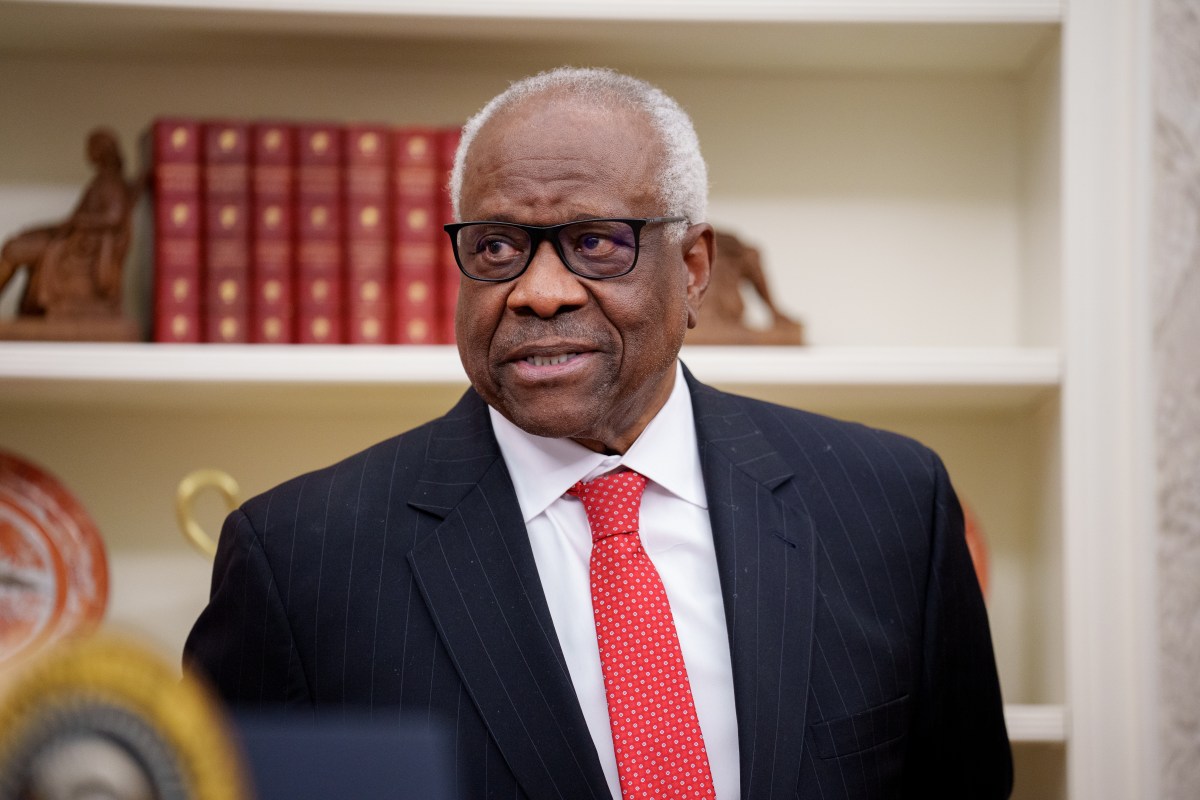
Supreme Court Justice Clarence Thomas has become a leading figure in the court by promoting originalism and textualism, ideas that focus on interpreting the Constitution based on its exact words and original meaning. Over his long career, Thomas has influenced the court’s shift toward conservative rulings on issues like religious freedom, abortion, gun rights, and affirmative action.
Key Facts
Clarence Thomas joined the Supreme Court in the early 1990s and is now the second-longest-serving justice.
He advocates for originalism and textualism, which means interpreting laws by their clear text and original meaning, rather than looking at legislative history or broader intent.
Thomas, along with Justices Antonin Scalia and William Rehnquist, helped change legal education and court practices to focus on text-first interpretation.
Even liberal justices accept textualism today, showing its wide influence.
Thomas grew up in extreme poverty in Jim Crow Georgia and overcame many challenges to become a Supreme Court justice.
He is known for being kind and approachable, appreciated by colleagues and staff alike.
Thomas prefers to persuade his fellow justices with kindness rather than conflict.
The next court term will see Thomas lead decisions on cases involving gun rights, among other issues.
Read the Original
Want the full story? Tap a source to open the original
article.
A recent poll shows that many young voters who supported President Trump now regret their choice. About 31% of Generation Z and 28% of Millennials who voted for him say they feel this way, with fewer regrets among older generations.
Key Facts
31% of Generation Z voters who chose President Trump now regret it.
28% of Millennials who voted for Trump also regret their choice.
20% of Generation X voters and 10% of Baby Boomers express regret over voting for Trump.
The poll reflects challenges in support for President Trump and the Republican Party.
The feelings of regret may influence voter motivation for upcoming elections.
This data comes from a recent Navigator poll that measures voter opinions.
The trend shows younger generations have more second thoughts about their 2024 vote for Trump than older groups.
Read the Original
Want the full story? Tap a source to open the original
article.
Republicans in the Senate and House are having disagreements over a bill to keep funding NASA. These talks have stopped, which could affect President Donald Trump’s goal to build a base on the moon. President Trump is visiting NASA’s Johnson Space Center in Houston on Friday.
Key Facts
Republicans in the Senate and House are not agreeing on a NASA funding bill.
The bill is meant to reauthorize NASA’s work and funding.
The disagreements have caused negotiations to stall.
This situation might slow down President Trump’s plan for a lunar base.
President Trump plans to visit NASA’s Johnson Space Center in Houston on Friday.
Building a moon base is one of President Trump’s space priorities.
The split between Senate and House Republicans is the main cause of delay.
Read the Original
Want the full story? Tap a source to open the original
article.
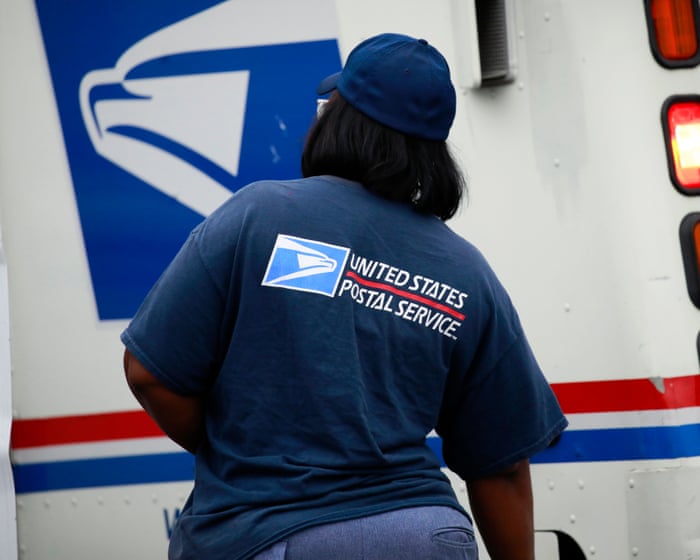
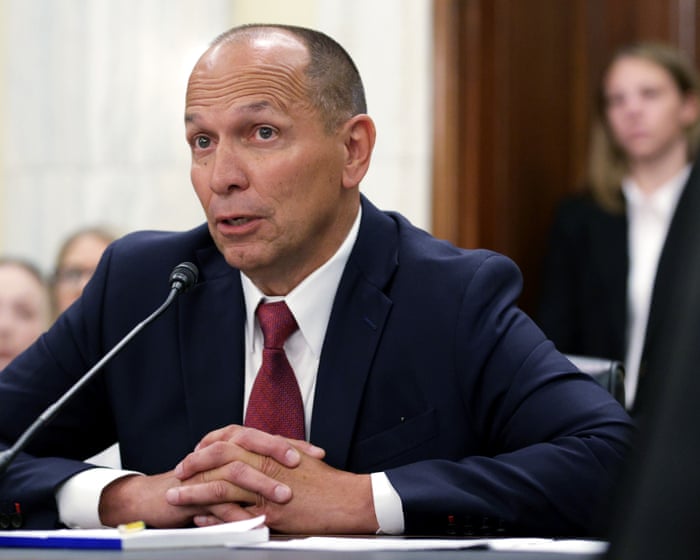
President Donald Trump has nominated four new members to the U.S. Postal Service board. However, a Republican senator is delaying their approval while asking the Postal Service to fix mail delivery problems.
Key Facts
President Trump wants to change the leadership of the U.S. Postal Service.
He nominated four people to become governors on the Postal Service board.
Two of the nominees are Jeffrey Brodsky and William Gallo.
A Republican senator is holding up the Senate vote to confirm these nominees.
The senator is concerned about delays in mail delivery.
The senator wants the Postal Service to make improvements before approving the nominees.
The hold affects how quickly the new board members can start working.
Read the Original
Want the full story? Tap a source to open the original
article.